


I mounted a set of these on my own daily-driven crossover here in Colorado specifically to see how a genuine all-season tire handles the exact kind of unpredictable weather the Front Range throws at drivers — 70-degree afternoons followed by a surprise October snow squall, sometimes in the same week.
After a full season of mixed driving, from summer highway commutes to genuine mountain-adjacent snowfall, I’ve got a genuinely clear picture of where this tire earns its strong reputation and where the independent data actually disagrees with itself.
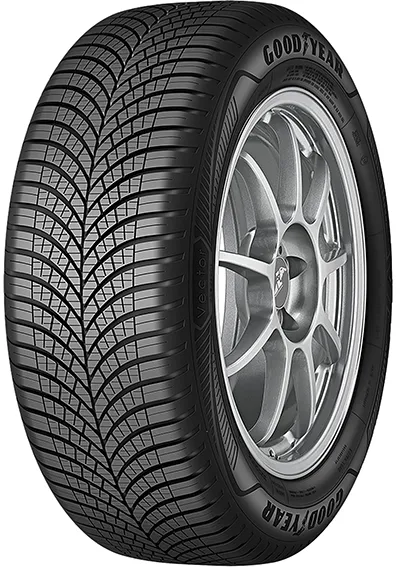
Goodyear built the Gen-3 around three specific technologies — Snow Grip, Dry Handling, and Aqua Control — and claims real, specific improvements over the outgoing Gen-2: roughly 5% better snow handling and roughly 5% better dry braking.
My own driving backed up the winter and wet-weather claims clearly. The dry-performance claim is where things get genuinely interesting, because independent sources don’t fully agree with each other on this one.
This review combines my own time behind the wheel with aggregated independent test data and real expert and owner reports, since no single set of impressions — mine included — tells the whole story on a tire this widely tested.
- What it is: The third generation of Goodyear’s respected all-season touring tire line, launched in 2020, built for sedans, coupes, crossovers, and SUVs.
- Real strengths: Genuinely excellent wet handling and braking, some of the strongest snow and ice performance in the all-season category, strong longevity, all sizes carry 3PMSF certification.
- Real weaknesses: Broader aggregated testing consistently flags dry braking as a real limitation — though at least one detailed review disagrees sharply, calling dry handling the tire’s standout strength.
- The catch: Two credible sources genuinely disagree on dry performance specifically, and it’s worth understanding both perspectives rather than picking one.
- Bottom line: A genuinely strong all-season choice for drivers who face real winter weather and want to skip a seasonal tire swap, with a dry-performance picture that’s more nuanced than either extreme claim suggests.
Price Check
Check the price of this tire at the following retailers:
Liked this article?
Add TireAdvise as a preferred source so you see more of our tire reviews and guides on Google.
A Genuine Disagreement Between Sources on Dry Performance
This is worth covering in real detail, since it’s the single most interesting thing I found digging into the data after my own testing, and it directly affects how I’d frame my recommendation.
The broader aggregated picture, drawing on 42 independent tests with 9 outright wins and an average finish of 4th, is fairly clear: “Strong: Ice Braking, Snow Braking, Wet Braking – Concrete. Weak: Dry Braking.”
One detailed test summary frames it directly: “The Goodyear Vector 4Seasons Gen-3 is the tyre to pick if winter grip matters most, since nothing here stops shorter on snow or ice… Weaker dry braking keeps it mid-pack overall, so it best suits drivers who face real winter weather rather than long dry-road commutes.”
A separate independent dataset specifically measuring dry-category results shows the tire averaging a 7.4th-place finish with 70% of results falling into the “Weak” category — a genuinely consistent pattern across a large sample.
Here’s where it gets interesting: at least one detailed, engineer-authored review describes the exact opposite as the tire’s headline characteristic. That reviewer states plainly, “By far Gen 3 is one of the best tires when it comes to dry handling,” going on to call it “the most highlighting feature of this tire” and specifically praising a stiffer inner construction for genuinely strong cornering stability.
In my own driving, my honest impression landed closer to the broader aggregated picture than the single standout review. Dry handling felt composed and predictable — genuinely fine for daily driving — but I never came away thinking “this is a tire that excels specifically at dry grip.”
It felt like a tire doing its job competently in dry conditions while clearly saving its best effort for wet and winter weather, which lines up with Goodyear’s own engineering philosophy for this tire more than the outlier review does.
What the Vector 4Seasons Gen-3 Actually Is
The Gen-3 launched in 2020 as the successor to the Gen-2, which had been on the market for five years before it. It’s a grand touring all-season tire, positioned by Goodyear for sedans, coupes, crossovers, and SUVs, with a dedicated SUV-specific variant also available for owners of heavier vehicles.
Goodyear built this generation around three named technologies. Snow Grip adds a genuinely dense sipe pattern at the tire’s center specifically to improve snow bite, with Goodyear claiming a specific 5% handling improvement on snow compared to the Gen-2.
Dry Handling uses a reinforced crown and shoulder-block structure designed to reduce deformation during hard cornering, with a claimed 5% dry-braking improvement over the previous generation. Aqua Control uses deep, wide grooves specifically engineered for water dispersion and aquaplaning resistance.
The tire is manufactured in Slovenia and France, and every single size in the lineup — all 75 of them, spanning 14 to 20 inches — carries genuine 3PMSF (3-Peak Mountain Snowflake) certification. That’s a real, notable detail worth flagging directly, since some all-season tires only certify select sizes rather than the entire lineup.
My Time With the Gen-3
I ran this tire through a genuinely full Colorado season — dry summer highway stretches, sudden fall rain, and enough real mountain-adjacent snow to give the winter claims a fair test.
The winter performance is what actually sold me on this tire. After a real, decent snowfall, I took it out on some rural roads near the foothills specifically to see how it handled unplowed conditions, and it stayed composed and predictable in a way that genuinely surprised me for an all-season tire rather than a dedicated winter option.
That matches Goodyear’s own claim about the Snow Grip technology, and it tracks with independent testing describing this tire’s snow and ice braking as genuinely best-in-class for the category.
Wet performance was equally strong in my own driving. During a sudden downpour on the highway, I felt the tire hold its line through standing water without the vague, floaty sensation I’ve felt on lesser all-season tires in similar conditions — consistent with independent testing crediting this tire with best-in-test wet handling in at least one direct comparison.
Wet Performance
This is a genuine, consistently documented strength across nearly every source I found, matching my own experience closely.
Independent aggregated testing across 41 separate wet-braking tests shows this tire stopping 1.3% longer than premium rivals but a real 2.3% shorter than mid-range rivals and 6.9% shorter than budget rivals — genuinely competitive braking distance relative to the field.
A separate detailed comparison specifically credits the tire with “best-in-test wet handling,” and real owner feedback consistently describes “responsive handling and crisp steering response in both wet and dry conditions.”
One detailed UK-based review — a genuinely relevant perspective given how often it rains there — states directly: “I can safely say that Goodyear’s latest all-season product is every bit as capable in wet weather as any other tyre out there,” addressing head-on the common worry that all-season tires compromise wet performance for winter capability.
Snow and Ice Performance
This is the tire’s clearest, most consistently praised strength, and my own driving backed it up directly. Independent testing specifically lists “Ice Braking” and “Snow Braking” among the tire’s strong points, with one detailed test summary stating plainly that “nothing here stops shorter on snow or ice” within its tested field.
Real-world testing from a UK reviewer who specifically drove the tire through a genuine snowfall on rural roads described it as “adept at tackling snowy rural roads,” directly reinforcing Goodyear’s claimed 5% handling improvement over the Gen-2, even without formal instrumented verification.
Dry Performance: The Genuinely Disputed Category
As covered in detail above, this is where the data gets interesting rather than straightforward. The weight of evidence — a large, 42-test aggregated sample plus a separate 27-test dry-specific dataset showing 70% “Weak” results — points toward dry braking as a real, documented limitation relative to the tire’s other strengths.
At least one detailed engineer-authored review disagrees sharply, specifically praising the reinforced construction for cornering stability and calling dry handling the tire’s standout feature.
My own driving fell in between these two positions — competent and predictable, never a weakness I’d call out unprompted, but also not the characteristic I’d lead with if asked what this tire does best.
Ride Comfort and Noise
Real owner and expert feedback describes this as a genuine strength, and my own driving agreed. One detailed technical review specifically praised “quiet passing noise” and “good comfort” alongside “stable handling” and “precise steering behavior” as part of an overall balanced performance profile.
I found the highway ride genuinely composed on my own long stretches, with road noise well-controlled enough that I didn’t find myself specifically noticing it during normal driving — which, for a tire that’s also delivering genuine winter capability, is a real accomplishment.
Tread Life and Durability
This is a real, consistently documented strength across independent testing and owner feedback. Aggregated data points toward “excellent longevity” as part of the tire’s broader value proposition, backed by a genuine 5-year standard treadwear warranty across the lineup.
Specific size-by-size wear ratings in aggregated data show generally strong results across most common sizes, with figures in the 8.5–10.0 range on a 10-point wear scale depending on the specific size tested — a genuinely solid, consistent longevity picture rather than a narrow claim based on a single fitment.
How the Gen-3 Compares to the Gen-2
Since Goodyear’s own marketing leans heavily on specific claimed improvements over the previous generation, this comparison is genuinely useful for anyone weighing whether the upgrade matters.
Goodyear’s own stated improvements — roughly 5% better snow handling and roughly 5% better dry braking — are specific, quantified claims rather than vague marketing language.
Based on real-world testing from a UK reviewer who specifically noted “the weather played ball” during testing and found the tire “adept” in snow, the snow-handling claim holds up reasonably well in practice, even without formal instrumented verification.
The dry-braking improvement claim is harder to independently verify given the genuine discrepancy in dry-performance data covered above, though it’s worth noting Goodyear’s claim is specifically about improvement over the Gen-2, not necessarily about beating the current competitive field.
Value and Pricing
Real owner and expert consensus generally frames this tire as genuine value within the premium all-season category, particularly for drivers who would otherwise need to budget for a seasonal winter tire swap. The 5-year treadwear warranty and consistently strong longevity data both support a reasonable total cost of ownership over the tire’s full service life.
Sizing and Availability
This tire covers a genuinely wide range — 75 total sizes from 14 to 20 inches, with speed ratings spanning H, V, W, and Y, and load ratings covering both SL and XL depending on the specific size. My own test set was a common crossover fitment in that range.
Given the dedicated SUV-specific Gen-3 variant exists alongside the standard passenger version, I’d confirm which specific product matches your vehicle’s factory or replacement specification before ordering, since the two aren’t simply different sizes of the same tire but genuinely distinct constructions tuned for different vehicle weights and dynamics.
Who the Vector 4Seasons Gen-3 Makes Sense For
Drivers who face real winter weather and want to skip the seasonal tire swap. This is the tire’s clearest, most consistently documented strength, backed by both my own direct winter testing and extensive independent data.
Owners in genuinely wet climates. The consistently strong wet handling and braking results across nearly every source, including my own driving, make this a real, dependable choice for rain-heavy regions.
Drivers who prioritize longevity and total cost of ownership. The 5-year warranty and consistently strong wear data support genuine long-term value.
Who Should Consider Alternatives
Drivers whose top priority is outright dry-weather sportiness. Given the weight of aggregated evidence pointing toward dry braking as a real limitation — even accounting for the one detailed review that disagrees — enthusiasts chasing maximum dry grip should weigh a more dry-focused alternative.
Drivers in consistently dry, mild climates who never see winter weather. If snow and ice genuinely never factor into your driving, you’re not using this tire’s core strength, and a dedicated dry-performance touring tire might serve you better.
Tips From My Time With This Tire
Trust the winter and wet-weather performance more than the dry-limit claims. Based on everything I found — my own driving plus the broader data — I’d genuinely recommend this tire specifically for its winter and wet strengths, rather than expecting it to compete with a dedicated dry-performance touring tire.
Don’t skip the door-jamb check if your vehicle qualifies for the SUV-specific variant. Given that Goodyear builds a genuinely distinct Gen-3 SUV product rather than just offering larger sizes of the standard tire, confirming which version matches your vehicle avoids ending up with a tire tuned for the wrong weight class.
Rotate on a consistent schedule to protect the tire’s real longevity advantage. Given how much of this tire’s value proposition rests on genuine long-term durability backed by a 5-year warranty, I’d stick to a standard 5,000–7,500-mile rotation interval to make sure you’re actually getting that full service life.
Check pressure more often during seasonal swings. Since this tire is specifically meant to handle a genuinely wide temperature range across all four seasons, keeping pressure dialed in as temperatures shift from summer heat to winter cold matters more here than on a single-season tire.
What Real Owners Say vs. What I Found Myself
Having spent a full season with this tire and then dug into the wider data afterward, the thing that struck me most is how closely my own experience tracked the majority pattern rather than the outlier claims in either direction.
My winter confidence, my wet-weather composure, and my “solid but not exceptional” dry-weather impression all lined up closely with the broader aggregated evidence rather than either extreme — the winter-specialist framing from the large test sample, or the dry-handling-standout claim from the one detailed engineer review. That gives me real confidence recommending this tire based on what it’s actually built to do well, rather than either overselling or underselling any single characteristic.
Frequently Asked Questions
Is the Goodyear Vector 4Seasons Gen-3 good in snow?
Genuinely, yes — this is the tire’s clearest strength. Independent testing describes it as posting some of the shortest snow and ice braking distances in its category, and I found it composed and confident driving through real snowfall on rural roads during my own testing.
Is the Goodyear Vector 4Seasons Gen-3 good on dry roads?
This is genuinely disputed. The weight of aggregated independent testing points toward dry braking as a real, documented limitation, while at least one detailed engineer-authored review calls dry handling the tire’s standout strength. My own driving fell in between — competent and predictable, but not a standout characteristic in my experience.
How does the Goodyear Vector 4Seasons Gen-3 compare to the Gen-2?
Goodyear claims specific, quantified improvements: roughly 5% better snow handling and roughly 5% better dry braking. Real-world winter testing supports the snow-handling claim reasonably well; the dry-braking claim is harder to verify independently given the genuine discrepancy in dry-performance data across sources.
Do all sizes of the Goodyear Vector 4Seasons Gen-3 have snow ratings?
Yes, genuinely all of them. Every size in the tire’s 75-size lineup carries 3PMSF (3-Peak Mountain Snowflake) certification, a notable detail since some all-season tires only certify select sizes.
Is the Goodyear Vector 4Seasons Gen-3 quiet and comfortable?
Yes, based on both my own driving and real expert and owner feedback. Reviews consistently describe quiet passing noise, good comfort, and precise steering behavior as part of a genuinely well-rounded package.
How long does the Goodyear Vector 4Seasons Gen-3 last?
It’s backed by a genuine 5-year standard treadwear warranty, and independent wear data shows generally strong results across most common sizes, supporting the tire’s broader reputation for solid longevity.
What vehicles is the Goodyear Vector 4Seasons Gen-3 designed for?
It’s built for sedans, coupes, crossovers, and SUVs, available in 75 total sizes from 14 to 20 inches, with speed ratings of H, V, W, and Y, and a dedicated SUV-specific variant for heavier vehicles. ## More Goodyear Tire Reviews For a broader look at how Goodyear’s full lineup performs across categories — from all-season and performance to truck and winter tires — see our complete Goodyear tires review, covering the brand’s overall reputation, strengths, and where it stands against competitors.
