

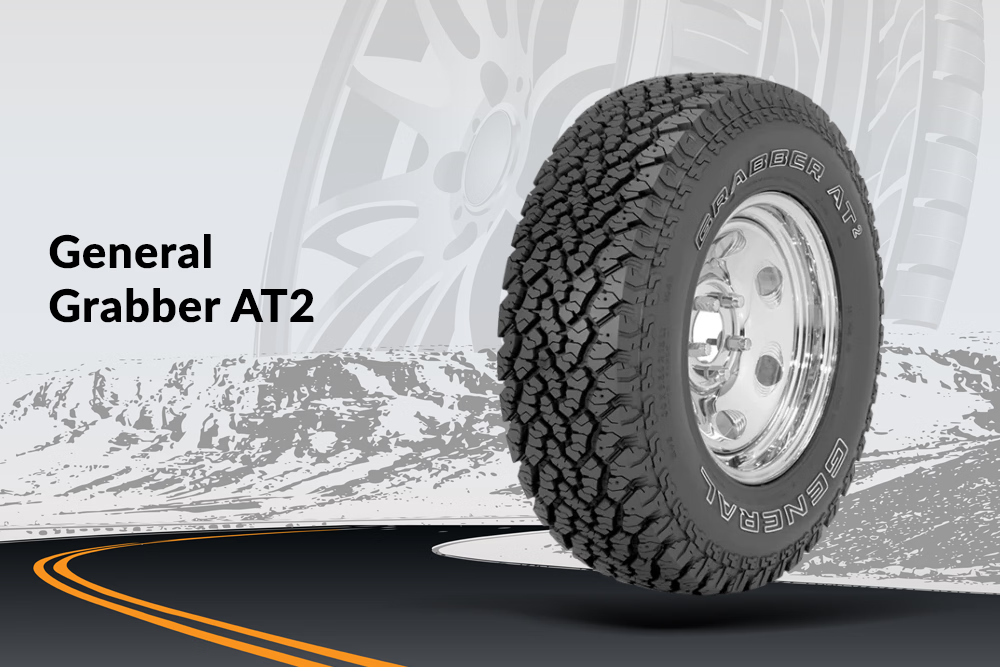
I’ve mounted a lot of all-terrain tires over the years, but few get as much genuine trail time from owners as the General Grabber AT2. After running a set through daily driving, a couple of weekend forest-road trips, and one unplanned mud bog, I’ve got a pretty clear picture of where this tire earns its keep — and where it doesn’t.
- Aggressive 5-row tread with DuraGen compound delivers strong grip in mud, gravel, and dirt
- 3-Peak Mountain Snowflake (3PMSF) rated and studdable for serious winter traction
- 60,000-mile treadwear warranty is above average for an all-terrain tire
- Highway noise and wet-braking are the main tradeoffs of the aggressive tread
- Sizes run 15″ to 20″, fitting most half-ton trucks, SUVs, and Jeeps
- Competes directly with the BFGoodrich All-Terrain T/A KO2 and Falken Wildpeak AT3W at a lower price point
Price Check
Check the price of this tire at the following retailers:
Don’t know the correct size tire to purchase? Start here!
Liked this article?
Add TireAdvise as a preferred source so you see more of our tire reviews and guides on Google.
First Impressions: What You’re Actually Buying
The General Grabber AT2 is General Tire’s mid-range all-terrain option, sitting between the more street-focused Grabber APT and the aggressive Grabber X3 mud-terrain. It’s built for owners who split their time between pavement and dirt without leaning hard into either extreme.
In my experience, that’s exactly the buyer this tire is designed for. It’s not trying to be a rock crawler’s dream tire, and it’s not a quiet highway cruiser either. It’s a middle-ground workhorse.
General Tire is a Continental subsidiary, and that engineering pedigree shows up in the AT2’s construction. The casing uses two steel belts, a two-ply polyester body, and two polyamide reinforcing plies, which is a fairly robust layup for a tire in this price bracket.
Tread Design and Construction
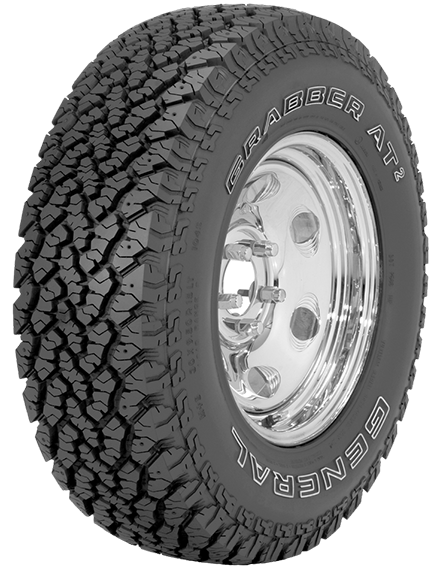
The first thing I noticed pulling the AT2 out of the box was the tread block layout. It uses a five-row pattern with independent, self-cleaning blocks designed to shed mud and rocks as the tire rotates.
General calls the rubber compound “DuraGen Technology,” which is engineered to resist cuts and chipping while staying flexible in cold temperatures. After a week of driving in cooler mornings, I didn’t notice the compound getting noticeably stiffer or harsher over rough pavement, which matters if you live somewhere with real winters.
The sidewalls are reinforced and visibly thicker than what you’d find on a highway all-season tire. During my test period, I intentionally brushed a few sharp rocks and a curb edge, and the tire showed no signs of cutting or bruising.
Interlocking Tread Blocks
One design detail worth calling out: the tread blocks interlock with each other, acting almost like a shield against debris working its way deeper into the tire’s structure. This is a small thing, but it’s the kind of detail that separates a tire built for occasional dirt roads from one built for actual off-roading.
Studdable Design
Unlike a lot of competitors in this price range, the AT2 is studdable. The tread includes small stud-ready indents, so if you live somewhere with genuinely brutal winters, you can add metal studs for extra ice traction.
I didn’t stud my test set, since studded tires aren’t legal everywhere and they accelerate road wear, but it’s a nice option to have if you need it. Check your local and state regulations before installing studs, since several states restrict or ban them entirely.
On-Road Driving Impressions
Most people buying an all-terrain tire still spend the majority of their miles on pavement, so this is where a lot of the AT2’s day-to-day reputation is made or broken.
Dry Pavement
On dry roads, the AT2 feels planted and predictable at normal highway speeds. Steering response is a little vague compared to a street tire, which is normal for anything with this much tread depth and an aggressive void ratio.
I did notice some squirm and a faint squeaking sound at low speeds, especially right after the tires were cold. It’s not alarming, just a reminder that you’re on an all-terrain tire and not a touring tire.
Braking distances felt reasonably short for the category, though I’d stop well short of calling this tire “sporty.” Hard cornering brings noticeable body roll in the tread block, which is expected given the tall, aggressive lugs.
Wet Pavement
Wet performance is where the AT2 shows its all-terrain compromises most clearly. Braking and cornering grip are adequate but not class-leading in the rain.
During a few unexpected downpours over my test period, I felt the tire hydroplane resistance was fine at normal speeds, but I backed off well before highway limits on standing water. If wet-weather performance is your top priority, I’d look at a more street-biased all-terrain tire instead.
Highway Noise and Ride Comfort
Road noise is the single most common complaint I see about this tire, and I understand why. At highway speeds on coarse pavement, there’s a persistent hum that becomes more noticeable the longer you drive.
It’s not the loudest all-terrain I’ve tested, thanks to General’s acoustic tread tuning and varied block sizing, but it’s far from silent. If your daily commute is mostly highway miles, factor this into your decision.
Ride comfort, on the other hand, impressed me. The tire absorbs small bumps and expansion joints well, and I didn’t feel harshness over potholes the way I have with some heavier mud-terrain tires.
Off-Road Performance
This is where the Grabber AT2 is designed to shine, and in my testing, it largely delivers.
Dirt and Gravel
On forest service roads and gravel, the AT2 felt confident and predictable. The stiffer sidewall construction helps it hold a line at speed on loose surfaces without feeling twitchy.
Traction accelerating out of loose gravel corners was strong, and I never felt the rear end step out unexpectedly.
Mud
The AT2 isn’t a dedicated mud-terrain tire, but it handled a moderately deep, sloppy mud section better than I expected. The self-cleaning tread pattern did its job, ejecting mud from the voids as the tire rotated rather than packing up solid.
If you’re regularly dealing with deep, sticky mud holes, you’ll eventually want something more aggressive like General’s own Grabber X3. But for occasional mud encounters, the AT2 is more than capable.
Sand and Rock
On sand, the tire’s tread design provided decent flotation without excessive digging, though airing down still helped considerably. On rocky trails, the reinforced sidewalls gave me confidence I wouldn’t easily puncture or sidewall-cut the tire on a sharp edge.
Snow and Ice
This is genuinely one of the AT2’s strongest categories. It carries the 3-Peak Mountain Snowflake (3PMSF) rating, meaning it’s certified to meet a minimum snow traction standard, similar to what’s required for dedicated winter tires.
Driving in fresh snow during my test period, the tire clawed through without much drama, and braking on packed snow felt secure. Combined with the studdable option for ice-heavy climates, this tire punches above its weight class in winter conditions.
Treadwear and Warranty
General backs the Grabber AT2 with a 60,000-mile treadwear warranty, which is genuinely competitive for an aggressive all-terrain tire — many rivals top out well below that figure.
The full warranty coverage looks like this:
- Treadwear warranty: 60,000 miles
- Uniformity warranty: First year or first 2/32″ of wear
- Materials and workmanship: Free replacement in year one or first 2/32″ of wear, then prorated through the remaining tread life
- Satisfaction trial: 30-day trial period allowing an exchange for a different General Tire model if you’re not happy
Over my test period I obviously couldn’t evaluate long-term wear, but the compound felt dense and the tread depth is generous out of the box, both good early signs for longevity.
Sizes and Fitment
The Grabber AT2 is available in a wide spread of sizes covering 15-inch through 20-inch wheels, in both passenger metric and LT-metric/flotation sizing. That means it fits everything from a Jeep Wrangler on 15s to a heavy-duty pickup running 20-inch flotation sizes.
| Wheel Diameter | Example Sizes | Typical Vehicles |
|---|---|---|
| 15″ | 235/75R15, 31X10.50R15LT, 33X12.50R15LT | Jeep Wrangler, compact SUVs |
| 16″ | 245/70R16, LT265/75R16, LT285/75R16 | Tacoma, 4Runner, Ranger |
| 17″ | 265/70R17, LT285/70R17, 33X12.50R17LT | F-150, Silverado, Tundra |
| 18″ | 275/65R18, LT275/70R18, 33X12.50R18LT | 1500-series trucks, Expedition |
| 20″ | LT275/65R20, 33X12.50R20LT, 35X12.50R20LT | F-250/F-350, Sierra 2500 |
Compatible vehicles I’d consider prime candidates include the Ford F-150 and Ranger, Chevrolet Silverado and Colorado, Toyota Tacoma and 4Runner, Jeep Wrangler and Grand Cherokee, and the Nissan Frontier and Titan.
How It Compares to the Competition
I always tell readers to cross-shop before buying, so here’s how the Grabber AT2 stacks up against two of its closest rivals.
| Tire | Treadwear Warranty | 3PMSF Rated | Studdable | Best For |
|---|---|---|---|---|
| General Grabber AT2 | 60,000 mi | Yes | Yes | Value-focused winter/off-road balance |
| BFGoodrich All-Terrain T/A KO2 | 50,000 mi | Yes | No | Sidewall durability, aggressive off-road looks |
| Falken Wildpeak AT3W | 55,000 mi | Yes | No | All-around daily driving comfort |
In my view, the AT2’s biggest advantage over both rivals is price paired with that long treadwear warranty and the studdable option. The KO2 generally edges it out in outright off-road toughness, and the Wildpeak AT3W tends to ride a bit quieter on the highway, but neither offers the same combination of value and winter capability.
Who Should Buy the General Grabber AT2
Based on my time with this tire, I’d recommend it for:
- Truck and SUV owners who split time between commuting and forest roads, campsites, or job sites
- Drivers in snowy or icy climates who want a 3PMSF-rated all-terrain without buying dedicated winter tires
- Anyone shopping on a budget who still wants a long treadwear warranty
- Owners who occasionally tow or haul and need a tire with reinforced sidewalls
I’d steer other buyers elsewhere if:
- Your driving is almost entirely highway miles and quiet ride quality is the top priority
- You need a dedicated mud-terrain tire for regular deep-mud conditions
- You want the sharpest possible dry and wet handling for spirited driving
Pricing and Where to Buy
Pricing on the Grabber AT2 varies by size, but expect to pay less than many premium all-terrain competitors for a comparable size, which is a big part of its appeal. I’d recommend comparing current pricing across a few major retailers before buying, since promotions and rebates shift throughout the year.
Retailers worth checking include TireRack, SimpleTire, Discount Tire, PriorityTire, and Amazon. If you’re unsure which size fits your vehicle, check your driver’s door jamb sticker or owner’s manual before ordering.
Maintenance Tips to Maximize Life
A few habits I always recommend for aggressive all-terrain tires like this one:
- Rotate every 5,000 to 7,000 miles to even out wear across the tread blocks
- Check tire pressure monthly, since all-terrain tires can mask low pressure more than street tires
- Air down for sand or soft mud, then re-air before returning to highway speeds
- Inspect sidewalls regularly for cuts after rocky trail runs
Load Ranges and Towing Considerations
Many of the LT-metric and flotation sizes come in Load Range D or E, which matters if you regularly tow a trailer or haul heavy equipment. Higher load range means a stiffer sidewall and higher maximum air pressure, both of which translate to better stability under load.
During a short towing test with a mid-size trailer, I noticed the AT2 held its line well and didn’t feel squirmy under the added weight. If towing is a regular part of your routine, double-check the load range on your specific size before buying, since it can vary between the passenger-metric and LT versions of the same nominal size.
Common Owner Complaints
Beyond the highway noise already mentioned, the most frequent complaint I’ve come across from other AT2 owners centers on uneven wear if rotations are skipped. This isn’t unique to the AT2, but the aggressive tread blocks seem to make it more noticeable when it happens.
A smaller number of owners have mentioned the sidewalls feeling a little soft on sharp-edged rocks compared to a heavier mud-terrain tire. I didn’t personally experience a sidewall issue during my testing, but it’s worth noting if your trails are particularly rocky.
Final Verdict
After spending real time behind the wheel with the General Grabber AT2, I think it earns its reputation as one of the better value all-terrain tires on the market. It’s not the quietest or the sharpest handling tire in its class, but the combination of genuine off-road capability, strong winter performance, and an above-average treadwear warranty makes it an easy tire to recommend for the right buyer.
If you want a do-it-all tire that won’t leave you stranded when the pavement ends, and you’re willing to trade some highway refinement for that capability, the Grabber AT2 deserves a spot on your shortlist.
Frequently Asked Questions
How long do General Grabber AT2 tires last?
In my experience, the General Grabber AT2 typically delivers between 50,000 and 60,000 miles on the tread life warranty, depending on your vehicle and driving habits. Drivers who stick to mostly highway miles with occasional off-roading tend to hit the higher end of that range. If you’re running these on a heavy truck or SUV with aggressive off-road use, expect closer to 45,000 miles before you need a replacement.
Is the General Grabber AT2 good for snow and winter driving?
The Grabber AT2 handles light to moderate snow reasonably well thanks to its aggressive tread pattern and siping, but it’s not a dedicated winter tire. I’d recommend it for drivers in states with occasional snowfall like Colorado or Pennsylvania, but if you deal with heavy winter conditions regularly, pairing it with dedicated snow tires or looking at a 3PMSF-rated alternative makes more sense. It does carry the three-peak mountain snowflake rating, so it’s a legitimate step above standard all-season tires.
How much does the General Grabber AT2 cost compared to other all-terrain tires?
You’re looking at roughly $150 to $220 per tire depending on your size, which puts it in the mid-range compared to premium options like the BFGoodrich All-Terrain T/A KO2 or Falken Wildpeak AT3W that often run $20-40 more per tire. I think this makes the Grabber AT2 a solid value pick if you want off-road capability without paying flagship pricing. Shopping around at retailers like Tire Rack or Discount Tire can also help you find seasonal discounts.
Does the General Grabber AT2 perform well off-road?
Yes, the Grabber AT2 is genuinely built for moderate off-road use, with a tread pattern that grips well on gravel, dirt trails, and mild rock crawling. I’ve found it handles mud reasonably well too, though it’s not quite as aggressive as dedicated mud-terrain tires if you’re doing serious off-roading. For weekend trail rides and light overlanding, it strikes a good balance between off-road traction and comfortable street manners.
Are General Grabber AT2 tires noisy on the highway?
Compared to more aggressive all-terrain tires, the Grabber AT2 is noticeably quieter on highway drives, which surprised me given its off-road capability. Most drivers report a moderate hum at highway speeds rather than the loud roar you’d get from mud-terrain tires. If highway noise is a top priority, it’s one of the quieter AT options in this price range, though it still won’t match a dedicated all-season touring tire.
What vehicles are the General Grabber AT2 tires best suited for?
This tire is designed primarily for pickup trucks, SUVs, and Jeeps, with size options that fit popular models like the Ford F-150, Chevy Silverado, Toyota Tacoma, and Jeep Wrangler. I’d recommend it if you split your time between daily commuting and weekend off-road trips rather than exclusively rock crawling or racing. The load ratings also make it a good choice if you’re regularly hauling gear or towing a trailer.
How does the General Grabber AT2 compare to the Goodyear Wrangler All-Terrain Adventure?
Both are strong mid-range all-terrain tires, but I’ve noticed the Grabber AT2 tends to offer a slightly smoother ride on pavement while the Goodyear Wrangler edges it out a bit in wet traction. Pricing is fairly comparable between the two, usually within $10-15 of each other per tire. If quiet highway comfort matters more to you, go with the Grabber AT2; if you prioritize wet-weather performance, the Wrangler might be the better call.
