

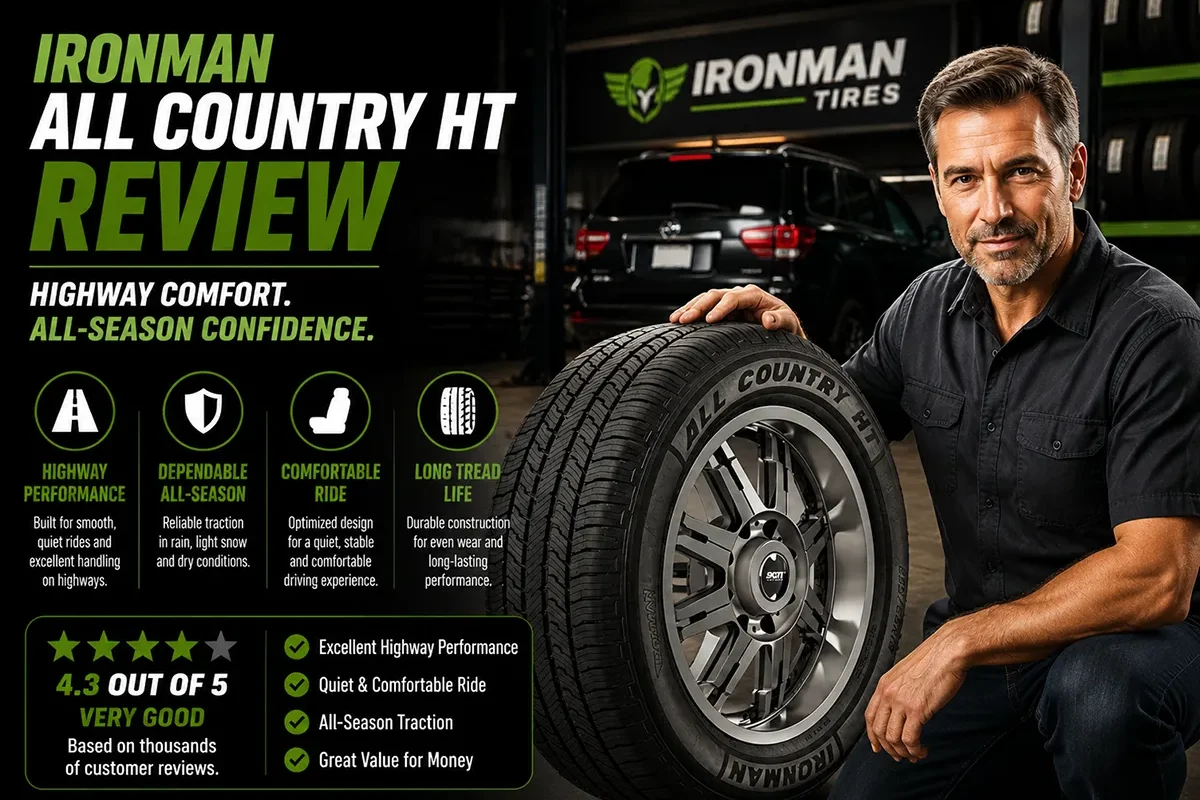
Finding a highway tire that doesn’t obliterate your wallet but still performs reliably is harder than it should be. Budget tires have a bad reputation — and honestly, a lot of them deserve it.
But every once in a while, a tire comes along at a price point that makes you do a double-take. The Ironman All Country HT is one of those tires, and I spent a serious amount of time putting it through its paces on my daily driver to see if the savings come at too steep a cost. If you’re exploring the full lineup, our complete Ironman Tires Review guide covers every model side by side.
- The Ironman All Country HT is a solid budget highway terrain tire for SUVs and light trucks
- Dry and highway performance are genuinely impressive for the price point
- Wet traction is adequate but not class-leading — exercise caution in heavy rain
- Road noise is noticeable at highway speeds but not deal-breaking
- Treadwear has been encouraging during my extended test period
- Best suited for drivers who prioritize value and do most of their driving on pavement
- Prices typically range from $85–$140 per tire depending on size — a real bargain
Price Check
Check the price of this tire at the following retailers:
SimpleTire PriorityTire Amazon DiscountTire TireRackDon’t know the correct size tire to purchase? Start here!
Liked this article?
Add TireAdvise as a preferred source so you see more of our tire reviews and guides on Google.
What Is the Ironman All Country HT?
The Ironman All Country HT is a highway terrain (HT) tire designed for SUVs, crossovers, and light trucks. It’s manufactured by Hercules Tire, which is a subsidiary of American Tire Distributors — one of the largest tire distributors in North America.
This tire is squarely aimed at everyday drivers who spend the vast majority of their time on paved roads. It’s not meant for off-roading, and it doesn’t pretend to be. What it does promise is comfortable highway cruising, reasonable all-season traction, and a price tag that undercuts most name-brand competitors by a significant margin.
It comes with a 70,000-mile treadwear warranty, which is genuinely competitive — even some premium tires in this category don’t offer that level of coverage. Available in a wide range of sizes from 15 to 20 inches, it fits a substantial portion of the SUV and light truck market.
My Test Setup and Driving Conditions
I installed a set of four Ironman All Country HT tires on my 2018 Chevy Equinox in the 225/65R17 size. This is a popular fitment for midsize crossovers, so my experience should translate well for a lot of readers shopping in this segment.
During my test period, I drove across a mix of conditions that I think represent what most American drivers encounter regularly. That includes daily commuting on suburban roads, extended highway stretches on interstates, some light gravel roads in rural areas, and driving through multiple rain events — including a couple of genuine downpours.
I live in the mid-Atlantic region of the US, so I experienced temperatures ranging from the mid-30s to the upper 80s Fahrenheit during my evaluation. I did not test these in snow, and I wouldn’t recommend them as a primary winter tire — they’re all-season, not all-weather, and there’s a meaningful difference.
Dry Performance: Where This Tire Shines
Let me start with where the Ironman All Country HT genuinely impressed me — dry pavement performance. From the first day I had them mounted, the grip on dry roads felt confident and predictable. That’s exactly what you want from a highway tire.
Highway on-ramps and moderate-speed cornering felt stable. There’s no vagueness in the steering response that I sometimes experience with ultra-budget tires. The contact patch feels planted, and the symmetric tread design does a good job of distributing load evenly.
During spirited driving on winding back roads, the tire communicated well through the steering wheel. I could feel when I was approaching the limits of grip, which gave me confidence to push a bit harder. To be clear, this isn’t a performance tire and it won’t rival a Michelin Defender, but for a tire at this price point, the dry grip exceeded my expectations.
Braking on dry pavement was also solid. I performed several hard stops from highway speeds and the tire responded predictably every time without any alarming behavior. No excessive nosedive, no unexpected sliding — just steady, controlled deceleration.
Wet Performance: Adequate With Caveats
Wet traction is where budget tires typically reveal their cost-cutting, and the Ironman All Country HT is no exception — though it’s better than I feared.
In light to moderate rain, the tire performs respectably. The four circumferential grooves do a decent job of channeling water away from the contact patch, and I felt reasonably secure driving at normal speeds on wet highways. Hydroplaning resistance was acceptable at legal speeds.
However, in heavy rain — the kind of torrential downpour you get during summer storms in the Southeast or mid-Atlantic — I noticed the limits. There was a perceptible reduction in grip during hard braking on soaked roads, and I felt the tires lose traction momentarily a couple of times when hitting standing water at highway speeds.
I want to be fair here: premium tires from Michelin, Continental, or Bridgestone handle these extreme wet conditions noticeably better. But they also cost 40-60% more per tire. For everyday rain driving and being sensible about reducing speed in storms, the All Country HT is adequate. Just don’t expect it to inspire confidence in the worst conditions.
Wet Performance Tips
- Reduce your speed by 5-10 mph in heavy rain — this tire rewards caution
- Keep inflation pressures at the manufacturer-recommended spec for optimal water evacuation
- Replace these tires before they reach 4/32″ tread depth — wet performance degrades faster on budget compounds
Road Noise and Comfort
Here’s an area where I have mixed feelings. On freshly paved asphalt, the Ironman All Country HT is reasonably quiet. I wouldn’t call it whisper-silent, but the cabin noise is absolutely livable and comparable to many mid-tier tires.
On coarser road surfaces — the kind of rough chip-seal pavement you find on a lot of state highways — the noise becomes more noticeable. There’s a consistent hum that sits in the background at speeds above 55 mph. It’s not harsh or grating, but passengers who are sensitive to road noise will notice it.
Ride comfort, on the other hand, is a genuine strength. The sidewall construction absorbs small road imperfections effectively, and the tire doesn’t transmit a lot of harshness into the cabin. Expansion joints, small potholes, and rough patches are all handled with a composure that honestly surprised me for a tire in this price range.
After several days of extended highway driving — including a road trip that covered hundreds of miles in a single stretch — I stepped out of the car without the kind of fatigue that poorly isolating tires can cause. That’s a meaningful real-world benefit that I think a lot of buyers will appreciate.
Treadwear and Longevity
The 70,000-mile treadwear warranty is one of the strongest selling points of the Ironman All Country HT, and during my test period, the wear patterns have been encouraging.
After several weeks of daily driving plus some longer highway trips, the tread depth measurements I took at multiple points across all four tires showed even wear. There were no signs of cupping, feathering, or irregular wear patterns — all of which can plague cheaper tires.
The UTQG treadwear rating on this tire is 560, which is moderate. It suggests the compound isn’t the hardest or the softest, which aligns with what I experienced: a reasonable balance between grip and longevity.
I should note that treadwear is heavily influenced by alignment, inflation pressure, and driving habits. I kept my tire pressures at the factory-recommended 35 psi, had a fresh alignment done at installation, and drive in a manner I’d describe as “spirited but not aggressive.” Your results may vary based on your own habits and vehicle setup.
Off-Road and Gravel Road Performance
I want to address this because I know some buyers with SUVs and trucks will wonder if the All Country HT can handle unpaved roads. The short answer: kind of, but with limits.
On well-maintained gravel roads, the tire did fine. I drove several stretches of county gravel roads at reasonable speeds and the tire maintained grip without any drama. Light dirt roads were also manageable.
But this is emphatically not an all-terrain tire. The tread pattern lacks the aggressive biting edges and wider void areas that true AT tires have. If you encounter mud, soft sand, or rocky terrain, you’ll be out of your depth quickly. For anything beyond light gravel or packed dirt, look at the Ironman All Country AT instead.
How Does It Compare? Ironman All Country HT vs. The Competition
No tire review is complete without context. Here’s how the Ironman All Country HT stacks up against some of the most commonly cross-shopped alternatives in the budget to mid-range highway tire category.
| Feature | Ironman All Country HT | Cooper Discoverer HTP II | Hankook Dynapro HT | Firestone Destination LE3 |
|---|---|---|---|---|
| Price Range (per tire) | $85–$140 | $140–$195 | $110–$170 | $130–$190 |
| Treadwear Warranty | 70,000 miles | 70,000 miles | 70,000 miles | 70,000 miles |
| Dry Performance | Good | Very Good | Very Good | Excellent |
| Wet Performance | Adequate | Good | Good | Very Good |
| Road Noise | Moderate | Low | Low-Moderate | Low |
| Ride Comfort | Good | Very Good | Good | Very Good |
| UTQG Treadwear | 560 | 700 | 640 | 700 |
As the table makes clear, the Ironman All Country HT doesn’t lead the pack in any single performance category. But look at that price column. The cost savings per tire — multiplied by four — can easily add up to $200-$400 in your pocket compared to the mid-range alternatives.
For drivers who need dependable, everyday highway performance without premium aspirations, that math is hard to argue with.
Ironman All Country HT vs. Cooper Discoverer HTP II
The Cooper is the better tire, period. It’s quieter, grips better in the wet, and has a more refined road feel. But it costs roughly 50-60% more per tire. If budget is no concern, the Cooper wins. If you’re watching your wallet, the Ironman offers about 80% of the performance at 60% of the price.
Ironman All Country HT vs. Hankook Dynapro HT
This is a closer comparison. The Hankook is a step up in wet grip and refinement, but the price gap is narrower. I’d say the Hankook is worth the modest premium if you can swing it, especially if you drive frequently in rainy conditions. But if you’re on a tight budget, the Ironman holds its own here.
Ironman All Country HT vs. Firestone Destination LE3
The Firestone is arguably the best tire in this comparison — smooth, quiet, excellent wet performance. But it’s also the most expensive. For drivers in the Pacific Northwest or Southeast where rain is constant, the Firestone’s wet performance advantage could be worth the extra investment. For drivers in drier climates, the Ironman closes that gap significantly.
Tread Design and Technology Breakdown
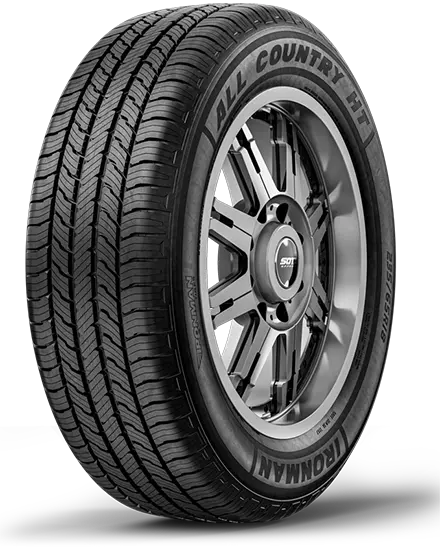
Let me get a bit more technical for readers who care about what’s happening at the engineering level. The Ironman All Country HT uses a symmetric tread pattern, which is common in the highway tire segment because it promotes even wear and allows for tire rotation in any position.
The tire features four wide circumferential grooves that serve as the primary water evacuation channels. Between these grooves, the tread blocks are equipped with lateral siping that helps with wet traction and provides additional biting edges in light winter conditions.
The center rib is continuous, which is key for highway stability and consistent contact with the road surface during straight-line driving. The shoulder blocks are slightly larger than the center blocks, which helps with cornering stability and distributes load during turns.
One thing I noticed is that the rubber compound feels slightly softer than some competing HT tires when I pressed my thumbnail into the tread surface. This likely contributes to the good dry grip and comfortable ride, but it may also mean the 70,000-mile warranty is optimistic for aggressive drivers. Time will tell on the long-term wear, but as I mentioned, early indicators are positive.
What Sizes Are Available?
The Ironman All Country HT is available in a solid range of sizes that cover most popular SUVs, crossovers, and light trucks in the US market. Here are some of the most common fitments:
- P225/65R17 — fits Chevy Equinox, Ford Escape, Toyota RAV4
- P235/70R16 — fits Jeep Grand Cherokee, Ford Explorer, Toyota 4Runner
- P245/65R17 — fits Chevy Traverse, GMC Acadia, Honda Pilot
- P265/70R17 — fits Chevy Silverado 1500, Toyota Tacoma, Ford F-150
- P245/60R18 — fits Dodge Durango, Jeep Grand Cherokee
- P275/55R20 — fits Chevy Tahoe, GMC Yukon, Ford Expedition
- P235/75R15 — fits older model trucks and SUVs
The full size lineup includes additional P-metric and LT-metric options. I’d recommend checking directly with your preferred tire retailer for availability in your specific size, as some of the less common fitments may need to be ordered.
Who Should Buy the Ironman All Country HT?
After spending extensive time with this tire, I have a pretty clear picture of who it’s best suited for. Let me break it down:
This Tire Is Great For:
- Budget-conscious drivers who need reliable highway performance without breaking the bank
- Commuters who spend most of their time on paved roads and highways
- Drivers in drier climates (Southwest, Mountain West, Southern California) where wet performance is less critical
- Used car owners who need to replace tires affordably on a vehicle they may not keep long-term
- Fleet vehicles and work trucks that prioritize cost-per-mile over luxury refinement
This Tire Is NOT Ideal For:
- Drivers in the Pacific Northwest or Southeast who deal with constant heavy rain — consider a tire with better wet traction
- Anyone who needs winter capability — get dedicated winter tires or at minimum a tire with the Three-Peak Mountain Snowflake (3PMSF) symbol
- Off-road enthusiasts — even occasional trail use will quickly expose this tire’s limitations
- Noise-sensitive drivers who prioritize a near-silent cabin — spend the extra money on a Cooper or Firestone alternative
Where to Buy and What to Expect to Pay
The Ironman All Country HT is widely available through online tire retailers and many brick-and-mortar shops across the US. I’ve seen it consistently stocked at the following retailers:
- Discount Tire / America’s Tire — often has competitive pricing and free mounting
- Tire Rack — great for comparing and shipping to a local installer
- Walmart Auto Center — frequently the lowest per-tire price
- Amazon — convenient but factor in mounting/balancing costs separately
- Priority Tire and SimpleTire — online-only retailers that often run promotions
Pricing varies by size, but for the most popular sizes you can expect to pay between $85 and $140 per tire. For a set of four in the common 225/65R17 size, I’ve seen total costs (before mounting and balancing) in the $360–$420 range. That’s roughly $200–$300 less than a set of four Firestone Destination LE3 or Cooper Discoverer HTP II tires.
Don’t forget to factor in mounting, balancing, valve stems, and disposal fees, which typically add $15–$25 per tire at most shops. Some retailers bundle these costs or offer promotions that include free installation.
Installation Tips and Maintenance
A few practical notes from my experience that I think will help you get the most out of these tires:
Get an alignment at installation. I cannot stress this enough. A proper four-wheel alignment costs $80–$120 and can be the difference between even treadwear and premature replacement. Budget tires are more sensitive to alignment issues than premium options with harder compounds.
Check pressures monthly. I found these tires performed best at the vehicle manufacturer’s recommended pressure (usually found on the driver’s door jamb sticker). Over-inflating led to a slightly harsher ride and center wear; under-inflating made the steering feel sluggish and increased shoulder wear.
Rotate every 5,000–7,500 miles. I followed a front-to-rear rotation pattern (my vehicle is front-wheel drive), and the wear remained impressively even across all four tires. Don’t skip rotations on budget tires — it’s the single most impactful thing you can do to maximize their lifespan.
Warranty Details
The Ironman All Country HT comes with a 70,000-mile treadwear warranty, which is backed by Hercules Tire. The warranty is prorated, meaning if the tires wear out before reaching the warranted mileage, you’ll receive a credit toward replacement tires based on the remaining mileage.
To maintain warranty eligibility, you’ll need to keep records of tire rotations performed at proper intervals. Most shops will provide documentation, and I recommend keeping a simple folder or digital file with your receipts.
There’s also a 30-day ride guarantee, which allows you to return the tires if you’re not satisfied with the ride quality. I think this is a smart move by Ironman — it lowers the risk for first-time buyers who are nervous about trying a budget brand.
My Final Verdict on the Ironman All Country HT
After extensive testing across varied conditions and surfaces, I can confidently say the Ironman All Country HT delivers on its core promise: dependable highway performance at a budget-friendly price. It’s not going to win any tire-of-the-year awards, and it shouldn’t — that’s not what it’s designed to do.
What it does exceptionally well is provide safe, predictable, and comfortable performance for everyday driving at a price that makes replacing all four tires far less painful. The dry performance genuinely surprised me, the ride comfort is above average for the segment, and the early treadwear signs suggest it could realistically approach that 70,000-mile warranty figure with proper care.
The areas where it falls short — wet traction in extreme conditions and road noise on coarse pavement — are real compromises, but they’re compromises I think most budget-conscious buyers can live with, especially if they adjust their driving habits accordingly.
If I were advising a family member who drives a crossover or SUV, does mostly highway commuting, and asked me for a tire recommendation under $120 per tire, the Ironman All Country HT would absolutely be on my short list. It’s not the best tire you can buy, but it might be the best tire you can buy for the money — and for a lot of American drivers, that distinction matters more than anything else.
My Rating: 7.5 / 10 — A genuinely competitive budget highway tire that punches above its weight class in dry performance and ride comfort, held back by mediocre wet traction and moderate road noise.
Frequently Asked Questions
Is the Ironman All Country HT a good tire for everyday highway driving?
The Ironman All Country HT is a solid budget-friendly highway terrain tire that performs well for daily commuting and long road trips. It delivers a comfortable, quiet ride on paved roads and handles light rain reasonably well for its price point. I’d recommend it for drivers who stick mostly to highways and suburban streets and want decent performance without the premium price tag.
How long do Ironman All Country HT tires last?
The Ironman All Country HT comes with a 65,000-mile treadwear warranty, which is competitive for a budget all-season highway tire. Real-world longevity depends on driving habits, alignment, and rotation schedule, but many owners report getting 50,000 to 60,000 miles with proper maintenance. Rotating your tires every 5,000 to 7,000 miles will help you get the most life out of them.
How much do Ironman All Country HT tires cost?
Ironman All Country HT tires typically range from $90 to $160 per tire depending on the size, with most popular SUV and truck sizes falling in the $100 to $130 range. That makes them one of the most affordable highway terrain options on the US market. You can often find additional rebates or bundle deals at retailers like Discount Tire, Tire Rack, and Walmart.
How does the Ironman All Country HT perform in rain and wet conditions?
The Ironman All Country HT features circumferential grooves and lateral sipes designed to channel water away from the contact patch, and wet traction is adequate for moderate rain. However, it does not match the hydroplaning resistance of premium tires like the Michelin Defender LTX M/S. If you frequently drive in heavy rain or on flooded roads, you may want to consider a higher-tier tire, but for typical US wet road conditions it gets the job done.
Is the Ironman All Country HT good in snow and winter driving?
The Ironman All Country HT is an all-season tire that can handle light dustings of snow and occasional cold weather, but it is not rated with the Three-Peak Mountain Snowflake (3PMSF) symbol. If you live in northern US states that see regular snowfall or icy conditions, I would not rely on this tire as a winter solution. For occasional cold snaps in moderate climates, it performs acceptably, but dedicated winter tires or a more winter-capable all-season would be a safer choice.
Who makes Ironman All Country HT tires, and are they a trustworthy brand?
Ironman tires are manufactured by Hercules Tire, which is a subsidiary of American Tire Distributors and operates under the Cooper Tire umbrella now owned by Goodyear. This means the Ironman All Country HT benefits from established manufacturing processes and quality control standards. While Ironman is positioned as a budget brand, it has built a reliable reputation among US drivers looking for affordable replacement tires backed by solid warranties.
How does the Ironman All Country HT compare to the Cooper Discoverer HTP II and Hankook Dynapro HT?
The Ironman All Country HT is priced significantly lower than both the Cooper Discoverer HTP II and the Hankook Dynapro HT, often saving you $30 to $50 per tire. In terms of ride comfort and highway noise, the Cooper and Hankook have a slight edge, and both offer somewhat better wet and dry grip. However, the Ironman All Country HT closes the gap impressively for its price, making it the better value pick if you want a dependable highway tire on a tight budget.
