


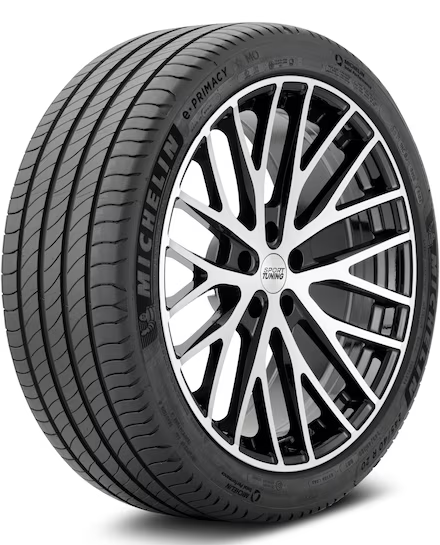
The Michelin e.Primacy carries a genuinely clear brief: low rolling resistance, quiet running, and everyday comfort, built specifically around the efficiency demands of hybrids and EVs alongside traditional gas commuters.
Most reviews of this tire simply repeat that efficiency positioning without checking it against real test data. Here’s what independent testing actually found, including one genuinely surprising result worth knowing before you buy.
This review is based on manufacturer specifications, aggregated professional and owner test data, and real long-term reports — not a single set of personal impressions.
- What it is: A premium summer touring tire with an eco-first brief, prioritizing low rolling resistance, quiet running, and comfort for gas, hybrid, and EV drivers.
- Real strengths: Class-leading dry braking, exceptional comfort, low noise, strong wear characteristics for high-mileage cost savings.
- Real weaknesses: Wet-road confidence shows a narrower safety margin in some testing, particularly in standing water, and at least one independent test specifically flagged rolling resistance as a weak point despite the tire’s eco-focused branding.
- The catch: Averaged across 7 independent professional tests, this tire finishes 9th on average — a genuinely modest overall standing rather than a dominant one, worth knowing honestly before assuming “eco tire” means “top performer.”
- Bottom line: A genuinely strong choice for comfort, quiet, and dry braking, particularly for high-mileage commuters and EV owners who prioritize refinement — but not a tire to buy purely on efficiency claims without checking the fine print.
Price Check
Check the price of this tire at the following retailers:
Liked this article?
Add TireAdvise as a preferred source so you see more of our tire reviews and guides on Google.
A Genuinely Surprising Finding on Rolling Resistance
This is worth addressing directly, since it cuts against the tire’s entire marketing premise and most reviews don’t mention it at all, instead simply repeating the manufacturer’s efficiency claims without checking them against real, independent test outcomes.
In one detailed independent test — a head-to-head comparison where the e.Primacy finished as the runner-up “strongest replacement option,” described as quiet and strong under dry braking — the tire’s rolling resistance was specifically listed among its weak points, not its strengths, while the winning tire in that same test (the Giti Control P10) beat it specifically on rolling resistance and EV efficiency.
That’s a genuinely notable result for a tire whose entire positioning centers on efficiency, and it’s the kind of finding a marketing-driven review would have every incentive to leave out.
It doesn’t mean the e.Primacy is inefficient in absolute terms — it remains a genuine touring tire with real efficiency engineering — but it means the tire didn’t win on its own signature strength in at least one credible, independent, head-to-head comparison against a direct competitor.
That’s worth knowing rather than assuming the “eco” branding guarantees class-leading efficiency in every test.
Separately, broader aggregated data across the tire’s full independent test history describes it standing out “for efficiency (useful for EV range or fuel economy) and strong wear” — so the picture is genuinely mixed rather than uniformly negative.
The honest takeaway: efficiency is a real, documented strength in the tire’s broader test history, but it’s not an unchallenged, guaranteed win in every single independent comparison, and at least one detailed test found a direct competitor beating it on exactly that metric.
An Honest Look at the Tire’s Overall Test Standing
This is also worth reporting plainly rather than glossing over. Aggregated data from independent test tracking shows the e.Primacy tested 7 times by independent publications, averaging a 9th-place finish across those tests.
That’s a genuinely modest overall standing — not a poor tire by any means, but not a dominant, always-wins-the-comparison performer either.
This context matters for setting realistic expectations: the e.Primacy is a strong, well-rounded touring tire with real, specific standout strengths (detailed below), rather than an across-the-board category leader in every test it’s entered.
What the e.Primacy Actually Is
The e.Primacy is a premium summer touring tire, positioned by Michelin around comfort, quiet, and efficiency rather than outright performance or all-season versatility.
It’s a summer-only tire, not rated for winter use, and it sits within Michelin’s broader Primacy family alongside the Primacy 4, Primacy A/S, and Primacy Tour A/S — related products with different specific priorities.
Michelin markets the e.Primacy specifically toward drivers who want a genuinely quiet, comfortable daily-driving experience with real efficiency benefits, whether that’s stretching EV range, improving gas-engine fuel economy, or simply minimizing long-term running costs through strong tread life.
Dry Performance
This is the e.Primacy’s clearest, most consistently documented strength, and it’s a genuinely strong one. Independent aggregated testing describes class-leading dry braking, with a specific measured stopping distance of 36.1 meters — a real, concrete figure rather than a vague marketing claim.
Aggregated professional test data specifically lists “Dry Braking” and “Dry Handling,” both objective and subjective measures, among the tire’s strong points across the tested field. This is a genuinely meaningful result, since dry braking distance is one of the most safety-relevant, directly comparable metrics in tire testing.
Wet Performance
This is where the picture gets more nuanced, and it’s worth reporting honestly rather than picking one favorable data point.
Broader aggregated analysis across the tire’s full test history describes the main compromise as “wet-road confidence, where many drivers and tests point to a narrower safety margin, particularly in standing water and aquaplaning” — a real, specific limitation worth taking seriously for drivers in genuinely rain-heavy climates.
At the same time, at least one specific detailed test lists “Subj. Wet Handling,” “Wet Braking,” and “Wet Handling” among the tire’s strong points in that particular comparison.
This isn’t necessarily a contradiction — different tests use different methodologies, vehicles, and comparison fields, and results can genuinely vary test to test.
The honest synthesis: wet braking performance appears solid in direct instrumented testing, but the tire’s margin specifically in standing water and aquaplaning resistance is a more consistently flagged concern across the broader aggregated picture.
Ride Comfort and Noise
This is a genuine, consistently strong category across every source reviewed. Aggregated testing describes the e.Primacy tying for first place in subjective comfort assessment — a real, standout result rather than simply “acceptable” comfort.
Noise performance is equally strong. Independent aggregated data specifically lists both “Noise” and “Rough Noise” among the tire’s strong points, and one detailed head-to-head test specifically described it as “quiet” even while finishing as the runner-up overall in that comparison — meaning even in a test it didn’t win outright, comfort and quiet remained genuine, documented advantages.
Tread Life and Wear
Independent aggregated data describes “strong wear” as one of the e.Primacy’s consistent, documented characteristics, directly supporting Michelin’s positioning around low long-term running costs for high-mileage drivers.
This matters specifically for the tire’s target audience — commuters and EV owners who rack up significant annual mileage benefit disproportionately from a tire that combines genuine efficiency with real longevity, since both factors compound over the life of the tire to reduce total cost of ownership.
Efficiency and EV Suitability
Given the tire’s core positioning, this deserves direct treatment beyond the rolling-resistance caveat covered above.
Broader aggregated data confirms the e.Primacy genuinely “stands out for efficiency (useful for EV range or fuel economy)” across its overall test history, even accounting for the specific test where a competitor beat it on that exact metric.
One detailed test specifically noted the tire “suits Tesla Model 3 owners who value cabin refinement and long life over ultimate range” — a genuinely useful, specific piece of guidance distinguishing this tire’s real strengths (comfort, longevity) from its comparatively less dominant efficiency positioning relative to at least one direct competitor.
The practical takeaway for EV shoppers: if maximum range extension is the single top priority, it’s worth cross-shopping against efficiency-focused alternatives like the Giti Control P10 mentioned in the test above. If comfort, quiet, and long-term durability matter as much or more than squeezing out the last percentage point of range, the e.Primacy remains a genuinely strong choice.
How the e.Primacy Compares to the Michelin Primacy 4
Since these are closely related Michelin touring tires that shoppers commonly cross-reference, it’s worth a direct comparison.
The Primacy 4 is positioned similarly around refinement, safety, and low running costs, with independent aggregated data describing it as “widely experienced as quiet and comfortable, with particularly strong dry braking and generally dependable wet braking” — genuinely similar strengths to the e.Primacy.
The Primacy 4’s own documented weak points are described as “steering feel and wet performance in deeper water, alongside a high upfront price,” a notably similar wet-weather caveat to the e.Primacy’s own documented aquaplaning concern.
The practical distinction: the e.Primacy leans more explicitly into efficiency-first positioning, while the Primacy 4 is framed more broadly around overall refinement and safety without the same specific EV/efficiency emphasis. For non-EV drivers who don’t specifically need the efficiency focus, either tire represents a similar, strong touring option with comparable trade-offs.
Who the e.Primacy Makes Sense For
High-mileage commuters who prioritize comfort and long-term cost. The combination of genuine comfort, quiet, and strong tread life makes this a sensible default for drivers logging significant annual miles.
EV and hybrid owners who value refinement over squeezing out maximum range. Given the specific test finding that a competitor beat it on efficiency, drivers whose absolute top priority is maximum range should cross-shop, but those who want a genuinely quiet, comfortable ride alongside solid (if not class-leading) efficiency will be well served.
Drivers in dry-to-moderate climates. Given the tire’s genuinely strong dry braking and the more honestly-documented wet-road margin concern, this tire is best suited to climates where standing water and heavy aquaplaning risk aren’t a constant, daily factor.
Who Should Consider Alternatives
EV owners chasing maximum range above all else. Given the specific documented test result where a direct competitor won on rolling resistance and EV efficiency, range-maximizing shoppers should genuinely cross-shop rather than assume the “eco” branding guarantees a win.
Drivers in consistently heavy-rain climates. Given the more consistently flagged standing-water and aquaplaning margin concern in the broader aggregated data, owners in the Pacific Northwest, Southeast, or similarly rain-heavy regions should weigh this limitation seriously.
Shoppers assuming this is the single best-tested option in its category. Given the honest 9th-place average finish across 7 independent tests, this is a strong, well-rounded tire rather than an unambiguous category leader — worth knowing before assuming “Michelin” alone guarantees a top-tier result in every comparison.
Sizing and Availability
The e.Primacy is available across a range of sizes covering common sedan and crossover fitments, with sizing generally overlapping the popular sizes used by mainstream gas, hybrid, and EV passenger vehicles in the US market.
Given its EV-friendly positioning, confirming whether a specific size carries any EV-specific load or construction designation is worth doing before ordering, since some manufacturers reserve reinforced or specifically-tuned variants for particular sizes rather than offering them across the entire size range.
As with any tire purchase, checking the exact size against the vehicle’s door jamb placard remains the safest first step, since sizing can vary meaningfully by trim and model year even on the same vehicle nameplate.
What Real Owners Say vs. What Test Labs Measure
There’s a genuinely useful pattern worth understanding here, similar to what shows up across many premium touring tires: owner sentiment and instrumented lab testing don’t always tell exactly the same story, and knowing why helps make sense of the tire’s overall reputation.
Owners generally report satisfaction with the tire’s comfort and quiet characteristics, consistent with the strong subjective comfort scores in aggregated testing — this is an area where real-world experience and lab measurement align closely, which lends genuine credibility to both sources when they agree.
Where the picture gets more textured is efficiency and wet-weather confidence, the two areas covered in detail above.
Owners who specifically cross-shopped this tire against efficiency-focused alternatives, or who drive in consistently wet climates, are the ones most likely to notice the nuances documented in independent testing — a reminder that how a tire performs for any individual driver depends heavily on which specific priorities and conditions matter most to them, not just an aggregate score.
Getting the Most Out of This Tire
Check tire pressure regularly, especially for EV owners. Given how directly rolling resistance ties to real-world efficiency, maintaining correct inflation pressure is one of the simplest, most effective ways to maximize whatever efficiency benefit this tire does offer.
Rotate on a consistent schedule. Regular rotation every 5,000–7,500 miles helps preserve the tire’s documented strong wear characteristics and keeps performance consistent across all four corners.
Weigh a genuine wet-weather alternative if you drive in consistently heavy rain. Given the honestly-documented standing-water and aquaplaning concern, drivers in the Pacific Northwest, Southeast, or similar climates should factor this into their decision rather than assuming “Michelin” alone guarantees class-leading wet performance.
Compare directly against efficiency-focused competitors if range is the top EV priority. Given the specific test result showing a competitor winning on rolling resistance, a direct side-by-side comparison against alternatives is a genuinely worthwhile step for range-focused shoppers before committing.
How the e.Primacy Fits the Broader Eco-Touring Tire Landscape
Positioned honestly, the e.Primacy competes in a genuinely crowded segment. Low-rolling-resistance touring tires have become a real priority for nearly every major manufacturer as EV adoption grows, and the Giti Control P10 mentioned throughout this review is just one of several credible competitors now chasing the same efficiency-and-comfort brief.
That competitive pressure is part of why the specific test result on rolling resistance matters — it’s a genuine signal that the eco-touring category has gotten more competitive rather than being dominated by any single brand’s marketing claims. A tire that would have led this category outright five years ago now has to earn that position against real, tested alternatives.
The e.Primacy’s real differentiator within that crowded field isn’t outright efficiency dominance — it’s the combination of genuine comfort, class-leading dry braking, and strong tread life alongside solid (rather than table-topping) efficiency. For shoppers who want that specific combination rather than chasing the single best rolling-resistance number available, it remains a genuinely strong choice.
Frequently Asked Questions
Is the Michelin e.Primacy actually more efficient than other tires?
The picture is genuinely mixed. Broader aggregated data across its full test history confirms real efficiency strength, useful for EV range or fuel economy. However, at least one specific, detailed independent test found a direct competitor (the Giti Control P10) beating it specifically on rolling resistance and EV efficiency, with the e.Primacy’s own rolling resistance flagged as a weak point in that particular comparison.
Is the Michelin e.Primacy good in the rain?
It’s genuinely mixed depending on the specific measure. Direct instrumented wet braking testing shows solid results in at least one detailed comparison, but broader aggregated analysis across the tire’s full test history consistently flags a narrower safety margin specifically in standing water and aquaplaning resistance as the tire’s main compromise.
How does the Michelin e.Primacy compare to other tires overall?
Honestly, it’s a solid rather than dominant performer — aggregated data shows it tested 7 times by independent publications with an average finish of 9th place. Its clearest standout strengths are class-leading dry braking, exceptional comfort, and strong tread life, rather than winning outright across every measured category.
Is the Michelin e.Primacy good for Tesla and other EVs?
Yes, with a specific caveat. One detailed test specifically recommends it for “Tesla Model 3 owners who value cabin refinement and long life over ultimate range” — meaning it’s a genuinely strong choice for EV owners prioritizing comfort and longevity, but not necessarily the top pick for owners chasing maximum possible range above all else.
What’s the difference between the Michelin e.Primacy and the Primacy 4?
Both are premium touring tires with similar core strengths — quiet, comfortable, strong dry braking — and similar documented weak points around wet-road margin in deeper water. The e.Primacy leans more specifically into efficiency-focused, EV-friendly positioning, while the Primacy 4 is framed more broadly around overall refinement and safety.
How long does the Michelin e.Primacy tire last?
Independent aggregated data specifically describes “strong wear” as one of the tire’s consistent characteristics, supporting Michelin’s positioning around low long-term running costs — genuinely valuable for high-mileage commuters and EV owners who benefit disproportionately from combining efficiency with real longevity.
Is the Michelin e.Primacy worth buying over a cheaper touring tire?
For drivers who genuinely prioritize comfort, quiet, and dry-weather braking performance, yes — those strengths are real and well-documented across independent testing. Budget-conscious shoppers, or those in consistently heavy-rain climates, should weigh the tire’s honestly-reported wet-road margin concern and its more modest overall aggregated test standing before assuming it’s an automatic best-in-class choice.

Nice review, Tyler. I have been using the Michelin Primacy on my Tata Nexon EV, so I was curious about the e.Primacy. I liked that you covered both the strengths and the weak points, like rolling resistance and wet grip. Looking forward to seeing how this new version performs. Thanks for the useful info.