


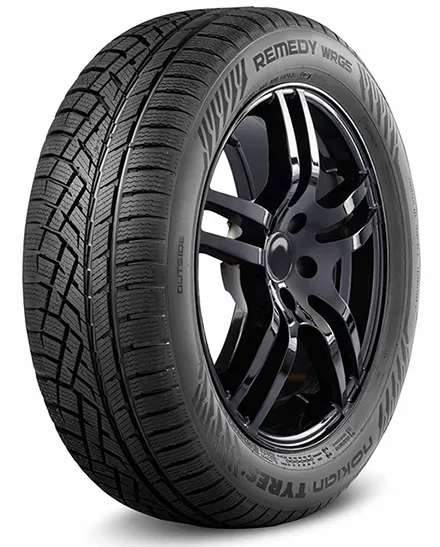
Nokian invented the all-weather tire category more than two decades ago, and the Remedy WRG5 is its sixth-generation attempt at that formula — a single tire meant to replace the seasonal swap between summer and winter rubber for drivers who see real snow but not constant, severe winter.
Here’s what most reviews of this tire skip over: its predecessor, the WR G4, had real, documented owner complaints — premature dry rot, performance that deteriorated over a few years of service, and a notably harsh, noisy ride. Nokian’s own customer service team acknowledged these complaints directly on a public forum. This review looks at whether the WRG5 actually addresses them.
This is based on manufacturer specifications, aggregated owner reports, and real long-term data — not a single set of personal impressions.
- What it is: Nokian’s sixth-generation all-weather tire, 3PMSF-certified, built for passenger cars, SUVs, and CUVs, sold exclusively in North America in over 70 sizes.
- Real strengths: Excellent snow traction, genuinely strong wet-weather grip with minimal hydroplaning, Aramid-reinforced sidewalls with a real pothole protection warranty, low rolling resistance, quiet on asphalt.
- Real weaknesses: Handling is the lowest-rated category among owners, road noise increases on grooved concrete, and — as with any all-weather tire — it’s a genuine compromise rather than matching a dedicated winter tire on pure ice.
- The catch: The predecessor WR G4 had documented durability complaints (dry rot, performance decline over time); the WRG5 was specifically engineered to address this, and early evidence is encouraging but the tire hasn’t yet had years to prove long-term durability the way the G4’s track record eventually did, for better or worse.
- Bottom line: A genuinely strong all-weather option backed by real engineering improvements over a well-loved but flawed predecessor — a sensible default for drivers in moderate-to-serious winter climates who don’t want a seasonal swap.
Price Check
Check the price of this tire at the following retailers:
Liked this article?
Add TireAdvise as a preferred source so you see more of our tire reviews and guides on Google.
Did the WRG5 Actually Fix the WR G4’s Known Problems?
This is worth addressing directly, since it’s the most relevant context for anyone who owned or researched the previous generation, and it’s a fair question to ask of any manufacturer’s refreshed product rather than taking marketing claims of improvement at face value.
Real WR G4 owner complaints are documented and specific. One detailed public exchange on Nokian’s own review platform describes a customer planning to file a warranty claim over “dry-rot experience,” with Nokian’s customer service response acknowledging the issue directly: “we would begin to be concerned about aging and recommend a thorough professional inspection… please feel free to email us… we will do our best with warranty options.” That’s a genuine, real acknowledgment from the manufacturer, not a customer’s unverified claim.
A separate detailed forum account describes G4 tires developing “severe dry rot on three of the tire,” prompting an early replacement, while another long-term owner in a harsh-winter climate described running G4s for three years before they visibly “faded,” with no hesitation in replacing them with the newer WRG5. A RAV4 forum thread includes a more critical account describing the G4 as “mediocre as a winter tire” with poor ice and snow braking, unusually loud road noise, and a notably hard ride.
Nokian’s own official messaging for the WRG5 directly addresses several of these specific points rather than vague generic improvement claims: “improved snow and ice traction, and higher levels of wet grip over the WR G4, without sacrificing rolling resistance or dry/wet handling.” The redesigned tread pattern is also described as “more aggressive” and “open” with an asymmetrical design specifically aimed at improving snow grip over the G4’s more conservative pattern.
Early owner evidence on the noise and ride complaints is genuinely encouraging. One detailed forum account specifically praised the WRG5’s replacement for a Nokian SUV tire that had suffered tread separation, describing the new tire as “smoother running and virtually noiseless” by comparison. Another owner directly comparing WRG4 to WRG5 on the same vehicle type noted the newer tire “do not seem more noisy than the OEM tires” after several weeks of use.
The honest caveat: the WRG5 launched in spring 2024, meaning it hasn’t yet accumulated the multi-year ownership history that eventually surfaced the G4’s dry-rot and deterioration complaints. Early results are positive, but genuine long-term durability — the exact category where the G4 disappointed some owners — will take more time to fully verify.
What the Remedy WRG5 Actually Is
The Remedy WRG5 is Nokian’s sixth-generation all-weather tire, a category the company states it invented more than two decades ago. It’s distinct from a dedicated winter tire — built to deliver the wear characteristics, quiet ride, and composed handling of a good all-season tire, with meaningfully enhanced winter traction layered on top.
It carries the 3-Peak Mountain Snowflake certification, meaning it’s passed the industry’s severe-snow traction standard, and it’s sold exclusively in North America across more than 70 sizes spanning 15- to 20-inch wheel diameters, built for passenger cars, SUVs, and CUVs.
According to Nokian’s own third-party research, this tire addresses a real, documented gap in the market: 74% of North American all-season tire drivers report feeling unsafe driving in winter at least a few times each year, based on a survey of over 1,000 drivers.
Key Technology and Construction
Triple-Performance Compound. This is the tire’s core engineering claim — a rubber formulation designed to stay flexible for traction at subfreezing temperatures while also delivering low rolling resistance, a combination that’s genuinely difficult to achieve since winter-oriented softness typically increases rolling resistance rather than reducing it.
Aramid-reinforced sidewalls. The same fiber material used in protective vests is built directly into the sidewall construction, aimed at class-leading durability against potholes and road hazards. This isn’t just a marketing claim — Nokian backs it with a genuine Pothole Protection warranty, replacing tires damaged beyond repair by road hazards.
Asymmetric tread with Dual Performance Siping and Venturi Grooves. The more aggressive, open tread pattern compared to the G4 is specifically engineered for excellent snow grip, while the Venturi Grooves are aimed at efficient water and slush evacuation.
Tie bar-reinforced tread with reinforced sidewalls. This construction is aimed at stability and capable handling — independent analysis notes it’s “not quite as nimble as a high-performance tire,” an honest, expected trade-off given the tire’s winter-traction priorities.
“Electric Fit” symbol and EV-specific engineering. Nokian explicitly designed the WRG5 to handle the weight and torque characteristics of electric vehicles, marking it with a dedicated symbol indicating a seamless fit for EV applications and stating the tire is built to help maximize range.
60,000-mile / 100,000-km treadwear warranty. A genuinely strong figure for an all-weather tire, where dedicated winter tires typically carry no mileage warranty at all given their seasonal-use design.
Snow and Winter Performance
This is the WRG5’s clearest, most consistently praised strength across every source reviewed.
Aggregated owner ratings put Snow Grip at 9.5 out of 10 — the tire’s single highest-rated category by a meaningful margin. Real owner accounts back this up in specific, concrete terms. One GTI owner running the tire as a winter set in New England described performance that “feels very close to a proper winter tire,” with confident grip in cold and snow. A separate owner specifically described the tire handling a snowstorm on an Audi A3 without issue, while another owner in Colorado at elevations above 8,000 feet described the tire performing well through genuinely demanding mountain winter conditions.
One particularly detailed account from a Chevy Bolt EV owner described a dramatic before-and-after comparison: previously unable to reliably leave their own driveway in snow on stock Michelin tires, to confidently driving on snow-covered roads after switching to the WRG5 — a genuinely meaningful, real-world safety improvement rather than a marginal one.
Wet Weather Performance
Wet traction is another consistently strong category, with multiple owners specifically highlighting hydroplaning resistance as a standout.
One detailed owner review states plainly: “You will not find a better tire for rain. Or snow. These have never hydroplaned even in deeper water.” A separate owner who switched from factory-fitted “spirt” (sport) tires on a Kia Telluride described the WRG5 as a “180° difference in performance” in the rain, having found the factory tires genuinely poor in wet conditions even when new.
Dry Handling: The Tire’s Honest Weak Point
This is worth addressing directly rather than glossing over, since it’s the category where independent owner data shows the tire’s clearest relative weakness.
Aggregated owner ratings put Handling at 5.7 out of 10 — genuinely the tire’s lowest-scored category, a meaningful gap from its 9.5 snow-grip score. This tracks with independent analysis describing the tire’s stability as “capable” but “not quite as nimble as a high-performance tire,” a reasonable, expected trade-off for a compound and construction prioritizing winter traction.
That said, not every account is negative here. One GTI owner specifically noted “surprisingly high” dry handling limits for what the tire is, enough to not feel like a hindrance on a “nice twisty road” — suggesting the handling trade-off, while real and measurable, isn’t severe enough to make the tire unpleasant for everyday spirited driving.
Real-World EV Range and Efficiency Data
This is a genuinely useful area most competing reviews don’t dig into, despite Nokian’s explicit EV-focused marketing for this tire.
Reports are honestly mixed, which is itself a useful, honest finding rather than a clean endorsement either way. One Ford Mustang Mach-E owner tracking efficiency directly reported seeing “a 4% drop in efficiency” measured through miles-per-kWh over their charging cycles, while cautioning that daily driving-mix variation made the data noisy enough that they couldn’t be fully confident in that specific number.
A separate Polestar 2 owner reported the predecessor G4 (not the WRG5 specifically) reduced range by roughly 5% and was “equally as noisy” as the factory Michelin Primacy tires it replaced — a useful data point for context, though it reflects the older generation rather than the current one.
On the more positive side, one detailed long-term account from an owner running their third consecutive set of WRG5 tires on a Ford Mach-E didn’t report negative range impact as a concern significant enough to mention, suggesting satisfaction outweighed any efficiency trade-off in their experience. A separate Chevy Bolt owner reported a notably large jump in observed city mpg-equivalent after switching from a different all-weather tire brand, though a figure that large — described in the original account as “nearly doubled” — likely reflects other variables beyond the tire alone, and should be treated with appropriate skepticism rather than as a representative outcome.
The honest synthesis: expect a modest, single-digit-percentage efficiency trade-off on EVs, consistent with any tire prioritizing winter traction and durability over minimum rolling resistance, rather than either a dramatic penalty or a genuine improvement.
Ride Comfort and Noise
This is a mixed-but-generally-positive category, with a specific, useful nuance about road surface type.
Multiple owners describe the tire as quiet, particularly on asphalt. One detailed account specifically noted: “Road noise is noticed more on concrete highways but on asphalt they are really quiet,” adding that the tires were “a little quieter on concrete highways that have grooves compared to smooth concrete” — a genuinely specific, useful data point for owners trying to anticipate noise levels based on their typical commute surface.
This is a meaningful improvement most owners directly credit over the WR G4, which multiple sources described as notably loud — one RAV4 forum account specifically recalled the G4 as “the noisiest tires I have ever driven on,” with pedestrians visibly reacting to the sound.
Pricing and Value
Current retail pricing runs roughly $220–$290 per tire depending on size, positioning the WRG5 as a premium rather than budget all-weather option — consistent with Nokian’s positioning as a specialist winter and all-weather brand rather than a mainstream budget manufacturer.
Given the genuine 60,000-mile treadwear warranty, Aramid-reinforced pothole protection coverage, and the tire’s strong snow and wet-weather performance data, most owners describing their purchase experience frame the price as justified — one detailed long-term Nokian customer specifically described the brand’s tires as “worth every penny” after over a decade of use across multiple winters in harsh Lower-48 conditions.
Who the Remedy WRG5 Makes Sense For
Drivers in moderate-to-serious winter climates who don’t want a seasonal tire swap. This is genuinely the tire’s core use case, and the aggregated evidence supports it strongly.
EV owners specifically, given Nokian’s dedicated engineering for EV weight and torque characteristics, and the real (if modest) efficiency trade-off data available to set expectations honestly.
Former WR G4 owners considering a repeat purchase, given the specific, targeted engineering improvements aimed at the G4’s documented weak points, though with the honest caveat that long-term durability data is still accumulating.
Who Should Consider Alternatives
Owners in regions with genuinely severe, sustained winter conditions who would be better served by a dedicated winter tire — an all-weather tire is a compromise by design, and even the WRG5’s strong snow performance doesn’t fully match a purpose-built winter tire on pure ice.
Drivers who prioritize sharp dry handling above other factors, given the tire’s documented, honestly-reported weak point in that specific category.
Extremely budget-conscious shoppers, given the WRG5’s premium pricing relative to mainstream all-season alternatives.
Sizing and Fitment
The Remedy WRG5 is available in an unusually wide range for an all-weather tire — more than 70 sizes spanning 15- to 20-inch wheel diameters, covering everything from compact economy cars to larger crossovers and SUVs.
Real retailer listings confirm this breadth in practice, with sizes ranging from a modest 205/55R16 passenger fitment up through wider, higher-load configurations like 245/60R18 and 265/70R17 for trucks and SUVs. Several sizes carry an XL (Extra Load) designation, relevant for owners of heavier vehicles including EVs, where the tire’s load rating needs to account for battery weight on top of the vehicle itself.
Given the wide size range, most mainstream passenger cars, crossovers, and SUVs should find a direct or very close factory-matching option, though as with any tire purchase, confirming the exact size against the vehicle’s door jamb sticker before ordering remains the safest first step.
How the Remedy WRG5 Compares to Other All-Weather Tires
Positioned honestly, the WRG5 competes directly against tires like the Michelin CrossClimate2, Continental TrueContact Tour with WeatherReady features, and Goodyear Assurance WeatherReady2 in the growing all-weather category — and real owner cross-shopping data offers a useful, if limited, point of comparison.
One detailed RAV4 forum thread specifically documents a shopper’s decision process between the Nokian G4/G5, the Michelin CrossClimate2, and the Pirelli Scorpion WeatherActive, ultimately choosing the Pirelli after finding it offered “slightly better dry pavement and ice performance, and slightly worse powdery snow performance” compared to the CrossClimate2, while being quieter than both by a small margin — a genuinely useful, real-world three-way comparison rather than a marketing claim from any single manufacturer.
That same buyer’s research specifically noted the previous-generation Nokian G4 had been “discontinued and replaced by G5,” and that the Michelin CrossClimate2 “seems to be the best” among the alternatives considered, according to their research at the time — a reasonable, honest data point suggesting the WRG5 enters a genuinely competitive field rather than having the all-weather category to itself.
The practical takeaway: the WRG5’s specific strengths — its documented snow grip, wet-weather hydroplaning resistance, and Aramid-reinforced pothole protection — represent real differentiators worth weighing against competitors’ own specific strengths, like a competitor’s quieter ride or a slightly different snow-versus-ice performance balance, rather than assuming any single all-weather tire is uniformly best across every category.
Frequently Asked Questions
Does the Nokian Remedy WRG5 fix the problems some owners had with the WR G4?
Early evidence is encouraging. Nokian specifically engineered improvements in snow/ice traction, wet grip, and noise — areas where real WR G4 owners reported issues, including documented complaints about premature dry rot that Nokian’s own customer service team acknowledged directly. However, the WRG5 launched in 2024, so it hasn’t yet accumulated the multi-year track record needed to fully confirm long-term durability improvements.
Is the Nokian Remedy WRG5 good for EVs?
Yes, with an honest caveat on range. Nokian specifically engineers this tire for EV weight and torque, marking it with an “Electric Fit” symbol. Real owner data shows a modest, single-digit-percentage efficiency trade-off in most reports, consistent with any tire that prioritizes winter traction and durability, alongside genuinely strong snow performance that owners describe as transformative compared to typical EV factory tires.
What’s the difference between the Nokian Remedy WRG5 and the WR G4?
The WRG5 uses a more aggressive, open asymmetric tread pattern specifically for improved snow grip, along with claimed improvements in ice traction and wet grip without sacrificing rolling resistance or handling. Real owner reports also describe meaningfully reduced road noise compared to the G4, which some owners described as notably loud.
Is the Nokian Remedy WRG5 good on ice and in deep snow?
Yes, this is the tire’s clearest strength — aggregated owner ratings put snow grip at 9.5 out of 10, and multiple detailed accounts describe confident traction in snow and slush, including one owner who went from being unable to leave their driveway in snow to driving confidently after switching.
What is the Nokian Remedy WRG5’s weakest performance category?
Dry handling, based on aggregated owner data, which rates it the lowest of measured categories at 5.7 out of 10. This is a reasonable, expected trade-off for a tire prioritizing winter traction, and several owners specifically note the handling limits remain surprisingly high for what the tire is, rather than feeling like a genuine hindrance in everyday driving.
Does the Nokian Remedy WRG5 have a warranty?
Yes. It carries a 60,000-mile (100,000-km) limited treadwear warranty, plus a genuine Pothole Protection warranty backed by the tire’s Aramid-reinforced sidewall construction, replacing tires damaged beyond repair by potholes or other road hazards.
How much does the Nokian Remedy WRG5 cost?
Current retail pricing runs roughly $220 to $290 per tire depending on size, positioning it as a premium all-weather option rather than a budget choice, consistent with Nokian’s specialist winter-tire brand positioning.
