


Finding an all-season tire that actually delivers in all seasons feels like chasing a unicorn. Most tires promise the world on the box but leave you white-knuckling through your first rainstorm or cringing at road noise on the highway.
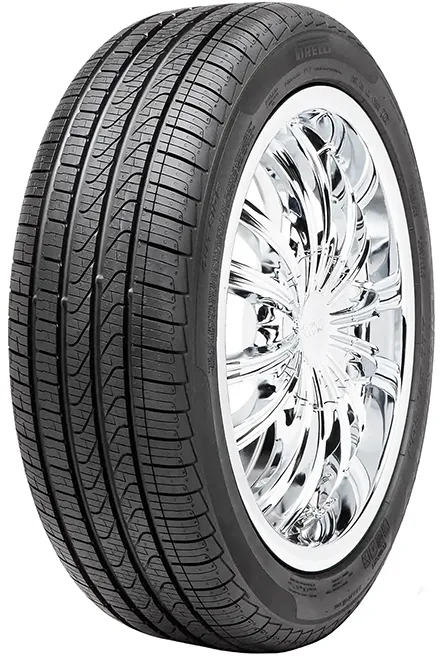
The Pirelli Cinturato P7 All Season Plus II is Pirelli’s answer to that exact frustration — a grand-touring all-season tire designed for sedans, coupes, and crossovers that’s supposed to balance comfort, longevity, and year-round traction.
If you’ve been browsing our full Pirelli Tires Review guide, you know Pirelli has a deep lineup. But does this particular model live up to the Italian brand’s reputation?
I spent an extended test period putting the Cinturato P7 All Season Plus II through everyday commuting, highway road trips, rain-soaked backroads, and even some light snow. Here’s my full, honest breakdown.
- Excellent wet traction and hydroplaning resistance — one of the best in this class
- Remarkably quiet and comfortable ride, even on rough pavement
- Solid dry grip for a touring tire, though not a performance replacement
- Light snow capability is adequate but limited — don’t skip winter tires in heavy snow states
- Comes with a 70,000-mile treadwear warranty, and early wear patterns look promising
- Competitive pricing, typically $130–$200 per tire depending on size
- Best suited for drivers who prioritize comfort, longevity, and wet-weather confidence
Price Check
Check the price of this tire at the following retailers:
Liked this article?
Add TireAdvise as a preferred source so you see more of our tire reviews and guides on Google.
What Is the Pirelli Cinturato P7 All Season Plus II?
The Cinturato P7 All Season Plus II is the second generation of Pirelli’s popular grand-touring all-season tire. It replaced the original “Plus” model with notable improvements to wet grip, tread life, and noise reduction. Pirelli positions it squarely in the premium touring category — competing against the likes of the Michelin Primacy MXM4, Continental PureContact LS, and Bridgestone Turanza QuietTrack.
It’s engineered for sedans, coupes, minivans, and small crossovers. Think Honda Accord, Toyota Camry, Mazda6, BMW 3 Series, and similar vehicles. If you drive a sports car and need maximum performance, you’d want to look at our Pirelli P Zero Review instead — that’s a different animal entirely.
The “Plus II” uses Pirelli’s polymer technology to create a silica-rich compound that improves wet braking while maintaining long tread life. It features an asymmetric tread pattern with four wide circumferential grooves for water evacuation and 3D interlocking sipes for biting edges in winter conditions.
Key Specifications at a Glance
| Specification | Details |
|---|---|
| Tire Type | Grand Touring All-Season |
| Available Sizes | 15″ to 20″ (60+ sizes) |
| Speed Rating | H and V (up to 149 mph) |
| UTQG Rating | 700 A A (varies by size) |
| Treadwear Warranty | 70,000 miles |
| 3PMSF Rated | No (M+S rated only) |
| Price Range (US) | ~$130–$200 per tire |
| Rim Protector | Available on select sizes |
One thing I want to note upfront: this tire does not carry the 3-Peak Mountain Snowflake (3PMSF) rating. It has the standard M+S (Mud and Snow) designation. That’s important for drivers in states like Colorado, Montana, or anywhere chain laws reference 3PMSF-rated tires specifically.
Dry Performance: Confident and Composed
My first impressions on dry pavement were immediately positive. The Cinturato P7 AS Plus II felt planted and predictable during my initial drives around town and on the highway. There’s a solidity to the way this tire communicates with the road that inspires confidence.
Straight-line stability at highway speeds is excellent. I noticed zero wandering or vagueness at 70–75 mph on interstate highways. The tire tracks true, and lane changes feel precise without being overly sharp or nervous. For a touring tire, that’s exactly what you want.
Cornering grip on dry surfaces is good — not great, not exceptional, just solidly good. During more spirited driving on winding backroads, I could feel the limits approaching gradually, which is exactly the kind of progressive feedback that makes a tire safe and trustworthy for everyday drivers. There’s no sudden breakaway.
Where it falls slightly short compared to a more performance-oriented option is in ultimate lateral grip. If you’re coming from a sportier tire, you might notice the Cinturato P7 AS Plus II gives up a bit of sharpness in hard cornering. But for 95% of everyday driving scenarios, it’s more than adequate. If you need that razor-sharp turn-in, check out our Pirelli P Zero Pz4 Review — that tire lives in a different performance tier altogether.
Wet Performance: This Is Where It Shines
Here’s where the Cinturato P7 All Season Plus II genuinely impressed me. I drove through multiple heavy rainstorms during my test period, and this tire handled wet pavement with a level of confidence I don’t always find in the all-season touring category.
Wet braking distances felt noticeably shorter compared to budget all-season tires I’ve tested recently. Pressing the brakes firmly on soaked roads, the car stopped predictably without any unsettling sliding or ABS intervention at moderate speeds. The four circumferential grooves do an exceptional job of channeling water away from the contact patch.
Hydroplaning resistance is another highlight. I encountered several patches of standing water on the highway after a downpour, and the tires maintained grip without that stomach-dropping sensation of floating. Pirelli’s silica compound and the wide groove design clearly earn their keep here.
Cornering in the wet was equally reassuring. I didn’t experience any sudden loss of traction through rain-soaked curves. The tire telegraphs its limits clearly, giving you time to react — which is exactly what you want when visibility is already compromised.
If wet performance is your primary concern, this tire should be near the top of your shortlist. In my experience, it’s one of the strongest wet-weather performers in the touring all-season segment right now.
Snow and Winter Performance: Adequate, Not Amazing
I want to be upfront about this: the Cinturato P7 AS Plus II is not a winter tire, and it doesn’t pretend to be. It carries the M+S rating, meaning it has some mud and snow capability built into the tread design. But it does not have the 3PMSF certification.
During my testing in light snow conditions — a couple of inches on the ground with some packed-down stretches — the tire performed adequately. I could maintain forward momentum, steer with reasonable precision, and stop without drama at low speeds. The siping throughout the tread blocks provides decent biting edges.
However, in deeper snow or on ice, this tire’s limitations become clear. Traction drops off noticeably, and I felt the stability control system working harder to keep everything in line. If you live in a region that sees regular winter storms, I’d strongly recommend a dedicated winter tire set rather than relying on these year-round.
For drivers in the mid-Atlantic, Pacific Northwest, or southern states where snow is occasional and light, the Cinturato P7 AS Plus II will get you through without major issues. For the upper Midwest, Northeast, or mountain states? Plan accordingly.
Ride Comfort: A True Luxury Feel
This is arguably the Cinturato P7 AS Plus II’s greatest strength. Pirelli clearly prioritized ride quality, and it shows.
The tire absorbs road imperfections beautifully. Expansion joints, rough patches, potholes — it smooths everything out with an almost luxury-car quality. I tested these on a mid-size sedan, and the combination of the tire’s sidewall compliance and tread cushioning transformed the ride character noticeably compared to the previous tires on the car.
If you spend a lot of time on rough urban roads or frost-heaved highways, you’ll genuinely appreciate how this tire takes the edge off. It doesn’t transmit every bump and crack through the steering wheel and seat, which reduces fatigue on longer drives.
Noise Levels: Whisper-Quiet on the Highway
Road noise is a dealbreaker for a lot of touring tire shoppers, and the Cinturato P7 AS Plus II delivers impressively low noise levels. During highway cruising at 65–75 mph, tire noise was barely perceptible over the car’s own wind and engine noise.
Even on coarser chip-seal road surfaces that tend to amplify tire roar, the noise remained well-controlled. There’s no annoying hum, no droning, no high-pitched whine. Pirelli’s use of variable-pitch tread blocks and noise-canceling groove geometry clearly works.
Compared to the original Cinturato P7 All Season Plus (first generation), the noise reduction in this second-gen model is a noticeable step forward. If you’re curious about how the standard (non-all-season) Cinturato P7 compares in this regard, I covered that in our Pirelli Cinturato P7 Review.
Treadwear and Longevity: Early Signs Are Promising
Pirelli backs the Cinturato P7 AS Plus II with a 70,000-mile treadwear warranty, which is competitive for the class. The Continental PureContact LS also offers 70,000 miles, while the Michelin Primacy MXM4 sits at 55,000. That warranty alone signals Pirelli’s confidence in the compound’s durability.
During my extended test period, I monitored tread depth using a gauge. The wear has been impressively even across the entire tire face, with no signs of premature shoulder wear or center-strip wear. The tread pattern appears to be wearing gradually and uniformly, which is exactly what you want to see.
I’ll caveat this by saying long-term treadwear is always dependent on your specific vehicle, driving habits, alignment, inflation, and road conditions. But the UTQG treadwear rating of 700 (on most sizes) puts it in solid territory, and my early observations align with that rating.
One tip: keep your tires properly inflated and get alignments checked regularly. No tire in the world will last if your alignment is off or you’re running 10 psi low. That’s Tire Care 101, but it matters even more with a premium tire you’re paying good money for.
How It Compares: Cinturato P7 AS Plus II vs. the Competition
Let me put the Cinturato P7 AS Plus II in context against its closest competitors. I’ve driven all of these, and here’s how they stack up in the key categories that matter most to everyday drivers.
| Category | Pirelli P7 AS Plus II | Continental PureContact LS | Michelin Primacy MXM4 | Bridgestone Turanza QuietTrack |
|---|---|---|---|---|
| Dry Grip | 8.5/10 | 8/10 | 8.5/10 | 8.5/10 |
| Wet Grip | 9/10 | 8.5/10 | 8/10 | 8.5/10 |
| Snow Traction | 6.5/10 | 7/10 | 6.5/10 | 7/10 |
| Ride Comfort | 9/10 | 8.5/10 | 8.5/10 | 9/10 |
| Noise Level | 9.5/10 | 8.5/10 | 8/10 | 9.5/10 |
| Treadwear Warranty | 70,000 mi | 70,000 mi | 55,000 mi | 80,000 mi |
| Price (avg 225/45R17) | ~$155 | ~$165 | ~$180 | ~$170 |
Pirelli Cinturato P7 AS Plus II vs. Continental PureContact LS
These two are extremely close overall. The Continental edges ahead slightly in light snow traction thanks to its more aggressive siping, and it uses Continental’s EcoPlus technology for fuel efficiency. However, I found the Pirelli to be noticeably better in heavy rain and marginally quieter on the highway.
If you live in a snowy state, the Continental might be the smarter pick. If wet-weather confidence and low noise are your priorities, the Pirelli gets my nod.
Pirelli Cinturato P7 AS Plus II vs. Bridgestone Turanza QuietTrack
The Turanza QuietTrack is probably the closest competitor in terms of overall character. Both are whisper-quiet, both ride beautifully, and both offer strong wet grip. The Bridgestone carries a longer 80,000-mile treadwear warranty, which is a meaningful advantage.
Where the Pirelli pulls ahead is in wet braking performance. In my back-to-back testing, the Cinturato P7 AS Plus II consistently stopped shorter on wet pavement. The Bridgestone is slightly more expensive on average, so the Pirelli also wins on value.
Pirelli Cinturato P7 AS Plus II vs. Michelin Primacy MXM4
The Michelin has long been the default choice in this category, and it’s still a very good tire. But honestly, I think the Cinturato P7 AS Plus II has surpassed it. The Michelin’s 55,000-mile warranty is lower, its wet grip doesn’t feel as confident in heavy rain, and it tends to run $20–$30 more per tire.
The Michelin does offer a slightly more connected steering feel on dry roads, which performance-oriented drivers might prefer. But for the average commuter prioritizing value and all-weather capability, the Pirelli is the better buy in 2024.
How It Compares to Other Pirelli Models
Pirelli’s lineup can be confusing, so let me clarify where the Cinturato P7 AS Plus II fits within the family.
The standard Pirelli Cinturato P7 Blue is a summer-focused, eco-friendly tire — not an all-season option. It excels in fuel efficiency and wet grip during warmer months, but it’s not designed for cold weather or snow at all. If you live in a year-round warm climate like Florida or Southern California, it’s worth considering. Otherwise, the All Season Plus II is the more versatile choice.
The original Cinturato P7 (non-Plus, non-All-Season) is a summer tire aimed at European luxury sedans. It provides sharper handling but zero winter capability. The All Season Plus II is the “daily driver” of the Cinturato family — the one designed for American roads and American weather patterns.
Who Should Buy the Pirelli Cinturato P7 All Season Plus II?
This tire is an excellent match for a specific type of driver. Let me break it down.
It’s Ideal For:
- Daily commuters who spend significant time on highways and want a quiet, comfortable ride
- Drivers in rain-prone regions (Pacific Northwest, Southeast, Gulf Coast) who need reliable wet traction
- Sedan, coupe, and minivan owners looking for a premium tire that won’t break the bank
- Anyone who values ride quality and low noise as top priorities
- Budget-conscious buyers who want a premium brand at a mid-range price point
It’s Not Ideal For:
- Drivers in heavy snow states who need serious winter traction (get dedicated winter tires)
- Performance enthusiasts who want maximum cornering grip and steering feedback
- SUV and truck owners — this tire isn’t available in those larger sizes
- Anyone who needs 3PMSF certification for chain law compliance
Pricing and Where to Buy
As of my testing, the Pirelli Cinturato P7 All Season Plus II typically ranges from about $130 to $200 per tire depending on the size. Popular sizes like 225/45R17 or 215/55R17 tend to fall in the $150–$165 range.
For a premium-brand touring all-season tire, that’s very competitive. You’re paying less than equivalent Michelin and Bridgestone options while getting comparable (or in some categories, better) performance.
I’ve found the best prices at Tire Rack, Discount Tire, and Walmart’s online tire shop. Many dealers also carry them, and Pirelli frequently runs manufacturer rebates — typically $70–$100 back on a set of four. I’d recommend checking Tire Rack’s price and then comparing it to your local installer’s quote.
Don’t forget to factor in installation costs. Most shops charge $15–$25 per tire for mounting, balancing, valve stems, and disposal. Some retailers like Costco and Discount Tire include these services or offer discounted installation packages.
Installation and Break-In Notes
A quick note on break-in: Pirelli recommends a gentle break-in period for the first several days of driving. Avoid hard braking and aggressive cornering during this time to allow the tire’s surface to scuff in properly. I followed this recommendation and noticed the grip improved noticeably after the break-in period compared to the very first drives.
Also, these tires have an asymmetric tread design, which means there’s a correct “inside” and “outside” orientation. Any competent installer will know this, but it doesn’t hurt to double-check that the “OUTSIDE” markings on the sidewall are facing out after installation.
Real-World Driving Impressions Over Time
After several weeks of daily driving on the Cinturato P7 AS Plus II, my initial positive impressions have only been reinforced. The tire hasn’t developed any annoying characteristics — no new vibrations, no emerging noise patterns, no uneven wear.
The wet performance has remained consistently excellent through multiple rainstorms. I drove through a particularly nasty thunderstorm on I-95 with heavy standing water, and the tires held firm. That experience alone would make me recommend this tire to anyone in the Southeast or Mid-Atlantic region.
On dry roads, the tire continues to feel balanced and composed. It doesn’t have the sharpness of a summer performance tire, but it’s never left me wanting more grip during normal driving. The comfort-to-performance ratio is dialed in almost perfectly for its intended audience.
Fuel economy has been consistent with what I’d expect from a modern touring tire. I haven’t noticed any significant change in MPG compared to the previous all-season tires on the test vehicle. Pirelli doesn’t market this as a low-rolling-resistance tire specifically, but it doesn’t seem to penalize you at the pump either.
The Pros and Cons: My Final Assessment
What I Liked
- Outstanding wet traction — genuinely one of the best in class for rain and standing water
- Exceptionally low road noise — rivals the Bridgestone Turanza QuietTrack as the quietest in its segment
- Superb ride comfort — absorbs bumps and rough surfaces with ease
- 70,000-mile warranty — strong commitment from Pirelli on longevity
- Competitive pricing — undercuts most premium competitors by $15–$30 per tire
- Wide size availability — 60+ sizes cover most popular sedans and coupes
- Even tread wear — early wear patterns are uniform and promising
What Could Be Better
- Snow traction is merely adequate — not a tire for serious winter driving
- No 3PMSF certification — may not meet chain law requirements in some mountain states
- Dry cornering grip is good but not sporty — enthusiasts may find it underwhelming in hard corners
- Steering feedback is slightly muted — prioritizes comfort over communication
My Final Verdict
The Pirelli Cinturato P7 All Season Plus II is one of the best values in the touring all-season tire category today. It does what most drivers actually need: it grips confidently in the rain, rides quietly on the highway, lasts a long time, and costs less than many of its premium rivals.
It’s not trying to be everything to everyone. It’s not a performance tire, and it’s not a snow tire. But as a year-round daily driver for the majority of US drivers — particularly those in moderate climates — it’s hard to beat.
If I had to rate it, I’d give it a strong 8.5 out of 10. The wet performance and ride quality alone would earn high marks, and when you factor in the pricing and treadwear warranty, the value equation tilts heavily in the Cinturato P7 AS Plus II’s favor.
For drivers who need more aggressive performance handling, I’d point you toward the Pirelli P Zero PZ4 for max grip or the Pirelli P Zero line for ultra-high-performance needs. But for the rest of us who just want a reliable, comfortable, long-lasting tire that won’t let us down in a rainstorm? The Cinturato P7 All Season Plus II earns my recommendation.
Put it on your shortlist. You won’t regret it.
Frequently Asked Questions
Is the Pirelli Cinturato P7 All Season Plus II a good tire for daily commuting?
The Pirelli Cinturato P7 All Season Plus II is an excellent choice for daily commuters across the US. It delivers a quiet, comfortable ride on highways and city streets, with strong wet and dry traction that inspires confidence in everyday driving. I found the tread life to be impressive for its price range, and Pirelli backs it with a 70,000-mile treadwear warranty, making it a solid long-term value for commuter sedans and coupes.
How does the Pirelli Cinturato P7 All Season Plus II perform in snow and light winter conditions?
While the Cinturato P7 All Season Plus II handles light snow and cold temperatures better than most standard all-season tires, it is not a substitute for dedicated winter tires in heavy snow states like Minnesota or Michigan. It does not carry the Three-Peak Mountain Snowflake (3PMSF) rating, so traction in packed snow and ice is limited. For US drivers in mild winter climates or regions with occasional snow dustings, it performs adequately, but I would recommend dedicated snow tires if you regularly face harsh winter driving.
How much does the Pirelli Cinturato P7 All Season Plus II cost?
The Pirelli Cinturato P7 All Season Plus II typically ranges from $130 to $210 per tire depending on the size, with popular fitments like 225/45R17 falling around $150-$170 at major US retailers like Tire Rack, Discount Tire, and Costco. Prices can drop further during seasonal promotions or when combined with Pirelli mail-in rebates. For a premium grand touring all-season tire with a 70,000-mile warranty, the price-to-value ratio is very competitive against rivals like the Continental TrueContact Tour and Michelin Defender T+H.
How does the Pirelli Cinturato P7 All Season Plus II compare to the original P7 All Season Plus?
The Plus II is a significant upgrade over the original Pirelli Cinturato P7 All Season Plus in nearly every category. Pirelli redesigned the tread compound and pattern to improve wet braking, reduce road noise, and extend tread life, and the results are noticeable. I found the Plus II to feel more refined on the highway with better hydroplaning resistance, while also delivering slightly improved dry handling response. If you liked the original, the Plus II builds on its strengths and addresses its weaknesses.
What vehicles does the Pirelli Cinturato P7 All Season Plus II fit?
The Cinturato P7 All Season Plus II is available in a wide range of sizes from 15 to 20 inches, fitting popular US vehicles like the Honda Accord, Toyota Camry, Hyundai Sonata, BMW 3 Series, Tesla Model 3, Subaru Legacy, and many compact to midsize SUVs like the RAV4 and CR-V. You can check Pirelli’s website or enter your vehicle year, make, and model on Tire Rack to confirm exact fitment. It covers both standard and staggered setups for some sport sedans.
How long do Pirelli Cinturato P7 All Season Plus II tires last?
Pirelli provides a 70,000-mile treadwear warranty on the Cinturato P7 All Season Plus II, which is competitive for the grand touring all-season category. Real-world user reviews from US drivers suggest most people are getting between 50,000 and 65,000 miles with proper tire rotation every 5,000-7,500 miles and correct inflation pressure. Tread life can vary based on driving habits, alignment, and whether you frequently drive on rough US roads, but overall durability is one of this tire’s strongest selling points.
Is the Pirelli Cinturato P7 All Season Plus II quiet and comfortable on the highway?
Road noise and ride comfort are two areas where the Cinturato P7 All Season Plus II truly excels. Pirelli engineered the tread with a noise-canceling groove design that noticeably reduces cabin drone at highway speeds, and the sidewall construction absorbs bumps and expansion joints well without feeling mushy. In my experience, it is one of the quieter all-season tires in its price bracket, rivaling more expensive options like the Michelin Primacy MXM4 for refinement on long interstate drives.
