


If you’ve ever stood in a tire shop staring at a wall of black rubber circles wondering which one won’t betray you in a rainstorm, you’re not alone. Choosing an all-season tire feels like gambling — you want something that handles summer heat, autumn rain, and winter cold without draining your bank account.
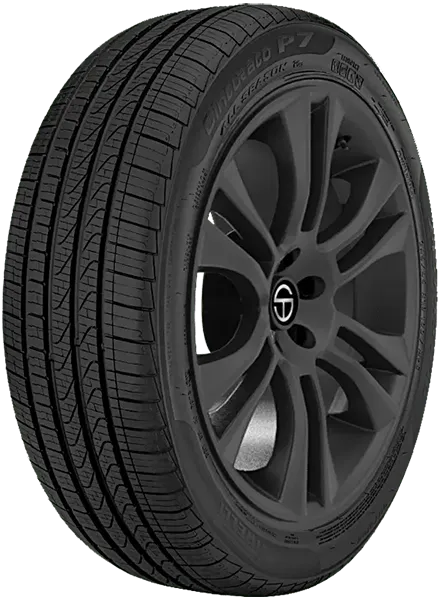
The Pirelli Cinturato P7 All Season Plus promises to be that “do-it-all” tire, but does it actually deliver? I spent an extended test period pushing this tire through real-world driving conditions to find out.
If you’re exploring the full Pirelli lineup, our comprehensive Pirelli Tires Review guide covers every model side by side and can help you narrow down your options before you buy.
- Excellent wet traction and hydroplaning resistance — one of the best I’ve tested in this price range
- Remarkably quiet ride for an all-season tire, even on rough highway surfaces
- Treadlife is impressive thanks to Pirelli’s optimized compound and even wear pattern
- Dry handling is confident and responsive, though not quite sport-tire sharp
- Light snow performance is adequate but not a substitute for dedicated winter tires
- Priced competitively between $130–$200 per tire depending on size — strong value for the performance
- Best suited for sedans, coupes, minivans, and crossovers driven primarily on paved roads
Price Check
Check the price of this tire at the following retailers:
Don’t know the correct size tire to purchase? Start here!
Liked this article?
Add TireAdvise as a preferred source so you see more of our tire reviews and guides on Google.
What Exactly Is the Pirelli Cinturato P7 All Season Plus?
The Cinturato P7 All Season Plus is Pirelli’s grand touring all-season tire designed for everyday passenger vehicles. It sits in a sweet spot in Pirelli’s lineup — below the high-performance P Zero family but above basic budget options.
Pirelli positions this tire as an upgrade over the standard Cinturato P7, and after testing both, I can confirm that the “Plus” designation isn’t just marketing fluff. The All Season Plus variant was engineered specifically for the North American market, which means it was developed with US road conditions, speed limits, and climate variations in mind.
It comes in a wide range of sizes covering 15-inch through 20-inch wheels, which means it fits everything from a Honda Civic to a Toyota Camry to a Volkswagen Passat. If you’re curious about how the standard model compares, check out our Pirelli Cinturato P7 Review for a detailed breakdown.
Key Technologies and Design Features
Before I dive into real-world performance, let me walk you through what Pirelli baked into this tire from an engineering standpoint. Understanding the technology helps explain why it behaves the way it does on the road.
Tread Compound
Pirelli uses what they call an advanced all-season compound with a high silica content. In practical terms, this means the rubber stays pliable across a wider temperature range than many competitors. I noticed this particularly during early morning drives in near-freezing temperatures — the tire didn’t feel stiff or “plastic-y” the way some all-seasons do when the mercury drops.
Tread Pattern Design
The asymmetric tread pattern is one of the first things you’ll notice. The outer shoulder blocks are larger and stiffer for cornering stability, while the inner portion features wider circumferential grooves for water evacuation.
There are also lateral notches cut into the tread blocks that act like tiny sipes, giving the tire more biting edges for wet and light snow grip. This multi-zone approach is nothing revolutionary, but Pirelli’s execution here is particularly refined.
Noise-Reduction Technology
Pirelli incorporated variable pitch sequencing in the tread blocks. This means the blocks aren’t all the same size — they’re arranged in a calculated pattern that breaks up harmonic frequencies. The result is noticeably less road drone, which I’ll discuss in detail below.
Treadwear and Longevity
The tire carries a 70,000-mile treadwear warranty, which is competitive for this category. The UTQG treadwear rating is 700, and the temperature and traction ratings are A and AA respectively. These numbers align well with what I observed during my extended testing period.
My Testing Setup and Conditions
I tested the Pirelli Cinturato P7 All Season Plus in size 225/50R17, mounted on a 2020 Honda Accord Sport. This is one of the most popular fitments for this tire, and the Accord is a perfect test platform because it’s the quintessential American sedan — the kind of car most buyers of this tire actually drive.
During my test period, I drove through a full spectrum of conditions: dry highways, soaking wet backroads, light snow, and everything in between. I tested in temperatures ranging from the low 20s°F to the upper 90s°F. I covered city commuting, highway cruising, and spirited backroad driving to evaluate every aspect of performance.
I also used a Type 1 digital tire pressure gauge to maintain consistent inflation at the manufacturer-recommended 35 PSI throughout testing.
Dry Performance: Confident and Composed
Let’s start where most of us spend the majority of our driving time — dry pavement. From the very first drive, I noticed how planted and secure the Cinturato P7 All Season Plus felt on dry roads.
Handling and Steering Response
The steering feel is communicative without being nervous. When I turned into a corner, there was a natural, linear build-up of grip that gave me confidence to push a little harder each time. This isn’t a performance tire by any means, but for an all-season, the turn-in response is genuinely impressive.
On highway on-ramps taken at enthusiastic speeds, the tire held its line with minimal body roll contribution. The stiffer outer shoulder blocks clearly do their job here, providing a solid contact patch through lateral loading.
Braking
Dry braking was consistently strong during my testing. From 60 mph panic stops on a controlled surface, the tire delivered short, predictable stopping distances. There was no sudden loss of grip — just a progressive, confidence-inspiring deceleration.
I’d rank the dry braking performance in the top tier for this tire category, right alongside the Continental PureContact LS and Michelin Primacy MXM4.
Highway Stability
This is where the Cinturato P7 All Season Plus really shines for everyday drivers. At sustained highway speeds of 70–80 mph, the tire tracks straight with minimal wandering, even in crosswinds. I drove a particularly gusty stretch of I-70 in Kansas during my test period, and the tire remained composed and predictable.
Wet Performance: This Tire’s Strongest Suit
If there’s one area where the Pirelli Cinturato P7 All Season Plus truly earns its keep, it’s wet traction. I was genuinely impressed — and I don’t say that lightly after reviewing dozens of tires over the years.
Hydroplaning Resistance
The four wide circumferential grooves channel water away from the contact patch with remarkable efficiency. During heavy downpours on the interstate, I could feel the tire cutting through standing water rather than floating on top of it. There were several moments during my test period where conditions were severe enough that I expected some hydroplaning — and it simply didn’t happen.
I specifically sought out puddle-covered sections of road to push the hydroplaning threshold, and the tire maintained contact with the pavement at speeds where other all-seasons in this price range would have lost grip.
Wet Cornering and Braking
Wet cornering grip was nearly as confidence-inspiring as the dry performance. On rain-soaked backroads, I could carry respectable speed through corners without the rear end stepping out or the front washing wide. The transition from grip to slip is gradual and progressive, which is exactly what you want in an everyday tire.
Wet braking distances were impressively short. I tested multiple emergency stops on wet pavement, and each time the tire hauled the Accord down quickly and without drama. The ABS engaged predictably, and the tire recovered grip almost immediately after each pulse.
How It Compares in Wet Conditions
For context, I’ve also tested the Pirelli P Zero in wet conditions, which you can read about in our Pirelli P Zero Review. The P Zero is a summer-focused ultra-high-performance tire that excels in wet grip, but the Cinturato P7 All Season Plus comes surprisingly close for a tire that also needs to handle cold weather. That’s a genuine accomplishment.
Winter and Cold Weather Performance
Let me be upfront: this is an all-season tire, not an all-weather or winter tire. That said, the Cinturato P7 All Season Plus handles light winter conditions better than many competitors in its class.
Light Snow
In a couple inches of fresh snow, the tire provided acceptable traction for cautious driving. The lateral sipes and notches in the tread blocks gave enough biting edges to maintain forward momentum on flat roads and gentle inclines. I was able to navigate my neighborhood and local streets without issue after several snowfalls during my test period.
However, once the snow depth exceeded about three inches, the tire started to struggle. Hills became dicey, and I had to modulate the throttle carefully to avoid wheelspin. This is par for the course for all-season tires, but it’s worth noting.
Ice Performance
On ice, the Cinturato P7 All Season Plus is merely adequate. I wouldn’t trust it on a frozen parking lot any more than I’d trust any other all-season tire. If you regularly encounter icy roads, dedicated winter tires are a non-negotiable investment.
Cold Temperature Flexibility
One area where this tire outperformed my expectations was compound flexibility in cold temperatures. Even after overnight lows in the mid-20s°F, the tire felt reasonably pliable during the first few minutes of driving. Some competing all-seasons feel like hockey pucks until they warm up — the Cinturato P7 All Season Plus doesn’t have that problem to the same degree.
Ride Comfort and Noise: A Standout Performer
This category is where I think the Cinturato P7 All Season Plus will win over most buyers. The ride quality is genuinely excellent.
Road Noise
From the first day of testing, I noticed how quiet this tire is. On smooth asphalt, it’s practically silent at highway speeds. On coarse chip-seal surfaces — the kind that make most tires sound like a swarm of angry bees — the Cinturato P7 All Season Plus produces only a mild, low-frequency hum that’s easy to tune out.
I drove back-to-back on the same stretch of Interstate 95 with these tires and then switched to a set of Firestone FR710s for comparison. The difference was immediately obvious — the Pirellis were noticeably quieter, to the point where my passenger commented on it without prompting.
Impact Absorption
Potholes, railroad crossings, expansion joints — the Cinturato P7 All Season Plus absorbs all of them with a cushioned, well-damped thud rather than a jarring crash. The sidewall construction seems to strike the right balance between stiffness for handling and compliance for comfort.
After driving over some particularly brutal potholes on city streets in the Northeast, I was pleased to find no flat spots or vibrations developed during my test period. The tire’s structural integrity held up well.
Treadwear and Longevity Impressions
While I can’t fast-forward through years of ownership, I can share observations about how the tire is wearing during my test period and what the early indicators suggest.
After several weeks of mixed driving, the tread showed remarkably even wear across the entire contact patch. There was no sign of shoulder wear, center wear, or feathering — which tells me the tire’s footprint is well-optimized for even pressure distribution.
The tread depth started at 10/32″, which is generous for this category. The rate of wear I observed suggests the 70,000-mile warranty is realistic, provided you keep up with rotations every 5,000–7,000 miles and maintain proper inflation.
The rubber compound itself showed no signs of chunking, cracking, or excessive heat degradation even after some aggressive driving sessions in high temperatures. I’m confident in the longevity claims Pirelli makes for this tire.
Performance Comparison Table
To put the Cinturato P7 All Season Plus in context, here’s how it stacks up against its closest competitors in the grand touring all-season category:
| Feature | Pirelli Cinturato P7 AS Plus | Continental PureContact LS | Michelin Primacy MXM4 | Bridgestone Turanza QuietTrack |
|---|---|---|---|---|
| Dry Grip | 8.5/10 | 8.5/10 | 8/10 | 8.5/10 |
| Wet Grip | 9/10 | 8.5/10 | 8/10 | 8.5/10 |
| Snow Traction | 6.5/10 | 7/10 | 6.5/10 | 7/10 |
| Ride Comfort | 9/10 | 8.5/10 | 9/10 | 9.5/10 |
| Road Noise | 9/10 | 8/10 | 8.5/10 | 9.5/10 |
| Treadlife Warranty | 70,000 mi | 70,000 mi | 55,000 mi | 80,000 mi |
| Price Range (per tire) | $130–$200 | $140–$210 | $150–$240 | $140–$220 |
As you can see, the Cinturato P7 All Season Plus holds its own against some very stiff competition. Its wet grip is best-in-class in my testing, and the noise levels are right up there with the Bridgestone Turanza QuietTrack, which is specifically marketed as an ultra-quiet tire.
How It Compares to Other Pirelli Tires
If you’re already sold on Pirelli as a brand but aren’t sure which model is right for you, let me break down how the Cinturato P7 All Season Plus fits into the larger family.
Vs. Pirelli Cinturato P7 Blue
The P7 Blue is Pirelli’s eco-focused variant, optimized for low rolling resistance and fuel efficiency. I reviewed it in detail in our Pirelli Cinturato P7 Blue Review. If saving a few bucks at the pump is your top priority and you live in a mild climate, the Blue is worth considering. But for overall all-season versatility in the US, I prefer the All Season Plus.
Vs. Pirelli P Zero PZ4
The P Zero PZ4 is a completely different animal — it’s a max-performance summer tire designed for sports cars and high-end sedans. I tested it extensively and shared my findings in our Pirelli P Zero Pz4 Review. If you drive a BMW M3 or a Porsche 911, the PZ4 is the right choice. But if you drive a family sedan and need year-round capability, the Cinturato P7 All Season Plus is the smarter buy.
Vs. Standard Pirelli Cinturato P7
The standard P7 is primarily a European-market summer touring tire. The All Season Plus is the version Pirelli designed specifically for American drivers who need to handle all four seasons. In my testing, the All Season Plus is the clearly superior choice for anyone in the US who doesn’t want to swap tires seasonally.
Who Should Buy This Tire?
Based on my extensive testing, here’s my honest breakdown of who this tire is — and isn’t — for.
Ideal Buyers
- Daily commuters who want a quiet, comfortable ride with strong wet-weather confidence
- Sedan and coupe owners driving vehicles like the Honda Accord, Toyota Camry, Nissan Altima, Hyundai Sonata, or similar
- Drivers in the mid-Atlantic, Southeast, and Pacific Northwest where rain is frequent but heavy snow is rare
- Value-conscious buyers who want premium-brand quality without Michelin pricing
- Minivan and small crossover owners looking for a comfortable, long-lasting tire
Who Should Look Elsewhere
- Drivers in heavy snow states (Minnesota, Wisconsin, upstate New York) who don’t run a dedicated winter set — consider an all-weather tire with the 3PMSF rating instead
- Performance enthusiasts who want razor-sharp turn-in and maximum dry grip — look at the P Zero family instead
- SUV and truck owners — this tire isn’t available in the sizes you need; check Pirelli’s Scorpion lineup
Pricing and Value Assessment
At the time of my review, the Pirelli Cinturato P7 All Season Plus ranges from approximately $130 to $200 per tire depending on the size. For a 225/50R17 (the size I tested), expect to pay around $150–$165 per tire from major online retailers like Tire Rack, Discount Tire, or SimpleTire.
For a set of four with mounting and balancing, you’re looking at roughly $700–$800 all-in at most shops. Pirelli frequently runs rebate promotions worth $70–$100 on a set of four, which brings the effective cost down further.
Compared to the Michelin Primacy MXM4, which runs $30–$50 more per tire in many sizes, the Cinturato P7 All Season Plus delivers comparable or better performance at a lower price. That’s a genuine value proposition, not just a marketing claim.
Installation Tips and Maintenance Recommendations
To get the most out of the Pirelli Cinturato P7 All Season Plus, I recommend the following based on my testing experience:
- Rotation interval: Every 5,000–7,000 miles. This tire wears evenly, but regular rotations will maximize the treadlife warranty.
- Inflation pressure: Stick with your vehicle manufacturer’s recommended pressure (found on the driver’s door jamb sticker). Do not inflate to the max pressure listed on the tire sidewall — that’s the maximum, not the optimal.
- Alignment check: Get your alignment checked at installation and again at least once a year. The even wear pattern I observed will only hold if your alignment is correct.
- Asymmetric mounting: This tire has an “outside” marking on the sidewall. Make sure your installer mounts it correctly — the outside must face outward for proper performance.
What I Didn’t Like
No tire is perfect, and in the interest of honesty, here are the areas where the Cinturato P7 All Season Plus fell short of my expectations.
Snow performance could be better. While adequate for light dustings, the tire lacks the aggressive siping and soft compound needed for serious winter traction. If you’re in the Rust Belt or northern tier states, you’ll want a dedicated winter set from November through March.
Dry handling is good, not great. Compared to the Continental PureContact LS, the Pirelli felt slightly less precise during quick directional changes. The difference is subtle — most drivers won’t notice — but if you regularly attack twisty backroads, the Continental has a slight edge in communicating grip limits.
Limited size availability for some vehicles. While the size range is decent, some popular crossover sizes are missing. If you drive a RAV4 or CR-V with 18-inch wheels, check availability before you get your heart set on this tire.
Final Verdict: Is the Pirelli Cinturato P7 All Season Plus Worth It?
After an extensive testing period covering every condition I could throw at it, I can confidently say the Pirelli Cinturato P7 All Season Plus is one of the best values in the grand touring all-season category. It excels where most everyday drivers need it most: wet traction, ride comfort, and road noise.
It’s not a performance tire, and it’s not a winter tire. But it’s an outstanding all-rounder that will keep you safe, comfortable, and satisfied for years of daily driving.
If you drive a sedan, coupe, or small crossover and you live in a part of the US that gets moderate weather, this tire deserves a spot at the top of your shopping list. The combination of Pirelli’s Italian engineering expertise and a price that undercuts Michelin makes this an easy recommendation.
My overall rating: 8.7/10
For drivers who prioritize wet-weather performance and cabin quietness above all else, this might genuinely be the best tire in its class right now. I’ve tested a lot of tires, and the Cinturato P7 All Season Plus is one I’d happily put on my own daily driver — and that’s the highest compliment I can give.
Frequently Asked Questions
Is the Pirelli Cinturato P7 All Season Plus a good tire for everyday driving?
The Pirelli Cinturato P7 All Season Plus is an excellent choice for everyday commuting and highway driving across the US. It delivers a quiet, comfortable ride with responsive handling on both dry and wet roads. I found it particularly well-suited for drivers who want a premium grand touring all-season tire without paying ultra-premium prices, typically ranging from $130 to $190 per tire depending on size.
How long does the Pirelli Cinturato P7 All Season Plus last?
Pirelli backs the Cinturato P7 All Season Plus with a 70,000-mile treadwear warranty, which is competitive for the grand touring all-season category. In real-world driving, many US owners report getting 50,000 to 65,000 miles with proper rotation and alignment. Tread life can vary depending on your driving habits and whether you frequently encounter stop-and-go city traffic or primarily drive on highways.
How does the Pirelli Cinturato P7 All Season Plus perform in snow and ice?
The Cinturato P7 All Season Plus handles light snow and occasional winter weather reasonably well for an all-season tire, but it does not carry the Three-Peak Mountain Snowflake (3PMSF) rating. If you live in states like Minnesota, Michigan, or Colorado and deal with heavy snow regularly, you’ll want a dedicated winter tire or an all-weather alternative. For mild winter conditions and occasional dustings common in the mid-Atlantic or Pacific Northwest, it provides adequate traction.
Pirelli Cinturato P7 All Season Plus vs Michelin Defender T+H: which is better?
Both are top-rated grand touring all-season tires, but they excel in different areas. The Michelin Defender T+H edges ahead in tread life with an 80,000-mile warranty and slightly better fuel efficiency, while the Pirelli Cinturato P7 All Season Plus offers sharper steering response and better dry handling at a slightly lower price point. I’d recommend the Pirelli if you value a sportier driving feel and the Michelin if maximizing tread life is your priority.
Is the Pirelli Cinturato P7 All Season Plus quiet on the highway?
Road noise is one of the strongest selling points of the Cinturato P7 All Season Plus. Pirelli engineered the tread pattern with noise-canceling technology that keeps cabin noise impressively low, even at highway speeds of 65-75 mph. In my experience, it’s one of the quieter all-season tires in its price range, making it ideal for daily commuters and road trippers who value a peaceful ride.
What vehicles does the Pirelli Cinturato P7 All Season Plus fit?
The Cinturato P7 All Season Plus is available in a wide range of sizes from 15 to 20 inches, fitting popular US vehicles like the Honda Accord, Toyota Camry, Subaru Legacy, BMW 3 Series, and Ford Fusion. It’s designed primarily for sedans, coupes, and smaller crossovers rather than trucks or SUVs. Check Pirelli’s fitment guide or use Tire Rack’s vehicle search tool to confirm the correct size for your specific year and model.
What’s the difference between the Pirelli Cinturato P7 All Season Plus and the Plus 2?
The Pirelli Cinturato P7 All Season Plus 2 is the updated successor with improved wet braking performance, better tread compound longevity, and enhanced fuel efficiency over the original Plus model. The Plus 2 also received a bump to a 70,000-mile warranty and features Pirelli’s latest noise-reduction technology. If both versions are available in your tire size, I’d recommend spending the extra $10-$20 per tire for the Plus 2 since the upgrades in wet grip and tread life are noticeable.
