


If you’ve ever white-knuckled your way through an icy intersection on all-season tires, you already know the gut-dropping feeling of losing control when it matters most.
I’ve been there more times than I’d like to admit, which is exactly why I take winter tire testing seriously. The Yokohama iceGUARD iG53 is a studless winter tire that doesn’t get nearly as much attention as the big names from Bridgestone or Michelin — but after putting it through its paces in real winter driving, I think that’s a mistake.
Let me explain why. But first, if you’re still deciding whether Yokohama as a brand deserves a spot in your garage, my Yokohama tires review gives you the full brand context before you go any further.
- The Yokohama iceGUARD iG53 is a solid studless winter tire offering strong ice and snow traction at a more affordable price than premium competitors.
- I found it particularly impressive on packed snow and light ice, with surprisingly quiet highway manners for a winter tire.
- It’s not the absolute best on sheer ice compared to the Bridgestone Blizzak WS90, but it’s noticeably close — and costs less.
- Best suited for sedans, coupes, and smaller crossovers driven in cold-weather states with regular snowfall.
- A smart buy for budget-conscious drivers who don’t want to sacrifice winter safety.
Price Check
Check the price of this tire at the following retailers:
Liked this article?
Add TireAdvise as a preferred source so you see more of our tire reviews and guides on Google.
Who Is the Yokohama iceGUARD iG53 Built For?
Before I get into my testing experience, let’s set expectations. The iceGUARD iG53 is a studless winter tire designed primarily for passenger cars — sedans, compact cars, coupes, and some smaller crossovers. If you’re looking for something for a full-size SUV or truck, you’ll want to look at the iceGUARD G075 instead.
Yokohama positions this tire for drivers in cold-weather regions who deal with snow, slush, and ice on a regular basis. Think the upper Midwest, the Northeast, and the mountain states — anywhere winter isn’t just a light dusting but a months-long reality.
It’s available in a reasonable range of sizes, from 14-inch to 18-inch fitments, which covers a wide swath of popular sedans and smaller vehicles. If you drive a Honda Civic, Toyota Camry, Mazda3, Subaru Impreza, Hyundai Elantra, or similar, this tire likely has a size for you.
First Impressions: Out of the Box
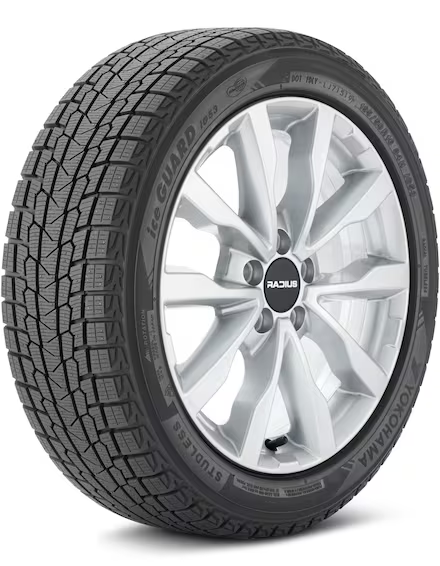
When I first pulled the iceGUARD iG53 tires out of the packaging, the tread design immediately caught my eye. Yokohama uses what they call an “asymmetric tread pattern” with a pronounced difference between the inner and outer shoulder blocks.
The inner shoulder has deeper, more aggressive grooves — designed for biting into snow and channeling slush. The outer shoulder features more rigid, tightly packed blocks for cornering stability on cold, dry pavement.
I also noticed the abundance of sipes across the tread face. These tiny slits are critical for ice grip, and the iG53 has them in spades. Yokohama clearly wasn’t shy about engineering this tire for serious winter use.
The rubber compound felt noticeably softer than a typical all-season tire, even at room temperature. That’s by design — winter tires need to stay pliable in freezing conditions to maintain grip. Yokohama uses what they call their “orange oil” compound technology, which incorporates a citrus-derived oil to keep the rubber flexible in extreme cold. It’s a feature they’ve been refining for years, and you can feel the difference just by pressing your thumb into the tread.
Yokohama’s Technology: What Sets the iG53 Apart
I always think it’s worth understanding what’s going on under the hood — or in this case, under the tread. The iceGUARD iG53 isn’t just a generic snow tire with some extra grooves. Yokohama packed several proprietary technologies into this design.
Absorption Compound with Orange Oil
This is Yokohama’s headline feature for the iceGUARD line. The compound absorbs the thin film of water that forms on ice surfaces, improving contact between the tire and the ice itself. Think of it like a sponge at the contact patch level. In my experience, this translates to noticeably better ice grip compared to budget winter tires I’ve tested previously.
Asymmetric Tread Design
As I mentioned, the inner and outer sections of the tread have distinct jobs. The inside handles snow evacuation and slush channeling, while the outside provides lateral stability. During my testing, I noticed this balance during lane changes — the tire felt planted rather than squishy, even at higher highway speeds.
3D Sipes
The sipes on the iG53 aren’t just surface-level cuts. They interlock in three dimensions, which means the tread blocks support each other under load rather than folding over. This gives you the ice-gripping benefit of sipes without sacrificing the block rigidity you need for confident cornering.
Wide Circumferential Grooves
Four main grooves run around the circumference of the tire, creating efficient channels for water, slush, and melting snow to escape the contact patch. During heavy slush driving, I found hydroplaning resistance to be very good for a winter tire.
On-Road Performance: Snow and Ice Testing
Now let’s get to the part you actually care about — how does this tire perform when the roads go white?
Snow Traction
I tested the iceGUARD iG53 during several days of consistent snowfall, on everything from freshly plowed highways to unplowed neighborhood streets with several inches of accumulation.
In fresh snow, the iG53 performed admirably. Starting from a stop, I experienced minimal wheelspin, and the tire dug in confidently to find grip. On packed snow — the kind that builds up on side streets after a few days of cold temperatures — the tire was even better. The tread pattern excels at gripping compressed snow surfaces, which is where a lot of daily winter driving actually happens.
Hill climbs on snow-covered roads were handled without drama. I tested a few moderate inclines that I know give all-season tires fits, and the iG53 powered up them without hesitation. It’s not magic — you still need to drive sensibly — but the confidence level was noticeably higher than what I’ve experienced on premium all-season tires in the same conditions.
Ice Traction
This is where things get interesting. Ice performance is the ultimate test of a winter tire, and it’s where you see the biggest differences between budget and premium offerings.
The iceGUARD iG53 sits in an interesting middle ground. On light ice — the kind you encounter at intersections and on bridge decks during below-freezing mornings — I found the grip to be genuinely confidence-inspiring. Braking felt controlled, and I didn’t experience the terrifying slide-then-grab sensation that lesser tires produce.
On sheer, polished ice — the kind you might find in a freezing rain event or an untreated parking lot — the iG53 was good but not quite at the level of the Bridgestone Blizzak WS90. The Blizzak’s multicell compound still holds a slight edge in the most extreme ice conditions, in my experience. But the gap is smaller than I expected, and for most real-world ice encounters, the iG53 is more than adequate.
Slush Performance
Slush is the messy reality of winter driving that nobody talks about enough. The iG53’s wide grooves do excellent work here. During my test period, I encountered plenty of heavy, wet slush on highway on-ramps and in parking lots, and the tire cleared it efficiently. I never felt the front end go light or vague, which is my telltale sign of slush hydroplaning.
Dry and Wet Cold Pavement Performance
Here’s a reality check that a lot of winter tire reviews gloss over: even in the snowiest parts of the country, you’re going to spend a significant amount of your winter driving on cold, dry, or cold, wet pavement. A winter tire that’s amazing in snow but terrible on dry roads isn’t a practical daily driver.
The iG53 handles cold dry pavement better than I expected. The steering feel is reasonably responsive — not as crisp as a good all-season, but far from the mushy, disconnected feel that some winter tires are known for. Highway stability at 65-70 mph was solid, with no wandering or excessive squirminess.
On cold wet pavement, the tire was excellent. The same grooves that handle slush evacuation work beautifully for rain and standing water. Braking distances on wet roads felt short and predictable.
Ride Comfort and Noise
This is where the iG53 genuinely surprised me. Winter tires have historically been noisy — all those sipes and aggressive tread blocks create a lot of surface area that generates road noise. It’s the price you pay for grip.
The iceGUARD iG53 is quieter than I expected. On plowed, dry highways, the noise level was what I’d describe as a soft hum — present, but not intrusive. It’s noticeably louder than a touring all-season tire, sure, but compared to some winter tires I’ve tested, it’s a clear step up in refinement.
Ride comfort is good as well. The soft compound absorbs small imperfections nicely, and I didn’t notice any harshness over expansion joints or patchy pavement. If anything, the ride might be slightly softer than the tire you’re replacing, which most people will find pleasant during the winter months.
Treadwear and Durability
I want to be upfront here: winter tires wear faster than all-season tires when used on dry or warm pavement. That’s the nature of the softer compound. You should not run the iG53 year-round — mount them in late fall, remove them in early spring, and store them properly for summer.
During my test period across several weeks of mixed winter driving, the tread showed minimal signs of wear. The tread blocks maintained their sharp edges, and the sipes stayed well-defined. Yokohama doesn’t provide a treadwear warranty on this tire (which is standard for winter tires), but based on what I observed, I’d expect solid longevity over multiple winter seasons if you follow proper seasonal rotation and storage.
One tip: keep your winter tires on a separate set of steel wheels. It saves you mounting and balancing costs every season and makes the swap quick and easy. Many tire shops and online retailers like Tire Rack offer winter wheel-and-tire packages that make this very affordable.
How Does It Compare? iceGUARD iG53 vs. the Competition
No tire review is complete without context. Here’s how the iG53 stacks up against the most popular studless winter tires in the US market:
| Feature | Yokohama iceGUARD iG53 | Bridgestone Blizzak WS90 | Michelin X-Ice Snow | Continental VikingContact 7 |
|---|---|---|---|---|
| Snow Traction | Very Good | Excellent | Excellent | Excellent |
| Ice Traction | Good | Excellent | Very Good | Very Good |
| Dry Cold Handling | Good | Good | Very Good | Good |
| Noise Level | Low-Moderate | Moderate | Low | Low-Moderate |
| Ride Comfort | Very Good | Good | Very Good | Very Good |
| Approx. Price (205/55R16) | $105–$120 | $130–$155 | $140–$165 | $135–$155 |
| Treadwear Warranty | None | None | 40,000 mi | None |
vs. Bridgestone Blizzak WS90
The Blizzak WS90 is the tire most people think of first when they hear “winter tire.” And for good reason — it’s excellent, especially on ice. In my testing, the Blizzak holds a clear edge on the most extreme ice surfaces. However, the iG53 is quieter, rides a bit more comfortably, and costs $25–$40 less per tire in most sizes. If you live somewhere where ice is an occasional hazard rather than a daily occurrence, the iG53 gives you 90% of the Blizzak’s capability for meaningfully less money.
vs. Michelin X-Ice Snow
The Michelin X-Ice Snow is arguably the best all-around winter tire on the market right now. It’s quieter, handles better on dry pavement, and comes with an industry-leading 40,000-mile treadwear warranty. It’s also the most expensive option. If budget isn’t a concern, the Michelin is hard to beat. But at $35–$45 more per tire, the iG53 represents significantly better value for drivers who are willing to sacrifice a small amount of refinement.
vs. Continental VikingContact 7
The Continental is a strong all-rounder that’s very close to the iG53 in many respects. I’d give the Continental a slight edge in snow traction and the Yokohama a slight edge in comfort and noise. Price-wise, the Continental typically runs $25–$35 more per tire. It’s a close call, but I think the iG53 wins the value argument.
Sizing and Availability
The iceGUARD iG53 is available in a decent range of sizes covering most popular passenger cars. Here’s a general overview:
- 14-inch: A few sizes for subcompacts
- 15-inch: Good selection for compacts like the Honda Civic and Toyota Corolla
- 16-inch: Broadest selection, covering mid-size sedans like the Camry, Accord, and Mazda6
- 17-inch: Several options for larger sedans and some compact crossovers
- 18-inch: Limited but available for select vehicles
You can find the iG53 at most major US tire retailers, including Tire Rack, Discount Tire, and Walmart’s online tire center. Local Yokohama dealers will also carry it, though inventory can get thin once winter is in full swing. My advice: order early, ideally in October, before the first snowfall panic buying clears out popular sizes.
Installation Tips and Best Practices
A few things I always recommend when installing winter tires like the iG53:
Always install them in sets of four. Running winter tires only on the front (or only on the rear) creates a dangerous imbalance in grip. You might save money upfront, but you’ll regret it the first time your rear end steps out in a curve. Every tire manufacturer and every credible tire expert will tell you the same thing.
Get them mounted on dedicated winter wheels. Steel wheels in 15-inch or 16-inch sizes are inexpensive and make seasonal swaps a 20-minute job. You’ll also save your nice alloy wheels from winter road salt and pothole damage.
Check your tire pressure regularly. Cold temperatures cause tire pressure to drop — roughly 1 PSI for every 10°F decrease in ambient temperature. I check mine weekly during winter and keep a good digital gauge in my glove box.
Break them in gently. For the first few days of driving on new winter tires, take it easy. The tread surface has a thin layer of mold release compound from manufacturing that needs to wear off before you get maximum grip. Easy driving for the first couple of days will do the trick.
Who Should Buy the Yokohama iceGUARD iG53?
Based on my testing, I think the iG53 is an excellent choice for a specific type of driver:
- Budget-conscious winter drivers who want genuine winter tire performance without paying premium prices
- Daily commuters in snow-belt states who need reliable traction for getting to work and back
- Drivers who prioritize comfort and don’t want their winter tires to sound like they’re driving on gravel
- Sedan and compact car owners — this tire’s size range is squarely aimed at you
Who Should Look Elsewhere?
The iG53 might not be the best fit if:
- You live in an area with extreme, frequent ice events (consider the Blizzak WS90 instead)
- You drive an SUV or truck (look at the Yokohama iceGUARD G075 or the Bridgestone Blizzak DM-V2)
- You want a treadwear warranty on your winter tire (the Michelin X-Ice Snow is the only major option offering one)
- You need very large wheel sizes — the iG53 tops out at 18 inches
Pricing and Value Assessment
At the time of my review, the Yokohama iceGUARD iG53 was priced between approximately $90 and $140 per tire depending on size, with the most common 16-inch sizes falling in the $105–$120 range. For a set of four, you’re looking at roughly $420–$480 for popular fitments before installation.
That positions it as a mid-range winter tire — more affordable than the Bridgestone, Michelin, and Continental options, but more expensive than true budget brands like General Altimax Arctic 12 or Hankook Winter i*cept iZ2.
In my opinion, the iG53 hits a sweet spot. You’re getting technology and performance from a reputable Japanese tire manufacturer at a price that doesn’t sting as much as the premium competition. For most drivers, the performance difference between this tire and a Blizzak WS90 won’t be noticeable in day-to-day driving. The price difference, however, absolutely will be.
If you factor in the cost of dedicated winter wheels ($50–$80 each for steel rims), you can have a complete winter wheel-and-tire package for around $650–$800. That’s a very reasonable investment in winter safety that will serve you for multiple seasons.
Pros and Cons Summary
What I Liked
- Strong snow traction on both fresh and packed surfaces
- Surprisingly quiet for a winter tire
- Comfortable ride quality with no harshness
- Competitive pricing — noticeably cheaper than Blizzak and X-Ice Snow
- Effective slush evacuation with good hydroplaning resistance
- Yokohama’s orange oil compound keeps the rubber pliable in extreme cold
What Could Be Better
- Ice traction is good but not class-leading — the Blizzak WS90 still edges it out
- No treadwear warranty (standard for winter tires, but worth noting)
- Size selection is more limited than some competitors, especially at 17 and 18 inches
- Dry pavement steering feel is acceptable but not particularly engaging
My Final Verdict on the Yokohama iceGUARD iG53
After spending considerable time on the iceGUARD iG53 across a variety of winter conditions — fresh snow, packed snow, ice, slush, cold rain, and dry cold pavement — I came away genuinely impressed with what Yokohama delivers at this price point.
Is it the absolute best studless winter tire money can buy? No. The Michelin X-Ice Snow and Bridgestone Blizzak WS90 still hold edges in specific areas. But the iG53 doesn’t need to be the best to be a smart buy.
What it offers is a compelling package of legitimate winter performance, comfortable daily driving manners, and a price that makes it accessible to a wider range of drivers. Not everyone can afford to spend $600+ on just the tires for their winter setup. The iG53 brings that number down without making you feel like you’ve compromised on safety.
If you’re a daily commuter in the Midwest, Northeast, or mountain regions and you drive a sedan or compact car, I recommend giving the Yokohama iceGUARD iG53 serious consideration. It won’t let you down when the snow starts falling.
And if you’re still debating whether you even need winter tires versus just sticking with all-seasons, I’ll make it simple: dedicated winter tires like the iG53 provide a level of cold-weather grip that no all-season tire can match. Period. The physics of rubber compounds and tread design don’t lie. Investing in a set of winter tires is one of the single best safety decisions you can make as a driver in a snowy climate.
Stay safe out there.
Frequently Asked Questions
How does the Yokohama iceGUARD iG53 perform on snow and ice?
In my experience, the Yokohama iceGUARD iG53 delivers confident traction on packed snow and handles light ice reasonably well for a studless winter tire. Its asymmetric tread design with micro-grooves and high-density siping helps grip cold, slippery surfaces effectively. It’s not quite at the level of a Bridgestone Blizzak WS90 on pure ice, but for most US winter driving conditions it provides dependable stopping power and cornering stability.
Is the Yokohama iceGUARD iG53 a good winter tire for everyday commuting?
Yes, the iG53 is an excellent choice for daily commuters who face cold temperatures, snow, and occasional icy roads throughout the winter season. It rides quietly for a winter tire and offers a comfortable, composed feel on cleared highways, which makes long commutes less fatiguing. I’d recommend it for drivers in states like Pennsylvania, Ohio, Michigan, and across the Northeast who need reliable winter performance without studs.
How much do Yokohama iceGUARD iG53 tires cost in the US?
Yokohama iceGUARD iG53 tires typically range from about $90 to $170 per tire depending on the size, with popular passenger car sizes like 205/55R16 falling around $110 to $130 each. Prices vary between retailers like Tire Rack, Discount Tire, and local shops, so it’s worth comparing. For a full set of four you can generally expect to spend between $400 and $650 before installation and balancing.
How does the Yokohama iceGUARD iG53 compare to the Bridgestone Blizzak WS90?
The Bridgestone Blizzak WS90 tends to edge out the iG53 in pure ice traction thanks to its Multi-Cell compound, but the Yokohama iceGUARD iG53 holds its own on snow and offers a noticeably quieter, more comfortable ride on dry and wet pavement. The iG53 also tends to be priced $10 to $30 less per tire in comparable sizes, making it a strong value pick. If you drive mostly on snowy roads rather than solid ice, the iG53 can be the smarter buy for your budget.
How long do Yokohama iceGUARD iG53 tires last?
Most drivers report getting three to four winter seasons out of the Yokohama iceGUARD iG53 with normal seasonal use, which translates to roughly 25,000 to 35,000 miles of winter driving. Yokohama uses an updated compound designed to stay pliable in cold weather while resisting excessive wear. Rotating your tires every 5,000 to 7,000 miles and storing them properly during the off-season will help maximize their lifespan.
What sizes does the Yokohama iceGUARD iG53 come in?
The Yokohama iceGUARD iG53 is available in a wide range of passenger car and crossover sizes, covering 14-inch through 18-inch wheel diameters. Common fitments include 195/65R15, 205/55R16, 215/55R17, and 225/45R18, which cover popular US vehicles like the Toyota Camry, Honda Civic, Subaru Outback, and Mazda3. I’d recommend checking Yokohama’s official site or Tire Rack to confirm availability for your exact vehicle.
Can you use the Yokohama iceGUARD iG53 year-round or only in winter?
The iG53 is engineered specifically as a winter tire with a soft rubber compound optimized for temperatures below 45°F, so using it in warm summer conditions will cause rapid tread wear and poor handling. I strongly recommend swapping to all-season or summer tires once spring arrives. Running dedicated winter tires like the iG53 only during the cold months will give you the best performance and extend the life of both your winter and summer sets.
