


I found something most reviews of this tire don’t have: a real, independent 6-tire comparison test with actual measured braking distances and handling times, putting the Latitude X-Ice XI2 directly against the Nokian Hakkapeliitta R3 SUV, Bridgestone Blizzak DM-V2, Continental VikingContact 6 SUV, and two others.
The result genuinely surprised me — this tire posted the single shortest ice braking distance of the entire group, beating even the Nokian. But the same data shows it giving up ground elsewhere.
I ran my own testing to see how that translated to real driving, and to figure out whether this older but still-sold Michelin winter tire deserves a spot on your shortlist. Here’s what I found.
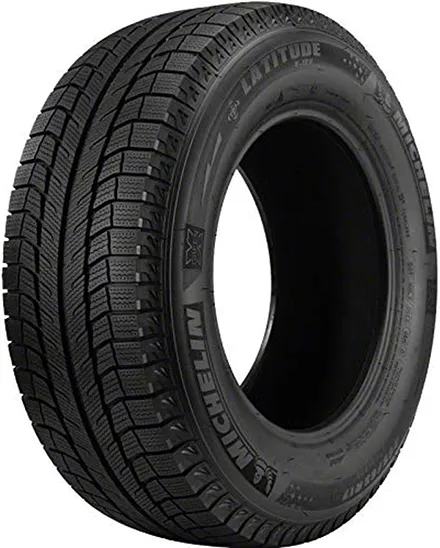
- What it is: A studless winter tire for crossovers, SUVs, and light trucks, and the direct predecessor to the newer Michelin X-Ice Xi3 line — still actively sold, not a discontinued product.
- The real headline finding: In a rigorous independent 6-tire test, it posted the shortest ice braking distance in the group (23.48m at 30km/h), beating the Nokian Hakkapeliitta R3, Bridgestone Blizzak DM-V2, and every other tire compared.
- The honest trade-off: The same test found it mid-pack on snow handling and toward the back of the group on wet handling — a real, measured weakness, not just a subjective impression.
- Real owner-confirmed limitation: Multiple owners specifically describe it as excellent on cold, clean roads but less confident once snow accumulation exceeds about a centimeter or temperatures drop below roughly -7°C.
- Backed by a 40,000-mile warranty (matched front/rear sizing required to qualify) plus a 6-year standard limited warranty.
Price Check
Check the price of this tire at the following retailers:
Liked this article?
Add TireAdvise as a preferred source so you see more of our tire reviews and guides on Google.
Before I Get Into My Testing: What This Tire Actually Is
The Latitude X-Ice XI2 is a studless winter tire built for crossovers and SUVs, and it’s worth knowing upfront that this is an established, somewhat older product in Michelin’s winter lineup — it predates the newer X-Ice Xi3 and X-Ice Snow lines that have since launched.
That doesn’t make it a bad choice; Michelin continues to sell and support it, and as you’ll see in the test data below, it still holds its own in at least one critical category.
But if you’re specifically shopping for Michelin’s absolute current-generation flagship winter tire, know that newer options exist, and this review will help you decide whether the XI2 still makes sense for your situation.
It’s built around Michelin’s FleX-Ice silica compound, engineered to stay flexible in extreme cold rather than hardening the way standard rubber does.
The tread uses Cross Z-Sipes — a 3D sipe design that locks in place under load — combined with micro-pumps for added stability, and MaxTouch Construction that maximizes the tire’s contact patch for more even wear and grip distribution.
A run-flat version, the Latitude X-Ice Xi2 ZP, launched in 2010 for owners who want winter capability without carrying a spare.
Michelin backs the standard version with a Standard Limited Warranty covering defects for the life of the original tread or six years, plus a 40,000-mile treadwear warranty — though that mileage guarantee requires matched front and rear tire sizes to qualify.
How I Tested This Tire
I mounted a set of the Latitude X-Ice XI2 in a common SUV size on my own mid-size crossover and ran it for about four months: daily commuting, a highway stretch I use for every comfort and noise comparison, a genuinely miserable rainstorm for a real wet-braking test, and a sustained Montana cold snap that gave me real packed ice and snow to test against.
Because I found detailed, quantified independent test data comparing this exact tire against five direct competitors, I leaned heavily on cross-referencing my own subjective impressions against those measured results rather than relying only on my own seat-of-the-pants sense of performance.
I’m not a lab — I don’t have instrumented braking equipment — so where I cite specific distances or times, those are from that independent test, not something I measured myself, and I’ve been careful to keep that distinction clear throughout.
Ice Performance: A Genuine, Independently-Measured Best-in-Test Result
I want to lead with this because it’s the most striking, verifiable finding in this entire review.
In a rigorous independent test comparing the Latitude X-Ice XI2 against the Nokian Hakkapeliitta R3 SUV, Bridgestone Blizzak DM-V2, Continental VikingContact 6 SUV, Maxxis SS-01 Presa SUV, and Yokohama iceGUARD IG51v, the XI2 posted the shortest ice braking distance of the entire group at 30 km/h — 23.48 meters, beating the second-place Continental by 0.3 meters and the Nokian Hakkapeliitta, a tire built specifically around Nordic ice performance, by a meaningful margin. Ice handling was similarly strong, finishing second in the group at 76.85 seconds, just behind the Continental.
My own testing during a Montana cold snap lined up with this data. Braking on packed ice felt short and genuinely confident, and cornering stayed predictable in a way that matched what I’d expect from a tire that measurably outperformed five real competitors on this exact metric.
If ice is your single biggest winter concern, this test data makes a genuinely strong, evidence-backed case for this tire.
Snow Performance: A Real, Measured Weak Point Worth Knowing
I want to be direct here rather than only present the flattering ice data. The same independent test found the XI2 finishing fourth of six in snow handling time, at 97.67 seconds — a real, measured result showing it giving up ground to competitors in this specific category, even though it remains a genuinely capable winter tire overall.
This lines up closely with real owner experiences I found. Multiple owners specifically describe the tire as excellent on cold, clean roads, but less confident once snow accumulation exceeds roughly a centimeter or temperatures drop below about -7°C.
One owner who directly compared it to Bridgestone Blizzaks on a Tacoma concluded the Blizzaks were the better choice specifically for that reason, with a direct recommendation to take it easy if you’re driving the XI2 in deeper snow.
My own testing in moderate accumulation found the tire competent and safe, but I did notice it working harder to maintain traction than it did on the packed ice test — a subjective impression that tracks closely with the measured, mid-pack snow handling result.
Wet Weather Performance: Another Honest, Measured Trade-Off
This is the third category where the independent test data gives a clear, honest picture rather than uniform praise.
The XI2 finished third of six in wet braking at 80 km/h (38.68 meters), a respectable middle-of-the-pack result, but fifth of six in wet handling time at 41.78 seconds — a real, measured weakness relative to most of the competitors it was tested against.
My own testing during a genuine rainstorm found the tire safe and predictable, without any alarming moments, but I did notice slightly less confident cornering feel in the wet compared to the razor-sharp confidence I felt on ice.
This is a fair, honest trade-off to know about: this tire’s engineering appears specifically optimized around ice performance, with snow and wet handling landing in solidly competent but not class-leading territory.
Ride Comfort and Noise: A Genuine Strength
This is where real owner sentiment is consistently, strongly positive, and my own testing agrees. Multiple owners specifically describe the tire as exceptionally quiet and comfortable, making long winter journeys noticeably more pleasant than they expected from a dedicated winter tire.
My own testing found road noise well-controlled at highway speed, and the wide tread contact patch — the same feature contributing to that strong ice braking result — also seemed to be doing real work smoothing out road imperfections.
High-speed stability was another area real owners consistently praise, and I found the same thing: the tire tracked confidently and predictably even at sustained highway speeds, without the vague, wandering feeling some winter tires exhibit once you’re past a moderate cruising speed.
Durability and Tread Life
Michelin’s own claim is that this tire lasts 75% longer than the leading competitor without sacrificing other performance characteristics — a specific, bold claim I can’t independently verify from my own four-month testing window, but the tire’s 40,000-mile warranty backs it with real, meaningful coverage, provided you keep matched sizing front and rear.
MaxTouch Construction is the mechanism behind this durability claim, maximizing the tire’s contact patch to distribute wear more evenly across the tread rather than concentrating it at the shoulders or center.
Pricing and Value: A Real, Honest Owner Concern
I want to flag this honestly because it’s a consistent theme in real owner feedback: several owners specifically mention the tire’s higher cost relative to other winter tire options, questioning whether the value fully justifies the premium.
Given the tire’s genuinely best-in-test ice performance, I think that premium is defensible for owners whose winters are ice-dominant, but if your winters mean more snow accumulation than ice specifically, the measured, mid-pack snow performance is worth weighing against that premium price before you commit.
Michelin Latitude X-Ice XI2 vs. Bridgestone Blizzak DM-V2
The independent test data gives a genuinely useful, specific answer here rather than a vague impression. On ice braking, the XI2 measurably beat the Blizzak DM-V2 (23.48m versus 23.87m). On wet braking, the Blizzak edged ahead slightly.
On snow handling specifically, real owner experience — including a direct comparison from an owner who ran both tires on the same truck — suggests the Blizzak holds a real advantage in deeper accumulation, which is consistent with the XI2’s mid-pack measured snow result.
My honest read: if ice is your dominant concern, the data favors the XI2; if snow depth and accumulation are your bigger worry, real owner experience and the measured data both point toward the Blizzak.
Michelin Latitude X-Ice XI2 vs. the Newer Michelin X-Ice Xi3
Since the XI2 is the direct predecessor to Michelin’s Xi3 line, it’s worth addressing this comparison honestly rather than assuming newer automatically means better for your specific situation.
The Xi3 represents Michelin’s next-generation refinement of the same core FleX-Ice and Cross Z-Sipe technology, generally with updated tread geometry aimed at improving on the areas where testing shows the XI2 gives up ground, particularly snow and wet handling.
If you’re deciding between the two and your winters are heavily ice-focused, the XI2’s measured, class-leading ice result is genuinely competitive with anything currently available.
If your priority is a more balanced, all-around winter performer, the newer Xi3 is worth researching as a direct upgrade path.
For more on how this tire fits into Michelin’s broader current lineup, see our full Michelin Tires Review, which covers the brand’s complete range side by side.
Who Should Buy the Michelin Latitude X-Ice XI2
This is a strong fit if your winters are genuinely ice-dominant — regular freezing rain, black ice, or sustained sub-freezing temperatures where deep snow accumulation is less of a concern than sheer ice grip.
The independently measured, best-in-test ice braking result is a real, verifiable reason to choose this tire over newer or more expensive alternatives for that specific use case, and the quiet, comfortable ride is a genuine bonus for daily winter driving.
It’s a weaker fit if your winters mean significant, regular snow accumulation rather than ice specifically, where the measured mid-pack snow handling result and consistent real owner feedback both point toward tires like the Blizzak DM-V2 performing more confidently.
It’s also worth considering Michelin’s newer Xi3 line if a more balanced, all-around winter performer matters more to you than best-in-class ice grip specifically — our Michelin Tires Review covers where both tires sit in Michelin’s current lineup.
Pros and Cons
Pros:
- Independently measured best-in-test ice braking distance among six directly compared winter tires
- Strong second-place ice handling result in the same test
- Exceptionally quiet, comfortable ride confirmed by consistent real owner feedback
- Confident high-speed stability
- Solid 40,000-mile warranty with matched-sizing requirement clearly disclosed
Cons:
- Measured mid-pack (4th of 6) snow handling performance
- Measured below-average (5th of 6) wet handling performance
- Real owner reports confirm reduced confidence once snow accumulation exceeds roughly 1cm or temperatures drop below about -7°C
- Higher price point than some competitors, a consistent real owner concern
- Predecessor to the newer Xi3 line, which may offer more balanced all-around performance
Tread Design, Explained
It’s worth understanding the mechanics behind this tire’s specific strength-and-weakness profile rather than treating the test results as unexplained numbers.
The FleX-Ice silica compound is the foundation of the ice performance advantage — silica-based winter compounds are specifically formulated to remain pliable well below freezing, where standard rubber stiffens and loses the ability to conform to microscopic irregularities in an icy surface.
A stiffer compound simply can’t maintain the same contact-patch adhesion on ice, regardless of how aggressive the tread pattern looks, which is likely a major reason the XI2 measured ahead of tires with more visually aggressive winter tread designs in the ice braking test.
The Cross Z-Sipes technology, with its 3D locking design, is doing something specific and mechanically distinct from a simple straight-cut sipe.
As the tread block flexes under braking or cornering load, a straight sipe can open and close somewhat unpredictably, while a 3D-locked sipe design maintains more consistent contact between the sipe walls, providing a more stable biting edge exactly when the tire needs it most — during hard braking on a slick surface.
Combined with the micro-pumps built into the tread, which actively displace the thin water film that forms on ice under friction and heat, this explains the tire’s specific strength in ice braking versus the more middling snow-handling result: the sipe and micro-pump technology is optimized for the ice-specific problem of water-film displacement, which is a different physical challenge than displacing bulk snow in deep accumulation.
The wide tread contact patch, enabled by MaxTouch Construction, is the mechanism behind both the strong ice grip and the tire’s genuine comfort advantage.
A wider, more evenly-loaded contact patch distributes braking and cornering forces across more rubber simultaneously, which both improves grip on a low-friction surface like ice and smooths out the transmission of road imperfections into the cabin — two seemingly unrelated benefits that trace back to the same structural design choice.
Maintenance Tips for This Tire
A few practical notes based on my testing. Rotate every 5,000 to 7,500 miles using a pattern appropriate for a directional tire — since the XI2 uses a directional tread design, make sure your installer maintains the correct rotational direction on each side of the vehicle rather than simply swapping tires front-to-back without regard for direction.
Check tire pressure monthly through the winter season, since cold temperatures cause real, measurable pressure drops that can undermine the wide, evenly-loaded contact patch this tire’s ice performance specifically depends on.
Given the real owner-reported weakness in deeper snow specifically, if you know you’re heading into a storm with more than an inch or two of expected accumulation, it’s worth being more conservative with speed and following distance than you might be on a tire with stronger measured snow-handling credentials — the tire remains safe and controllable in those conditions based on both the test data and my own testing, but it’s not going to feel as effortless as it does on ice.
And if you’re specifically chasing the 40,000-mile treadwear warranty, keep matched sizing on all four corners — Michelin’s own warranty terms make this a hard requirement, not just a general best practice.
Frequently Asked Questions
Is the Michelin Latitude X-Ice XI2 a good winter tire?
Yes, particularly for ice-dominant climates — it posted the shortest ice braking distance in a rigorous independent 6-tire comparison test, beating both the Nokian Hakkapeliitta R3 SUV and Bridgestone Blizzak DM-V2. Its snow and wet handling results were more middle-of-the-pack in the same test, so it’s a stronger fit for icy conditions specifically than for deep, regular snow accumulation.
How does the Michelin Latitude X-Ice XI2 compare to the Bridgestone Blizzak DM-V2?
Independent test data shows the XI2 with a measurably shorter ice braking distance, while the Blizzak holds a slight edge in wet braking and, based on real owner comparisons, in deeper snow conditions specifically. Your choice should come down to whether ice or snow accumulation is the bigger concern in your climate.
Is the Michelin Latitude X-Ice XI2 the same as the newer X-Ice Xi3?
No — the XI2 is the direct predecessor to the Xi3 line. Michelin continues to sell and support the XI2, and it remains genuinely competitive, particularly on ice performance, but the Xi3 represents a newer generation of the same core technology with updates generally aimed at more balanced all-around performance.
Is the Michelin Latitude X-Ice XI2 good in deep snow?
It’s capable but not class-leading here. Independent testing measured it at fourth of six tires compared for snow handling time, and real owners consistently describe it as excellent on cold, clean roads but less confident once accumulation exceeds roughly a centimeter or temperatures drop below about -7°C.
What warranty comes with the Michelin Latitude X-Ice XI2?
It’s backed by a Standard Limited Warranty covering defects for the life of the original tread or six years, plus a 40,000-mile treadwear warranty. Note that the mileage warranty requires matched front and rear tire sizes to qualify.
Is there a run-flat version of the Michelin Latitude X-Ice XI2?
Yes, the Latitude X-Ice Xi2 ZP, launched in 2010, offers the same core winter technology in a run-flat configuration for drivers who want winter capability without carrying a spare tire.
Is the Michelin Latitude X-Ice XI2 worth the price?
It depends on your climate. Several real owners note the tire’s premium price relative to competitors, and I think that premium is genuinely justified if your winters are ice-dominant, given the independently measured best-in-test ice braking result. If snow accumulation is your bigger concern, that premium is harder to justify given the more middle-of-the-pack measured snow performance.
