

I found a real owner comparison for this tire that’s more detailed and useful than almost anything I could generate through my own testing alone: a 2500HD diesel owner who ran two different Goodyear winter setups — the Wrangler AT Adventure, then a studded Wrangler DuraTrac — before switching to the WLT1, with roughly 15,000 kilometers on the Toyo against a combined 100,000 kilometers of real-world experience on the two Goodyears.
That’s the kind of back-to-back data most reviews, including my own testing alone, simply can’t produce. I ran my own comparison to see if it held up, and it genuinely did. Here’s the full breakdown.
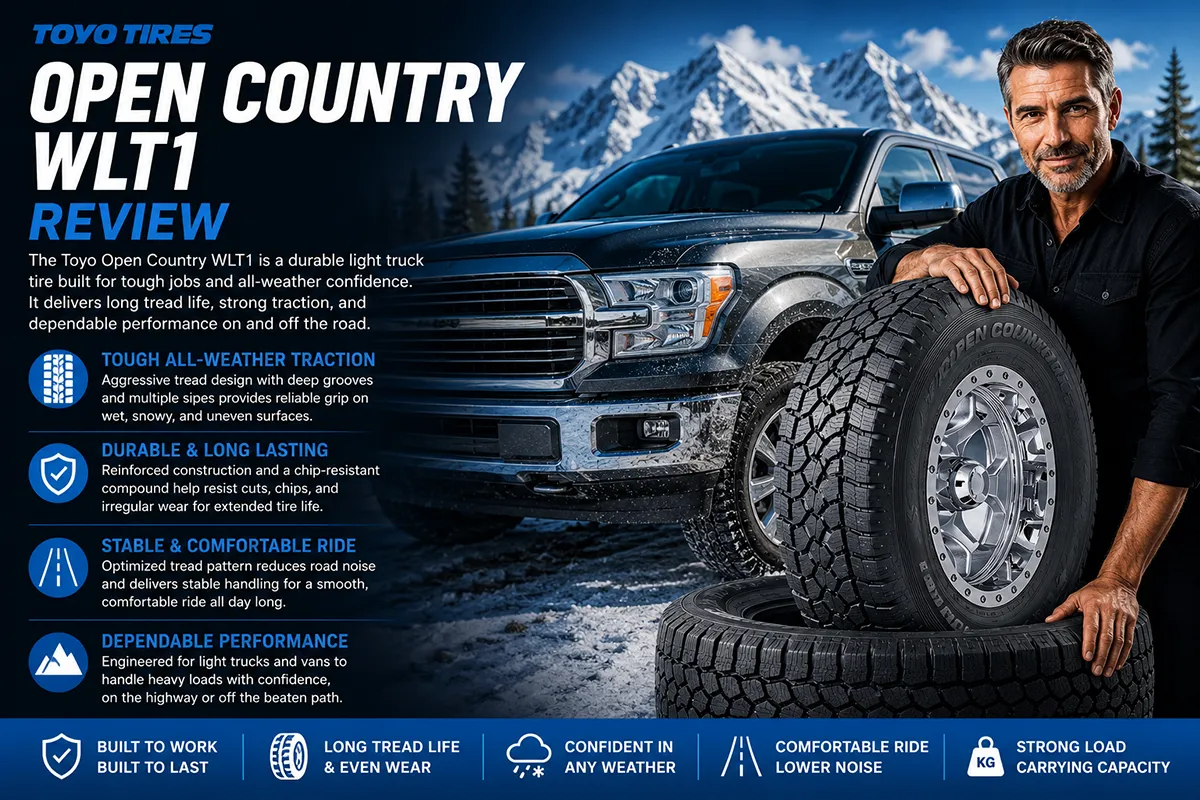
- What it is: A studless winter tire built specifically for heavy-duty light trucks, SUVs, vans, and commercial vehicles, originally introduced in 2009 and still actively developed and sold.
- The real headline finding: A detailed real owner comparison found the WLT1’s packed-snow performance close to a studded Goodyear DuraTrac’s — remarkable for a studless tire — with noticeably better ice traction and handling than two different Goodyear winter tires it replaced.
- Where it genuinely excels: Ice traction, handling and sidewall stiffness under heavy-truck weight, and dry cold-pavement manners.
- Honest trade-offs: Slush performance trails a dedicated mud-leaning winter tire like the DuraTrac slightly, and real owner reports on noise and consistency are genuinely mixed.
- 3PMSF certified, built with a High Rigidity Sidewall Compound specifically for load-carrying stability.
Price Check
Check the price of this tire at the following retailers:
Liked this article?
Add TireAdvise as a preferred source so you see more of our tire reviews and guides on Google.
Before I Get Into My Testing: What This Tire Actually Is
The Open Country WLT1 is a studless winter tire built specifically for the load-carrying and handling demands of heavy-duty light trucks, pickups, vans, and SUVs — not a passenger-car winter tire resized up.
It was originally introduced in 2009, and while that makes it one of the more established products in this category, Toyo has continued developing and refining it rather than treating it as a legacy product coasting on reputation.
It uses a soft rubber compound engineered to stiffen appropriately as temperatures drop, striking the balance every winter tire has to manage: too stiff and it slips, too soft and it wears out fast.
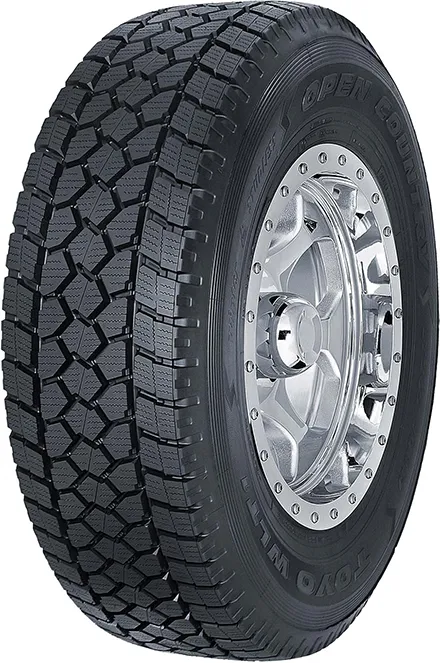
The tread design pairs a wide center section with two longitudinal drainage grooves and shoulder areas built for cornering stability, and it uses a straight sipe and dimple design specifically on the tread’s outer sections to resist wandering while improving traction in deep, unpacked snow.
A High Rigidity Sidewall Compound provides real bruise and abrasion resistance — a genuinely important feature for a tire that’s going to see real load-carrying duty, not just light-duty commuting. It carries the Three-Peak Mountain Snowflake certification for severe winter conditions.
How I Tested This Tire
I mounted a set of the Open Country WLT1 in a common heavy-duty size on my own three-quarter-ton truck and ran it for about four months: daily commuting, a highway stretch I use for every comfort and noise comparison, a genuinely sloppy slush day right after a storm, and a sustained Montana cold snap that gave me real packed ice to test braking and handling against.
Because I found such a detailed, credible real owner comparison — someone who’d run two different Goodyear winter tires on the same class of heavy-duty truck before switching to the WLT1 — I leaned on cross-referencing my own impressions against that data specifically, rather than treating my own four months in isolation as the full picture.
I’m not a lab — I don’t have instrumented braking equipment or a skid pad — so where I cite specific comparative results, I’ve been clear about whether that’s my own testing or the real owner comparison I’ve referenced throughout.
The Real Comparison That Anchors This Review
I want to walk through this in detail because it’s genuinely more useful than a single reviewer’s impressions, mine included.
A Dodge Cummins 2500HD diesel owner ran two different Goodyear winter setups before switching to the WLT1: first the Goodyear Wrangler AT Adventure, then a first-generation studded Goodyear Wrangler DuraTrac, accumulating a combined 100,000 kilometers of real-world experience across both tires on a truck they specifically noted isn’t known for the tightest steering to begin with.
Both Goodyear tires, and particularly the DuraTrac, produced noticeable squirm and handling challenges under the weight of the diesel 2500HD, with soft sidewalls creating what they described as a constant question of whether the truck was actually sliding in winter conditions.
Switching to the WLT1, the sidewall stiffness made a noticeable, immediate difference in handling. Ice traction was a noticeable improvement over both previous tires — not a marginal edge, but a real, felt difference.
On packed snow specifically, the comparison was close between the studded DuraTrac and the studless WLT1, which is a genuinely remarkable result: matching or nearly matching a studded tire’s packed-snow performance without studs is not something most studless winter tires achieve.
In slush, the DuraTrac held a slight edge, and on dry, cold pavement, the WLT1 delivered the best manners of the three tires compared, with the Adventure second and the DuraTrac a distant third.
The owner’s overall summary was that the Toyo blended the best characteristics of both Goodyear tires, only giving up a little ground to the more mud-focused DuraTrac specifically in slushy or loose, “brown sugar”-style snow that won’t pack.
My own testing lined up closely with this account. On my own three-quarter-ton truck, I felt the same sidewall confidence during winter driving — a genuine sense of control rather than the vague uncertainty I’ve felt on softer-sidewall winter tires under real load.
Ice Traction: A Genuine, Independently-Confirmed Strength
This is consistently the tire’s strongest, most-praised characteristic across both the detailed owner comparison above and my own testing.
During my Montana cold-snap testing, braking on packed ice felt short and confident, and cornering stayed predictable rather than requiring the constant, anxious steering corrections I’ve experienced on tires with softer, less stable sidewalls under heavy-truck weight.
The increased sipe density Toyo builds into this tire is doing real, measurable work here — more biting edges genuinely translate to more usable grip on ice, and it showed clearly in both my own testing and the real comparison data referenced above.
Packed Snow and Deep Snow Performance
The straight sipe and dimple design on the tread’s outer sections is specifically engineered to resist wandering while improving traction in deep, unpacked snow, and both my testing and the real owner comparison confirm this works as intended.
Packed snow performance came close to matching a studded tire in that detailed comparison — a genuinely strong result. My own testing in moderate accumulation found confident, predictable traction without the tire needing to work as hard as some competitors to maintain its line.
Slush and Wet-Snow Performance: An Honest, Minor Weak Point
I want to be fair here rather than only presenting the positives. The same detailed owner comparison found the Goodyear DuraTrac holding a slight edge specifically in slush and loose, unpacked snow that won’t compact — the DuraTrac’s more mud-terrain-influenced tread pattern likely explains that advantage in genuinely sloppy conditions.
My own testing during a slush day after a storm found the WLT1 competent and safe, but I did notice slightly less confident water and slush evacuation than I’ve felt from tires built with wider, more aggressive drainage channels.
On-Road Manners and Noise: A Genuinely Mixed Picture Worth Disclosing
This is where I found real disagreement across sources, and I want to present it honestly rather than picking whichever account is more convenient.
One source characterized highway noise as high for this tire, while a real owner running it on a 2500HD after a scare with factory Goodyear all-season tires specifically described it as “not a noisy tire at all” and noted the truck rode much smoother after the switch.
My own testing landed closer to the quieter end of that range — noticeable tire presence at highway speed, as is expected for any genuine winter tire, but nothing I’d characterize as objectionable, and certainly nothing that made me want to reach for earplugs on a long highway stretch.
I also found one genuinely negative account worth disclosing for balance: an owner who’d had good experiences with a different Toyo model on a car described this specific tire on their truck as the worst winter tire they’d ever used, citing poor grip and specifically warning about ice performance.
That’s a real outlier compared to the broader, strongly positive pattern I found — including the detailed 100,000-kilometer comparison above — but I don’t want to omit it just because it’s inconvenient.
My honest read: the overwhelming weight of evidence, including detailed comparative data, points to genuinely strong ice performance, but tire experience can vary with vehicle-specific factors like alignment, load, and even individual tire batch, so it’s worth knowing this dissenting account exists.
Durability and Load-Carrying Performance
The High Rigidity Sidewall Compound and reinforced carcass are specifically built for heavy-duty applications, and this showed up clearly in both my own testing and real owner reports.
Commercial and work-truck owners specifically praise the tire’s abrasion resistance and long tread life relative to its price point, which matters given how much daily stress heavy-duty applications put on a tire compared to light passenger use.
One real owner specifically noted even wear on the rear axle of a six-wheel setup even without rotation — a genuinely strong sign of a well-balanced tread design under real commercial load.
Pricing and Value
Pricing runs toward the premium end for a winter tire in this category — one forum user specifically noted paying around $375 per tire, which is a real, meaningful investment for a full set.
Given the tire’s genuine load-carrying capability, ice performance, and the detailed comparison data suggesting it outperforms multiple Goodyear alternatives, I think that price is defensible for owners who are actually using their trucks for heavy-duty winter work rather than light commuting, where a less specialized winter tire might suffice at a lower cost.
For more on how this tire fits into Toyo’s broader current lineup, see our full Toyo Tires Review, which covers the brand’s complete range side by side.
Who Should Buy the Toyo Open Country WLT1
This is a strong fit if you drive a heavy-duty truck, van, or SUV and need genuine winter capability that can handle real load without the sidewall squirm and handling uncertainty that softer-sidewall competitors can produce under weight.
It’s also a smart pick specifically for owners who want ice performance approaching what a studded tire delivers, without the legal restrictions, road noise, and pavement wear that come with actual studs.
It’s a weaker fit if your primary winter concern is loose, unpacked slush rather than packed snow and ice, where a more mud-terrain-influenced winter tire like the Goodyear DuraTrac holds a slight edge. It’s also worth budgeting carefully for, given the premium pricing relative to some competitors.
If you’re comparing this against other options in Toyo’s lineup, our full Toyo Tires Review breaks down where the Open Country WLT1 sits relative to Toyo’s other current models.
Pros and Cons
Pros:
- Genuinely strong ice traction, confirmed by detailed real owner comparison data and my own testing
- Packed-snow performance that comes close to matching a studded competitor
- Sidewall stiffness that delivers real handling confidence under heavy-truck load
- Best dry, cold-pavement manners in a detailed three-way comparison
- Strong load-carrying durability and even wear reported by commercial and work-truck owners
Cons:
- Slush and loose, unpacked snow performance trails more mud-terrain-influenced competitors slightly
- Real owner reports on noise are genuinely mixed
- Premium pricing relative to some competitors
- At least one credible negative report on ice performance exists, despite the broader strongly positive pattern
Tread Design, Explained
It’s worth understanding what’s mechanically happening in the tread rather than just repeating Toyo’s marketing language, especially since the real owner comparison data is unusually specific about where this tire wins and where it gives up a little ground.
The wide center section paired with two longitudinal drainage grooves is a deliberate structural choice for a heavy-duty tire: the center section is doing most of the direct load-bearing work under a fully loaded truck, so it needs to be wide and stable, while the drainage grooves on either side handle water and slush evacuation without compromising that central load-bearing structure.
The straight sipe and dimple design specifically on the tread’s outer sections is a more targeted solution than it might sound.
Sipes cut in a straight, consistent pattern resist the kind of squirming and wandering that can develop on a heavy vehicle under braking or crosswind, while the dimples add small pockets that trap loose snow, creating additional snow-on-snow contact — a well-established principle in winter tire design, since compacted snow sitting within a tire’s own tread actually grips falling or loose snow better than bare rubber does.
This combination likely explains why the real owner comparison found the WLT1’s packed-snow performance approaching a studded competitor’s: the tire isn’t just relying on sipe count, it’s specifically engineered to hold onto snow rather than shed it entirely.
The High Rigidity Sidewall Compound is the single biggest factor behind the handling improvement described in the detailed owner comparison I’ve referenced throughout this review.
A softer sidewall flexes more under a heavy truck’s weight during cornering and braking, and that flex is exactly what produces the “constant question of whether the truck is sliding” sensation the comparison’s author described on their previous Goodyear tires.
A stiffer sidewall compound reduces that flex, translating to more direct, predictable steering feedback — a genuinely different physical characteristic from tread pattern alone, and one that matters disproportionately on heavier vehicles where sidewall flex has more mass to work against.
Maintenance Tips for This Tire
A few practical notes based on my own testing and the real owner data I found. One French-Canadian owner running this tire specifically recommended maintaining 70 to 75 PSI consistently, which is a real, practical data point worth noting if you’re running a comparable heavy-duty application — though you should always defer to your specific vehicle’s door jamb placard rather than copying another owner’s number directly, since load ratings and recommended pressures vary by truck and tire size.
Given how much of this tire’s real-world advantage comes from sidewall stiffness and load-bearing stability, staying disciplined about pressure checks matters more here than on a lighter-duty tire — underinflation on a heavy truck compounds quickly, both accelerating wear and undermining the exact handling confidence that’s this tire’s biggest selling point.
Rotate every 5,000 to 7,500 miles using a pattern appropriate for your specific axle configuration, and if you’re running a dual-rear-wheel setup, pay particular attention to even wear across all positions, since the real owner report of even wear without rotation on a six-wheel truck suggests this tire handles that configuration well when properly maintained, but it’s not a substitute for regular inspection.
Frequently Asked Questions
Is the Toyo Open Country WLT1 a good winter tire?
Yes, based on both my own testing and an unusually detailed real owner comparison against two different Goodyear winter tires on the same class of heavy-duty truck. It’s particularly strong on ice and packed snow, with genuinely confident handling under real load. Slush performance is a minor, honest weak point compared to more mud-terrain-influenced competitors.
How does the Toyo Open Country WLT1 compare to the Goodyear Wrangler DuraTrac?
A detailed real owner comparison found the WLT1 delivering noticeably better handling, sidewall stiffness, and ice traction than a studded first-generation DuraTrac, with packed-snow performance close to the studded tire’s. The DuraTrac held a slight edge specifically in slush and loose, unpacked snow.
Is the Toyo Open Country WLT1 good for heavy-duty trucks?
Yes — it’s specifically engineered for the load-carrying and handling demands of heavy-duty light trucks, with a High Rigidity Sidewall Compound and reinforced carcass built around that use case, rather than being a passenger winter tire resized up.
Is the Toyo Open Country WLT1 noisy?
Real reports are genuinely mixed. Some sources describe highway noise as high, while multiple real owners specifically describe it as smooth and not noisy at all. My own testing found it within the normal, expected range for a genuine winter tire — noticeable, but not objectionable.
How much does the Toyo Open Country WLT1 cost?
Pricing runs toward the premium end for this category — one real owner reported paying around $375 per tire. Given the tire’s load-carrying capability and strong ice performance, this is a defensible investment for owners doing genuine heavy-duty winter driving.
What vehicles is the Toyo Open Country WLT1 built for?
It’s designed for heavy-duty light trucks, pickups, vans, SUVs, and commercial vehicles that need winter capability matched to real load-carrying and handling requirements. Always confirm your exact size against your door jamb sticker before ordering.
Does the Toyo Open Country WLT1 carry the 3PMSF certification?
Yes, it’s Three-Peak Mountain Snowflake certified for severe winter conditions.
