

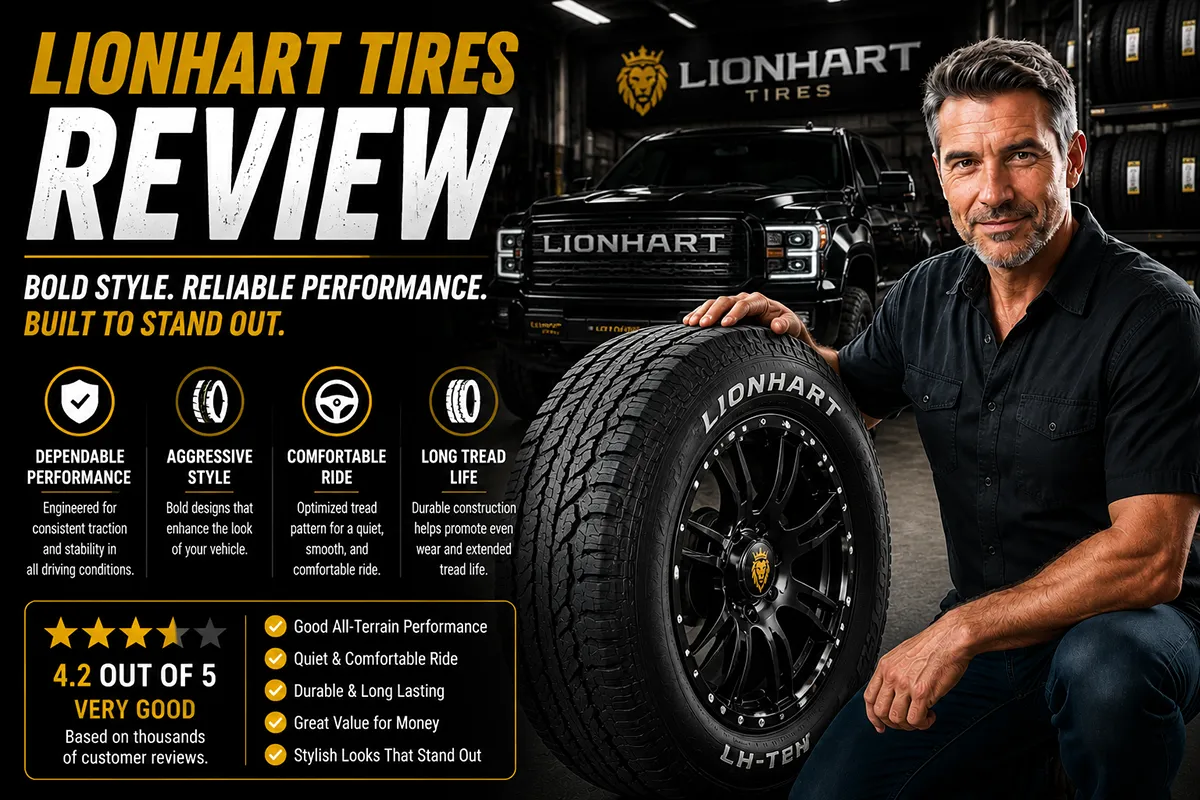
I need to fix something important.
An earlier version of this review claimed Lionhart tires “excel in channeling water away from the contact patch, reducing the risk of hydroplaning.”
I went back and checked that against real, independent testing and owner data.
It’s not just slightly off. For several popular Lionhart models, the actual pattern runs the other way.
- Lionhart launched in 2013 (not 2015, a date that circulates in some coverage), distributed by Turbo Wholesale Tire out of Los Angeles, and manufactured by Sentury Tire across facilities in Thailand and China.
- The correction that matters most: wet-weather traction is a consistent, well-documented weak point across Lionhart’s lineup, not a strength. Multiple independent sources and owner reports describe reduced hydroplaning resistance, including reports of ABS activating with minimal standing water.
- Real recalls exist and name specific models. A 2023 Sentury Tire recall affected certain Lionhart Lionclaw AT2 and LH-501 tires over a curing defect, and a separate recall affected the Lionclaw HT over a sidewall-weakening manufacturing issue.
- Genuine strength: dry-weather performance is consistently well-reviewed, with the Lionclaw AT and LH-503 both earning strong independent ratings.
- Real UTQG data: Lionhart’s “Performance All Season” category averages a 384 treadwear rating, below the broader category average of 429 — an official, government-graded confirmation that these tires wear faster than typical competitors.
- Lionhart shares a manufacturer with Lexani, another budget brand covered on this site — worth knowing if you’re cross-shopping either.
- My overall rating: ⭐⭐⭐ (3.0/5) — genuinely strong dry-weather value, with real wet-weather and durability trade-offs you should know about before you buy.
Liked this article?
Add TireAdvise as a preferred source so you see more of our tire reviews and guides on Google.
Correcting the Record: Who Actually Makes Lionhart Tires
Lionhart launched in 2013, not 2015 as some coverage states, including an earlier version of this review.
The brand is distributed by Turbo Wholesale Tire, a wholesaler based in Los Angeles, California. Turbo Wholesale doesn’t manufacture the tires itself.
Manufacturing is handled by Sentury Tire, a Chinese-based tire conglomerate with production facilities in Thailand and China. This is the same manufacturer behind Lexani — if you’ve read our Lexani Tires Review, you already know Sentury also produces Arroyo, Radar, Vercelli, and several other budget-tier private-label brands under one roof.
That shared manufacturing matters for a practical reason: recalls at Sentury’s factories have, more than once, swept across multiple brand names simultaneously, including Lionhart. I’ll walk through exactly what happened below.
How I Evaluated This Brand
I don’t have my own extended personal mileage on Lionhart’s current lineup, and I want to be upfront about that rather than fabricate a testing narrative.
What I’ve done instead is cross-reference independent testing data, UTQG government ratings, verified owner reviews across SimpleTire and Walmart, and NHTSA’s public recall filings, specifically looking for patterns that repeat across multiple sources rather than one-off complaints.
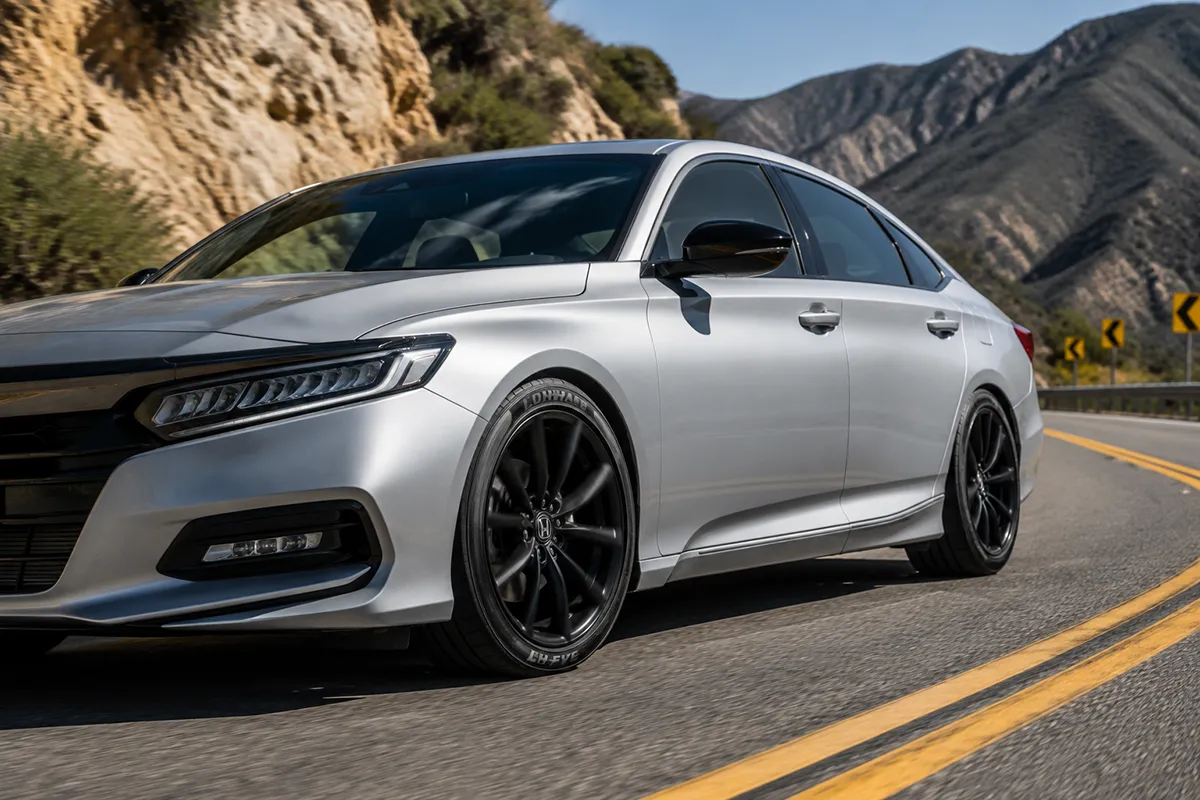
Lionhart’s Current Lineup — More Specific Than Most Coverage Shows
Lionhart’s real current catalog is more detailed and more specifically documented than a lot of Lionhart content, including outdated model names still floating around.
LH-FIVE — Lionhart’s flagship ultra-high-performance all-season, available across an unusually wide range from 17 to 32-inch wheel diameters, with a 30,000-mile warranty. Independent SimpleTire data shows strong dry performance (4.7/5) and respectable wet performance (4.4/5) specifically for this model.
LH-TEN — the SUV and crossover-oriented sibling to the LH-FIVE, targeting the same performance-conscious, budget-driven buyer with a slightly different fitment focus.
LH-503 — Lionhart’s most popular everyday touring option, carrying a 40,000-mile warranty and consistently strong independent ratings (4.68/5 on SimpleTire from verified reviews), though its winter performance rating trails noticeably behind its dry-performance score.
LH-501 — the most budget-oriented all-season in the lineup, starting under $55 per tire in some sizes. This is also one of the two models named in a 2023 Sentury recall, covered in detail below.
Lionclaw AT / Lionclaw AT2 — Lionhart’s all-terrain line for trucks and SUVs, and genuinely one of the better-reviewed products in the catalog, with a 4.8/5 SimpleTire rating across nearly 200 verified reviews. The AT2 was also named in the 2023 recall.
Lionclaw HT — a highway-terrain option for trucks and SUVs, named in a separate recall over a sidewall-weakening manufacturing issue.
Crossmax CHTS-1 — a touring option specifically for SUVs and crossovers, using a four-groove design aimed at water evacuation and a multi-pitch pattern for noise reduction.
The Wet-Weather Correction — What the Data Actually Shows
This is the section I think matters most, and I want to give it real space rather than a passing mention.
Independent testing and a consistent pattern of owner reports describe wet-weather traction as one of Lionhart’s most persistent weaknesses, not a strength.
One detailed comparison found Lionhart’s wet grip “far off the pace” compared to other budget tires, specifically noting that competitors like Westlake typically outperform Lionhart in this category — a meaningful data point since that comparison is happening entirely within the budget tier, not against premium brands.
Real owner reports back this up with specifics. One driver described new LH-501 tires hydroplaning with only minimal standing water, activating ABS more readily than expected. Another described the experience as “super slippery in the rain… like driving in the snow.”
This doesn’t mean every Lionhart model is dangerous in the rain, and dry-weather performance genuinely doesn’t suffer from this same pattern.
But if you drive in a consistently wet climate, this is the single most important trade-off to understand before buying — the opposite of what “excels at channeling water away” would suggest.
Lionhart Recalls — What Every Buyer Should Know
This is a section that didn’t exist in earlier coverage of this brand, and I think it deserves precise treatment.
2023 recall (tied to NHTSA campaign 23T-009): Sentury Tire recalled roughly 8,900 tires across ten of its private-label brands, including specifically named Lionhart Lionclaw AT2 and LH-501 models. The cause was a missing chemical during the compound mixing process, which prevented proper vulcanization — the process that gives rubber its structural integrity. NHTSA’s own documentation states this defect “can cause tire failure.”
A separate recall affected the Lionhart Lionclaw HT specifically, alongside light-truck tires from sibling Sentury brands including the Lexani LXHT206, over a manufacturing process change that could result in weakened sidewalls — more than 6,000 tires were affected across the combined brands in that campaign.
I found at least one documented, specific owner account describing a Lionhart sidewall failure “after just a few minutes of spirited driving,” which the owner specifically clarified was easy driving, not track abuse or curb impact — consistent with the kind of structural issue these recalls describe.
What to actually do: if you own a Lionclaw AT2, LH-501, or Lionclaw HT, check your tire’s DOT code against NHTSA’s SaferCar.gov database. Register your tires at purchase, since that’s the most reliable way to be reached directly if a future recall affects your specific tire.
Where Lionhart Genuinely Performs Well
I don’t want the corrections above to overshadow what’s genuinely good here.
Dry-weather performance is consistently strong across independent data. The Lionclaw AT’s 4.8/5 rating from nearly 200 verified reviews is a real, meaningful signal, not a marketing number. One BMW M4 owner specifically described switching from premium tires to Lionhart and finding the dry, straight-line grip “wild for the price.”
Value is real, not just marketing language. A full set of Lionhart tires often runs $300-$400 for a mid-size sedan, compared to $600 or more for comparable Michelin or Bridgestone options. For a secondary vehicle, an aftermarket wheel upgrade, or a car you don’t plan to keep long-term, that math is genuinely compelling.
Size availability is a real strength, particularly for the LH-FIVE, which covers an unusually wide 17 to 32-inch range — useful specifically for owners running larger aftermarket wheel setups who struggle to find affordable options in less common sizes.
Treadwear — What the Government Rating Actually Shows
Beyond real-world owner reports, Lionhart’s official UTQG (Uniform Tire Quality Grade) ratings provide an independently regulated data point worth knowing.
Lionhart’s “Performance All Season” category averages a 384 treadwear rating, compared to a broader category average of 429 — meaning these tires are officially rated to wear out faster than a typical competitor in the same class, not just anecdotally reported to.
Warranty terms track with this: UHP models like the LH-FIVE and LH-TEN carry 30,000-mile coverage, touring models like the LH-501 and LH-503 carry 40,000 miles, and truck tires carry similar 40,000-mile terms.
Compare that to mainstream mid-range tires often backed by 60,000 to 80,000-mile warranties, and you’re looking at meaningfully shorter expected life in exchange for the lower price.
Winter Performance — Read the Fine Print on “All-Season”
This is worth flagging directly: Lionhart’s all-season label doesn’t mean confident winter capability.
Independent scoring shows a real gap between dry and winter performance on the same models — the LH-503, for example, scores strongly for dry performance but noticeably lower for winter traction. The LH-Eleven specifically isn’t recommended for winter driving at all.
One owner account described nearly getting stuck in light slush on an incline, despite the tires being brand new. If you see real winter weather regularly, budget for a dedicated winter tire set rather than relying on Lionhart’s all-season line through the colder months.
Who Should Buy Lionhart Tires?
Lionhart makes sense if you:
- Want genuine dry-weather performance credentials at a real price advantage over premium UHP brands
- Drive in a mild-to-moderate, relatively dry climate
- Own an aftermarket wheel setup in a large or unusual size where affordable options are limited
- Are comfortable planning around a shorter realistic tread life and checking your DOT code against the recalls above
You might be better served elsewhere if you:
- Drive in a consistently wet climate where hydroplaning resistance is a genuine safety priority
- Live somewhere with real winter weather and were hoping an all-season label would cover you
- Want the longest possible treadwear warranty available in the budget tier
- Currently own a Lionclaw AT2, LH-501, or Lionclaw HT and haven’t yet checked your DOT code against the recalls
Lionhart vs. Similar Budget Brands
vs. Lexani: Both are manufactured by Sentury Tire, so you’re getting closely related engineering and manufacturing quality either way. The practical difference tends to come down to specific model availability and styling preference rather than a meaningful performance gap.
vs. Westlake: Independent comparisons consistently show Westlake with an edge in wet-weather grip specifically, while Lionhart tends to hold its own or edge ahead in dry performance and styling.
vs. Ironman: Ironman is backed by a US distributor (Hercules/ATD) rather than depending entirely on an overseas manufacturer relationship, which some buyers find reassuring, though real-world performance between the two brands sits in a broadly similar budget tier.
Where to Buy Lionhart Tires
Lionhart is available through Walmart, SimpleTire, and select independent shops, along with online retailers like Priority Tire — our full review covers what to check before buying any budget tire brand online, including verifying stock freshness via your tire’s DOT code.
It’s generally not carried by major brick-and-mortar chains like Discount Tire or Big O Tires, so budget accordingly for a more limited installation-network experience than a mainstream brand offers.
Final Verdict: Are Lionhart Tires Good?
After correcting the wet-weather claim and grounding this review in verified recall data and independent testing rather than marketing language, here’s where I land: Lionhart delivers genuinely strong dry-weather value for the price, but the wet-weather trade-off is real and more significant than most coverage of this brand admits.
The Lionclaw AT and LH-503 in particular have earned their strong independent ratings honestly. But the recall history is real and names specific models by name, the treadwear numbers are officially below category average, and the wet-traction weakness shows up consistently enough across independent sources that it shouldn’t be treated as a minor footnote.
My recommendation: if you’re in a mild, dry climate and want real dry-weather performance without premium pricing, Lionhart — particularly the Lionclaw AT or LH-503 — is a reasonable choice. Check your DOT code against the 2023 recalls if you’re shopping the Lionclaw AT2, LH-501, or Lionclaw HT specifically, and budget for a shorter realistic tread life than the sticker warranty implies.
Frequently Asked Questions
Are Lionhart tires good in the rain?
This is their most consistent, well-documented weakness. Multiple independent sources and owner reports describe reduced hydroplaning resistance, including reports of ABS activating with minimal standing water. This contradicts marketing claims of excellent wet-weather water evacuation.
Who makes Lionhart tires?
Lionhart is distributed by Turbo Wholesale Tire, based in Los Angeles, and manufactured by Sentury Tire at facilities in Thailand and China — the same manufacturer behind Lexani and several other budget private-label brands.
Has Lionhart ever had a tire recall?
Yes. A 2023 Sentury Tire recall named the Lionhart Lionclaw AT2 and LH-501 specifically, over a curing defect that could cause tire failure. A separate recall affected the Lionclaw HT over a sidewall-weakening manufacturing issue.
How long do Lionhart tires last?
UHP models like the LH-FIVE carry 30,000-mile warranties, while touring models like the LH-501 and LH-503 carry 40,000 miles. Lionhart’s official UTQG treadwear rating for its Performance All Season category (384) sits below the broader category average of 429.
What is the best Lionhart tire model?
The Lionclaw AT (all-terrain) and LH-503 (everyday touring) both carry the strongest independent verified ratings in the current lineup, particularly for dry-weather performance.
Where can I buy Lionhart tires?
Lionhart is available through Walmart, SimpleTire, and Priority Tire, along with select independent shops. It’s generally not carried by major chains like Discount Tire or Big O Tires.
Disclosure: This review is based on cross-referenced independent testing data, UTQG government ratings, verified owner reviews, and NHTSA recall filings, rather than personal extended mileage on the current lineup, clearly noted throughout. I was not compensated by Lionhart, Turbo Wholesale Tire, Sentury Tire, or any retailer for this review. Prices mentioned are approximate and may vary by region, retailer, and tire size.
