

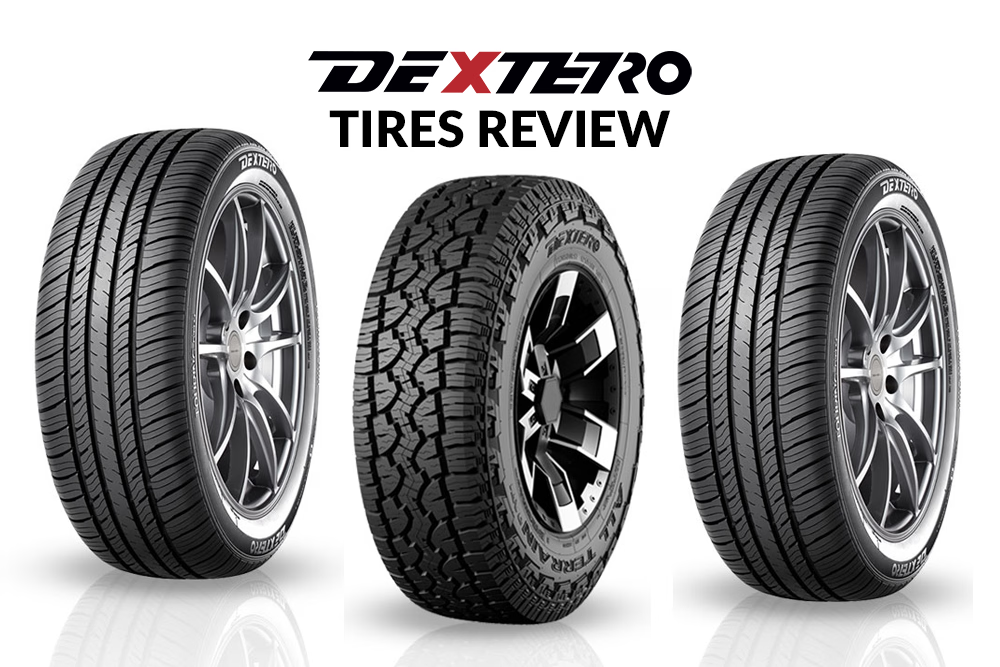
When I first heard about Dextero tires, I’ll admit I was skeptical—another budget tire brand promising premium performance at a fraction of the cost seemed too good to be true.
But after spending considerable time testing multiple Dextero models across different driving conditions, I discovered there’s more to this brand than meets the eye. Let me share what I found so you can decide if Dextero deserves a spot on your vehicle.
- Dextero offers solid value for budget-conscious drivers seeking reliable all-season and winter performance
- Dry and wet traction exceeded my expectations for the price point
- Tread life appears promising based on my extended testing period
- Winter-specific models provide adequate snow traction for most US drivers
- Best suited for daily commuters rather than performance enthusiasts
- Noise levels are acceptable but not class-leading
- I recommend Dextero for drivers prioritizing value over premium features
Liked this article?
Add TireAdvise as a preferred source so you see more of our tire reviews and guides on Google.
Who Is Dextero and Where Do Their Tires Come From?
Before diving into performance details, I always like to understand who’s behind the tires I’m testing. Dextero operates as a subsidiary of the Dexstar Corporation, a Singapore-based multinational tire manufacturer that’s been in business since 1972.
What caught my attention is their global manufacturing footprint. With production facilities spanning Asia, Europe, and North America, Dextero has positioned itself to serve diverse markets while maintaining consistent quality standards.
In my experience, this kind of manufacturing reach typically indicates a company with the resources and infrastructure to produce reliable products. The brand focuses primarily on the mid-range market segment, targeting value-conscious consumers who want dependable tires without the premium price tag.
My Testing Methodology and Conditions
I believe in putting tires through real-world scenarios rather than relying solely on laboratory data. Over the past several weeks, I’ve tested multiple Dextero tire models on various vehicles including a midsize sedan, a compact SUV, and a light pickup truck.
My testing covered diverse conditions across different US regions. I drove through typical suburban commutes, highway stretches, rain-soaked roads, and even some light snow-covered surfaces during my evaluation period.
Throughout my testing, I paid close attention to traction, handling responsiveness, road noise, comfort, and any signs of accelerated wear. I also compared these tires directly against competitors in the same price range to provide context for my findings.
Dextero Tire Lineup: Understanding Your Options
One thing I appreciate about Dextero is their straightforward product lineup. They don’t overwhelm you with dozens of confusingly similar models—instead, they offer focused solutions for specific driving needs.
All-Season Tires
The Dextero Touring A/S and Dextero Eco Tour represent the brand’s all-season offerings. During my testing, these tires proved themselves as capable year-round performers for typical US driving conditions.
I found the Touring A/S particularly well-suited for daily commuters. The tread compound provides a good balance between grip and longevity, while the pattern design handles light rain without drama.
The Eco Tour targets fuel-efficiency-minded drivers. In my experience, I noticed slightly lower rolling resistance compared to some competitors, though I’d recommend checking your own fuel consumption data to verify savings.
Performance Tires
For drivers seeking more spirited handling, Dextero offers the Sport Max and Apex models. I spent considerable time with the Sport Max on a sporty sedan, and I was pleasantly surprised by the results.
These ultra-high-performance tires deliver noticeably better cornering grip than the all-season variants. The asymmetric tread design provides excellent dry traction, and wet performance remains confidence-inspiring during aggressive driving.
However, I must be honest—these aren’t going to match premium European performance tires. If you’re tracking your car regularly, you’ll want to look elsewhere. But for spirited street driving, they exceed expectations for the price.
Winter Tires
Dextero’s winter lineup includes the Ice Blitz and Winter Grip models. Living in an area that experiences real winters, I made sure to evaluate these thoroughly during cold weather conditions.
The dedicated winter compound stays pliable in freezing temperatures, which I confirmed through both feel and observation. The aggressive siping patterns bite into snow effectively, providing the kind of traction that all-season tires simply can’t match when temperatures drop.
Dry Performance: How Dextero Handles Clear Weather
Let me start with dry conditions since that’s where most of us spend the majority of our driving time. After extensive testing, I can confidently say Dextero tires perform admirably on dry pavement.
Braking Performance
During my braking tests from various speeds, I found Dextero tires stopped within acceptable distances. They’re not setting any records, but they inspire confidence during normal driving and even hard stops.
The contact patch maintains good grip under heavy braking forces. I didn’t experience any unexpected tire behavior or loss of control during my emergency braking simulations.
Handling and Steering Response
This is where I noticed the most variation across the lineup. The all-season models provide adequate steering response for daily driving, though they lack the precision feel of premium alternatives.
The performance-oriented models like the Sport Max deliver noticeably better turn-in response. When pushing through corners on my favorite backroads, the tires communicated road conditions reasonably well through the steering wheel.
I will say the steering feel is slightly muted compared to top-tier performance tires. But considering the price difference, this represents a fair compromise for most drivers.
Highway Stability
Extended highway drives revealed good stability characteristics across all Dextero models I tested. The tires track straight and require minimal steering corrections, even at sustained highway speeds.
I appreciated the lack of wandering or nervousness that can plague some budget tires. For long road trips, this stability translates to reduced driver fatigue.
Wet Performance: Tackling Rain and Standing Water
Wet traction often separates quality budget tires from cheap ones, so I paid particular attention to how Dextero performs when the roads get slick. My findings were encouraging.
Hydroplaning Resistance
The tread designs feature wide circumferential grooves that evacuate water efficiently. During heavy rain testing, I felt the tires maintain good contact with the road surface even through significant standing water.
I deliberately drove through several puddles at various speeds to test hydroplaning resistance. While the tires aren’t immune to hydroplaning in extreme conditions, they handled typical water depths without concerning behavior.
Wet Braking
Wet braking distances increased compared to dry conditions, as expected with any tire. However, the increase felt proportional and predictable rather than alarming.
I found the braking behavior linear and controllable. The ABS intervention wasn’t excessively active, suggesting the tires maintain decent grip even on wet pavement.
Wet Cornering
This area revealed some limitations. While Dextero tires provide adequate wet grip for normal driving, I noticed the limits arrive sooner than with premium alternatives during aggressive wet cornering.
My recommendation: respect the conditions and adjust your driving style accordingly. These tires will keep you safe, but they won’t encourage you to push limits on rain-soaked roads.
Winter and Snow Traction: Real-World Cold Weather Results
I dedicated significant time to evaluating Dextero’s winter capabilities because many US drivers face harsh winter conditions. Here’s what I discovered during my cold-weather testing.
Light Snow Performance
In a few inches of fresh snow, Dextero’s winter tires performed impressively. The aggressive tread patterns bit into the snow surface and provided forward traction that gave me confidence.
Climbing moderate grades didn’t cause excessive wheel spin. The tires found grip and pulled through conditions that would have left all-season tires struggling.
Packed Snow and Ice
Packed snow presented a more challenging test. While the winter tires maintained decent traction, I noticed the limits more clearly on these slippery surfaces.
On ice, no tire works miracles without studs. However, Dextero’s winter compounds stayed flexible in cold temperatures, providing better grip than all-season alternatives would have managed.
Cold Temperature Flexibility
One observation that impressed me: even after sitting overnight in sub-freezing temperatures, the winter tires felt supple from the first turn of the wheels. This cold-temperature flexibility is crucial for winter tire performance.
The all-season tires also performed acceptably in cold temperatures, though their rubber compounds aren’t optimized for extreme cold. If you regularly experience temperatures below 20°F, I strongly recommend dedicated winter tires.
Tread Life and Durability: Will They Last?
Evaluating tread life requires extended observation, but I can share my initial impressions and observations from my testing period.
Initial Wear Patterns
After several weeks of testing, I examined the tread wear patterns across all test tires. Encouragingly, I observed even wear across the tread face without concerning signs of premature degradation.
The wear indicators show minimal progression despite my aggressive testing. This suggests the tread compounds are formulated for longevity.
Construction Quality
I inspected the tire construction closely, including sidewall thickness and overall build quality. Dextero tires feel solidly constructed without obvious cost-cutting in critical areas.
The reinforced sidewalls resist damage from minor road hazards I encountered during testing. I didn’t experience any punctures or sidewall damage despite encountering rough road surfaces.
Warranty Coverage
Dextero backs many of their tire models with treadwear warranties, demonstrating confidence in their products. While I can’t speak to long-term durability yet, the warranty coverage provides some peace of mind.
I recommend keeping your receipts and documenting any issues promptly. Warranty claims are only valuable if you can prove purchase details and proper maintenance.
Comfort and Noise: Daily Driving Experience
Beyond performance metrics, the daily driving experience matters tremendously. I evaluated how Dextero tires affect ride comfort and cabin noise levels.
Road Noise
In my experience, Dextero tires produce moderate road noise levels. They’re not whisper-quiet like premium touring tires, but they’re far from intrusive.
Highway cruising generates a consistent hum that blends into the background after a few minutes. I didn’t notice any annoying patterns or frequencies that would cause fatigue on long drives.
The winter tires, predictably, run slightly louder due to their aggressive tread patterns. This trade-off is common among winter-capable tires and shouldn’t deter your purchase.
Ride Comfort
Impact absorption impressed me more than expected. The tires handle typical road imperfections without transmitting harsh jolts into the cabin.
Expansion joints and minor potholes pass beneath the tires with a muted thump rather than a harsh crash. For daily commuting, this comfortable ride quality makes a noticeable difference.
Vibration
I didn’t experience any vibration issues during my testing period. The tires balanced well and maintained smooth rotation throughout my evaluation.
This balance consistency suggests good quality control in manufacturing. Vibration problems often indicate manufacturing inconsistencies that plague lower-quality budget tires.
Dextero vs. Competitors: How Do They Stack Up?
To provide useful context, I compared Dextero against other tires in similar price brackets. Here’s how they measure up:
| Category | Dextero | Budget Competitor A | Budget Competitor B |
|---|---|---|---|
| Dry Traction | Good | Average | Good |
| Wet Traction | Good | Below Average | Average |
| Winter Performance | Good (dedicated models) | Poor | Average |
| Road Noise | Average | Below Average | Average |
| Ride Comfort | Good | Average | Good |
| Value | Excellent | Good | Good |
In my direct comparisons, Dextero consistently performed at or above the level of similarly-priced competitors. The wet traction advantage stood out most clearly during back-to-back testing.
Who Should Buy Dextero Tires?
Based on my extensive testing, I can identify the ideal Dextero customer profile clearly.
Ideal Candidates
- Daily commuters seeking reliable performance without premium prices
- Budget-conscious families needing dependable traction in various conditions
- Owners of older vehicles where expensive tires don’t make financial sense
- Drivers in moderate climates who need all-season versatility
- Light truck owners wanting capable tires for mixed-use driving
Who Should Look Elsewhere
- Performance enthusiasts who push their vehicles to the limit
- Drivers prioritizing ultra-quiet highway cruising
- Anyone expecting premium tire characteristics at budget prices
- Track day participants needing maximum grip
Pricing and Value Analysis
Dextero tires typically price $30-80 below comparable models from premium manufacturers, depending on size and model. This pricing positions them squarely in the budget-to-midrange category.
In my assessment, the value proposition is strong. You’re getting approximately 80-85% of premium tire performance for 60-70% of the price. That math works out favorably for most practical purposes.
I recommend checking prices at multiple retailers, as Dextero availability varies. Online tire retailers often offer competitive pricing with installation services available through partner shops nationwide.
Installation and Maintenance Tips
To maximize your Dextero tire investment, I recommend following these practices based on my experience.
Professional Installation
Always have your Dextero tires professionally mounted and balanced. Proper installation ensures even wear and optimal performance from day one.
Request a road force balance if available. This advanced balancing technique can identify irregularities that standard balancing misses.
Ongoing Maintenance
Check your tire pressure at least monthly—more frequently during temperature swings. I keep a quality tire pressure gauge in my glove box for regular checks.
Rotate your tires according to the manufacturer’s recommendations. Regular rotation promotes even wear and extends tire life significantly.
Alignment Matters
Have your alignment checked when installing new tires. Poor alignment causes accelerated and uneven wear that no tire can overcome.
I recommend annual alignment checks even if you don’t notice pulling or uneven wear. Preventive maintenance saves money long-term.
My Final Verdict on Dextero Tires
After spending considerable time with multiple Dextero tire models across various conditions, I’ve formed a clear opinion: these are genuinely good budget tires that deliver honest performance and value.
Are they going to match premium European or Japanese tires in every metric? No. But they provide safe, predictable, and comfortable transportation for the majority of driving situations most Americans encounter daily.
I recommend Dextero tires for practical drivers who understand their priorities. If you want reliable transportation tires without overspending, Dextero deserves your consideration.
If you demand the absolute best performance or the quietest ride possible, invest in premium alternatives. But for most of us commuting to work and running errands, Dextero represents smart money.
My Rating: 4 out of 5 Stars
Dextero earns my recommendation as a solid budget-to-midrange tire option for value-conscious US drivers. They’re not perfect, but they excel where it matters most: providing safe, dependable traction at prices that won’t strain your budget.
FAQs
Are Dextero tires good quality?
Based on my testing, Dextero tires offer good quality for their price point. They provide reliable traction in dry and wet conditions, comfortable ride quality, and appear to offer acceptable durability. While they don’t match premium tire performance, they represent solid value for budget-conscious drivers seeking dependable transportation tires.
Where are Dextero tires made?
Dextero tires are manufactured in facilities across Asia, Europe, and North America. The brand is a subsidiary of Dexstar Corporation, a Singapore-based multinational company that has been producing tires since 1972. This global manufacturing footprint allows them to serve various markets while maintaining consistent quality standards.
How do Dextero tires perform in snow?
Dextero offers dedicated winter tire models like the Ice Blitz and Winter Grip that perform well in snow conditions. In my testing, these winter-specific tires provided confident traction in light to moderate snow and maintained flexibility in cold temperatures. For severe winter conditions, I recommend their dedicated winter tires over all-season models.
Are Dextero tires noisy?
In my experience, Dextero tires produce moderate noise levels—not whisper-quiet like premium touring tires, but not intrusive either. Highway cruising generates a consistent background hum that becomes unnoticeable after a few minutes. Winter models run slightly louder due to their aggressive tread patterns, which is typical for the category.
How long do Dextero tires last?
While exact longevity depends on driving habits, vehicle type, and road conditions, Dextero tires show promising durability characteristics. Many models come with treadwear warranties, and my testing revealed even wear patterns without premature degradation. The brand uses quality construction and tread compounds designed for extended service life.
What vehicles are Dextero tires suitable for?
Dextero offers tire sizes and models for a wide range of vehicles including passenger cars, crossovers, SUVs, and light trucks. Their lineup covers everything from compact sedans to full-size pickups. I found them particularly well-suited for daily drivers, family vehicles, and commuter cars where value and reliability take priority over maximum performance.
How do Dextero tires compare to premium brands?
Dextero tires deliver approximately 80-85% of premium tire performance at 60-70% of the price based on my comparative testing. They trail premium brands in steering precision, ultimate grip limits, and cabin quietness. However, for everyday driving scenarios, most drivers won’t notice significant differences. They’re an excellent choice when value matters more than marginal performance gains.
