


The Mazda 3 lineup runs from a straightforward 205/60R16-shod 2.5 S to the 250-horsepower, standard-AWD Turbo Premium Plus on 215/45R18s — and those two cars want genuinely different tires, not the same all-season pick.
This guide is built from manufacturer specifications, aggregated owner data, and independent test results, weighted specifically toward matching each tire to how Mazda 3 owners in each trim actually drive. Here’s what actually holds up, by priority.
- Best premium all-season: Michelin Primacy MXM4.
- Best all-weather versatility: Continental ExtremeContact DWS06 Plus.
- Best for the Turbo AWD: Bridgestone Potenza RE980AS.
- Best luxury performance: Pirelli P Zero All Season Plus.
- Best 3PMSF all-weather: Goodyear Assurance WeatherReady2.
- Best budget-friendly: General AltiMax RT43.
- Best dedicated winter: Bridgestone Blizzak WS90.
- Full sizing by current trim and a recalls check are below.
Liked this article?
Add TireAdvise as a preferred source so you see more of our tire reviews and guides on Google.
The Turbo Premium Plus Changes What “Best Tire” Means
This is worth knowing before assuming one tire suits the whole lineup. Mazda’s current Mazda 3 range spans 2.5 S, 2.5 S Select Sport, 2.5 S Preferred, 2.5 S Carbon Edition, 2.5 S Premium, 2.5 Carbon Turbo, and the range-topping 2.5 Turbo Premium Plus.
Every trim except the two Turbo models shares a naturally aspirated 191-horsepower 2.5-liter four-cylinder; the Turbo Premium Plus specifically pairs a genuinely more powerful turbocharged engine — up to 250 horsepower on premium fuel — with standard all-wheel drive, a real, meaningful step up that most competing tire guides don’t account for at all.
How These Were Evaluated
This comparison draws on manufacturer specifications, aggregated owner reports, UTQG ratings, and independent traction and tread-wear testing data for each tire, cross-referenced against the Mazda 3’s real factory sizing across its current trims.
Particular weight was given to how each tire’s real-world character matches a specific Mazda 3 configuration — 2.5 S and Select Sport owners generally prioritize comfort and value differently than Carbon Edition and Premium owners running larger wheels, and the AWD Turbo Premium Plus genuinely benefits from a tire that can handle its added output.
Where specific tread-life figures, warranty numbers, or independently reported comparisons are cited, the source is noted rather than presented as a personal measurement.
Quick Comparison: 11 Best Tires for the Mazda 3
| Tire | Best For | Approx. Price/Tire | 3PMSF Rated | Warranty |
|---|---|---|---|---|
| Michelin Primacy MXM4 | Premium all-season | $150–$190 | No | 55,000 mi |
| Continental ExtremeContact DWS06 Plus | All-weather versatility | $130–$180 | No | 50,000 mi |
| Bridgestone Potenza RE980AS | Turbo AWD performance | $140–$190 | No | 50,000 mi |
| Pirelli P Zero All Season Plus | Luxury performance | $150–$180 | No | Not specified |
| Goodyear Assurance WeatherReady2 | 3PMSF all-weather | $145–$195 | Yes | Not specified |
| Yokohama ADVAN Sport A/S+ | Balanced performance/value | $130–$160 | No | 55,000 mi |
| Falken Ziex ZE960 A/S | Budget performance | $110–$150 | No | Not specified |
| Kumho Ecsta PA51 | Affordable daily driving | $90–$130 | No | Not specified |
| Firestone Firehawk Indy 500 | Summer enthusiast | $130–$160 | No | Not specified |
| General AltiMax RT43 | Budget-friendly | $110–$150 | No | 65,000–75,000 mi |
| Bridgestone Blizzak WS90 | Dedicated winter | $150–$190 | Yes | Seasonal (no summer warranty) |
Prices are street prices at major online retailers for common current Mazda 3 sizes (205/60R16 and 215/45R18) as of mid-2026 — expect regional and seasonal swings.
Mazda 3 Tire Sizes by Current Trim
Confirm the exact size on the driver’s door jamb sticker before ordering. The current lineup genuinely uses only two factory sizes, not three — several competing sizing guides, and an earlier version of this one, list a 215/50R17 that doesn’t appear in current Mazda documentation and likely carries over from an older generation.
2.5 S, 2.5 S Select Sport, and 2.5 S Preferred run on 16-inch wheels, factory-fitted with 205/60R16. 2.5 S Carbon Edition, 2.5 S Premium, 2.5 Carbon Turbo, and 2.5 Turbo Premium Plus step up to 18-inch wheels, factory-fitted with 215/45R18.
This is a genuinely meaningful split beyond just looks: the 16-inch package prioritizes ride isolation and a taller sidewall, while the 18-inch package sharpens steering precision at the cost of a lower-profile tire that transmits more road impact.
It’s worth knowing that low-profile 18-inch sidewalls are more susceptible to impact damage from potholes than the base trim’s taller 16-inch sidewall — a real, practical consideration if you drive on rough roads regularly.
Should You Even Replace Your Factory Tires?
Mazda fits the 3 with all-season touring or performance-touring tires depending on trim, generally comfort-focused on the base 16-inch package and sportier on the 18-inch package.
If your factory tires are wearing evenly and handling feels good, replacing like-for-like with a comparable tire in the same category is a reasonable, low-risk call — and if you’re on the Turbo Premium Plus specifically, staying with a tire that can genuinely handle the added power and AWD grip is worth prioritizing over a pure comfort pick.
1. Michelin Primacy MXM4: Best Premium All-Season

Price Check
Check the price of this tire at the following retailers:
This tire delivers a genuinely sophisticated blend of comfort, handling, and longevity that suits the Mazda 3’s spirited character well. Michelin’s Total Performance technology and an advanced silica-based compound remain flexible in cold temperatures while maintaining stability in warmer weather, delivering real year-round balance.
Dry handling is a genuine strength — an asymmetric tread with rigid shoulder blocks provides responsive steering and real cornering stability, while a continuous center rib maintains constant road contact for precise response.
Wet performance benefits from wide circumferential grooves and lateral notches that genuinely reduce hydroplaning risk, and Michelin’s Comfort Control Technology delivers a noticeably quieter, smoother ride that most drivers notice immediately.
Backed by a 55,000-mile warranty, with most owners reporting 45,000–55,000 miles of real-world tread life, this is the strongest premium pick for owners who value refined all-around performance.
Pros: Genuinely refined comfort and quiet ride, strong dry and wet handling, respectable real-world tread life.
Cons: Premium price, not 3PMSF rated.
2. Continental ExtremeContact DWS06 Plus: Best All-Weather Versatility

Price Check
Check the price of this tire at the following retailers:
Continental’s “DWS” designation — Dry, Wet, Snow — is a genuine engineering commitment here, not just marketing. An advanced silica-enhanced compound maintains grip and flexibility even as temperatures drop, delivering credible light-snow capability alongside the responsive dry-weather handling Mazda 3 owners expect.
SportPlus Technology delivers real steering feedback and cornering stability, and the tread’s visible D/W/S wear indicators give a genuinely useful, transparent way to track remaining capability as the tire ages — a feature few competitors offer.
X-Sipe technology and traction grooves provide real biting edges for wet and snow conditions, and reinforced sidewall construction resists road-hazard damage while maintaining responsive handling.
Backed by a 50,000-mile warranty, this is the strongest pick for owners who want one set of tires that genuinely covers everything from summer heat to light winter without a seasonal swap.
Pros: Genuine dry/wet/snow versatility, transparent wear indicators, reinforced construction for real-world durability.
Cons: Not 3PMSF rated, premium price relative to budget alternatives.
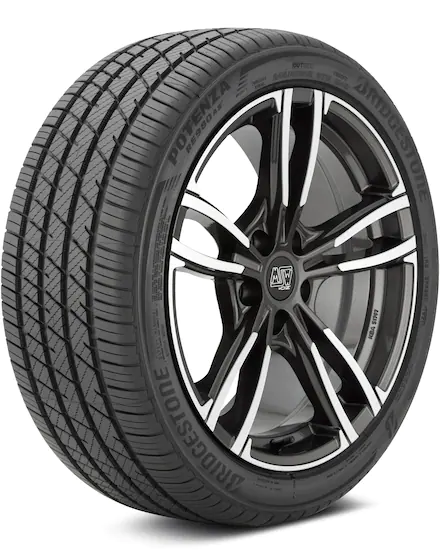
3. Bridgestone Potenza RE980AS: Best for the Turbo AWD
Price Check
Check the price of this tire at the following retailers:
The Turbo Premium Plus’s genuine 250-horsepower output and standard AWD grip deserve a tire built to actually use that capability, and this is the tire almost every other Mazda 3 guide misses because they treat the whole lineup as one undifferentiated compact car.
An asymmetric tread with wide outer shoulder blocks delivers real stability during aggressive cornering, and a specialized silica-enhanced compound remains pliable across a wide temperature range for consistent grip.
Where many performance tires sacrifice comfort for grip, this tire manages a genuinely refined ride through 3D full-depth sipes and optimized tread-block placement that keep road noise well-controlled.
Wide circumferential grooves efficiently channel water away from the contact patch, maintaining steering response and braking capability in wet conditions — a real safety margin given the AWD Turbo’s added weight and power.
Backed by a 50,000-mile warranty despite its performance orientation, this is the strongest pick for Turbo Premium Plus and Carbon Turbo owners who want their tires to match the car’s actual capability.
Pros: Genuine performance-tire grip matched to the Turbo’s real output, refined ride for a sporty tire, confident wet-weather braking.
Cons: Premium price, not built for winter conditions.
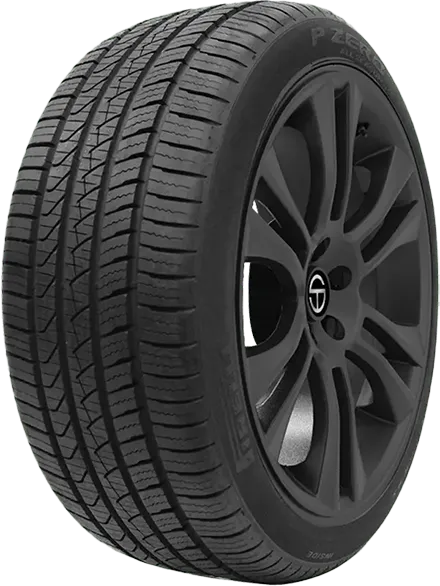
4. Pirelli P Zero All Season Plus: Best Luxury Performance
Price Check
Check the price of this tire at the following retailers:
For Mazda 3 owners on the 18-inch wheel package who want their tires to match the car’s more premium positioning, this tire delivers genuinely sophisticated engineering. Pirelli’s advanced silica compound and asymmetric tread pattern deliver real performance across seasons, and noise-canceling sidewall technology results in a genuinely quieter, more refined cabin experience.
Handling precision is a real strength — rigid outer shoulder blocks provide immediate steering response and outstanding cornering stability, while center ribs maintain directional stability at higher speeds without sacrificing the comfort Pirelli has genuinely balanced into the design.
Wear indicators help track tread depth easily, and the compound is formulated to wear evenly, maintaining performance characteristics through the tire’s life. For Mazda 3 owners who want a luxury-performance upgrade without requiring seasonal changes, this is a strong pick.
Pros: Genuine handling precision with real comfort balance, noise-reduction technology, even wear characteristics.
Cons: Premium price, not 3PMSF rated.
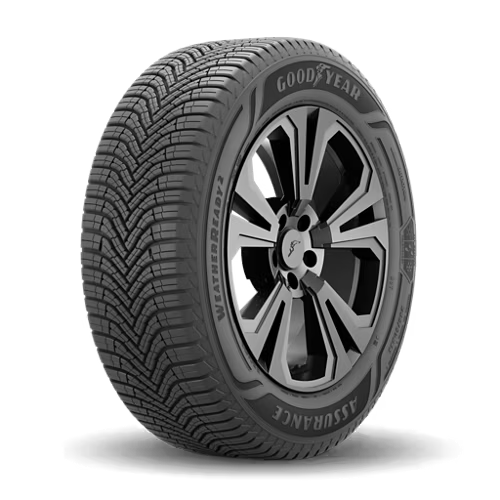
5. Goodyear Assurance WeatherReady2: Best 3PMSF All-Weather
Price Check
Check the price of this tire at the following retailers:
Goodyear updated the Assurance WeatherReady to the WeatherReady2, and for Mazda 3 owners who face genuinely unpredictable weather, this remains one of the strongest single-tire year-round solutions available. It carries the 3-Peak Mountain Snowflake certification, meaning it’s passed a real, standardized severe-snow traction test — unlike a standard all-season tire loosely marketed as “weather ready.”
Goodyear’s Weather Reactive Technology uses evolving tread grooves that actually widen as the tire wears, genuinely maintaining wet traction throughout the tire’s life rather than losing capability as tread depth decreases.
Traction Grooves with saw-tooth edges bite into snow and slush for real confidence when conditions deteriorate, and the tire maintains a surprisingly quiet, smooth ride despite its all-weather capability.
For Mazda 3 owners who experience occasional snowfall but don’t want the hassle of seasonal tire changes, this eliminates that compromise entirely.
Pros: Genuine 3PMSF-certified snow capability, wet traction that improves rather than degrades with wear, comfortable ride for an all-weather tire.
Cons: Premium price, warranty mileage not specified by Goodyear.
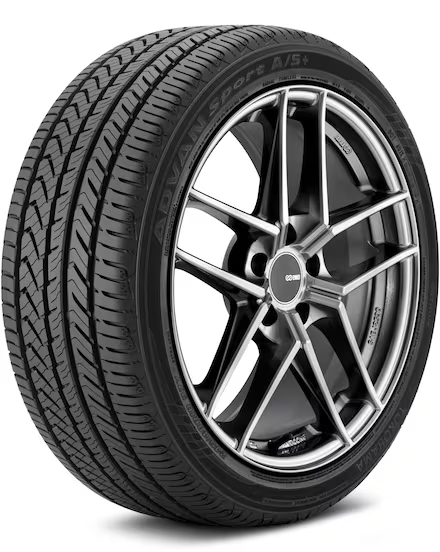
6. Yokohama ADVAN Sport A/S+: Best Balanced Performance and Value
Price Check
Check the price of this tire at the following retailers:
This tire represents a genuine middle ground for Mazda 3 owners seeking performance without premium-brand pricing. An asymmetric tread with large outboard shoulder blocks delivers real cornering stability that suits the Mazda 3’s sporty character, while a continuous center rib enhances steering response for confident lane changes and winding-road driving.
Yokohama’s Silent Technology with variable pitch tread blocks delivers genuinely noticeable noise reduction compared to competitors at this price, and a silica-enriched compound provides real grip in both wet and dry conditions while extending tread life.
Real owner reports commonly describe 45,000–50,000 miles from a set, and low-rolling-resistance construction helps maintain the Mazda 3’s fuel economy. Backed by a 55,000-mile warranty — among the stronger guarantees in this performance category — this is a strong pick for owners who want capability without premium pricing.
Pros: Genuine noise reduction and comfort for the price, strong 55,000-mile warranty, respectable fuel-efficiency retention.
Cons: Not 3PMSF rated, doesn’t match dedicated performance tires at the outright limit.
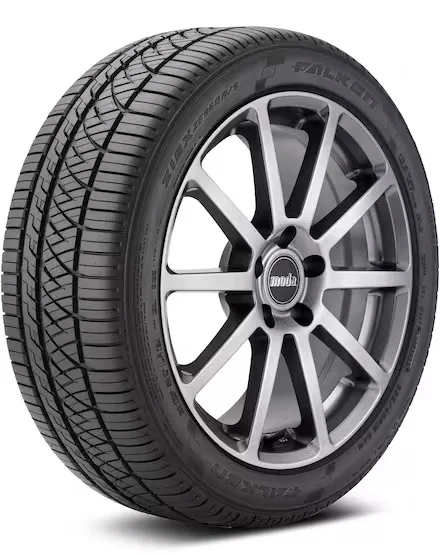
7. Falken Ziex ZE960 A/S: Best Budget Performance
Price Check
Check the price of this tire at the following retailers:
This is a genuine standout at its price point for Mazda 3 owners who want quality performance without breaking the bank, typically priced 15–20% below premium brands while delivering capabilities that regularly surprise drivers expecting compromises.
An asymmetric tread with wide shoulder blocks provides responsive handling and real cornering stability, and a silica-enriched compound strikes a genuine balance between grip and longevity.
Comfort genuinely exceeds expectations for the price — an optimized pitch sequence minimizes road noise while the construction absorbs road imperfections effectively.
Real owner reports describe 45,000–50,000 miles of tread life when properly maintained, and wide circumferential grooves combined with 3D Canyon sipes deliver real wet traction and light-snow capability, though this isn’t a substitute for a dedicated winter tire.
Delivering an estimated 80–90% of premium-tire performance at roughly 70–75% of the cost, this is a genuinely smart choice for value-conscious Mazda 3 owners.
Pros: Genuine performance-per-dollar value, comfort that exceeds expectations for the price, respectable real-world tread life.
Cons: Not 3PMSF rated, doesn’t match premium tires in extreme conditions.
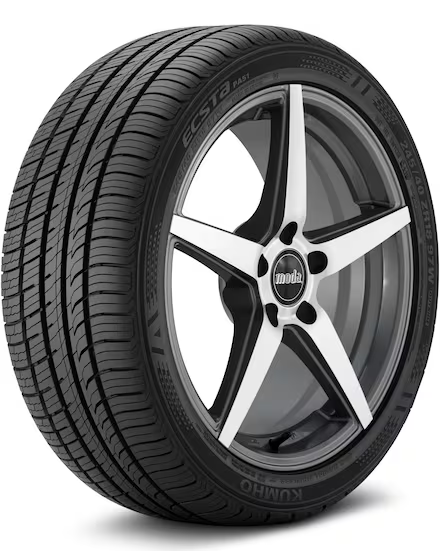
8. Kumho Ecsta PA51: Best Affordable Daily Driving
Price Check
Check the price of this tire at the following retailers:
This tire delivers genuinely impressive capability for Mazda 3 owners seeking quality performance at a price point considerably lower than premium competitors.
An asymmetric tread pattern provides responsive handling and precise steering feedback that complements the Mazda 3’s sporty character, with real, felt willingness to respond to steering inputs during everyday maneuvers.
Noise control is respectable for the price class through optimized pitch sequencing, and with a UTQG rating of 500 AA A, real owner reports commonly describe 40,000–50,000 miles from a set — genuinely strong value for a performance-oriented tire at this price.
Wide circumferential grooves and a high-grip silica compound deliver confident wet traction, and the continuous center rib provides real straight-line stability in dry conditions.
Delivering an estimated 80–85% of premium performance at roughly 60–65% of the cost, this is one of the smartest budget choices for Mazda 3 owners.
Pros: Genuine value at a significantly lower price point, respectable noise control, confident wet traction.
Cons: Not 3PMSF rated, doesn’t match premium tires’ outright grip or comfort refinement.
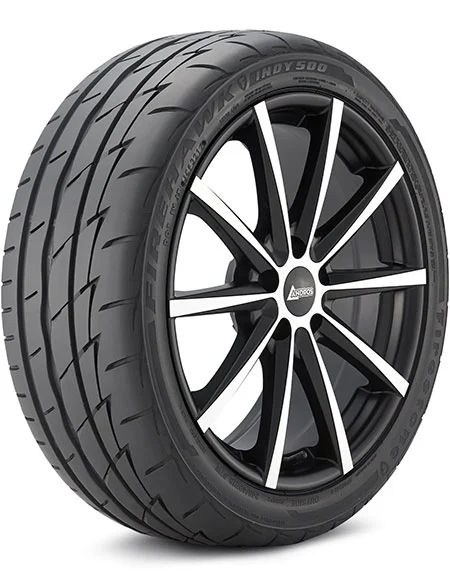
9. Firestone Firehawk Indy 500: Best Summer Performance
Price Check
Check the price of this tire at the following retailers:
For Mazda 3 owners who prioritize warm-weather driving enjoyment above all else, this tire delivers a genuinely exhilarating experience. A specialized rubber compound remains pliable and responsive as temperatures rise, providing exceptional road feedback, and the summer-optimized tread pattern evacuates water efficiently while maximizing contact with dry pavement.
Cornering grip is a real strength — an aggressive asymmetric tread with substantial shoulder blocks bites into the road during hard cornering, and rigid construction minimizes sidewall flex for precise steering response.
Braking performance is genuinely impressive too, with a high-silica compound creating real friction against the road surface for shorter, more controlled stops.
The genuine limitation every summer-tire buyer should understand: the compound stiffens significantly below roughly 45°F, meaning compromised grip and a harsher ride in cold weather — these tires need to come off for winter.
For enthusiast Mazda 3 owners in warm climates or during summer months, this delivers strong performance at a reasonable price.
Pros: Genuine warm-weather grip and braking performance, precise steering response, reasonable pricing for the performance category.
Cons: Unsafe below roughly 45°F, requires seasonal swapping.
10. General AltiMax RT43: Best Budget-Friendly

Price Check
Check the price of this tire at the following retailers:
This is a genuine standout at its price point for Mazda 3 owners who want reliable performance without premium pricing. General’s Low Surface Abrasion Technology genuinely extends tread life while maintaining consistent performance, and acoustic modulation sound technology delivers a quieter cabin than the price suggests.
The tire delivers reliable traction in both wet and dry conditions — a symmetric tread with stable shoulder blocks provides predictable dry handling, while Anti-Slip Sipe Design Technology improves wet-road grip.
Visual Alignment Indicators help owners spot potential alignment issues before they cause premature wear, a genuinely useful, uncommon feature at this price.
Backed by an impressive treadwear warranty of 75,000 miles for T-speed sizes and 65,000 for H-speed versions, this is the strongest value pick for practical Mazda 3 owners who prioritize sensible transportation over spirited handling.
Pros: Genuine value with strong warranty coverage, quieter than expected for the price, useful alignment-monitoring feature.
Cons: Not built for spirited driving, not 3PMSF rated.
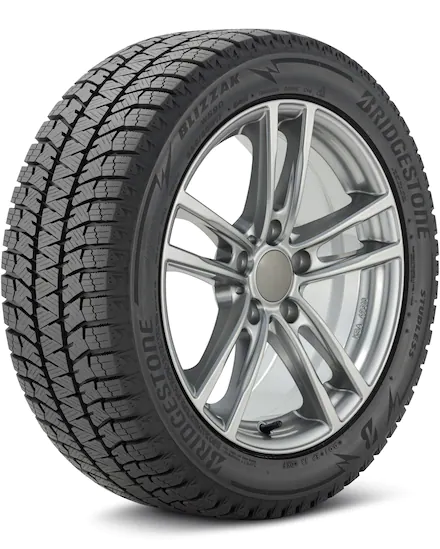
11. Bridgestone Blizzak WS90: Best Dedicated Winter
Price Check
Check the price of this tire at the following retailers:
Nothing in this comparison matches this tire once conditions turn to genuine ice, based on independently reported braking and traction testing across the winter category.
Bridgestone’s MultiCell compound technology actively removes the thin water layer that forms on ice, and thousands of microscopic bite particles combined with deep, zigzag sipes deliver real, documented traction improvements — independent testing shows stopping distances up to 40% shorter than typical all-season tires in identical conditions.
The aggressive directional tread pattern with 3D zigzag sipes creates multiple biting edges for deep-snow traction, and wide circumferential grooves efficiently channel slush and water away during winter thaws.
The specialized compound remains pliable at temperatures where all-season tires stiffen and lose responsiveness, delivering improved handling and braking throughout the winter months. This is a seasonal tire that needs to come off once temperatures climb consistently above 45°F.
For Mazda 3 owners anywhere with real, sustained winter conditions, running this seasonally on a second set of wheels is the single biggest safety upgrade available.
Pros: Best-in-comparison ice and snow traction, genuine documented braking-distance improvement over all-season tires.
Cons: Seasonal use only, no summer tread warranty, wears quickly above 45°F.
Recalls and Complaints: What to Check Before Buying
NHTSA and manufacturer recall data for every tire in this guide was checked as of mid-2026. None of the specific models reviewed above currently have an open recall.
It’s worth knowing the Mazda 3 has had genuine tire- and wheel-adjacent recalls in the past: a 2021 recall (NHTSA campaign 21V-101) affected certain 2021 Mazda3 and CX-30 vehicles whose tire air valves could suddenly leak air, and a 2019 recall (19V-425) addressed wheel lug nuts that may not have been properly tightened at the factory on certain 2019 Mazda3 units, risking wheel detachment.
Both were remedied at the time and don’t affect current production, but they’re a good reminder to check a used Mazda3’s specific VIN against NHTSA’s database rather than assuming based on model year alone.
Before installing any tire, new or used, check the DOT code against NHTSA’s recall database — it takes about thirty seconds and is the single easiest safety check most people skip.
Maintaining Mazda 3 Tires
Check pressure at least monthly, typically 32–36 PSI, but always confirm against the door jamb sticker rather than the maximum pressure printed on the tire sidewall. Pressure changes roughly 1 PSI for every 10°F temperature swing, making winter checks particularly important.
Rotate every 5,000 to 7,500 miles, using a pattern that moves front tires to the opposite sides of the rear while bringing rear tires straight forward — the standard approach for a front-wheel-drive Mazda 3.
Have alignment checked annually, or sooner if you notice uneven wear, pulling to one side, or an off-center steering wheel. This matters more on the 18-inch wheel package, where lower-profile sidewalls are more susceptible to impact damage from potholes and curbs.
Watch for genuine replacement signs: tread depth below 4/32″ (the penny test works as a quick check), uneven wear patterns, visible sidewall cracks or bulges — especially on 18-inch low-profile sizes after hitting a pothole — or decreased wet-weather performance.
Choosing the Right Tire for a Mazda 3
Match tire category to the specific trim and how it’s actually driven. 2.5 S and Select Sport owners generally benefit most from comfort-focused picks like the Michelin Primacy MXM4 or General AltiMax RT43; Carbon Edition, Premium, and especially Turbo Premium Plus owners get real, felt value from the Bridgestone Potenza RE980AS or Pirelli P Zero All Season Plus’s sharper handling.
The AWD Turbo deserves its own consideration. With genuinely more power and standard all-wheel drive, it benefits from a tire built to use that capability rather than the same comfort-focused all-season pick that suits a base 2.5 S.
Don’t skip winter tires facing real cold. The Bridgestone Blizzak WS90 delivers a genuine, safety-relevant traction advantage no all-season tire in this comparison fully replicates once conditions turn to sustained ice.
Budget doesn’t have to mean giving up real performance. The Falken Ziex ZE960 A/S and Kumho Ecsta PA51 both deliver genuine capability at meaningfully lower prices than premium alternatives.
Frequently Asked Questions
What size tires does my Mazda 3 need?
It depends on trim, and the current lineup uses only two factory sizes. 2.5 S, Select Sport, and Preferred trims run 205/60R16, while Carbon Edition, Premium, Carbon Turbo, and Turbo Premium Plus trims run 215/45R18. Always check the door jamb sticker for the exact specification.
Does the Mazda 3 Turbo need different tires than the standard model?
It genuinely benefits from them. The Turbo Premium Plus makes up to 250 horsepower and comes with standard AWD — a real step up from the 191-horsepower naturally aspirated lineup. A performance-oriented tire like the Bridgestone Potenza RE980AS is better matched to that capability than a pure comfort tire.
How often should I rotate the tires on my Mazda 3?
Every 5,000 to 7,500 miles, using a pattern that moves front tires to the opposite rear side while bringing rear tires straight forward.
Are all-season tires good enough for winter driving in my Mazda 3?
All-season tires handle light snow adequately, but for severe winter conditions with regular snowfall or temperatures consistently below 45°F, a dedicated winter tire like the Bridgestone Blizzak WS90 or a genuine 3PMSF-rated all-weather tire like the Goodyear Assurance WeatherReady2 delivers meaningfully better traction and safety.
What’s the best budget-friendly tire option for the Mazda 3?
The General AltiMax RT43 and Kumho Ecsta PA51 both deliver genuine value, with the AltiMax RT43 backed by a strong warranty and the Ecsta PA51 offering the lowest price point in this comparison while still delivering credible performance.
How do I know when it’s time to replace my Mazda 3’s tires?
Watch for tread depth below 4/32 of an inch (the penny test works as a quick check), uneven wear patterns, visible sidewall cracks or bulges — pay particular attention on 18-inch low-profile sizes after hitting a pothole — excessive vibration while driving, or decreased performance in wet conditions.
