


The Miata’s lightweight, 50:50-balanced chassis means tire choice shows up in how the car feels more than almost any other vehicle on the road — and the right tire for a weekend autocrosser is genuinely the wrong tire for someone who daily-drives their Miata through a real winter.
This guide is built from manufacturer specifications, aggregated owner data, and independent test results, weighted specifically toward matching each tire to how Miata owners actually use the car. Here’s what actually holds up, by priority.
- Best overall performance: Michelin Pilot Sport 4S.
- Best track-ready precision: Bridgestone Potenza S-04 Pole Position.
- Best balanced value: Continental ExtremeContact Sport.
- Best for autocross: Dunlop Direzza ZIII.
- Best budget performance: Firestone Firehawk Indy 500.
- Best rising-star value: Falken Azenis RT660.
- Best extreme grip (track/fair-weather only): Toyo Proxes R1R.
- Full sizing by current trim, the real story on the factory tire, and a recalls check are below.
Liked this article?
Add TireAdvise as a preferred source so you see more of our tire reviews and guides on Google.
Understanding the Miata’s Tire Needs
Most current Miatas run modest-sized rubber — 205/45R17 across the current ND2 lineup — while older generations ran smaller 195/50R15 or 205/50R16 setups.
These relatively narrow tire profiles are a deliberate engineering choice, not a cost-cutting one: they let the car communicate with the driver and dance through corners rather than simply generating maximum grip.
The Miata was never built to be the fastest car on track; it was built to deliver the most engaging driving experience a given amount of grip can provide.
This means tire selection has an outsized effect on how the car actually feels. A stickier, more aggressive compound increases cornering grip and can genuinely shave seconds off a lap time, but often introduces more road noise and a firmer ride.
A comfort-oriented tire smooths things out but can feel vaguer through corners. Because the Miata’s chassis is so light and communicative, you’ll feel these differences through the steering wheel and seat far more than you would in a heavier car riding on the same tire.
How These Were Evaluated
This comparison draws on manufacturer specifications, aggregated owner reports, UTQG ratings, and independent traction and braking testing data for each tire, cross-referenced against the Miata’s real factory sizing across its current and recent trims.
Particular weight was given to matching each tire’s real-world character to how it’s actually driven — a daily-driven Miata has different priorities than one that spends weekends at autocross or the occasional track day, and the gap between those use cases is wider on a car this light and responsive than it would be on almost anything else.
Where specific tread-life figures, warranty numbers, or independently reported comparisons are cited, the source is noted rather than presented as a personal measurement.
Quick Comparison: 11 Best Tires for the Mazda MX-5 Miata
| Tire | Best For | Approx. Price/Tire | 3PMSF Rated | Warranty |
|---|---|---|---|---|
| Michelin Pilot Sport 4S | Best overall performance | $200–$250 | No | Not specified |
| Bridgestone Potenza S-04 Pole Position | Track-ready precision | $190–$240 | No | Not specified |
| Continental ExtremeContact Sport | Balanced value | $170–$220 | No | Not specified |
| Dunlop Direzza ZIII | Autocross | $150–$200 | No | Not specified |
| Yokohama ADVAN Apex V601 | Japanese engineering balance | $170–$220 | No | Not specified |
| Firestone Firehawk Indy 500 | Budget performance | $120–$160 | No | Not specified |
| BFGoodrich g-Force Sport COMP-2 | Progressive, forgiving limits | $140–$190 | No | Not specified |
| Falken Azenis RT660 | Rising-star value | $140–$185 | No | Not specified |
| Toyo Proxes R1R | Extreme dry grip (track/fair-weather) | $160–$210 | No | Not specified |
| Hankook Ventus V12 evo2 | Underrated value | $130–$175 | No | Not specified |
| Nitto NT555 G2 | Modern UHP daily driver | $150–$195 | No | Not specified |
Prices are street prices at major online retailers for the common Miata size (205/45R17) as of mid-2026 — older-generation 15- and 16-inch sizes generally run below these ranges, and expect regional and seasonal swings.
Mazda MX-5 Miata Tire Sizes by Trim and Generation
Confirm the exact size on the driver’s door jamb sticker before ordering — Mazda has genuinely changed how sizing works across trims in recent years, and it’s worth knowing which era of Miata you’re shopping for.
Current lineup (2025–2026, ND2 facelift): Mazda has standardized wheel diameter across the current trim range. Soft Top (ST) Sport, Club, and Grand Touring, and RF (hardtop) Club and Grand Touring — RF is no longer offered in Sport trim — all run the same 205/45R17 as the factory fitment. This is a real change from earlier ND-generation model years, where the base Sport trim commonly ran a smaller 205/50R16 while Club and Grand Touring ran 205/45R17; several competing guides still describe that older split as current, and it isn’t anymore. For 2026, the Club RF specifically gains the Brembo BBS Recaro Package as standard equipment, a genuine upgrade worth knowing about since it affects braking and unsprung weight even though it doesn’t change the base tire size.
Earlier generations: NC-generation (2006–2015) Miatas commonly ran 205/45R17 on Grand Touring and Limited trims, with Sport and base/Touring trims on 205/50R16. NA and NB-generation Miatas (1990–2005) ran smaller sizes still, frequently 185/60R14 or 195/50R15 depending on trim and year — always confirm via the door jamb sticker rather than assuming based on model year alone, since Mazda mixed sizes across trims more in these earlier generations.
Should You Even Replace Your Factory Tires?
This is worth knowing before assuming a factory-fit tire needs to be swapped for something exotic: Bridgestone has supplied the Potenza line as genuine Mazda original equipment for the Miata for roughly a decade, historically the Potenza S001 and more recently the S-04 Pole Position featured later in this guide.
If your factory tires are wearing evenly and the car still feels sharp, replacing like-for-like with the current Potenza — or a comparably capable alternative — is a completely reasonable, low-risk choice rather than a compromise.
That said, the Miata’s popularity as a track and autocross car means a large share of owners intentionally move away from the factory setup toward something more specialized for their actual use case, and that’s a legitimate reason to look elsewhere in this comparison too.
1. Michelin Pilot Sport 4S: Best Overall Performance

Price Check
Check the price of this tire at the following retailers:
This tire stands as the gold standard for Miata owners who refuse to compromise on performance. Michelin’s Dynamic Response Technology uses a hybrid belt of aramid and nylon to maintain contact-patch stability during aggressive cornering, and large, rigid outer-shoulder blocks maximize cornering stability — a characteristic that genuinely complements the Miata’s nimble handling rather than fighting it.
Wet performance is a real strength rather than an afterthought: a silica-infused compound and four wide circumferential grooves maintain impressive traction in rain, meaningfully reducing hydroplaning risk on a lightweight car where that margin matters.
Handling transforms noticeably — turn-in sharpens, mid-corner stability improves, and steering feel gains real precision.
Michelin’s Bi-Compound tread design uses a harder compound on the outer shoulder specifically to resist wear during aggressive cornering, and real owner reports commonly describe 25,000–30,000 miles from a set — genuinely impressive for this performance category.
For Miata owners who want the strongest all-around tire regardless of price, this is the pick.
Pros: Genuine wet and dry grip balance, noticeably sharper handling and steering feel, respectable tread life for the performance category.
Cons: Premium price, not built for winter conditions.
2. Bridgestone Potenza S-04 Pole Position: Best Track-Ready Precision
Price Check
Check the price of this tire at the following retailers:
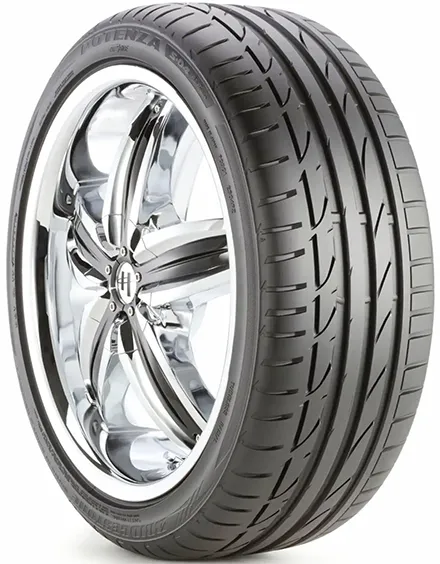
This tire draws directly from Bridgestone’s Formula 1 development program, and it’s also — genuinely relevant here — the same Potenza lineage Mazda has fitted as factory equipment on the Miata for years. UNI-T technology combines a high-grip compound with an internal structure engineered to maintain an optimal contact patch even under extreme driving loads.
Dry grip is the standout attribute, with rigid outside shoulder blocks and a continuous center rib delivering exceptionally sharp steering response.
A silica-enhanced compound balances grip with longevity, addressing a common complaint about performance tires wearing too fast, and the tire resists heat buildup during aggressive driving sessions, maintaining consistent performance across multiple hot laps.
Feedback is genuinely transparent — the tire communicates clearly where the limits of adhesion sit, which matters for a car whose whole appeal is that communication. For Miata owners who alternate between spirited weekend drives and occasional track days, this is a strong, factory-proven pick.
Pros: Genuine track-derived grip and heat management, factory-proven pedigree on this exact car, transparent limit feedback.
Cons: More road noise than touring-oriented alternatives, premium price.
3. Continental ExtremeContact Sport: Best Balanced Value

Price Check
Check the price of this tire at the following retailers:
This tire represents the sweet spot many Miata owners actually want — genuine performance credentials without flagship pricing.
Continental’s engineering delivers a specialized tread compound and pattern that effectively channels water away from the contact patch, reducing hydroplaning risk even in aggressive wet-weather driving, a real benefit for owners who don’t garage their roadster when clouds roll in.
Dry grip is equally strong, with responsive handling and clear feedback through the Miata’s already communicative steering.
Where this tire truly separates itself is everyday livability — road noise is well-controlled for a performance tire, and the ride strikes a genuine balance between firmness for handling precision and compliance for absorbing road imperfections.
Real owner reports commonly describe 30,000-plus miles even with occasional track days mixed in, and the progressive breakaway characteristics preserve the controlled, playful slides that make the Miata what it is.
For Miata owners who want one tire that does everything well, this is the strongest pick.
Pros: Genuine wet-weather strength, well-controlled road noise for a performance tire, strong real-world tread life.
Cons: Not quite as sharp as dedicated track-focused options at the absolute limit.
4. Dunlop Direzza ZIII: Best for Autocross
Price Check
Check the price of this tire at the following retailers:
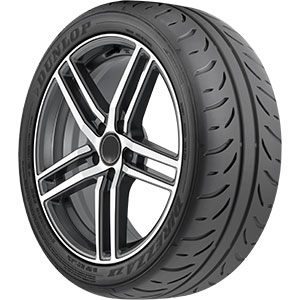
For Miata owners who frequent autocross events, this tire delivers genuinely extreme grip levels that can transform cornering capability. Its most distinctive trait is remarkably quick warm-up — where many performance tires need several laps to reach optimal temperature, the Direzza ZIII delivers near-maximum grip within the first lap, a real, meaningful advantage when an autocross run might only give you a handful of attempts to set your best time.
Turn-in is genuinely razor-sharp, with minimal delay between steering input and tire response, and the large, rigid tread blocks with minimal siping are engineered specifically to maximize dry grip on the technical, tight courses typical of autocross.
The real trade-off: stiffer sidewall construction firms up the ride on public roads, road noise runs noticeably higher than touring-focused options, and tread wear accelerates meaningfully under regular commuting use.
For the Miata owner who prioritizes weekend competition performance over daily comfort, this is the strongest pick.
Pros: Genuinely fast warm-up ideal for short autocross runs, razor-sharp turn-in, real competitive track record among Miata autocrossers.
Cons: Firmer ride and more road noise for daily driving, accelerated wear under regular commuting use.
5. Yokohama ADVAN Apex V601: Best Japanese-Engineering Balance

Price Check
Check the price of this tire at the following retailers:
This tire is a genuine philosophical match for the Miata — both share Japanese engineering DNA that prioritizes balance and driver engagement over raw numbers.
An asymmetric tread pattern delivers predictable handling across conditions: rigid outer-shoulder blocks enhance cornering stability, while the inner tread area’s additional siping and grooves maintain wet-weather performance without compromising dry grip.
What makes the V601 particularly livable is genuinely impressive noise control for a performance tire — Yokohama’s proprietary Silent Technology uses variable pitch tread elements to minimize road noise, making the tire noticeably more comfortable on longer drives than many competitors.
Sidewall stiffness strikes a real middle ground: firm enough for precise turn-in and minimal roll, compliant enough to absorb road imperfections rather than transmit them directly to the cabin.
For Miata owners who want consistent, balanced performance across both spirited driving and daily use, this is a strong pick.
Pros: Genuinely quiet for a performance tire, balanced wet and dry grip, comfortable sidewall tuning for daily use.
Cons: Not the outright grip leader in this comparison, premium price relative to budget alternatives.
6. Firestone Firehawk Indy 500: Best Budget Performance
Price Check
Check the price of this tire at the following retailers:
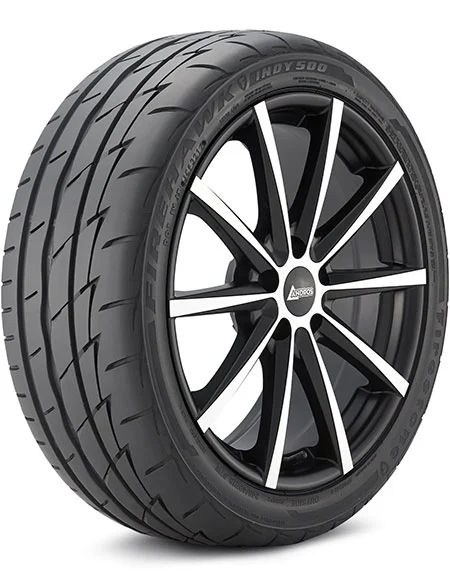
Leveraging Firestone’s genuine racing heritage — 43 Indianapolis 500 victories — this tire proves exceptional performance doesn’t require premium pricing.
A silica-enriched compound and asymmetric tread pattern deliver real, surprising dry grip at this price point, and Pulse Groove Technology efficiently channels water, delivering wet performance that genuinely outperforms many competitors in the same price bracket.
Steering feedback is responsive and handling predictable at the limit, and the sidewall construction strikes a real balance between comfort and performance for the Miata’s lightweight chassis.
Real owner reports commonly describe 25,000–30,000 miles, competitive among ultra-high-performance summer tires given the price. For casual enthusiasts who want spirited weekend driving without premium-tier cost, this is the strongest value pick in the comparison.
Pros: Genuine performance-per-dollar value, respectable wet grip for the price, predictable handling at the limit.
Cons: Doesn’t match premium tires in outright grip or longevity.
7. BFGoodrich g-Force Sport COMP-2: Best Progressive, Forgiving Limits
Price Check
Check the price of this tire at the following retailers:
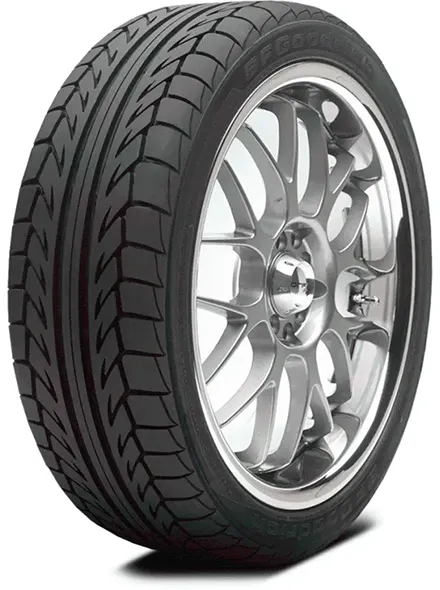
This tire brings genuine American performance-tire engineering to the Miata, delivering a real blend of grip, responsiveness, and durability. Its standout trait is progressive grip behavior — rather than breaking loose suddenly at the limit, it provides clear, building feedback as you approach maximum adhesion, genuinely inspiring the confidence to explore the car’s handling limits safely.
A silica-infused compound and optimized tread pattern deliver real wet and dry performance, evacuating water efficiently while maintaining sharp turn-in and mid-corner stability on dry pavement.
The tire manages heat well during occasional track use without excessive degradation, and a reinforced internal structure resists the premature shoulder wear that plagues some performance tires — real owner reports commonly describe 25,000-plus miles of spirited driving.
An all-season g-Force COMP-2 A/S variant is also available for owners in milder-winter regions who want extended-season usability. For Miata owners who want progressive, predictable limit behavior at a reasonable price, this is a strong pick.
Pros: Genuinely progressive, confidence-inspiring limit behavior, better-than-typical durability for the category, all-season variant available.
Cons: Not the sharpest option here at the outright limit.
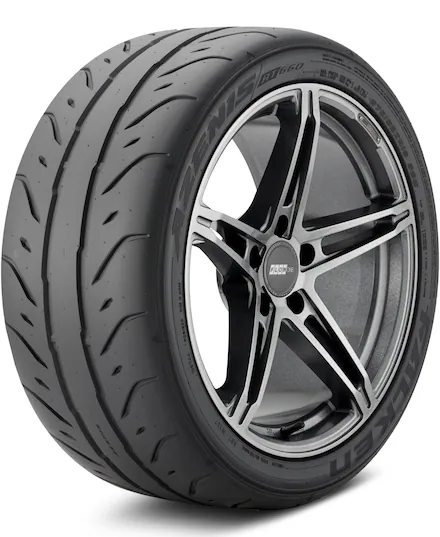
8. Falken Azenis RT660: Best Rising-Star Value
Price Check
Check the price of this tire at the following retailers:
This newer entrant has quickly earned a genuine following, delivering an exceptional blend of capability at a price point that undercuts many established competitors.
A specialized high-grip compound paired with a directional tread pattern delivers surprising adhesion in both dry and wet conditions — Miata drivers consistently report carrying more corner speed than expected, with confidence-inspiring stability at the limit.
Feedback characteristics suit the Miata’s platform particularly well, communicating clearly through the responsive steering and offering progressive breakaway that forgives minor mistakes while still signaling clearly when you’re approaching the limit — genuinely useful for drivers developing their skills.
Track day and autocross enthusiasts have embraced the RT660 quickly, with many reporting lap times comparable to considerably more expensive tires.
The real trade-offs: more road noise than touring options, stiffer sidewalls than daily-comfort tires, and shorter tread life than all-season alternatives, though reasonable for the performance category. For Miata owners chasing maximum performance-per-dollar, this is one of the strongest values available.
Pros: Genuine grip and feedback rivaling pricier tires, progressive and forgiving limit behavior, strong value.
Cons: More road noise for daily driving, shorter tread life than all-season alternatives.
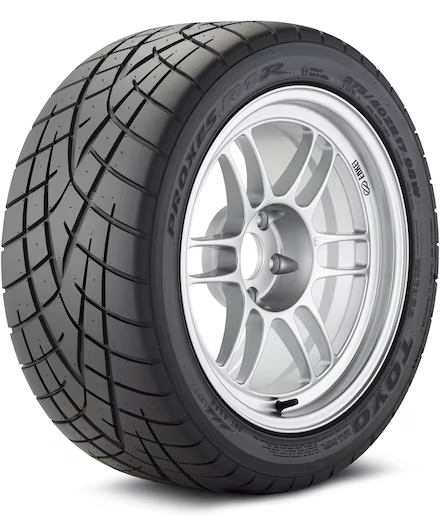
9. Toyo Proxes R1R: Best Extreme Grip for Track and Fair-Weather Use
Price Check
Check the price of this tire at the following retailers:
This tire represents what happens when engineers focus almost exclusively on maximum grip — a semi-slick design that signals its intent immediately to anyone who knows what to look for.
Large, solid shoulder blocks with minimal siping and a reduced void ratio compared to conventional performance tires create genuinely extraordinary dry grip, with immediate steering response and cornering stability that Miata track-day drivers specifically seek out.
The compound reaches optimal operating temperature quickly and maintains consistent performance across high-performance driving sessions, and many Miata owners report multi-second lap-time improvements simply from switching to the R1R from street-oriented performance tires.
The genuine, important trade-off: reduced void ratio significantly compromises wet performance, so these should be treated with real caution in rain — many owners run them as dedicated fair-weather or track tires and swap to something more versatile when conditions turn. Tread wear is also faster than conventional tires, a fair trade most owners accept for the grip on offer.
For dedicated track and autocross drivers who prioritize maximum performance over everyday practicality, this delivers an experience few other tires match.
Pros: Genuinely extraordinary dry-condition grip, quick heat-up and consistent track performance.
Cons: Wet performance is a real, significant compromise — not suitable as a daily or all-weather tire — faster wear than conventional options.
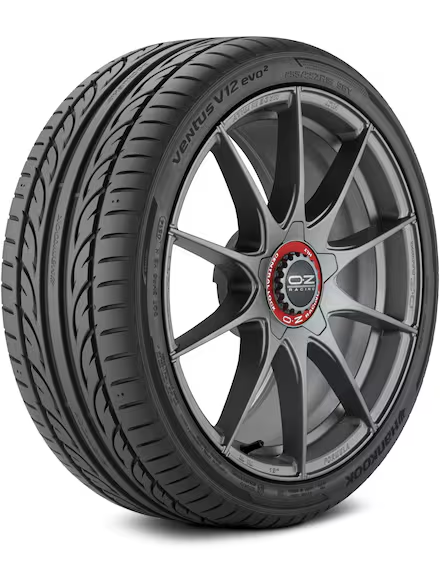
10. Hankook Ventus V12 evo2: Best Underrated Value
Price Check
Check the price of this tire at the following retailers:
This tire remains genuinely underrated for the Miata, offering capability that rivals more expensive competitors. An aggressive directional tread pattern efficiently channels water away from the contact patch, meaningfully reducing hydroplaning risk even in heavy rain, giving drivers real confidence in wet corners.
Compound and construction strike a genuine balance between performance and comfort — unlike many performance-oriented tires that sacrifice ride quality, the Ventus V12 evo2 maintains a relatively comfortable ride while still delivering responsive handling.
Noise control is a real strength, with noise-reduction technology in the tread pattern keeping road noise manageable at highway speed, particularly relevant since a convertible’s open cabin can amplify tire noise.
Typically priced 15–20% below comparable premium tires while delivering an estimated 90–95% of their performance, this is a genuinely compelling value pick.
Pros: Genuine value relative to premium alternatives, real wet-weather confidence, comfortable and quiet for the performance category.
Cons: Less established brand recognition than some competitors, doesn’t quite match the outright grip of flagship options.
11. Nitto NT555 G2: Best Modern UHP Daily Driver

Price Check
Check the price of this tire at the following retailers:
This tire represents the evolution of ultra-high-performance rubber, offering Miata owners a genuine blend of modern technology and street-focused drivability.
A silica-enhanced compound delivers real wet and dry grip while maintaining reasonable tread life — a balance that’s genuinely difficult to achieve in this segment — working alongside an asymmetric tread pattern with large outboard blocks that maximize cornering stability.
Size availability is a real strength for Miata owners specifically, since the G2 covers everything from stock wheel diameters to custom aftermarket setups more broadly than several competitors.
Reinforced sidewalls deliver more precise steering feedback, something Miata drivers particularly value given the car’s renowned handling character, while also resisting deformation under aggressive cornering loads to maintain a consistent contact patch.
Turn-in is crisp without being nervous, and progressive breakaway characteristics make the tire forgiving when pushed beyond its limits — a genuinely valuable trait for drivers who occasionally track their Miata but mostly drive on public roads. For Miata owners who want modern UHP capability without premium European pricing, this is a strong daily-driver pick.
Pros: Genuine balance of grip and tread life, wide size availability for stock and modified setups, precise steering feedback from reinforced sidewalls.
Cons: Not the outright performance leader in this comparison, road noise more noticeable than comfort-focused alternatives.
Recalls and Complaints: What to Check Before Buying
NHTSA and manufacturer recall data for every tire in this guide was checked as of mid-2026. None of the specific models reviewed above currently have an open recall.
Two genuinely relevant Miata-specific recalls are worth knowing about: a 2025 recall (NHTSA campaign 25V336) affecting certain 2024–2025 MX-5 vehicles found the Traction Control System and Dynamic Stability Control indicator light could fail to illuminate due to a software error — meaning the system itself works, but the dashboard warning that it’s actively intervening might not, which matters on a car people genuinely push toward its handling limits.
Mazda’s remedy replaces the DSC unit at no cost. Separately, a 2024 recall (NHTSA campaign 24V695) affecting 2016–2023 MX-5 Miata and related Fiat 124 Spider models found a software calibration error could cause front airbags to deploy with excessive force in minor collisions; Mazda’s fix is a free software update.
Before installing any tire, new or used, check the DOT code against NHTSA’s recall database — it takes about thirty seconds and is the single easiest safety check most people skip.
Choosing the Right Tire for a Mazda MX-5 Miata
Daily drivers get the best balance from the Continental ExtremeContact Sport or Michelin Pilot Sport 4S — genuine performance without punishing comfort or tread life for commuting.
Autocross competitors should gravitate toward the Dunlop Direzza ZIII or Falken Azenis RT660. Both warm up quickly and deliver the immediate grip that short, intense autocross runs demand.
Dedicated track-day drivers get the most from the Bridgestone Potenza S-04 Pole Position or Toyo Proxes R1R, both of which maintain grip and thermal stability across multiple hot laps, with the R1R’s extra grip coming at the cost of real wet-weather compromise.
Touring-focused drivers who prioritize long-distance comfort should look at the BFGoodrich g-Force Sport COMP-2 or Hankook Ventus V12 evo2, both of which strike a genuine balance between performance and ride quality.
Year-round drivers in variable climates should note that every tire in this comparison is a dry/wet performance tire, not an all-weather one — none carry 3PMSF certification. If your Miata sees real winter conditions, plan on a dedicated seasonal winter tire on a second set of wheels rather than expecting any tire above to substitute for one.
Maintaining Miata Tires
Check tire pressure carefully and often. The Miata’s light weight and precise handling characteristics make correct pressure genuinely more consequential than on a heavier car — most owners find staying within 1–2 PSI of Mazda’s recommendation, listed on the door jamb sticker, delivers noticeably better handling and more even wear.
Rotate every 5,000 to 7,000 miles. The Miata’s rear-wheel-drive layout means rear tires typically wear faster, especially with spirited driving, so a consistent rotation schedule genuinely extends the life of the full set.
Have alignment checked annually, or sooner after hitting a significant pothole or curb — a lightweight, precisely tuned chassis like the Miata’s shows alignment issues more readily than a heavier vehicle.
Watch for genuine replacement signs: tread depth below 4/32″, uneven wear patterns, visible sidewall cracks or bulges, or decreased wet-weather performance.
Frequently Asked Questions
What size tires does my Mazda MX-5 Miata need?
It depends on generation and trim. The current 2025–2026 lineup runs 205/45R17 across every trim — Sport, Club, and Grand Touring on the Soft Top, and Club and Grand Touring on the RF hardtop (Sport is not offered as an RF). Earlier ND-generation model years often ran a smaller 205/50R16 on base Sport trim. NC-generation (2006–2015) and older NA/NB-generation Miatas ran smaller sizes still. Always check the door jamb sticker for your exact specification.
What tires come factory on the Mazda MX-5 Miata?
Bridgestone has supplied the Potenza line as genuine Mazda original equipment for roughly a decade — historically the Potenza S001 and, more recently, the S-04 Pole Position featured in this guide. Replacing like-for-like with the current Potenza is a low-risk, reasonable choice if your factory tires wore well.
Are summer tires or all-season tires better for a Miata?
It depends on climate and driving habits. Summer performance tires like the Michelin Pilot Sport 4S deliver maximum grip in warm conditions but become genuinely unsafe below roughly 45°F. Every tire in this comparison falls into the summer or performance-all-season category rather than a true 3PMSF-rated all-weather tire, so owners in regions with real winters should plan on a dedicated winter tire for that season rather than expecting any tire above to cover it.
How often should I rotate the tires on my Miata?
Every 5,000 to 7,000 miles. The Miata’s rear-wheel-drive layout means rear tires typically wear faster, especially with spirited driving, so consistent rotation helps even out that difference.
What’s the best tire for autocross events on a Miata?
The Dunlop Direzza ZIII and Falken Azenis RT660 are both strong choices — they warm up quickly and deliver immediate grip, which matters when an autocross event might only give a handful of runs to set a time.
How do I choose between premium and budget tire options for my Miata?
Consider driving frequency, style, and total cost of ownership rather than sticker price alone. Premium tires like the Michelin Pilot Sport 4S offer superior grip and often better longevity despite the higher upfront cost. Budget options like the Firestone Firehawk Indy 500 deliver genuinely strong performance-per-dollar but typically wear faster — calculate cost per mile, not just purchase price, to compare fairly.
How important is proper tire pressure for a Miata specifically?
More important than on most cars. The Miata’s light weight and precise handling amplify the effects of incorrect pressure on both performance and wear. Most owners find staying within 1–2 PSI of the manufacturer’s recommendation, checked regularly and especially before spirited driving, delivers noticeably better results than on a heavier vehicle.
