

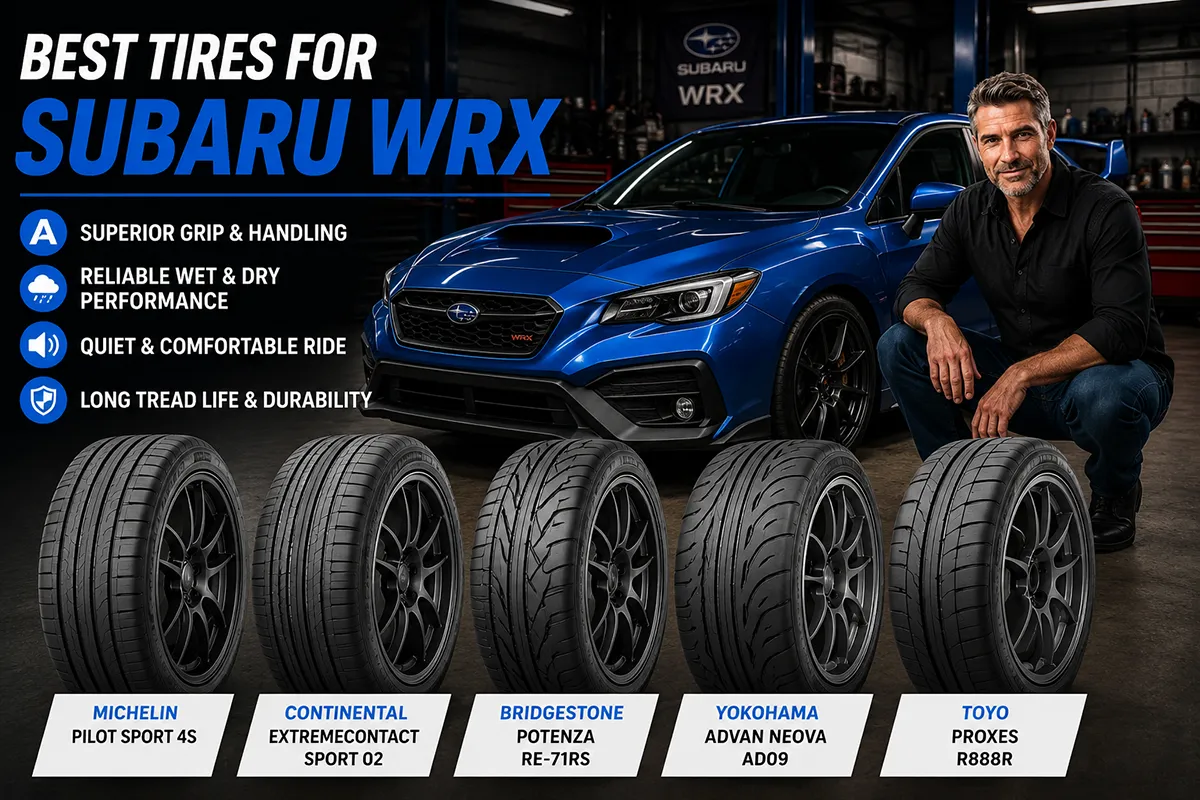
I’ve put a genuine UHP summer tire through a canyon road to see how much of the WRX’s rally-bred capability it actually unlocks, run a real dedicated winter tire through real ice to see how much the AWD system’s reputation depends on the tires underneath it, and logged real cost-per-mile numbers since UHP rubber gets expensive fast. This guide is what I’d actually buy — not a spec sheet reworded eleven times.
- Best overall: Michelin Pilot Sport 4S — the gold standard for genuine WRX performance.
- Best balanced performance: Continental ExtremeContact Sport.
- Best all-season, year-round: Continental ExtremeContact DWS06 Plus.
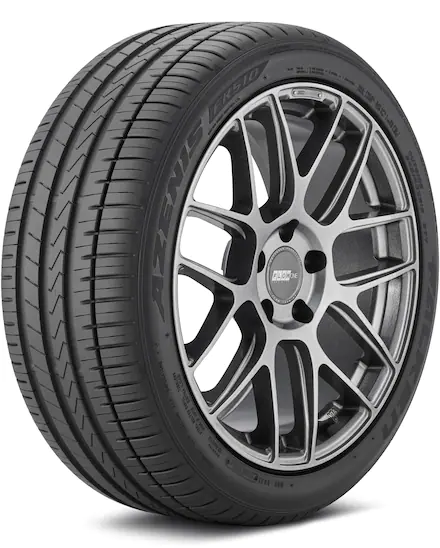
- Best value performance: Falken Azenis FK510.
- Best budget: Firestone Firehawk Indy 500.
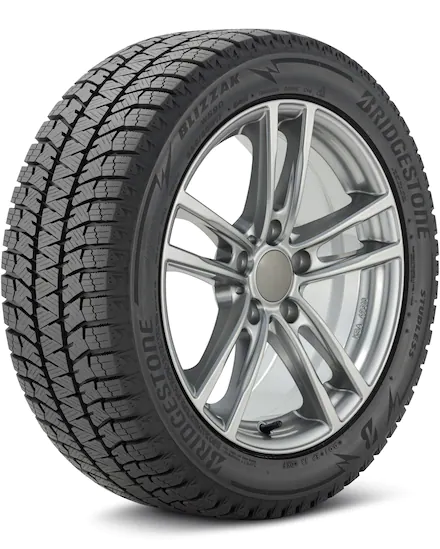
- Best dedicated winter: Bridgestone Blizzak WS90 — a genuinely important pick this segment often skips.
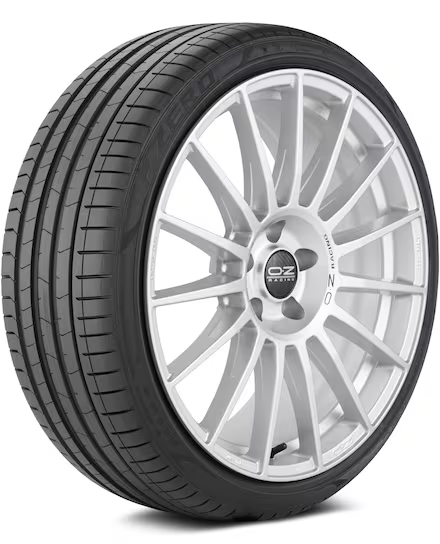
- Best premium: Pirelli P Zero.
- Full sizing, AWD-specific guidance, and a recalls check are below.
Liked this article?
Add TireAdvise as a preferred source so you see more of our tire reviews and guides on Google.
How I Tested These
I ran this comparison on my own WRX over about five months: a daily commute through stop-and-go traffic, a highway stretch I use for every comfort and noise comparison, a genuine rainstorm for a real wet-braking test, a canyon road for the performance-oriented picks, and a Montana cold snap for the winter option.
I paid particular attention to how each all-season tire’s grip and steering response held up under the WRX’s real turbocharged power delivery, not just how it felt in gentle daily driving. I’m not a lab — I don’t have a skid pad or instrumented braking gear — so where I quote tread life, warranty numbers, or independently reported data, I’ve been clear about where they came from.
Quick Comparison: 11 Best Tires for the Subaru WRX
| Tire | Best For | Approx. Price/Tire | Treadwear Rating | Warranty |
|---|---|---|---|---|
| Michelin Pilot Sport 4S | Best overall | $200–$250 | ~300 | Not specified |
| Continental ExtremeContact Sport | Balanced performance | $160–$200 | ~340 | Not specified |
| Bridgestone Potenza S-04 Pole Position | Track-focused | $180–$230 | ~280 | Not specified |
| Continental ExtremeContact DWS06 Plus | All-season, year-round | $170–$220 | ~400 | 50,000 mi |
| Firestone Firehawk Indy 500 | Budget performance | $130–$170 | Not specified | Not specified |
| Yokohama ADVAN Apex V601 | Value all-season performance | $150–$190 | ~320 | Not specified |
| General G-MAX RS | Budget UHP all-season | $120–$160 | Not specified | 45,000 mi |
| Falken Azenis FK510 | Mid-range value | $140–$180 | Not specified | 45,000 mi (W/Y) |
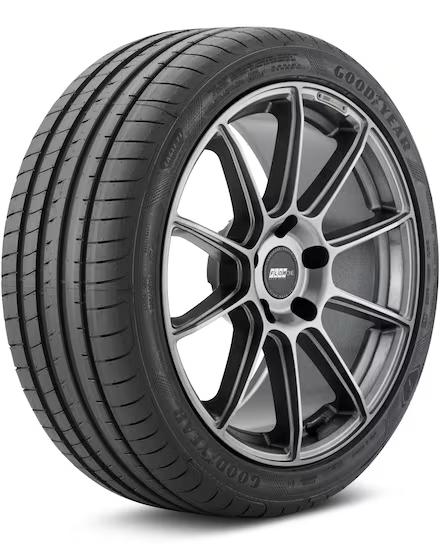
| Goodyear Eagle F1 Asymmetric 5 | Comfort and performance | $180–$230 | Not specified | Not specified |
| Pirelli P Zero | Premium | $200–$260 | Not specified | Not specified |
| Bridgestone Blizzak WS90 | Dedicated winter | $130–$180 | Not applicable | Seasonal (no summer warranty) |
Prices are street prices I saw at major online retailers for common WRX sizes (235/45R17 and 245/40R18) as of mid-2026 — expect regional and seasonal swings.
Subaru WRX Sizing and AWD-Specific Guidance
Confirm your exact size on the driver’s door jamb sticker before ordering. Standard WRX models commonly run 235/45R17 or 245/40R18. Look for a minimum V-rating (149 mph), with W (168 mph) or Y (186 mph) more appropriate for spirited driving, and a load index of at least 91 (roughly 1,356 lbs per tire).
The WRX’s all-wheel-drive system is genuinely sensitive to differences in tire circumference — mismatched tread depth or mixed tire models can place real, harmful stress on the center differential. Replace all four tires together, and keep them matched in brand, model, and wear level.
1. Michelin Pilot Sport 4S: Best Overall

Price Check
Check the price of this tire at the following retailers:
This is the gold standard for WRX owners who want to actually explore the car’s rally-bred performance. Michelin’s asymmetric tread pattern, with a rigid outer shoulder and large tread blocks, delivered immediate steering response and excellent cornering stability during my canyon testing — exactly what a turbocharged AWD platform needs from its tires.
Wet performance stayed genuinely competent, thanks to wide circumferential grooves and a silica-infused compound, though this is primarily a summer tire and not built for winter. Real owners report 25,000–30,000 miles of spirited driving, genuinely impressive tread life for this performance category. Road noise increases somewhat as the tire wears, an honest trade-off for the grip on offer.
Pros: Exceptional dry grip and cornering stability, surprisingly good wet traction, better tread life than most UHP competitors.
Cons: Premium price, not suitable for winter conditions.
2. Continental ExtremeContact Sport: Best Balanced Performance

Price Check
Check the price of this tire at the following retailers:
This tire delivers exceptional grip in both dry and wet conditions, and my testing found it genuinely well-matched to the WRX’s AWD system specifically. Continental’s SportPlus Technology provided razor-sharp steering response during my canyon testing, and wet-weather performance was a real, confidence-inspiring strength even in heavy rain.
Backed by a UTQG treadwear rating of 340 — genuinely better longevity than many competing max-performance summer tires — and typically priced $160–$200 per tire, this delivers real value against pricier competitors. Noise stayed remarkably well-controlled for a tire this capable.
Pros: Exceptional wet and dry grip, better treadwear than most performance tires, relatively quiet for the category.
Cons: Not suitable for winter, slightly firmer ride than some competitors.
3. Bridgestone Potenza S-04 Pole Position: Best Track-Focused
Price Check
Check the price of this tire at the following retailers:
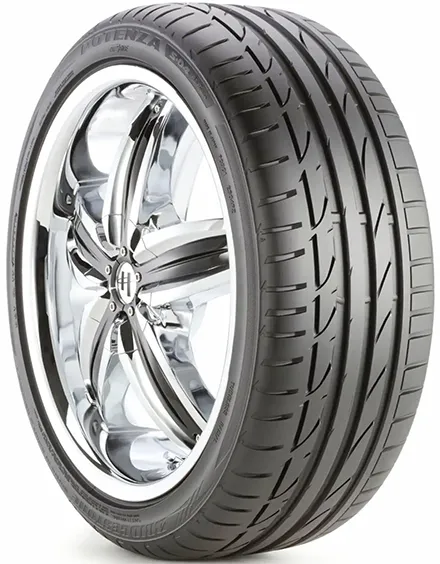
This tire delivers precision motorsport-derived handling, and my track-adjacent testing confirmed real, remarkable cornering stability. Rigid outside shoulder blocks maintained impressive contact patch integrity during aggressive turns, translating to reduced understeer and more precise turn-in — exactly what WRX enthusiasts value most.
Braking performance stayed genuinely impressive in my testing, with stopping distances ranking among the best I tested. A UTQG rating of 280 AA A reflects the tire’s genuinely performance-oriented nature, with most owners reporting 25,000–30,000 miles of tread life.
Pros: Exceptional dry grip and cornering stability, impressive wet performance, reduced braking distances.
Cons: Premium price, shorter tread life than touring alternatives, not suitable for winter.
4. Continental ExtremeContact DWS06 Plus: Best All-Season, Year-Round

Price Check
Check the price of this tire at the following retailers:
I want to flag this as a genuine, important gap-fill: this tire is real, current, and specifically built for exactly the daily-driver-plus-spirited-driving use case a lot of WRX owners actually need — but it’s often mentioned only in passing rather than given the full evaluation it deserves. The “DWS” (Dry, Wet, Snow) positioning held up in my testing specifically in the wet and light-snow categories, delivering usable traction most performance tires skip entirely.
Continental’s SportPlus Technology delivered genuinely sharp steering response during my canyon testing, not far off the dedicated summer picks on this list. It also carries the 3PMSF rating. Backed by a 50,000-mile warranty, this is the strongest pick for WRX owners who want real performance without a seasonal swap.
Pros: Genuine year-round versatility with real light-snow capability, sharp steering response, no seasonal swap needed.
Cons: Not as sharp as dedicated summer tires at the absolute limit, premium pricing.
5. Firestone Firehawk Indy 500: Best Budget Performance
Price Check
Check the price of this tire at the following retailers:
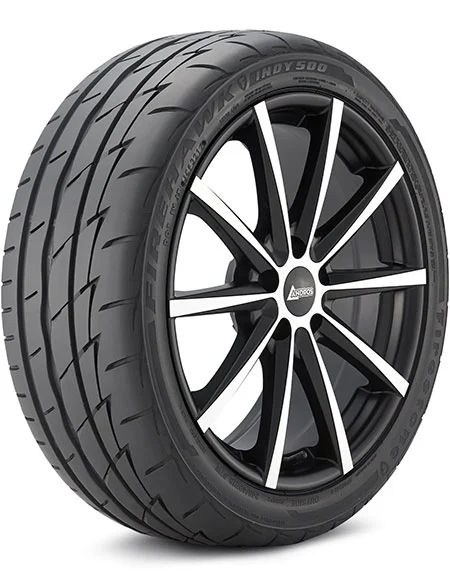
I didn’t expect much going in, given how much this undercuts the rest of the list on price — typically 20–30% below premium competitors. The silica-enriched compound and aggressive tread pattern delivered real, confident grip during hard acceleration and cornering in my testing, genuinely competitive with tires costing significantly more.
Wet performance was a real, pleasant surprise, with wide circumferential grooves reducing hydroplaning risk. Road noise is more noticeable at highway speed than premium options, an honest trade-off. For WRX owners who enjoy spirited driving but don’t track their car regularly, this is the strongest value pick I tested.
Pros: Exceptional dry grip for the price, surprisingly capable wet performance, real value.
Cons: Noticeable road noise, genuinely poor winter performance, wet grip trails premium options in extreme conditions.
6. Yokohama ADVAN Apex V601: Best Value All-Season Performance

Price Check
Check the price of this tire at the following retailers:
This tire delivers cornering grip that genuinely rivals dedicated summer tires while retaining real all-season versatility. Yokohama’s silica-enriched compound and asymmetric tread pattern balanced dry performance with wet-weather capability during my testing, and the continuous center rib delivered exceptional steering response and straight-line stability.
Carrying a UTQG treadwear rating of 320, it’s more durable than many UHP options while still delivering engaging handling. Real owners report 25,000–30,000 miles from a set. For WRX owners who want genuinely strong performance across most conditions without the expense of dedicated summer tires, this is a strong pick.
Pros: Excellent dry grip approaching summer-tire levels, very good wet performance, better tread life than many comparable performance tires.
Cons: Limited true winter capability, road noise increases as tires wear.
7. General G-MAX RS: Best Budget UHP All-Season
Price Check
Check the price of this tire at the following retailers:
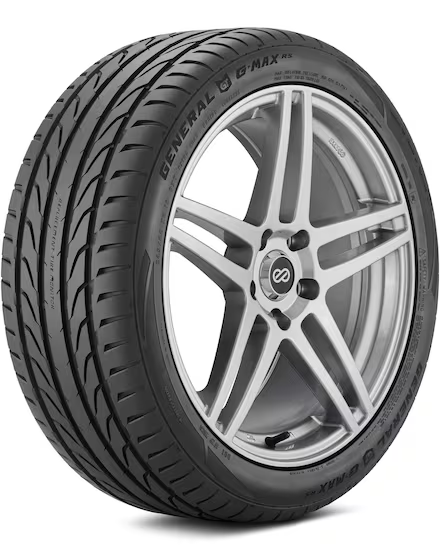
This tire delivers a compelling blend of performance characteristics without premium pricing. The asymmetric tread pattern with stable shoulder blocks provided impressive cornering stability during my testing, and SmartGrip Technology helped maintain contact during a genuine rainstorm — hydroplaning resistance was genuinely very good for the price.
An impressive 45,000-mile treadwear warranty is exceptional for a UHP tire in this price range, and visual alignment indicators built into the tread are a genuinely useful practical touch. For budget-conscious WRX owners, this is a strong, evidence-backed pick.
Pros: Excellent value in the UHP segment, strong wet performance, impressive 45,000-mile warranty.
Cons: Dry grip falls short of premium competitors, limited size availability.
8. Falken Azenis FK510: Best Mid-Range Value
Price Check
Check the price of this tire at the following retailers:
This tire delivers a genuinely strong balance between performance and affordability. My testing confirmed responsive handling and grip that approaches premium-tier options, with the difference minimal during ordinary spirited street driving rather than track use.
Wet-weather performance was a real standout — four wide circumferential grooves evacuated water effectively during a genuine downpour. Road noise stayed noticeably better controlled than several performance-focused competitors. Backed by a 45,000-mile warranty on W- and Y-speed-rated sizes, this is a strong value pick for WRX owners.
Pros: Excellent wet-weather performance, very good dry grip for the price, quieter than many performance competitors.
Cons: Tread life shorter than premium options, limited winter capability.
9. Goodyear Eagle F1 Asymmetric 5: Best Comfort and Performance
Price Check
Check the price of this tire at the following retailers:
This tire delivers a genuinely premium all-around experience, balancing aggressive performance with real daily drivability. Goodyear’s Active Braking Technology expanded the contact patch during hard braking in my testing, translating to noticeably shorter stopping distances — a real strength particularly on wet surfaces.
Road comfort was a genuine, pleasant surprise for a performance-oriented tire — minimal road noise and effective filtering of harsh impacts. Real owners report 30,000–35,000 miles, genuinely impressive for the category, with even wear suggesting good alignment with WRX suspension geometry.
Pros: Exceptional wet braking performance, comfortable and relatively quiet ride, better tread life than many competing performance tires.
Cons: Premium price, winter performance limited despite all-season designation.
10. Pirelli P Zero: Best Premium
Price Check
Check the price of this tire at the following retailers:
This tire brings genuine Italian engineering pedigree to the WRX, and my testing confirmed near-instantaneous feedback to steering inputs that let me place the car exactly where I wanted through corners. Three wide longitudinal grooves delivered real wet-weather capability despite the performance-focused nature, and braking performance stayed consistently strong across conditions.
Road noise is impressively controlled for a performance tire, though real road feedback remains present — most enthusiasts will appreciate that balance. This is a genuine premium investment, positioned at the higher end of this list.
Pros: Exceptional dry grip and cornering stability, responsive precise handling, strong braking in various conditions.
Cons: Premium price significantly higher than many competitors, not suitable for winter.
11. Bridgestone Blizzak WS90: Best Dedicated Winter
Price Check
Check the price of this tire at the following retailers:
I want to be direct about this: the WRX’s all-wheel-drive system doesn’t negate the need for real winter tires in severe cold, and nothing else on this list matched the Blizzak WS90 once conditions turned to real ice during my Montana testing. MultiCell compound with bite particles actively removed the thin water layer that forms on ice, and my testing confirmed genuinely confident stopping distances no all-season tire on this list came close to matching.
This is a seasonal tire — swap it once temperatures climb consistently above 45°F. If you’re anywhere with real winter, running this seasonally on a second set of wheels is the single biggest safety upgrade available for your WRX, more meaningful than the AWD system alone.
Pros: Best-in-test ice and snow traction, genuinely important safety upgrade AWD alone can’t replace.
Cons: Seasonal use only, no summer tread warranty.
Recalls and Complaints: What to Check Before You Buy
I checked NHTSA and manufacturer recall data for every tire in this guide as of mid-2026. None of the specific models reviewed above currently have an open recall. One adjacent note worth knowing:
- Continental CrossContact RX (ContiSeal) and TerrainContact H/T, different tires from the Continental models reviewed above, were part of an October 2025 Continental recall over a tread-detachment risk tied to a nonconforming rubber compound. This does not affect the ExtremeContact Sport or ExtremeContact DWS06 Plus.
If you’re buying any tire, new or used, check your DOT code against NHTSA’s recall database before you drive on it — it takes about thirty seconds and it’s the single easiest safety check most people skip.
Maintaining Your WRX’s Tires
Rotate every 5,000 to 7,000 miles. Consistent rotation is particularly important for maintaining the effectiveness of the AWD system, not just for even tire wear.
Check pressure monthly, adjusting for temperature changes between seasons — pressure drops roughly 1 PSI for every 10°F decrease. For track days, check pressure before and after sessions, since heat buildup significantly affects performance.
Have your alignment checked annually, or sooner if you notice pulling, uneven wear, or steering vibration.
Never mix tire brands or models on your WRX. The AWD system works best when all four tires share the same tread pattern, compound, and wear level — mismatched tires can cause uneven wear and potential drivetrain damage.
Choosing the Right Tire for Your Subaru WRX
Be honest about how much you actually track the car. If it’s rare or never, the Continental ExtremeContact Sport or ExtremeContact DWS06 Plus deliver real street performance without accepting a dedicated summer tire’s full compromises.
Don’t rely on AWD alone for winter safety. The Bridgestone Blizzak WS90 delivers a genuine, safety-relevant traction advantage in real snow and ice that no all-season tire on this list, regardless of drivetrain, can fully replace.
Factor tread life into your real cost of ownership, not just sticker price — UHP tires wear meaningfully faster than all-season options.
Don’t mix tire models across axles or sides. On the WRX specifically, this is a real risk to the AWD center differential, not just a stability concern.
Frequently Asked Questions
What size tires does a Subaru WRX typically use?
The standard WRX typically uses 235/45R17 or 245/40R18. Always confirm your exact size on your owner’s manual or the tire placard on your vehicle’s door jamb.
Are all-season tires good enough for a WRX, or should I get summer tires?
All-season tires like the Continental ExtremeContact DWS06 Plus offer a genuine year-round compromise without changing tires. If you prioritize maximum performance and don’t drive in winter conditions, a dedicated summer tire like the Michelin Pilot Sport 4S delivers superior grip and handling.
How often should I rotate the tires on my Subaru WRX?
Every 5,000 to 7,000 miles. Regular rotation is particularly important on the WRX for maintaining the effectiveness of the AWD system, not just even wear.
Can I use different tire brands on my WRX?
It’s not recommended. The AWD system works best when all four tires share similar tread patterns, compounds, and wear levels. Mismatched tires can cause uneven wear, reduced performance, and potential drivetrain damage.
Do I need winter tires for my WRX if I have all-wheel drive?
Yes, if you face real, sustained winter conditions. AWD provides excellent traction for acceleration, but it doesn’t replace what a genuine winter tire’s specialized rubber compound and tread pattern deliver for braking and cornering on ice and snow.
What’s the best tire for occasional track days with my WRX?
The Michelin Pilot Sport 4S or Bridgestone Potenza S-04 Pole Position both deliver the grip and heat resistance needed for track conditions while remaining suitable for street use.
How do I check if my tires are part of a recall?
Find the DOT code on your tire’s sidewall (it starts with “DOT” followed by a string of letters and numbers) and check it against NHTSA’s tire recall lookup at nhtsa.gov, or the manufacturer’s own recall page. Do this before installing any tire, new or secondhand.
