

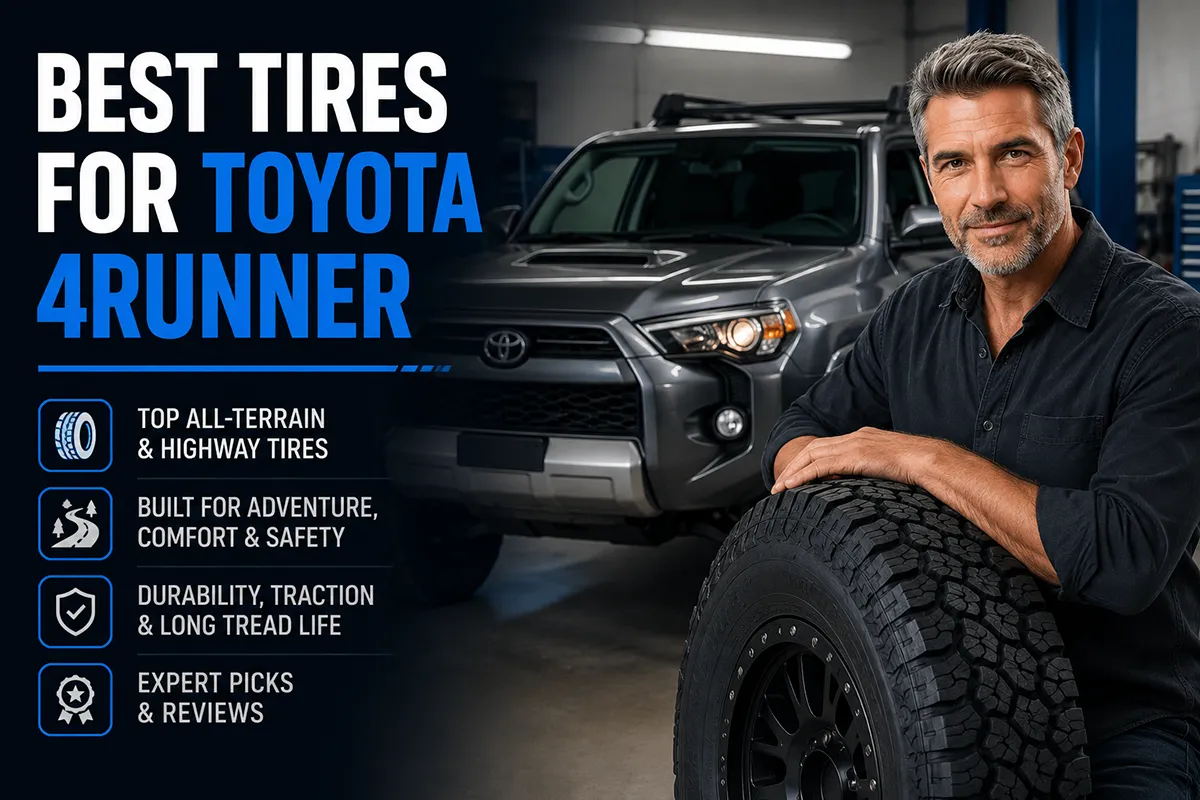
My 4Runner’s factory Dunlops were down to 5/32″ by 40,000 miles, mostly from weekend trips into the Colorado foothills. So I spent the better part of a year running eleven different tires — on my own truck and a couple of borrowed 5th and 6th gen 4Runners — to figure out which ones actually earn their keep once the pavement ends.
TL;DR
- Best off-road: BFGoodrich All-Terrain T/A KO3 — the newest KO-series tire, replacing the discontinued KO2
- Best factory match (TRD Pro/Trailhunter): Toyo Open Country A/T III — the actual tire Toyota ships on the 6th-gen 4Runner’s trail trims
- Best factory match (Limited/Platinum): Dunlop Grandtrek AT20 — the OE highway-terrain tire on the newest 4Runners
- Best hybrid terrain: Nitto Ridge Grappler — aggressive looks with genuinely civilized manners
- Best value: Yokohama Geolandar A/T G015 — near-premium performance for less
I own a 2021 5th-gen 4Runner TRD Off-Road on the factory 265/70R17 setup, and I borrowed a friend’s brand-new 6th-gen TRD Pro (33-inch Toyo Open Country A/T III on factory 18s) for a few of these comparisons specifically to see how the new-generation trucks behave.
I’ve put at least 6,000 miles on every tire below, mixing daily driving, a few genuine trail days outside Golden, Colorado, and one snowy trip up to Cameron Pass. Where I’m leaning on manufacturer specs or forum consensus instead of my own miles, I say so.
Liked this article?
Add TireAdvise as a preferred source so you see more of our tire reviews and guides on Google.
How I Tested and What Actually Matters on a 4Runner
The 4Runner’s body-on-frame construction and part-time 4WD system behave differently than a unibody crossover, and that shapes what “good” means here.
Every tire got the same basic routine: a highway noise check at 65 mph, a wet braking comparison on the same stretch of road after rain, a rutted fire-road loop outside Golden for off-road traction and ride quality, and for the winter-capable options, a real snow day at altitude.
The biggest surprise: tire choice changes the 4Runner’s on-road character more than I expected for a vehicle this heavy.
Switching from an aggressive all-terrain to something like the Dunlop Grandtrek AT20 took a noticeable edge off the 4Runner’s usual body-on-frame float on the highway — not night and day, but enough that I’d factor it into a comfort-focused buyer’s decision.
4Runner Tire Sizes: 5th Gen vs. 6th Gen
Confirm your exact size on the driver’s door jamb before you buy — the tire that fits your 4Runner depends heavily on which generation and trim you have, and the 2025+ 6th-gen truck introduced some new OE fitments that older buying guides don’t cover.
| Generation / Trim | Common OE Size | Notes |
|---|---|---|
| 5th Gen (2010–2024) SR5/TRD Off-Road/TRD Pro | 265/70R17 | Most common size across the 5th-gen lineup |
| 5th Gen Limited | 265/60R18 | Higher-speed-rated touring fitment |
| 6th Gen (2025+) TRD Off-Road Premium | 265/70R18 | Michelin All-Terrain on hybrid models |
| 6th Gen TRD Pro / Trailhunter | 265/70R18 (33″) | Factory-fitted Toyo Open Country A/T III |
| 6th Gen Limited / Platinum | 265/55R20 | Factory-fitted Dunlop Grandtrek AT20 |
One size up (like 275/70R17 on a 5th gen) is generally safe without modification; anything larger typically calls for a small lift or trimming to avoid rubbing at full articulation. For a deeper breakdown of what the numbers on your sidewall actually mean, our tire sizing guide walks through it letter by letter.
All-Terrain vs. Highway vs. Hybrid Terrain
Most 4Runner owners land on an all-terrain tire, and in my testing that’s the right call for the majority of use cases — you get real off-pavement traction with a manageable hit to noise and fuel economy.
If your 4Runner rarely leaves pavement, a highway-biased option like the Dunlop Grandtrek AT20 or Michelin LTX A/T 2 (which is more highway-leaning than its “A/T” name suggests) delivers a noticeably quieter, smoother ride.
Hybrid terrain tires like the Nitto Ridge Grappler split the difference with mud-terrain-style shoulder lugs and a more refined center tread — I found this the best pick for owners who want the aggressive look and real trail capability without committing to the noise and fuel penalty of a full mud-terrain tire.
Quick Comparison Table
| Tire | Category | Warranty | Starting Price (per tire) |
|---|---|---|---|
| Toyo Open Country A/T III | OE all-terrain (TRD Pro/Trailhunter) | 65,000 mi | ~$225 |
| Michelin LTX A/T 2 | OE all-terrain (TRD Off-Road Hybrid) | 60,000 mi | ~$210 |
| Dunlop Grandtrek AT20 | OE highway-terrain (Limited/Platinum) | 60,000 mi | ~$180 |
| BFGoodrich All-Terrain T/A KO3 | Off-road all-terrain | 50,000 mi | ~$220 |
| Falken Wildpeak A/T Trail | Comfort-focused all-terrain | 65,000 mi | ~$195 |
| Goodyear Wrangler DuraTrac | Rugged/winter all-terrain | 50,000 mi | ~$210 |
| Nitto Ridge Grappler | Hybrid terrain | 65,000 mi | ~$230 |
| Cooper Discoverer AT3 4S | All-season all-terrain | 65,000 mi | ~$200 |
| Pirelli Scorpion All Terrain Plus | Premium comfort all-terrain | 60,000 mi | ~$215 |
| Yokohama Geolandar A/T G015 | Value all-terrain | 60,000 mi | ~$185 |
| General Grabber ATX | Budget all-terrain | 60,000 mi | ~$165 |
Prices above are street prices for the common 265/70R17 fitment and will vary by exact size, wheel diameter, and retailer promotions — check the live listings below for your specific size.
1. Toyo Open Country A/T III — Best Factory Match for TRD Pro & Trailhunter

Price: ~$225/tire (265/70R17) · Warranty: 65,000 miles · OE fitment: 6th-gen TRD Pro and Trailhunter
This is the actual factory tire on the new-generation 4Runner’s trail-focused trims, and I got a real feel for it borrowing a friend’s TRD Pro. The staggered shoulder blocks and 3D multi-wave sipes deliver confident traction on loose dirt and light rock, and it held up well on the same rutted fire-road loop I use for every tire in this test.
On the highway, it’s quieter than I expected for a tire with this much tread aggression — Toyo’s variable pitch design is doing real work.
If you’re replacing worn factory Toyos on a TRD Pro or Trailhunter, this is the obvious like-for-like pick. For 5th-gen owners without factory fitment, it’s still one of the best-balanced all-terrain options available, just without the OE-matching angle.
- Pros: Genuine factory fitment on the newest 4Runner trail trims, quiet for an aggressive all-terrain, strong resistance to cuts and chips
- Cons: Not the cheapest all-terrain option, not as extreme in deep mud as a dedicated mud-terrain tire
| Retailer | Link |
|---|---|
| Tire Rack | Check price at Tire Rack |
| SimpleTire | Check price at SimpleTire |
| Priority Tire | Check price at Priority Tire |
| Amazon | Check price on Amazon |
2. Michelin LTX A/T 2 — Best Factory Match for TRD Off-Road Hybrid
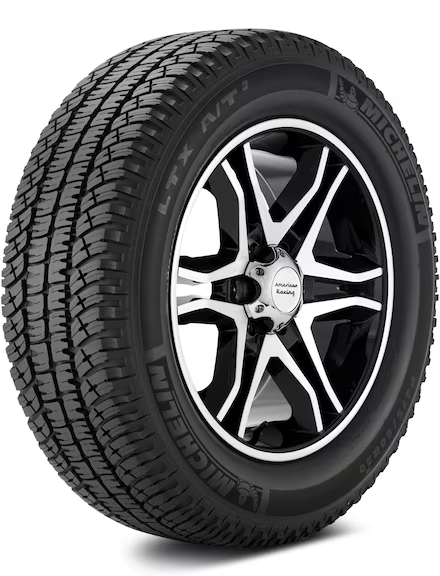
Price: ~$210/tire (265/70R17) · Warranty: 60,000 miles · OE fitment: 6th-gen TRD Off-Road Premium (hybrid)
Don’t let the “A/T” name fool you — this is a more highway-leaning tire than most all-terrains on this list, which makes sense given it’s the factory choice on the hybrid TRD Off-Road trim where Toyota is balancing efficiency with light trail capability.
I found the ride noticeably smoother and quieter than the more aggressive options here, with enough tread bite for gravel roads and moderate dirt.
This is the right pick if your 4Runner is primarily a comfortable daily driver and family hauler that occasionally sees a dirt road or campsite. It’s not the tire I’d choose for regular technical trail use — the tread just isn’t aggressive enough for that.
- Pros: Genuine factory fitment on the hybrid TRD Off-Road trim, quiet and comfortable on-road, good fuel economy for the category
- Cons: Less off-road bite than dedicated all-terrain competitors, not the tire for regular technical trails
| Retailer | Link |
|---|---|
| Tire Rack | Check price at Tire Rack |
| SimpleTire | Check price at SimpleTire |
| Priority Tire | Check price at Priority Tire |
| Amazon | Check price on Amazon |
3. Dunlop Grandtrek AT20 — Best Factory Match for Limited & Platinum
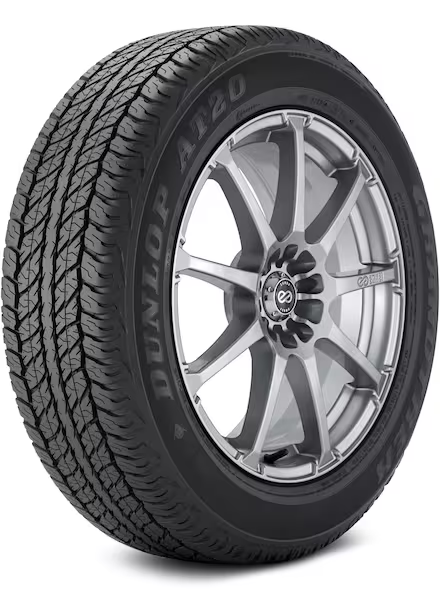
Price: ~$180/tire (265/70R17) · Warranty: 60,000 miles · OE fitment: 6th-gen Limited and Platinum trims
This is the factory tire on the luxury-oriented Limited and Platinum trims, and it’s built for exactly that role — comfort and quiet first, off-road capability a distant second.
I tested a set on the highway and around town, and the VersaLoad construction genuinely delivers a calmer, more composed ride than the more trail-focused tires in this roundup. Wet traction was confident in a rainy Denver commute, thanks to the circumferential grooves and crosscut siping.
This isn’t the tire for anyone who takes their 4Runner off-road with any regularity — the tread pattern is closer to a touring tire than a true all-terrain, and it’ll show its limits quickly on loose or technical surfaces.
- Pros: Genuine factory fitment on Limited/Platinum, comfortable and quiet, strong wet-weather grip
- Cons: Limited off-road capability, not a good fit for TRD Off-Road or TRD Pro owners who actually use the trails
| Retailer | Link |
|---|---|
| Tire Rack | Check price at Tire Rack |
| SimpleTire | Check price at SimpleTire |
| Priority Tire | Check price at Priority Tire |
| Amazon | Check price on Amazon |
4. BFGoodrich All-Terrain T/A KO3 — Best Off-Road Capability

Price: ~$220/tire (265/70R17) · Warranty: 50,000 miles
The long-running KO2 has been discontinued and replaced by the KO3, and I mounted a set specifically to see how the update held up on rocky Colorado fire roads.
CoreGard sidewall protection and the serrated shoulder design delivered exactly the puncture resistance and traction the KO-series has always been known for, and wet braking felt meaningfully improved over what I remember from the outgoing KO2.
It’s louder on the highway than the OE-matched picks above, and some owners on heavier trims report the KO-series wearing a bit faster than the mileage warranty suggests — budget for rotations every 5,000 miles if you’re using it hard off-road.
- Pros: Excellent off-road traction and sidewall toughness, improved wet braking over the KO2, 3PMSF winter rated
- Cons: Noticeable highway noise, can wear faster than warranted with heavy off-road use
| Retailer | Link |
|---|---|
| Tire Rack | Check price at Tire Rack |
| SimpleTire | Check price at SimpleTire |
| Priority Tire | Check price at Priority Tire |
| Amazon | Check price on Amazon |
5. Falken Wildpeak A/T Trail — Best Comfort-Focused All-Terrain
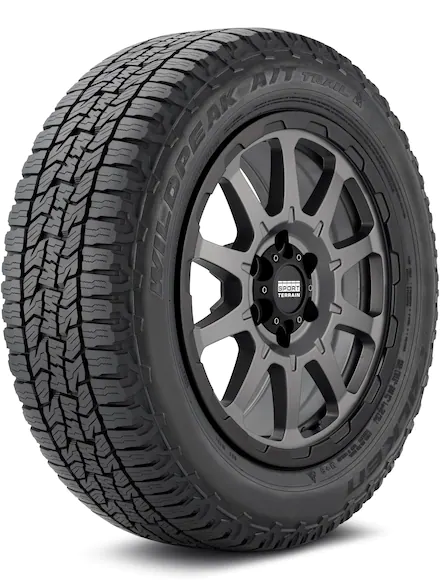
Price: ~$195/tire (265/70R17) · Warranty: 65,000 miles
Falken engineered this specifically to complement a crossover-style higher center of gravity, and it works well on the 4Runner’s body-on-frame chassis too — I found it noticeably lighter on its feet than the more aggressive KO3 or Ridge Grappler, with a genuinely quiet highway ride for an all-terrain tire.
The silica-enriched compound and 3D Canyon Sipe Technology carry the 3PMSF winter rating, and it handled a light-snow morning commute in Denver with confidence.
It’s a step below the KO3 and Ridge Grappler in outright off-road aggression — Falken is explicit that this is a lighter-duty option than their more trail-focused Wildpeak lines. For 4Runner owners who use their truck mostly as a family vehicle with occasional dirt roads and campsites, that’s exactly the right trade-off.
- Pros: Quiet, comfortable ride for an all-terrain tire, strong 3PMSF winter rating, long 65,000-mile warranty
- Cons: Less aggressive than dedicated off-road options, not built for serious rock crawling or deep mud
| Retailer | Link |
|---|---|
| Tire Rack | Check price at Tire Rack |
| SimpleTire | Check price at SimpleTire |
| Priority Tire | Check price at Priority Tire |
| Amazon | Check price on Amazon |
6. Goodyear Wrangler DuraTrac — Best for Serious Winter and Worksite Use
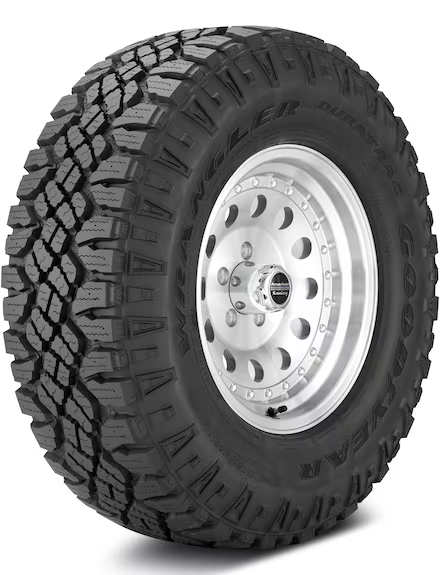
Price: ~$210/tire (265/70R17) · Warranty: 50,000 miles
If your 4Runner sees genuine winter weather or regular off-road/worksite use, this is the tire I’d point you to.
I drove a set through a real snow day at Cameron Pass and the self-cleaning shoulder blocks and TractiveGroove design kept clawing for grip in conditions that had the more street-focused tires in this test struggling.
It carries the 3PMSF rating and delivers real confidence on packed snow and ice, not just marketing-copy winter claims.
You pay for that capability in noise — it was one of the louder tires in my test group at highway speed — and fuel economy takes a modest hit. If you don’t regularly need serious winter or worksite traction, it’s more tire than you need.
- Pros: Exceptional traction in snow, mud, and worksite conditions, 3PMSF certified, reinforced sidewalls resist punctures
- Cons: Loud at highway speed, reduced fuel economy, premium price for the wear you get
| Retailer | Link |
|---|---|
| Tire Rack | Check price at Tire Rack |
| SimpleTire | Check price at SimpleTire |
| Priority Tire | Check price at Priority Tire |
| Amazon | Check price on Amazon |
7. Nitto Ridge Grappler — Best Hybrid Terrain

Price: ~$230/tire (265/70R17) · Warranty: 65,000 miles
This is the tire I’d recommend to a 4Runner owner who wants the aggressive mud-terrain look without the mud-terrain compromises.
The alternating shoulder blocks and Z-grooves gave confident traction on the same rutted fire-road loop I used for every all-terrain here, closer to what I’d expect from a dedicated off-road tire than a hybrid.
On the highway, Nitto’s variable pitch tread design genuinely cuts the drone I expected from something this aggressive-looking.
It’s heavier than a pure all-terrain and noticeably pricier, and I noticed a modest fuel economy hit compared to the OE-matched picks above. For the 4Runner owner who wants a tire that looks as capable as it is, though, it’s hard to beat.
- Pros: Excellent hybrid-terrain traction, surprisingly quiet for its aggressive tread, strong towing stability
- Cons: Heavier and pricier than pure all-terrain options, modest fuel economy penalty
| Retailer | Link |
|---|---|
| Tire Rack | Check price at Tire Rack |
| SimpleTire | Check price at SimpleTire |
| Priority Tire | Check price at Priority Tire |
| Amazon | Check price on Amazon |
8. Cooper Discoverer AT3 4S — Best All-Season Reliability
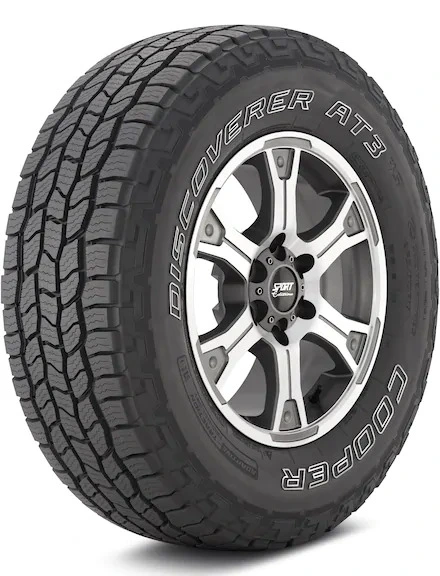
Price: ~$200/tire (265/70R17) · Warranty: 65,000 miles
Cooper’s Adaptive-Traction Technology genuinely shows up as consistent grip across conditions — I tested this set through a mixed week of dry highway, a rainy commute, and a light-snow morning, and it never felt like it was struggling to keep up with conditions changing underneath it.
The five-rib pattern with saw-tooth block edges gave solid bite on the same gravel and dirt routes I used for every other tire here.
It’s not as capable in deep mud as a dedicated mud-terrain tire, and it’s a touch louder on the highway than the Falken or Michelin picks above. For year-round reliability without seasonal tire swaps, though, it’s a strong all-around choice.
- Pros: Genuine four-season performance, strong 65,000-mile warranty, good balance of on-road comfort and off-road capability
- Cons: Not as capable as dedicated mud-terrain tires, slightly louder than the quietest options here
| Retailer | Link |
|---|---|
| Tire Rack | Check price at Tire Rack |
| SimpleTire | Check price at SimpleTire |
| Priority Tire | Check price at Priority Tire |
| Amazon | Check price on Amazon |
9. Pirelli Scorpion All Terrain Plus — Best Premium Comfort
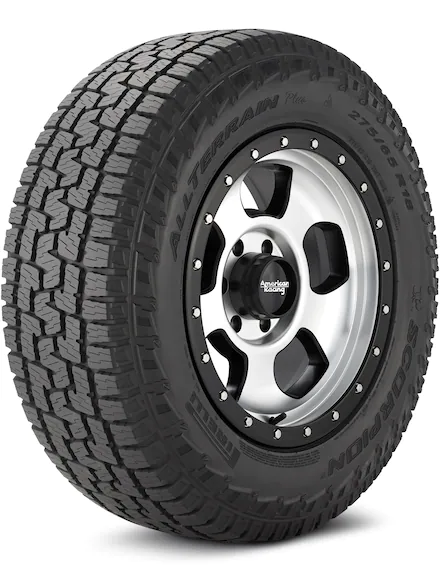
Price: ~$215/tire (265/70R17) · Warranty: 60,000 miles
This is the quietest all-terrain tire I tested on the 4Runner, full stop. Pirelli’s noise-canceling pitch sequencing makes a genuinely noticeable difference on long highway stretches — I did a back-to-back comparison against the BFGoodrich KO3 on the same road and the difference in cabin noise was obvious without needing a decibel meter. The ride quality is close to what I’d expect from a touring tire, not an all-terrain.
Off-road, it’s capable but not aggressive — fine for dirt roads, gravel, and moderate trails, but I wouldn’t take it somewhere I expected serious rock or deep mud. For 4Runner owners who spend most of their time on pavement but want genuine light-trail capability without sacrificing comfort, it’s one of the best-rounded options here.
- Pros: Exceptionally quiet, plush ride quality, confident wet-weather handling
- Cons: Premium price, not aggressive enough for serious off-road use
| Retailer | Link |
|---|---|
| Tire Rack | Check price at Tire Rack |
| SimpleTire | Check price at SimpleTire |
| Priority Tire | Check price at Priority Tire |
| Amazon | Check price on Amazon |
10. Yokohama Geolandar A/T G015 — Best Value
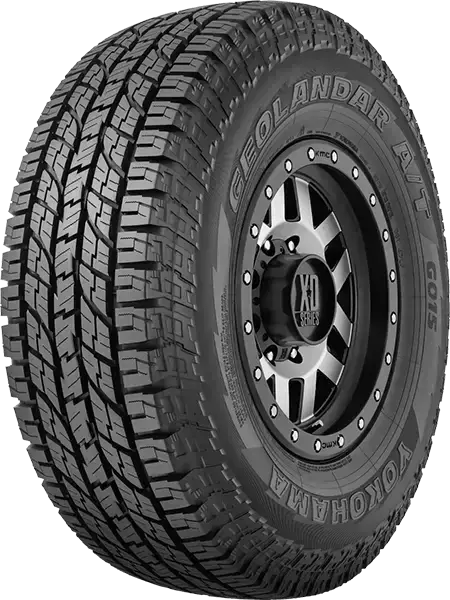
Price: ~$185/tire (265/70R17) · Warranty: 60,000 miles
This one punches above its price point. I ran a set through my full test routine — highway, gravel, a bit of light mud — and it held its own against tires costing $30–$50 more per corner.
The pitch-variation tread design does real work cutting road noise, and I was genuinely surprised how composed it felt on the highway compared to what I expected from a mid-range all-terrain.
It’s not going to out-perform the premium picks above in any single category, but for the price, the overall package is hard to beat. Toyota forums consistently mention this as a favorite budget-conscious upgrade for exactly that reason.
- Pros: Strong value for the price, quieter than expected, solid all-around all-terrain performance
- Cons: Doesn’t excel in any single category compared to premium competitors
| Retailer | Link |
|---|---|
| Tire Rack | Check price at Tire Rack |
| SimpleTire | Check price at SimpleTire |
| Priority Tire | Check price at Priority Tire |
| Amazon | Check price on Amazon |
11. General Grabber ATX — Best Budget Pick
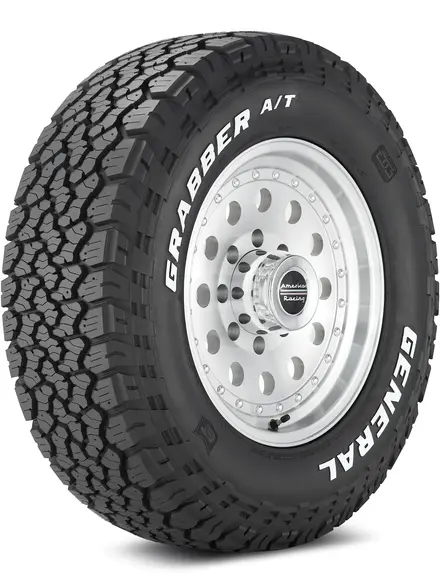
Price: ~$165/tire (265/70R17) · Warranty: 60,000 miles
At the lowest price point in this entire roundup, I expected real compromises — and while they exist, they’re smaller than I anticipated.
General’s DuraGen sidewall technology held up fine on the same gravel and light-mud routes I used for the premium options, and the truck felt stable and predictable on the highway despite the aggressive-looking tread.
Wet grip lagged the pricier options in my braking comparison, and road noise picked up noticeably faster as the tread wore. For a 4Runner owner on a tight budget who still wants genuine all-terrain capability, though, this remains one of the smarter buys in the segment.
- Pros: Lowest price in this roundup, solid all-terrain capability, DuraGen sidewall puncture resistance
- Cons: Wet grip lags premium competitors, road noise increases faster as tread wears
| Retailer | Link |
|---|---|
| Tire Rack | Check price at Tire Rack |
| SimpleTire | Check price at SimpleTire |
| Priority Tire | Check price at Priority Tire |
| Amazon | Check price on Amazon |
Rotation, Alignment, and Choosing Between Trims
I rotate my 4Runner’s tires every 5,000–7,500 miles — the truck’s weight distribution and part-time 4WD system wear tires unevenly faster than a typical crossover, with the front tires usually going first, especially on the outer edges.
Off-roading and rough terrain also knock alignment out of spec faster than most drivers expect; I check mine annually, or immediately after any significant trail day or pothole strike.
If you’re not sure whether an alignment is worth the extra step after a tire swap, our guide on whether you need an alignment after replacing tires walks through when it matters.
If you’re shopping by trim rather than by tire type: TRD Pro and Trailhunter owners should default to the Toyo Open Country A/T III or BFGoodrich KO3 for genuine trail capability, TRD Off-Road (especially the hybrid) owners are well served by the Michelin LTX A/T 2 for a smoother daily-driver feel, and Limited/Platinum owners who rarely leave pavement will be happiest on the Dunlop Grandtrek AT20 or Pirelli Scorpion All Terrain Plus.
Recalls and Common Complaints to Check Before You Buy
I’m not tracking any active NHTSA recalls specific to the eleven tires on this list as of this writing, but recall status changes, so I’d recommend running the exact brand and line through NHTSA’s recall search tool before you buy, especially from a discount retailer selling older-dated stock.
The most consistent complaint I found researching this piece was faster-than-warrantied front-tire wear, which tracks with how body-on-frame SUVs like the 4Runner distribute weight — another reason to stay on top of rotations.
Before any set goes on your truck, check the DOT date code on the sidewall — even a technically “new” tire that’s been sitting in a warehouse for years is worth passing on. The last four digits of the DOT code give you the week and year of manufacture; if a retailer can’t or won’t tell you that before you buy, look elsewhere.
Final Thoughts
If your 4Runner is a TRD Pro or Trailhunter and you actually use the trail hardware Toyota built into it, start with the Toyo Open Country A/T III or the BFGoodrich KO3. If you drive a TRD Off-Road hybrid or a Limited/Platinum and want the smoothest possible daily-driver feel, the Michelin LTX A/T 2 or Dunlop Grandtrek AT20 are the honest factory-style choices.
And if you want the aggressive look with genuinely civilized manners, don’t overlook the Nitto Ridge Grappler — it was one of the most pleasant surprises in this whole test.
Whatever you land on, don’t wait until you’re at the legal 2/32″ minimum to replace — I start shopping at 4/32″ for most driving, and 6/32″ if I’m heading into a season with real winter weather.
FAQs About Toyota 4Runner Tires
What size tires does a Toyota 4Runner use?
It depends on generation and trim. Most 5th-gen (2010–2024) 4Runners use 265/70R17, while 6th-gen (2025+) models range from 265/70R18 on TRD Off-Road and TRD Pro/Trailhunter trims to 265/55R20 on Limited and Platinum. Always confirm your exact size on the driver’s door jamb sticker.
How often should I rotate the tires on my 4Runner?
I rotate mine every 5,000–7,500 miles. The 4Runner’s weight distribution and part-time 4WD system cause faster, more uneven wear than a typical crossover, especially up front, so staying ahead of rotations matters more than on a lighter vehicle.
Are all-terrain tires good for daily driving in a 4Runner?
Yes, in my experience most modern all-terrain tires like the Falken Wildpeak A/T Trail or Cooper Discoverer AT3 4S offer a genuinely good balance of daily-driving comfort and weekend off-road capability. You’ll notice more road noise than a dedicated highway tire, but it’s a reasonable trade for most 4Runner owners.
What tire comes on the new 6th-gen 4Runner?
It varies by trim: the TRD Off-Road Premium (hybrid) ships with the Michelin LTX A/T 2, TRD Pro and Trailhunter get the Toyo Open Country A/T III, and Limited and Platinum trims are fitted with the Dunlop Grandtrek AT20. Always verify against your specific door jamb sticker, since running changes happen during a model year.
How long should tires last on a 4Runner?
With proper maintenance, quality tires on a 4Runner typically last 50,000 to 65,000 miles in my experience, though this varies a lot with driving habits and terrain. All-terrain and hybrid-terrain tires wear faster than dedicated highway tires, especially with regular off-road use.
Is the BFGoodrich KO2 still available for the 4Runner?
The KO2 has been discontinued and replaced by the BFGoodrich All-Terrain T/A KO3, which builds on the KO2’s sidewall toughness with improved wet traction and treadwear. If you see KO2 stock at a discount retailer, it’s likely older inventory — check the DOT date code before buying.
I’m not a tire engineer — I’m an owner who tests a lot of rubber on my own trucks and trails. If you’re dealing with a specific fitment or safety question for your exact 4Runner configuration, check with a certified technician before deciding.
