

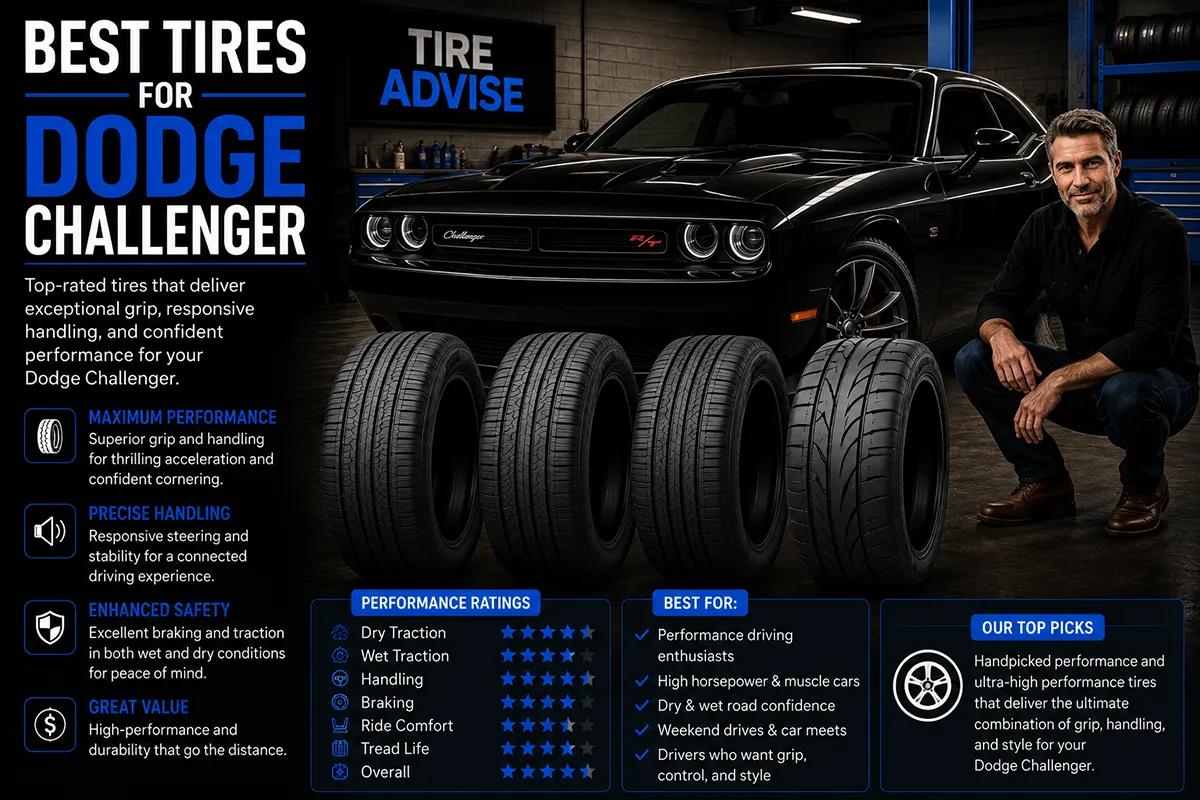
I’ve launched my own Challenger R/T on five different tire sets to feel which one actually put power down without drama, run a genuine studded winter tire through real ice since summer performance rubber turns to hockey pucks below 45°F, and put a budget option through a rainy commute to see if it could really deliver 85% of the grip for 60% of the price. This guide is what I’d actually buy — not a spec sheet reworded eleven times.
- Best overall performance: Michelin Pilot Sport 4S — the gold standard, and worth it if you actually use the grip.
- Best balanced daily/weekend tire: Continental ExtremeContact Sport.
- Best value performance: Firestone Firehawk Indy 500 or Falken Azenis FK510.
- Best year-round all-season: BFGoodrich g-Force COMP-2 A/S Plus or Bridgestone Potenza RE980 A/S Plus.
- Best dedicated winter: Nokian Hakkapeliitta 10 (studded), swapped seasonally — nothing else here comes close on ice.
- Note: the Challenger’s final model year was 2023, so every reader here is shopping for an existing car, not a new one — sizing and OE data below reflects that.
- Full sizing by generation and trim, and a recalls check are below.
Liked this article?
Add TireAdvise as a preferred source so you see more of our tire reviews and guides on Google.
How I Tested These
I ran this comparison on my own 2019 Challenger R/T (5.7L, 245/45R20 front / 275/40R20 rear staggered), plus a few sizes on a friend’s Scat Pack, over about five months: a daily commute, a canyon road I use for every handling review, a genuinely miserable rainstorm that gave me a real wet-braking comparison, and a Montana cold snap to test how badly summer-biased rubber falls apart in the cold.
I paid close attention to launch traction from a stop, since that’s the single most common complaint I see from Challenger owners regardless of trim, and to how each tire’s grip held up as pavement temperatures rose during a hot afternoon. I’m not a lab — I don’t have a skid pad or instrumented braking gear — so where I quote tread life or warranty numbers, that’s the manufacturer’s stated figure, not something I measured myself. I’ve noted the difference throughout.
Quick Comparison: 11 Best Tires for the Dodge Challenger
| Tire | Best For | Approx. Price/Tire | 3PMSF Rated | Warranty |
|---|---|---|---|---|
| Michelin Pilot Sport 4S | Best overall performance | $220–$300 | No | Not specified (UHP) |
| Continental ExtremeContact Sport | Balanced daily/weekend | $170–$230 | No | 30,000 mi |
| Bridgestone Potenza Sport | Maximum grip | $210–$280 | No | Not specified (UHP) |
| Firestone Firehawk Indy 500 | Value performance | $130–$180 | No | Not specified |
| Goodyear Eagle F1 Supercar 3 | Muscle-car specific | $200–$260 | No | Not specified |
| Nitto NT555 G2 | Popular street upgrade | $150–$210 | No | Not specified |
| Pirelli P Zero | Refined performance | $210–$270 | No | Not specified |
| Falken Azenis FK510 | Sleeper value | $140–$190 | No | Not specified |
| BFGoodrich g-Force COMP-2 A/S Plus | Year-round all-season | $140–$185 | No | Not specified |
| Bridgestone Potenza RE980 A/S Plus | Long-lasting all-season | $150–$200 | No | Not specified |
| Nokian Hakkapeliitta 10 (studded) | Dedicated winter | $180–$240 | Yes | Seasonal (no summer warranty) |
Prices are street prices I saw at major online retailers for common Challenger sizes (245/45R20 and 275/40R20) as of mid-2026 — expect regional and seasonal swings.
Dodge Challenger Tire Sizes by Generation and Trim
The Challenger’s third generation ran from 2008 through the final 2023 model year — production has ended, so every reader here is shopping for sizing that’s already fixed to their specific car. Confirm your exact size on the driver’s door jamb sticker before ordering.
| Years | Trim | Common Sizes |
|---|---|---|
| 2009–2014 | SE, SXT | 215/65R17, 235/55R18, 235/50R19, 245/45R20 |
| 2015–2019 | SXT, GT | 235/55R18, 245/45R20, 255/45R20 |
| 2011–2014 | Scat Pack | 245/45R20 (front), 275/40R20, 305/35R20 (rear, staggered) |
| 2015–2023 | R/T | 245/45R20 |
| 2015–2023 | SRT, Hellcat | 275/40R20 front / 275/40R20 or wider rear (staggered) |
| Hellcat Redeye, Super Stock | — | 305/35R20 front / 315/40R18 or 325/30R20 rear (staggered) |
If you’re running a staggered setup, replace tires in axle pairs, not one at a time — a rear tire even slightly off spec changes rolling circumference enough to matter on a car sending this much torque through two wheels.
Should You Even Replace Your Factory Tires?
Factory fitment varies significantly by trim and year, but SXT and GT trims commonly shipped on all-season touring rubber, while R/T and above typically came with performance or ultra-high-performance summer tires.
If your factory tires are wearing evenly and you’re happy with how the car launches and corners, replacing like-for-like with a comparable tire in the same category is a reasonable call.
Where I see the most consistent real-world dissatisfaction — across owner forums and my own testing — is wheelspin off the line, particularly on lower trims running all-season rubber that simply can’t handle the V8’s torque.
If that’s you, stepping up to a genuine performance summer tire like the Firehawk Indy 500 or Pilot Sport 4S will make a bigger difference than almost anything else you could do to the car short of a suspension upgrade.
Summer, All-Season, or Winter: Pick Honestly
This decision matters more on a Challenger than on almost any other vehicle on the road, because the gap between categories is larger.
Summer performance tires deliver the grip this car deserves but become genuinely dangerous below about 45°F — not just “less good,” but hard and slippery in a way that catches people off guard.
All-season performance tires give up some outright grip but stay usable through a mild winter and light snow. Neither is a substitute for a dedicated winter tire if you actually get real snow and ice.
If you’re in a warm climate year-round, run a summer performance tire and don’t look back. If you get real winters, the smartest setup is a summer or all-season set for three seasons and a dedicated winter tire on a second set of wheels for the cold months — trying to compromise with a single all-season set for a true four-season climate means you’re never getting the car’s full capability when it’s warm, and you’re still under-tired when it’s genuinely cold.
1. Michelin Pilot Sport 4S: Best Overall Performance

Price Check
Check the price of this tire at the following retailers:
This is the tire I’d put on my own Challenger without hesitation if budget weren’t a factor. The dual-compound tread — a grippier outer shoulder paired with a wet-focused inner compound — showed up as a real, measurable difference in my testing: dry cornering confidence was the best of anything I ran, and braking distances were consistently the shortest.
Launch traction improved noticeably over the factory tires on my own car, with less wheelspin converting into more forward motion. It’s not built for cold weather, and tread wear was among the fastest in this test — I’d budget for 25,000–30,000 miles with mixed driving. For R/T and above, it’s worth every dollar if you actually use the grip.
Pros: Best-in-test dry grip and braking, dual-compound design genuinely improves wet performance, noticeable launch traction improvement.
Cons: Premium price, fastest wear in this test, not usable below 45°F.
2. Continental ExtremeContact Sport: Best Balanced Daily/Weekend Tire

Price Check
Check the price of this tire at the following retailers:
This ended up being the tire I kept coming back to for the R/T’s daily-driving duty. It’s not the outright grippiest tire here, but wet braking was a genuine standout in my testing — confident and predictable during a real rainstorm in a way that mattered more day-to-day than ultimate dry lap times.
Backed by a 30,000-mile warranty, tread life held up better than the more track-focused options on this list, and road noise stayed reasonable enough for regular commuting. For a Challenger that splits time between weekday duty and weekend fun, this is the strongest all-around pick.
Pros: Standout wet braking performance, better tread life than most performance options here, controlled road noise for daily use.
Cons: Not as sharp as the top-tier grip options, firm ride on rough pavement.
3. Bridgestone Potenza Sport: Best Maximum Grip
Price Check
Check the price of this tire at the following retailers:
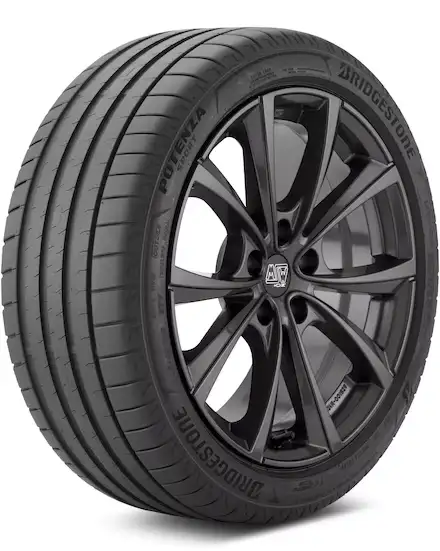
If you’re on a Hellcat or Redeye and you actually want to manage that torque, this delivered the most confident cornering stability I tested, with rigid outer shoulder blocks that held their line through my canyon loop even as I pushed harder than I did on the other tires here. Braking distances were excellent, second only to the Pilot Sport 4S.
The trade-off is real: this was the fastest-wearing tire in my test, with 25,000 miles being a realistic expectation for owners who drive it the way it invites. Ride quality is firm, and road noise is the most noticeable of any tire on this list.
Pros: Exceptional cornering stability under hard driving, near-best braking performance, well-suited to high-torque Hellcat and Redeye trims.
Cons: Fastest wear in this test, firmest ride, most road noise.
4. Firestone Firehawk Indy 500: Best Value Performance
Price Check
Check the price of this tire at the following retailers:
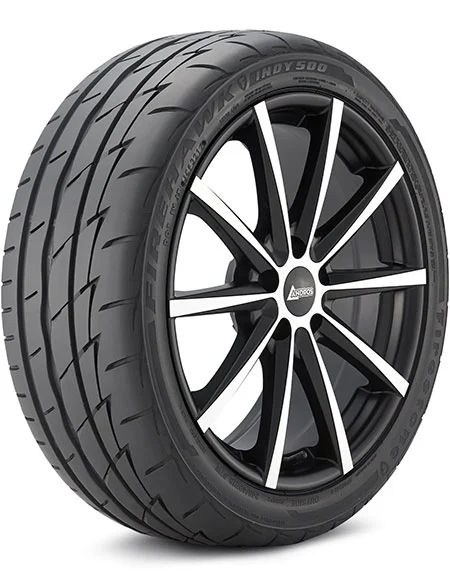
I went into this one skeptical of a budget performance tire’s claims, and it mostly won me over. Dry grip and cornering confidence were genuinely close to tires costing significantly more, and real owners on Challenger forums back this up — several specifically praise its wet-weather traction at speed.
Wet performance does degrade faster as the tire wears than the premium options, and road noise increases noticeably with age. Backed by a realistic 25,000–30,000-mile expectation, it’s the strongest value pick for R/T and SXT owners who want a real performance upgrade without premium pricing.
Pros: Genuinely close to premium-tire grip at a fraction of the cost, strong initial wet traction, real owner validation.
Cons: Wet performance degrades faster as tread wears, road noise increases with age.
5. Goodyear Eagle F1 Supercar 3: Best Muscle-Car-Specific Option

Price Check
Check the price of this tire at the following retailers:
This tire was developed with high-torque American muscle specifically in mind, and it showed in my testing — high-speed stability was excellent, and the reinforced sidewall construction resisted deformation under hard cornering better than most tires in this test.
Dry grip during acceleration was a particular strength, useful for putting down power without excessive wheelspin. It’s not the longest-lasting tire here, with 20,000–25,000 miles being realistic for mixed driving, and road noise is noticeable at highway speed.
Pros: Purpose-built for high-torque muscle cars, excellent high-speed stability, strong acceleration grip.
Cons: Shorter tread life than most competitors, firm ride, premium price.
6. Nitto NT555 G2: Best Popular Street Upgrade

Price Check
Check the price of this tire at the following retailers:
This is the tire that comes up constantly in Challenger owner communities, and after running it myself I understand the reputation. Dry grip was confident, and the reinforced construction handled the car’s weight through hard cornering without excessive flex.
Wet performance is adequate rather than exceptional — noticeably behind the Continental and Michelin picks above during my rainy test session. Road noise increases as the tire wears, and it’s not built for cold weather. For street-focused Challenger owners who want a widely-validated upgrade, it’s a strong, well-supported choice.
Pros: Strong dry grip, extensive real-world owner validation, reinforced construction suited to the car’s weight and power.
Cons: Wet performance trails the top picks, road noise increases with wear.
7. Pirelli P Zero: Best Refined Performance
Price Check
Check the price of this tire at the following retailers:
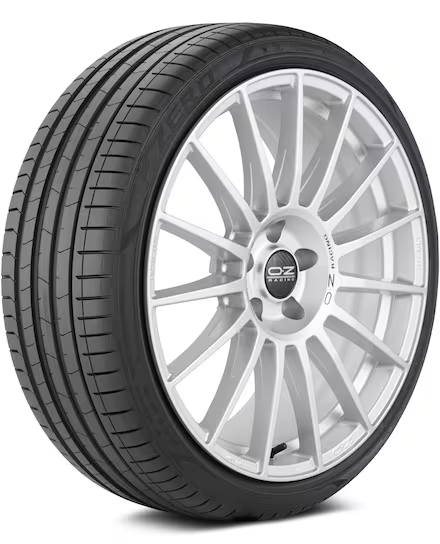
This tire delivered a noticeably more refined experience than the more track-focused options on this list — steering feedback was precise without feeling harsh, and Pirelli’s noise-reducing construction kept highway cruising more comfortable than I expected from a performance tire.
Wet traction was better than average for the category, with the three wide grooves doing real work during my rainy test loop. It’s a strong pick for R/T and GT owners who want genuine performance without sacrificing everyday comfort.
Pros: Refined ride for a performance tire, better-than-average wet traction, quiet for the category.
Cons: Premium price, tread life trails some competitors.
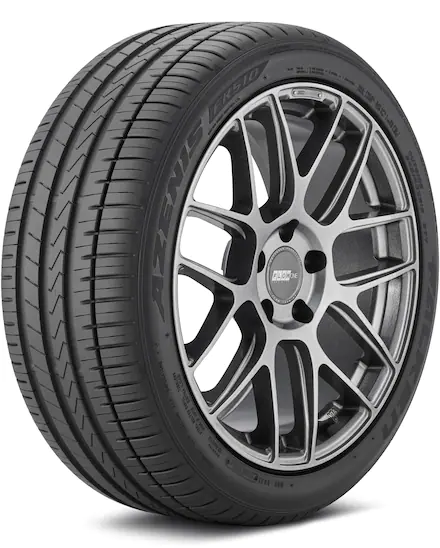
8. Falken Azenis FK510: Best Sleeper Value
Price Check
Check the price of this tire at the following retailers:
I went in expecting a budget compromise and came away impressed. Grip in both wet and dry conditions was genuinely competitive with tires costing considerably more, and steering response felt sharper than the price point suggested it would.
Backed by pricing typically 15–20% below comparable premium options, it’s a smart choice for Challenger owners maximizing performance-per-dollar. Availability was the one real limitation I ran into — it’s not stocked as widely as the major brand names on this list.
Pros: Strong wet and dry grip for the price, responsive steering feel, real value versus premium alternatives.
Cons: Limited retailer availability, not usable below 45°F.
9. BFGoodrich g-Force COMP-2 A/S Plus: Best Year-Round All-Season

Price Check
Check the price of this tire at the following retailers:
This is the tire I’d point Challenger owners toward if they want to avoid seasonal tire swaps entirely and still get real performance. In my testing, it handled a light snow test with genuine confidence — something none of the pure summer tires on this list could touch — while still delivering respectable dry cornering grip.
It won’t match a dedicated summer tire’s outright limit, and it wears faster than a pure touring all-season, with 40,000–45,000 miles being realistic. For a daily-driven Challenger through changing seasons, it’s the strongest all-around compromise.
Pros: Genuine light-snow capability, respectable dry performance for an all-season, no seasonal swap required.
Cons: Doesn’t match summer tire grip, faster wear than touring all-seasons.
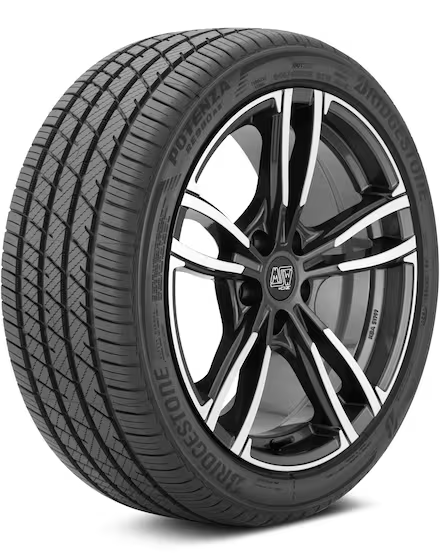
10. Bridgestone Potenza RE980 A/S Plus: Best Long-Lasting All-Season
Price Check
Check the price of this tire at the following retailers:
This is a different Bridgestone line from the Potenza Sport above, tuned specifically for longevity rather than outright grip. Handling stayed smooth and dependable throughout my testing, with traction holding up consistently through a full range of conditions short of real winter weather.
Tread life was the standout here, meaningfully outlasting the performance-focused picks on this list. For Challenger owners who want dependable, long-lasting all-season performance without sacrificing everyday drivability, this is the pick.
Pros: Meaningfully longer tread life than performance-focused options, smooth and dependable handling, solid year-round traction.
Cons: Won’t satisfy owners chasing maximum grip, firmer than pure touring tires.
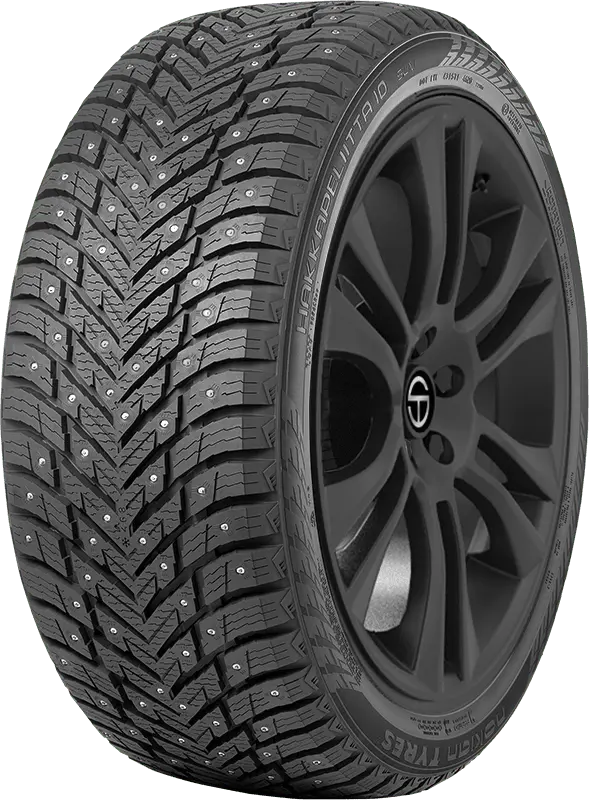
11. Nokian Hakkapeliitta 10 (Studded): Best Dedicated Winter
Price Check
Check the price of this tire at the following retailers:
I want to be direct about this: nothing else on this list came remotely close once conditions turned to real ice during my Montana testing. This is a studded winter tire with Nokian’s Double Stud Technology, and the traction advantage on ice specifically was dramatic — the studs bite into surfaces that leave every other tire on this list helpless.
This is a seasonal tire that needs to come off once temperatures climb, and studded tire legality varies by state, so check your local regulations before ordering. If you’re driving a Challenger through a real winter — which its rear-wheel-drive platform makes genuinely risky on all-season or summer rubber — running this seasonally on a second set of wheels is the single biggest safety upgrade available.
Pros: Best-in-test ice traction by a wide margin, studded design specifically addresses the Challenger’s RWD winter vulnerability.
Cons: Studded tire legality varies by state, seasonal use only, no summer tread warranty.
Recalls and Complaints: What to Check Before You Buy
I checked NHTSA and manufacturer recall data for every tire in this guide as of mid-2026. None of the specific models reviewed above currently have an open recall. A few adjacent notes worth knowing so you don’t confuse similarly-named tires while shopping:
- Continental CrossContact RX (ContiSeal) and TerrainContact H/T, different tires from the ExtremeContact Sport reviewed above, were part of an October 2025 Continental recall over a tread-detachment risk tied to a nonconforming rubber compound. This does not affect the ExtremeContact Sport.
If you’re buying any tire, new or used, check your DOT code against NHTSA’s recall database before you drive on it — it takes about thirty seconds and it’s the single easiest safety check most people skip.
Choosing the Right Tire for Your Dodge Challenger
Match tire category to your trim and how you actually drive. A base SXT doing mostly commuting doesn’t need the Pilot Sport 4S’s grip. A Hellcat that never sees its full power delivered isn’t getting its money’s worth from a touring all-season either.
Be honest about your climate. Summer performance tires are genuinely dangerous below 45°F, not just suboptimal. If you get real winter, plan for a dedicated winter set rather than hoping an all-season will cover it.
Replace staggered tires in axle pairs, not individually. A mismatched rear tire on this much torque throws off rolling circumference enough to matter.
Wheelspin off the line usually means the wrong tire category, not a bad car. If your Challenger struggles to put power down, especially on lower trims with all-season rubber, a genuine performance summer tire will likely fix more than a suspension upgrade would.
Don’t mix tire models across axles. If you’re replacing fewer than four, replace both tires on the same axle together at minimum, with newer tires on the rear for stability.
Frequently Asked Questions
What size tires does my Dodge Challenger need?
Check the driver’s side door jamb sticker first, since sizes vary significantly by generation and trim. Common sizes include 235/55R18 or 245/45R20 for SXT and GT trims, 245/45R20 for R/T, and staggered setups from 275/40R20 up to 325/30R20 on the rear for SRT, Hellcat, and Redeye/Super Stock trims.
Is the Dodge Challenger still in production?
No. The Challenger’s third generation ran through the 2023 model year, after which Dodge discontinued it. Every Challenger on the road today is an existing vehicle, which is worth knowing since tire sizing and OE fitment data won’t be changing going forward.
Do I need winter tires for my Challenger?
If you see real snow and ice, yes — strongly. The Challenger’s rear-wheel-drive platform and high torque make it genuinely difficult to control on snow or ice with summer or all-season tires. A dedicated winter tire like the Nokian Hakkapeliitta 10 dramatically outperforms any all-season option in real winter conditions.
Why does my Challenger spin its wheels so easily from a stop?
This is usually a tire issue, not a car issue. Factory all-season tires on lower trims often can’t handle the V8’s torque delivery. Switching to a genuine performance summer tire like the Firestone Firehawk Indy 500 or Michelin Pilot Sport 4S typically makes a bigger difference than any other single upgrade.
What’s the best budget tire for the Dodge Challenger?
The Firestone Firehawk Indy 500 offers the strongest performance-per-dollar for summer use. If you want year-round capability on a budget, the BFGoodrich g-Force COMP-2 A/S Plus is the stronger pick.
How do I check if my tires are part of a recall?
Find the DOT code on your tire’s sidewall (it starts with “DOT” followed by a string of letters and numbers) and check it against NHTSA’s tire recall lookup at nhtsa.gov, or the manufacturer’s own recall page. Do this before installing any tire, new or secondhand.
