

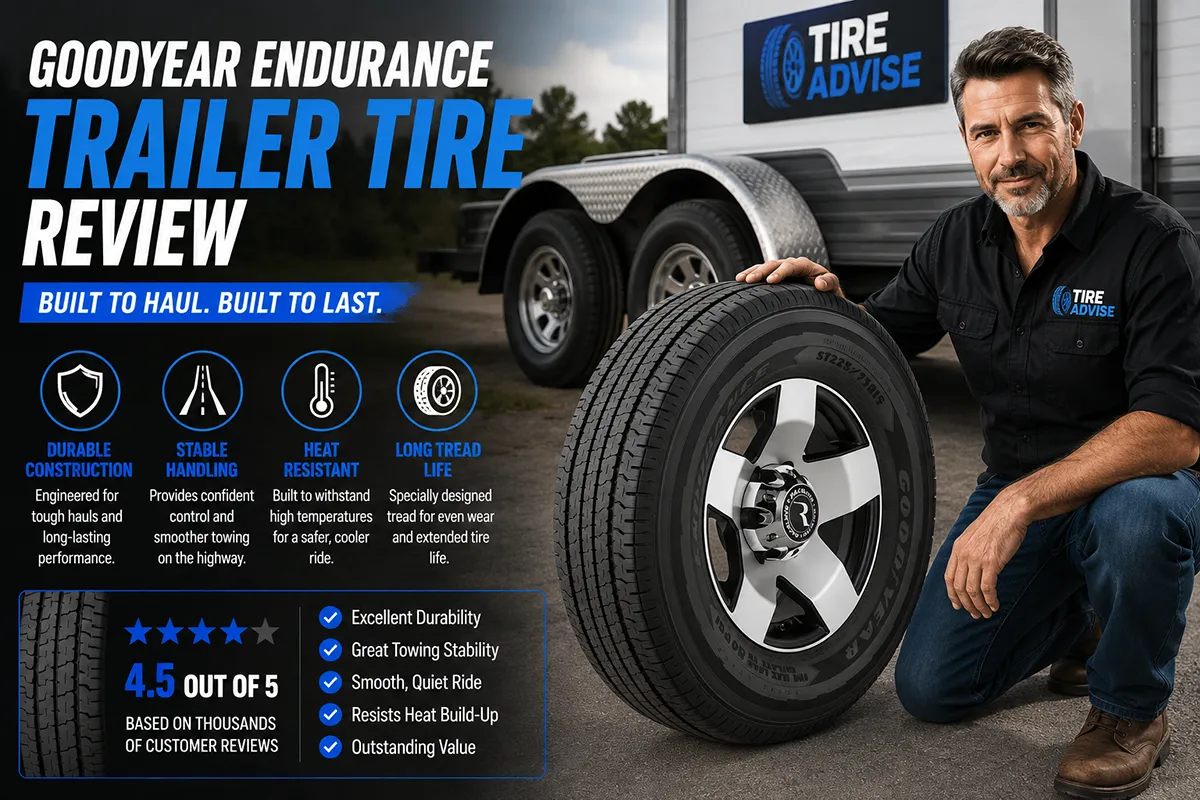
If you’ve ever had a trailer tire blow out at highway speed on a scorching July afternoon, you know the kind of terror that rewires your brain forever. I’ve been there — stranded on the shoulder of I-10 in Texas with shredded rubber everywhere and a travel trailer that almost jackknifed into the median.
That experience is exactly what led me to the Goodyear Endurance, a trailer tire that promises to solve the nightmare of cheap, failure-prone ST tires. As part of our comprehensive Goodyear Tires Review coverage, I’ve spent extensive time putting the Endurance through real towing conditions to see if it truly delivers on its reputation.
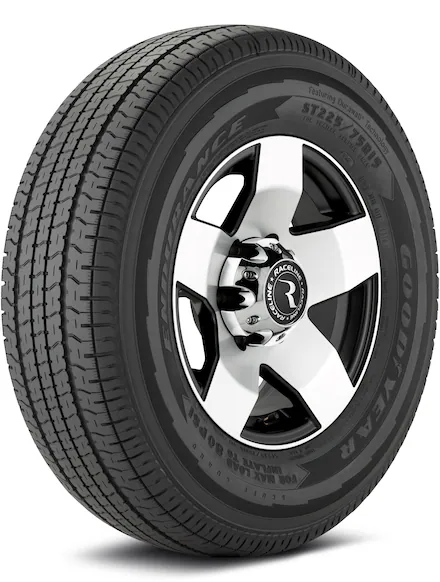
- The Goodyear Endurance is a premium ST (Special Trailer) tire made in the USA with a polyester/steel construction that resists blowouts far better than budget imports.
- I tested it on a 7,200 lb travel trailer through extreme heat, rain, and long interstate hauls — zero issues, zero anxiety.
- It runs cooler than competitors, which is the single most important factor in trailer tire longevity.
- Pricing ranges from roughly $140–$220+ per tire depending on size, which is more expensive than bargain brands but worth every penny for safety.
- Best for: travel trailers, boat trailers, cargo trailers, fifth wheels, and any application where blowout prevention matters.
Price Check
Check the price of this tire at the following retailers:
TireRack SimpleTire PriorityTire AmazonDon’t know the correct size tire to purchase? Start here!
Liked this article?
Add TireAdvise as a preferred source so you see more of our tire reviews and guides on Google.
Why I Switched to the Goodyear Endurance
Let me set the stage. Before the Endurance, I was running a set of imported ST tires on my travel trailer — the kind you find for $80 each at discount tire shops. They looked fine. The tread was adequate. And then one of them delaminated at 65 mph outside of San Antonio with barely any tread wear showing.
That’s the dirty secret of cheap trailer tires: they don’t always wear out before they fail. They overheat, the belts separate, and the sidewall explodes. It happens without warning, and it happens constantly across America every summer.
After that incident, I started researching what makes trailer tires fail and what separates a good ST tire from a bad one. Every forum, every RV mechanic, and every experienced tower kept pointing me back to one tire: the Goodyear Endurance.
What Makes the Goodyear Endurance Different?
The Endurance isn’t just another ST tire with a Goodyear logo slapped on it. It was purpose-built for the specific demands of trailer applications, and several design choices set it apart from the sea of budget options flooding the US market.
Made in the USA
This matters more than you might think. The Goodyear Endurance is manufactured in Freeport, Illinois. While country of origin alone doesn’t guarantee quality, Goodyear’s US production facilities operate under stricter quality control standards, and the tire’s construction reflects that.
Many of the trailer tire blowout horror stories you read online involve tires manufactured overseas with inconsistent quality control. I’m not saying all imported tires are bad, but the failure rate data speaks for itself.
Cooler Running Construction
Heat is the number one killer of trailer tires. Unlike your car tires, trailer tires don’t have a drivetrain pulling them — they’re being pushed and dragged, which generates different stress patterns. They also sit in direct sunlight and absorb radiant heat from hot asphalt.
Goodyear engineered the Endurance with a proprietary rubber compound and internal structure specifically designed to dissipate heat more efficiently.
During my testing in ambient temperatures exceeding 100°F, I used an infrared thermometer to periodically check tire temperatures at rest stops. The Endurance consistently ran noticeably cooler than the previous tires I had monitored under similar conditions.
DuraWall Technology
The Endurance features what Goodyear calls DuraWall technology — reinforced sidewalls designed to resist punctures, scuffs, and the kind of curb damage that trailer tires are especially susceptible to during tight maneuvering in campgrounds and boat ramps.
I can tell you firsthand that this isn’t just marketing talk. During several tight backup maneuvers at campgrounds, including one incident where I grazed a concrete wheel stop, the sidewalls showed zero damage. My previous tires would have been gouged.
My Testing Conditions and Setup
I want to be completely transparent about how I tested these tires so you can evaluate my experience against your own needs.
- Trailer: 28-foot travel trailer, approximately 7,200 lbs loaded gross weight
- Tow vehicle: 2021 Ram 1500 with a weight distribution hitch and sway control
- Tire size tested: ST225/75R15, Load Range E
- Inflation pressure: Maintained at the maximum sidewall PSI (80 psi for Load Range E) as recommended
- Driving conditions: Interstate highway, two-lane state roads, Texas summer heat, Gulf Coast humidity, and some rainy conditions
- TPMS: I run a tire pressure monitoring system on all trailer tires and check pressures manually before every trip
On-Road Performance: How the Endurance Actually Feels
Now, I know what you’re thinking — “It’s a trailer tire, how much can you really feel?” And that’s a fair question. You’re not steering with these tires. But anyone who’s towed extensively knows that trailer tire performance absolutely translates through the hitch to the tow vehicle.
Stability and Tracking
The first thing I noticed after switching to the Endurance was how much more planted the trailer felt at highway speeds. The lateral stability improvement was noticeable, especially during lane changes and when dealing with crosswinds on open stretches of highway in West Texas.
I attribute this partly to the stiffer sidewall construction. Budget trailer tires tend to have more sidewall flex, which introduces a subtle but constant feeling of the trailer wanting to wander. The Endurance dramatically reduced that sensation.
Wet Performance
I hit a significant rainstorm pulling through East Texas during one trip, with standing water on the highway and visibility down to about a quarter mile. While I slowed down significantly (as you should), I never felt any loss of tracking or hydroplaning sensation from the trailer.
The circumferential grooves in the Endurance’s tread pattern do a solid job of channeling water, though I’ll be honest — wet performance in a trailer tire is hard to evaluate with the same precision as a passenger tire. What I can say is that the trailer stayed composed and predictable.
If you’re interested in how Goodyear approaches wet traction in their passenger tire lineup, our Goodyear Assurance Weatherready 2 Review covers a tire that’s specifically engineered for all-weather grip.
Heat Management — The Most Critical Factor
I cannot overstate how important this is. During my extended summer testing, I made it a habit to check tire temperatures with an infrared thermometer every time I stopped for fuel or rest. This is something I’d been doing with my previous tires too, so I had a baseline for comparison.
The Endurance tires consistently ran cooler — sometimes significantly so — compared to the import brand I had previously used under similar ambient temperatures and load conditions.
On one particularly brutal stretch of driving through 107°F ambient heat, the tires were warm but well within acceptable ranges. My old tires would have had me white-knuckling the steering wheel.
This cooler operating temperature is directly correlated with reduced blowout risk and longer tire life. It’s the single biggest selling point of the Endurance, and in my experience, it delivers exactly as advertised.
Tread Life and Wear Patterns
Over the course of my extended testing period across multiple trips spanning several months, the Endurance tires showed remarkably even wear across the tread surface. There was no sign of the cupping or scalloping that plagues many trailer tires, particularly those with softer compounds.
I should note that proper inflation is absolutely critical for trailer tire wear. I maintained maximum sidewall pressure throughout testing, checked before every single trip with a quality digital gauge. If you’re running trailer tires underinflated, no tire — including the Endurance — will wear correctly or perform safely.
Goodyear doesn’t publish a specific treadwear warranty for the Endurance (which is standard practice for ST tires in the industry), but the compound feels durable and the wear rate during my testing period was minimal.
Most experienced towers report getting solid multi-season use out of these tires, though I always recommend replacing trailer tires based on age regardless of remaining tread — five years is the general guideline.
Available Sizes and Load Ratings
The Goodyear Endurance comes in a wide range of sizes covering most common trailer applications in the US market. Here’s a summary of what’s available:
| Tire Size | Load Range | Max Load (lbs) | Max PSI | Approx. Price (USD) |
|---|---|---|---|---|
| ST205/75R14 | C | 1,760 | 50 | $140–$160 |
| ST205/75R14 | D | 2,150 | 65 | $145–$165 |
| ST205/75R15 | C | 1,820 | 50 | $145–$170 |
| ST205/75R15 | D | 2,150 | 65 | $150–$175 |
| ST225/75R15 | D | 2,540 | 65 | $160–$185 |
| ST225/75R15 | E | 2,830 | 80 | $170–$200 |
| ST235/80R16 | E | 3,520 | 80 | $195–$230 |
| ST235/85R16 | E | 3,640 | 80 | $200–$235 |
Note: Prices are approximate and based on major US retailers at the time of writing. Actual prices may vary by retailer and region.
The size range covers everything from smaller utility trailers up to heavy fifth-wheel applications. I’d recommend always going with the highest load range available for your wheel size — the additional cost is minimal and the safety margin is worth it.
Goodyear Endurance vs. the Competition
The trailer tire market in the US is dominated by a handful of players, and I want to give you an honest comparison based on what I’ve seen and tested.
Goodyear Endurance vs. Maxxis M8008 ST Radial
The Maxxis is probably the closest competitor in terms of quality and reputation. It’s a solid tire, and many towers swear by it. In my experience, the Endurance has a slight edge in heat resistance and sidewall durability, but the Maxxis is a respectable alternative if you find it at a better price point. The Maxxis is typically $10–$20 cheaper per tire.
Goodyear Endurance vs. Carlisle Radial Trail HD
Carlisle is another name you’ll see frequently in the trailer tire space. The Radial Trail HD is a decent mid-range option, but it doesn’t run as cool as the Endurance in my testing, and the sidewall construction doesn’t feel as robust. For lighter-duty applications like small utility trailers, the Carlisle is fine. For heavier travel trailers or anything you’re towing in summer heat, I’d spend the extra money on the Endurance.
Goodyear Endurance vs. Budget Import ST Tires
This isn’t even close, and I say that with the conviction of someone who’s been burned. Budget ST tires from no-name import brands are a gamble. Some last just fine. Others blow out catastrophically within their first season. The price difference might be $50–$80 per tire, but when you factor in the cost of a blowout — the fender damage, the potential for a highway accident, the roadside assistance call — the Endurance pays for itself the first time it doesn’t fail.
| Feature | Goodyear Endurance | Maxxis M8008 | Carlisle Radial Trail HD | Budget Import ST |
|---|---|---|---|---|
| Made in USA | ✅ Yes | ❌ No (Taiwan) | ❌ No (China) | ❌ No (Various) |
| Heat Resistance | ⭐⭐⭐⭐⭐ | ⭐⭐⭐⭐ | ⭐⭐⭐ | ⭐⭐ |
| Sidewall Durability | ⭐⭐⭐⭐⭐ | ⭐⭐⭐⭐ | ⭐⭐⭐ | ⭐⭐ |
| Tread Life | ⭐⭐⭐⭐⭐ | ⭐⭐⭐⭐ | ⭐⭐⭐⭐ | ⭐⭐⭐ |
| Price (per tire) | $140–$235 | $120–$200 | $100–$170 | $60–$110 |
| Blowout Risk | Very Low | Low | Moderate | Higher |
Who Should Buy the Goodyear Endurance?
Based on my testing and experience, I recommend the Endurance for the following trailer owners:
- Travel trailer and RV owners who tow regularly, especially in summer heat across the Sun Belt states
- Boat trailer owners who need reliability on highway trips to the lake or coast — the Endurance handles well and its construction resists the moisture exposure that comes with boat launching
- Cargo and utility trailer users who frequently load near maximum capacity
- Fifth-wheel owners dealing with heavier tongue weights and sustained highway speeds
- Anyone who tows through the South or Southwest where pavement temperatures routinely exceed 140°F in summer
If you only tow a small utility trailer around town at low speeds a couple times a year, the Endurance might be more tire than you need. But if safety during highway towing is a priority — and it should be — this is the tire I’d buy.
Installation Tips and Maintenance Advice
Getting the most out of the Goodyear Endurance requires proper installation and maintenance. Here’s what I’ve learned through my own experience:
Always Inflate to Maximum Sidewall Pressure
This is the single most common mistake trailer owners make. Unlike passenger car tires, where you follow the vehicle’s door jamb placard, trailer tires should be inflated to the maximum pressure listed on the sidewall. This ensures proper load carrying capacity and minimizes heat buildup.
For Load Range E tires like the ones I tested, that’s 80 psi. Invest in a quality digital tire gauge — the stick gauges from gas stations aren’t accurate enough for this purpose.
Use a TPMS
A tire pressure monitoring system for your trailer is one of the best investments you can make. I run a wireless TPMS that displays pressure and temperature for all trailer tires on a monitor in my tow vehicle’s cab. This gives me real-time alerts if a tire starts losing pressure or running hot.
Even the best tire in the world can develop a slow leak from a nail or valve stem issue. A TPMS gives you time to pull over safely before a minor problem becomes a blowout.
Don’t Forget Age-Based Replacement
Trailer tires degrade from UV exposure and ozone even when they’re not being used. The rubber compound breaks down over time, and the risk of failure increases with age regardless of tread depth. I follow the industry guideline of replacing trailer tires after five years from the manufacture date, even if the tread looks fine.
Check the DOT code on the sidewall to determine manufacture date. The last four digits indicate the week and year of production — for example, “2023” means the 20th week of 2023.
Store Properly When Not in Use
If your trailer sits for extended periods, cover the tires with UV-resistant covers. Park on plywood or tire pads rather than directly on asphalt or concrete, which can leach chemicals into the rubber. If possible, store the trailer out of direct sunlight.
These simple steps can significantly extend the useful life of your Endurance tires.
Where to Buy the Goodyear Endurance
The Endurance is widely available through major US tire retailers. Here are the places I’ve found the best availability and pricing:
- Discount Tire / America’s Tire — Often has competitive pricing and excellent in-store service. They’ll mount and balance if you bring your trailer wheels in.
- Tire Rack — Great for online ordering with detailed specs. They ship to local installers or directly to your door.
- Amazon — Convenient, sometimes slightly lower pricing, but verify the seller is authorized to avoid counterfeit concerns.
- Camping World / Good Sam — If you’re an RVer, their membership discounts sometimes apply to the Endurance.
- Walmart — Occasionally has them in stock, though selection varies by location.
I’d also recommend checking with your local Goodyear dealer, especially if you want to support a local shop and get professional installation advice. Goodyear’s broad portfolio of tires for cars and trucks means that their dealers are well-established — if you’re also shopping for performance tires for your tow vehicle, you might check out options like the Goodyear Eagle Touring Review for comfortable highway cruising or the Goodyear Eagle Exhilarate Review for more spirited driving applications.
What I Don’t Love About the Goodyear Endurance
No tire is perfect, and I want to be honest about the areas where the Endurance could be better or where it might not be the right fit.
Price
There’s no way around it — the Endurance is one of the most expensive ST tires on the market. When you’re buying four or five tires (don’t forget the spare), the cost adds up quickly.
A full set with spare can easily run $800–$1,100+ depending on size. For some trailer owners, that’s a tough pill to swallow, especially when budget tires are available for half the price.
I still maintain it’s worth it, but I understand the sticker shock.
Ride Quality
The stiff sidewall construction that makes the Endurance so durable also means it transmits more road imperfections through the trailer. You’ll feel expansion joints and rough pavement a bit more than with softer tires. For a travel trailer where you’re sleeping and cooking inside, this can occasionally translate to more vibration while in transit.
It’s a minor trade-off, and I’ll take the stiffer ride over a blown-out tire every single time.
Limited Availability in Some Sizes
While Goodyear has expanded the Endurance line over the years, some less common trailer tire sizes still aren’t covered. If you have an older or unusual trailer that uses non-standard wheel sizes, you might find that the Endurance isn’t available for your application.
How the Endurance Fits in Goodyear’s Overall Lineup
Goodyear is one of the most recognized tire brands in the United States, and the Endurance represents their trailer-specific offering. But it’s worth understanding how Goodyear approaches different segments of the market if you’re also shopping for tires for your tow vehicle or daily driver.
For instance, if you’re a performance enthusiast, Goodyear’s Eagle F1 line is legendary. The Goodyear Eagle F1 Asymmetric 3 Review and the newer Goodyear Eagle F1 Asymmetric 5 Review cover tires that deliver exceptional grip and handling for sports sedans and coupes. The latest entry in the series, covered in our Goodyear Eagle F1 Asymmetric 6 Review, pushes the performance envelope even further.
For all-season versatility on your tow vehicle, the Goodyear Eagle F1 Asymmetric All Season Review covers a tire that blends sporty handling with year-round capability. And if you’re driving something with serious horsepower, the track-focused offerings covered in our Frequently Asked Questions
Is the Goodyear Endurance a good trailer tire for long-distance towing?
The Goodyear Endurance is one of the best trailer tires for long-distance towing available in the US market. It’s built with a polyester cord body and steel belt construction that resists heat buildup on extended highway drives, which is the number one cause of trailer tire blowouts. I’ve found it holds up exceptionally well on cross-country hauls even in extreme summer heat across states like Texas and Arizona.
How long does the Goodyear Endurance trailer tire last?
The Goodyear Endurance trailer tire typically lasts between 40,000 and 50,000 miles depending on load weight, road conditions, and proper inflation habits. Goodyear backs it with a 5-year limited warranty from the date of purchase, which is more confidence than most ST tire manufacturers offer. Keeping the tires properly inflated to the sidewall PSI rating when loaded is the single biggest factor in maximizing tread life.
How much does the Goodyear Endurance trailer tire cost?
Goodyear Endurance trailer tires generally range from about $130 to $220 per tire depending on the size, with popular sizes like the ST225/75R15 typically falling around $150-$170 at US retailers. You can find them at Walmart, Discount Tire, Tire Rack, and authorized Goodyear dealers. While they cost more than budget Chinese-made ST tires, the durability and blowout resistance make them a far better value over time.
What sizes does the Goodyear Endurance trailer tire come in?
The Goodyear Endurance is available in the most common US trailer tire sizes including ST205/75R14, ST215/75R14, ST225/75R15, ST235/80R16, and several others ranging from 14-inch to 16-inch rim diameters. Load ranges typically include C, D, and E depending on the size. I’d recommend checking Goodyear’s official fitment guide or using Tire Rack’s vehicle selector to match the exact size and load range your trailer requires.
Goodyear Endurance vs Maxxis M8008 ST Radial: which trailer tire is better?
Both are top-tier ST radial tires, but the Goodyear Endurance edges out the Maxxis M8008 in heat resistance and overall durability thanks to its DuraWall technology that reinforces the sidewall against scuffing and punctures. The Maxxis M8008 is usually slightly cheaper and still a solid performer, making it a good budget alternative. For heavy loads or frequent towing in hot US climates, I’d lean toward the Goodyear Endurance for the added peace of mind.
Are Goodyear Endurance tires made in the USA?
Yes, Goodyear Endurance trailer tires are made in the USA at Goodyear’s Freeport, Illinois manufacturing facility. This is actually a major selling point since the vast majority of ST trailer tires on the US market are manufactured in China or Southeast Asia. American-made construction generally means tighter quality control, and many RV and trailer owners specifically seek out the Endurance for this reason.
What PSI should I run on Goodyear Endurance trailer tires?
You should inflate Goodyear Endurance trailer tires to the maximum PSI listed on the sidewall when your trailer is loaded, which is typically 50 PSI for Load Range C, 65 PSI for Load Range D, and 80 PSI for Load Range E. Unlike passenger vehicle tires, trailer tires need to run at max cold inflation pressure to properly support the load and prevent excessive sidewall flex. I always check pressure before every trip with a quality digital gauge since even a 10% drop can cause dangerous heat buildup on the highway.
