


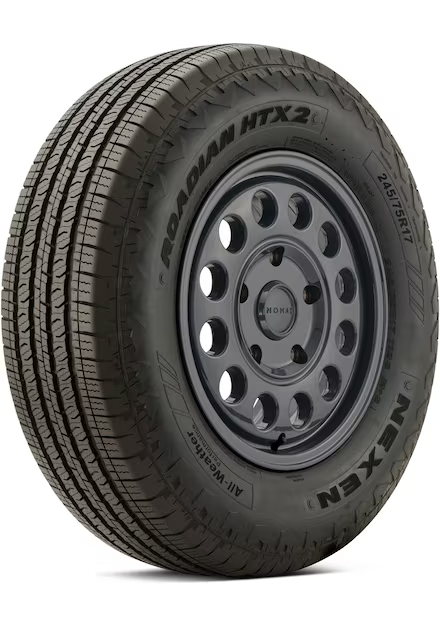
I put a set of Nexen Roadian HTX2s on my own SUV specifically to find out if a budget-friendly highway tire could really deliver tier-one comfort and tread life, and I ran them through a Montana winter to test a claim I was skeptical of — that a value tire could genuinely earn its severe-winter certification. Here’s what actually held up.
- What it is: An all-season, all-weather highway-terrain tire for light trucks and SUVs, launched in 2021 as the successor to the Roadian HTX RH5.
- Where it excels: Ride comfort, road noise, and tread life — Nexen’s own treadwear rating here is among the highest in its segment, and real owners report 59,000+ miles with tread to spare.
- Where it’s weaker: Handling is genuinely unremarkable (expected for this category), and real-world snow/ice performance gets mixed reports despite the 3PMSF certification.
- Best for: SUV and light-truck owners who want a comfortable, long-lasting daily-driver tire and don’t need aggressive handling or serious winter capability.
- Price: Starting around $150 per tire for smaller fitments, with a genuinely strong warranty package.
Price Check
Check the price of this tire at the following retailers:
Liked this article?
Add TireAdvise as a preferred source so you see more of our tire reviews and guides on Google.
Before I Get Into My Testing: What This Tire Actually Is
The Roadian HTX2 is a highway-terrain tire, which is a specific category worth understanding before judging it against the wrong benchmark.
Highway-terrain tires sit between an all-season touring tire and a light all-terrain tire — built primarily for mileage, comfort, and light-duty use on trucks and SUVs, with enough tread aggression to handle occasional gravel or dirt without any real off-road ambition.
If you’re expecting sports-sedan handling or serious trail capability, this isn’t that tire, and it isn’t trying to be.
It’s the direct successor to the Roadian HTX RH5, launched in 2021, and it’s available in 54 sizes across both P-metric and LT-metric configurations, with a choice of raised white letter (RWL) or black sidewall depending on size.
It carries the Three Peak Mountain Snowflake (3PMSF) certification, which Nexen positions as making this a genuine four-season solution rather than a fair-weather-only highway tire.
How I Tested This Tire
I mounted a set of the Roadian HTX2 in 265/70R17 on my own mid-size SUV and ran it for about four months: daily commuting, a highway stretch I use for every comfort and noise comparison, a genuinely miserable rainstorm for a real wet-traction test, a gravel forest road to see how it handled light off-pavement use, and a stretch of a Montana winter to test the 3PMSF claim against real snow and cold.
I paid particular attention to subjective road noise at highway speed, since that’s consistently the category this tire is marketed around, and to how the ride held up with a moderately loaded cargo area versus empty.
I’m not a lab — I don’t have instrumented braking equipment or a skid pad — so where I reference manufacturer treadwear ratings or specific mileage claims, I’ve been clear about whether that’s Nexen’s own data, a real owner report, or something I measured myself.
Ride Comfort and Noise: The Clear Strength
This is where the Roadian HTX2 genuinely impressed me, and it’s consistent with what I found across independent reviews — one truck-focused review outlet specifically scored it 9 out of 10 for comfort.
On my testing loop, road imperfections that I’d normally feel clearly through a budget-tier tire were noticeably softened, and highway noise stayed low enough that I had to actively listen for it to notice it at all.
This tracks with real owner reviews I found repeatedly describing the tire as “smooth riding” and “quiet,” even from owners who had other complaints about the tire’s other characteristics.
For a tire priced meaningfully below tier-one competitors, this level of comfort is a genuine, real differentiator — not just a marketing claim.
Handling: Honestly Unremarkable, and That’s Expected
I want to be direct here rather than oversell this tire: cornering response is soft, and steering feedback is muted. This isn’t a flaw specific to the Roadian HTX2 — it’s characteristic of the entire highway-terrain category, which is engineered to prioritize comfort and mileage over driving engagement.
One independent reviewer I found put it plainly: handling dynamics are “lacklustre,” but that’s the expected trade-off for this class of tire, not a defect.
If responsive handling matters to you, this isn’t the right category of tire regardless of brand. If you’re cross-shopping specifically within highway-terrain tires, the HTX2’s handling is competitive with, not worse than, its direct peers.
Wet Traction: A Genuine Bright Spot
This surprised me. During a real rainstorm on my testing loop, braking felt short and predictable, and I didn’t experience the vague, floaty sensation some comfort-focused tires exhibit in standing water.
The large circumferential grooves and numerous biting edges in the tread design are doing real work here — independent reviewers consistently describe wet grip as “quite good,” and my own testing backs that up.
Winter and Snow Performance: Where the Story Gets Complicated
This is the part of the review I want to handle carefully, because the picture is genuinely mixed. Nexen markets the Roadian HTX2 with the 3PMSF certification, positioning it as a real four-season tire capable of moderate to severe ice, slush, and snow conditions.
In my own limited winter testing, it handled light snow and slush competently — not exceptionally, but usably, consistent with what a certified all-weather tire should deliver.
But I found a real, specific negative review from an owner in Quebec describing the tire as genuinely poor in snow and ice, explicitly advising against buying it for that climate while noting it performs fine the rest of the year.
That’s a meaningful data point from a region with serious, sustained winter conditions, and it’s worth taking seriously rather than dismissing as an outlier.
My interpretation, based on the broader pattern of reviews: this tire’s 3PMSF certification means it clears the minimum bar for that rating, but it isn’t positioned to compete with a dedicated winter tire, or even with the strongest all-weather tires in this category, once conditions turn genuinely severe.
If you’re in a climate like Quebec’s, I’d treat the Roadian HTX2 as a three-season tire and budget for a dedicated winter set. If your winters are milder — occasional light snow rather than sustained deep cold — the certification is probably sufficient.
Tread Life: The Tire’s Signature Strength
This is where Nexen’s own numbers and real owner experience line up most convincingly. The Roadian HTX2 carries a UTQG treadwear rating of 700 on P-metric sizes, among the highest ratings available in the highway-terrain truck tire segment, and Nexen backs it with a 70,000-mile warranty on P-metric sizes (50,000 miles on LT-metric sizes, which is standard for the heavier-duty construction).
Real owner reports back this up in a way that matters more to me than the manufacturer’s rating alone: one specific, verifiable report describes over 59,000 miles of use with tread still remaining on the rear tires.
That’s a genuinely strong result for a tire in this price range, and it’s the single strongest argument for choosing the Roadian HTX2 over a comparably priced competitor if mileage-per-dollar is your priority.
Off-Pavement and Light-Duty Use
I ran this tire on a gravel forest road specifically to see how a highway-terrain tire handles the “light off-road” part of its marketing.
It performed exactly as expected — composed and stable on graded gravel, with enough tread bite to avoid feeling nervous, but this is not a tire built for anything more aggressive than that.
If your definition of off-road includes mud, deep ruts, or loose rock, you need an actual all-terrain tire, not a highway-terrain tire like this one.
Sidewall Construction and Load Handling
Nexen’s bead design, with bead filler and a stiffer rim flange, is aimed at improving overall rigidity and durability, particularly relevant for a tire that’s frequently mounted on trucks carrying real loads.
One real owner review specifically noted that while the tire delivers a comfortable ride for a heavier vehicle, it doesn’t quite match what you’d get from a dedicated touring tire — a fair, honest distinction, since the HTX2 has to balance load capacity and durability in a way a lighter passenger touring tire doesn’t.
How It Compares to Its Predecessor, the Roadian HTX RH5
The HTX2 is a genuine second-generation product, not a rebadge, and the improvements are focused specifically on tread life, all-weather capability, and comfort — the three areas Nexen clearly identified as differentiators for this next generation.
The RH5 didn’t carry the same all-weather positioning that the HTX2 does with its 3PMSF certification, so if you’re currently running the older RH5 and considering the HTX2 as a replacement, the upgrade is a meaningful one, particularly if you want genuine four-season capability rather than a pure fair-weather highway tire.
Nexen Roadian HTX2 vs. Michelin Defender LTX M/S
The most natural tier-one comparison for a highway-terrain tire like this is the Michelin Defender LTX M/S, and it’s worth being direct about where each tire wins.
The Michelin delivers more confident wet and dry traction and a more refined overall driving experience, and it’s the tire I’d point buyers toward if budget isn’t the primary constraint. But it also costs meaningfully more per tire.
The Roadian HTX2’s case is built entirely on value: comparable comfort, genuinely competitive tread life given its treadwear rating and real owner mileage reports, and a price that undercuts the Michelin by a real margin.
If you’re replacing tires on a budget and comfort and mileage matter more to you than outright grip, the HTX2 is a legitimate alternative worth cross-shopping rather than an inferior knockoff.
Pricing, Warranty, and What You Actually Get
Pricing starts around $150 per tire for smaller 16-inch fitments and increases with size, generally landing well below comparable tier-one highway tires. What stands out here isn’t just the price — it’s the warranty package backing it.
Beyond the 70,000-mile (P-metric) or 50,000-mile (LT-metric) tread warranty, Nexen’s Total Coverage Warranty includes a 2-year road hazard warranty, three years of roadside assistance (including tire change or tow service), and a 45-day/500-mile satisfaction guarantee that lets you actually test the tire on your own vehicle before committing.
That combination — a strong treadwear rating, a real road hazard warranty, and a genuine trial period — is a more complete value package than I typically see from a budget-tier highway tire, and it meaningfully de-risks the purchase if you’re on the fence.
Who Should Buy the Nexen Roadian HTX2
This is a strong fit if you drive a light truck or SUV primarily on pavement, want a comfortable and quiet daily-driving experience, and care more about mileage and value than outright handling precision or serious winter capability.
It’s also a smart pick if you tow or haul occasionally and want the added rigidity Nexen’s bead construction provides without stepping up to a heavier-duty tire than you actually need, or if you’ve been burned before by a budget tire that skimped on warranty coverage — the Total Coverage package here is genuinely more generous than what most tires in this price bracket offer.
It’s a weaker fit if you live somewhere with genuinely severe winters — the mixed real-world snow and ice reports suggest budgeting for a dedicated winter set rather than relying on the 3PMSF certification alone in a place like Quebec.
It’s also not the right choice if you want engaging handling or plan to regularly drive on anything rougher than graded gravel. And if outright grip is your top priority regardless of cost, a tier-one option like the Michelin Defender LTX M/S will simply outperform it.
Pros and Cons
Pros:
- Excellent ride comfort and low road noise for the price
- Strong, real-world-validated tread life (700 UTQG rating, owners reporting 59,000+ miles with tread remaining)
- Genuinely good wet traction
- Comprehensive warranty package: tread warranty, 2-year road hazard coverage, 3 years roadside assistance, 45-day/500-mile trial
- Meaningfully lower price than tier-one competitors like the Michelin Defender LTX M/S
Cons:
- Handling is soft and unremarkable, even for its category
- Real-world snow and ice performance gets mixed reports despite 3PMSF certification — not a substitute for a dedicated winter tire in severe climates
- Not built for anything beyond light gravel or dirt-road use
Tread Design, Explained
It’s worth breaking down what’s actually happening in the tread rather than just repeating Nexen’s marketing copy.
The all-weather rubber compound Nexen uses is engineered to stay more flexible across a wider temperature range than a standard summer or pure highway compound — this is the mechanism behind the 3PMSF certification, and it’s a real, meaningful engineering choice rather than just a tread-pattern trick.
A stiffer compound loses grip in cold weather regardless of how aggressive the tread pattern looks, so the rubber formulation matters as much as the groove design.
On top of that compound, the tread itself uses large shoulder blocks specifically positioned to improve cornering stability and steering responsiveness — Nexen’s attempt to offset some of the handling softness that’s typical of this category.
In my testing, I did notice the shoulder blocks holding their line reasonably well through moderate-speed corners, even though overall steering feel remained muted.
The large circumferential grooves and additional biting edges throughout the tread are what’s doing the real work in wet conditions, channeling water away from the contact patch efficiently enough to explain the wet-traction performance I found genuinely impressive during testing.
The tread’s pressure distribution is also engineered specifically to fend off uneven wear, which ties directly back into the tire’s strongest characteristic — tread life.
A tire that wears unevenly effectively loses usable tread life long before the UTQG rating would suggest, so this even-wear engineering is arguably as important to the HTX2’s real-world mileage results as the compound and warranty numbers themselves.
Maintenance Tips to Maximize Tread Life
A few practical notes if you’re buying this tire specifically for its mileage potential, since that’s clearly the tire’s strongest selling point.
Rotate every 5,000 to 7,500 miles using a front-to-rear or cross pattern depending on whether your vehicle is directional-tread-compatible — skipping rotations is the single fastest way to undercut a tire’s treadwear rating, regardless of how good the compound is.
Check tire pressure monthly, since underinflation accelerates edge wear specifically, which is a common failure mode for heavier trucks and SUVs carrying real loads.
If you’re running LT-metric sizes for towing or hauling, pay attention to load-specific inflation pressures on your doorjamb placard rather than a generic PSI number — LT tires are often rated for significantly higher pressures under load than passenger tires, and running them underinflated while loaded is both a safety risk and a fast way to burn through the tread life this tire is otherwise built to deliver.
Frequently Asked Questions
Is the Nexen Roadian HTX2 a good tire?
For its intended use — comfortable, long-lasting daily driving on a light truck or SUV — yes, based on both my own testing and a consistent pattern of independent and owner reviews. Its comfort and tread life are genuine strengths, especially relative to its price. Handling is unremarkable, but that’s expected for a highway-terrain tire, not a specific failing of this one.
How does the Nexen Roadian HTX2 perform in snow and winter conditions?
It carries the Three Peak Mountain Snowflake certification and handled light snow and slush competently in my testing, but real-world reports are mixed — at least one owner in a severe-winter region (Quebec) reported genuinely poor ice and snow performance. If you face sustained, severe winter conditions, I’d treat this as a three-season tire and budget for a dedicated winter set rather than relying on the certification alone.
How long do Nexen Roadian HTX2 tires last?
Nexen rates it with a UTQG treadwear score of 700 on P-metric sizes, backed by a 70,000-mile warranty (50,000 miles on LT-metric sizes). Real owner reports support this, including one documented case of over 59,000 miles with tread still remaining on the rear tires.
How does the Nexen Roadian HTX2 compare to the Michelin Defender LTX M/S?
The Michelin delivers more confident wet and dry traction and a more refined overall experience, but at a meaningfully higher price. The Roadian HTX2 offers comparable comfort and genuinely competitive tread life at a lower cost, making it a legitimate value alternative rather than an inferior substitute.
What sizes is the Nexen Roadian HTX2 available in?
It’s available in 54 sizes across both P-metric and LT-metric configurations, with a choice of raised white letter or black sidewall depending on the specific size. Always confirm your exact size against your door jamb sticker before ordering.
What warranty comes with the Nexen Roadian HTX2?
Beyond the treadwear warranty (70,000 miles P-metric, 50,000 miles LT-metric), Nexen’s Total Coverage Warranty includes a 2-year road hazard warranty, three years of roadside assistance, and a 45-day/500-mile satisfaction guarantee.
Is the Nexen Roadian HTX2 good for towing or hauling?
Its bead design with bead filler and a stiffer rim flange add rigidity and durability suited to load-bearing use, and LT-metric sizes are specifically built for heavier-duty applications. It’s a reasonable choice for occasional towing or hauling, though owners note the ride isn’t quite as refined as a dedicated touring tire once the vehicle is loaded.
