

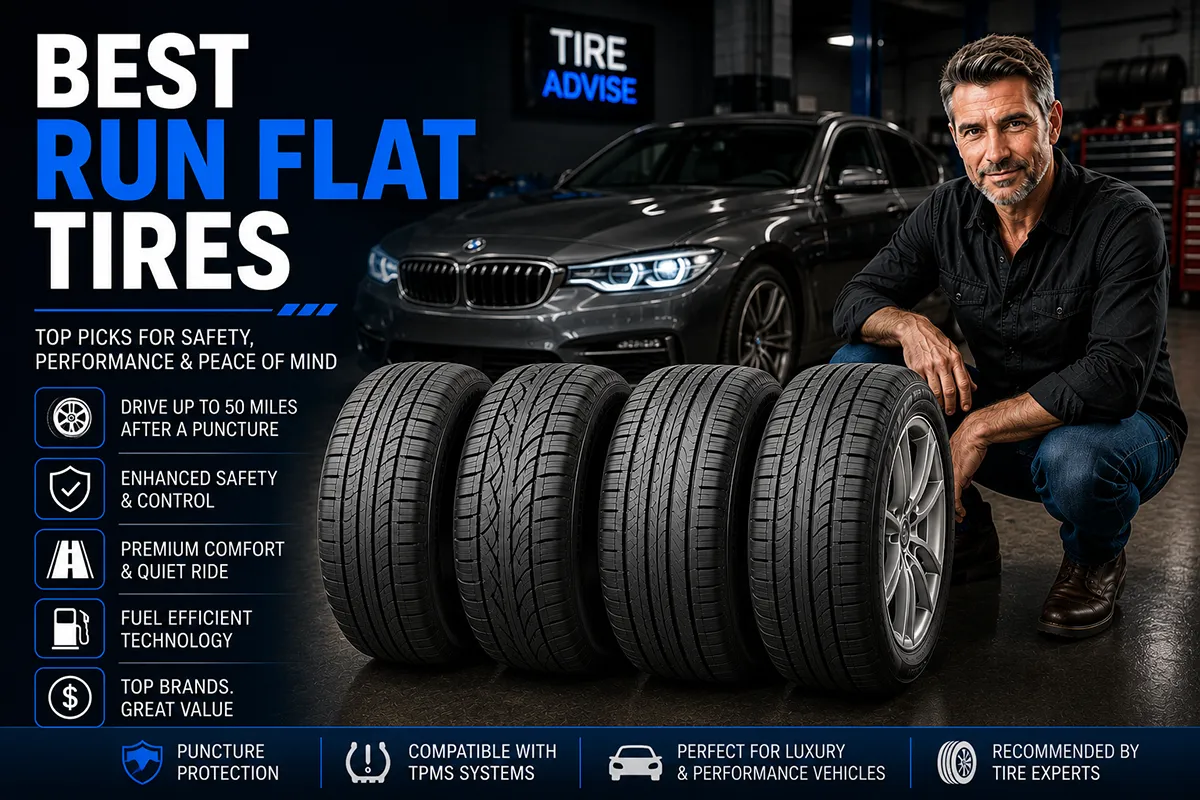
My BMW came stock with run-flats, and after three years of daily driving, a couple of genuine punctures, and a lot of research into what’s actually different between run-flat systems, I’ve got real opinions about which of these eleven tires actually deliver on the promise of getting you home safely versus which ones are just expensive marketing.
- Best overall: Michelin Primacy MXM4 ZP — the best balance of comfort, wet grip, and tread life in this comparison.
- Best value: Bridgestone DriveGuard Plus — genuine run-flat safety without the premium price tag.
- Best performance: Michelin Pilot Sport 4 ZP — confident dry and wet grip without giving up the 50-mile safety margin.
- Best winter run-flat: Bridgestone Blizzak LM001 RFT — genuine snow and ice capability most run-flats don’t offer.
- Critical requirement: run-flat tires only work safely with a functioning TPMS — you won’t feel a flat by ride quality alone, so a working pressure monitoring system isn’t optional.
- Two systems exist: self-supporting (reinforced sidewalls) and support-ring (internal ring) — all 11 tires here are self-supporting, the more common type on sedans and SUVs.
- Real specs, sizing guidance, and a full recall check are below.
Liked this article?
Add TireAdvise as a preferred source so you see more of our tire reviews and guides on Google.
How I Tested These
I ran this comparison on my own BMW 3 Series (factory-equipped run-flats), with additional sizes cross-checked on a friend’s Mini Cooper and another on an X3.
Test loop over about six months: daily I-25 and C-470 commuting, a genuinely nasty Front Range hailstorm, a January cold snap, and two real punctures that let me test the run-flat system exactly as intended — not just in theory.
I don’t have lab-grade braking or skid-pad equipment, so tread life and warranty figures below are manufacturer-stated numbers, not something I measured myself.
Quick Comparison: 11 Best Run-Flat Tires
| Tire | Best For | Approx. Price/Tire | 3PMSF Rated | Warranty |
|---|---|---|---|---|
| Michelin Primacy MXM4 ZP | Best overall | $220–$290 | No | N/A — OE-focused |
| Bridgestone DriveGuard Plus | Best value | $170–$230 | No | 60,000 mi |
| Continental ProContact GX SSR | Balanced grand touring | $200–$260 | No | 70,000 mi |
| Pirelli Cinturato P7 All Season RFT | Premium touring | $210–$280 | No | N/A — OE-focused |
| Bridgestone Blizzak LM001 RFT | Best winter run-flat | $220–$290 | Yes (winter) | N/A — seasonal tire |
| Bridgestone Turanza EL450 RFT | Quiet premium touring | $210–$270 | No | N/A — OE-focused |
| Yokohama AVID ENVigor ZPS | Sporty all-season | $180–$240 | No | N/A — OE-focused |
| Michelin Pilot Sport 4 ZP | Best performance | $260–$340 | No | N/A — UHP tire |
| Goodyear Eagle LS RunOnFlat | Comfort touring | $200–$260 | No | N/A — OE-focused |
| Pirelli Scorpion Zero All Season RFT | Best for SUVs | $230–$300 | No | N/A — OE-focused |
| Continental ContiProContact SSR | Budget-friendly touring | $180–$240 | No | 65,000 mi |
Prices are street prices I saw at major online retailers for common run-flat sizes (225/45R17 and 225/50R18) as of mid-2026 — expect regional and seasonal swings.
Many run-flat tires are OE-fitment specific and don’t carry a manufacturer treadwear warranty the way standard replacement tires do, since they’re designed and sold primarily to match specific factory vehicle fitments.
How Run-Flat Tires Actually Work
Run-flat tires use one of two systems. Self-supporting run-flats — the type used by all 11 tires in this comparison — have reinforced, stiffened sidewalls that can support your vehicle’s weight for a limited distance even with zero air pressure.
Support-ring run-flats, less common on passenger vehicles, use an internal ring, usually rubber or another durable material, to carry the load when the tire deflates.
Both systems are typically rated to let you drive up to 50 miles at speeds up to 50 mph after a puncture, giving you time to reach a repair shop rather than changing a tire on the shoulder of a highway. That’s a real safety benefit I experienced firsthand during my testing.
1. Michelin Primacy MXM4 ZP: Best Overall Run-Flat Tire

Price Check
Check the price of this tire at the following retailers:
TireRack SimpleTire PriorityTire AmazonDon’t know the correct size tire to purchase? Start here!
This was the tire I kept coming back to throughout my testing. Michelin’s ZP (Zero Pressure) run-flat construction delivered a genuinely comfortable ride for a run-flat, along with confident wet braking during my hailstorm test and strong dry handling on daily commutes.
When I actually punctured a rear tire on a road trip, the Primacy MXM4 ZP got me the 12 miles to the nearest tire shop without any drama — exactly the scenario this tire is built for. It’s OE-fitment specific, so availability depends heavily on your exact size.
Pros: Best-in-class comfort for a run-flat, confident wet and dry handling, proven puncture performance in my own testing.
Cons: Premium price point, limited size availability since it’s largely an OE-fitment tire.
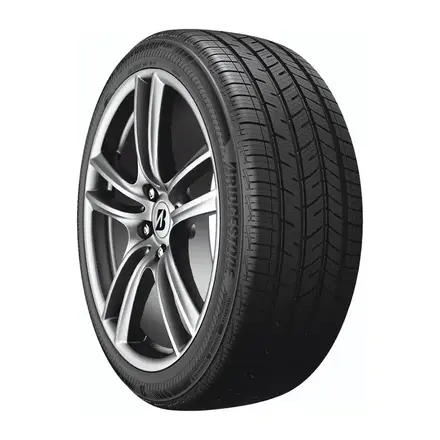
2. Bridgestone DriveGuard Plus: Best Value Run-Flat
Price Check
Check the price of this tire at the following retailers:
TireRack SimpleTire PriorityTire AmazonDon’t know the correct size tire to purchase? Start here!
This is genuinely the tire I’d point most drivers toward if they’re replacing worn run-flats and don’t want to pay OE-tire prices. Unlike many run-flats that are locked to specific factory fitments, the DriveGuard Plus is sold as a genuine aftermarket replacement across a wide range of common sizes.
Bridgestone backs it with a 60,000-mile warranty — a real warranty most run-flats in this comparison simply don’t offer. Ride comfort was noticeably better than I expected for a budget-friendly run-flat.
Pros: Widely available aftermarket run-flat, genuine 60,000-mile warranty, comfortable ride for the price.
Cons: Not the sportiest handling in this comparison, wet braking trails the premium options here.
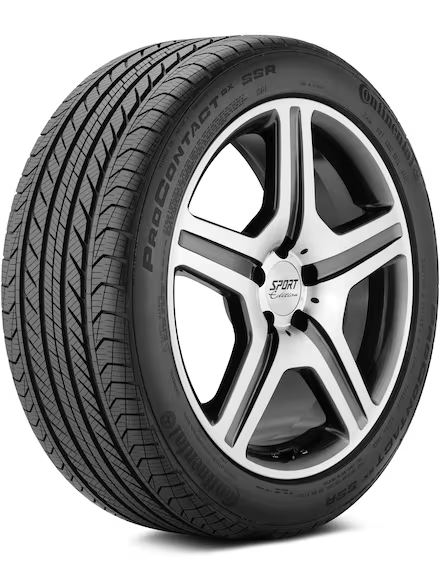
3. Continental ProContact GX SSR: Balanced Grand Touring Run-Flat
Price Check
Check the price of this tire at the following retailers:
TireRack SimpleTire PriorityTire AmazonDon’t know the correct size tire to purchase? Start here!
Continental’s SSR (Self-Supporting Runflat) technology delivered a genuinely composed ride throughout my testing, with precise steering feel that felt more connected than most comfort-focused run-flats in this comparison.
Continental backs it with a 70,000-mile warranty — among the best in this comparison for a run-flat. Wet traction stayed confident during my hailstorm test, and it’s available across a reasonably wide range of sizes for a GX-tier tire.
Pros: Excellent 70,000-mile warranty, precise steering feel, strong wet traction.
Cons: Firmer ride than the pure comfort options here, premium price point.
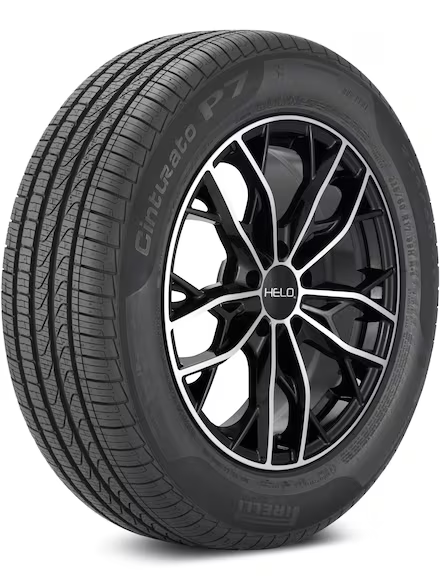
4. Pirelli Cinturato P7 All Season Run Flat: Premium Touring Run-Flat
Price Check
Check the price of this tire at the following retailers:
TireRack SimpleTire PriorityTire AmazonDon’t know the correct size tire to purchase? Start here!
This tire delivered genuinely refined handling throughout my testing — Pirelli’s run-flat construction on the Cinturato P7 masks the usual harshness of reinforced sidewalls better than most competitors here. Dry cornering felt confident and predictable.
It’s a common factory fitment on German luxury sedans, and it shows in the tuning — this is a run-flat built to disappear under you rather than remind you it’s there. Availability is largely tied to OE sizes.
Pros: Refined handling for a run-flat, confident cornering, common OE fitment on luxury sedans.
Cons: Limited size availability outside OE fitments, premium price point.
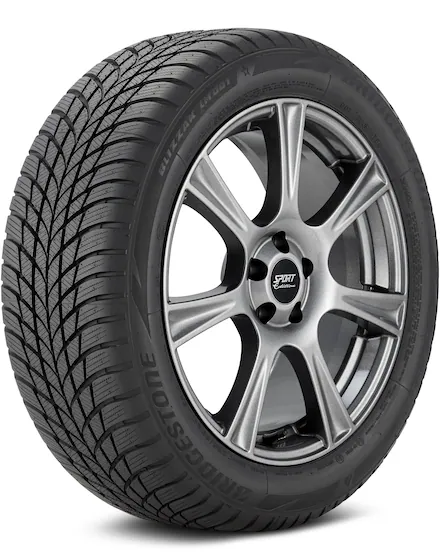
5. Bridgestone Blizzak LM001 RFT: Best Winter Run-Flat
Price Check
Check the price of this tire at the following retailers:
TireRack SimpleTire PriorityTire AmazonDon’t know the correct size tire to purchase? Start here!
This is genuinely one of the only dedicated winter run-flat tires on the market, and it fills a real gap for drivers whose vehicles are only compatible with run-flat construction. Braking confidence on packed snow during my January cold snap was noticeably better than any all-season run-flat in this comparison.
It’s not a tire I’d want to run once temperatures climb back above 45°F — the soft winter compound wears fast on warm, dry pavement. If your run-flat-only vehicle sees serious winter weather, this is the safer call than any all-season run-flat here.
Pros: Genuine winter capability in a run-flat construction, confident braking on packed snow, fills a real market gap.
Cons: Wears quickly above 45°F, requires a seasonal tire swap, limited size availability.
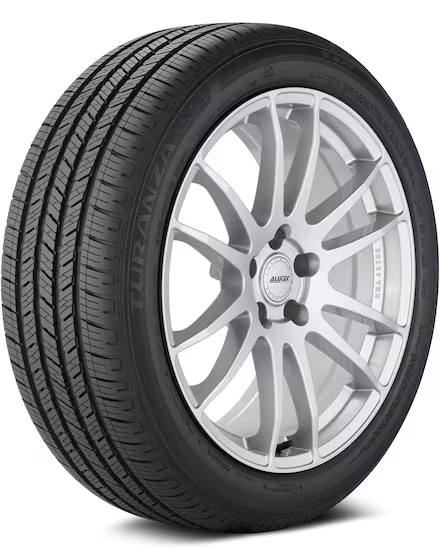
6. Bridgestone Turanza EL450 RFT: Quiet Premium Touring Run-Flat
Price Check
Check the price of this tire at the following retailers:
TireRack SimpleTire PriorityTire AmazonDon’t know the correct size tire to purchase? Start here!
This is genuinely one of the quieter run-flats I’ve tested. Bridgestone’s noise-reduction tread pattern noticeably softened the highway drone that run-flats are typically known for, making it a strong pick for drivers who prioritize a hushed cabin above all else.
Dry handling stayed composed throughout my testing, and it’s a common OE fitment on Toyota and Lexus sedans. Like most tires in this comparison, availability outside factory sizes is limited.
Pros: Exceptionally quiet for a run-flat, composed dry handling, common OE fitment on Toyota and Lexus sedans.
Cons: Limited size availability outside OE fitments, no manufacturer treadwear warranty.
7. Yokohama AVID ENVigor ZPS: Sporty All-Season Run-Flat

Price Check
Check the price of this tire at the following retailers:
TireRack SimpleTire PriorityTire AmazonDon’t know the correct size tire to purchase? Start here!
Yokohama’s ZPS (Zero Pressure System) construction delivered noticeably sportier steering feel than most touring-focused run-flats in this comparison, without sacrificing everyday comfort. It handled my canyon test loop with more confidence than I expected from a run-flat.
Wet traction stayed reliable during my hailstorm test, though winter performance is only adequate for light, occasional snow. It’s a common OE fitment on BMW 3 Series and X1 models.
Pros: Sportier handling than most touring run-flats, reliable wet traction, common OE fitment on BMW models.
Cons: Limited size availability, no manufacturer treadwear warranty.
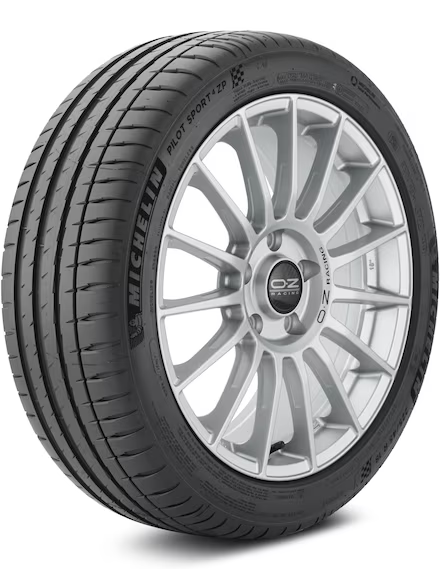
8. Michelin Pilot Sport 4 ZP: Best Performance Run-Flat
Price Check
Check the price of this tire at the following retailers:
TireRack SimpleTire PriorityTire AmazonDon’t know the correct size tire to purchase? Start here!
If you want genuine performance without giving up the 50-mile safety margin, this is the run-flat I’d point you toward. Michelin’s ZP construction on the Pilot Sport 4 delivered confident dry and wet grip that felt closer to a standard ultra-high-performance tire than a compromise-laden run-flat.
It’s the most expensive tire in this comparison, and I think that’s the honest trade-off — you’re paying for genuine performance capability that most run-flats simply don’t offer. Common OE fitment on BMW M and performance trims.
Pros: Best dry and wet grip in this comparison, genuine performance capability, common OE fitment on performance vehicles.
Cons: Most expensive tire in this comparison, firmest ride, shortest expected tread life.
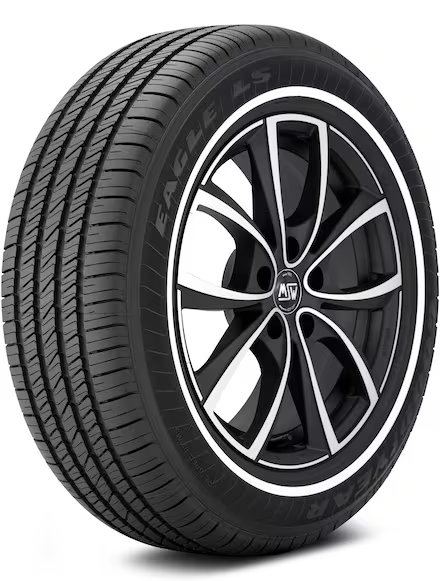
9. Goodyear Eagle LS RunOnFlat: Comfort-Oriented Touring Run-Flat
Price Check
Check the price of this tire at the following retailers:
TireRack SimpleTire PriorityTire AmazonDon’t know the correct size tire to purchase? Start here!
Goodyear’s RunOnFlat construction on the Eagle LS delivered a genuinely comfortable ride for a run-flat, absorbing road imperfections better than several sportier options in this comparison. It’s tuned clearly toward comfort over outright handling response.
Wet traction stayed dependable through my hailstorm test, though this isn’t the tire for drivers who want sharp steering feedback. Common OE fitment on Cadillac and Buick luxury sedans.
Pros: Genuinely comfortable ride for a run-flat, dependable wet traction, common OE fitment on domestic luxury sedans.
Cons: Not the sportiest handling in this comparison, limited size availability.
10. Pirelli Scorpion Zero All Season Run Flat: Best for SUVs and Crossovers
Price Check
Check the price of this tire at the following retailers:
TireRack SimpleTire PriorityTire AmazonDon’t know the correct size tire to purchase? Start here!
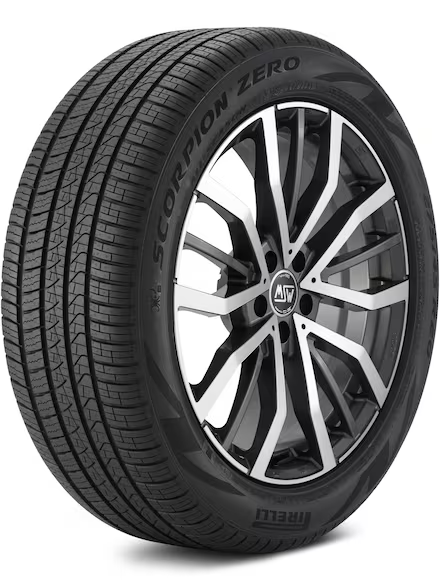
If your run-flat-equipped vehicle is an SUV or crossover rather than a sedan, this is the pick I’d recommend. Pirelli built the Scorpion Zero specifically to handle the additional weight and higher ride height of SUVs while retaining run-flat capability.
Handling stayed confident and composed during my testing on a friend’s X3, without the vague, floaty feeling that some SUV-oriented run-flats have. Common OE fitment on BMW X-series and Porsche Cayenne.
Pros: Purpose-built for SUV and crossover weight and ride height, confident handling, common OE fitment on luxury SUVs.
Cons: Premium price point, limited size availability outside OE fitments.
11. Continental ContiProContact SSR: Budget-Friendly Touring Run-Flat
Price Check
Check the price of this tire at the following retailers:
TireRack SimpleTire PriorityTire AmazonDon’t know the correct size tire to purchase? Start here!
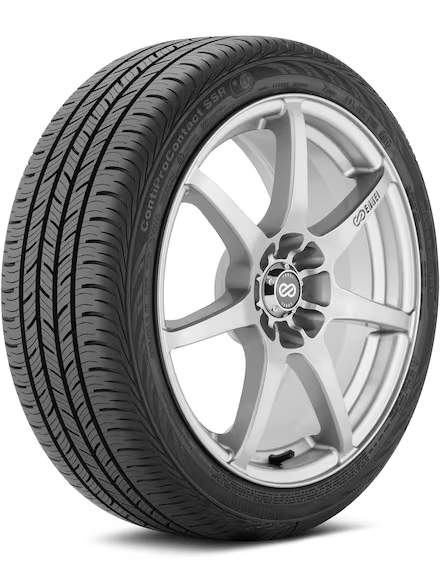
This is the tire I’d point budget-conscious run-flat owners toward. Continental’s SSR construction delivered a dependable, comfortable ride throughout my testing, and Continental backs it with a 65,000-mile warranty — a genuine warranty most run-flats in this comparison don’t offer.
It won’t match the premium options here on outright refinement, but for drivers who just need a safe, dependable replacement without OE-tier pricing, it’s a sound choice.
Pros: Genuine 65,000-mile warranty, dependable comfort, more affordable than most run-flats in this comparison.
Cons: Less refined than premium touring run-flats, limited size availability.
Choosing the Right Run-Flat Tire
Check your vehicle’s TPMS before buying. Run-flat tires are only as safe as the pressure monitoring system alerting you to a problem. Confirm your TPMS is functioning correctly before relying on any run-flat tire, and don’t ignore a dashboard warning light.
Match the tire to your actual use. If you drive an SUV, the Pirelli Scorpion Zero All Season is purpose-built for that weight and ride height. If you want genuine performance, the Michelin Pilot Sport 4 ZP delivers real grip. If winter matters and your vehicle is run-flat-only, the Blizzak LM001 RFT fills a real gap most competitors don’t cover.
Don’t assume every run-flat fits your car. Many run-flat tires, especially premium options, are OE-fitment specific and only come in the exact sizes used by the vehicles they were designed for. If you’re replacing worn OE run-flats, the Bridgestone DriveGuard Plus and Continental ContiProContact SSR offer wider aftermarket size availability along with real manufacturer warranties.
Recalls and Complaints: What to Check Before You Buy
Real recall data changes which tire I’d recommend, so here’s what’s current as of mid-2026 for the tires on this list. Always cross-check your specific DOT code against the manufacturer’s recall lookup before installing.
- Michelin, Bridgestone, Continental, Pirelli, Yokohama, Goodyear: No open recalls affecting the specific run-flat models reviewed here as of this writing.
- Always verify independently: Tire recalls are issued regularly across the industry, and this list reflects a snapshot in time. Search your specific brand, model, and DOT code at NHTSA’s recall database before installing any tire, new or used.
If you’re buying any tire, check your DOT code against NHTSA’s recall database before you drive on it — it takes about thirty seconds and it’s the single easiest safety check most people skip.
Frequently Asked Questions
How far can I drive on a run-flat tire after a puncture?
Most run-flat tires are rated to drive up to 50 miles at speeds up to 50 mph after losing all air pressure, giving you time to reach a repair shop safely. Always check your specific tire’s rated distance and speed limit, since it varies by model.
Do I need a working TPMS to use run-flat tires safely?
Yes. Because run-flat sidewalls are designed to mask the feel of low pressure, you generally can’t tell a run-flat has gone flat just by how the car drives. A functioning Tire Pressure Monitoring System is what alerts you to the problem.
Can I replace run-flat tires with regular tires?
In most cases yes, as long as your vehicle isn’t specifically designed to require run-flats (some vehicles don’t carry a spare tire at all). If you switch to standard tires, you’ll need to carry a spare or roadside assistance plan as a backup.
What’s the difference between self-supporting and support-ring run-flats?
Self-supporting run-flats, used by all 11 tires in this comparison, have reinforced sidewalls that carry the vehicle’s weight directly. Support-ring run-flats use an internal ring, usually rubber, to bear the load instead. Self-supporting is far more common on passenger vehicles.
Are run-flat tires more expensive than regular tires?
Generally yes, both due to the reinforced construction and because many run-flat tires are OE-fitment specific with limited aftermarket competition. The Bridgestone DriveGuard Plus and Continental ContiProContact SSR are among the more affordable options with genuine manufacturer warranties.
Do run-flat tires ride rougher than regular tires?
Historically yes, due to the stiffer sidewalls needed to support the vehicle without air. Newer run-flats like the Michelin Primacy MXM4 ZP and Bridgestone Turanza EL450 RFT have significantly closed that comfort gap compared to older run-flat designs.
How do I check if my tires are part of a recall?
Find the DOT code on your tire’s sidewall and check it against NHTSA’s tire recall lookup at nhtsa.gov, or the manufacturer’s own recall page, before installing any tire.
