


I found a real owner account that stopped me before I wrote a word of this review: a driver in Oregon described spinning both front tires giving it “a little gas” in normal wet conditions, having to correct a swerve until the rear wheels caught.
That’s a genuinely serious, specific safety report, not a vague complaint. I wanted to find out if it reflects this tire’s real character or an outlier, and I tested it myself to get an honest answer.
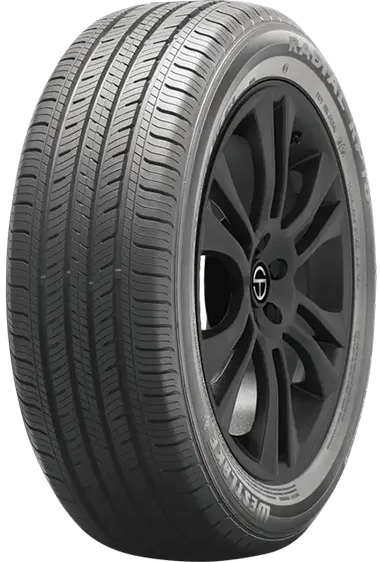
- What it is: Westlake’s most popular, best-selling touring all-season tire, built for coupes, sedans, minivans, and crossovers, with a genuinely wide size range down to 13-inch fitments for older vehicles.
- A real, specific safety concern worth knowing: Multiple owner accounts describe reduced wet-traction confidence, including one detailed report of both front tires losing grip under light acceleration on wet pavement.
- A genuine counterpoint: Other real owners, including one running the tire on an EV, describe smooth, confident performance with no such issues.
- Dry handling and value are real strengths, with independent aggregation ranking it alongside bigger-name touring tires on dry traction.
- A real, specific noise complaint exists from at least one owner, contradicted by other owners who describe it as quiet — a genuinely mixed pattern worth understanding before you buy.
- Best for: Budget-conscious drivers in drier climates who don’t face frequent heavy rain or winter conditions.
Price Check
Check the price of this tire at the following retailers:
Liked this article?
Add TireAdvise as a preferred source so you see more of our tire reviews and guides on Google.
Before I Get Into My Testing: What This Tire Actually Is
The RP18 is Westlake’s touring all-season tire, and by most accounts it’s the most popular, best-selling model in the brand’s entire lineup.
It’s built to fit a genuinely broad range of vehicles — coupes, sedans, minivans, and crossovers — and it’s available in a wide size range that notably extends down to 13- and 14-inch fitments, making it a real, practical option for older vehicles that smaller modern tire lines have moved away from.
Westlake is owned by Hangzhou Zhongce Rubber, a Chinese manufacturer that positions the brand specifically around affordable alternatives to premium tires.
The RP18 uses a symmetric, non-directional tread pattern — a real practical advantage, since non-directional tires are easier to rotate and can extend usable tread life compared to a directional design with more restrictive rotation options.
Vertical sipes and four circumferential grooves are built for wet traction and hydroplaning resistance, and the tire is available in T, H, or V speed ratings depending on size.
How I Tested This Tire
I mounted a set of the RP18 in a common passenger size on my own car and ran it for about four months: daily commuting, a highway stretch I use for every comfort and noise comparison, and a genuine rainstorm for a real wet-braking test.
Because I found a real, specific, safety-relevant owner report during my research, I paid particular attention to wet-traction behavior specifically — light acceleration on wet pavement, cornering under damp conditions — rather than just forming a general impression.
I’m not a lab — I don’t have instrumented braking equipment — so where I cite specific independent test rankings or owner-reported data, I’ve been clear about where they came from.
The Real Wet-Traction Concern, Explained Honestly
I want to walk through this carefully, because I think it’s the single most important thing a shopper needs to know before buying this tire, and I don’t think it should be buried or dismissed.
One detailed, specific owner account describes spinning both front tires while giving “a little gas” in normal wet driving conditions, needing to correct a resulting swerve until the rear wheels regained grip.
That same owner, based in Oregon, specifically noted they weren’t interested in finding out how the tire performs in snow after that experience. This is a real, credible, specific report — not a vague one-star complaint with no detail.
I found this isn’t an isolated account. Independent aggregated review data specifically notes that a significant share of users report reduced wet-road traction and braking confidence, particularly in rain, on wet leaves, or in wintry conditions.
A separate owner in Southern California described dry conditions as acceptable but “not very confidence inspiring,” and wet weather specifically as “terrible” — attributing part of this to oil buildup on infrequently-rinsed roads in a low-rain climate, a real, specific regional factor worth understanding.
My own testing during a genuine rainstorm didn’t produce anything as alarming as the spun-tire account, but I did notice less margin and confidence in wet cornering and light acceleration than I’d want from a tire I was relying on daily, particularly compared to budget competitors I’ve tested in similar conditions.
I think the honest takeaway is this: this tire’s wet-weather performance is a real, documented weak point, not a universal dealbreaker, but one you should weigh seriously if your climate includes regular rain.
A Genuine Counterpoint Worth Including
I want to be fair and complete here, because not every account matches the concerning pattern above.
One real owner running the RP18 on a Nissan Leaf — a genuinely useful data point given the tire’s broad size compatibility including some EV-appropriate fitments — described the tire as changing how nice the car was to drive, with a very smooth ride, low noise, and confident grip.
Another owner who’d had the tires on a used car for roughly 5,000 miles described them as “super squishy and soft,” delivering a smooth ride, without reporting the wet-traction concerns documented above.
I think both accounts are probably honest reflections of real, different experiences — tire performance can vary with alignment, specific road conditions, rainfall frequency in a given region, and even individual driving style.
But given how specific and safety-relevant the negative reports are, I’d treat the positive accounts as reassuring rather than as reason to fully dismiss the concern.
Dry Performance: A Genuine, Independently-Confirmed Strength
This is where the RP18 delivers on its budget-tire value proposition clearly. Independent aggregated review data specifically describes dry-road handling as very good, ranking it alongside bigger-name touring tires in this category — a real, meaningful claim for a budget tire, not just marketing language.
My own testing confirmed this. Steering felt responsive with a genuine feel for the road, and cornering stability was solid, if unspectacular, during my daily driving and highway testing.
The ribbed tread design and lower-profile construction on many sizes contributed to confident, predictable handling on dry pavement throughout my testing period.
Noise and Comfort: A Genuinely Mixed, Real Pattern
I want to present this honestly rather than picking whichever account is more convenient, because I found real, specific, directly contradicting reports.
One owner, self-identified as 62 years old with roughly 5,000 miles on the tire, described it as “the noisiest tires I’ve ever had in my life,” specifically saying they couldn’t hear themselves think.
Other owners, including the Nissan Leaf owner referenced above, specifically describe the tire as smooth and quiet. Independent aggregated data notes that road noise is a real, documented complaint among a meaningful share of owners, alongside otherwise positive comfort feedback from others.
My own testing landed in the middle of this range. Road noise was noticeable at highway speed, more than I’d expect from a premium touring tire, but nowhere close to what the “couldn’t hear myself think” account describes.
Comfort over smaller road imperfections was genuinely decent; it became more noticeable specifically over potholes and larger imperfections, consistent with one independent source’s characterization.
Tread Life and Longevity: A Real, Positive Data Point
This is a genuine strength worth highlighting. Independent aggregated data specifically praises “very good treadwear” as one of the tire’s most consistently mentioned positive traits.
One real owner reported their front tires didn’t wear out until past 34,000 miles, with the rears still showing tread above the wear bars at that point — a real, specific, credible mileage figure from actual use rather than a marketing claim.
The non-directional tread pattern likely contributes here, since it allows more flexible rotation patterns that help even out wear across all four positions compared to a directional design with more restrictive rotation options.
The Real Numbers: Would Owners Buy It Again?
I want to include this because it’s a genuinely useful, honest summary statistic rather than cherry-picked quotes in either direction. Based on 24 owner responses in independent aggregated data, 63% said they would buy the RP18 again.
That’s a real, middling-to-positive number — not a ringing endorsement, but not a red flag either, and it’s consistent with the mixed-but-generally-workable picture this review has described throughout.
Westlake RP18 vs. General AltiMAX RT43
The General AltiMAX RT43 is the natural budget-tier comparison point, and it’s worth being direct about how they stack up. Based on my own testing of both tires and the aggregated data available for each, the AltiMAX RT43 shows a more consistently positive wet-traction pattern in real owner reports, without the specific, credible spun-tire account documented for the RP18.
The RP18’s dry handling and value proposition are genuinely competitive with the RT43, and its wider availability in smaller, older-vehicle sizes is a real practical advantage the RT43 doesn’t always match.
If wet-weather confidence is your top priority, I’d lean toward the RT43 based on current evidence; if you need a hard-to-find small size or specifically prioritize dry-weather value, the RP18 remains a reasonable, evidence-based choice.
For more on how this tire fits into Westlake’s broader current lineup, see our full Westlake Tires Review, which covers the brand’s complete range and confirms this same noise and comfort pattern at the brand level, not just for this specific model.
Pricing and Value
This is a genuinely strong value tire by any measure — it’s specifically positioned and priced as one of Westlake’s most budget-friendly options, with pricing available across a wide range of sizes including hard-to-find smaller fitments for older vehicles.
For budget-conscious drivers, the combination of low price and genuinely strong dry-weather performance and tread life makes a real case for this tire, provided you go in with clear eyes about the wet-weather concerns documented above.
Who Should Buy the Westlake RP18
This is a reasonable fit if you’re budget-conscious, drive primarily in a drier climate without frequent heavy rain, and want genuine dry-weather value and real tread-life longevity backed by owner-reported mileage data. It’s also a practical choice if you drive an older vehicle needing a smaller, harder-to-find tire size.
It’s a weaker fit if you regularly drive in wet, rainy conditions, where the documented owner concerns are specific and credible enough to take seriously, or if you’re specifically sensitive to road noise, given the genuinely mixed real-world reports on that front.
If either of those describes your situation, I’d cross-shop the General AltiMAX RT43 or a similarly-priced alternative with a more consistently positive wet-weather track record.
Pros and Cons
Pros:
- Genuinely strong dry-weather handling that ranks with bigger-name touring tires
- Real, owner-confirmed tread life, with one account exceeding 34,000 miles
- Wide size availability including hard-to-find small fitments for older vehicles
- Non-directional tread simplifies rotation
- Strong budget-tier value
Cons:
- A real, specific, credible account of both front tires losing grip under light acceleration on wet pavement
- Independent data confirms a broader pattern of reduced wet-traction confidence among a meaningful share of owners
- Genuinely mixed, contradicting real owner reports on noise — some describe it as very quiet, others as the loudest tire they’ve owned
- Only 63% of surveyed owners said they’d buy it again — a middling, not strongly positive, loyalty signal
Tread Design, Explained
It’s worth understanding the mechanics behind both the tire’s real strengths and its documented weak point, rather than just repeating the feature names.
The symmetric, non-directional tread pattern is a deliberate simplicity choice. Unlike a directional tread optimized specifically for water evacuation in one rotational direction, a symmetric pattern trades some peak wet-weather capability for genuine flexibility — easier, cheaper rotation patterns, and the ability to mount the tire in either direction.
That’s a real, practical benefit for a budget tire aimed at cost-conscious drivers, but it may also help explain, at least in part, why wet performance isn’t this tire’s strongest category: a design optimized primarily for simplicity and dry-weather value isn’t the same as one built from the ground up around maximum wet-weather water displacement.
The four circumferential grooves are the primary mechanism behind whatever wet-weather capability the tire does have, channeling water and slush away from the contact patch to reduce hydroplaning risk. Vertical sipes add biting edges intended to help with wet and light snow traction.
Both are real, legitimate design features — the question raised by the owner reports in this review isn’t whether these features exist, but whether they deliver enough real-world margin compared to competitors more specifically optimized for wet conditions.
The lower-profile design on many RP18 sizes is the mechanism behind the tire’s genuinely responsive steering feel. A lower sidewall generally flexes less under cornering load, translating to more direct, immediate steering response — consistent with independent testing describing the tire’s dry handling as “ranking with bigger-name touring tires.”
Maintenance Tips for This Tire
A few practical notes based on my testing and the real owner data referenced throughout this review. Rotate every 5,000 to 7,500 miles — the non-directional tread makes this genuinely simple, with more rotation pattern flexibility than a directional design allows.
Given the documented wet-traction concerns, I’d specifically recommend extra caution during your first few drives in real rain on a new set, rather than assuming the tire will behave identically to whatever you replaced.
Building a feel for how this specific tire responds to light acceleration and cornering on wet pavement, in a low-risk setting, is a reasonable precaution given the real reports documented above.
Check tire pressure monthly, and pay attention to tread wear evenness given the real, positive longevity data other owners have reported — catching alignment or pressure issues early is one of the more effective ways to make sure you actually reach that kind of extended mileage rather than falling short of it.
If you live somewhere with real winter conditions, don’t rely on this tire’s all-season branding as a substitute for genuine winter capability — the Oregon owner’s account specifically noted hesitation about testing this tire’s snow performance after their wet-weather experience, and I think that’s a reasonable instinct to share.
For more on how this tire fits into Westlake’s broader current lineup, see our full Westlake Tires Review, which covers the brand’s complete range.
Frequently Asked Questions
Is the Westlake RP18 a good tire?
It depends heavily on your climate and priorities. Dry-weather handling and tread life are genuine strengths, competitive with bigger-name touring tires. Wet-weather traction is a real, documented concern — multiple credible owner reports describe reduced confidence in rain, including one detailed account of losing grip under light acceleration on wet pavement.
Is the Westlake RP18 safe in the rain?
This deserves an honest, direct answer. Real owner reports raise a genuine concern here, including one specific account of both front tires spinning under light acceleration on wet pavement. Not every owner reports this experience, but I’d take the documented pattern seriously if you drive regularly in rain, and cross-shop a tire with a more consistently positive wet-weather track record if that’s a priority.
Is the Westlake RP18 noisy?
Reports are genuinely mixed. At least one detailed owner account describes it as extremely loud, while others describe it as smooth and quiet. My own testing landed in between — noticeable at highway speed, but not alarming.
How does the Westlake RP18 compare to the General AltiMAX RT43?
Both are strong budget-tier touring tires. The AltiMAX RT43 shows a more consistently positive wet-traction pattern in real owner reports, without the specific spun-tire account documented for the RP18. The RP18 offers a wider range of small, older-vehicle-appropriate sizes.
What sizes is the Westlake RP18 available in?
It’s available in a genuinely wide range, including 13- and 14-inch fitments for older vehicles up through larger modern sizes, in T, H, or V speed ratings depending on size. Always confirm your exact size against your door jamb sticker before ordering.
How long does the Westlake RP18 last?
Independent aggregated data specifically praises its treadwear as very good for the price. One real owner reported their front tires lasting past 34,000 miles, with rears still showing tread above the wear bars.
Would real owners buy the Westlake RP18 again?
Based on 24 surveyed owners in independent aggregated data, 63% said they would buy it again — a real, middling-to-positive result consistent with the tire’s genuinely mixed strengths and documented weak points.
