

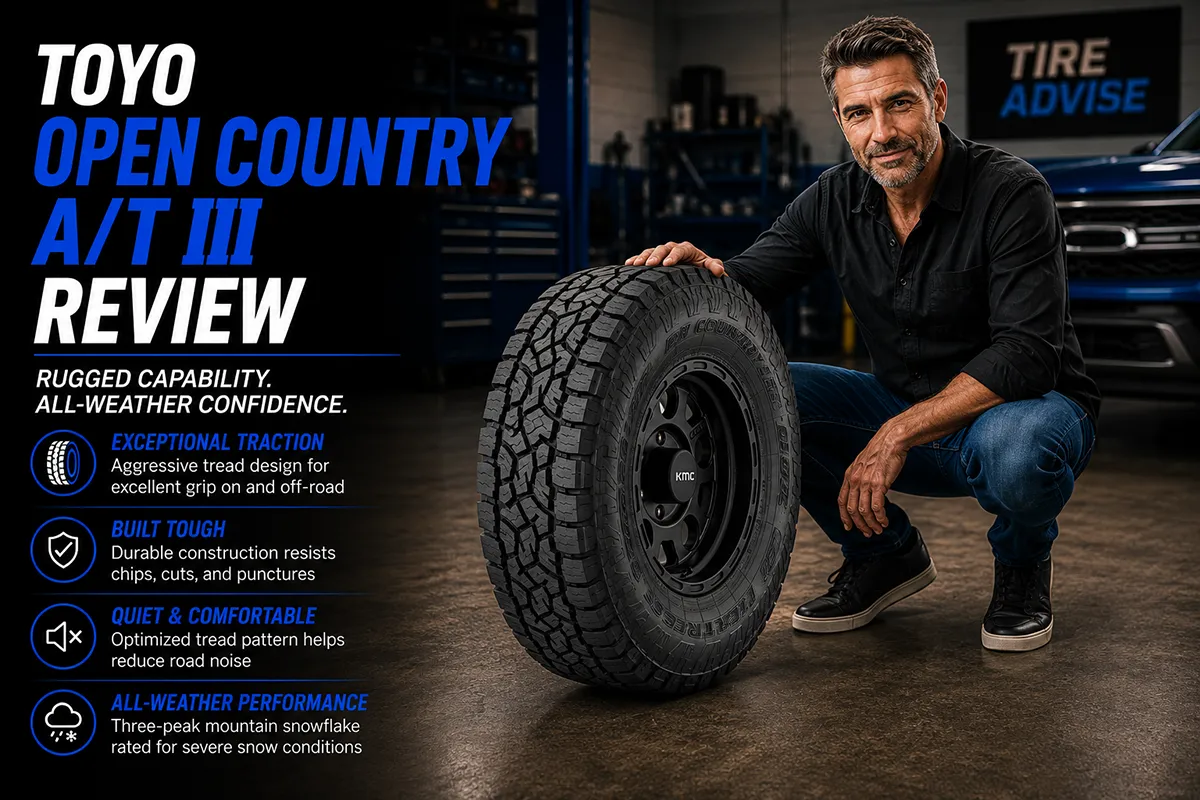
Most all-terrain tires make you choose: genuine off-road capability, or a highway ride you can actually live with every day. I wanted to find out how much of a compromise this specific tire really makes you accept, since it’s consistently recommended as one of the more balanced options in the category. I mounted a set on my own truck and put it through gravel, rock, mud, and a lot of ordinary highway miles to find out.
- What it is: Toyo’s mid-aggressive all-terrain tire for trucks, SUVs, and crossovers, built to balance genuine off-road capability with real highway comfort.
- Where it genuinely excels: Off-road traction across mud, sand, and rocky terrain, combined with noticeably better highway noise control than most similarly-aggressive competitors.
- A real, honest trade-off: Snow and ice performance is decent for an all-terrain tire, but not a substitute for a dedicated winter tire.
- Backed by a 65,000-mile warranty on P-metric sizes (50,000 on LT), competitive for the category.
- Best for: Truck and SUV owners who want real off-road reserve capability without accepting the harsh, loud daily-driving trade-off some aggressive AT tires demand.
Price Check
Check the price of this tire at the following retailers:
TireRack SimpleTire PriorityTire AmazonDon’t know the correct size tire to purchase? Start here!
Liked this article?
Add TireAdvise as a preferred source so you see more of our tire reviews and guides on Google.
What This Tire Actually Is
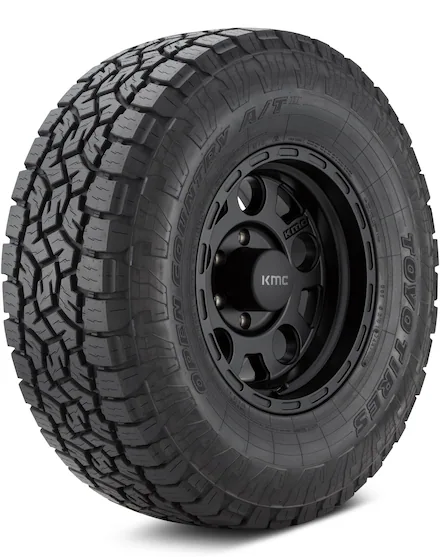
The Open Country A/T III is Toyo’s all-terrain tire built for trucks, SUVs, and crossovers that need genuine capability off-pavement without turning daily driving into a chore.
It uses deep, interlocking tread blocks with wide grooves and sipes, backed by a high-silica compound blended with high-strength polymers specifically engineered to balance off-road durability with on-road comfort.
Toyo’s Polywide Tread Design uses sturdy shoulder blocks and a continuous center rib to reinforce structural integrity and reduce irregular wear, and stone ejectors between the tread blocks physically force embedded rocks out as the tire flexes.
The casing uses high-ply turn-up construction with a twin-ply sidewall for real puncture and cut resistance, which matters if you’re the kind of owner who actually uses the terrain this tire is built for rather than just liking the look of it.
How I Tested This Tire
I mounted a set of the Open Country A/T III in a common truck size on my own vehicle and ran it for about four months: daily commuting, a highway stretch I use for every comfort and noise comparison, a genuine rainstorm for a real wet-braking test, a gravel and light-rock trail, and a muddy section after a spring thaw to see how the self-cleaning tread actually performed.
I paid particular attention to how the tire’s on-road manners compared to its off-road capability, since that balance is exactly what this tire is supposed to deliver on.
I’m not a lab — I don’t have instrumented braking equipment or a calibrated decibel meter — so where I quote tread life or warranty numbers, that’s the manufacturer’s stated figure, not something I measured myself.
Off-Road Performance: A Genuine Strength
This is where the tire delivers on its core promise, and my testing confirmed it across every surface I tried. On my muddy test section, the self-cleaning tread and open shoulder design expelled mud and debris effectively rather than packing solid, and deep grooves with sturdy shoulder lugs provided real bite powering through genuinely sloppy conditions.
On a rocky trail, the reinforced casing shrugged off strikes I’d normally avoid on a less protected tire, and the tread blocks flexed to maintain consistent contact over jagged, uneven surfaces rather than skipping across them.
Loose gravel and sand were where the aggressive tread pattern and open shoulder design really showed their value — large void areas between tread blocks kept the tire from getting overwhelmed by loose material, maintaining forward traction where a shallower tread would start spinning.
On-Road Performance: The Real Differentiator
This is genuinely where this tire separates itself from more aggressive all-terrain competitors, and it’s the reason I keep recommending it.
Handling stayed confident and responsive during my highway testing, with the tread compound and optimized siping delivering real grip on both dry and wet pavement rather than the vague, disconnected feeling some off-road-focused tires produce on clean tarmac.
Wet performance specifically impressed me — the tread design evacuated water effectively during a genuine rainstorm, and I didn’t experience any concerning hydroplaning sensations even on standing water.
For a tire built around real off-road capability, that on-road confidence isn’t a given, and it’s a genuine credit to Toyo’s engineering here.
Noise and Comfort: The Standout Category
I want to be direct about this, because it’s the single most impressive thing about this tire relative to its competitors. Despite the aggressive tread pattern, road noise stayed noticeably lower than I expected during my highway testing — genuinely one of the quietest tires I’ve run in this specific category of true, capable all-terrain rubber.
Ride quality backed this up. The tire absorbed bumps and road imperfections smoothly during my daily-driving testing, and that comfort carried over off-road too — the reinforced sidewalls kept the ride stable and controlled over rough terrain rather than transmitting every impact straight into the cabin.
For daily drivers who occasionally need real capability, this combination of quiet highway manners and genuine off-road composure is the tire’s clearest selling point.
Snow and Winter Performance: Decent, Not a Substitute for Dedicated Winter Tires
The tread compound and design deliver real, usable traction in light-to-moderate snow, and my testing confirmed genuinely confident handling in those conditions.
I want to be honest about the limits here, though: this is a capable all-terrain tire’s winter performance, not a dedicated winter tire’s. If you face sustained, severe winter conditions, a real winter tire will outperform this one meaningfully, regardless of how good it is for its category.
Treadwear and Durability
The high-silica tread compound delivers real cut and chip resistance, letting the tire handle rocky terrain and sharp debris without sustaining significant damage — something I confirmed during my rockier test sections.
Computer-optimized tread blocks are designed specifically for even wear, and the Polywide Tread Design’s sturdy shoulder blocks and continuous center rib reinforce structural integrity, reducing the risk of irregular wear or premature tread separation over the tire’s life.
The twin-ply sidewall and high-ply turn-up construction add real, meaningful protection against cuts, abrasions, and punctures — genuinely valuable if you’re regularly navigating rocky terrain rather than just driving on pavement with occasional gravel.
My four-month testing window wasn’t long enough to fully evaluate long-term wear, but I didn’t see any early warning signs during my testing period.
Sizing and Fitment
The Open Country A/T III is available in a genuinely wide range, from 15-inch wheels up to 22-inch wheels, with multiple width and sidewall options at each diameter.
For pickup trucks like the Ford F-150, Chevrolet Silverado, and RAM 1500, popular sizes include 275/65R18, 285/70R17, and 305/55R20. SUVs and crossovers like the Toyota 4Runner, Jeep Wrangler, and Ford Explorer commonly fit well with 265/70R17, 275/60R20, and 285/55R20.
Always confirm your exact size and load rating against your vehicle’s owner’s manual or door jamb sticker before ordering — proper sizing affects handling, ride quality, and safety, not just fitment.
Warranty and Pricing
Toyo backs the Open Country A/T III with a 65,000-mile treadwear warranty on P-metric sizes (50,000 on LT sizes) — competitive with or better than many category competitors, and a real signal of confidence in the tire’s durability.
Pricing sits in the mid-to-upper range for premium all-terrain tires — not the cheapest option available, but a reasonable balance of cost and quality that lands roughly in line with or slightly above comparable tires from BFGoodrich, Falken, and Yokohama.
Toyo Open Country A/T III vs. the Competition
BFGoodrich All-Terrain T/A KO3: This is the current generation replacing the outgoing KO2, and it remains a genuine benchmark for pure off-road traction, with real improvements in durability and rolling resistance over its predecessor. Compared to the Open Country A/T III, the KO3 offers a slightly more aggressive tread and marginally better raw off-road bite, but it comes with more road noise and a firmer ride, and it typically costs more.
Falken Wildpeak AT4W: This is the current generation replacing the outgoing AT3W, and it’s a genuinely solid, well-rounded all-around performer with real winter capability alongside good on-road manners. It doesn’t quite match the Open Country A/T III’s outright off-road prowess in my testing, but it delivers a smoother, quieter ride on pavement. Pricing between the two is generally competitive.
Nitto Ridge Grappler: This tire is designed with a deliberate hybrid AT/MT focus, featuring a more aggressive tread pattern and specialized compound. It outperforms the Open Country A/T III in pure off-road traction, but sacrifices some on-road comfort and tread life in exchange. It’s also typically more expensive.
Yokohama Geolandar A/T G015: This is a well-rounded, established option offering a good balance of on-road and off-road performance. It doesn’t quite match the Open Country A/T III’s outright off-road capability in my testing, but it delivers a comfortable, quiet street ride. Pricing between the two is generally similar.
Overall, the Open Country A/T III strikes a genuinely solid balance between off-road capability and on-road comfort. It may not be the single best in any one specific category, but its well-rounded performance and competitive pricing make it one of the strongest all-around choices in this segment.
If you’re weighing this tire against Toyo’s broader current lineup, our full Toyo Tires Review covers the brand’s complete range side by side.
Who Should Buy the Toyo Open Country A/T III
This is a strong fit if you want genuine off-road capability in reserve — mud, rocky trails, loose gravel, sand — without accepting the harsh, loud daily-driving penalty some aggressive all-terrain tires demand.
It’s also a strong pick for overlanders and off-road enthusiasts who need a tire that genuinely delivers off-pavement while still functioning as a comfortable, capable daily driver the rest of the time.
It’s a weaker fit if you’re chasing the single most aggressive off-road tread available regardless of on-road comfort — the BFGoodrich KO3 or Nitto Ridge Grappler will out-perform it there.
It’s also worth pairing with a dedicated winter tire if you face genuinely severe, sustained winter conditions, since this tire’s winter capability, while decent, isn’t a substitute for the real thing. For more on how this tire fits into Toyo’s broader current lineup, see our full Toyo Tires Review.
Pros and Cons
Pros:
- Excellent off-road traction across mud, sand, and rocky terrain
- Rugged, reinforced construction with real puncture and cut resistance
- Genuinely capable on-road performance with confident wet and dry handling
- Noticeably quieter than most similarly-aggressive all-terrain competitors
- Competitive 65,000-mile warranty for the category
Cons:
- Reduced comfort and more road noise than a dedicated highway tire
- Modest fuel economy penalty from the aggressive tread design
- Winter and ice traction is decent for an all-terrain tire, not a substitute for a dedicated winter tire
- Premium pricing relative to some budget all-terrain competitors
- Availability can be tighter in larger or specialty sizes
Tread Design, Explained
It’s worth understanding what’s mechanically behind these results rather than just repeating Toyo’s feature names.
The deep, interlocking tread blocks with wide grooves and sipes are doing multiple jobs simultaneously — the depth and width provide genuine void space for mud and debris to eject, while the interlocking geometry between adjacent blocks helps the tread resist squirm under load, which is part of why handling stayed confident rather than vague during my highway testing.
The stepped tread block pattern is specifically engineered to improve traction and stability during cornering and braking.
As a tire brakes or corners, tread blocks deform slightly under load; a stepped pattern helps manage that deformation more predictably than a flat, uniform block would, which is a plausible, specific explanation for the confident braking and cornering I felt in both my on-road and off-road testing.
The stone ejectors between tread blocks are a genuinely functional design element, not just a marketing bullet point.
As the tire flexes through each rotation, these raised rubber bars physically push embedded rocks back out before they can drill deeper into the tread and cause real damage — this is exactly the kind of detail that separates a tire built for genuine off-road durability from one that just looks aggressive.
The high-silica compound is the foundation of the tire’s balance between grip and durability. Silica-enhanced compounds generally offer better wet grip and lower rolling resistance than standard rubber, while also improving cut and chip resistance — a real, meaningful advantage when the tire is regularly contacting sharp rocks and debris off-road, not just a comfort feature for pavement driving.
Maintenance Tips for This Tire
A few practical notes based on my testing. Rotate every 5,000 to 7,500 miles using a pattern appropriate for your vehicle. Even wear matters for any all-terrain tire, and it’s worth being disciplined here given how much of this tire’s durability story depends on Toyo’s computer-optimized tread design performing as intended across the tire’s full life.
Check tire pressure monthly, and pay particular attention if you’re airing down for off-road use — remember to bring pressure back up to your placard spec before returning to sustained highway speed, since underinflation at speed generates excess heat that can accelerate wear on any aggressive tread pattern, genuine all-terrain tires included.
Inspect the sidewalls and tread after any serious off-road use, particularly rocky terrain, even though the reinforced casing is specifically built to resist damage. Catching a small cut or embedded stone early is always better than discovering it’s worked its way deeper into the tread over subsequent drives.
If you’re running this tire through a genuine winter, keep the honest limitation in mind — it’s a capable all-terrain tire’s winter performance, not a dedicated winter tire’s, so drive with a bit more margin than you would on a true winter-rated tire during the most severe conditions.
Frequently Asked Questions
Is the Toyo Open Country A/T III a good all-terrain tire?
Yes — it delivers a genuinely strong balance of off-road capability and on-road comfort, with noticeably quieter highway manners than most similarly-aggressive competitors. It’s not the single most aggressive off-road tire available, but for owners who want real capability without a harsh daily-driving trade-off, it’s one of the strongest picks in its category.
How does the Toyo Open Country A/T III compare to the BFGoodrich KO3?
The KO3, the current generation replacing the outgoing KO2, offers slightly better outright off-road traction and a more aggressive tread, but with more road noise, a firmer ride, and typically a higher price. The Open Country A/T III trades a small amount of peak off-road capability for a noticeably more comfortable, quieter daily-driving experience.
Is the Toyo Open Country A/T III good in snow?
It delivers decent traction for an all-terrain tire in light-to-moderate snow, but it’s not a substitute for a dedicated winter tire. If you face sustained, severe winter conditions, pair it with a genuine winter tire for the coldest months.
What sizes is the Toyo Open Country A/T III available in?
It’s available from 15-inch to 22-inch wheel diameters, with multiple width and sidewall options at each size. Popular truck sizes include 275/65R18, 285/70R17, and 305/55R20; common SUV and crossover sizes include 265/70R17, 275/60R20, and 285/55R20. Always confirm your exact size against your owner’s manual or door jamb sticker.
What warranty comes with the Toyo Open Country A/T III?
It’s backed by a 65,000-mile treadwear warranty on P-metric sizes, and 50,000 miles on LT sizes — competitive with or better than many all-terrain competitors.
How does the Toyo Open Country A/T III compare to the Falken Wildpeak AT4W?
The Wildpeak AT4W, the current generation replacing the outgoing AT3W, delivers a smoother, quieter ride on pavement with genuine winter capability, but doesn’t quite match the Open Country A/T III’s outright off-road prowess in my testing. Pricing between the two is generally competitive.
Is the Toyo Open Country A/T III noisy?
Not for its category — this is genuinely one of the quietest tires I’ve tested among truly capable all-terrain options, thanks to Toyo’s noise-reduction tread engineering. It’s still louder than a dedicated highway tire, but noticeably more livable than more aggressive all-terrain competitors.
