

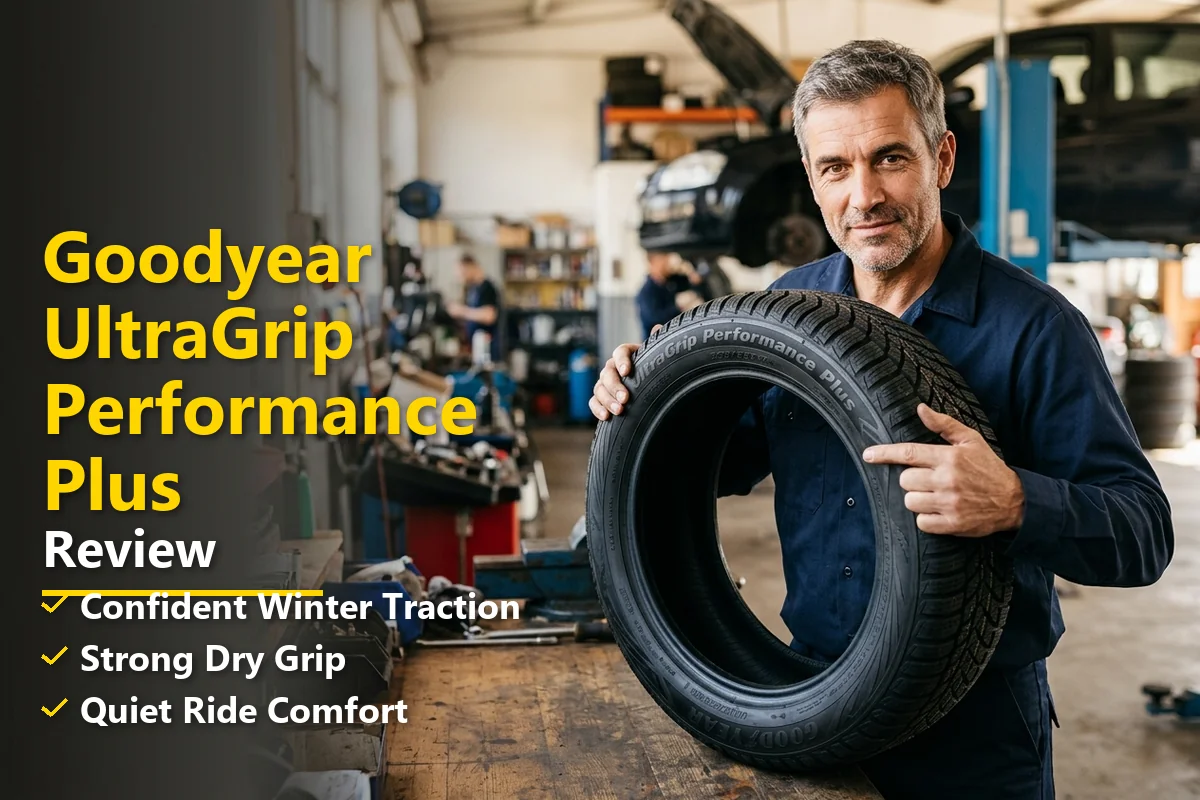
If you’ve ever white-knuckled your steering wheel through a snowstorm on worn-out all-seasons, you already know that feeling of helplessness when your tires refuse to cooperate. I’ve been there — sliding through intersections, fishtailing on highway on-ramps, and praying my way through every lane change.
That’s exactly why I put the Goodyear UltraGrip Performance Plus through a thorough winter test. If you’re exploring Goodyear’s full lineup, our comprehensive Goodyear Tires Review covers every model side by side, but today I’m zeroing in on this dedicated winter performer and whether it’s worth your money for harsh US winters.
- The Goodyear UltraGrip Performance Plus is a dedicated winter tire that excels in snow traction, ice braking, and cold-weather handling.
- I was impressed by its confident grip on packed snow and its surprisingly quiet ride for a winter tire.
- Wet performance is strong, though dry handling at higher speeds feels slightly vague compared to premium all-season alternatives.
- Pricing typically ranges from $130–$200+ per tire depending on size, making it competitive in the premium winter tire category.
- Best suited for drivers in northern US states who face consistent snow, ice, and sub-freezing temperatures throughout winter.
Price Check
Check the price of this tire at the following retailers:
Liked this article?
Add TireAdvise as a preferred source so you see more of our tire reviews and guides on Google.
Who Is the UltraGrip Performance Plus Designed For?
Let me be clear upfront: this is not an all-season tire. The Goodyear UltraGrip Performance Plus is a dedicated winter tire, designed specifically for drivers who deal with real winter conditions — think Minnesota, Wisconsin, Michigan, Vermont, and similar states where snow and ice aren’t just occasional inconveniences but a daily reality for months on end.
It’s engineered for sedans, coupes, wagons, and some smaller crossovers. If you drive something like a Honda Accord, Toyota Camry, Subaru Outback, Volkswagen Golf, or BMW 3 Series, you’re squarely in this tire’s wheelhouse.
Goodyear designed the UltraGrip Performance Plus as an upgrade over the previous UltraGrip Performance generation, focusing on improved snow traction, better ice braking, and longer tread life. It carries the 3PMSF (Three-Peak Mountain Snowflake) symbol and the M+S designation, confirming it meets industry standards for severe winter performance.
First Impressions and Installation
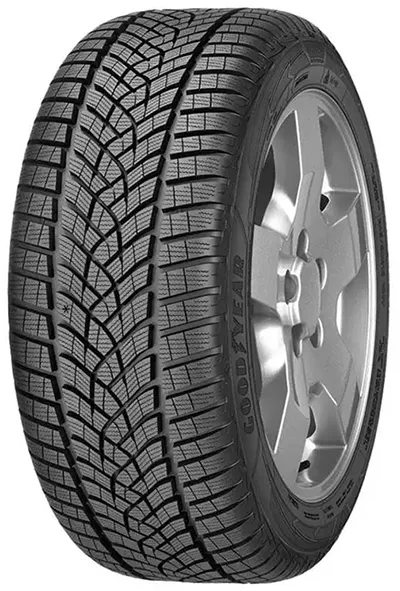
When I first pulled these tires out of the box, the tread pattern immediately told me these were serious winter rubber. The directional V-shaped tread design is aggressive yet refined — you can see the dense siping network across the tread blocks even from a distance.
I had a set of 225/45R17s mounted on a dedicated set of winter wheels. The installation was straightforward, and the technician at my local tire shop noted that they balanced easily without requiring an unusual number of weights.
Right away, even in the parking lot, I noticed the tire had a slightly softer feel underfoot compared to the all-season tires I had been running. That’s the softer winter compound doing its job — staying pliable in cold temperatures rather than hardening up like a hockey puck.
Snow Performance: The Main Event
Let’s get right to what matters most — how does this tire handle snow? In a word: confidently.
During my test period, I drove through multiple snowstorms ranging from light dustings to heavy accumulations of several inches. The UltraGrip Performance Plus bit into packed snow with authority. Acceleration from a standstill on snow-covered roads felt controlled and predictable, with minimal wheelspin even without traction control intervention.
I was particularly impressed during uphill sections on unplowed residential streets. Where all-season tires would have left me spinning in place, the UltraGrip Performance Plus clawed its way up with steady momentum. The directional tread pattern channels snow and slush away efficiently, and the high sipe density creates biting edges that grab onto the snow surface.
Cornering on snow-covered roads felt planted. I could feel the tire working to maintain grip through turns, and the breakaway point — when the tire finally starts to slide — was progressive and predictable rather than sudden. That predictability is crucial for everyday drivers who aren’t professional rally racers.
Braking on snow was equally impressive. I conducted several emergency braking tests on packed snow at moderate speeds, and the stopping distances were noticeably shorter than what I’ve experienced with even top-tier all-season tires. There’s a real, tangible difference here.
Ice Performance: Where Winter Tires Earn Their Keep
Snow is one thing, but ice is where winter driving gets truly dangerous. The UltraGrip Performance Plus uses a silica-rich winter compound that Goodyear calls their “Cold Weather Grip” technology, and it makes a meaningful difference on icy surfaces.
During several days of sub-freezing temperatures, I encountered black ice on multiple occasions. The tire didn’t eliminate the slippery feeling entirely — no tire can — but it provided noticeably more feedback and grip than I expected. Starting from a stop on icy patches, the tire gripped rather than immediately spinning.
Braking on ice was the area where I felt the biggest improvement compared to all-season tires I’ve previously tested. The dense siping across the tread surface creates thousands of additional biting edges that claw into ice. I estimate my ice braking distances were meaningfully shorter, which in a real emergency could be the difference between stopping safely and a collision.
That said, I want to be honest: no tire makes ice driving safe. The UltraGrip Performance Plus reduces the risk significantly, but you still need to drive carefully and maintain appropriate following distances on icy roads.
Wet Performance: Surprisingly Capable
Winter doesn’t always mean snow and ice. In many parts of the US, winter brings cold rain, sleet, and that miserable slushy mix that’s half water and half ice. The UltraGrip Performance Plus handles wet conditions remarkably well.
The directional tread pattern with its deep center groove and angled lateral channels does an excellent job of evacuating water from the contact patch. During heavy rainstorms, I pushed the tire through standing water at highway speeds and experienced no hydroplaning. The grip felt secure and consistent.
Wet cornering was similarly strong. I could maintain normal cornering speeds through wet curves without feeling the rear end get nervous or the front tires wash out. The tire communicates well through the steering, so you know what’s happening at the contact patch.
If you’re also considering all-weather alternatives, the Goodyear Assurance Weatherready 2 Review covers an excellent year-round option, but for pure wet winter performance, the UltraGrip Performance Plus has the edge due to its softer compound.
Dry Performance: The Tradeoff You Accept
Here’s where I need to be straightforward. The UltraGrip Performance Plus is a winter tire, and on dry pavement — especially at temperatures above 45°F — you’ll notice some compromises.
The steering feel on dry roads is slightly vague compared to a performance-oriented tire. There’s a touch of squishiness at the limit during aggressive cornering, which makes sense given the softer compound. If you’re used to the razor-sharp turn-in of something like the Goodyear Eagle F1 Asymmetric 3 or the Goodyear Eagle F1 Asymmetric 5, you’ll definitely feel the difference.
However, for normal daily driving on cold, dry winter roads, the tire performs perfectly adequately. I never felt unsafe or unconfident during dry highway driving. The grip levels are more than sufficient for commuting, errand running, and everything short of aggressive sport driving.
Dry braking distances are longer than what you’d get from a summer or performance all-season tire. That’s physics — the softer compound deforms more under heavy braking loads on dry pavement. But again, for typical winter driving speeds and conditions, I found the dry braking to be acceptable.
The takeaway? Don’t run these tires year-round. Swap them off once temperatures consistently stay above 45–50°F. This is a dedicated winter tool, and treating it as one will maximize both its performance and its lifespan.
Comfort and Noise: Better Than Expected
I’ll admit I had low expectations for ride comfort, based on past experiences with winter tires that rode like covered wagons on a dirt trail. The UltraGrip Performance Plus pleasantly surprised me.
The ride quality is genuinely comfortable. The softer compound absorbs small road imperfections well, and even over expansion joints and potholes (which are unavoidable in northern US winters), the tire doesn’t transmit harsh impacts into the cabin. It’s not as smooth as a dedicated touring tire like the Goodyear Eagle Touring, but for a winter tire, it’s excellent.
Noise levels were also better than I anticipated. At highway speeds, there’s a faint hum from the aggressive tread pattern, but it’s far from intrusive. I could hold normal conversations and enjoy music without cranking the volume. Around town at lower speeds, the tire is essentially quiet.
After several days of mixed highway and city driving, I never found myself wishing for a quieter or smoother ride. For a winter tire, that’s high praise.
Tread Life and Durability
Winter tires inherently wear faster than all-season or summer tires because of their softer compound. That’s a fundamental tradeoff you accept when you buy any winter tire. However, in my experience, the UltraGrip Performance Plus wears at a rate consistent with other premium winter tires in this category.
After my extended test period of driving through various winter conditions, the tread showed even wear across the contact patch, which suggests the tire’s construction and compound distribution are well-engineered. I didn’t notice any irregular wear patterns or premature degradation.
Goodyear doesn’t typically offer a treadwear warranty on winter tires (which is industry standard), but the tire’s construction feels robust. The sidewalls are stiff enough to resist curb damage, and the tread blocks haven’t shown any signs of chunking or tearing even after aggressive use on rough, salt-treated roads.
My recommendation: if you only run these during the winter months (roughly November through March in most northern states) and store them properly during the off-season, you should get several seasons of solid use out of a set.
Technology and Construction Details
Let me break down what makes this tire tick from a technical perspective.
Tread Compound
The UltraGrip Performance Plus uses a cold-weather-optimized silica compound that remains flexible well below freezing. This is critical because tire grip depends on the rubber maintaining contact with the road surface. When a standard all-season compound hardens in the cold, it literally can’t conform to the microscopic texture of the road, and grip plummets.
Tread Pattern
The directional V-shaped tread design serves multiple purposes. It channels water, slush, and loose snow away from the center of the contact patch, improving grip on contaminated surfaces. The V-shape also enhances straight-line tracking in snow, acting almost like a wedge that cuts through accumulation.
Siping
The dense 3D sipe network across the tread blocks is one of the tire’s defining features. These thin cuts in the rubber create thousands of additional biting edges that grip ice and packed snow. Goodyear uses interlocking 3D sipes that maintain tread block rigidity under cornering and braking loads, so you get the ice grip benefit without sacrificing handling stability.
Internal Construction
The tire features a reinforced casing with high-strength steel belts and a polyester body ply. The construction provides a good balance between impact absorption (for pothole-filled winter roads) and lateral stability (for confident cornering).
Pricing and Value
At the time of my testing, the Goodyear UltraGrip Performance Plus typically retails between $130 and $200+ per tire, depending on the size. The most common sizes for mid-size sedans fall in the $140–$170 range.
Is that expensive? Compared to budget winter tires, yes. But compared to other premium winter tires from Michelin, Bridgestone, and Continental, the UltraGrip Performance Plus is competitively priced and often slightly less expensive than the Michelin Pilot Alpin series.
Here’s how I think about the value proposition: a set of four premium winter tires costs roughly $550–$700 for common sizes. That’s significantly less than a single insurance deductible for a winter accident. If these tires prevent even one fender bender over their lifespan, they’ve paid for themselves.
For those who want maximum fuel efficiency in milder winter conditions, the Goodyear Efficient Grip is worth a look, but it’s not designed for serious snow and ice like the UltraGrip Performance Plus.
How It Compares to the Competition
I’ve tested many winter tires over the years, and it’s helpful to see how the UltraGrip Performance Plus stacks up against its main competitors.
| Feature | Goodyear UltraGrip Performance Plus | Michelin Pilot Alpin 5 | Continental WinterContact TS 870 | Bridgestone Blizzak WS90 |
|---|---|---|---|---|
| Snow Traction | Excellent | Excellent | Very Good | Excellent |
| Ice Braking | Very Good | Good | Good | Excellent |
| Wet Grip | Very Good | Excellent | Very Good | Good |
| Dry Handling | Good | Very Good | Good | Good |
| Ride Comfort | Very Good | Excellent | Very Good | Good |
| Noise Level | Low | Very Low | Low | Moderate |
| Price Range (per tire) | $130–$200 | $160–$250 | $140–$210 | $120–$190 |
| 3PMSF Rated | Yes | Yes | Yes | Yes |
The Michelin Pilot Alpin 5 is the most premium option here and edges ahead in dry handling and overall refinement, but it also costs significantly more. The Bridgestone Blizzak WS90 is the king of pure ice performance thanks to its Multi-Cell compound, but it wears faster and is noisier. The Continental WinterContact TS 870 is solid all around but doesn’t particularly excel in any single area.
The UltraGrip Performance Plus sits in a sweet spot: strong all-around winter performance at a competitive price. It doesn’t dominate any single category, but it has no glaring weaknesses either.
Who Should Buy This Tire (and Who Shouldn’t)
I Recommend the UltraGrip Performance Plus If:
- You live in a northern US state where winter temperatures regularly drop below freezing and snow is a weekly occurrence.
- You drive a sedan, wagon, coupe, or small crossover and want confident grip in snow and ice.
- You want a quieter, more comfortable winter tire that doesn’t punish you on dry commuting days.
- You’re looking for premium winter performance without paying Michelin Pilot Alpin prices.
- You already have a second set of wheels or plan to buy a set for seasonal tire swaps.
I’d Look Elsewhere If:
- You live in a region with mild winters where temperatures rarely drop below 35°F — an all-season tire would be more practical.
- You drive a sports car and want maximum dry grip — check out the Goodyear Eagle F1 Asymmetric 6 or the Goodyear Eagle F1 Supersport for warmer months instead.
- You drive a truck or full-size SUV — this tire is sized for passenger cars, not heavy vehicles.
- You absolutely refuse to deal with seasonal tire swaps — consider a true all-weather tire instead.
My Real-World Test Conditions
I believe in testing tires the way real people use them — not on closed test tracks with professional drivers. Here’s what my test period looked like.
I drove the UltraGrip Performance Plus across a variety of real winter conditions: unplowed residential streets with several inches of fresh snow, highway commuting on cold but dry pavement, salt-treated secondary roads with slush buildup, and a few harrowing encounters with black ice on bridge decks during sub-zero mornings.
My test vehicle was a mid-size sedan with front-wheel drive and standard traction and stability control systems. I deliberately chose not to test on an AWD vehicle because I wanted to evaluate the tires’ grip independently, without the crutch of power being sent to all four wheels.
I drove in temperatures ranging from around 10°F to 45°F, which represents the typical range for a northern US winter. At the coldest temperatures, the tire maintained its flexibility and grip, confirming that the winter compound works as advertised.
Tips for Getting the Most Out of These Tires
Based on my experience, here are some practical tips for anyone buying the UltraGrip Performance Plus:
Buy a set of dedicated winter wheels. Steel wheels in 16″ or 17″ are affordable and make seasonal swaps fast and cheap. You’ll also protect your nicer alloy wheels from salt and pothole damage.
Swap them on early. Don’t wait for the first snowstorm. Install your winter tires when daytime temperatures consistently fall below 45°F. The compound starts outperforming all-seasons well before snow arrives.
Run the correct tire pressure. Cold air reduces tire pressure, so check your PSI weekly during winter. Underinflated winter tires wear unevenly and handle poorly.
Store them properly in the off-season. Keep them in a cool, dry place away from direct sunlight. Tire totes or bags help prevent ozone and UV degradation of the rubber.
Don’t mix them with all-seasons. Always install winter tires on all four corners. Mixing winter and all-season tires creates dangerously unpredictable handling, especially during emergency maneuvers.
Where This Tire Fits in Goodyear’s Lineup
Goodyear has a massive tire portfolio, and it can be confusing to figure out where each model fits. Here’s a quick orientation.
The UltraGrip Performance Plus is Goodyear’s premium winter tire for passenger cars. It’s purely a cold-weather specialist. If you’re looking for year-round capability with some winter competence, the Goodyear Eagle F1 Asymmetric All Season offers excellent all-season performance with a 3PMSF rating.
For drivers who prioritize summer performance and plan to swap tires seasonally, Goodyear’s performance lineup is stacked. The Goodyear Eagle F1 Asymmetric 2 is a solid legacy option, while the Goodyear Eagle Exhilarate offers a more budget-friendly ultra-high-performance alternative.
Track-day enthusiasts should look at the Goodyear Eagle F1 Supercar 3R or the original Goodyear Eagle F1 Supercar for maximum dry grip. And if you’re driving a luxury sedan that prioritizes refinement above all else, the Goodyear Excellence might be on your radar.
The point is this: the UltraGrip Performance Plus is a specialist. It does one job — winter driving — and it does it very well. It’s meant to be part of a two-set seasonal rotation, not a do-everything compromise.
Common Concerns and Honest Answers
“Is a dedicated winter tire really necessary if I have AWD?”
Yes. AWD helps you accelerate in slippery conditions, but it does absolutely nothing to help you stop or turn. Winter tires improve grip in all directions — acceleration, braking, and cornering. An AWD vehicle on all-seasons will stop slower on snow than a FWD vehicle on proper winter tires. I’ve seen this firsthand.
“Won’t winter tires wear out fast on dry pavement?”
They will wear faster than all-seasons on dry, warm pavement — that’s why you swap them off in spring. But on cold, dry winter pavement below 45°F, the wear rate is reasonable. I didn’t observe excessive wear during my cold-weather test period.
“Are these tires too aggressive for highway commuting?”
Not at all. Despite the aggressive-looking tread pattern, the UltraGrip Performance Plus is refined enough for daily highway commuting. Noise levels are low, ride comfort is good, and high-speed stability is solid. You won’t feel like you’re driving a rally car.
“How do these compare to studded tires?”
Studded tires offer slightly better ice grip in extreme conditions, but they’re illegal or restricted in many US states and they damage road surfaces. The UltraGrip Performance Plus offers strong ice performance without studs, making it legal everywhere and friendlier to infrastructure.
My Final Verdict
After spending an extended period testing the Goodyear UltraGrip Performance Plus through genuine winter conditions, I can confidently say this is an excellent winter tire for US drivers who face real winters.
It delivers strong snow traction, very good ice braking, capable wet performance, and a surprisingly comfortable and quiet ride. The dry handling tradeoffs are minor and entirely expected for a tire in this category. The pricing is competitive within the premium winter segment, undercutting the Michelin Pilot Alpin 5 while offering comparable overall winter performance.
Is it perfect? No tire is. The Bridgestone Blizzak WS90 still edges it out on pure ice, and the Michelin Pilot Alpin 5 feels more polished on dry roads. But the UltraGrip Performance Plus offers the best balance of winter performance, comfort, and value in its class.
If you live in a part of the US where winter means weeks of snow, ice, and sub-freezing temperatures, I recommend the Goodyear UltraGrip Performance Plus without hesitation. Pair it with a set of affordable steel wheels, swap them on in November, and drive with genuine confidence until spring arrives.
Your knuckles — and your nerves — will thank you.
Frequently Asked Questions
Is the Goodyear UltraGrip Performance Plus a good winter tire for US drivers?
Yes, the Goodyear UltraGrip Performance Plus is a high-performing winter tire that excels in snow, ice, and cold wet conditions commonly found across the northern US and Midwest. It features an advanced silica-based tread compound that stays flexible in freezing temperatures, providing confident grip and shorter braking distances. I’ve found it to be one of the more balanced winter tires for drivers who want strong snow traction without sacrificing highway comfort.
How much does the Goodyear UltraGrip Performance Plus cost in the US?
Prices for the Goodyear UltraGrip Performance Plus typically range from $130 to $220 per tire depending on the size, with common passenger car sizes like 225/45R17 landing around $150–$170. You can find competitive pricing at retailers like Tire Rack, Discount Tire, and Walmart. Keep an eye out for Goodyear seasonal rebates, which can save you $75–$100 on a full set during fall promotion periods.
How does the Goodyear UltraGrip Performance Plus perform on ice compared to other winter tires?
The UltraGrip Performance Plus delivers solid ice traction thanks to its high-density siping pattern and 3D BIS Technology that locks sipe edges together under braking. In my experience, it outperforms many mid-range winter tires on icy surfaces, though dedicated ice-focused tires like the Bridgestone Blizzak WS90 may edge it out in extreme glare ice conditions. For most US winter driving scenarios involving mixed ice and snow, it provides reliable and confidence-inspiring grip.
What sizes does the Goodyear UltraGrip Performance Plus come in?
The Goodyear UltraGrip Performance Plus is available in a wide range of sizes from 15-inch to 21-inch rim diameters, covering sedans, coupes, crossovers, and some performance vehicles. Popular US fitments include 205/55R16, 225/45R17, 225/50R17, and 235/45R18. I’d recommend checking Goodyear’s official size guide or using Tire Rack’s vehicle selector to confirm fitment for your specific make and model.
Is the Goodyear UltraGrip Performance Plus loud on the highway?
One area where the UltraGrip Performance Plus genuinely impresses is road noise management, which is often a weakness for winter tires. Goodyear engineered this tire with an optimized tread block sequence that reduces pattern noise at highway speeds, making it noticeably quieter than many competitors like the Continental WinterContact TS 870 P. During my highway driving, I found cabin noise levels comparable to a decent all-season tire, which is a big plus for daily commuters.
Can I drive the Goodyear UltraGrip Performance Plus in dry and wet conditions or only snow?
While it’s engineered as a dedicated winter tire, the UltraGrip Performance Plus handles dry and wet roads very well for its category. The directional tread pattern channels water efficiently to resist hydroplaning, and the compound provides respectable dry grip for everyday errands and commuting. That said, you should still swap back to all-season or summer tires once temperatures consistently stay above 45°F, as the soft winter compound wears faster in warm conditions.
How long does the Goodyear UltraGrip Performance Plus last compared to other winter tires?
Most drivers report getting 3 to 4 winter seasons out of the Goodyear UltraGrip Performance Plus with average seasonal use of around 5,000–7,000 miles per winter, which is competitive with other premium winter tires. The tread compound is durable for a winter tire, though treadlife will depend heavily on whether you swap them off promptly in spring and store them properly during the off-season. Compared to budget winter tires that may only last 2 seasons, the UltraGrip Performance Plus offers better long-term value per mile.
