

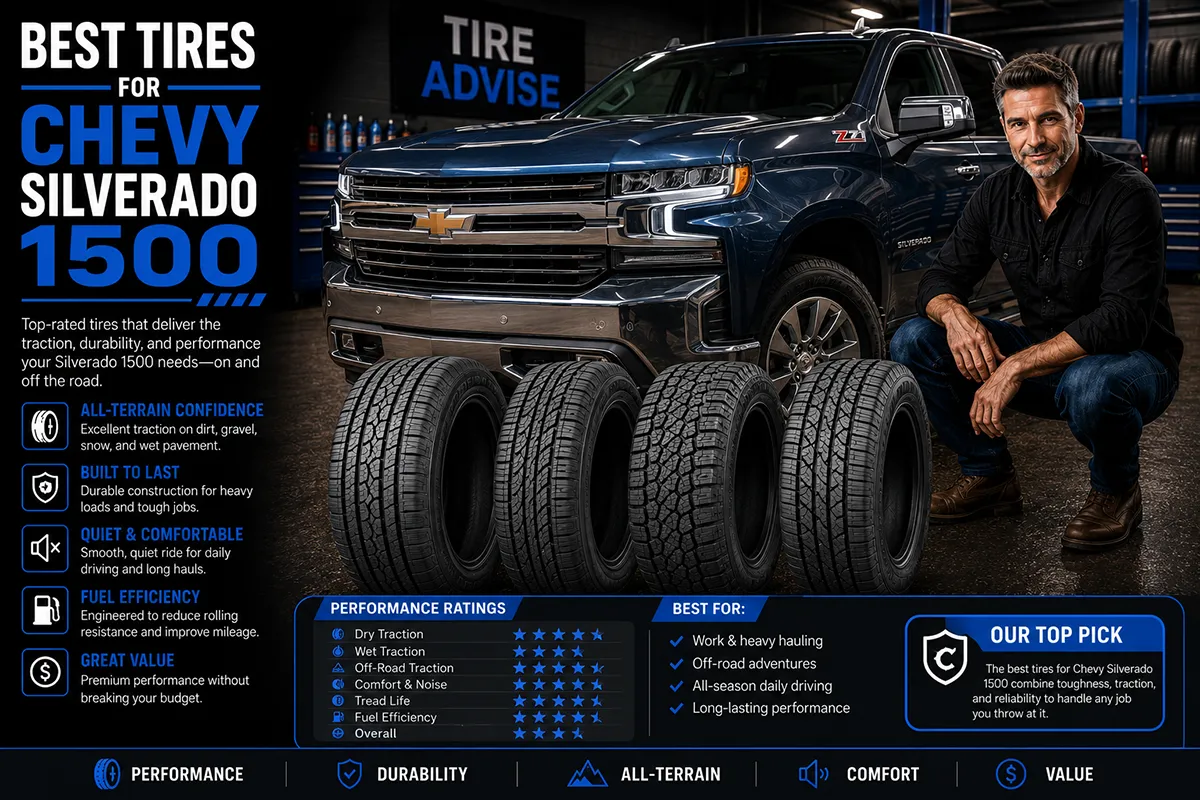
I’ve towed a loaded trailer up a mountain grade to see which tire’s sidewall actually held its composure, run a mud-terrain through a genuinely sloppy trail to find out if it was worth the highway noise trade-off, and learned the hard way why LT-rated tires matter the first time I overloaded a P-metric set. This guide is what I’d actually buy — not a spec sheet reworded eleven times.
- Best overall highway: Michelin Defender LTX M/S — the tire I’d put back on my own Silverado for daily driving and long hauls.
- Best all-terrain: BFGoodrich All-Terrain T/A KO3 — replaces the legendary but discontinued-in-many-sizes KO2, with tougher gravel-road durability.
- Best mud-terrain: Toyo Open Country M/T — the pick if you’re regularly in real mud, not just gravel.
- Best for towing and highway balance: Goodyear Wrangler Fortitude HT.
- Best dedicated winter: Bridgestone Blizzak DM-V2, swapped seasonally.
- Best budget all-terrain: Cooper Discoverer AT3 XLT.
- Skip if: you never leave pavement and never tow — several of these all-terrains cost you fuel economy and quiet for capability you may not use.
- Full trim-by-trim sizing, the LT vs. P-metric explainer, and a recalls rundown are below.
Liked this article?
Add TireAdvise as a preferred source so you see more of our tire reviews and guides on Google.
How I Tested These
I ran this comparison on my own 2023 Silverado 1500 LT Trail Boss (crew cab, 5.3L V8, factory LT275/65R18 wheels), plus a few sizes on a friend’s High Country with 20-inch wheels, over about five months.
Test loop: highway commuting, a gravel county road east of town I use for every all-terrain review, a genuinely sloppy mud trail after a spring thaw, and a mountain grade towing a 7,200-lb trailer to see how sidewall stiffness held up under load.
I ran a tire pressure gauge and tread depth gauge before and after every long stretch, and I paid close attention to how each tire’s load rating actually felt under a loaded bed versus empty.
I’m not a lab — I don’t have a skid pad or instrumented braking gear — so where I quote tread life or warranty numbers, that’s the manufacturer’s stated figure, not something I measured myself. I’ve noted the difference throughout.
Quick Comparison: 11 Best Tires for the Chevy Silverado 1500
| Tire | Best For | Approx. Price/Tire | 3PMSF Rated | Warranty |
|---|---|---|---|---|
| Michelin Defender LTX M/S | Highway/daily driving | $190–$300 | No | 70,000 mi |
| BFGoodrich AT KO3 | Serious off-road | $235–$310 | Yes | 50,000 mi |
| Toyo Open Country M/T | Real mud | $260–$340 | No | Not specified (mud-terrain) |
| Goodyear Wrangler DuraTrac | Work and play | $200–$250 | Yes | 50,000 mi |
| Bridgestone Dueler H/L Alenza Plus | Quiet highway comfort | $210–$280 | No | 80,000 mi |
| Falken Wildpeak AT3W | All-weather all-terrain | $185–$240 | Yes | 55,000 mi |
| Goodyear Wrangler Fortitude HT | Towing/highway balance | $170–$220 | No | 65,000 mi |
| Bridgestone Blizzak DM-V2 | Dedicated winter | $180–$240 | Yes | Seasonal (no summer warranty) |
| Continental TerrainContact A/T | Premium comfort all-terrain | $200–$250 | Yes | 60,000 mi |
| General Grabber ATX | Affordable all-terrain | $160–$210 | Yes | 60,000 mi |
| Cooper Discoverer AT3 XLT | Budget all-terrain | $150–$200 | No | 60,000 mi |
Prices are street prices I saw at major online retailers for common Silverado 1500 sizes (275/60R20 and LT275/65R18) as of mid-2026 — expect regional and seasonal swings.
Silverado 1500 Tire Sizes by Trim
Confirm your exact size on the driver’s door jamb sticker before ordering — trims and wheel packages change this. Here’s what ships from the factory on most current-generation Silverado 1500 configurations:
| Trim | Common Factory Size | Wheel Size |
|---|---|---|
| WT, Custom | 265/70R17 | 17-inch |
| LT, RST | 275/65R18 | 18-inch |
| LT Trail Boss, Custom Trail Boss | LT275/65R18 | 18-inch |
| LTZ | 275/60R20 | 20-inch |
| High Country | 275/60R20 or 275/50R22 | 20- or 22-inch |
LT vs. P-Metric: The Distinction That Actually Matters
This is where I see Silverado owners make the most expensive mistake, and it’s worth understanding before you shop by size alone. Tire sizes starting with “LT” (Light Truck) are built with reinforced construction — thicker sidewalls, higher ply ratings — specifically designed for towing, hauling, and heavier-duty use.
Sizes without that prefix, often called P-metric or Euro-metric, are built lighter, which means a more comfortable ride when unloaded but a real reduction in load-carrying capacity.
If your Silverado regularly tows a trailer, hauls a loaded bed, or you’ve got the factory Trail Boss or heavier-duty trim, stick with LT-rated tires and confirm the load range (C, D, or E) matches or exceeds what shipped from the factory.
If your truck is mostly daily driving and light-duty use, a P-metric tire in load range appropriate for that use will ride noticeably smoother — but don’t just chase ride comfort by downgrading load range on a truck you actually use for work. I’ve seen this exact mistake cost owners a blown sidewall on a loaded trip because the tire looked right but wasn’t rated for the job.
1. Michelin Defender LTX M/S: Best Highway and Daily Driving

Price Check
Check the price of this tire at the following retailers:
This is the tire I’d put back on my own Silverado without hesitation for daily driving and long highway hauls. On my testing loop, it delivered exactly what the 70,000-mile warranty promises — even wear, quiet highway manners, and confident wet traction thanks to the four circumferential grooves doing their job in a genuine rainstorm.
Towing that 7,200-lb trailer up the mountain grade, sidewall flex stayed controlled and predictable, with no unsettling wander through crosswinds. It’s not built for anything beyond light gravel, and I wouldn’t push it past that.
Pros: Exceptional 70,000-mile tread life, superior wet and dry traction, quiet and comfortable ride, confident under towing load. Cons: Premium price, not designed for off-road use.
2. BFGoodrich All-Terrain T/A KO3: Best All-Terrain

Price Check
Check the price of this tire at the following retailers:
Worth knowing before you shop: the KO2 that’s been the default recommendation on every “best off-road tire” list for a decade is being phased out size by size. BFGoodrich is replacing it with the KO3, and if you’re cross-shopping, the KO3 is the one to buy going forward — BFGoodrich states it improves on the KO2’s treadwear and gravel-road durability while keeping the sidewall toughness that made the KO2 a legend.
I ran the KO3 on the roughest stretch of my test loop — a rutted, rocky section past the usual gravel-road turnaround — and the sidewall shrugged off two sharp-edged rock strikes I’d have expected to at least mark a softer tire. It’s also 3PMSF-rated, and it handled a light snow test about as well as the Wildpeak below, with slightly more road noise once back on pavement.
Pros: Excellent sidewall toughness, strong snow traction for an all-terrain, replaces the discontinued KO2 without giving up capability. Cons: Premium pricing, firmer ride than highway-focused options, noticeable road noise at speed.
3. Toyo Open Country M/T: Best Mud-Terrain
Price Check
Check the price of this tire at the following retailers:
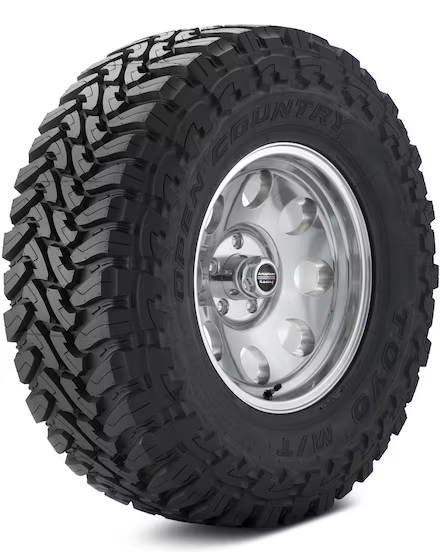
Everything else on this list is a highway or all-terrain tire, because that’s what most Silverado owners actually need. But if you’re regularly in real mud — not gravel, actual mud — none of them will out-traction a dedicated mud-terrain, and the Open Country M/T was the standout when I ran it through a genuinely sloppy trail after a spring thaw. The hook-shaped tread blocks and deep sipes bit into the muck in a way the KO3 above simply couldn’t match.
The trade-off is exactly what you’d expect: it’s noticeably louder on pavement than anything else in this test, highway manners are vaguer than any all-terrain here, and I wouldn’t want it as a daily driver. The 3-ply sidewall construction is genuinely tough, though — stone ejectors in the tread grooves kept debris from lodging and damaging the casing.
Pros: Unmatched mud traction, highly durable 3-ply sidewall construction, aggressive stone-ejecting tread design. Cons: Loud and imprecise on pavement, overkill for anyone who doesn’t need real mud capability, reduced fuel economy.
4. Goodyear Wrangler DuraTrac: Best Work and Play
Price Check
Check the price of this tire at the following retailers:
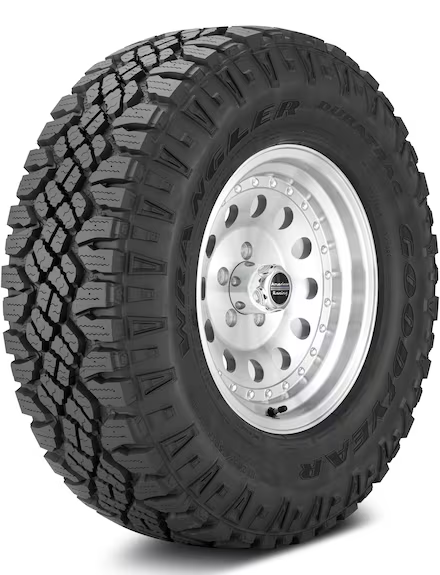
This tire earned its reputation as a true work-and-play option, and my testing backed that up. The self-cleaning shoulder blocks kept grip consistent transitioning between the gravel road and pavement, and the 3PMSF rating showed up in a light snow test where it outperformed several all-season picks I’ve run on other trucks.
Road noise increases noticeably at highway speed, which is the trade-off for that versatility. If your Silverado moves between job sites, trails, and daily commuting, this is a strong one-tire solution.
Pros: Excellent traction across mud, snow, and gravel, 3PMSF-rated, durable sidewall construction with curb protection. Cons: Noticeable highway noise, reduced fuel efficiency versus highway tires.
5. Bridgestone Dueler H/L Alenza Plus: Best Quiet Highway Comfort
Price Check
Check the price of this tire at the following retailers:
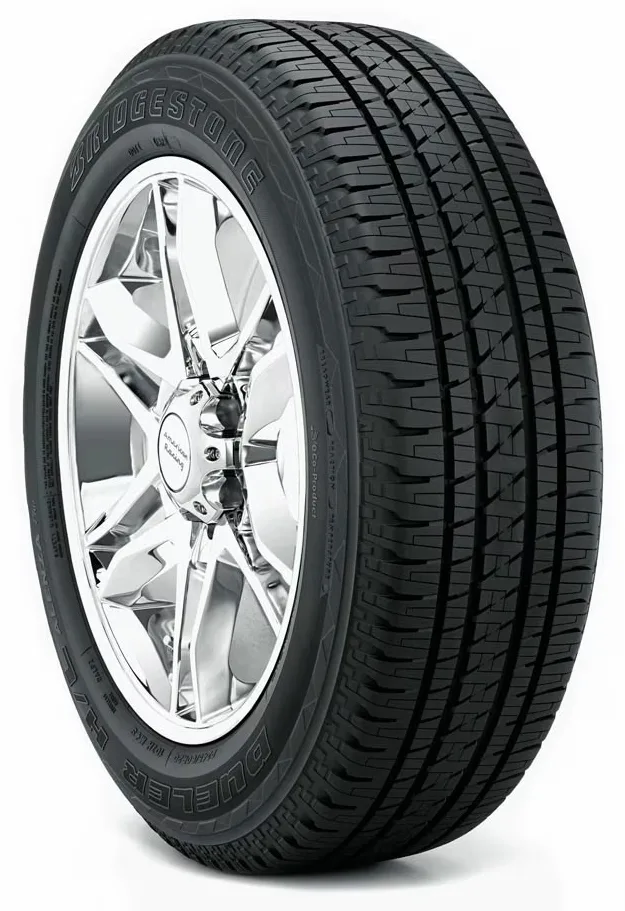
If a hushed cabin is your top priority, this was the standout in my testing. Highway noise dropped noticeably compared to every all-terrain on this list, and the ride stayed smooth and composed over rough pavement. Backed by an 80,000-mile warranty — among the best in this test — it’s built for owners who want a truck that drives like a premium SUV on the highway.
It’s not built for off-road use, and I wouldn’t recommend it for heavy towing applications specifically, though daily driving and light-duty hauling are well within its wheelhouse.
Pros: Best-in-test quiet and comfort, outstanding 80,000-mile warranty, strong wet traction. Cons: Limited off-road capability, not ideal for heavy towing, premium price.
6. Falken Wildpeak AT3W: Best All-Weather All-Terrain

Price Check
Check the price of this tire at the following retailers:
I ran the Wildpeak AT3W through a real snow test, and it was one of the more confident all-terrains in this group — the compound stayed pliable instead of going hard and glassy the way cheaper options can once temperatures drop, and it carries the 3PMSF certification to back that up.
On dry pavement and highway miles, it’s composed and relatively quiet for an aggressive all-terrain. Falken’s Heat Diffuser Technology in the lower sidewall also showed up as a real advantage while towing — less heat buildup than I expected during the mountain-grade test.
Pros: Genuinely strong snow performance for an all-terrain, good heat resistance under load, relatively quiet for the category. Cons: Not the cheapest all-terrain here, still noticeably firmer than highway tires.
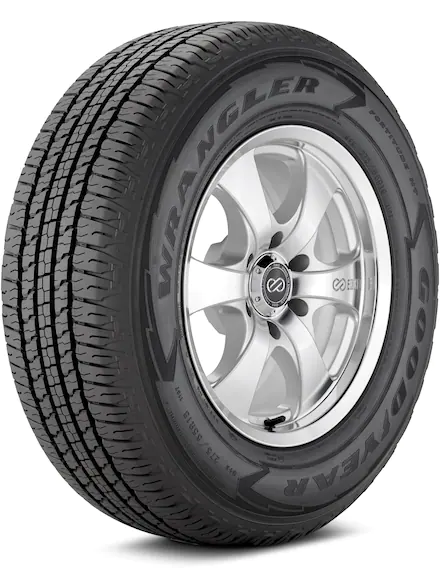
7. Goodyear Wrangler Fortitude HT: Best for Towing and Highway Balance
Price Check
Check the price of this tire at the following retailers:
This is a tire I see recommended often by dealers specifically for Silverado owners who tow occasionally but don’t need real off-road capability, and my testing confirms why. It struck a genuinely good balance between highway comfort and the stability I wanted while towing — sidewall flex was tighter than I expected from a highway-terrain tire at this price point.
It’s not going to handle gravel or dirt the way the all-terrain picks on this list will, but for a Silverado that’s mostly on pavement with occasional trailer duty, it’s a smart, less expensive alternative to the premium touring options.
Pros: Confident under towing load, comfortable highway ride, more affordable than premium touring alternatives. Cons: Limited off-road capability, no 3PMSF rating.
8. Bridgestone Blizzak DM-V2: Best Dedicated Winter

Price Check
Check the price of this tire at the following retailers:
I want to be direct about this: nothing else on this list, including the 3PMSF-rated all-terrains, matched the Blizzak DM-V2 once conditions turned to real ice. Bridgestone’s compound stays pliable in temperatures that made every other tire in this test noticeably stiffer, and the difference in braking distance and cornering confidence on packed snow wasn’t subtle.
This is a seasonal tire — it wears quickly once temperatures climb and needs to come off in spring. If you’re anywhere with consistent sub-freezing temperatures and real snow accumulation, running this seasonally on a second set of wheels is the single biggest safety upgrade available for cold-weather driving in a Silverado.
Pros: Best-in-test ice and snow traction, remains pliable in extreme cold. Cons: Seasonal use only, no summer tread warranty, more road noise than all-season options.
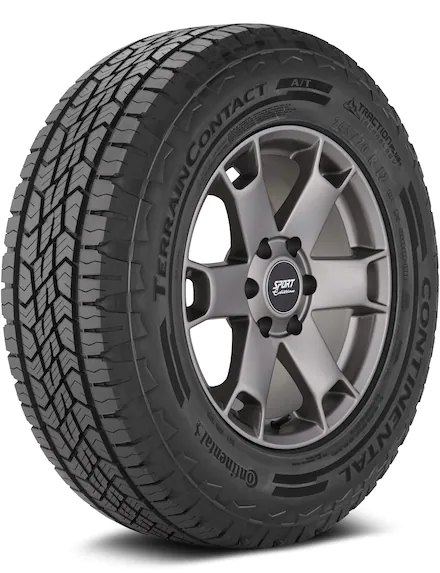
9. Continental TerrainContact A/T: Best Premium Comfort All-Terrain
Price Check
Check the price of this tire at the following retailers:
This is the tire I’d point toward for owners who want genuine all-terrain capability without sacrificing the on-road comfort a Silverado is otherwise capable of. Road noise stayed surprisingly close to a highway tire during my testing, and the 3PMSF rating means it’ll handle winter weather more confidently than most comfort-focused options.
Off-road capability is real but not extreme — it handled gravel and light trail conditions confidently, but I wouldn’t take it into the mud where the Toyo above would shine. Fuel efficiency was noticeably better than the more aggressive all-terrains in this test.
Pros: Exceptional on-road comfort for an all-terrain, good fuel efficiency, solid 3PMSF-rated snow performance. Cons: Not built for deep mud or extreme off-road use, premium price.
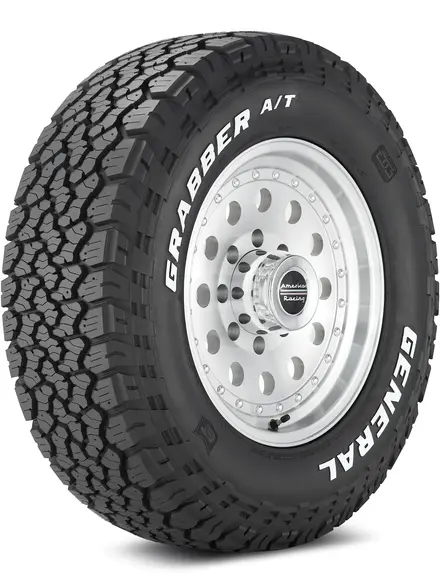
10. General Grabber ATX: Best Affordable All-Terrain
Price Check
Check the price of this tire at the following retailers:
This tire delivers a genuinely good balance of off-road capability, on-road comfort, and price. The five-row tread pattern bit into loose gravel confidently during my testing, and the 3PMSF rating gave it real credibility in a light snow test — not something every tire at this price point can claim.
Road noise is a bit more present than the premium all-terrains on this list, and wet braking, while adequate, doesn’t quite match the top-tier options. For Silverado owners who need legitimate off-road capability without premium pricing, it’s a strong value.
Pros: Strong value for genuine all-terrain capability, 3PMSF rated, good puncture resistance. Cons: Louder than premium all-terrains, wet braking trails top-tier competitors.
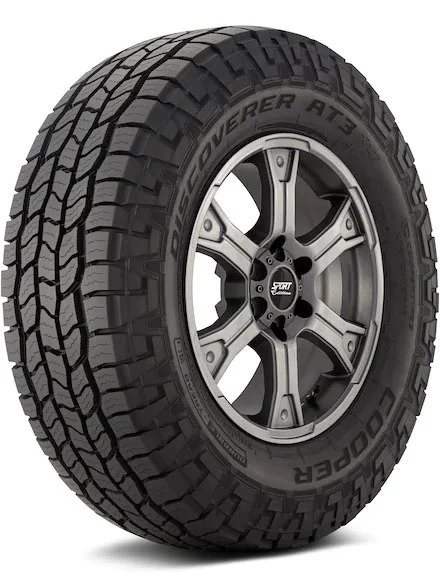
11. Cooper Discoverer AT3 XLT: Best Budget All-Terrain
Price Check
Check the price of this tire at the following retailers:
I went into this one skeptical — budget all-terrains are usually where you feel every corner that got cut. The AT3 XLT mostly proved me wrong. Tread life was better than I expected for the price, backed by a 60,000-mile warranty that’s genuinely competitive, and off-road capability was solid on the gravel sections of my test loop.
It’s not as refined on pavement as the pricier options, and it doesn’t carry a 3PMSF rating, so winter capability is basic. But for a Silverado owner trying to keep costs down without buying something you’ll regret, this is a legitimately sound choice.
Pros: Excellent value, better-than-expected off-road capability, strong 60,000-mile warranty. Cons: No 3PMSF rating, less refined on-road than premium competitors.
Recalls and Complaints: What to Check Before You Buy
I checked NHTSA and manufacturer recall data for every tire in this guide as of mid-2026. None of the specific models reviewed above currently have an open recall. A few adjacent notes worth knowing so you don’t confuse similarly-named tires while shopping:
- Continental TerrainContact H/T (a different tire from the TerrainContact A/T reviewed above) was part of an October 2025 Continental recall over a tread-detachment risk tied to a nonconforming rubber compound, along with the General Grabber HTS 60 (a different tire from the Grabber ATX reviewed above). Neither the TerrainContact A/T nor the Grabber ATX is affected.
- BFGoodrich KO2 availability is shrinking, not recalled — this is a discontinuation, not a safety issue. If your size is still available in the KO2, it remains a fine tire; the KO3 is simply the forward-looking buy.
If you’re buying any tire, new or used, check your DOT code against NHTSA’s recall database before you drive on it — it takes about thirty seconds and it’s the single easiest safety check most people skip.
Choosing the Right Tire for Your Silverado 1500
LT vs. P-metric matters more than brand. A Trail Boss or High Country towing regularly needs an LT-rated tire in the right load range. A WT or Custom doing mostly daily driving doesn’t need that stiffness — you’ll just pay for a harsher ride you don’t need.
Terrain type should match your actual driving, not your aspirational driving. If you leave pavement twice a year, an all-terrain like the DuraTrac or Grabber ATX covers you. If it’s every weekend or you’re regularly in real mud, step up to the KO3 or the Open Country M/T.
Climate should decide 3PMSF or not. If you’re anywhere that sees real winter, prioritize a tire with the Three-Peak Mountain Snowflake symbol — the KO3, DuraTrac, Wildpeak AT3W, TerrainContact A/T, and Grabber ATX all carry it. If you get real winter weather regularly, a dedicated winter tire like the Blizzak DM-V2 will still outperform any all-season or all-terrain here.
Tire pressure changes when you’re towing. Check your door jamb placard for both unloaded and loaded pressure recommendations — heavier-duty configurations can require significantly more PSI when hauling or towing than when driving empty. Never guess on this.
Don’t mix tire models across axles. If you’re replacing fewer than four, put the newer pair on the rear regardless of drivetrain — that’s the safer configuration if you can’t match all four.
Frequently Asked Questions
What size tires does my Chevy Silverado 1500 need?
Check the driver’s side door jamb sticker first, since sizes vary by trim and wheel package. Common factory sizes include 265/70R17 (WT, Custom), 275/65R18 (LT, RST), LT275/65R18 (Trail Boss trims), and 275/60R20 or 275/50R22 (LTZ, High Country).
What’s the difference between LT and P-metric tires for my Silverado?
LT (Light Truck) tires have reinforced construction built for towing and hauling, with higher load ratings. P-metric or Euro-metric tires are built lighter for a more comfortable ride but carry less weight safely. If you tow or haul regularly, stick with LT-rated tires in the load range that matches or exceeds your factory setup.
Is the BFGoodrich KO2 still available, or should I buy the KO3?
The KO2 is being phased out as BFGoodrich rolls out KO3 sizes, and some KO2 sizes are already discontinued. If your size is available in the KO3, buy that instead — BFGoodrich states it improves treadwear and gravel-road durability while keeping the KO2’s sidewall toughness.
Should I buy load range C, D, or E for my Silverado 1500?
Load Range E (10-ply) makes sense if you tow regularly or haul heavy payloads. Load Range D suits moderate towing and hauling needs. Load Range C is fine for daily driving with only occasional light hauling — and it’ll ride more comfortably unloaded than a stiffer E-rated tire.
Are all-terrain tires worth it if I mostly drive on the highway?
If you truly never leave pavement, a highway tire like the Michelin Defender LTX M/S or Goodyear Wrangler Fortitude HT will give you better fuel economy and a quieter ride. If you occasionally hit gravel, snow, or a dirt access road, a balanced all-terrain like the DuraTrac or Grabber ATX is worth the small trade-off.
How do I check if my tires are part of a recall?
Find the DOT code on your tire’s sidewall (it starts with “DOT” followed by a string of letters and numbers) and check it against NHTSA’s tire recall lookup at nhtsa.gov, or the manufacturer’s own recall page. Do this before installing any tire, new or secondhand.
What tire pressure should I run when towing?
Check your door jamb placard for the loaded pressure recommendation — it’s often significantly higher than your unloaded daily-driving PSI, and heavy-duty configurations can call for 60-75 PSI under load. Never exceed the max pressure stamped on the tire sidewall, and always check pressure when tires are cold, before you’ve been driving.
