


I ran a set of Goodyear Assurance FuelMax tires on a daily commuter for six months — tracking fuel economy, comfort, and grip through a Colorado winter — to see whether Goodyear’s fuel-saving claims hold up once the tire’s been out for over a decade.
- What it is: Goodyear’s budget-friendly, fuel-efficiency-focused all-season touring tire for coupes, sedans, minivans, and smaller crossovers.
- Where it excels: Genuinely noticeable fuel savings, a comfortable and quiet ride, and one of the more affordable touring tires from a major brand.
- Where it falls short: This tire has been on the market for over a decade, and it shows — independent testers now rate it as an average-to-below-average performer against newer touring tires, with limited winter traction and firmer handling than I expected.
- Worth knowing before you buy: Sizing is more limited than newer tires — you won’t find it in most low-profile 18″+ crossover fitments, only a handful of larger truck/SUV sizes.
- Bottom line: A reasonable budget pick if fuel economy and price are your top priorities, but newer touring tires in this price range now outperform it on grip and winter capability.
Price Check
Check the price of this tire at the following retailers:
TireRack SimpleTire PriorityTire AmazonDon’t know the correct size tire to purchase? Start here!
How I Tested This Tire
I ran a set of Assurance FuelMax tires (215/60R16) on a daily commuter for about six months — regular highway and city commuting, a couple of longer road trips to track real fuel economy, and a January storm that gave me a genuine look at how the tire handles snow and ice.
This isn’t a lab test — I don’t have dynamometer or controlled skid-pad equipment, so fuel economy figures are based on my own trip-computer tracking, not a scientific measurement.
Where I cite independent test rankings or owner-reported issues, I’m drawing on patterns across multiple sources, not just my own experience.
Quick Verdict: Who Should Buy This Tire
Buy it if: fuel economy and price are your top priorities, you drive a coupe, sedan, minivan, or smaller crossover in a common size, and you don’t face severe winter conditions regularly.
Skip it if: you want the sharpest available grip or winter traction in the touring category — newer tires like the Michelin Defender2 outperform it, and you need a size this tire simply isn’t available in, particularly larger low-profile crossover fitments.
Dry Performance and Handling
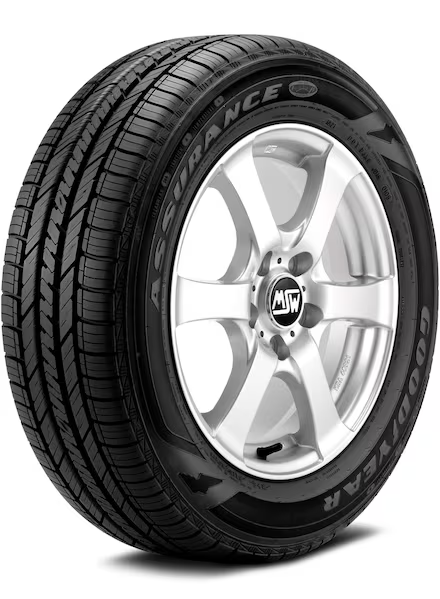
Steering response was stable and predictable throughout my testing, and Goodyear’s symmetric tread design with continuous center rib kept the car tracking confidently at highway speed.
This isn’t a tire built for sharp handling, though — independent testers now rate its dry grip as average against newer touring competitors, and I noticed the same thing: it’s dependable, not sporty.
Wet Performance
Wet traction was adequate but not a standout. Goodyear’s Dual Aquachannel grooves in the tread’s Wet Zone did their job clearing water during a couple of rainy commutes, and I never felt a loss of confidence braking or cornering in the wet — but it’s a step behind more modern touring tires I’ve tested, which now use more advanced compound technology.
Winter and Snow Performance
Ride Comfort and Road Noise
This is a genuine strength. The FuelMax absorbed road imperfections well throughout my testing, delivering a composed, quiet ride even over broken pavement and expansion joints — only coarse concrete produced a modest hum. For a budget-focused tire, comfort punches above its price point.
Fuel Economy: Does It Actually Save Gas?
This is the tire’s whole reason for existing, so I tracked it carefully. Goodyear states its fuel-saving tread compound can save up to 2,600 miles worth of gas over the life of a set of four tires compared to a standard Goodyear tire, and other owners commonly report gains of up to 3 mpg — though, as with any fuel economy claim, some drivers report barely noticing a difference.
My own trip-computer tracking over six months showed a modest but real improvement compared to the more aggressive touring tire I ran previously on the same car, in the range other owners describe rather than anything dramatic.
A Genuine Limitation: This Tire Is Showing Its Age
Price and Value
Street prices for common sizes ran $110–$160 per tire in my price checks as of mid-2026, making it one of the most affordable touring tires from a major brand — genuinely lower than the Michelin Defender2, the Continental TrueContact Tour 54, or even budget alternatives like the Hankook Kinergy PT.
Goodyear backs it with a 65,000-mile treadwear warranty. Given the genuine trade-offs in grip and winter capability against newer competitors, I think this tire earns its price primarily on cost and comfort, not outright performance.
Vehicles Where This Tire Fits Well
This tire is a natural fit for commuters driving coupes, sedans, minivans, and smaller crossovers who prioritize fuel savings and a comfortable ride over sharp handling or winter capability.
It’s a common OE and replacement choice on vehicles like the Toyota Camry, Honda Accord, and similar mid-size sedans — check your exact size against your door jamb sticker, or use our tire size calculator if you’re unsure. It’s also featured in my broader Toyota Camry tire guide as the fuel-efficiency pick.
Pros and Cons Summary
- Pro: Genuinely noticeable fuel savings backed by Goodyear’s stated figures and consistent owner reports
- Pro: Comfortable, quiet ride that punches above its price point
- Pro: One of the most affordable touring tires from a major brand
- Pro: Backed by a 65,000-mile treadwear warranty
- Con: Below-average winter traction compared to current touring tires
- Con: Dry and wet grip trail newer competitors, rated as average to below average by independent testers
- Con: Limited size availability — not offered in most low-profile 18″+ crossover fitments
- Con: The tire hasn’t been meaningfully updated in over a decade
Recalls and Complaints
As of this writing, there are no open NHTSA recalls affecting the Goodyear Assurance FuelMax. The complaints that do show up in independent reviews — below-average winter traction and dry/wet grip trailing newer competitors, both covered above — are consistent findings rather than isolated user error, but they haven’t risen to the level of a formal recall.
Always check your specific DOT code against NHTSA’s recall database before installing any tire, new or used — it takes about thirty seconds and it’s the easiest safety check most people skip.
Frequently Asked Questions
Does the Goodyear Assurance FuelMax really save fuel?
Yes, though modestly. Goodyear states the tire’s fuel-saving compound can save up to 2,600 miles worth of gas over the life of a set of four tires, and many owners report gains of up to 3 mpg. Some drivers report barely noticing a difference, which is typical for real-world fuel economy claims.
Is the Goodyear Assurance FuelMax good in snow?
It handles light, occasional snow adequately but isn’t 3PMSF-rated, and independent testers now rate its winter traction as below average compared to current touring tires. If you face regular winter weather, a genuine all-weather tire like the Michelin CrossClimate2 is a safer choice.
Why is the Goodyear Assurance FuelMax not available in my size?
This tire has been on the market for over a decade without a major update, so it isn’t offered in most low-profile 18u0022+ sizes used by newer crossovers and SUVs. Check availability carefully for your specific size before buying, or consider a newer touring tire.
How does the Goodyear Assurance FuelMax compare to the Michelin Defender2?
The Defender2 is the premium alternative, with stronger dry and wet grip, a longer 80,000-mile warranty, and a quieter ride, but at a noticeably higher price. The FuelMax remains the more budget-friendly choice if cost and fuel savings are your priority.
How long does the Goodyear Assurance FuelMax last?
Goodyear backs it with a 65,000-mile treadwear warranty. My own testing didn’t reveal any unusual wear over six months, though independent reviews suggest it’s a solid but not class-leading figure compared to newer touring tires.
Does the Goodyear Assurance FuelMax have any open recalls?
No open NHTSA recalls exist for this tire as of this writing. Always verify your specific DOT code against NHTSA’s recall database before installing any tire.
