

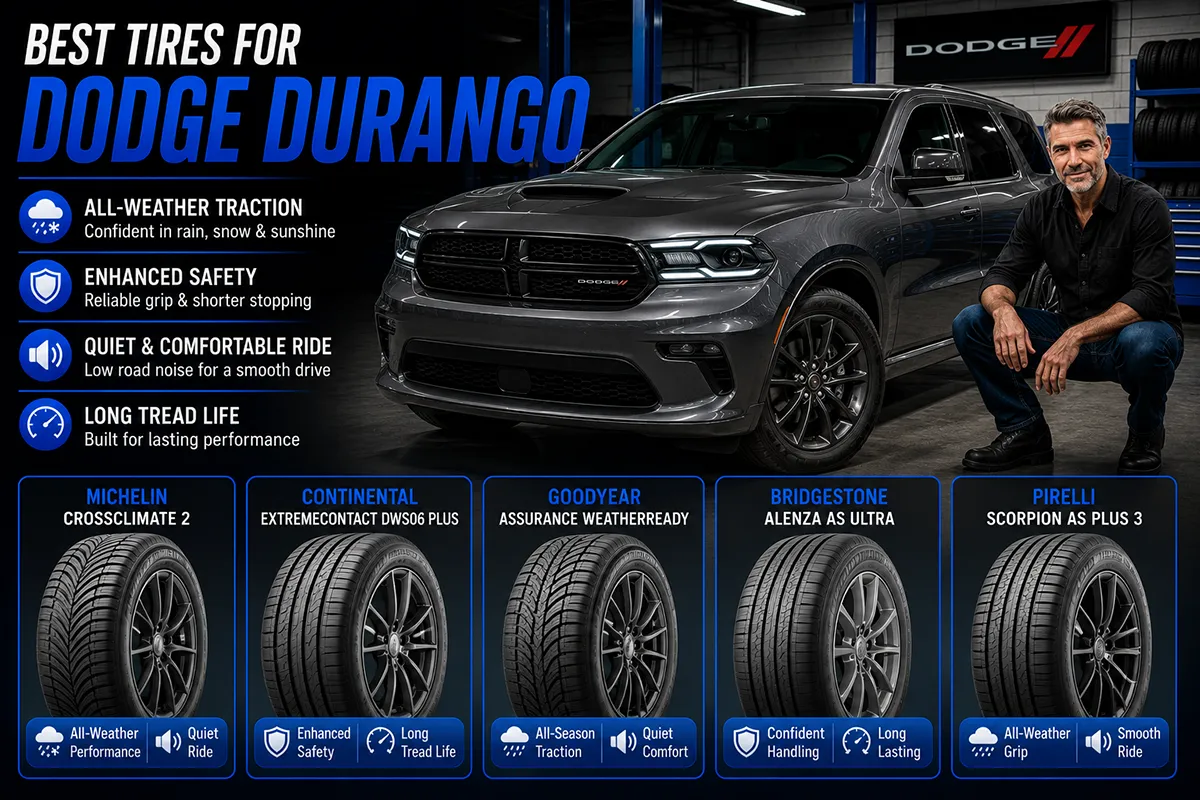
Few three-row SUVs span the range the Durango does — a family-hauling GT and a 710-horsepower SRT Hellcat share a nameplate but need almost nothing else in common tire-wise. This guide is built from manufacturer specifications, aggregated owner data, and independent test results, weighted specifically toward matching each tire to how Durango owners in each trim actually drive. Here’s what actually holds up, by priority.
- Best overall: Michelin Defender LTX M/S2.
- Best all-season comfort: Continental CrossContact LX25.
- Best highway refinement: Bridgestone Dueler H/L Alenza Plus.
- Best for the SRT Hellcat: Michelin Pilot Sport All Season 4.
- Best value performance for R/T: Continental ExtremeContact Sport.
- Best dedicated winter: Bridgestone Blizzak DM-V2.
- Best all-terrain: BFGoodrich All-Terrain T/A KO3.
- Full sizing by current trim, a note on Dodge’s simplified 2026 lineup, and a recalls check are below.
Liked this article?
Add TireAdvise as a preferred source so you see more of our tire reviews and guides on Google.
How These Were Evaluated
This comparison draws on manufacturer specifications, aggregated owner reports, UTQG ratings, and independent traction and tread-wear testing data for each tire, cross-referenced against the Durango’s real factory sizing across its current trims.
Particular weight was given to how each tire’s real-world character matches a specific Durango configuration — a GT or GT HEMI used mainly for family duty has different priorities than an R/T 392 driven with some enthusiasm, and the SRT Hellcat’s supercharged output demands a genuinely different tire category than either of those.
Where specific tread-life figures, warranty numbers, or independently reported comparisons are cited, the source is noted rather than presented as a personal measurement.
Quick Comparison: 11 Best Tires for the Dodge Durango
| Tire | Best For | Approx. Price/Tire | 3PMSF Rated | Warranty |
|---|---|---|---|---|
| Michelin Defender LTX M/S2 | Best overall | $195–$255 | No | 70,000 mi |
| Continental CrossContact LX25 | All-season comfort | $170–$225 | No | 70,000 mi |
| Bridgestone Dueler H/L Alenza Plus | Highway refinement | $190–$245 | No | 80,000 mi |
| Michelin Pilot Sport All Season 4 | SRT Hellcat | $270–$350 | No | 45,000–50,000 mi |
| Continental ExtremeContact Sport | Value performance (R/T) | $220–$290 | No | Not specified |
| Bridgestone Blizzak DM-V2 | Dedicated winter | $165–$225 | Yes | Seasonal (no summer warranty) |
| BFGoodrich All-Terrain T/A KO3 | All-terrain | $235–$305 | Yes | 50,000 mi (DT sizes) |
| Falken Wildpeak A/T4W | Light off-road value | $195–$265 | Yes | 60,000–65,000 mi |
| Cooper Discoverer AT3 4S | All-weather all-terrain | $185–$245 | Yes | 60,000 mi |
| General AltiMax RT43 | Budget | $135–$180 | No | 65,000–75,000 mi |
| Michelin CrossClimate2 | All-weather, no seasonal swap | $215–$275 | Yes | 60,000–85,000 mi (size dependent) |
Prices are street prices at major online retailers for common Durango sizes (265/60R18, 265/50R20, and the SRT Hellcat’s 295/45R20) as of mid-2026 — larger performance sizes run above these ranges, and expect regional and seasonal swings on top of that.
Dodge Durango Tire Sizes and the 2026 Trim Lineup
Confirm the exact size on the driver’s door jamb sticker before ordering — and be aware that Dodge has genuinely simplified the Durango lineup for the current model year, which most competing tire guides haven’t caught up with yet.
Current lineup (2026): Per Dodge’s own official specifications, the current core trim structure is GT (3.6L Pentastar V6 standard), GT HEMI (5.7L HEMI V8), R/T 392 (6.4L HEMI V8, up to 475 hp), and SRT Hellcat (supercharged 6.2L HEMI V8). The SXT and Citadel trim names that appear throughout most tire buying guides — including outdated inventory and some dealer marketing pages still circulating online — have been dropped from Dodge’s current official trim lineup, though used and recent-model-year Durangos carrying those names remain common on the road. GT and GT HEMI trims commonly run 265/60R18, R/T-level trims commonly step up to 265/50R20, and the SRT Hellcat runs a genuinely different high-performance 295/45R20 setup with a Y-speed rating to match its supercharged output.
Earlier model years (2021–2025): The prior SXT, GT, R/T, Citadel, and SRT trim structure generally used the same size ranges — 265/60R18 on lower trims, 265/50R20 on R/T and Citadel, and 295/45R20 on SRT models — so the size logic carries over even though the trim names shopping for a replacement tire today may not match what’s currently advertised.
Should You Even Replace Your Factory Tires?
Dodge doesn’t ship one universal factory tire across the Durango lineup — checking the sidewall directly confirms what’s currently installed, since factory-fitted tires have come from Bridgestone, Pirelli, and Goodyear depending on model year and trim, with SRT Hellcat models running a genuinely higher-performance factory setup than GT or R/T trims.
If the factory tires are wearing evenly and handling feels good, replacing like-for-like with a comparable tire in the same category is a reasonable call.
The most consistent real-world dissatisfaction pattern among Durango owners is outer-edge wear on the front tires, largely tied to the vehicle’s suspension geometry and substantial weight — regular alignment checks matter more here than on a lighter crossover, regardless of which tire you choose.
1. Michelin Defender LTX M/S2: Best Overall
Price Check
Check the price of this tire at the following retailers:
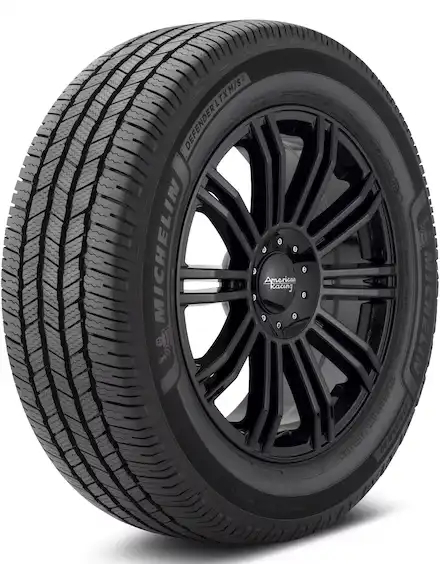
This tire delivers a genuinely strong balance across every category that matters for GT and GT HEMI owners who use the Durango primarily as a family vehicle. Michelin’s EverTread compound and MaxTouch Construction spread contact pressure evenly across the tread, maintaining real, even wear through the tire’s life even under the Durango’s substantial weight — a genuine advantage over tires that wear unevenly on a heavier three-row SUV.
A silica-enhanced all-season compound with additional biting edges delivers confident grip in both dry and wet conditions, and Michelin backs the tire with a genuinely strong 70,000-mile warranty, with real owner reports commonly citing figures near that mark when rotation is kept up. For GT, GT HEMI, and even most R/T owners who don’t need genuine performance-tire grip, this is the strongest all-around pick.
Pros: Genuinely even wear from balanced contact pressure under a heavy vehicle, comfortable and quiet ride, strong 70,000-mile warranty.
Cons: Premium price, not built for spirited driving or SRT-level power.
2. Continental CrossContact LX25: Best All-Season Comfort
Price Check
Check the price of this tire at the following retailers:
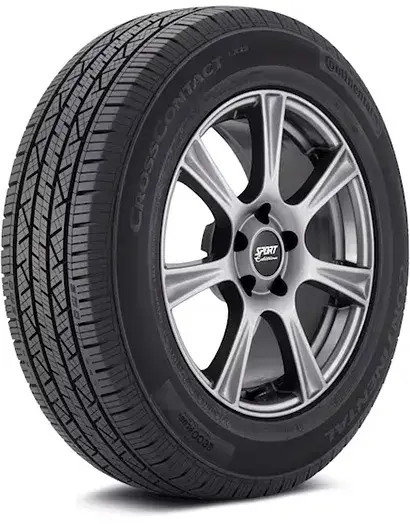
The CrossContact LX25 offers a genuinely well-rounded package for Durango owners, combining Continental’s EcoPlus Technology — a silica-enhanced compound paired with an efficient tread pattern — with real fuel-efficiency benefits that matter on a vehicle not known for great gas mileage. Four wide circumferential grooves channel water away from the contact patch, genuinely reducing hydroplaning risk on a vehicle this heavy.
The continuous center rib delivers responsive steering and real highway stability, particularly important given the Durango’s higher center of gravity. Continental’s ComfortRide Technology adds a cushioned layer beneath the tread that measurably reduces road noise, and most sizes carry a genuinely strong 70,000-mile warranty. For GT and R/T owners who want one dependable tire for nearly everything, this is a strong pick.
Pros: Genuine fuel-efficiency benefit, strong highway stability, competitive 70,000-mile warranty.
Cons: Not built for off-road use, no 3PMSF rating.
3. Bridgestone Dueler H/L Alenza Plus: Best Highway Refinement
Price Check
Check the price of this tire at the following retailers:
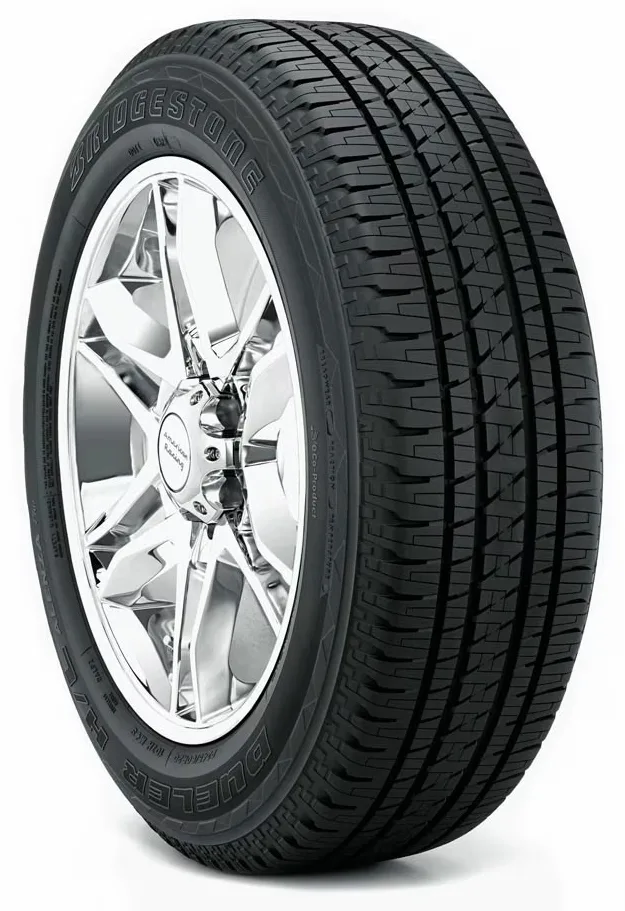
Quiet ride performance is the top priority for highway-focused Durango owners, and the Dueler H/L Alenza Plus is built specifically around that. Its specially engineered tread pattern and rubber compound minimize road-noise transmission into the cabin, and the tire’s touring-focused construction absorbs small-impact harshness noticeably better than the more performance-oriented options in this comparison.
Bridgestone backs the Alenza Plus with a genuinely strong 80,000-mile treadwear warranty — the longest in this comparison — and the tire maintains its composed character even as it wears, resisting the hardening that makes some touring tires noticeably noisier late in life. For GT, GT HEMI, and R/T 392 owners who spend most of their time on the highway and want the quietest, longest-lasting cabin experience, this is the strongest pick.
Pros: Genuinely quiet, comfortable ride, longest warranty in this comparison at 80,000 miles, resists hardening as it ages.
Cons: Not built for off-road use, no 3PMSF rating, slightly less winter capability than some all-season alternatives.
4. Michelin Pilot Sport All Season 4: Best for the SRT Hellcat

Price Check
Check the price of this tire at the following retailers:
A 710-horsepower supercharged SUV genuinely deserves a tire built for that reality, and the Pilot Sport All Season 4 is designed specifically for high-performance vehicles on large wheel packages like the Hellcat’s factory 295/45R20 setup. Its rigid sidewall construction minimizes flex during aggressive acceleration and cornering, delivering more direct steering input and better overall control — a real, felt difference when the Hellcat’s instant torque is actually used.
Advanced tread compounds deliver near-sports-car levels of grip while still providing respectable tread life for a performance tire, and independent testing shows meaningfully shorter stopping distances than standard all-season tires — a genuine safety margin given the Hellcat’s substantial weight and power combination. The trade-off is the one every performance-tire buyer already expects: firmer ride quality and a shorter warranty than the comfort-focused picks in this comparison. For SRT Hellcat owners who want their tires to match the vehicle’s actual performance envelope, this is the strongest pick.
Pros: Genuine performance-tire grip and steering precision matched to the Hellcat’s power, strong braking performance, built for large wheel packages.
Cons: Firmer ride than other Durango trims are tuned for, shorter warranty, premium price reflecting the performance category.
5. Continental ExtremeContact Sport: Best Value Performance for R/T

Price Check
Check the price of this tire at the following retailers:
For R/T 392 owners who want genuinely sharper handling than a standard all-season tire without paying SRT-level performance-tire prices, the ExtremeContact Sport delivers real, credible grip. Continental’s SportPlus Technology combines a specialized compound with a tread pattern engineered for precise steering response, and the tire maintains stability at highway speeds better than most tires in its price tier.
Real owner reports describe confident dry and wet grip that suits the R/T 392’s 475-horsepower output, and while tread life runs shorter than the comfort-focused options in this comparison — as is typical for the performance category — the trade-off is a genuine improvement in cornering confidence and braking response. For R/T owners who occasionally push the Durango and want that capability without stepping up to the Hellcat-focused Pilot Sport All Season 4’s price point, this is a strong middle-ground pick.
Pros: Genuine performance-tire grip at a more accessible price than ultra-premium options, confident dry and wet handling, stable at highway speed.
Cons: Shorter tread life than comfort-oriented tires, not 3PMSF rated, firmer ride.
6. Bridgestone Blizzak DM-V2: Best Dedicated Winter

Price Check
Check the price of this tire at the following retailers:
Nothing in this comparison matches this tire once conditions turn to genuine ice, based on independently reported braking and traction testing across the winter category. Bridgestone’s MultiCell compound technology actively removes the thin water layer that forms on ice, and thousands of microscopic bite particles combined with deep, zigzag sipes deliver real, documented snow and slush traction — independent testing shows stopping distances up to 40% shorter than typical all-season tires on packed snow.
Even in extreme cold, where many tires stiffen and lose flexibility, the Blizzak’s specialized compound stays pliable, maintaining consistent grip well below freezing. This is a seasonal tire — it needs to come off once temperatures climb consistently above 45°F. For Durango owners anywhere with real, sustained winter conditions, particularly AWD GT and R/T models, running this seasonally on a second set of wheels is the single biggest safety upgrade available.
Pros: Best-in-comparison ice and snow traction, genuine cold-temperature compound flexibility.
Cons: Seasonal use only, no summer tread warranty, not built for performance or off-road driving.
7. BFGoodrich All-Terrain T/A KO3: Best All-Terrain

Price Check
Check the price of this tire at the following retailers:
BFGoodrich retired the legendary KO2 in favor of the KO3, and for Durango owners who genuinely take their SUV beyond pavement — gravel roads, campsite access, light trail use — the successor is a real step forward. BFGoodrich built the KO3 specifically to improve gravel-road durability, snow traction, and tread wear over the KO2 without sacrificing the sidewall toughness and loose-surface grip the KO2 was known for, and unlike the KO2, the KO3 carries the 3PMSF severe-snow rating out of the box.
CoreGard Max sidewall technology adds reinforced rubber that resists splitting and bruising on rocky trails and curb strikes — a genuine concern given the Durango’s factory 18- and 20-inch wheels with lower-profile sidewalls. On-road, the KO3 carries over the KO2’s surprisingly composed highway manners, with moderate rather than excessive road noise for an aggressive-looking tread. Warranty coverage sits at 50,000 miles on DT-branded sizes, and BFGoodrich is still expanding available sizes as of mid-2026, so confirm your exact fitment is in stock before ordering.
Pros: Genuine snow-traction and tread-wear improvement over the KO2, 3PMSF rated out of the box, reinforced sidewall for occasional off-road use.
Cons: Premium price, sizes still expanding for some fitments, moderate highway noise for pure commuters.
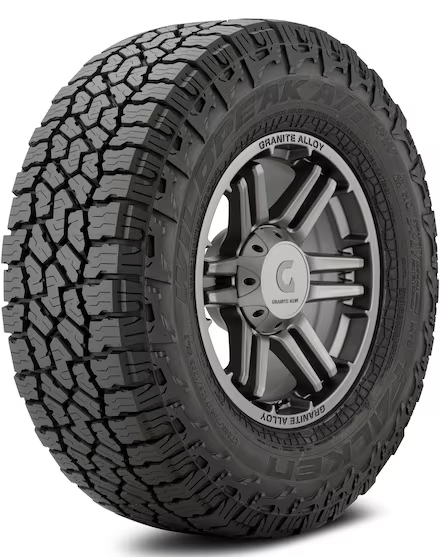
8. Falken Wildpeak A/T4W: Best Light Off-Road Value
Price Check
Check the price of this tire at the following retailers:
Falken’s Wildpeak line has developed a genuine following, and the A/T4W — the successor to the AT3W featured in our own Falken Wildpeak AT3W review — pushes that reputation further with an all-new compound and stronger off-road bite. It keeps the severe-snow 3PMSF certification that made the AT3W a favorite for owners in variable-weather regions, and Falken backs most sizes with a 60,000- to 65,000-mile warranty — genuinely competitive with tires costing considerably more.
On-road manners remain a real strength: predictable steering feel and reasonable cabin noise for an aggressive-looking tread. For Durango owners who want genuine light off-road capability without KO3-level pricing, this is the strongest value pick in the category.
Pros: Genuine upgrade over the well-regarded AT3W, 3PMSF-rated snow performance, strong warranty for the price point.
Cons: Newer tire with a shorter independent track record than the KO3, heavier sizes ride firmer unloaded.
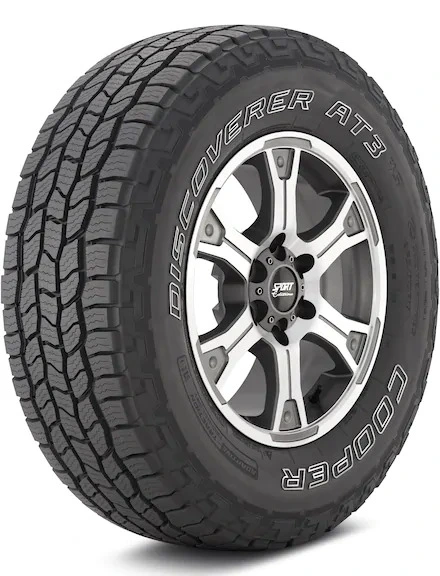
9. Cooper Discoverer AT3 4S: Best All-Weather All-Terrain
Price Check
Check the price of this tire at the following retailers:
The Discoverer AT3 4S earns its “4S” designation with genuine four-season capability, carrying the 3PMSF rating alongside real all-terrain construction — a combination that matters for Durango owners in regions with unpredictable winters who don’t want to run a dedicated snow tire seasonally. Cooper’s Adaptive Traction Technology adjusts the tread’s behavior across changing road conditions, and the silica-based compound stays flexible in cold weather while resisting wear when temperatures climb.
Wide circumferential grooves handle wet roads and slush confidently, and Cooper backs the tire with a 60,000-mile warranty that real owner reports describe as genuinely achievable with regular rotation. For GT and R/T owners in mixed-climate regions who want a single, year-round tire with real all-terrain and winter capability, this is the strongest pick in this comparison.
Pros: Genuine 3PMSF-rated winter capability in an all-terrain package, strong wet-weather performance, achievable 60,000-mile warranty.
Cons: Not as capable as the KO3 in deep mud or rock, moderate road noise, doesn’t match a dedicated winter tire on ice.
10. General AltiMax RT43: Best Budget

Price Check
Check the price of this tire at the following retailers:
This is a genuine standout at its price point for GT owners who want dependable performance without premium pricing. General’s dual-layer tread compound genuinely extends tread life beyond what the price suggests, and real owner reports commonly describe the tire outlasting its own treadwear warranty with proper rotation — a rare and specific claim that holds up across independent aggregated feedback.
Confident handling in wet and dry conditions rounds out a well-balanced budget package, and General backs the AltiMax RT43 with a warranty that’s genuinely competitive with tires costing considerably more. For budget-conscious Durango owners who still want a trustworthy, well-reviewed tire, this is the strongest pick in this comparison.
Pros: Genuine value with a track record of outlasting its own warranty, confident wet and dry handling for the price.
Cons: Not 3PMSF rated, doesn’t match premium tires in comfort or ultimate grip.
11. Michelin CrossClimate2: Best All-Weather, No Seasonal Swap

Price Check
Check the price of this tire at the following retailers:
All-weather options like the Michelin CrossClimate2 offer a compelling middle ground for Durango owners who don’t want to swap tires seasonally but still face real winter weather often enough that a standard all-season tire feels risky. It carries the 3PMSF certification and provides significantly better cold-weather performance than a typical all-season tire, without requiring the seasonal changeover a dedicated winter tire demands.
Its V-shaped tread design with dense biting edges maintains solid traction in light to moderate snow while still delivering respectable dry-weather handling and tread life. Michelin’s warranty coverage varies meaningfully by size, running from roughly 60,000 miles on more aggressive load-range sizes up toward 85,000 miles on lighter passenger-metric fitments, so confirm the specific warranty for your Durango’s exact size before buying. For GT and GT HEMI owners in regions with moderate but real winters who want one set of tires they never have to think about swapping, this is the strongest single-tire solution in this comparison.
Pros: Genuine 3PMSF-rated winter capability without seasonal swapping, respectable dry handling and tread life, wide size availability.
Cons: Doesn’t match a dedicated winter tire on ice, warranty coverage varies significantly by size, premium price.
Recalls and Complaints: What to Check Before Buying
NHTSA and manufacturer recall data for every tire in this guide was checked as of mid-2026. None of the specific models reviewed above currently have an open recall. Recent Durango vehicle-level recalls have concerned rear spoiler attachment, steering gear rack hardening, ABS/electronic stability control software, and rearview camera display — none have involved tires, wheels, or TPMS specifically, so a tire-related safety concern on your Durango isn’t part of any known open manufacturer campaign.
Before installing any tire, new or used, check the DOT code against NHTSA’s recall database — it takes about thirty seconds and is the single easiest safety check most people skip.
Maintaining Durango Tires
Rotate every 5,000 to 7,500 miles, using a forward-cross pattern on RWD models and a rearward-cross pattern on AWD models to distribute wear evenly — this matters even more on a Durango carrying a full three rows of passengers or towing, since uneven wear accelerates noticeably faster under load.
Check pressure at least monthly, typically 33–36 PSI depending on trim, but always confirm against the door jamb sticker rather than the maximum pressure printed on the tire sidewall. Pressure changes roughly 1 PSI for every 10°F temperature swing.
Have alignment checked annually, or sooner after hitting a significant pothole or curb — the Durango’s weight makes it particularly prone to outer-edge front-tire wear when alignment drifts, and proper alignment can extend tire life by up to 20%.
Watch for genuine replacement signs: tread depth below 4/32″ for all-season or all-terrain tires (6/32″ for dedicated mud-terrain), uneven wear on one edge, visible sidewall cracks or bulges, or decreased wet-weather performance.
Choosing the Right Tire for a Dodge Durango
Match tire category to the specific trim and how it’s actually driven. GT and GT HEMI owners generally benefit most from comfort-focused picks like the Bridgestone Dueler H/L Alenza Plus or Michelin Defender LTX M/S2; R/T 392 owners get real, felt value from the Continental ExtremeContact Sport’s sharper handling; SRT Hellcat owners need the Michelin Pilot Sport All Season 4’s genuine performance-tire grip to match the vehicle’s power.
Don’t skip winter tires facing real cold. The Bridgestone Blizzak DM-V2 delivers a genuine, safety-relevant traction advantage no all-season tire in this comparison fully replicates once conditions turn to sustained ice.
Don’t mix tire models across axles. If replacing fewer than four, put the newer pair on the rear — that configuration helps maintain stability when a full matched set isn’t possible, and matters even more on AWD models.
Confirm your current trim’s naming before shopping. Dodge’s simplified 2026 lineup (GT, GT HEMI, R/T 392, SRT Hellcat) uses different names than the SXT/Citadel structure still referenced by most tire guides and dealer inventory pages — the sizing logic carries over, but don’t assume a guide written around the old trim names is describing your exact vehicle.
Frequently Asked Questions
What size tires does my Dodge Durango need?
It depends on trim. Current-lineup (2026) GT and GT HEMI trims typically run 265/60R18, R/T 392 typically runs 265/50R20, and the SRT Hellcat runs a performance-oriented 295/45R20. Earlier model years with the SXT/Citadel trim structure used the same general size ranges. Always check the door jamb sticker for the exact specification.
How often should I rotate the tires on my Dodge Durango?
Every 5,000 to 7,500 miles, using a forward-cross pattern for RWD models and a rearward-cross pattern for AWD models.
Are all-season tires good enough for winter driving in my Dodge Durango?
All-season tires handle light snow and moderately cold temperatures adequately, but for severe winter conditions with regular snowfall or temperatures consistently below 45°F, a dedicated winter tire like the Bridgestone Blizzak DM-V2 delivers meaningfully better traction and safety.
Has Dodge changed the Durango’s trim lineup recently?
Yes. The current official lineup is GT, GT HEMI, R/T 392, and SRT Hellcat — a simplified structure compared to the SXT/GT/R/T/Citadel/SRT lineup used in recent prior model years. Many tire guides and dealer pages still reference the older trim names, so confirm your specific trim and tire size via the door jamb sticker rather than assuming a guide matches your exact vehicle.
What’s the best tire for the Dodge Durango SRT Hellcat?
The Michelin Pilot Sport All Season 4 is built specifically for high-performance vehicles on large wheel packages, delivering the sharper steering response and shorter braking distances that match the Hellcat’s supercharged output.
What’s the best budget-friendly tire option for the Dodge Durango?
The General AltiMax RT43 delivers genuine value, with real owner reports describing it as commonly outlasting its own treadwear warranty when properly rotated.
How do I know when it’s time to replace my Dodge Durango’s tires?
Watch for tread depth below 4/32 of an inch (the penny test works as a quick check), uneven wear patterns — especially on the outer edges of the front tires, a common Durango-specific pattern — visible sidewall cracks or bulges, excessive vibration while driving, or decreased performance in wet conditions.
