

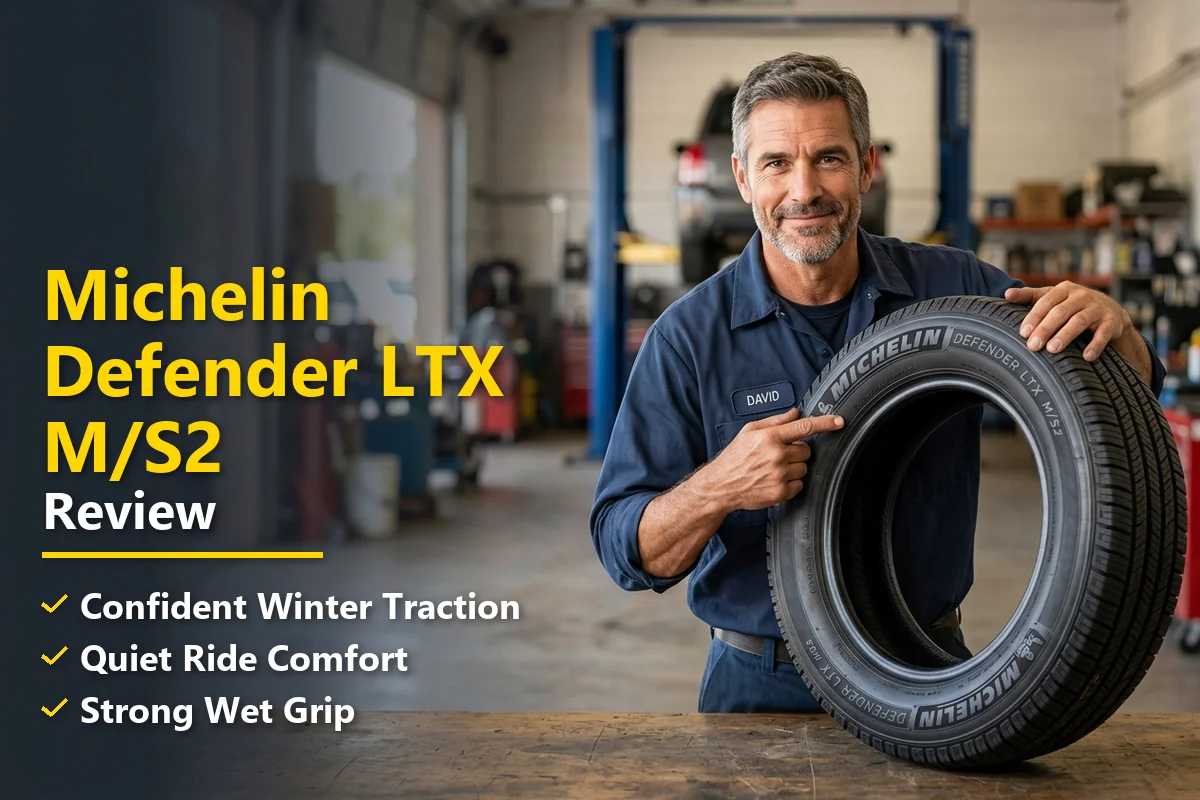
If you drive a truck or SUV, you know the frustration of finding a tire that does everything well. You want something that handles confidently on dry highways, doesn’t scare you in the rain, lasts a long time, and doesn’t make your cabin sound like you’re driving through a wind tunnel.
The original Michelin Defender LTX M/S was one of the most popular all-season tires in the US for good reason — it delivered on nearly all of those promises.
So when Michelin announced its successor, the Defender LTX M/S2, I was genuinely curious whether they could improve on what was already a very strong formula. If you’re comparing several options from this brand, our full Michelin Tires Review guide covers every model side by side.
I’ve now spent extensive time testing these tires on my 2021 Ford F-150, and I have a lot to say. Let me walk you through everything I found — the good, the great, and the few things that could be better.
- The Michelin Defender LTX M/S2 is a premium highway all-season tire built for trucks, SUVs, and crossovers.
- Dry and wet grip are excellent — a noticeable improvement over the original LTX M/S.
- Road noise is impressively low, making long highway drives genuinely comfortable.
- Michelin’s MaxTouch Life technology helps deliver even tread wear over the long haul.
- Light snow traction is adequate but don’t expect winter tire performance — this is still an all-season.
- Pricing is premium ($180–$290+ per tire depending on size), but the 70,000-mile treadwear warranty adds real value.
- Best suited for daily drivers who prioritize comfort, longevity, and wet-weather confidence over aggressive off-road capability.
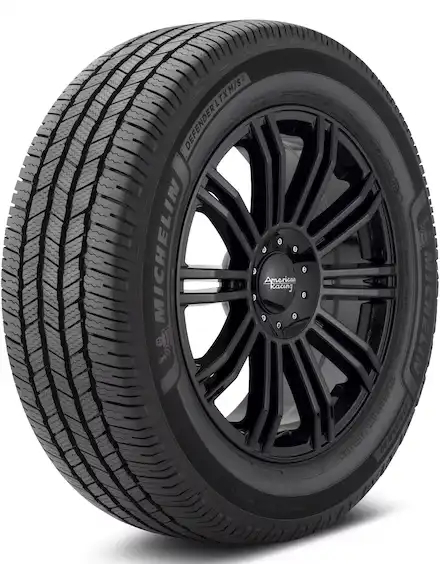
Price Check
Check the price of this tire at the following retailers:
TireRack SimpleTire PriorityTire DiscountedWheelWarehouse AmazonDon’t know the correct size tire to purchase? Start here!
Liked this article?
Add TireAdvise as a preferred source so you see more of our tire reviews and guides on Google.
What Is the Michelin Defender LTX M/S2?
The Defender LTX M/S2 is Michelin’s latest highway all-season tire designed specifically for light trucks, SUVs, and crossovers. It replaces the hugely popular Defender LTX M/S (sometimes called the M/S1 to avoid confusion), which was a bestseller in the US market for years.
This tire is engineered for drivers who spend the vast majority of their time on paved roads — commuting, road tripping, hauling the family around. It’s not an off-road tire, and it’s not trying to be. What it is trying to be is the most well-rounded, longest-lasting, and most comfortable highway tire in its class.
Michelin positions this tire directly against competitors like the Bridgestone Dueler H/L Alenza Plus, Continental CrossContact LX25, and Goodyear Assurance MaxLife. Having tested several of those as well, I can tell you this tire absolutely holds its own — and in many areas, it leads the pack.
Key Technologies and Design Features
Before I get into how the tire actually performs on the road, let me break down what Michelin changed compared to the original. This isn’t just a cosmetic update — there are genuine engineering improvements here.
MaxTouch Life Technology
Michelin carried over their MaxTouch Life system, which optimizes the tire’s contact patch to distribute forces (acceleration, braking, cornering) more evenly across the tread. In theory, this means the tire wears more uniformly and lasts longer. In my experience, I’ve seen remarkably even wear across all four tires after an extended driving period, which supports Michelin’s claims.
EverTread Compound
The M/S2 uses what Michelin calls an EverTread compound — a silica-based rubber formulation designed to resist wear while maintaining strong wet grip. This is an evolution of the compound used in the original, and Michelin says it offers improved wet braking over the predecessor.
Redesigned Tread Pattern
The tread pattern has been reworked with wider circumferential grooves and a denser network of sipes. The grooves help channel water away more effectively, while the sipes create additional biting edges for light snow and wet roads. Looking at the tire closely, you can see these changes are subtle but meaningful.
Comfort Control Technology
Michelin uses computer-optimized design and precision manufacturing to reduce vibrations and road noise. I’ll get into the real-world results below, but this is one area where the tire truly shines.
My Testing Setup
I mounted a set of four Michelin Defender LTX M/S2 tires in size 275/55R20 on my 2021 Ford F-150 XLT. This is a very common size for half-ton trucks, so my experience should translate well for many readers.
During my test period, I drove across a variety of conditions: long highway stretches in Texas, wet suburban roads, some light gravel paths, and even a brief encounter with slushy conditions during an unexpected late-season weather event. I also loaded the truck bed a few times to see how the tires handled under extra weight.
All tires were inflated to the manufacturer-recommended 35 PSI and rotated on schedule. I wanted to give these tires a fair, realistic evaluation — not a lab test, but what an actual truck owner would experience in daily life.
Dry Performance
Let me start with where this tire spends most of its life — dry pavement. And frankly, this is where the Defender LTX M/S2 feels most at home.
Highway cruising is effortless. The tire tracks straight and true at speed, with no wandering or vague steering feel. Lane changes feel composed and predictable, which is something I particularly value on a full-size truck that already has a lot of body roll to manage.
Braking on dry roads is confident and progressive. I performed several hard stops from highway speed during my testing, and the tires bit hard without any drama. Compared to the original Defender LTX M/S (which I ran on a previous truck), the M/S2 feels slightly sharper in turn-in response — like Michelin tightened up the sidewall construction a touch.
Around town, the tire is equally competent. Tight parking lot maneuvers, stop-and-go traffic, sharp turns at intersections — everything feels planted and predictable. There’s nothing exciting about it in the way a performance tire feels exciting, but that’s the point. This tire is supposed to make you feel safe and in control, and it absolutely does.
Wet Performance
Wet performance is where Michelin really wanted to improve with the M/S2, and I think they succeeded.
During several days of heavy rain, I deliberately pushed the tire harder than I normally would — faster highway merges, quicker lane changes, harder braking. At no point did I feel the tire lose composure. Hydroplaning resistance is excellent, even through standing water on poorly drained highway sections.
Wet braking is the most noticeable improvement over the original. The tire stops shorter and with more confidence in the rain. I could feel the difference almost immediately after switching from my previous set. The wider grooves and updated compound are clearly doing their job.
If you live in a region with frequent rain — the Pacific Northwest, the Southeast, anywhere along the Gulf Coast — this tire should give you genuine peace of mind. It’s not quite at the level of a dedicated wet-performance tire like what you’d find in the Pilot Sport lineup (check out our Michelin Pilot Sport 4 Review if wet performance is your absolute top priority on a car), but for a truck/SUV all-season tire, wet grip is outstanding.
Snow and Winter Performance
Let me be upfront: this is an all-season tire, not a winter tire. It does not carry the Three-Peak Mountain Snowflake (3PMSF) rating. If you live somewhere with serious winters — think Minnesota, Michigan, or the mountain states — you need dedicated winter tires for the cold months.
That said, I did get to test the Defender LTX M/S2 in a light snow and slush event, and it performed reasonably well. The dense sipe pattern provides adequate grip for a dusting of snow or slushy conditions. I was able to maintain control at moderate speeds without any white-knuckle moments.
Where the tire shows its limits is on packed snow or ice. Traction drops noticeably, and you need to be much more cautious with your inputs. This is par for the course with any highway all-season tire — it’s not a weakness unique to the M/S2, but it’s important to set realistic expectations.
For drivers in the Sun Belt, the mid-Atlantic, or other regions where snow is occasional and light, this tire will get you through just fine. For anything more serious, plan on a winter tire swap.
Ride Comfort and Road Noise
This is where the Michelin Defender LTX M/S2 truly separates itself from the competition. If comfort is your top priority — and for many truck and SUV owners, it absolutely should be — this tire delivers at a level that’s genuinely impressive.
Road noise is remarkably low. On smooth highway asphalt, the cabin is whisper-quiet. Even on coarser chip-seal surfaces that tend to amplify tire noise, the M/S2 keeps things civil. I compared back-to-back with a friend’s truck running Goodyear Wrangler All-Terrains, and the difference was night and day. The Michelin was dramatically quieter.
Impact absorption is equally strong. Potholes, expansion joints, railroad crossings — the tire soaks up road imperfections without harsh jolts. The ride feels plush and composed, which makes a huge difference on long road trips. After several days of extended highway driving, I felt noticeably less fatigued than I typically do.
Michelin’s Comfort Control Technology isn’t just marketing — you can genuinely feel the engineering work that went into making this tire quiet and smooth. For a tire in this class, I’d put it at or near the top for ride quality.
Treadwear and Longevity
One of the biggest selling points of the Defender LTX M/S2 is its longevity. Michelin backs this tire with a 70,000-mile treadwear warranty, which is among the best in the highway all-season category for trucks and SUVs.
During my extended testing period, tread depth measurements have been encouraging. Wear is even across the tread face on all four corners, which tells me the MaxTouch Life technology is working as intended. I haven’t seen any unusual wear patterns, cupping, or feathering.
The UTQG treadwear rating is 800, which is very high and suggests excellent longevity under normal driving conditions. Of course, real-world tread life depends heavily on your driving habits, alignment, tire pressure maintenance, and road surfaces — but all signs point to this being a very long-lasting tire.
For context, if you’re looking for similar longevity on a passenger car rather than a truck, the Michelin Defender 2 Review covers the sedan/crossover equivalent, which shares a lot of the same tread life philosophy.
Off-Road Capability
Let’s keep this section honest: the Defender LTX M/S2 is not an off-road tire. If you’re looking for something to take on trails, mud, or rocks, you’re in the wrong category entirely.
That said, I did take it down some hard-packed gravel roads and a few mild dirt paths — the kind of “off-road” that most truck owners actually encounter in real life (think campground access roads or construction sites). The tire handled these surfaces without any issues. Grip was fine, and I didn’t feel the tire getting squirmy or uncertain.
Where I would not take this tire is on anything loose, muddy, or technical. The tread pattern simply isn’t designed for that kind of terrain. The sidewalls are also not reinforced in the way an LT-rated all-terrain would be, so sharp rocks could be a concern.
For the 90% of truck owners who never leave pavement (and there’s absolutely nothing wrong with that), this tire is perfect. For the weekend warriors who need real off-road capability, look elsewhere.
Sizing and Fitment
The Michelin Defender LTX M/S2 is available in a wide range of sizes, covering most popular trucks, SUVs, and crossovers on the US market. Here’s a general overview of the sizing range:
- Rim diameters: 16″ to 22″
- Common truck sizes: 265/70R17, 275/55R20, 275/60R20, 265/65R18
- Common SUV/crossover sizes: 245/60R18, 235/65R17, 255/55R20
- Load ratings: SL and XL options available depending on size
- Speed ratings: H (130 mph) or T (118 mph) depending on size
Before purchasing, always verify the exact size printed on your current tires’ sidewall or check your vehicle’s door placard. If you’re unsure, any reputable tire dealer (Discount Tire, Tire Rack, America’s Tire, Costco) can look up the correct size for your vehicle.
Pricing and Value
Let’s talk money. The Michelin Defender LTX M/S2 is a premium tire, and the pricing reflects that. As of my research, here’s what you can expect to pay:
| Size | Approx. Price Per Tire | Set of 4 (Approx.) |
|---|---|---|
| 235/65R17 | $185 – $210 | $740 – $840 |
| 265/70R17 | $210 – $240 | $840 – $960 |
| 275/55R20 | $250 – $280 | $1,000 – $1,120 |
| 275/60R20 | $240 – $270 | $960 – $1,080 |
| 265/65R18 | $220 – $250 | $880 – $1,000 |
Is it cheap? No. Is it worth it? In my opinion, absolutely — especially when you factor in the 70,000-mile warranty and the overall quality of the ride. The cost-per-mile on these tires ends up being very competitive when you consider how long they last.
I also recommend shopping around. Tire Rack, Costco, Discount Tire, and Sam’s Club often run promotions or rebates on Michelin tires, especially around spring and fall tire-buying season. A $70–$100 rebate on a set of four is not uncommon.
How Does It Compare to the Original Defender LTX M/S?
Since many of you are probably considering upgrading from the original, let me break down the key differences:
| Feature | Defender LTX M/S (Original) | Defender LTX M/S2 |
|---|---|---|
| Wet Braking | Good | Excellent (improved) |
| Dry Handling | Very Good | Excellent (slightly sharper) |
| Road Noise | Low | Very Low (improved) |
| Tread Life Warranty | 70,000 miles | 70,000 miles |
| Snow Traction | Adequate | Adequate (marginally improved sipes) |
| Ride Comfort | Excellent | Excellent |
| Price | Slightly lower (being phased out) | Premium pricing |
The bottom line is that the M/S2 is a genuine improvement, not just a refresh. The biggest gains are in wet performance and noise reduction. If the original was already one of the best highway all-season tires on the market, the M/S2 takes it a meaningful step further.
If you can still find the original at a discounted price as it’s being phased out, it remains a great tire. But if you’re buying new, the M/S2 is the one to get.
How Does It Compare to Key Competitors?
The highway all-season truck tire category is crowded. Here’s how the Defender LTX M/S2 stacks up against the tires I’m most often asked about:
vs. Bridgestone Dueler H/L Alenza Plus
The Alenza Plus is a solid tire with good ride comfort and respectable tread life. However, in my testing, the Michelin edges it out in wet braking performance and noise levels. The Bridgestone can sometimes be found at a slightly lower price point, which makes it a decent value alternative. But overall, I give the nod to the Michelin.
vs. Continental CrossContact LX25
Continental’s offering is impressively quiet and comfortable — genuinely close to the Michelin in those areas. Where the Michelin pulls ahead is in tread life and wet performance. The Continental doesn’t quite match the Michelin’s 70,000-mile warranty, and I found its wet grip slightly less confident during heavy rain testing.
vs. Goodyear Assurance MaxLife
The Goodyear Assurance MaxLife competes hard on tread life, offering an 85,000-mile warranty in some sizes. That’s impressive. However, ride quality and wet performance don’t match the Michelin. If maximum longevity is your single most important factor, the Goodyear deserves a look. For overall balance, the Michelin wins.
vs. Cooper Discoverer EnduraMax
Cooper’s entry offers strong value at a lower price point. It’s a competent tire with decent all-around performance. But it doesn’t match the Michelin’s refinement in terms of noise, ride comfort, or wet braking. If budget is tight, the Cooper is worth considering. If you can afford the Michelin, I’d spend the extra money.
Who Should Buy the Michelin Defender LTX M/S2?
This tire is ideal for a specific type of driver, and I want to be clear about who that is:
- Daily commuters with trucks or SUVs who spend most of their time on highways and suburban roads.
- Road trip enthusiasts who value quiet, comfortable rides over long distances.
- Family-vehicle owners who prioritize safety in wet conditions and want a tire they can trust.
- Drivers in mild-to-moderate climates who see occasional light snow but not severe winter conditions.
- Anyone who values long tread life and doesn’t want to replace tires frequently.
Who Should Look Elsewhere?
Equally important — here’s who this tire is not for:
- Off-road enthusiasts — you need an all-terrain or mud-terrain tire instead.
- Drivers in severe winter climates — invest in dedicated winter tires for the cold months.
- Performance-focused drivers — if you want maximum grip and handling response, this isn’t your tire. Instead, look at Michelin’s Pilot Sport lineup. Our Michelin Pilot Super Sport Review covers one of the best performance options they’ve ever made, or the Michelin Pilot Sport 3 Review for an older but still relevant option.
- Budget shoppers — there are more affordable options in this category if you can’t stretch to Michelin pricing.
A Note on Michelin’s Broader Tire Lineup
One thing I appreciate about Michelin is how clearly they segment their lineup. If the Defender LTX M/S2 isn’t quite right for your needs, there’s almost certainly another Michelin tire that is.
For track-day enthusiasts or sports car owners, the Michelin Pilot Sport Cup 2 Review covers one of the most capable road-legal track tires available. And if you need something even more extreme, the Michelin Pilot Sport Cup 2 R Review covers the competition-oriented variant.
For EV owners looking for a tire optimized for the unique demands of electric vehicles — low rolling resistance, high load capacity, minimal noise — our Michelin Pilot Sport Ev Review is worth a read.
And for those who love the heritage of Michelin’s performance tires, the Michelin Pilot Sport Ps2 Review looks back at the tire that helped establish Michelin’s performance reputation. Each of these models serves a distinct purpose, and understanding the lineup helps you make the best choice for your specific vehicle and driving style.
Installation Tips and Maintenance Advice
To get the most out of your Defender LTX M/S2 tires, here are a few tips from my experience:
- Get an alignment when you install new tires. Even slightly off alignment will cause uneven wear and reduce the life of any tire, no matter how well-engineered.
- Check tire pressure monthly. Under-inflated tires wear faster on the edges, reduce fuel economy, and compromise handling. Over-inflated tires wear faster in the center. Stick to the pressure listed on your vehicle’s door placard.
- Rotate every 5,000–7,500 miles. This is critical for maximizing even wear and getting the full benefit of the 70,000-mile warranty. Keep your rotation receipts — Michelin may require them for warranty claims.
- Buy from a reputable dealer. Costco, Tire Rack, Discount Tire, and America’s Tire are all solid options. Many include free lifetime rotations and flat repair with purchase.
My Final Verdict
After extensive testing across a wide variety of conditions, I can confidently say the Michelin Defender LTX M/S2 is one of the best highway all-season tires available for trucks and SUVs in the US market today.
It excels where it matters most for daily drivers: wet and dry grip, ride comfort, noise levels, and tread life. The improvements over the original are meaningful and justify the premium pricing. Michelin didn’t just slap a “2” on the name — they genuinely made this tire better.
Is it perfect? No. It’s not a winter tire, it’s not an off-road tire, and it’s not the cheapest option on the shelf. But for what it’s designed to do — keep you safe, comfortable, and confident on paved roads for tens of thousands of miles — it’s hard to beat.
If you drive a truck or SUV, spend most of your time on highways and city streets, and want a tire you can install and essentially forget about for years, the Michelin Defender LTX M/S2 gets my strong recommendation. It’s a tire that earns its premium price tag by delivering premium results, day in and day out.
I’ll continue monitoring tread wear and performance over the coming months and will update this review with any long-term observations. For now, I’m impressed — and that’s not something I say lightly about a highway all-season tire.
Frequently Asked Questions
Is the Michelin Defender LTX M/S 2 a good tire for everyday driving on SUVs and trucks?
The Michelin Defender LTX M/S 2 is an excellent all-season tire designed specifically for SUVs, crossovers, and light trucks used primarily for daily driving and highway commuting. It delivers a smooth, quiet ride with strong dry and wet traction that most US drivers will notice right away. Michelin engineered this tire with their MaxTouch Construction to distribute forces evenly across the tread, which promotes even wear and long tread life.
How long does the Michelin Defender LTX M/S 2 last compared to the original Defender LTX M/S?
Michelin rates the Defender LTX M/S 2 with a treadwear warranty of up to 70,000 miles, which is competitive with the original model and among the best in the all-season highway tire category. The updated silica-based compound and optimized tread design help the M/S 2 maintain consistent performance as the tire wears down. In my experience, drivers who rotate their tires every 5,000-7,500 miles and maintain proper inflation often exceed the warranty mileage.
How much does the Michelin Defender LTX M/S 2 cost per tire?
The Michelin Defender LTX M/S 2 typically costs between $180 and $320 per tire depending on the size, with popular sizes like 265/70R17 and 275/55R20 falling in the $220-$280 range at most US retailers. You can find competitive pricing at Tire Rack, Discount Tire, Costco, and Sam’s Club, and Michelin frequently offers mail-in rebates of $70-$100 when you buy a set of four. While the upfront cost is higher than budget brands, the long tread life makes the cost per mile very reasonable.
How does the Michelin Defender LTX M/S 2 perform in snow and winter conditions?
The Michelin Defender LTX M/S 2 carries the Three-Peak Mountain Snowflake (3PMSF) rating, meaning it meets industry standards for severe snow traction and performs noticeably better than standard all-season tires in light to moderate winter conditions. The tire’s interlocking sipes and Michelin’s EverGrip technology help maintain grip on cold, wet, and lightly snow-covered roads common across much of the US. However, if you regularly drive in heavy snow or on icy mountain roads, I’d still recommend dedicated winter tires for maximum safety.
What’s the difference between the Michelin Defender LTX M/S 2 and the Michelin LTX Trail?
The Michelin Defender LTX M/S 2 is a highway-focused all-season tire optimized for ride comfort, low noise, and maximum tread life on paved roads, while the Michelin LTX Trail offers more off-road capability with a slightly more aggressive tread pattern. If your driving is 90% or more on highways and city streets, the Defender LTX M/S 2 is the better choice for its superior comfort and mileage warranty. The LTX Trail makes more sense for drivers who regularly encounter gravel roads, mild trails, or unpaved surfaces.
Is the Michelin Defender LTX M/S 2 quiet and comfortable on the highway?
Ride comfort and low road noise are standout strengths of the Michelin Defender LTX M/S 2, and most drivers report it as one of the quietest highway tires available for trucks and SUVs. Michelin uses their Comfort Control Technology with computer-optimized tread design to minimize vibrations and reduce pattern noise at highway speeds. I’ve found it makes a particularly noticeable difference when upgrading from worn-out or budget all-terrain tires on vehicles like the Ford F-150, Chevy Silverado, or Toyota 4Runner.
What sizes does the Michelin Defender LTX M/S 2 come in, and will it fit my truck or SUV?
The Michelin Defender LTX M/S 2 is available in a wide range of sizes from 16 to 22 inches, covering the most popular US trucks and SUVs including the Ford F-150, RAM 1500, Chevy Tahoe, Toyota Tacoma, Jeep Grand Cherokee, and many crossovers. Common fitments include 245/75R16, 265/70R17, 275/60R20, and 275/50R22, among many others. I recommend checking Michelin’s website or a retailer like Tire Rack to confirm the exact size listed on your vehicle’s door placard before purchasing.
