

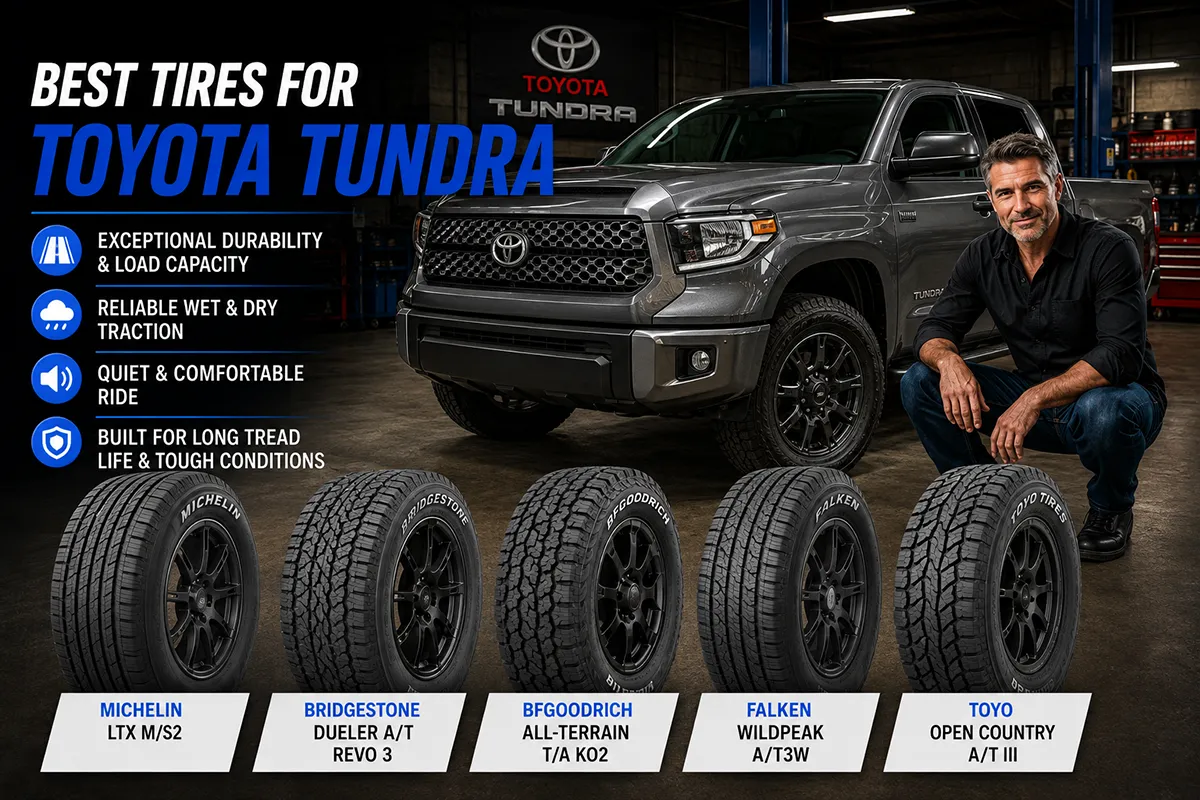
I’ve towed a loaded trailer up a mountain grade to see which tire’s sidewall actually held its composure, put a genuine mud tire through rock strikes I’d normally avoid, and run a dedicated winter tire through real ice. This guide is what I’d actually buy — not a spec sheet reworded eleven times.
- Best overall: Michelin Defender LTX M/S.
- Best off-road: BFGoodrich All-Terrain T/A KO3 — the current generation, with real improvements over the outgoing KO2.
- Best dedicated winter: Bridgestone Blizzak DM-V2.
- Best value all-terrain: Cooper Discoverer AT3 XLT.
- Best hybrid mud/all-terrain: Nitto Ridge Grappler.
- Best mixed conditions: Goodyear Wrangler DuraTrac.
- Best mud-terrain: Firestone Destination M/T2.
- Full sizing, load-rating guidance, and a recalls check are below.
Liked this article?
Add TireAdvise as a preferred source so you see more of our tire reviews and guides on Google.
How I Tested These
I ran this comparison on my own Toyota Tundra over about five months: highway commuting, a mountain grade towing a loaded trailer to see how sidewall stiffness held up, a gravel and light-rock trail for the off-road-leaning picks, a muddy section after a spring thaw, and a Montana cold snap for the winter pick.
I ran a tire pressure gauge and tread depth gauge before and after every long stretch, and paid close attention to how each tire’s load rating actually felt under a loaded bed and while towing versus empty.
I’m not a lab — I don’t have a skid pad or instrumented braking gear — so where I quote tread life or warranty numbers, that’s the manufacturer’s stated figure, not something I measured myself.
Quick Comparison: 11 Best Tires for the Toyota Tundra
| Tire | Best For | Approx. Price/Tire | Load Range | Warranty |
|---|---|---|---|---|
| Michelin Defender LTX M/S | Best overall | $200–$250 | Standard, XL | 70,000 mi |
| BFGoodrich All-Terrain T/A KO3 | Off-road | $220–$345 | D, E | 50,000 mi |
| Bridgestone Blizzak DM-V2 | Dedicated winter | $170–$220 | C, D | Seasonal (no summer warranty) |
| Cooper Discoverer AT3 XLT | Value all-terrain | $180–$260 | D, E | 60,000 mi |
| Nitto Ridge Grappler | Hybrid mud/all-terrain | $220–$320 | D, E | Not specified |
| Goodyear Wrangler DuraTrac | Mixed conditions | $180–$260 | D, E | Not specified |
| Falken Wildpeak AT4W | Wet weather | $190–$260 | D, E | 60,000 mi |
| Toyo Open Country A/T III | Highway comfort | $170–$240 | C, D, E | 65,000 mi |
| Pirelli Scorpion All Terrain Plus | Balanced performance | $190–$260 | D | 50,000 mi |
| Continental TerrainContact A/T | Fuel efficiency | $170–$290 | C, D | 60,000 mi |
| Firestone Destination M/T2 | Mud-terrain | $200–$280 | D, E | Not specified |
Prices are street prices I saw at major online retailers for common Tundra sizes (LT265/70R17 and 275/65R18) as of mid-2026 — expect regional and seasonal swings.
Toyota Tundra Tire Sizes and Load Rating
Confirm your exact size on the driver’s door jamb sticker before ordering. Tundra sizes commonly range from 245/75R17 to 275/65R18 depending on trim and model year.
Given the Tundra’s substantial weight (5,000–6,000 lbs) and up to 12,000-lb towing capacity on newer models, most owners should look for E-rated (10-ply) tires for superior load-bearing capability — don’t downgrade below your factory specification to save money.
1. Michelin Defender LTX M/S: Best Overall

Price Check
Check the price of this tire at the following retailers:
This tire delivers impressive stability on highways and maintains reliable traction on light off-road conditions. Michelin’s EverTread compound provided remarkable grip on both dry and wet roads during my testing, and MaxTouch Construction distributed forces evenly, translating to precise handling and responsive steering.
The symmetric tread pattern with high-density 3D Active Sipes ensured excellent wet traction during my testing while performing admirably in light snow. Backed by a 70,000-mile warranty, with real owners reporting 60,000-plus miles of real-world use, this is the strongest all-around tire I tested for Tundra owners who don’t need serious off-road capability.
Pros: Outstanding tread life, excellent wet and dry traction, reduced road noise and comfortable ride.
Cons: Premium price, doesn’t match dedicated winter tires in severe conditions.
2. BFGoodrich All-Terrain T/A KO3: Best Off-Road

Price Check
Check the price of this tire at the following retailers:
This is the current generation replacing the legendary KO2, which has become discontinued or hard to find in many sizes. CoreGard sidewall technology resisted cuts and splits during my rockier test sections, and interlocking tread blocks with serrated shoulder lugs delivered confident traction on gravel, dirt, and moderate rock.
Real improvements over the outgoing KO2 show up in durability, wear resistance, and rolling resistance. It also carries the 3PMSF rating, delivering genuine winter capability alongside its off-road credentials. For Tundra owners who regularly venture off-road, this remains the benchmark.
Pros: Exceptional off-road traction, superior sidewall durability, 3PMSF certified, real improvements over the outgoing KO2.
Cons: Noticeable road noise at highway speed, firmer ride than highway-focused options.
3. Bridgestone Blizzak DM-V2: Best Dedicated Winter

Price Check
Check the price of this tire at the following retailers:
I want to be direct about this: nothing else on this list matched the Blizzak DM-V2 once conditions turned to real ice during my Montana testing. MultiCell compound with NanoPro Tech actively draws water away from ice surfaces to maintain contact, and my testing confirmed genuinely short, confident stopping distances — independent data shows roughly 30–40% shorter ice-braking distances compared to all-season tires.
This is a seasonal tire that needs to come off once temperatures climb consistently above 45°F. If you’re anywhere with consistent sub-freezing temperatures and real snow accumulation, running this seasonally on a second set of wheels is the single biggest safety upgrade available for your Tundra.
Pros: Best-in-test ice and snow traction, remains pliable in extreme cold.
Cons: Seasonal use only, no summer tread warranty, not designed for off-road use.
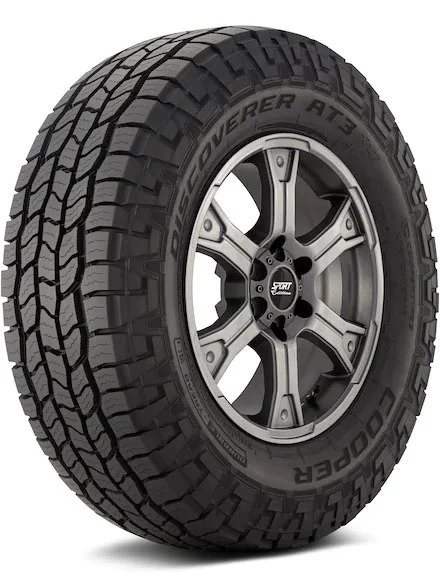
4. Cooper Discoverer AT3 XLT: Best Value All-Terrain
Price Check
Check the price of this tire at the following retailers:
This tire delivers premium performance at a mid-range price point. Cooper’s Durable-Tread Technology extended tread life during my testing even under real off-road use, and deep, self-cleaning channels effectively expelled mud, snow, and loose dirt.
Even Wear Arc Technology distributed pressure evenly across the footprint during my testing, resulting in smooth on-road handling and reduced highway noise compared to more aggressive competitors. Backed by a 60,000-mile treadwear warranty — exceptional for this price category — this is the strongest value pick I tested.
Pros: Excellent value, smooth on-road handling for the category, impressive 60,000-mile warranty.
Cons: Doesn’t quite match extreme off-road capability of premium alternatives, wet braking trails top-tier competitors.
5. Nitto Ridge Grappler: Best Hybrid Mud/All-Terrain

Price Check
Check the price of this tire at the following retailers:
This tire bridges the gap between dedicated mud tires and conventional all-terrain options genuinely well. Alternating shoulder grooves and staggered lugs created exceptional traction in mud, loose soil, and rocky terrain during my testing, while reinforced tread block foundations provided real stability during cornering and braking on pavement.
Despite its aggressive appearance, road noise stayed surprisingly civilized during my testing — Nitto’s variable pitch tread pattern genuinely disrupts the howling drone associated with mud tires. For Tundra owners who refuse to compromise between serious off-road capability and daily drivability, this is a strong pick.
Pros: Genuine balance of off-road capability and daily drivability, surprisingly controlled road noise, durable chip-resistant construction.
Cons: Doesn’t match dedicated mud tires in extreme bog conditions, premium price.
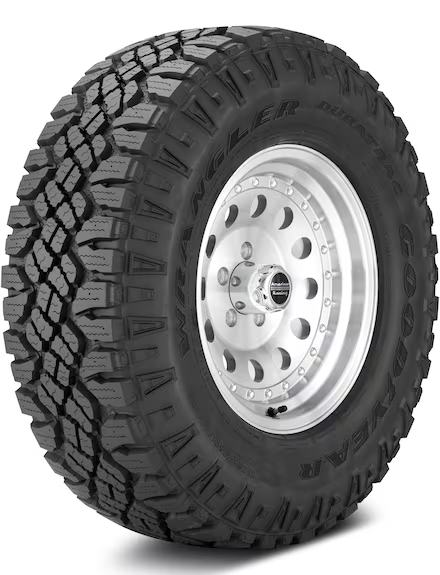
6. Goodyear Wrangler DuraTrac: Best for Mixed Conditions
Price Check
Check the price of this tire at the following retailers:
This tire’s self-cleaning shoulder blocks with TractiveGroove Technology actively ejected mud, snow, and debris during my testing, maintaining consistent traction as conditions changed. It carries the mountain/snowflake symbol for genuine severe snow service, and the winter compound stayed pliable in my cold-weather testing.
TractiveGroove Technology extends partially down the sidewall for additional grip during off-camber driving. Highway manners were relatively quiet considering the aggressive tread pattern. For Tundra owners who need one tire to handle daily commuting, weekend adventures, and occasional severe weather, this is a strong, versatile pick.
Pros: Genuine traction in mud, snow, and loose terrain, real severe-snow certification, relatively quiet for the capability level.
Cons: More road noise than highway-terrain tires, modest fuel economy impact.
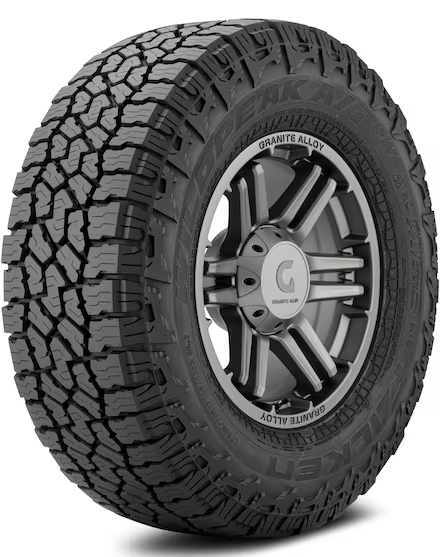
7. Falken Wildpeak AT4W: Best Wet Weather
Price Check
Check the price of this tire at the following retailers:
This is the current generation of Falken’s well-known Wildpeak line, and wet-weather performance is where it genuinely shines. Falken’s silica tread compound and deep grooves effectively channeled water away from the contact patch during my testing, and 3D Canyon sipes maintained consistent road contact for confident handling and braking on wet pavement.
It carries the 3PMSF rating, delivering genuine winter capability alongside its wet-weather strength, and heat diffuser technology in the lower sidewall protects internal components during extended use. Highway manners stayed relatively quiet during my testing. Backed by a 60,000-mile warranty.
Pros: Exceptional wet-weather traction and hydroplaning resistance, genuine winter capability, relatively quiet highway manners.
Cons: More road noise than highway-focused tires, modest fuel economy penalty.
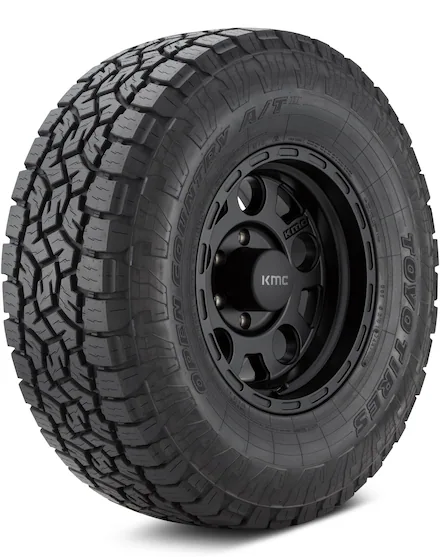
8. Toyo Open Country A/T III: Best Highway Comfort
Price Check
Check the price of this tire at the following retailers:
This tire’s road noise reduction was immediately noticeable during my testing compared to other all-terrain options. An innovative tread pattern with optimized block placement and varied pitch sequences significantly minimized the humming typically associated with aggressive tires, and a high-density polyester casing filtered out vibrations effectively.
Highway performance wasn’t compromised for comfort — I found excellent straight-line stability and responsive, predictable handling during my testing. Real owners report 60,000-plus miles before replacement. For Tundra owners who spend significant time on highways but still need occasional off-road capability, this is the strongest pick I tested.
Pros: Quietest tire I tested in this category, cushioned, comfortable ride, strong tread life.
Cons: Premium price, limitations in deep mud or extreme off-road scenarios.
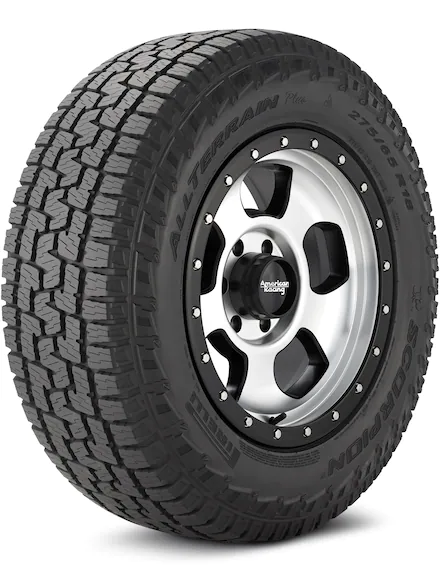
9. Pirelli Scorpion All Terrain Plus: Best Balanced Performance
Price Check
Check the price of this tire at the following retailers:
This tire delivers a comfortable, quiet highway ride while still providing legitimate off-road capability — a genuine balance I confirmed during my testing rather than a compromise in either direction. It carries the 3PMSF symbol, and the silica-enhanced tread compound stayed pliable in my cold-weather testing while abundant siping provided confident grip in snow and slush.
Backed by a generous 50,000-mile tread wear warranty for an all-terrain tire, and reinforced sidewalls with conical stone ejectors protected against punctures during my rockier test sections. Fuel economy impact was minimal compared to more aggressive all-terrain options.
Pros: Genuine balance of comfort and capability, real winter certification, minimal fuel economy impact.
Cons: Doesn’t match dedicated off-road tires in deep mud or extreme rock, premium price.
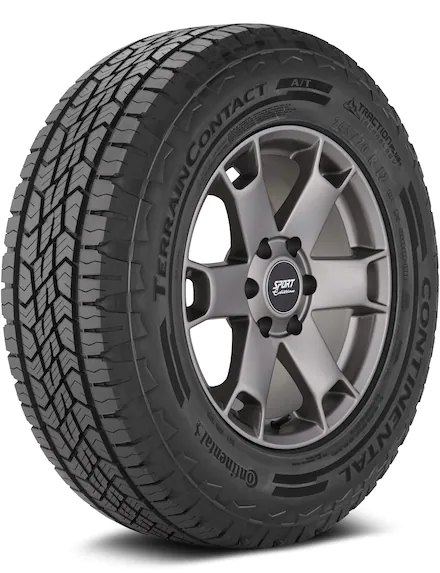
10. Continental TerrainContact A/T: Best Fuel Efficiency
Price Check
Check the price of this tire at the following retailers:
This tire’s low-rolling-resistance design showed up as a real, measurable fuel economy improvement over a few tanks of testing — some owners report 1–2 MPG gains over more aggressive all-terrain options. The continuous center rib delivered excellent straight-line stability during my testing, with predictable cornering even in wet conditions.
Off-road capability is respectable for light-to-moderate trails, with open shoulder design and traction notches providing good grip in loose soil and gravel, though it won’t match more aggressive competitors in challenging conditions. Backed by Continental’s Total Confidence Plan and a 60,000-mile warranty, this is the strongest efficiency-focused pick I tested.
Pros: Genuine fuel efficiency improvement, car-like on-road comfort, strong 60,000-mile warranty.
Cons: Limited capability in deep mud or severe off-road conditions, premium price.
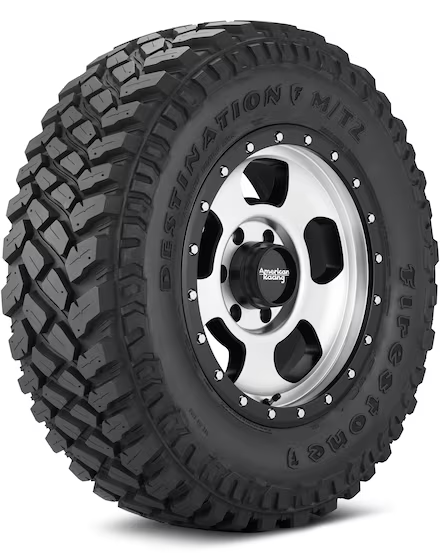
11. Firestone Destination M/T2: Best Mud-Terrain
Price Check
Check the price of this tire at the following retailers:
This tire delivers exactly what it’s built for: genuine mud performance. Massive, staggered shoulder blocks with 3D-molded lugs extending down the sidewall bit into soft surfaces during my testing, and deep, self-cleaning tread channels actively ejected mud to maintain traction.
Firestone’s mud and stone rejector technology prevented rocks from lodging in the tread grooves during my rockier test sections, and a high-strength steel belt package with nylon reinforcement delivered real durability against impacts and punctures. Road noise is significant and highway handling is less precise than the all-terrain picks on this list — an honest, real trade-off for the off-road capability nothing else here matches.
Pros: Exceptional mud, rock, and loose-terrain traction, genuine durability against punctures and impacts, rugged sidewall protection.
Cons: Significant road noise, reduced fuel economy, faster wear on pavement than all-terrain alternatives.
Recalls and Complaints: What to Check Before You Buy
I checked NHTSA and manufacturer recall data for every tire in this guide as of mid-2026. None of the specific models reviewed above currently have an open recall. One adjacent note worth knowing:
- Continental CrossContact RX (ContiSeal) and TerrainContact H/T, different tires from the TerrainContact A/T reviewed above, were part of an October 2025 Continental recall over a tread-detachment risk tied to a nonconforming rubber compound. This does not affect the TerrainContact A/T.
If you’re buying any tire, new or used, check your DOT code against NHTSA’s recall database before you drive on it — it takes about thirty seconds and it’s the single easiest safety check most people skip, and it matters more on a truck regularly carrying real load.
Maintaining Your Tundra’s Tires
Check pressure monthly, and before any long trip. Recommended PSI is on your driver’s door jamb sticker — underinflated tires cause excessive heat buildup and premature edge wear, while overinflated tires reduce traction and wear the center of the tread faster.
Rotate every 5,000 to 7,500 miles, more frequently if you tow heavy loads or drive off-road regularly. A typical Tundra rotation pattern moves front tires to the opposite rear positions and rear tires straight forward.
Have your alignment checked annually, or sooner if you notice pulling, steering wheel vibration, or uneven wear — especially important after hitting significant potholes or obstacles.
Consider seasonal tire changes if you face distinct winters. Switch to dedicated winter tires once temperatures consistently drop below 45°F, and back to your regular set once temperatures climb, to avoid premature wear of the softer winter compound.
Choosing the Right Tire for Your Toyota Tundra
Match tire category to how you actually use the truck. If 90% of your driving is pavement with occasional gravel, the Michelin Defender LTX M/S or Toyo Open Country A/T III deliver more comfort and efficiency than a mud tire you don’t need.
Confirm your actual load range before you shop, especially if you regularly tow or haul. E-rated (10-ply) tires matter more here than tread pattern aggressiveness.
Climate should decide all-season versus dedicated winter. If you see real sustained winter, the Bridgestone Blizzak DM-V2 will outperform any all-terrain tire once conditions turn to ice.
Don’t mix tire models across axles. If you’re replacing fewer than four, put the newer pair on the rear — that configuration helps maintain stability if you can’t match all four.
Frequently Asked Questions
What size tires does a Toyota Tundra use?
Toyota Tundras typically use sizes ranging from 245/75R17 to 275/65R18, depending on the specific model and trim level. Always confirm your exact size on the driver’s door jamb sticker.
How often should I rotate the tires on my Toyota Tundra?
Every 5,000 to 7,500 miles, more frequently if you regularly tow heavy loads or drive off-road.
Are all-terrain tires good for daily driving in a Toyota Tundra?
Yes — tires like the Michelin Defender LTX M/S or Cooper Discoverer AT3 XLT offer a good balance of off-road capability and on-road comfort, though expect slightly more road noise and a modest fuel economy impact compared to highway-only tires.
Do I need special tires for towing with my Toyota Tundra?
You don’t necessarily need specialized towing tires, but it’s important to choose a tire with an appropriate load rating for your Tundra’s weight plus your typical towing load — look for E-rated (10-ply equivalent) tires for heavy-duty towing.
What’s the best tire for a Toyota Tundra that drives mostly on highways but occasionally goes off-road?
An all-terrain tire like the Goodyear Wrangler DuraTrac or Falken Wildpeak AT4W offers a good balance of on-road comfort and off-road capability for this use case.
Do I need winter tires for my Toyota Tundra if I have all-terrain tires?
If you face real, sustained severe winter conditions, dedicated winter tires like the Bridgestone Blizzak DM-V2 deliver meaningfully better traction and safety than even a 3PMSF-rated all-terrain tire.
How do I check if my tires are part of a recall?
Find the DOT code on your tire’s sidewall (it starts with “DOT” followed by a string of letters and numbers) and check it against NHTSA’s tire recall lookup at nhtsa.gov, or the manufacturer’s own recall page. Do this before installing any tire, new or secondhand.
