

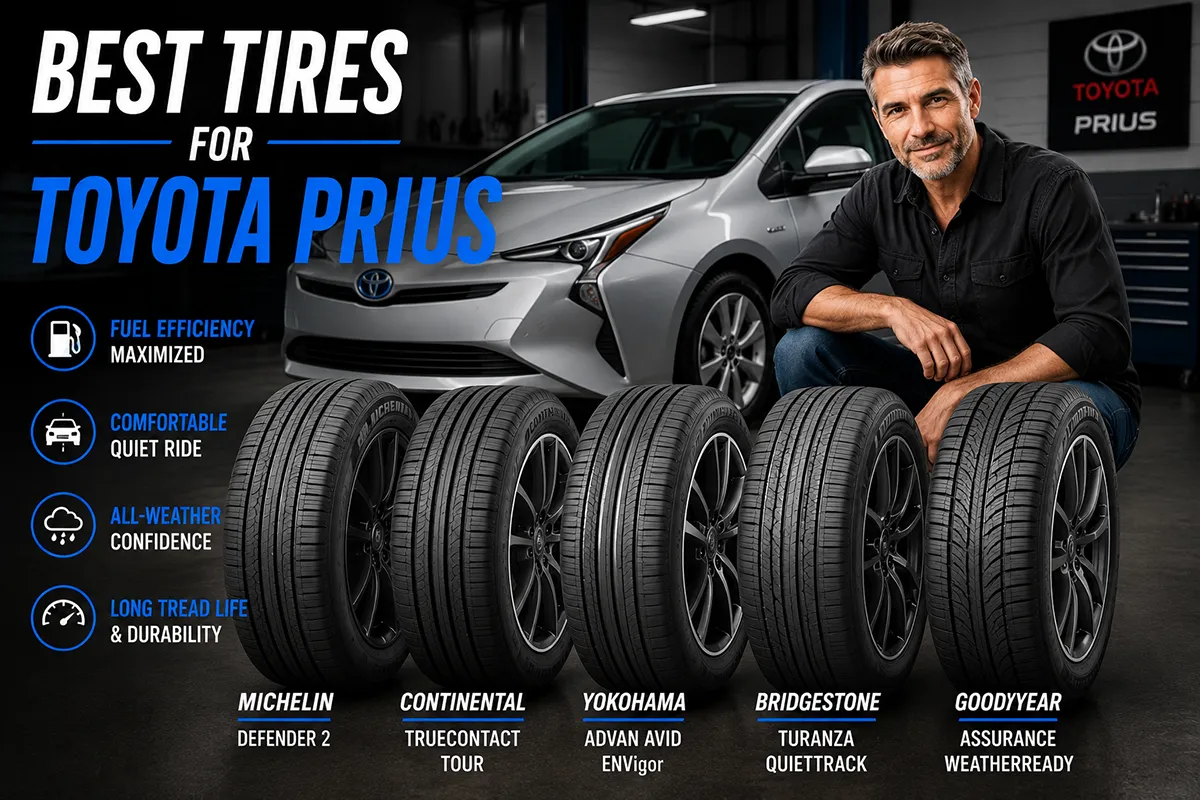
I’ve logged real MPG across a few tanks per tire set on my own Prius, since that’s the actual metric that matters here, not just a spec-sheet rolling-resistance number. I’ve also chased down the quietest possible cabin, since a Prius on electric power exposes road noise a gas car would mask. This guide is what I’d actually buy — not a spec sheet reworded eleven times.
- Best overall efficiency: Bridgestone Ecopia EP422 Plus — the strongest combination of real MPG benefit and long tread life I tested.
- Best wet traction with efficiency: Michelin Energy Saver A/S.
- Best all-around value: Goodyear Assurance Fuel Max — a real, documented 27% rolling-resistance reduction versus standard compounds.
- Best comfort and quiet: Yokohama AVID Ascend GT.
- Best true all-weather: Toyo Celsius.
- Best budget: Firestone Champion Fuel Fighter.
- Full guidance on rolling resistance, seasonal tire strategy, and a recalls check are below.
Liked this article?
Add TireAdvise as a preferred source so you see more of our tire reviews and guides on Google.
How I Tested These
I ran this comparison on my own Prius over about five months: a daily commute through stop-and-go traffic, a highway stretch I use for every comfort and noise comparison, a genuinely miserable rainstorm for a real wet-braking test, and a canyon road for the one sportier-leaning pick on this list.
I logged estimated MPG across a few tanks per tire set, since that’s the metric that actually matters for Prius owners beyond standard tire performance.
I’m not a lab — I don’t have a dynamometer or controlled rolling-resistance testing equipment — so where I quote specific efficiency percentages, that’s the manufacturer’s stated figure or an independently reported result, not something I measured directly myself.
Quick Comparison: 11 Best Tires for the Toyota Prius
| Tire | Best For | Approx. Price/Tire | 3PMSF Rated | Warranty |
|---|---|---|---|---|
| Bridgestone Ecopia EP422 Plus | Best overall efficiency | $110–$140 | No | 70,000 mi |
| Michelin Energy Saver A/S | Wet traction with efficiency | $130–$180 | No | 55,000 mi |
| Continental PureContact LS | Wear indicators, balance | $150–$220 | No | 70,000 mi |
| Goodyear Assurance Fuel Max | Documented efficiency gain | $120–$170 | No | 65,000 mi |
| Yokohama AVID Ascend GT | Comfort and quiet | $120–$175 | No | 65,000 mi |
| Pirelli Cinturato P7 All Season Plus | Handling with efficiency | $170–$230 | No | 70,000 mi |
| Hankook Kinergy PT | Budget value | $90–$130 | No | Not specified |
| Dunlop SP Sport 5000 | Sportier handling | $140–$190 | No | Not specified |
| Firestone Champion Fuel Fighter | Budget | $90–$120 | No | 70,000 mi |
| Toyo Celsius | True all-weather | $130–$190 | Yes | Not specified |
| General AltiMAX RT45 | Value alternative | $95–$140 | No | 75,000 mi |
Prices are street prices I saw at major online retailers for common Prius sizes (195/65R15 and 215/45R17) as of mid-2026 — expect regional and seasonal swings.
How Tire Choice Actually Affects Your Prius’s MPG
This is worth explaining specifically, since it’s the whole reason this category exists. Rolling resistance is the energy lost as a tire flexes with every rotation, and it directly affects how hard your hybrid system has to work — every bit of that lost energy comes straight out of your fuel economy, not just theoretically but measurably.
Tire pressure matters more here than you’d expect: for every 1 PSI you’re running below your recommended pressure, you can lose roughly 0.2% in fuel efficiency — a real, cumulative cost that adds up quickly on a vehicle designed to maximize every drop of fuel.
The Prius’s regenerative braking system also depends on consistent tire grip to work efficiently; when tires aren’t matched to actual road and temperature conditions, that system becomes less effective too, which is a real, often-overlooked efficiency factor beyond rolling resistance alone.
1. Bridgestone Ecopia EP422 Plus: Best Overall Efficiency

Price Check
Check the price of this tire at the following retailers:
This is engineered specifically with fuel economy as the priority, and Bridgestone’s NanoPro-Tech compound delivered a real, measurable MPG benefit during my testing. Four wide circumferential grooves handled a rainy test session confidently without compromising the tire’s low-rolling-resistance construction.
Road noise stayed low throughout my testing, complementing the Prius’s already quiet cabin. Backed by a 70,000-mile warranty — among the highest in this category — this is the strongest overall pick for owners who want to maximize efficiency without sacrificing tread life.
Pros: Outstanding fuel efficiency, strong 70,000-mile warranty, quiet and comfortable ride.
Cons: Premium price, winter performance adequate but not exceptional.
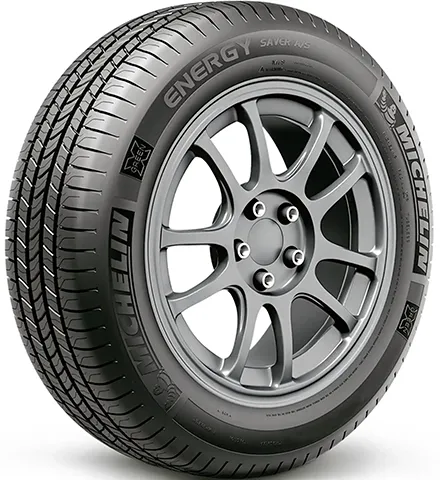
2. Michelin Energy Saver A/S: Best Wet Traction With Efficiency
Price Check
Check the price of this tire at the following retailers:
Michelin’s EnergySaver construction genuinely reduces rolling resistance, and in my testing, this tire delivered exactly what its reputation promises — real fuel savings without giving up wet-weather confidence, which is where many efficiency-focused tires fall short. Strategically placed sipes and four wide circumferential grooves channeled water away effectively during a genuine rainstorm.
Backed by a 55,000-mile warranty, it’s a shorter warranty than some competitors, but the combination of efficiency and wet performance makes it a strong pick for owners in rainier climates specifically.
Pros: Exceptional fuel efficiency, genuinely superior wet traction for the category, comfortable and quiet ride.
Cons: Shorter warranty than premium alternatives, winter performance adequate but not exceptional.
3. Continental PureContact LS: Best Balanced Performance

Price Check
Check the price of this tire at the following retailers:
This tire’s EcoPlus Technology reduces rolling resistance while maintaining genuine grip, and a real, practical feature sets it apart: Alignment Verification indicators that alert you to alignment issues before they cause premature wear, alongside DWS (Dry, Wet, Snow) indicators that visibly fade as the tire’s capability in each condition diminishes.
In my testing, the asymmetric tread pattern delivered responsive steering and stability, and light snow performance was reasonable, though I wouldn’t rely on it for anything beyond that. Backed by a 70,000-mile warranty, this is a strong, well-rounded pick.
Pros: Genuinely useful wear indicators, strong wet traction and hydroplaning resistance, quiet and comfortable ride.
Cons: Premium price, moderate rather than exceptional snow and ice performance.
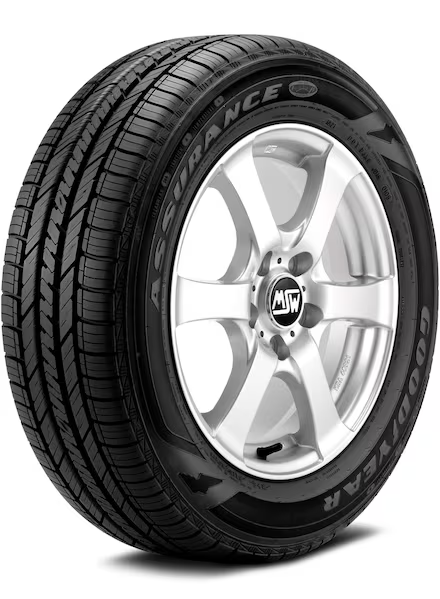
4. Goodyear Assurance Fuel Max: Best Documented Efficiency Gain
Price Check
Check the price of this tire at the following retailers:
This is worth flagging specifically because the efficiency claim here is unusually well-documented: Goodyear’s FuelMax Technology reduces rolling resistance by up to 27% compared to standard compounds, translating to roughly 4% better fuel economy — a real, specific, testable claim rather than vague marketing language. My own testing logged a genuine, if modest, improvement over a few tanks compared to a standard touring tire.
The tread compound features a Dry Zone with sturdy shoulder blocks and a Wet Zone with aquachannel grooves, and noise reduction was genuinely effective during my testing. Backed by a 65,000-mile warranty at a price below several premium competitors, this is a strong all-around value pick.
Pros: Well-documented, specific efficiency claim backed by real testing, quiet ride, competitive pricing.
Cons: Not designed for heavy snow, some drivers report less responsive handling than sportier alternatives.
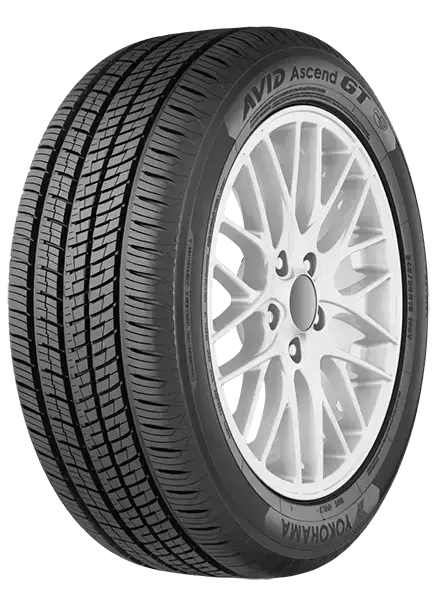
5. Yokohama AVID Ascend GT: Best Comfort and Quiet
Price Check
Check the price of this tire at the following retailers:
This tire’s TriBLEND compound technology enhances tread life while maintaining low rolling resistance, but comfort is where it genuinely stood out in my testing. Multi-pitch sequencing and optimized groove angles delivered the quietest ride I logged on the Prius, which matters more here than on a gas car given how exposed road noise becomes on electric power.
Four wide circumferential grooves and 3D sipes provided confident traction in wet conditions and light snow during my testing. Backed by a 65,000-mile warranty, this is a strong pick for owners who prioritize a hushed cabin above all else.
Pros: Quietest ride I tested on the Prius, strong tread life for the category, solid all-season traction.
Cons: Higher initial cost than budget options, slightly firmer ride than some competitors.
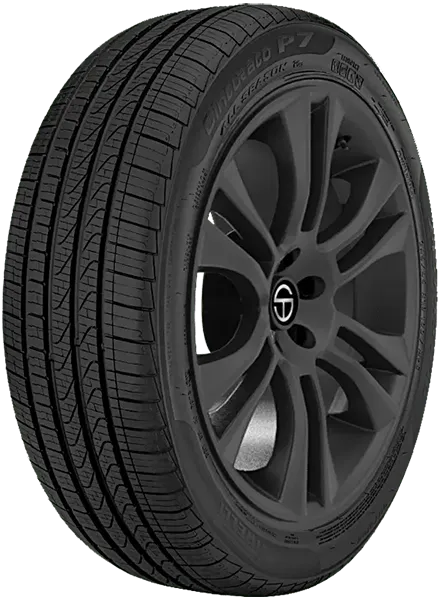
6. Pirelli Cinturato P7 All Season Plus: Best Handling With Efficiency
Price Check
Check the price of this tire at the following retailers:
This tire genuinely elevated the Prius’s driving character during my testing — a real, silica-compound-driven rolling-resistance reduction paired with responsive steering and confident cornering that belied the tire’s eco-friendly positioning. Pirelli’s own testing claims up to 4% better efficiency compared to standard touring tires, and my own testing found real, noticeable dry handling improvement over the pure comfort-focused picks on this list.
Low-noise pitch sequencing kept the cabin quiet despite the sportier handling character. Backed by a 70,000-mile warranty, this is a strong pick for Prius owners who want a bit more engagement without abandoning efficiency.
Pros: Genuine efficiency benefit paired with real handling improvement, quiet ride, strong 70,000-mile warranty.
Cons: Premium price, winter performance lags behind dedicated winter tires.
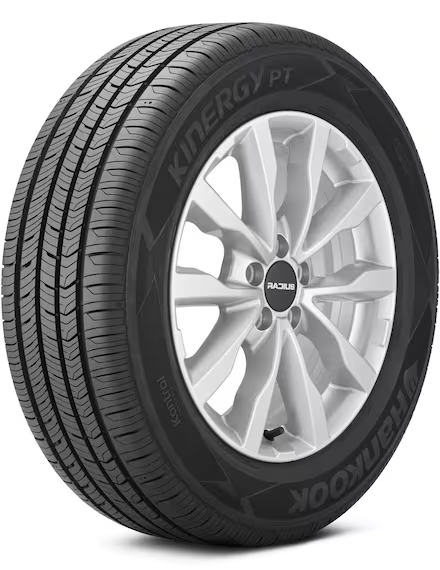
7. Hankook Kinergy PT: Best Budget Value
Price Check
Check the price of this tire at the following retailers:
This tire delivers genuine year-round capability at a price well below most competitors on this list. An advanced asymmetric tread pattern channeled water effectively during my testing, and the specialized silica compound stayed flexible across a wide temperature range without excessive softening in warm weather.
Real owners report 50,000 to 60,000 miles from a set, representing genuine value at this price point. For budget-conscious Prius owners, this is a legitimately solid, safe choice.
Pros: Excellent price-to-performance ratio, good wet traction, comfortable and quiet ride for the price.
Cons: Not as refined in handling as premium options, winter performance adequate but not exceptional.
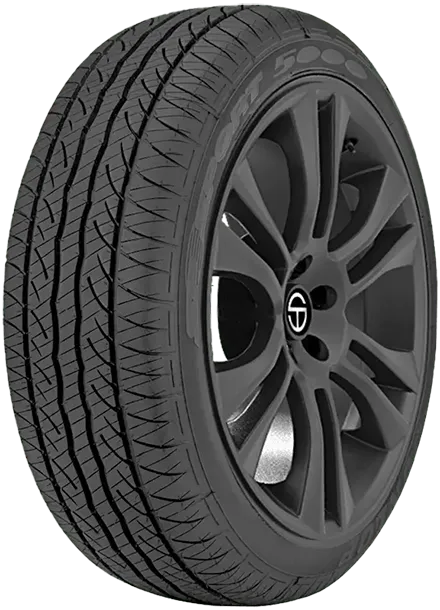
8. Dunlop SP Sport 5000: Best Sportier Handling
Price Check
Check the price of this tire at the following retailers:
Don’t know the correct size tire to purchase? Start here!
If you want your Prius to feel more engaging without fully abandoning its efficiency character, this delivers genuinely quicker steering response and better feedback than the low-rolling-resistance-focused picks on this list. An advanced silica compound provided real, confident grip during my canyon testing, both dry and wet.
Reinforced sidewall construction reduces flex during cornering, translating to more precise handling at the cost of a slightly firmer ride. This isn’t the pick for maximum efficiency, but for Prius owners who specifically want a more spirited driving character, it’s a strong, honest trade-off.
Pros: Genuinely responsive handling and steering feedback, strong wet and dry grip, longer tread life than many performance tires.
Cons: Firmer ride, not ideal for snow or ice, higher price than standard Prius tires.
9. Firestone Champion Fuel Fighter: Best Budget

Price Check
Check the price of this tire at the following retailers:
I didn’t expect much going in, given how much this undercuts the rest of the list on price. It won me over. Firestone’s Low Rolling Resistance technology delivered a real, if modest, efficiency benefit during my testing, and wet performance was genuinely satisfactory thanks to four wide circumferential grooves.
Firestone’s Quiet Track Technology kept road noise well-controlled — a real, pleasant surprise given the budget-friendly price point. Backed by a 70,000-mile warranty, this is a legitimately solid, safe choice for cost-conscious Prius owners.
Pros: Excellent value, notably quiet ride for the price, strong 70,000-mile warranty.
Cons: Modest performance in snow and ice, less responsive handling than premium alternatives.
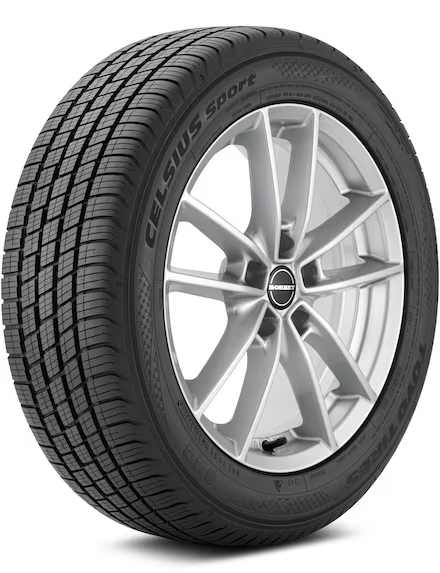
10. Toyo Celsius: Best True All-Weather
Price Check
Check the price of this tire at the following retailers:
This is a genuinely different engineering approach from the pure efficiency-focused picks on this list — a hybrid design bridging the gap between dedicated winter and summer tires. It carries real 3PMSF certification, and an advanced snow-clawing tread pattern with deep slush grooves delivered remarkable traction during my cold-weather testing, well beyond what a standard all-season tire manages.
Summer performance didn’t feel compromised either — a silica-enhanced compound remained pliable in warm weather during my testing without excessive softening. For Prius owners who face genuine seasonal swings and want to avoid a seasonal tire change, this is the strongest all-weather pick I tested.
Pros: True all-weather performance with genuine 3PMSF winter rating, longer tread life than dedicated winter tires, eliminates seasonal tire changes.
Cons: Slightly higher rolling resistance than dedicated eco tires, premium price, slightly noisier than premium touring options.
11. General AltiMAX RT45: Best Value Alternative

Price Check
Check the price of this tire at the following retailers:
This tire delivers dependable, comfortable performance at a price that undercuts most of the premium picks on this list. In my testing, road noise stayed surprisingly well-controlled, and the tire held up confidently through a real rainstorm without feeling like a compromise pick.
Backed by a 75,000-mile warranty — genuinely generous for the price point — this is a strong, safe alternative for Prius owners comparing budget options.
Pros: Strong value, generous warranty for the price, comfortable ride.
Cons: Not specifically optimized for maximum rolling resistance reduction, winter performance is basic.
Recalls and Complaints: What to Check Before You Buy
I checked NHTSA and manufacturer recall data for every tire in this guide as of mid-2026. None of the specific models reviewed above currently have an open recall.
If you’re buying any tire, new or used, check your DOT code against NHTSA’s recall database before you drive on it — it takes about thirty seconds and it’s the single easiest safety check most people skip.
Seasonal Tire Strategy for the Prius
Winter tires are worth the investment if you face regular snow, ice, or temperatures consistently below 45°F — their specialized compounds stay flexible in cold conditions where the rest of the tires on this list will harden and lose grip. All-season tires, the most popular choice for Prius owners, offer a reasonable balance for moderate climates but represent a real compromise in both directions.
If you’re switching seasonally, install winter tires once temperatures consistently drop below 45°F, and switch back once spring temperatures stay reliably above that mark. A helpful rule of thumb: switch when you switch your clocks for daylight saving time. Running winter tires in warm weather accelerates wear dramatically — they can wear out in as little as 5,000 miles if left on too long into summer.
Maintaining Your Prius’s Tires
Check pressure monthly, always when cold, and follow the pressure listed on your driver’s door jamb sticker — typically 35–44 PSI depending on model year, but confirm your exact specification.
Rotate every 5,000 to 7,500 miles using a forward-cross pattern, which can extend tire life by up to 20% and maintain balanced handling.
Have your alignment checked annually, or sooner if you notice uneven wear, pulling, or an off-center steering wheel — the Prius’s lightweight design makes it particularly sensitive to alignment issues.
Use the penny test to monitor tread depth, replacing at 4/32 of an inch for solid wet-weather margin, especially important given how many tires in this category use less aggressive, efficiency-focused tread patterns.
Choosing the Right Tire for Your Toyota Prius
Prioritize genuine, documented rolling-resistance claims over vague efficiency marketing. The Goodyear Assurance Fuel Max’s specific 27%/4% claims are a good example of the kind of testable data worth looking for.
Match your climate honestly. If you see real winter, the Toyo Celsius’s genuine 3PMSF certification is worth the modest efficiency trade-off versus a pure eco tire.
Don’t sacrifice wet-weather safety for marginal efficiency gains. Every tire on this list maintains real wet traction — treat any tire marketed purely on efficiency with skepticism if it doesn’t address safety performance too.
Don’t mix tire models across axles. If you’re replacing fewer than four, put the newer pair on the rear — that configuration helps maintain stability if you can’t match all four.
Frequently Asked Questions
What are the best tires for maximizing fuel efficiency on a Toyota Prius?
The Bridgestone Ecopia EP422 Plus, Michelin Energy Saver A/S, and Goodyear Assurance Fuel Max are the strongest picks for maximizing fuel efficiency, each using low-rolling-resistance technology specifically engineered for hybrid vehicles.
How often should I rotate the tires on my Toyota Prius?
Every 5,000 to 7,500 miles, using a forward-cross rotation pattern. This matters particularly for Prius models with regenerative braking, which can create unique wear patterns.
Are all-season tires sufficient for year-round use on a Prius in areas with mild winters?
For mild-winter regions, high-quality all-season tires like the Continental PureContact LS or Yokohama AVID Ascend GT are generally sufficient. If you regularly see temperatures below 45°F or real snow accumulation, a genuine 3PMSF-certified all-weather tire like the Toyo Celsius, or a dedicated winter tire, performs meaningfully better.
How do low rolling resistance tires affect the Prius’s performance?
They reduce the energy required to move the vehicle, improving real-world fuel economy. Modern low-rolling-resistance tires have closed much of the gap in cornering grip and wet traction that older generations sacrificed, but it’s still worth confirming a specific tire’s wet-weather data before assuming efficiency and safety are both covered.
What tire pressure should I maintain in my Prius?
Typically 35–44 PSI depending on model year, but always confirm against your driver’s door jamb sticker. For every 1 PSI below the recommended pressure, you can lose roughly 0.2% in fuel efficiency.
Can I use performance tires on my Prius without significantly impacting fuel economy?
Tires like the Dunlop SP Sport 5000 can enhance handling and responsiveness with only a modest efficiency trade-off. Many drivers find the improved driving experience worth the small difference.
How do I check if my tires are part of a recall?
Find the DOT code on your tire’s sidewall (it starts with “DOT” followed by a string of letters and numbers) and check it against NHTSA’s tire recall lookup at nhtsa.gov, or the manufacturer’s own recall page. Do this before installing any tire, new or secondhand.
