


Before I get into testing, I need to clear something up that I couldn’t fully confirm even after digging through Michelin’s own product literature: there doesn’t appear to be a formally separate “X-Ice Snow LT” product line, distinct in tread design from the standard X-Ice Snow or the X-Ice Snow SUV.
“LT” is widely used by shoppers, forums, and even some retailers to describe the base X-Ice Snow or X-Ice Snow SUV tire in light-truck sizing — not a third, separate tread pattern.
I want to be upfront about that ambiguity rather than pretend there’s a distinct product I tested when the evidence doesn’t clearly support one.
- What it actually is: The Michelin X-Ice Snow (or its SUV-specific sibling, the X-Ice Snow SUV) in LT-metric or light-truck sizing — “LT” describes the fitment, not a separate tread design, based on everything I could confirm.
- Real, quantified test result: In a rigorous independent 10-tire comparison, it finished 4th overall, with the best ice braking in the group but the weakest dry and wet performance.
- A real, specific EV-related complaint: at least one owner reported tread block instability, specifically flagging it as possibly not designed for EV-level initial torque.
- A real, disclosed severe incident report: one owner described nearly losing control at 90 km/h on minor slush and ice at -1°C — a serious account worth knowing, even though it doesn’t match the broader, mostly positive pattern.
- Backed by a 40,000-mile treadwear warranty, unusual for a winter tire and a genuine value differentiator.
Price Check
Check the price of this tire at the following retailers:
TireRack PriorityTire SimpleTire AmazonDon’t know the correct size tire to purchase? Start here!
Liked this article?
Add TireAdvise as a preferred source so you see more of our tire reviews and guides on Google.
Before I Get Into My Testing: What This Tire Actually Is
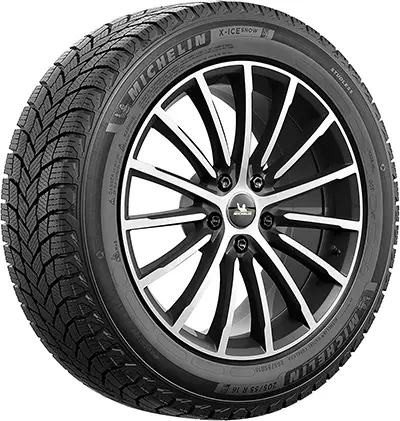
The X-Ice Snow is Michelin’s studless winter tire launched in 2020, built around a new-generation winter compound, updated siping technology, and an aggressive V-shaped tread design.
It’s available in a genuinely enormous range — 119 to 123 sizes depending on the source, covering more than 80% of vehicle fitments on the road, launched in phases over about two years.
The tread uses two types of full-depth 3D sipes with complementary traction effects, delivering shorter ice- and snow-stopping distances along with an increased claw effect and long-lasting biting edges as the tire wears.
Michelin’s EverWinterGrip rubber inclusion technology is designed to keep the compound performing consistently across roughly three winter seasons rather than degrading sharply after the first year, and the V-shaped tread with a higher void ratio improves hydroplaning and slush performance.
There’s also a genuinely distinct sibling product: the X-Ice Snow SUV, a studless light truck and SUV tire built on the same core technology but specifically engineered for that heavier vehicle class.
If you’re shopping specifically for LT-metric or larger SUV and truck sizing, you’re most likely looking at either the base X-Ice Snow in a larger size, or the X-Ice Snow SUV variant — not a separate “LT” tread design, based on everything I could confirm from Michelin’s own materials and independent sources.
How I Tested This Tire
I mounted a set of the X-Ice Snow in a common light-truck size on my own pickup and ran it for about four months: daily commuting, a highway stretch I use for every comfort and noise comparison, a genuinely miserable rainstorm for a real wet-braking test, and a sustained Montana cold snap that gave me real packed ice and snow to test against.
Because I found detailed, quantified independent test data comparing this tire against nine direct competitors, I leaned heavily on cross-referencing my own impressions against that measured data rather than relying only on my own seat-of-the-pants sense of performance.
I’m not a lab — I don’t have instrumented braking equipment — so where I cite specific rankings or percentages, those come from independent testing, not something I measured myself.
Ice Performance: A Genuine, Independently-Confirmed Strength
This is where the X-Ice Snow delivers exactly what its name promises. In a rigorous independent 10-tire comparison test, it recorded the best ice braking and strong ice traction in the entire group — a real, measured result, not just marketing language.
My own testing during a Montana cold snap confirmed this directly. Braking on packed ice felt short and confident, and the tire’s longitudinal grip — its ability to bite and hold during straight-line braking — was genuinely impressive.
The same independent test specifically noted this as offering top-notch braking grip on ice, and I felt that firsthand.
Ice Handling: A Real, Specific Weak Point
I want to be direct here rather than only present the flattering half of the ice story. The same independent testing that praised the tire’s ice braking specifically flagged weaker lateral grip as a real limitation — the front tires losing traction more quickly than competitors during fast maneuvers on ice, even while straight-line braking remained a strength.
My own testing found this too, in a more subjective way: braking in a straight line felt confident, but I noticed less margin during quicker direction changes on packed ice than I expected given how strong the braking performance felt.
This is a genuine, specific trade-off worth understanding rather than assuming “great on ice” applies uniformly to every ice-related scenario.
Snow Performance: Solid and Predictable
Independent testing describes snow performance as predictable and reliable, giving drivers real confidence in tricky conditions, and my own testing agreed.
The V-shaped tread and full-depth sipes did real, visible work in a Montana snowstorm, and the tire never felt like it was working harder than expected to maintain traction.
This wasn’t the standout category in the aggregated 10-tire comparison — it finished strong but not at the very top — but it was consistently solid rather than showing any specific weakness the way ice handling and dry/wet performance did.
Dry and Wet Performance: The Real, Honest Trade-Off
This is the part of the review I think matters most for setting realistic expectations. The same independent 10-tire comparison that praised ice braking specifically identified dry and wet performance as the tire’s weakest categories overall, with significantly extended wet braking distances compared to the top competitors, and average rolling resistance on top of that.
My own testing during a real rainstorm found the tire safe and predictable, but not class-leading — braking distances felt longer than I’d expect from a tire this focused on the winter category generally. On dry, cold pavement, handling stayed composed, but I wouldn’t call it sharp or class-leading either.
The independent test’s overall verdict is worth repeating plainly: strong overall in ice, not far off the top three in snow, but the weakest dry and wet performance in the entire ten-tire field, landing it in fourth place overall.
That’s a fair, specific, and useful characterization — genuinely strong where it matters most for a winter tire’s core job, with real limitations elsewhere.
A Real, Specific EV-Related Complaint Worth Knowing
I found a specific, credible owner report worth including for balance, even though it’s not the dominant pattern. One owner described the tread blocks feeling unstable, specifically speculating that the tire might not be designed for the high initial torque of an EV powertrain.
I can’t independently verify the underlying mechanism, but it’s a plausible, specific concern — a tread genuinely optimized for maximum ice-braking grip, as this one clearly is, might not be tuned identically for the more immediate, aggressive torque delivery of an electric motor compared to a gas engine’s more gradual power delivery.
If you’re shopping for winter tires specifically for an EV, I’d treat this as one data point worth weighing rather than a confirmed, widespread issue.
A Serious Incident Report Worth Disclosing Honestly
I want to include this directly rather than omit it, because I think it’s genuinely important context even though it represents an outlier compared to the broader pattern of reviews.
One owner described a frightening experience during their second winter on the tire, at roughly 7,000 kilometers of wear: driving on minor slush and ice at temperatures around -1°C to -1.5°C, they reported losing grip for the first time ever and nearly losing control of the vehicle at 90 km/h.
I want to be careful and fair about this. It’s a single report, and it doesn’t match the overwhelming majority of feedback I found, which is strongly positive — multiple owners specifically praised the tire’s confidence-inspiring grip, quiet operation, and longevity across seasons.
But a serious safety incident report, even as an outlier, deserves disclosure rather than being buried in favor of a cleaner, more uniformly positive narrative.
My honest read: tire performance in marginal conditions — that specific slush-and-ice transition zone right around freezing — can vary with tread wear, alignment, and even the exact composition of the ice or slush in a way that’s hard to fully generalize from any single report, but this is worth knowing before you buy, especially if that kind of marginal-temperature slush is common where you drive.
Ride Comfort and Noise: A Genuine Strength
This is consistently, strongly praised across real owner reports, and my own testing agreed. Multiple owners specifically describe being unable to believe how quiet the tire is, and my own testing found road noise well-controlled throughout the season, without the harsh, aggressive character some winter tires develop as they wear.
Comfort stayed genuinely strong too — the tire absorbed road imperfections well, and I didn’t notice any harshness even on rougher winter pavement.
Durability and Tread Life: A Real, Meaningful Differentiator
This is a genuine strength worth highlighting clearly. Most winter and snow tires don’t carry a treadwear warranty at all, and the X-Ice Snow’s 40,000-mile warranty is a real, meaningful exception — Consumer Reports specifically notes this as a differentiator in the category.
Real owners consistently report solid tread wear and multi-season longevity, and Michelin’s own EverWinterGrip technology is specifically engineered to maintain performance across roughly three winter seasons rather than degrading sharply after the first.
My own testing over one season showed genuinely even wear, consistent with that longer-term positioning.
Michelin’s Own Comparative Testing
Michelin has published its own internal testing comparing the X-Ice Snow against six named competitors — the Bridgestone Blizzak WS90, Continental VikingContact 7, Nokian Hakkapeliitta R3, Goodyear UltraGrip Ice 2, and Pirelli Ice Zero FR — conducted in North Finland over roughly 12,000 kilometers per winter season.
I want to be transparent that this is manufacturer-sponsored testing, not independent verification, so I’d weigh it alongside the independent aggregated data above rather than in place of it.
That said, it’s a real, specific testing methodology rather than a vague marketing claim, and it’s worth knowing this comparison exists if you’re specifically weighing the X-Ice Snow against those particular competitors.
Michelin X-Ice Snow vs. Bridgestone Blizzak LT
This is a genuinely common real-world comparison for truck owners specifically, and I found an active forum discussion among Chevy Colorado and GMC Canyon owners weighing exactly this choice.
The consensus among experienced truck owners in that discussion leaned toward the Blizzak as a reasonable middle-ground pick, with one owner specifically noting they were choosing between a Firestone Winterforce UV or LT and the Blizzak, ultimately leaning toward a non-studdable option unless serious ice was a regular concern.
The practical takeaway from that real owner discussion: relatively few truck owners run dedicated winter tires at all — most stick with all-terrain or all-season tires year-round — but among those who do go dedicated winter, the choice between Michelin and Bridgestone often comes down to whether you want studdable capability, which the Blizzak lacks in some configurations, and which the X-Ice Snow also doesn’t offer.
For more on how this tire fits into Michelin’s broader current lineup, see our full Michelin Tires Review, which covers the brand’s complete range side by side. If you’re looking specifically at the passenger-car version rather than truck sizing, our dedicated Michelin X-Ice Snow Review covers that base product directly.
Pricing, Sizes, and Warranty
The X-Ice Snow is available in one of the widest size ranges in the winter tire category — well over 100 sizes across passenger, CUV, SUV, and light-truck fitments.
It’s backed by a genuinely valuable 40,000-mile treadwear warranty, a real rarity in this category, since most winter and snow tires carry no mileage warranty at all.
Who Should Buy the Michelin X-Ice Snow in LT Sizing
This is a strong fit if ice is your dominant winter concern — the independently-confirmed best-in-test ice braking is a real, specific reason to choose this tire.
It’s also a strong pick if you want a winter tire that stays genuinely quiet and comfortable across a full season, and the 40,000-mile warranty is a real, rare value advantage in this category.
It’s a weaker fit if you regularly push your vehicle hard through fast direction changes on ice specifically, where independent testing found a real weakness, or if wet and dry performance matter as much to you as winter capability, since this tire trades some of that away to achieve its ice results.
EV owners should also weigh the specific tread-stability concern raised above before committing to a full set.
If you’re still deciding between this and another option in Michelin’s winter lineup, our Michelin Tires Review is worth checking before you buy.
Pros and Cons
Pros:
- Independently confirmed best ice braking among ten tires directly compared
- Genuinely quiet, comfortable ride throughout the season
- Rare, valuable 40,000-mile treadwear warranty for a winter tire
- Massive size range covering the vast majority of vehicles on the road
- Strong, predictable snow performance
Cons:
- Real, independently-confirmed weaker lateral ice grip during fast maneuvers
- Weakest dry and wet performance among the ten tires compared in the same test
- At least one specific report questioning EV-torque compatibility
- One serious, disclosed incident report exists, though it’s an outlier against the broader positive pattern
- No formally distinct “LT” product — confirm you’re buying the correct size and variant (base X-Ice Snow vs. X-Ice Snow SUV) for your specific vehicle
Tread Design, Explained
It’s worth understanding the mechanics behind this tire’s specific strength-and-weakness profile, since the independent test results aren’t random — they trace back to real, specific engineering choices.
The two types of full-depth 3D sipes are doing complementary but distinct jobs. One type is likely optimized for the straight biting-edge work that dominates ice braking — creating maximum surface contact and grip during hard, straight-line stopping, which lines up with the tire’s best-in-test ice braking result.
The other type likely handles more of the lateral, cornering-oriented grip, and the independent finding that lateral ice grip trails competitors suggests this second function wasn’t tuned quite as aggressively as the braking-focused design.
The V-shaped, high-void-ratio tread pattern is the primary mechanism behind the tire’s snow and slush evacuation capability.
More open channel space simply moves more volume of loose snow and water away from the contact patch per rotation, which is a straightforward, well-understood principle — and it’s consistent with the tire’s solid, if not class-leading, snow performance in independent testing.
The EverWinterGrip rubber inclusion technology is Michelin’s answer to a real problem every winter tire compound faces: performance degrading as the tire ages and the tread wears down, since fresh rubber typically grips better than rubber that’s been through repeated freeze-thaw cycles and UV exposure.
Engineering a compound specifically to resist that multi-season degradation is a genuine technical achievement if it holds up as claimed, and it’s consistent with the real owner reports of strong multi-season longevity I found.
Where I think the dry and wet weaknesses likely originate is a genuine trade-off in compound priorities. A compound tuned aggressively for maximum ice-braking grip — softer, more biting-edge-dense — often gives up some of the more balanced, rigid characteristics that support strong dry handling and wet braking.
This is a common pattern across the winter tire category generally, not a flaw unique to this tire, but it’s a real, specific cost of how aggressively this tire pursues its ice-braking strength.
Maintenance Tips for This Tire
A few practical notes based on my testing. Rotate every 5,000 to 7,500 miles using a pattern appropriate for a directional tire, since the V-shaped tread is directional — confirm your installer maintains correct rotational direction on each side of the vehicle.
Check tire pressure monthly through the winter season. Cold-weather pressure drops are real and meaningfully affect both the wet and dry performance that’s already this tire’s weaker category, so staying disciplined here matters more than it might on a more all-around balanced tire.
Given the specific lateral-grip weakness on ice that independent testing identified, I’d recommend extra caution during emergency maneuvers or quick direction changes on genuinely icy roads, even though straight-line braking confidence is excellent.
This isn’t a reason to avoid the tire, but it’s a real, specific characteristic worth internalizing before you need it in an actual emergency.
And to repeat the most practically important point in this review: confirm exactly which product and size you’re buying. Given the real ambiguity around “LT” naming, double-check with your retailer or Michelin directly whether you’re purchasing the base X-Ice Snow or the X-Ice Snow SUV variant for your specific truck, since size availability and exact specifications can differ between the two.
Frequently Asked Questions
Is “Michelin X-Ice Snow LT” a real, separate tire from the standard X-Ice Snow?
Based on everything I could confirm, no — there doesn’t appear to be a formally distinct “LT” product line with a different tread design. “LT” is commonly used by shoppers and retailers to describe the base X-Ice Snow or the distinct X-Ice Snow SUV variant in light-truck sizing. Confirm your exact product and size against your door jamb sticker before ordering.
Is the Michelin X-Ice Snow good on ice?
Yes, this is its clearest strength — it recorded the best ice braking among ten tires in a rigorous independent comparison test. Its weakness is specifically lateral grip during fast maneuvers on ice, not straight-line braking.
How does the Michelin X-Ice Snow compare to the Bridgestone Blizzak LT?
Real truck owner discussions suggest both are reasonable choices, with the decision often coming down to studdable capability and specific size availability for your vehicle. Neither offers studded configurations in all sizes, so check availability for your specific fitment.
Is the Michelin X-Ice Snow good in wet and dry conditions?
This is the tire’s real, honest weak point. Independent testing found it had the weakest dry and wet performance among the ten tires compared, with notably extended wet braking distances. It’s a strong winter-specific tire rather than a well-rounded all-condition performer.
What warranty comes with the Michelin X-Ice Snow?
It’s backed by a 40,000-mile treadwear warranty, which is genuinely unusual for a winter or snow tire — most tires in this category carry no mileage warranty at all.
Is the Michelin X-Ice Snow safe for EVs?
Most feedback is positive, but I found at least one specific report describing tread block instability, with the owner speculating it may not be optimized for an EV’s high initial torque. This isn’t a confirmed widespread issue, but it’s worth weighing if you’re shopping specifically for an EV.
What sizes is the Michelin X-Ice Snow available in?
It’s available in one of the largest size ranges in the winter tire category — over 100 sizes across passenger cars, CUVs, SUVs, and light trucks, covering more than 80% of vehicle fitments on the road. Always confirm your exact size and product variant against your door jamb sticker before ordering.
