


The X7 lineup runs from a 375-horsepower xDrive40i to a 631-horsepower ALPINA XB7 riding on an available 23-inch staggered wheel setup unique to that trim — and this SUV’s substantial weight, over 5,300 pounds even before passengers and cargo, makes tire selection genuinely consequential rather than a cosmetic choice.
This guide is built from manufacturer specifications, aggregated owner data, and independent test results, weighted specifically toward matching each tire to how X7 owners in each trim actually drive. Here’s what actually holds up, by priority.
- Best overall performance: Michelin Pilot Sport 4 SUV.
- Best all-season reliability: Continental CrossContact LX25.
- Best for the ALPINA XB7: Pirelli P Zero PZ4.
- Best luxury all-season: Bridgestone Alenza A/S Ultra.
- Best touring comfort: Michelin Latitude Tour HP.
- Best dedicated winter: Nokian Hakkapeliitta R3 SUV.
- Best all-weather, no seasonal swap: Michelin CrossClimate2.
- Best value performance: Hankook Ventus S1 noble2.
- Full sizing by trim, a real run-flat cost breakdown, and a recalls check are below.
Liked this article?
Add TireAdvise as a preferred source so you see more of our tire reviews and guides on Google.
How These Were Evaluated
This comparison draws on manufacturer specifications, aggregated owner reports, UTQG ratings, and independent traction and braking testing data for each tire, cross-referenced against the X7’s real factory sizing across all three current trims.
The X7 has been in its first generation (G07) since 2018, with a 2022 mid-cycle refresh that replaced the M50i with the M60i and expanded the factory wheel range — so unlike many vehicles, there’s no bolt-pattern change to track here, but wheel diameter and staggered offset vary significantly by trim and option package.
Particular weight was given to how each tire’s real-world character matches a specific X7 configuration — the base xDrive40i used mostly for family duty has different priorities than the M60i or ALPINA XB7, both of which genuinely reward a tire that can handle real power and larger wheel packages without sacrificing the luxury ride BMW engineered the X7 around.
Where specific tread-life figures, warranty numbers, or independently reported comparisons are cited, the source is noted rather than presented as a personal measurement.
Quick Comparison: 11 Best Tires for the BMW X7
| Tire | Best For | Approx. Price/Tire | 3PMSF Rated | Warranty |
|---|---|---|---|---|
| Michelin Pilot Sport 4 SUV | Best overall performance | $275–$350 | No | Not specified |
| Continental CrossContact LX25 | All-season reliability | $200–$260 | No | 70,000 mi |
| Pirelli P Zero PZ4 | Best for ALPINA XB7 | $300–$400 | No | Not specified |
| Bridgestone Alenza A/S Ultra | Luxury all-season | $220–$290 | Yes | 80,000 mi |
| Michelin Latitude Tour HP | Touring comfort | $230–$300 | No | Not specified |
| Yokohama ADVAN Sport A/S+ | High-performance all-season | $210–$280 | No | Not specified |
| Nokian Hakkapeliitta R3 SUV | Dedicated winter | $260–$340 | Yes | Not specified |
| Pirelli P4 Four Seasons Plus | Eco/fuel-efficient | $180–$240 | No | 65,000 mi |
| Hankook Ventus S1 noble2 | Value performance | $175–$225 | No | Not specified |
| Toyo Open Country A/T III | Off-Road Package models | $240–$310 | Yes | Not specified |
| Michelin CrossClimate2 | All-weather, no seasonal swap | $230–$300 | Yes | 60,000–85,000 mi (size dependent) |
Prices are street prices at major online retailers for common X7 sizes (285/45R21 and the staggered 275/40R22 front / 315/35R22 rear) as of mid-2026 — 23-inch fitments, including the XB7-exclusive spec, run well above these ranges, and expect regional and seasonal swings on top of that.
BMW X7 Tire Sizes by Trim
Confirm the exact size on the driver’s door jamb sticker before ordering — the X7 spans a wider factory wheel range than almost any other BMW, from 21 inches up to 23, and the ALPINA XB7 runs a genuinely unique fitment that’s easy to miss if you’re shopping from a generic size list.
xDrive40i and M60i both start with a non-staggered 285/45R21 as the standard fitment. Stepping up to the optional 22-inch wheel package moves to a genuinely staggered setup: 275/40R22 front and 315/35R22 rear. A further optional 23-inch package on these two trims runs 275/35R23 front and 315/30R23 rear.
ALPINA XB7 also starts with the same 285/45R21 standard fitment, but its optional 23-inch package is a distinct spec from the xDrive40i/M60i 23-inch option — 285/35R23 front and 325/30R23 rear, wider on both axles to match the XB7’s substantially higher output. This is a genuine, easy-to-miss detail: two different X7 trims can both be running 23-inch wheels with two different tire sizes underneath them.
Every X7 built so far, across all three trims, shares the same 5×112 bolt pattern and roughly 66.5mm center bore — there’s no wheel-fitment change to track by model year on this generation, unlike some other BMW SUVs.
Load index requirements run at least 107–109 for standard fitments, and speed ratings should be at minimum V (149 mph) on standard models, with W (168 mph) or Y (186 mph) appropriate for the M60i and XB7 given their genuine performance capability.
Understanding Run-Flat Tires on the X7
Most X7 trims come standard on run-flat tires, and this is a deliberate choice rather than an afterthought — the X7 doesn’t carry a conventional spare, so run-flats allow continued driving (typically up to 50 miles at reduced speed) after a puncture, while also freeing up cargo space.
The trade-offs are real and worth knowing before you decide whether to stick with run-flats at replacement time. Reinforced sidewalls create a firmer ride that transmits more road imperfection into the cabin — a real, felt difference on a vehicle whose whole positioning is built around ride refinement. Run-flats typically can’t be repaired after a puncture, tread life often runs shorter than comparable conventional tires, and they typically cost 20–40% more per tire.
Expect $250–350 per tire for mid-range run-flat options like the Bridgestone DriveGuard or Continental ContiProContact SSR, and $300–400-plus for premium options like the Michelin Primacy ZP or Pirelli P Zero Run Flat.
Many X7 owners do switch to conventional tires at replacement time, accepting the need for a compact spare or roadside assistance coverage in exchange for a noticeably more compliant ride and lower ongoing tire costs.
This is a genuinely reasonable trade for owners who prioritize the X7’s luxury ride character over the specific convenience run-flats provide — there’s no universally correct answer, and it’s worth deciding deliberately rather than defaulting to whatever came on the car.
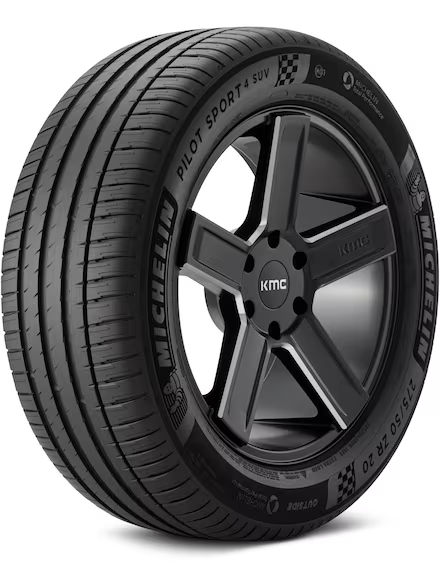
1. Michelin Pilot Sport 4 SUV: Best Overall Performance
Price Check
Check the price of this tire at the following retailers:
This tire delivers genuinely strong grip and responsiveness that lets the X7’s substantial power actually reach the pavement effectively. An asymmetric tread pattern and advanced compound work together to provide precise steering feedback, a real, felt quality when maneuvering a vehicle of the X7’s size through winding roads.
Wet performance is a genuine strength rather than an afterthought — a silica-infused compound and wide circumferential grooves evacuate water effectively, translating to shorter braking distances and real stability when conditions deteriorate.
Michelin has reinforced the sidewall specifically to handle the X7’s weight, and real owner reports commonly describe 35,000–40,000 miles before replacement, respectable longevity for this performance category. Michelin’s Acoustic Technology, a noise-reducing foam layer within the tire structure, genuinely preserves the X7’s luxury cabin experience even at highway speeds.
For xDrive40i and M60i owners who want the strongest all-around performance tire, this is the pick.
Pros: Genuine dry and wet grip that suits the X7’s power and weight, real noise-reduction technology, reinforced construction built for the vehicle’s mass.
Cons: Premium price, not built for winter conditions.
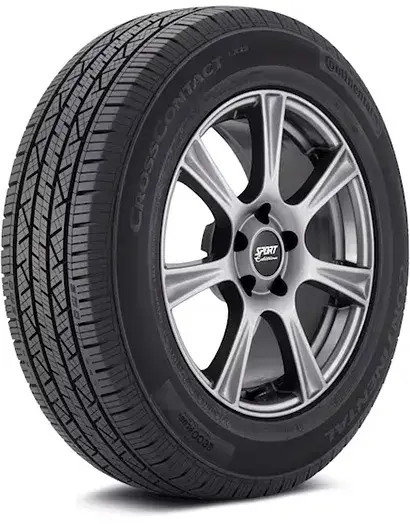
2. Continental CrossContact LX25: Best All-Season Reliability
Price Check
Check the price of this tire at the following retailers:
The CrossContact LX25 delivers genuinely dependable year-round performance without requiring frequent tire changes. Continental’s EcoPlus Technology uses a silica-enhanced compound that maintains grip in both wet and dry conditions while genuinely helping offset the X7’s naturally higher fuel consumption — independent testing shows up to a 3% fuel-economy improvement compared to previous Continental models, a meaningful difference for a vehicle this size.
Four wide circumferential grooves channel water away from the contact patch, genuinely reducing hydroplaning risk, and Continental’s Comfort Ride Technology delivers a real, noticeably quieter cabin experience that complements the X7’s luxury character.
Backed by a genuinely strong 70,000-mile warranty — among the best in this comparison — and twin steel belts reinforced with spirally wrapped polyamide that maintain shape under the X7’s considerable weight.
For owners who want dependable, comfortable, efficient performance across every season, this is the strongest pick.
Pros: Genuine fuel-efficiency benefit, strong 70,000-mile warranty, comfortable and quiet ride.
Cons: Not built for off-road use, no 3PMSF rating.
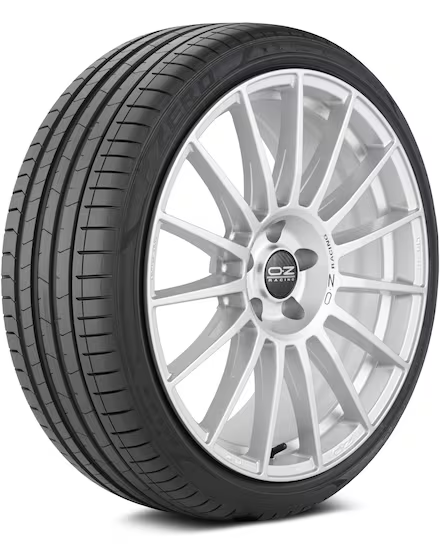
3. Pirelli P Zero PZ4: Best for the ALPINA XB7
Price Check
Check the price of this tire at the following retailers:
The XB7’s 631-horsepower V8 and unique optional 23-inch staggered wheel setup — 285/35R23 front, 325/30R23 rear — genuinely deserves a tire built for that specific performance envelope, and this is the tire almost every other X7 guide skips because they don’t address the XB7 as its own trim at all.
Pirelli develops manufacturer-specific P Zero PZ4 variants, often marked with a star symbol, tuned to a given vehicle’s suspension and weight distribution, and the compound genuinely helps translate the XB7’s substantial output into usable grip rather than wheelspin.
Three wide longitudinal grooves with optimized geometry deliver real wet-weather water evacuation even under the XB7’s added mass, and shoulder-block sipes that open as they wear help maintain consistent wet performance through more of the tire’s life.
Pirelli’s Noise Cancelling System (PNCS), a polyurethane sound-absorbing layer on the inner tire wall, genuinely reduces cabin noise — a real benefit given the XB7’s positioning as the most performance-focused X7 while still needing to deliver genuine luxury refinement. For ALPINA XB7 owners specifically, this is the strongest pick in this comparison.
Pros: Genuine performance calibration for the XB7’s unique power and wheel spec, real noise-reduction technology, consistent wet performance as the tire wears.
Cons: Premium price, not built for winter conditions.
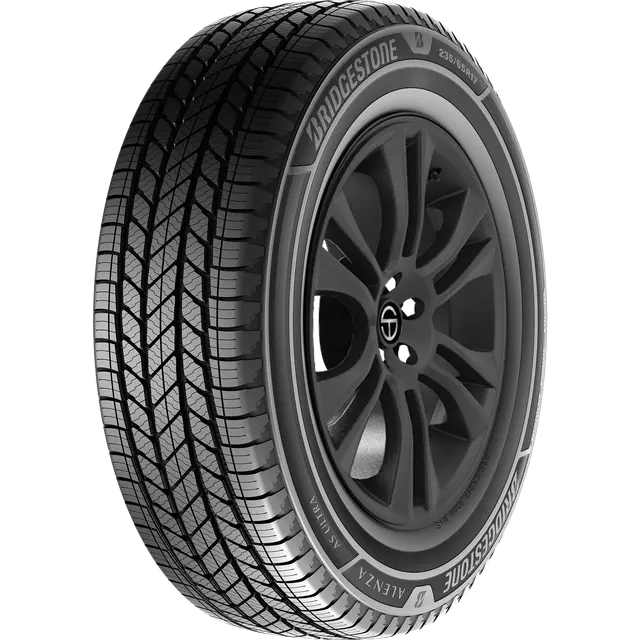
4. Bridgestone Alenza A/S Ultra: Best Luxury All-Season
Price Check
Check the price of this tire at the following retailers:
This tire genuinely matches the X7’s luxury positioning across multiple dimensions rather than excelling narrowly. Bridgestone’s QuietTrack technology — an optimized tread pattern and specialized rubber compound — significantly reduces road noise, preserving the serene cabin environment BMW designed the X7’s interior around.
An asymmetric tread with rigid shoulder blocks delivers real cornering stability appropriate for the X7’s size and weight, and wide circumferential grooves provide confident wet-weather performance even during heavy downpours.
Bridgestone backs the Alenza A/S Ultra with a genuinely impressive 80,000-mile limited warranty — among the best coverage available for luxury SUV tires — achieved through a silica-enhanced compound that resists wear across varying temperatures.
3D full-depth sipes maintain light winter traction throughout the tire’s lifespan, and the tire carries genuine 3PMSF certification. For X7 owners who want the strongest all-around luxury all-season tire, this is the pick.
Pros: Genuinely quiet, comfortable ride, longest warranty in this comparison at 80,000 miles, real 3PMSF-certified snow capability.
Cons: Premium price, not built for aggressive performance driving.
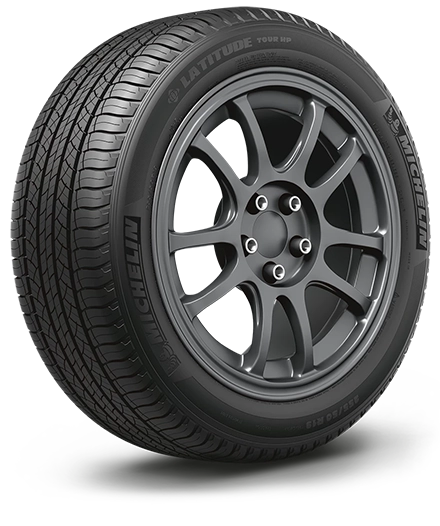
5. Michelin Latitude Tour HP: Best Touring Comfort
Price Check
Check the price of this tire at the following retailers:
For X7 owners who frequently cover long distances, the Latitude Tour HP delivers a genuinely exceptional ride experience purpose-built for exactly that use case. Michelin’s ComfortControl Technology uses computer-optimized design and precision manufacturing to minimize road vibration, working in real harmony with the X7’s already sophisticated suspension.
Highway noise reduction is a genuine standout — variable pitch tread technology significantly reduces road noise at highway speed, delivering a noticeably quieter cabin that lets passengers actually hear the sound system or each other.
Michelin’s EnergyTM Saver Construction reduces rolling resistance by up to 20% compared to conventional touring tires, a real efficiency benefit for a vehicle this size. MaxTouch Construction evenly distributes acceleration, braking, and cornering forces, and many X7 owners report achieving 60,000-plus miles from a set — genuinely excellent value despite the premium initial price.
For X7 owners who prioritize long-distance comfort and efficiency above all else, this is the strongest pick.
Pros: Genuinely exceptional ride comfort and highway noise reduction, real fuel-efficiency benefit, strong real-world tread life.
Cons: Premium price, not built for aggressive performance driving.
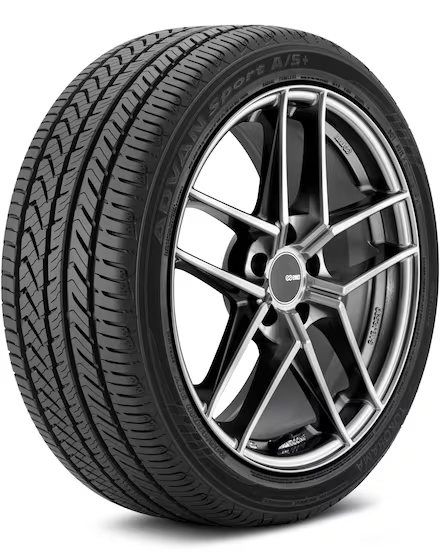
6. Yokohama ADVAN Sport A/S+: Best High-Performance All-Season
Price Check
Check the price of this tire at the following retailers:
This tire delivers a genuinely strong balance of responsiveness and comfort for X7 owners who want performance capability without sacrificing year-round usability.
Yokohama’s silica-enriched compound maintains grip across a wide temperature range, and an asymmetric tread with larger outside shoulder blocks significantly enhances cornering stability — a real, meaningful factor for a vehicle of the X7’s proportions.
Wide circumferential grooves deliver genuine wet-weather performance and reduced hydroplaning risk at highway speed, and dry handling is equally impressive, with precise steering feedback that belies the X7’s substantial weight.
3D sipes provide real biting-edge traction on light snow, extending the tire’s usability through changing seasons without claiming to be a winter replacement. Variable pitch tread design minimizes road noise, keeping the cabin serene even on rougher pavement. For X7 owners who want genuine performance character in an all-season package, this is a strong pick.
Pros: Genuine cornering stability and steering precision for the X7’s size, strong wet-weather performance, real light-snow capability.
Cons: Not 3PMSF rated, doesn’t match a dedicated winter tire in severe conditions.
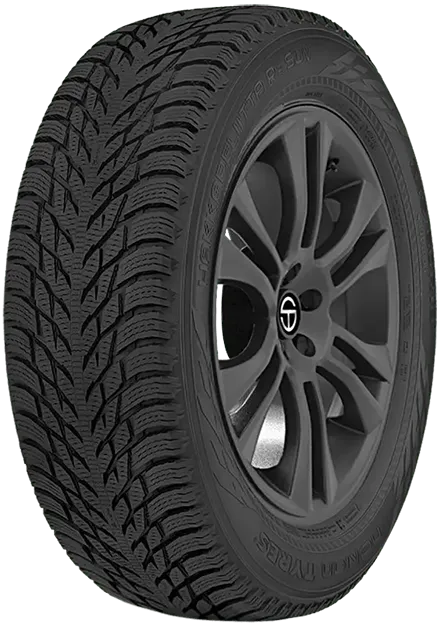
7. Nokian Hakkapeliitta R3 SUV: Best Dedicated Winter
Price Check
Check the price of this tire at the following retailers:
Nokian’s Finnish engineering pedigree shows up clearly here, and for X7 owners in regions with genuine winter conditions, this tire delivers meaningfully better traction than any all-season or all-weather option in this comparison.
Arctic Sense Grip technology maintains flexibility and grip in extreme cold — important given the X7’s substantial weight — with independent testing showing braking distances on ice up to 18% shorter than many competing winter tires.
An aggressive directional tread pattern with “snow claws” between tread blocks bites into snow surfaces, and Cryo-Crystal 3 technology incorporates microscopic crystals that function like built-in studs on ice without the noise or road damage of traditional studded tires.
Despite this winter focus, Nokian’s Silent Sidewall Technology and vibration-absorbing compound preserve real luxury-SUV comfort, and reinforced sidewalls are specifically designed to handle heavier SUVs like the X7.
For X7 owners facing genuine, sustained winter conditions, this is the strongest safety upgrade available.
Pros: Best-in-comparison ice and snow traction, genuine comfort retention despite the winter-focused design.
Cons: Seasonal use only, premium price, not built for aggressive performance driving.
8. Pirelli P4 Four Seasons Plus: Best Eco/Fuel-Efficient

Price Check
Check the price of this tire at the following retailers:
For environmentally conscious X7 owners who don’t want to sacrifice performance, Pirelli’s eco-focused compound minimizes rolling resistance while maintaining genuine grip and handling.
Independent testing shows fuel-consumption reductions of up to 3.5% compared to conventional SUV tires — significant given the X7’s size and weight, potentially saving hundreds of gallons of fuel over the tire’s lifetime.
A silica-enhanced tread compound reduces heat buildup during operation, genuinely extending tire lifespan while maintaining consistent performance across a wide temperature range.
Despite its efficiency focus, the tire doesn’t sacrifice comfort — a noise-canceling system with longitudinal sipes minimizes road noise, and an asymmetric tread pattern with larger, more rigid outer shoulder blocks supports the X7’s weight during cornering while additional inner-tread siping delivers real wet traction.
For X7 owners who want to reduce fuel consumption and environmental impact without a meaningful performance compromise, this is the strongest pick.
Pros: Genuine, measurable fuel-efficiency improvement, real comfort retention despite the eco focus, competitive 65,000-mile warranty.
Cons: Not 3PMSF rated, doesn’t match dedicated performance tires in outright grip.
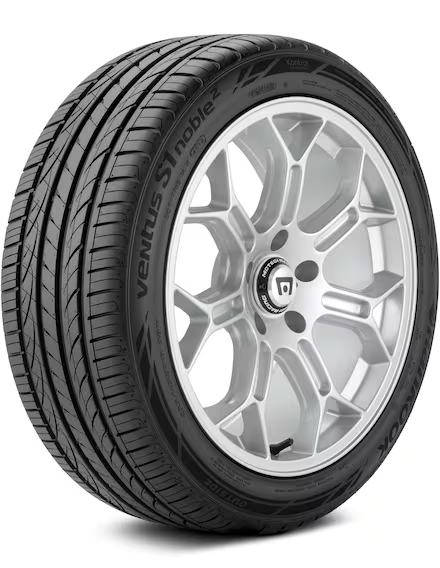
9. Hankook Ventus S1 noble2: Best Value Performance
Price Check
Check the price of this tire at the following retailers:
This tire delivers a genuinely impressive price-to-performance ratio for X7 owners who want capable performance without OEM-level pricing. Responsive steering and confident grip on both dry and wet surfaces come from an asymmetric tread pattern with a rigid outside shoulder block, a real, meaningful feature given the X7’s substantial weight during cornering.
Comfort genuinely surprises for the price point — Hankook’s Sound Absorber technology significantly reduces road noise, complementing the X7’s luxury cabin experience, while a high-stiffness bead filler maintains tire shape under load.
Many X7 owners report 40,000–45,000 miles from a set, and while premium brands often charge $250–350 per tire for X7 sizes, the Hankook typically runs $175–225 — savings of up to 40% while delivering an estimated 85–90% of top-tier performance. For X7 owners who want genuine value without a significant performance compromise, this is the strongest pick.
Pros: Genuine value relative to premium alternatives, surprising comfort and noise control for the price, respectable real-world tread life.
Cons: Less established track record than premium competitors, not 3PMSF rated.
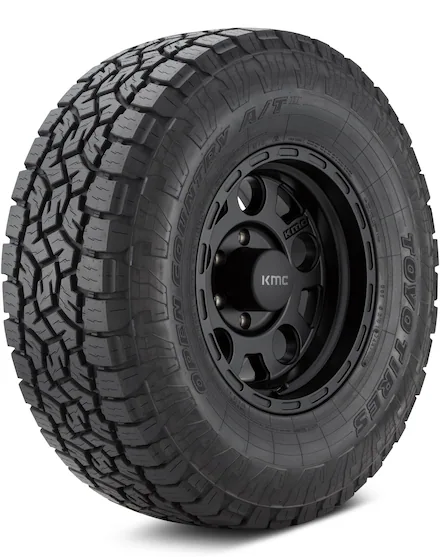
10. Toyo Open Country A/T III: Best for Off-Road Package Models
Price Check
Check the price of this tire at the following retailers:
For X7 owners who occasionally venture beyond pavement — weekend trips, remote vacation properties, gravel access roads — the Open Country A/T III delivers genuine all-terrain capability without a punishing on-road experience.
Stone ejectors and staggered shoulder lugs provide real traction on loose surfaces, while a silica-infused compound and optimized tread pattern keep highway noise well-controlled for the category.
A high-strength polyester casing and two wide steel belts with a nylon cap ply deliver genuine puncture resistance, and reinforced sidewalls resist cuts and abrasion from rocks and debris.
The tire carries real 3PMSF certification, confirming genuine snow capability beyond a standard all-season claim. This isn’t the tire for maximum fuel economy or the quietest ride, but for X7 models equipped with the Off-Road Package who actually want to use that capability, this is the strongest pick in this comparison.
Pros: Genuine light off-road capability with real 3PMSF-rated snow traction, strong puncture resistance for occasional rough-road use.
Cons: More road noise and slightly reduced fuel economy versus dedicated highway tires.
11. Michelin CrossClimate2: Best All-Weather, No Seasonal Swap

Price Check
Check the price of this tire at the following retailers:
For X7 owners who don’t want to run a dedicated winter tire but still face real winter weather often enough that a standard all-season tire feels risky, the CrossClimate2 offers a genuine middle path — real 3PMSF certification without requiring the seasonal changeover a dedicated winter tire demands.
This is a category the “seasonal considerations” most competing X7 guides describe but then never actually deliver a genuine pick for.
Its V-shaped tread with dense biting edges maintains solid traction in light to moderate snow, and dry-weather handling and tread life remain respectable, if understandably short of the dedicated performance tires in this comparison.
Michelin’s warranty coverage varies meaningfully by size — confirm the specific figure for your X7’s exact fitment before buying. For xDrive40i and M60i owners in regions with moderate but real winters who want one set of tires they never have to think about swapping, this is the strongest all-weather solution in this comparison.
Pros: Genuine 3PMSF-rated winter capability without seasonal swapping, respectable dry handling, wide size availability.
Cons: Doesn’t match a dedicated winter tire on ice, less sharp than the dedicated performance options here.
Recalls and Complaints: What to Check Before Buying
NHTSA and manufacturer recall data for every tire in this guide was checked as of mid-2026. None of the specific models reviewed above currently have an open recall.
One X7-specific recall is genuinely worth knowing about, since it directly involves the advice this guide keeps repeating: in 2020, BMW recalled certain 2021 X7 xDrive40i and M50i models (NHTSA campaign 20V-514) because the tire information labels — the same door jamb sticker this guide repeatedly points readers to — contained tire size and inflation pressure information that didn’t match the tires actually installed, which could lead to installing an incorrect size or pressure.
BMW replaced the labels free of charge, but it’s a good reminder that even the door jamb sticker itself isn’t infallible; cross-check it against your specific tire’s sidewall markings if anything looks inconsistent.
Separately, the X7 has had recalls involving an integrated brake module affecting ABS/DSC function (2023–2024 models), a front control arm weld issue (2020 models), and a windshield seal/electrical water-intrusion issue (2026 models) — none of these involve tires or wheels directly, but they’re worth knowing about if you own an affected model year.
Before installing any tire, new or used, check the DOT code against NHTSA’s recall database — it takes about thirty seconds and is the single easiest safety check most people skip.
Tire Maintenance Tips for BMW X7 Owners
Check pressure at least monthly, typically 35–41 PSI depending on load and trim, always against the door jamb sticker rather than the maximum PSI on the tire sidewall — and check when tires are cold for accurate readings. Underinflation causes excessive sidewall flex, heat buildup, and edge wear, while overinflation reduces the contact patch and causes harsher ride and center wear.
Rotate every 5,000 to 7,000 miles. For non-staggered fitments (the standard 285/45R21 on any trim), use a cross-rotation pattern; staggered setups (the 22- and 23-inch optional packages) limit rotation to side-to-side only, since front and rear are different sizes.
Have alignment checked annually, or after hitting a significant pothole or curb, after any suspension work, or if you notice uneven wear or pulling — the X7’s sophisticated suspension needs precise alignment to perform as designed, and misalignment accelerates wear and reduces efficiency.
Watch for genuine replacement signs: tread depth below 4/32″ for all-season or performance tires (6/32″ for dedicated winter tires), center wear (overinflation), edge wear (underinflation), one-sided wear (alignment), or cupping/scalloping (suspension or balance issues).
Choosing the Right Tire for a BMW X7
Match tire category to the specific trim and how it’s actually driven. xDrive40i owners generally benefit most from comfort- and efficiency-focused picks like the Continental CrossContact LX25 or Michelin Latitude Tour HP; M60i and ALPINA XB7 owners get real, felt value from the Michelin Pilot Sport 4 SUV or Pirelli P Zero PZ4’s genuine performance-tire grip.
Don’t skip winter tires facing real cold. The Nokian Hakkapeliitta R3 SUV delivers a genuine, safety-relevant traction advantage no all-season or all-weather tire in this comparison fully replicates once conditions turn to sustained ice.
Decide deliberately on run-flats versus conventional tires. Both are legitimate choices — weigh the no-spare convenience against the noticeably firmer ride and higher replacement cost run-flats bring.
Confirm which staggered spec applies to your trim before shopping 23-inch wheels. The xDrive40i/M60i 23-inch option and the ALPINA XB7’s 23-inch option are two genuinely different sizes, despite the matching wheel diameter.
Frequently Asked Questions
What size tires does my BMW X7 need?
It depends on trim and wheel package. All three current trims (xDrive40i, M60i, and ALPINA XB7) start with a standard, non-staggered 285/45R21. Optional staggered packages differ by trim: xDrive40i and M60i step up to 275/40R22 front / 315/35R22 rear, then 275/35R23 front / 315/30R23 rear. The ALPINA XB7’s optional 23-inch package is a distinct spec — 285/35R23 front / 325/30R23 rear. Always check the door jamb sticker for your exact specification.
Are run-flat tires recommended for the BMW X7?
Run-flats are a legitimate choice for owners who value the no-spare convenience and the ability to keep driving after a puncture, but they come with a firmer ride, shorter tread life, and a 20–40% price premium. Many X7 owners switch to conventional tires at replacement time for a noticeably more compliant ride, accepting the trade-off of carrying a compact spare or leaning on roadside assistance.
How often should I rotate the tires on my BMW X7?
Every 5,000 to 7,000 miles. Non-staggered setups (the standard 285/45R21) use a cross-rotation pattern; staggered setups (22- and 23-inch optional packages) are limited to side-to-side rotation only.
What’s the best tire for the ALPINA XB7?
The Pirelli P Zero PZ4 is built specifically to handle high-performance vehicles and is available in manufacturer-tuned variants, making it a strong match for the XB7’s substantial power output and unique 23-inch staggered wheel option.
Do I need winter tires for my BMW X7?
If you live somewhere with severe winter conditions — frequent snowfall or temperatures consistently below 45°F — a dedicated winter tire like the Nokian Hakkapeliitta R3 SUV delivers meaningfully better traction and safety than any all-season or all-weather tire, regardless of the X7’s AWD system.
What’s the most fuel-efficient tire option for the BMW X7?
The Pirelli P4 Four Seasons Plus stands out with a low-rolling-resistance design that can improve fuel economy by up to 3.5% compared to conventional SUV tires — a meaningful difference given the X7’s size and weight.
How long should tires last on a BMW X7?
Tire lifespan varies with driving habits and conditions, but quality tires for a luxury SUV like the X7 typically last 40,000 to 60,000 miles when properly maintained, with touring-focused options like the Michelin Latitude Tour HP sometimes exceeding 60,000 miles. Regular rotation, proper inflation, and alignment checks help maximize real-world tire life.
