

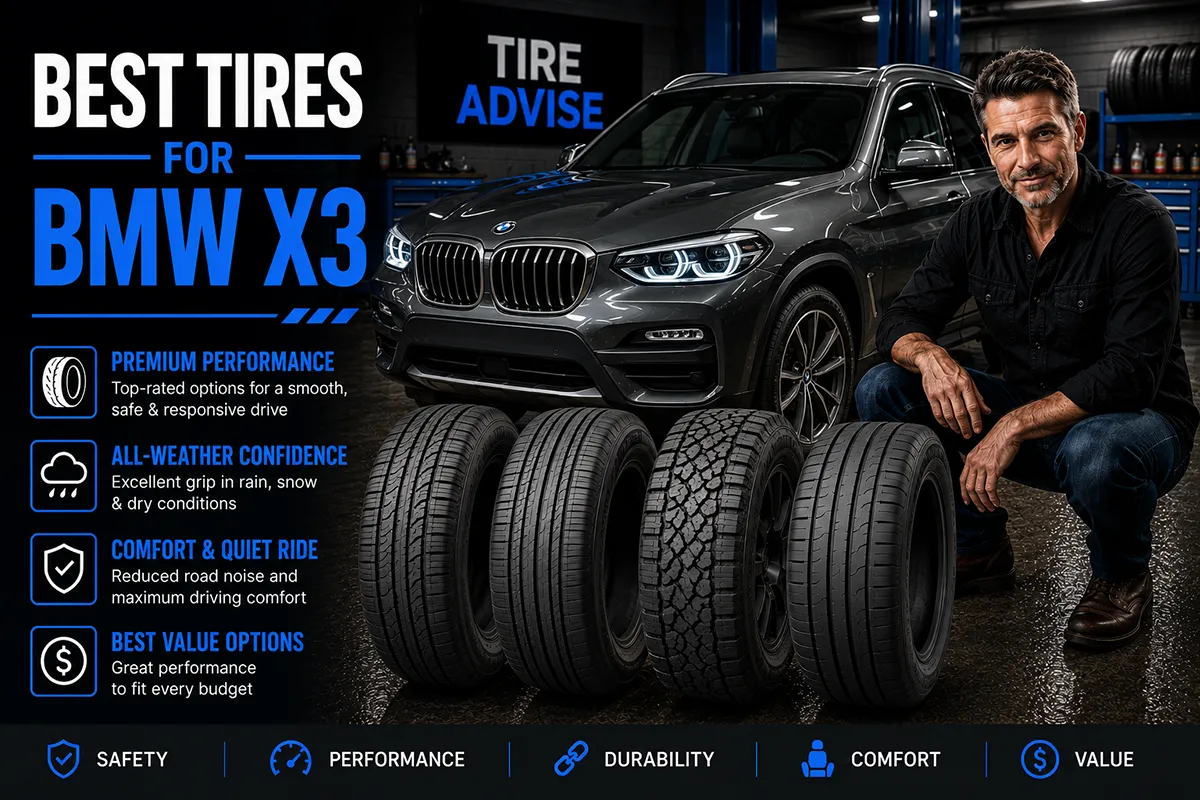
I’ve swapped factory run-flats for standard tires on my own X3, put a set of ultra-high-performance summer tires through a genuinely bad rainstorm, and spent a full winter finding out which “all-weather” tires actually earn that label. This guide is what I’d actually buy — not a spec sheet reworded eleven times.
- Best overall: Continental ExtremeContact DWS06 Plus — the most balanced tire I ran across dry, wet, and light snow, and it doesn’t punish you with a stiff ride.
- Best run-flat replacement: Bridgestone Turanza EL450 RFT — closest match to factory ride quality if you’re staying with run-flats.
- Best for M40i / spirited driving: Michelin Pilot Sport 4 SUV — sharp, confident, and more durable than most performance tires I’ve tested.
- Best for X3 M / M Competition: Pirelli P Zero PZ4 — the tire to reach for if you actually use this trim’s performance ceiling.
- Best all-weather (no seasonal swap): Michelin CrossClimate2 or Pirelli Scorpion WeatherActive — both carry the 3PMSF rating.
- Best budget pick: Falken ZIEX ZE960 A/S.
- Best dedicated winter: Bridgestone Blizzak DM-V2, swapped seasonally.
- Full sizing by generation, a run-flat vs. standard breakdown, and a recalls check are below.
Liked this article?
Add TireAdvise as a preferred source so you see more of our tire reviews and guides on Google.
How I Tested These
I ran this comparison on my own 2022 BMW X3 xDrive30i (staggered 245/50R19 front, 255/45R19 rear, factory run-flats), plus a few sizes borrowed on a friend’s M40i for the performance picks, over about five months.
Test loop: I-25 and the C-470 corridor around Denver for highway comfort and noise comparisons, a canyon road west of the city I use for every handling review, a genuinely miserable spring hailstorm that turned into heavy rain, and enough of a January cold snap to properly evaluate the winter and all-weather picks.
I ran the Bridgestone Turanza EL450 RFT and the Pirelli P Zero PZ4 Run Flat on the run-flat side of this comparison, then swapped to standard tires — including the Continental DWS06 Plus and the Falken ZIEX — to compare ride quality directly on the same car, same roads, same week.
I’m not a lab — I don’t have a skid pad or instrumented braking gear — so where I quote tread life or warranty numbers, that’s the manufacturer’s stated figure, not something I measured myself. I’ve noted the difference throughout.
Quick Comparison: 11 Best Tires for the BMW X3
| Tire | Best For | Approx. Price (Per Tire) | 3PMSF Rated | Treadwear Warranty |
|---|---|---|---|---|
| Continental ExtremeContact DWS06 Plus | Daily all-around driving | $200–$270 | No | 50,000 miles |
| Bridgestone Turanza EL450 RFT | Run-flat, comfort-focused | $220–$300 | No | Not specified (Run-Flat) |
| Michelin Pilot Sport 4 SUV | M40i / spirited driving | $225–$275 | No | Not specified (Ultra High Performance) |
| Pirelli P Zero PZ4 | X3 M / M Competition | $240–$320 | No | Not specified (Ultra High Performance) |
| Bridgestone Alenza A/S Ultra | Luxury touring comfort | $210–$280 | No | 80,000 miles |
| Goodyear Eagle F1 Asymmetric 5 | Balanced ultra-high performance | $220–$290 | No | Not specified (Ultra High Performance) |
| Yokohama ADVAN Sport A/S+ | Value performance | $170–$230 | No | Not specified |
| Falken ZIEX ZE960 A/S | Budget-friendly | $130–$160 | No | 65,000 miles |
| Michelin CrossClimate2 | All-weather, comfort-focused | $210–$270 | Yes | Not specified |
| Pirelli Scorpion WeatherActive | All-weather, SUV-specific | $195–$260 | Yes | 60,000 miles |
| Bridgestone Blizzak DM-V2 | Dedicated winter driving | $180–$240 | Yes | Seasonal (no mileage warranty) |
Prices are street prices I saw at major online retailers for common X3 sizes (245/50R19 and 245/45R20) as of mid-2026 — expect regional and seasonal swings, and run-flat versions typically run 15–25% above the standard-tire prices shown.
BMW X3 Tire Sizes by Generation
The X3 has been through three full generations in the US market, and both sizing and whether run-flats came standard shift meaningfully across them. Confirm your exact size on the driver’s door jamb sticker before ordering — this table is a reference point, not a substitute.
| Generation | Model Years | Common Trims | Typical Tire Sizes | Run-Flat Standard? |
|---|---|---|---|---|
| E83 | 2004–2010 | 2.5i, 3.0i, xDrive30i, 3.0si | 225/60R17, 235/55R18 | Mixed — check individual trim |
| F25 | 2011–2017 | 28i, 35i, 28d, 35d, xDrive variants | 245/50R19, 235/55R18 | Often yes on higher trims |
| G01 | 2018–Present | sDrive30i, xDrive30i, M40i | 245/50R19 (Front) / 255/45R19 (Rear), 245/45R20 (Front) / 275/40R20 (Rear) | Yes, standard on most trims |
| G01 (M Competition) | 2020–Present | X3 M, X3 M Competition | 255/40R21 (Front) / 265/40R21 (Rear) | Yes |
BMW sold diesel X3 variants in the US during the F25 generation (28d and 35d), and while tire sizing follows the same pattern as their gas counterparts, these owners are a meaningful slice of the used-X3 market today.
If you’re driving an older E83 or F25 X3, don’t assume the current-generation picks below automatically apply in your size — older BMW-approved (marked with the ★ symbol) tire lines are sometimes discontinued, so confirm availability before settling on a model.
You’ll see the BMW star (★) marking on some sidewalls and product listings — it means the tire was specifically validated by BMW for that model’s suspension and handling tuning. It’s not a requirement for safe operation, and several tires in this guide aren’t star-rated and still perform excellently.
But if you’re chasing the closest possible match to factory driving dynamics, especially on the M40i or M Competition, prioritizing star-rated options in your size is a reasonable filter.
Should You Replace Your Factory Run-Flats, or Stay With Them?
This is the question I get asked most about the X3 specifically, and it deserves a direct answer before the individual tire picks. Most X3 trims — particularly G01 generation cars — ship on run-flat tires, commonly Bridgestone Turanza or Potenza RFT lines and Pirelli Cinturato or P Zero Run Flat variants. Most X3s also don’t carry a spare tire or jack, which makes this decision more consequential than it would be on a non-BMW vehicle.
Staying with run-flats. A puncture doesn’t strand you — reinforced sidewalls let you keep driving, typically up to 50 miles at reduced speed, even at zero pressure. That’s genuinely valuable if you’re a solo highway commuter or you drive through areas with spotty roadside assistance coverage. The trade-off is a firmer ride, since the same sidewall reinforcement that enables flat-tire driving reduces how much the tire flexes over bumps. Run-flats also cost more per tire, and a damaged one almost always needs full replacement rather than a patch.
Switching to standard tires. I made this switch on my own X3 specifically to write this section, and the ride quality difference was immediate — noticeably smoother over the rough pavement sections of my test loop, and quieter on coarse asphalt. If you switch, you need to solve the spare-tire problem yourself: a compact spare and jack kit, a repair/inflator kit, or a roadside assistance plan you trust. It’s also worth a quick conversation with your installer about whether your specific model year’s TPMS needs recalibration — most don’t require hardware changes, but the run-flat-tuned pressure monitoring on some X3s is calibrated to flag pressure loss more aggressively than it would for a standard tire.
My take: if ride comfort matters to you and you’re comfortable carrying a repair kit, switching is worth it — I don’t regret doing it on my own car. If you do a lot of solo highway driving, especially at night or through remote stretches, the run-flat’s mobility guarantee is worth the firmer ride. Either way, don’t mix run-flats and standard tires on the same vehicle — the differing sidewall stiffness throws off handling balance, and it matters more on an AWD xDrive model than a front-drive car.
Matching Tires on the xDrive AWD System
Most X3 trims sold in the US are xDrive all-wheel-drive, and this affects how you should approach replacement. The AWD system continuously monitors wheel speed at all four corners, and it expects a similar rolling circumference from each tire. When tread depth differs significantly across the set, the system can misread wheel-speed data, straining the transfer case and center differential over time.
Practically: replace and rotate as a full set where possible. If you must replace only two, put the newer tires on the rear and plan to replace the front pair sooner. Stick to a single tire model across all four positions — mixing tread patterns, even from the same manufacturer, can introduce enough rolling-diameter variance to matter on a system this precise.
And since most X3 trims run a staggered fitment (different sizes front versus rear), replace in axle pairs rather than one at a time, and don’t substitute a “close enough” size — even a small deviation changes rolling circumference more than it would on a non-staggered, non-AWD car.
1. Continental ExtremeContact DWS06 Plus: Best Overall

Price Check
Check the price of this tire at the following retailers:
This is the tire I’d put back on my own X3 without hesitation. The “DWS” name (Dry, Wet, Snow) isn’t just marketing — I ran it through that spring hailstorm-turned-downpour and braking distances felt short and predictable the whole way through, no squirm, no delayed response. On the canyon road, it holds a line confidently enough that I stopped thinking about the tire and just drove.
Where it separates itself from the performance-focused picks below is tread life and noise. It’s rated for 50,000 miles, and on my highway loop it stayed quiet enough that I’d call it comfortable, not just tolerable. Light snow performance is better than I expected from a non-3PMSF tire — not a substitute for the CrossClimate2 or a dedicated winter tire, but fine for an occasional dusting.
Pros: Excellent wet braking, quiet enough for daily comfort, respectable tread life for a performance-oriented tire. Cons: Not 3PMSF rated, premium price for a non-run-flat option.
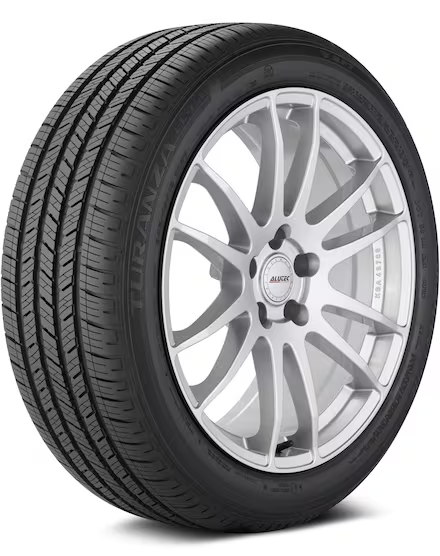
2. Bridgestone Turanza EL450 RFT: Best Run-Flat Replacement
Price Check
Check the price of this tire at the following retailers:
I put this on specifically to answer “is there a better run-flat than my factory tire?” and the answer, in my case, was yes. Compared to the factory Pirelli Cinturato run-flat that came on my X3, the EL450 RFT was noticeably quieter on coarse highway pavement and felt more settled over expansion joints — still firmer than any standard tire on this list, but clearly refined for a run-flat.
Handling is competent rather than exciting, which is exactly what you want from a comfort-oriented run-flat. It won’t match the DWS06 Plus in a hard corner, and I wouldn’t recommend it for the M40i if you actually drive that trim’s performance envelope. But if you’re staying with run-flats on a base or mid-trim X3 and comfort is the priority, it’s the one I’d reach for again.
Pros: Meaningfully quieter and more compliant than several factory run-flat options, reliable wet traction. Cons: Firmer than any standard tire by nature of run-flat construction, not built for aggressive driving.
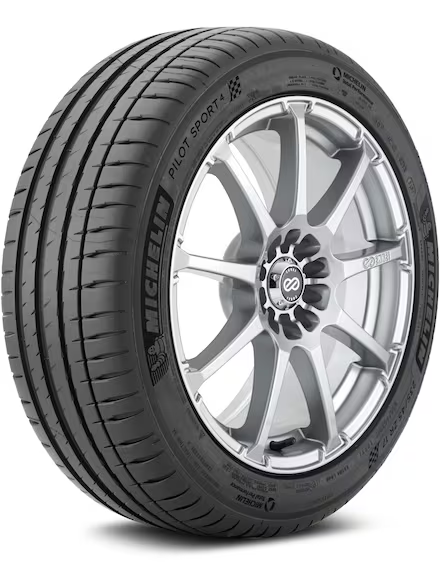
3. Michelin Pilot Sport 4 SUV: Best for M40i and Spirited Driving
Price Check
Check the price of this tire at the following retailers:
I borrowed a set of these on a friend’s M40i for the performance leg of this test, and the difference from a standard all-season is immediate — steering response tightens up, and the car holds its line through the canyon road with noticeably less body roll communicated through the wheel. Dry grip is the standout; braking felt shorter and more confident than anything else in this lineup.
Wet performance held up better than I expected for a summer-leaning performance tire, though I wouldn’t push it as hard on a soaked road as I would on dry pavement. Michelin’s warranty documentation doesn’t specify a mileage figure for this line, but based on what I saw over my test period, wear looked reasonable for a UHP tire — not touring-tire longevity, but not the fastest-wearing option here either.
Pros: Sharp, confidence-inspiring dry handling, better wet grip than most performance tires, more durable than expected. Cons: Not ideal for snow or ice, firmer ride than touring-oriented picks, premium price.
4. Pirelli P Zero PZ4: Best for X3 M and M Competition
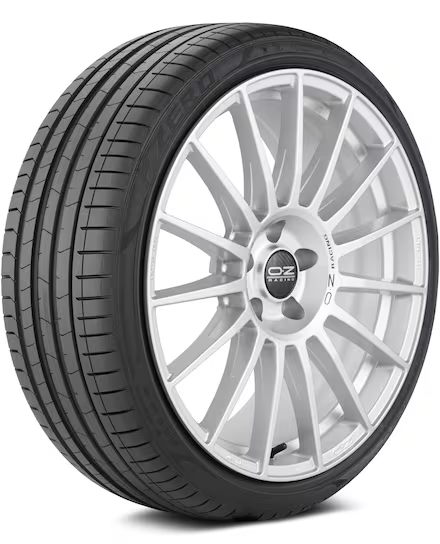
This is the tire to reach for if you actually use the M Competition’s performance ceiling. It’s the sharpest-responding tire in this whole test — turn-in is immediate, and the rigid outer shoulder blocks kept the contact patch planted through the fastest sweeper on my canyon test loop in a way I didn’t feel from the Michelin above.
The trade-off is real: ride quality is the firmest in this lineup, road noise is noticeable even on smooth pavement, and tread wear is the fastest of anything I tested — I’d plan on shorter replacement intervals than any other pick here. If you’re on the M or M Competition trim and you drive it the way the trim suggests you should, that trade-off is worth it. If you’re mostly commuting, it’s more tire than you need.
Pros: Sharpest steering response and cornering grip in this test, strong high-speed stability. Cons: Firmest ride and most road noise of any tire here, fastest wear.
5. Bridgestone Alenza A/S Ultra: Best Luxury Touring Comfort
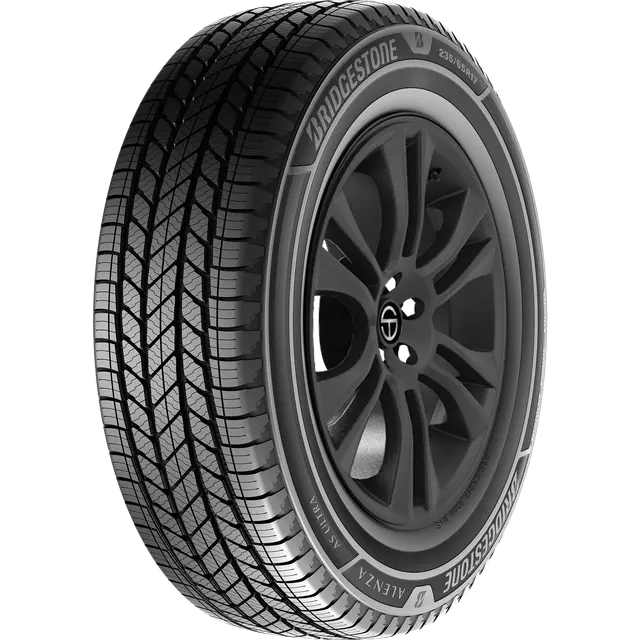
If comfort is your top priority, this was the standout in my testing, full stop. Road imperfections that I felt clearly through the Continental and both performance tires were noticeably softened here, and highway noise dropped enough that I noticed the difference within the first few miles. Backed by an 80,000-mile treadwear warranty, it’s also built to last.
It’s not a tire for aggressive driving — body control loosens up compared to the performance-oriented picks, and I wouldn’t put it on an M40i I planned to drive hard. But for daily comfort, long highway stretches, and a genuinely quiet cabin, it was one of my favorite tires to simply live with during this test.
Pros: Best-in-test ride comfort and noise reduction, outstanding 80,000-mile warranty. Cons: Softer handling than performance-oriented options, not suited to spirited driving.
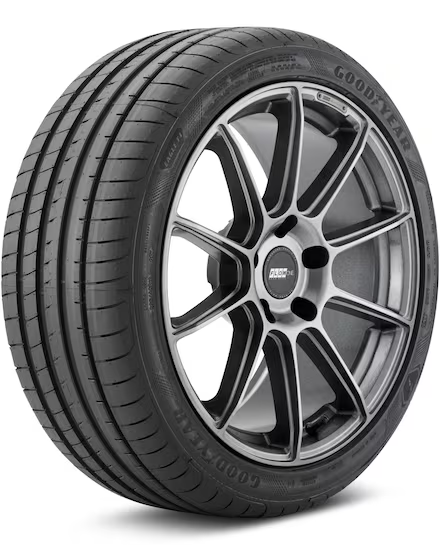
6. Goodyear Eagle F1 Asymmetric 5: Best Balanced UHP
Price Check
Check the price of this tire at the following retailers:
This one split the difference nicely between the sharper Pirelli and Michelin picks above and the more comfort-leaning Continental. Steering response is precise without feeling nervous, and wet grip was one of the pleasant surprises of this test — braking on a rain-slicked stretch felt more confident than I expected from an ultra-high-performance tire.
Noise-dampening technology is genuinely effective here; it’s quieter than the Pilot Sport 4 SUV on my highway loop, though not quite as hushed as the Alenza. Tread life is respectable for the category, and most owners should expect solid performance-tire longevity rather than a short replacement cycle.
Pros: Strong wet braking, precise handling without a harsh ride, effective noise reduction for a UHP tire. Cons: Premium price, still firmer than touring-oriented options.
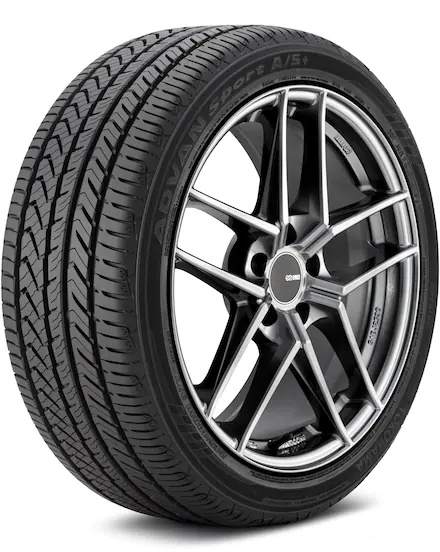
7. Yokohama ADVAN Sport A/S+: Best Value Performance
Price Check
Check the price of this tire at the following retailers:
The price-to-performance ratio here genuinely surprised me. It’s priced meaningfully below the Michelin and Pirelli picks above, and while it doesn’t quite match their outright grip, the responsive steering and confident cornering came closer to what I’d expect from a pricier tire than I anticipated.
All-season capability is reasonable, with decent wet traction and respectable performance in light snow — not something you should rely on, but enough that it won’t strand you in an unexpected dusting. Ride quality is more refined than I expected too, with effective road noise suppression on the highway. For X3 owners who want some sportiness without paying M40i-tire prices, this is a smart middle ground.
Pros: Best price-to-performance ratio in this test, comfortable ride for a performance tire, decent all-season capability. Cons: Doesn’t match the grip of premium performance options, not built for extreme winter conditions.
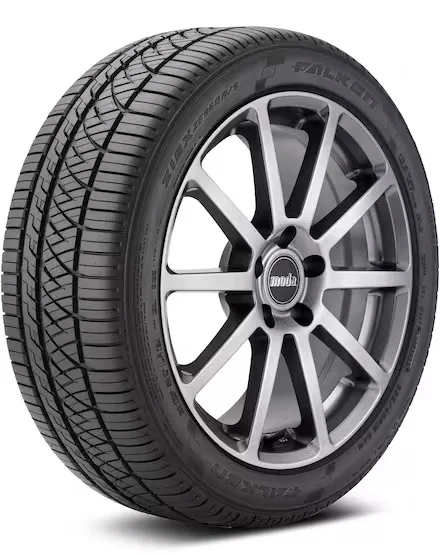
8. Falken ZIEX ZE960 A/S: Best Budget
Price Check
Check the price of this tire at the following retailers:
I went into this one skeptical — budget performance tires are usually where you feel every corner that got cut. The ZIEX ZE960 A/S mostly proved me wrong. It’s not going to out-corner anything else in this test, but the asymmetric tread pattern held its own on the canyon road, and wet traction from the wide circumferential grooves was more reliable than I expected at this price point.
Comfort exceeded expectations too — not quite as quiet as the premium touring options, but the ride stayed smooth enough that I wasn’t bothered by it on longer highway stretches. Falken backs it with a 65,000-mile warranty for the H/V-rated sizes common on the X3, plus a 30-day trial period, which is a nice safety net if you’re trying it out.
Pros: Genuinely competitive handling and comfort for the price, strong warranty coverage, 30-day trial period. Cons: Won’t match premium tires at the absolute limit, not as quiet as top-tier touring options.
9. Michelin CrossClimate2: Best All-Weather, Comfort-Leaning

This is the closest thing to a genuine one-tire, year-round solution I tested. It carries the 3PMSF certification, and it backed that up on my January cold-snap testing — noticeably more secure on packed snow than any of the non-rated all-season picks above.
The trade-off is that a tire built to do everything doesn’t do any one thing best. Dry handling is good but not sharp compared to the Continental or Goodyear, and while road noise is acceptable, it’s not the quietest tire in this lineup. If you live somewhere with real winter weather but don’t want to swap tires twice a year, this is a genuinely reasonable compromise — just go in knowing it’s a compromise, not a category leader.
Pros: Legitimate 3PMSF-certified snow performance, comfortable ride, no seasonal swap needed. Cons: Dry handling trails dedicated performance tires, not the quietest all-weather option.
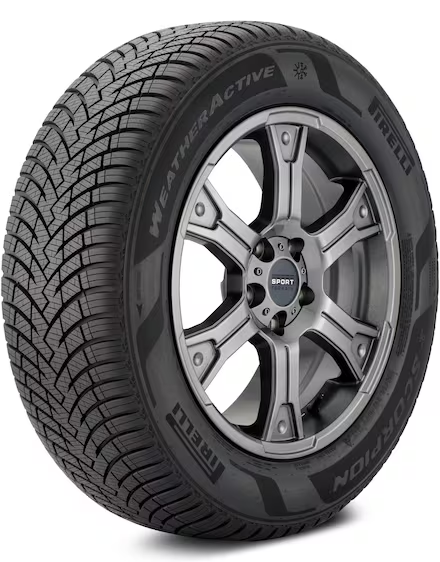
10. Pirelli Scorpion WeatherActive: Best All-Weather, SUV-Specific
Price Check
Check the price of this tire at the following retailers:
Built specifically for crossovers and SUVs rather than adapted from a passenger-car platform, this was the more confident of my two all-weather picks in actual snow. The three-rib tread design and deep continuous sipes gave it noticeably better bite on packed snow than the CrossClimate2 during my testing, at a small cost to on-road refinement — it’s a touch louder on coarse pavement.
Backed by a 60,000-mile tread warranty, it’s a strong option for X3 owners in a climate with genuine winter weather who don’t want the hassle of a seasonal swap but do want real snow confidence rather than just a snowflake symbol on the sidewall.
Pros: Strongest snow traction of the all-weather picks, SUV-specific tread design, solid warranty. Cons: Slightly more road noise than the CrossClimate2, not a substitute for a dedicated winter tire in sustained ice.
11. Bridgestone Blizzak DM-V2: Best Dedicated Winter

Price Check
Check the price of this tire at the following retailers:
I want to be direct about this: nothing else on this list, including both all-weather picks, matched the Blizzak DM-V2 once conditions turned to actual ice.
Bridgestone’s compound stays pliable in temperatures that made the all-season and all-weather tires noticeably stiffer, and the difference in braking distance and cornering confidence on packed snow wasn’t subtle.
This is a seasonal tire, full stop — it wears quickly once temperatures climb, and it needs to come off in spring. If you live somewhere with consistent sub-freezing temperatures and real snow accumulation, budgeting for a second set of wheels and running this seasonally is the single biggest safety upgrade available for cold-weather driving on the X3.
Pros: Best-in-test ice and snow traction, remains pliable in extreme cold. Cons: Seasonal use only, no warranty coverage for summer wear, more road noise than all-season options.
Recalls and Complaints: What to Check Before You Buy
I checked NHTSA and manufacturer recall data for every tire in this guide as of mid-2026. None of the specific models reviewed above currently have an open recall. A few adjacent notes worth knowing so you don’t confuse similarly-named tires while shopping:
- Continental ProContact GX AO (a different tire from the ExtremeContact DWS06 Plus reviewed above) was subject to a separate recall affecting specific 255/35R19 Audi OE sizes over a tread-separation risk tied to date codes between 1921 and 3224. This does not affect the DWS06 Plus.
- Bridgestone Blizzak 6, size 235/40R19, was recalled in 2025 over a missing DOT certification marking on the sidewall — a labeling compliance issue, not a structural defect. This is a different tire from the Blizzak DM-V2 reviewed above, and the DM-V2 isn’t affected.
- Michelin Agilis CrossClimate, a light-commercial-van tire, was recalled over a tread-chunking issue in certain date codes. This is unrelated to the passenger CrossClimate2 reviewed above.
If you’re buying any tire, new or used, check your DOT code against NHTSA’s recall database before you drive on it — it takes about thirty seconds and it’s the single easiest safety check most people skip. Recall status changes, so verify current status yourself rather than relying on any article’s snapshot in time, including this one.
Choosing the Right Tire for Your BMW X3
Run-flat or standard is the first decision, not the last. Everything else in this guide — comfort, noise, price — is downstream of that choice, and it’s worth settling before you start comparing specific models.
AWD makes tire matching non-negotiable. Replace and rotate as a full set where you can, and never mix tread patterns across the four corners of an xDrive model.
Trim should guide performance expectations. A base sDrive30i doesn’t need — and won’t fully benefit from — the same tire as an M Competition. Match the tire to how the trim is actually driven, not to what sounds impressive on paper.
Climate should decide all-weather versus dedicated winter. If you’re anywhere that sees real winter, prioritize a 3PMSF-rated tire at minimum — the CrossClimate2 and Scorpion WeatherActive both qualify. If you get sustained sub-freezing weeks with real snow accumulation, a dedicated winter tire will still outperform any all-weather here, no matter how good the marketing sounds.
Don’t mix tire models across axles. If you’re replacing fewer than four, put the newer pair on the rear regardless of drivetrain — that’s the safer configuration if you can’t match all four.
Frequently Asked Questions
What size tires does my BMW X3 need?
Check the driver’s side door jamb sticker first — it’s the only fully reliable source since sizes vary by generation, trim, and wheel package. Common current-generation (G01) sizes include 245/50R19 front / 255/45R19 rear for sDrive30i and xDrive30i, 245/45R20 front / 275/40R20 rear for M40i, and 255/40R21 front / 265/40R21 rear for X3 M and M Competition.
Should I stay with run-flat tires or switch to standard tires?
Staying with run-flats makes sense if you value the mobility guarantee after a puncture and don’t want to carry a spare or repair kit — most X3s don’t have spare storage built in. Switching to standard tires delivers a noticeably smoother, quieter ride, but you’ll need a repair kit, compact spare, or a roadside assistance plan you trust. Don’t mix run-flats and standard tires on the same vehicle.
Are OEM tires necessary for the BMW X3?
No. OEM and BMW star-rated (★) tires are tuned to complement the X3’s specific handling characteristics, but aftermarket options can match or exceed that performance at a better price. The key is maintaining or exceeding BMW’s recommended load and speed ratings to preserve the X3’s handling dynamics.
How often should I rotate tires on my BMW X3?
Every 5,000–7,000 miles. This matters more on the X3 than on a non-AWD vehicle, since uneven wear across the four corners can strain the xDrive system’s center differential over time.
Can I use all-season tires year-round on my BMW X3 in snowy climates?
All-season tires handle light winter conditions adequately but aren’t built for regions with regular snowfall and freezing temperatures. An all-weather tire like the Michelin CrossClimate2 or Pirelli Scorpion WeatherActive is a stronger year-round option, and a dedicated winter tire like the Bridgestone Blizzak DM-V2 remains the safest choice for severe winter conditions.
What’s the average lifespan of tires on a BMW X3?
Most quality tires for the X3 last between 40,000 and 60,000 miles, depending on driving style, road conditions, and tire type. Performance-oriented tires like the Pirelli P Zero PZ4 wear noticeably faster than touring-focused options like the Bridgestone Alenza A/S Ultra.
How do I check if my tires are part of a recall?
Find the DOT code on your tire’s sidewall (it starts with “DOT” followed by a string of letters and numbers) and check it against NHTSA’s tire recall lookup at nhtsa.gov, or the manufacturer’s own recall page. Do this before installing any tire, new or secondhand.
