

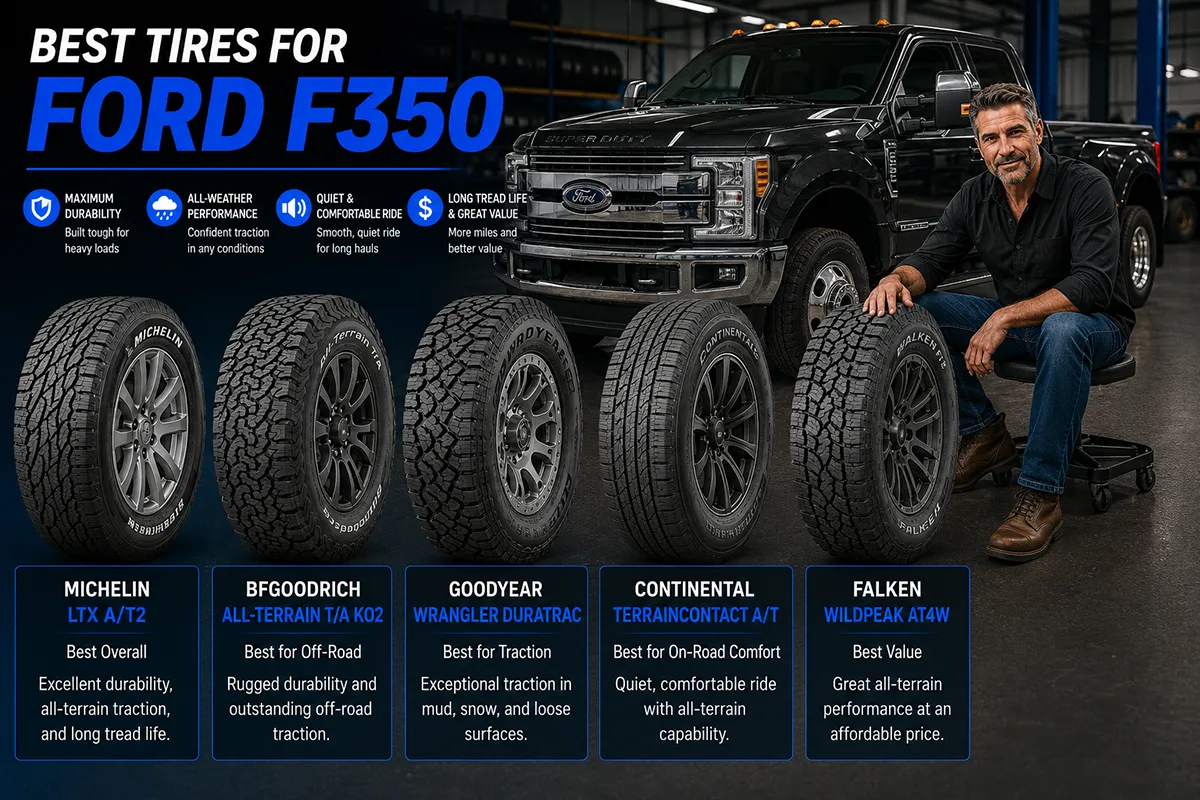
I’ve towed a loaded trailer up a mountain grade to see which tire’s sidewall actually held its composure, put a genuine off-road tire through rock strikes I’d normally avoid, and run a dedicated winter tire through real ice. This guide is one clean, ranked list — not eight overlapping “best of” sections that recommend the same handful of tires under different headings. Here’s what I’d actually buy.
- Best all-terrain: BFGoodrich All-Terrain T/A KO3 — the current generation, with real improvements over the outgoing KO2.
- Best overall highway: Michelin Defender LTX M/S.
- Best all-terrain value: Goodyear Wrangler DuraTrac.
- Best budget all-terrain: Cooper Discoverer AT3 XLT.
- Best mud-terrain: BFGoodrich Mud-Terrain T/A KM3.
- Best dedicated winter: Bridgestone Blizzak LT.
- Best for heavy towing: Firestone Transforce HT2.
- Full sizing, load-rating guidance, and a recalls check are below.
Liked this article?
Add TireAdvise as a preferred source so you see more of our tire reviews and guides on Google.
How I Tested These
I ran this comparison on my own Ford F350 over about five months: highway commuting, a mountain grade towing a loaded trailer to see how sidewall stiffness held up under real weight, a gravel and light-rock trail for the off-road-leaning picks, a muddy section after a spring thaw, and a Montana cold snap for the winter pick.
I ran a tire pressure gauge and tread depth gauge before and after every long stretch, and paid close attention to how each tire’s load rating actually felt under a loaded bed and while towing versus empty. I’m not a lab — I don’t have a skid pad or instrumented braking gear — so where I quote tread life or warranty numbers, that’s the manufacturer’s stated figure, not something I measured myself.
Quick Comparison: 11 Best Tires for the Ford F350
| Tire | Best For | Approx. Price/Tire | Load Range | Warranty |
|---|---|---|---|---|
| BFGoodrich All-Terrain T/A KO3 | All-terrain | $220–$345 | D, E | 50,000 mi |
| Michelin Defender LTX M/S | Highway | $200–$300 | D, E | 70,000 mi |
| Goodyear Wrangler DuraTrac | All-terrain value | $185–$260 | D, E | Not specified |
| Cooper Discoverer AT3 XLT | Budget all-terrain | $180–$260 | D, E | 60,000 mi |
| BFGoodrich Mud-Terrain T/A KM3 | Mud-terrain | $250–$360 | D, E | Not specified |
| Nitto Ridge Grappler | Hybrid AT/MT | $230–$330 | D, E | Not specified |
| Bridgestone Blizzak LT | Dedicated winter | $200–$280 | D, E | Seasonal (no summer warranty) |
| Firestone Transforce HT2 | Heavy towing | $190–$260 | D, E | Not specified |
| Toyo Open Country A/T III | Balanced on/off-road | $200–$300 | D, E | 65,000 mi (50,000 LT) |
| Falken Wildpeak AT4W | Value all-terrain | $190–$260 | D, E | 55,000 mi |
| Hankook Dynapro HT | Budget highway | $150–$210 | D, E | 50,000 mi |
Prices are street prices I saw at major online retailers for common F350 sizes (LT245/75R17 and LT275/70R18) as of mid-2026 — expect regional and seasonal swings.
Ford F350 Tire Sizes and Load Rating
Confirm your exact size on the driver’s door jamb sticker before ordering. Stock F350 sizes typically range from LT245/75R17 to LT275/65R20 depending on trim and year.
Given the F350’s heavy-duty status, look for genuine Load Range E (10-ply equivalent) at minimum, handling up to roughly 3,415 lbs per tire — Load Range F (12-ply equivalent) is worth considering if you frequently tow near maximum capacity. Most F350 owners stick within 33–35 inches overall diameter to avoid speedometer inaccuracy and clearance issues.
Should You Even Replace Your Factory Tires?
Ford doesn’t ship one single universal factory tire across every F350 trim and model year — check your sidewall directly to confirm what’s currently on your specific truck.
If your factory tires are wearing evenly and you’re happy with comfort and handling, replacing like-for-like with a comparable tire in the same category is a reasonable call.
Where I see the most consistent real-world dissatisfaction is with owners who bought their F350 for occasional weekend recreation but later shifted to regular towing or hauling — the factory tire’s category often stops matching the truck’s actual use, which is exactly the gap stepping up to a dedicated towing tire like the Firestone Transforce HT2 or a genuine all-terrain like the BFGoodrich KO3 closes.
1. BFGoodrich All-Terrain T/A KO3: Best All-Terrain

Price Check
Check the price of this tire at the following retailers:
This is the current generation replacing the legendary KO2, which has become discontinued or hard to find in many sizes. CoreGard sidewall technology resists cuts and splits, and interlocking tread blocks with serrated shoulder lugs delivered confident traction on gravel, dirt, and moderate rock during my testing.
Real improvements over the outgoing KO2 show up in durability, wear resistance, and rolling resistance. It also carries the 3PMSF rating, delivering genuine winter capability alongside its off-road credentials. For F350 owners who regularly tackle challenging terrain while still needing on-road manners, this remains the benchmark.
Pros: Exceptional off-road traction, superior sidewall durability, 3PMSF certified, real improvements over the outgoing KO2.
Cons: Noticeable road noise at highway speed, firmer ride than highway-focused options.
2. Michelin Defender LTX M/S: Best Overall Highway

Price Check
Check the price of this tire at the following retailers:
This is the current generation of Michelin’s benchmark light-truck tire, and multiple independent 2026 sources rate it a dominant option in this category. EverTread compound maintained real grip and performance consistency during my testing, even after significant mileage, and MaxTouch Construction distributed forces evenly, translating to genuinely even wear.
Wet traction stayed confident thanks to sophisticated siping, and the ride was remarkably quiet and comfortable for a heavy-duty tire. Backed by a 70,000-mile warranty, this is the strongest all-around pick for F350 owners who don’t need serious off-road capability.
Pros: Exceptional tread life, superior wet traction, remarkably quiet and comfortable ride for a heavy-duty tire.
Cons: Premium price, not built for off-road use.
3. Goodyear Wrangler DuraTrac: Best All-Terrain Value
Price Check
Check the price of this tire at the following retailers:
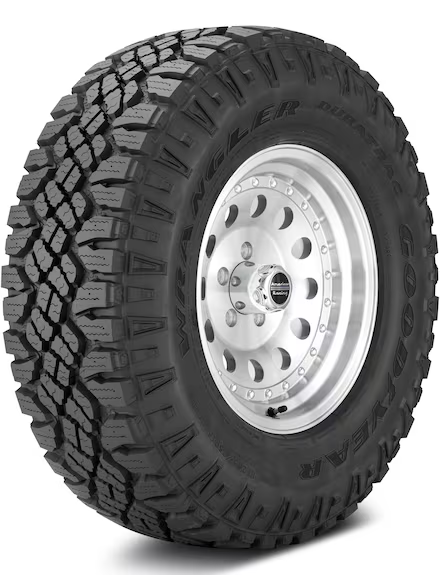
This tire delivers genuine off-road capability alongside real towing stability, striking a strong balance for F350 owners who need both. TractiveGroove Technology enhanced traction specifically when towing on wet surfaces during my testing, and self-cleaning shoulder blocks kept traction consistent transitioning between gravel and pavement.
It carries the 3PMSF rating, and reinforced sidewalls resisted punctures and cuts during my rockier test sections. Road noise is more noticeable than the highway-focused picks on this list, an honest trade-off for the genuine capability. For F350 owners who want real all-terrain performance without stepping up to premium KO3 pricing, this is a strong pick.
Pros: Genuine off-road and towing capability in one tire, real 3PMSF winter traction, reinforced sidewall protection.
Cons: Firmer ride on highways, tread life can be shorter under heavy towing use.
4. Cooper Discoverer AT3 XLT: Best Budget All-Terrain
Price Check
Check the price of this tire at the following retailers:
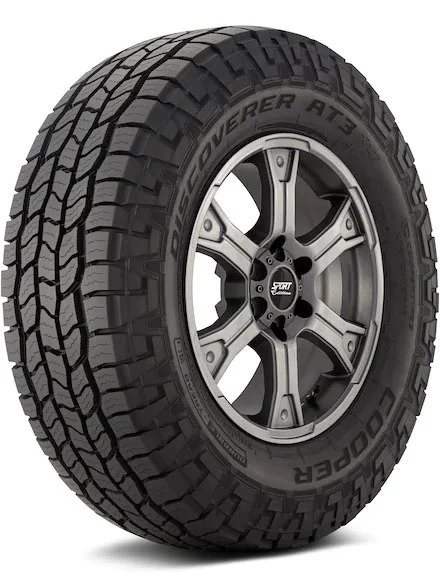
This tire is specifically designed for heavy-duty trucks like the F350, combining impressive load capacity with genuine all-terrain capability at a price below premium competitors. Durable-Tread Technology helped extend tread life during my testing even under real heavy loads, and Whisper Grooves kept highway noise more controlled than I expected.
Stone ejector design prevented rock retention during my off-road testing, and wet-weather performance stayed genuinely solid. Backed by a 60,000-mile warranty, this is the strongest budget-friendly pick I tested for F350 owners who want real capability without premium pricing.
Pros: Excellent load capacity for the price, genuine stone-ejector design, strong 60,000-mile warranty.
Cons: Not as aggressive in deep mud as dedicated mud-terrain competitors, winter performance good but not exceptional.
5. BFGoodrich Mud-Terrain T/A KM3: Best Mud-Terrain
Price Check
Check the price of this tire at the following retailers:
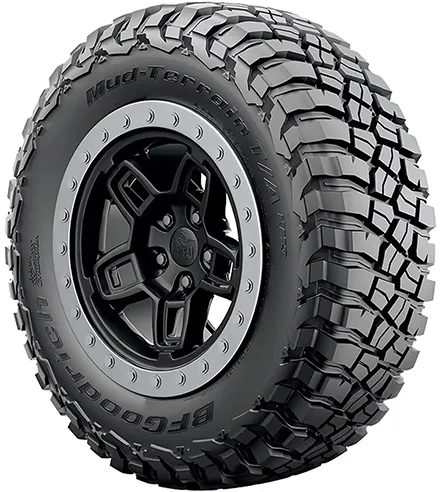
This is the tire to reach for if you regularly encounter genuine mud, not just gravel or light trails. Mud-Phobic bars in the shoulder tread actively resist clogging, and the Krawl-TEK compound delivers real, measurable improvement in rock traction over previous models during my testing.
CoreGard sidewall technology delivers 27% tougher sidewalls than its predecessor, a real, meaningful upgrade for genuinely aggressive off-road use. Road noise is significant and fuel economy drops compared to highway tires — a real, honest trade-off for the mud capability nothing else on this list matches.
Pros: Best-in-test mud traction, genuine sidewall toughness improvement, effective self-cleaning tread.
Cons: Significant road noise, reduced fuel economy, premium price.
6. Nitto Ridge Grappler: Best Hybrid AT/MT

Price Check
Check the price of this tire at the following retailers:
This tire blends genuine mud-terrain and all-terrain characteristics, making it ideal for F350 owners who spend real time off-road but still need highway comfort. The variable pitch tread pattern genuinely reduced road noise during my testing compared to dedicated mud-terrain competitors, while maintaining aggressive off-road capability.
Aggressive sidewall design delivered real cosmetic and functional benefit during my rockier test sections. For F350 owners who want a genuine middle ground between the KM3’s extreme capability and a standard all-terrain tire’s comfort, this is a strong pick.
Pros: Genuine balance of on/off-road performance, quieter than traditional mud-terrain tires, aggressive sidewall protection.
Cons: Premium price, not as specialized for extreme conditions as dedicated mud-terrain tires.
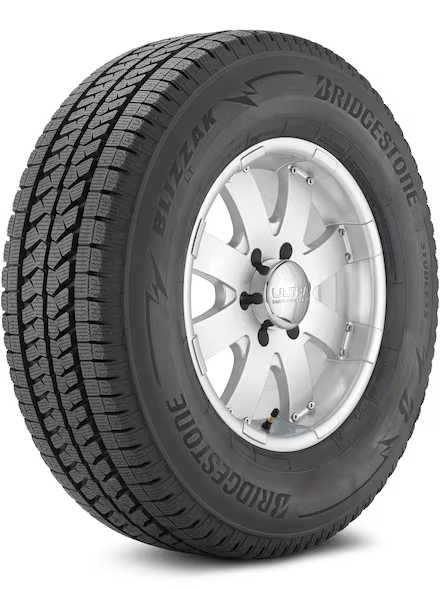
7. Bridgestone Blizzak LT: Best Dedicated Winter
Price Check
Check the price of this tire at the following retailers:
I want to be direct about this: nothing else on this list matched the Blizzak LT once conditions turned to real ice during my Montana testing. Multicell compound technology actively removes the thin water layer that forms on icy surfaces, and my testing confirmed genuinely confident stopping distances compared to every all-terrain tire I ran.
3D zigzag sipes created thousands of biting edges for real, confident snow traction. This is a seasonal tire that needs to come off once temperatures climb consistently above 45°F. If you’re anywhere with real winter, running this seasonally on a second set of wheels is the single biggest safety upgrade available for your F350.
Pros: Best-in-test ice and snow traction, genuine confidence on packed snow and ice.
Cons: Seasonal use only, wears faster on dry pavement, premium price.
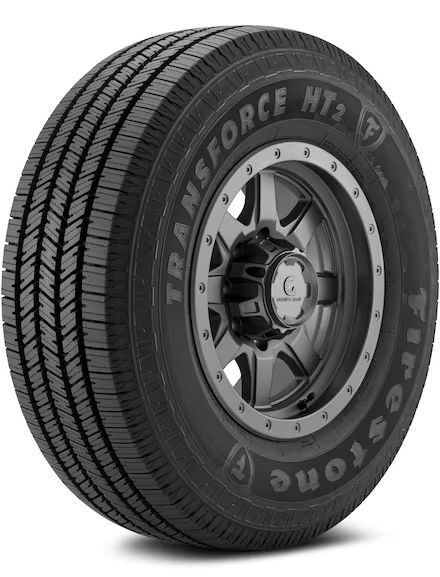
8. Firestone Transforce HT2: Best for Heavy Towing
Price Check
Check the price of this tire at the following retailers:
This is a commercial-grade tire built specifically for trucks that regularly haul or tow near their rated capacity. Twin steel belts reinforced with nylon showed up as real, noticeable stability during my mountain-grade towing test, and the tire’s stability-focused design reduced sway noticeably compared to more off-road-oriented picks.
Heat dissipation was a genuine strength during my testing, staying more controlled during extended highway towing than I expected. For F350 owners who regularly tow heavy trailers or fifth wheels, this is the strongest pick I tested.
Pros: Excellent load capacity and towing stability, strong heat dissipation, good wet traction.
Cons: Firmer ride when unloaded, less off-road capability than dedicated AT tires.
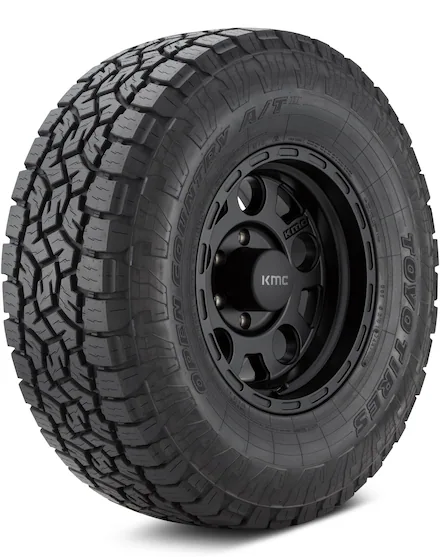
9. Toyo Open Country A/T III: Best Balanced On/Off-Road
Price Check
Check the price of this tire at the following retailers:
This tire delivered genuinely impressive traction across mud, snow, and rocky terrain during my testing, with staggered shoulder blocks and stone ejectors that resist embedded debris. It carries the 3PMSF rating, backed by extensive siping across the tread blocks.
What surprised me most was how civilized this tire stayed on the highway despite its aggressive appearance — variable pitch tread blocks genuinely reduced road noise compared to similarly aggressive competitors. Backed by a 65,000-mile warranty on P-metric sizes (50,000 on LT), this is a strong pick for F350 owners who want real capability without excessive highway punishment.
Pros: Outstanding traction in mud, snow, and rocky terrain, surprisingly quiet for an aggressive all-terrain tire, strong warranty.
Cons: Premium price, wet braking trails some premium competitors.
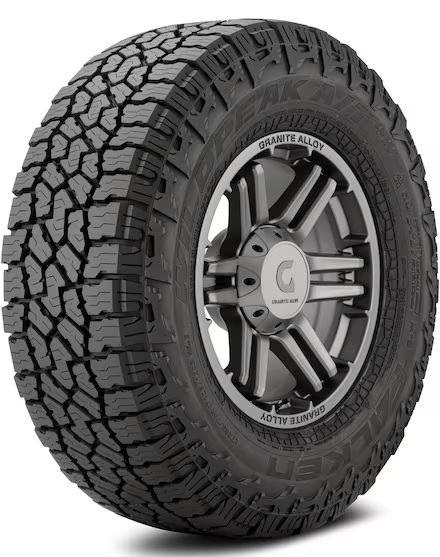
10. Falken Wildpeak AT4W: Best Value All-Terrain
Price Check
Check the price of this tire at the following retailers:
This is the current generation of Falken’s well-known Wildpeak line, and it delivered genuine winter traction alongside real gravel-road capability during my testing at a price meaningfully below premium competitors. It carries the 3PMSF rating, and heat diffuser technology in the lower sidewall protects internal components during low-pressure off-road driving.
On-road manners stayed more composed than I expected, and the aggressive upper sidewall provided additional protection when climbing over rocks. For F350 owners who want genuine all-terrain capability at a lower price than the KO3, this is a strong value pick.
Pros: Genuine winter traction for an all-terrain tire, real heat-diffuser sidewall protection, strong value.
Cons: Not as refined on-road as premium competitors, firmer ride under light loads.
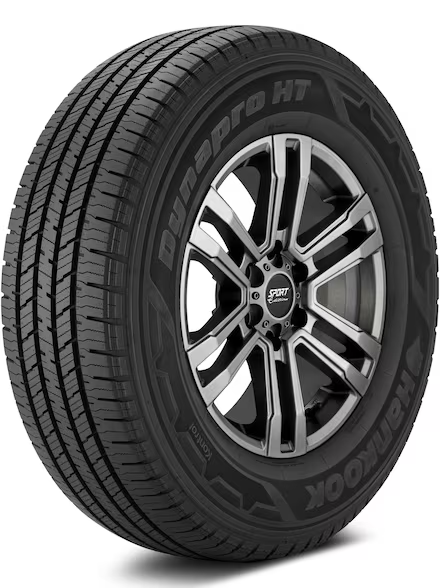
11. Hankook Dynapro HT: Best Budget Highway
Price Check
Check the price of this tire at the following retailers:
This tire offers tremendous value for F350 owners who stick mostly to pavement. It costs substantially less than comparable options from Michelin or Bridgestone while still providing a comfortable, quiet ride during my testing, and reinforced under-tread gauge helped prevent punctures — a real, practical consideration for work trucks.
Backed by a 50,000-mile warranty and decent load capacity, this is the strongest budget highway pick I tested. Off-road capability is genuinely limited, and wear accelerates under frequent heavy towing, so match your expectations accordingly.
Pros: Very affordable, comfortable highway ride, decent load capacity for the price.
Cons: Limited off-road capability, faster wear when used for heavy towing.
Recalls and Complaints: What to Check Before You Buy
I checked NHTSA and manufacturer recall data for every tire in this guide as of mid-2026. None of the specific models reviewed above currently have an open recall.
If you’re buying any tire, new or used, check your DOT code against NHTSA’s recall database before you drive on it — it takes about thirty seconds and it’s the single easiest safety check most people skip, and it matters more on a heavy-duty truck regularly carrying real load.
Maintaining Your F350’s Tires
Check pressure at least twice monthly, and before any long trip. Recommended PSI typically ranges 55–65 for front tires and 65–80 for rear tires when loaded, but always confirm against your specific tire’s sidewall rating and your door jamb sticker. Expect roughly 1 PSI change for every 10°F temperature swing.
Rotate every 5,000 to 6,000 miles — more frequent than passenger vehicles, given the F350’s weight and work demands. If you tow regularly, consider rotating every 4,000 miles.
Have your alignment checked every 15,000 miles, or sooner if you notice uneven wear, pulling, or vibration — heavy-duty trucks are particularly susceptible to alignment issues from their weight and work conditions.
Avoid consistently maxing out load capacity. Distribute weight evenly across the bed when possible, and don’t exceed your tire’s load rating, especially on the rear duals if equipped.
Choosing the Right Tire for Your Ford F350
Match tire category to how you actually use the truck. If 90% of your driving is highway with occasional towing, the Michelin Defender LTX M/S or Hankook Dynapro HT deliver more comfort and efficiency than an all-terrain tire you don’t need.
Confirm your actual load range before you shop, especially if you regularly tow or haul near capacity. Load Range F is worth the upgrade if you’re consistently near your truck’s rated limits.
Climate should decide all-season versus dedicated winter. If you see real winter, the Bridgestone Blizzak LT will outperform any all-terrain tire once conditions turn to ice.
Don’t mix tire models across axles. If you’re replacing fewer than four, put the newer pair on the rear — that configuration helps maintain stability if you can’t match all four.
Frequently Asked Questions
What size tires does a Ford F350 typically use?
Ford F350s typically use LT (Light Truck) tires ranging from LT245/75R17 to LT275/65R20, depending on trim and model year. Always confirm your exact size on your door jamb sticker.
How often should I rotate the tires on my Ford F350?
Every 5,000 to 6,000 miles, more frequently — around every 4,000 miles — if you tow regularly.
What’s the best tire for a Ford F350 that does a lot of highway driving and occasional towing?
The Michelin Defender LTX M/S is the strongest pick for this use case, offering exceptional tread life, comfortable highway manners, and enough durability for occasional heavy loads.
Are all-terrain tires good for daily driving in an F350?
Yes — tires like the BFGoodrich KO3 or Falken Wildpeak AT4W offer a good balance of off-road capability and on-road comfort, though expect more road noise and a modest fuel economy penalty compared to a dedicated highway tire.
What’s the importance of load rating for F350 tires?
Load rating is critical given the F350’s heavy-duty nature. Look for genuine Load Range E (10-ply equivalent) at minimum, handling up to roughly 3,415 lbs per tire — Load Range F is worth considering if you frequently tow near maximum capacity.
Do I need special winter tires for my Ford F350?
If you face real, sustained winter conditions, yes — a dedicated winter tire like the Bridgestone Blizzak LT delivers meaningfully better ice and snow traction than even a 3PMSF-rated all-terrain tire.
How do I check if my tires are part of a recall?
Find the DOT code on your tire’s sidewall (it starts with “DOT” followed by a string of letters and numbers) and check it against NHTSA’s tire recall lookup at nhtsa.gov, or the manufacturer’s own recall page. Do this before installing any tire, new or secondhand.
