

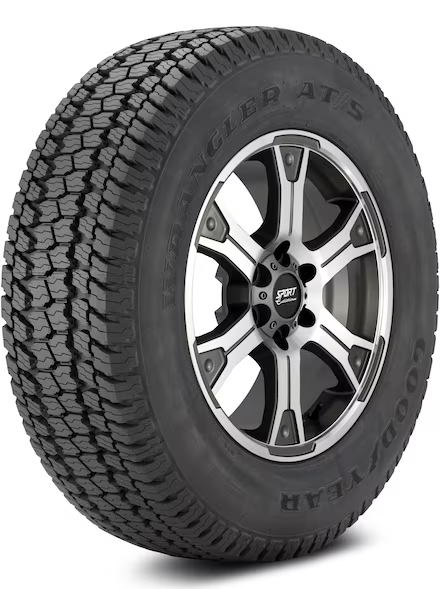
If you drive a truck or SUV and you’re tired of choosing between a tire that handles well on pavement and one that actually works off-road, you’re not alone. That’s the exact dilemma I found myself in when I started testing the Goodyear Wrangler AT/S — one of Goodyear’s longest-running all-terrain options designed to bridge that gap.
For a deeper look at how this tire stacks up across the entire lineup, our full Goodyear Tires Review guide covers every model side by side. But in this review, I’m going deep on the Wrangler AT/S specifically — what it does well, where it falls short, and whether it deserves a spot on your truck.
- The Goodyear Wrangler AT/S is a dependable all-terrain tire that excels on highways and handles light off-road terrain with confidence.
- Dry and wet traction on paved roads impressed me — it felt more like a touring tire than an AT in everyday driving.
- Off-road, it manages gravel, packed dirt, and light mud well but isn’t built for hardcore rock crawling or deep sand.
- Road noise is noticeable at highway speeds but not a dealbreaker for a tire in this category.
- Tread life has been solid during my test period, and it comes with an attractive price point compared to premium competitors.
- Best suited for truck and SUV owners who spend 70-80% of their time on pavement with occasional off-road adventures.
Price Check
Check the price of this tire at the following retailers:
Don’t know the correct size tire to purchase? Start here!
Liked this article?
Add TireAdvise as a preferred source so you see more of our tire reviews and guides on Google.
What Is the Goodyear Wrangler AT/S?
The Goodyear Wrangler AT/S is an all-terrain tire designed for light trucks, SUVs, and crossovers. It sits in the middle of Goodyear’s Wrangler lineup — more capable off-road than a highway tire, but more refined on pavement than an aggressive mud-terrain.
Goodyear positions this tire for drivers who need year-round versatility. It features an all-season compound and a tread design that balances open-road stability with off-road grip.
The “AT/S” designation essentially stands for “All-Terrain with Street” capabilities. That naming convention tells you exactly what Goodyear had in mind: a tire that’s equally at home commuting to work on Monday as it is hitting a fire road on Saturday.
Key Specifications and Features
Before I get into my driving impressions, here’s a quick breakdown of what Goodyear built into this tire from an engineering standpoint.
- Tread Compound: All-season rubber compound designed for extended tread life and multi-surface grip
- Tread Pattern: Aggressive interlocking tread blocks with wide lateral grooves for water and debris evacuation
- Siping: Multi-directional sipes across the tread face for wet traction and light snow grip
- Sidewall: Reinforced two-ply polyester construction for added durability off-road
- Sizes Available: Ranges from 15-inch to 20-inch fitments covering popular trucks like the Ford F-150, Chevy Silverado, Toyota Tacoma, and Jeep Wrangler
- Load Range: Available in standard and extra-load ratings depending on size
- Warranty: Goodyear backs this tire with a limited treadwear warranty (varies by size)
My Test Setup and Driving Conditions
I tested the Goodyear Wrangler AT/S on a 2019 Ford F-150 in the P265/70R17 size. This is one of the most popular fitments for this tire, so it should be highly relevant for many of you reading this.
My test period covered a wide range of driving conditions across the American Southeast and Mid-Atlantic regions. I put them through daily highway commuting, two-lane rural roads, gravel back roads, a few unpaved forest service roads, and some wet weather driving during spring storms.
I deliberately pushed these tires across different surfaces to see how they’d hold up for a driver who doesn’t want to swap tires seasonally. I wanted to know: can the Wrangler AT/S truly do it all?
On-Road Performance: Highway and City Driving
Dry Traction
Right out of the gate, I was impressed by how composed the Wrangler AT/S felt on dry pavement. There’s a confidence to the steering response that you don’t always get with all-terrain tires. When I merged onto the highway for the first time, the tire tracked straight and held its line through long sweeping turns without any vagueness.
Braking performance on dry roads was also commendable. I performed several hard braking tests from highway speed, and the AT/S bit down predictably every time. There was no squirming or instability — just a clean, controlled stop.
I’d compare the dry-road manners favorably to many dedicated highway tires I’ve tested. If you’re coming from the factory all-season rubber that shipped with your truck, you’ll likely notice improved grip and cornering stability.
Wet Traction
Wet performance is where all-terrain tires often separate themselves, and the Wrangler AT/S holds its own. The wide grooves and multi-directional siping do a solid job of channeling water away from the contact patch. During several heavy rainstorms, I never experienced hydroplaning or a sudden loss of grip on the highway.
On wet city streets, the tire maintained good traction through turns and during braking. I did notice that the stopping distance in wet conditions increased slightly compared to dry — which is expected — but it was never alarming. The tire communicates its limits gradually, which gives you time to react.
If wet-weather performance is your top priority and you also want all-season versatility on a passenger vehicle, you might want to check out the Goodyear Assurance Weatherready 2 Review for a tire that’s specifically engineered around weather adaptability.
Road Noise and Comfort
This is where the Wrangler AT/S shows its all-terrain roots. On smooth highways at cruising speeds, there’s a noticeable hum. It’s not the aggressive roar you get from a mud-terrain tire, but it’s definitely louder than a dedicated highway tire or a premium touring option like the one I reviewed in our Goodyear Eagle Touring Review.
The noise is most prominent between 55-70 mph and on concrete surfaces. On asphalt, it quiets down considerably. After several days of driving, I got used to it — but if you’re coming from a quiet highway tire, you’ll notice the difference.
Ride comfort is decent for the category. The reinforced sidewalls add some stiffness, which translates to a slightly firmer ride over bumps and expansion joints. But I wouldn’t call it harsh. It’s a tradeoff you make when you want off-road durability.
Off-Road Performance: Gravel, Dirt, and Mud
Gravel and Packed Dirt
This is the Wrangler AT/S’s sweet spot off-road. On gravel roads and packed dirt trails, the tire felt controlled and predictable. The interlocking tread blocks gripped loose surfaces well, and I felt confident pushing the truck at moderate speeds through winding forest roads.
The tread design does a good job of self-cleaning — rocks and debris don’t pack into the grooves easily. After several days of driving on gravel roads, I checked the tread and it was remarkably clean.
Mud Performance
In light to moderate mud, the Wrangler AT/S performed adequately. The open shoulder design helped the tire bite into softer surfaces and maintain forward momentum. I took the F-150 through a muddy fire road after a heavy rain, and the tires clawed through without any issues.
However, I want to be honest: this is not a mud tire. In deep, sticky clay or thick mud pits, the Wrangler AT/S will reach its limits faster than a dedicated mud-terrain tire. The tread lugs aren’t aggressive enough to paddle through truly challenging terrain. If you’re regularly wheeling through deep mud, you’ll want something more aggressive.
Sand and Rock
I did some limited testing on sandy surfaces and rocky trails. On sand, the tire performed about average — you’ll want to air down for any serious sand driving. On rocky surfaces, the reinforced sidewalls gave me peace of mind against punctures, though I wouldn’t classify this as a trail-rated tire for serious rock crawling.
For most weekend warriors who occasionally venture off the beaten path, the Wrangler AT/S offers enough off-road capability to get the job done without sacrificing everyday drivability.
Snow and Winter Performance
I didn’t have extensive snow conditions during my primary test period, but I did encounter some light snow and slush on a trip through the mountains. The Wrangler AT/S handled it reasonably well. The siping provided decent biting edges on slick surfaces, and the all-season compound maintained flexibility in cold temperatures.
That said, this tire does not carry the Three-Peak Mountain Snowflake (3PMSF) symbol. If you live in an area that sees heavy snow and ice regularly, I’d recommend dedicated winter tires for the cold months. The Wrangler AT/S will get you through a surprise storm, but it’s not a substitute for purpose-built snow tires.
Tread Life and Durability
During my test period, the tread on the Wrangler AT/S wore evenly across all four tires. I maintained proper tire pressure and rotated them at regular intervals, and the tread depth measurements showed consistent wear patterns front to back.
Goodyear uses a durable compound on this tire that seems to balance grip with longevity well. The UTQG treadwear rating is competitive for the all-terrain category, and based on the wear rate I observed during testing, these tires should deliver solid value over their lifespan.
I didn’t encounter any chunking, chipping, or irregular wear during my time with the tires — even after spending time on abrasive gravel roads. The compound holds up well under mixed-use conditions.
Pricing and Value
The Goodyear Wrangler AT/S is priced competitively within the all-terrain segment. Depending on the size, you can expect to pay roughly $130-$220 per tire from major US retailers like Tire Rack, Discount Tire, and Walmart Auto.
For a name-brand tire from one of the most recognized manufacturers in America, that’s a solid value proposition. You’re getting Goodyear’s engineering, warranty support, and dealer network at a price that undercuts some of the premium all-terrain competitors.
Here’s how the Wrangler AT/S compares to some of the most popular all-terrain tires in the US market:
| Feature | Goodyear Wrangler AT/S | BFGoodrich All-Terrain T/A KO2 | Falken Wildpeak AT3W | Cooper Discoverer AT3 4S |
|---|---|---|---|---|
| Price Range (per tire) | $130–$220 | $175–$300 | $140–$250 | $135–$230 |
| Highway Comfort | Good | Average | Good | Very Good |
| Off-Road Capability | Moderate | Excellent | Very Good | Moderate |
| Wet Traction | Very Good | Good | Very Good | Very Good |
| Snow Rating (3PMSF) | No | Yes | Yes | Yes |
| Road Noise | Moderate | Noticeable | Low-Moderate | Low |
| Tread Life | Good | Very Good | Very Good | Good |
As you can see, the Wrangler AT/S holds its own in terms of value and on-road performance, though the BFGoodrich KO2 and Falken Wildpeak AT3W have an edge in off-road aggressiveness and winter capability. If your driving skews more toward pavement, the Wrangler AT/S is an excellent choice at a lower price point.
Who Should Buy the Goodyear Wrangler AT/S?
Based on my testing, the Goodyear Wrangler AT/S is best suited for a specific type of driver. Here’s who I think will be happiest with this tire:
- Daily commuters with trucks or SUVs who want better-than-average all-terrain capability without sacrificing highway comfort
- Weekend adventurers who hit gravel roads, forest trails, and unpaved campsite roads a few times a month
- Budget-conscious buyers who want a trusted brand name without paying premium all-terrain prices
- Drivers in mild to moderate climates who don’t face severe winter conditions regularly
Who Should Look Elsewhere?
The Wrangler AT/S isn’t the right tire for everyone. Here’s who should consider alternatives:
- Serious off-roaders who regularly tackle deep mud, rock crawling, or sand dunes — you’ll want a dedicated mud-terrain tire
- Drivers in heavy snow regions who need 3PMSF-rated tires for winter safety and legal compliance
- Noise-sensitive drivers who prioritize a library-quiet cabin over off-road versatility
- Performance-oriented drivers — if you’re looking for sporty handling on a car or sedan, check out something like the Goodyear Eagle Exhilarate Review or the Goodyear Eagle F1 Asymmetric 3 Review instead
How the Wrangler AT/S Compares Within Goodyear’s Lineup
One of the questions I get most often is how the Wrangler AT/S fits into Goodyear’s broader tire family. Goodyear makes a lot of tires, and it can be confusing to figure out which one matches your driving style.
If you want pure on-road performance and you drive a sports car or performance sedan, the Goodyear Eagle F1 Asymmetric 5 or the Goodyear Eagle F1 Asymmetric 6 are in an entirely different league — they’re built for grip and cornering precision, not off-road use.
For those who need a track-oriented tire for weekend events, the Goodyear Eagle F1 Supercar 3R and the Goodyear Eagle F1 Supercar are purpose-built for maximum performance on tarmac.
If you’re driving a sports car and want a daily-friendly ultra-high-performance option, I’d point you toward the Goodyear Eagle F1 Supersport Review for a tire that balances street comfort with track capability.
The Goodyear Eagle F1 Asymmetric 2 remains a strong choice for luxury sedans, while the Goodyear Eagle F1 Asymmetric All Season bridges the gap for drivers wanting high performance across all four seasons.
For those interested in fuel efficiency on commuter vehicles, the Goodyear Efficient Grip Review covers a tire specifically designed to reduce rolling resistance. And if you’re shopping for a premium touring tire on a luxury car, our Goodyear Excellence Review is worth a read.
But for truck and SUV owners who want a single tire that handles the majority of their driving needs? The Wrangler AT/S remains one of the most sensible choices in the lineup.
Installation Tips and Maintenance Advice
I always recommend having all-terrain tires professionally mounted and balanced. The Wrangler AT/S is no exception. Improper balancing can amplify the natural road hum of an AT tire and lead to premature, uneven wear.
Here are my tips for getting the most out of the Wrangler AT/S:
- Maintain proper inflation: Check your tire pressure at least once a month. The recommended PSI is listed on your vehicle’s door jamb, not on the tire sidewall. Under-inflation kills tread life and hurts fuel economy.
- Rotate regularly: I recommend rotating every 5,000-7,500 miles (or roughly every other oil change) to promote even wear across all four tires.
- Get an alignment check: If your truck pulls to one side or you notice uneven tread wear, get an alignment done immediately. Misalignment is the silent killer of tire longevity.
- Air down for off-road: When hitting dirt trails or gravel, dropping your tire pressure by 5-8 PSI can significantly improve traction and ride comfort. Just remember to re-inflate before hitting the highway.
Real-World Fuel Economy Impact
Switching to an all-terrain tire from a standard highway tire will typically result in a slight decrease in fuel economy. In my experience with the Wrangler AT/S, the difference was marginal — roughly 1-2 MPG at highway speeds compared to the factory Goodyear highway tires I replaced.
The Wrangler AT/S isn’t specifically marketed as a low-rolling-resistance tire, but Goodyear hasn’t gone overboard with aggressive lugs either. The balanced tread design keeps fuel economy losses within a reasonable range for the category.
If fuel economy is a top concern, you might want to keep your tire pressure at the higher end of the recommended range (but never exceed the maximum rated pressure). Properly inflated all-terrain tires can claw back some of that fuel efficiency loss.
Pros and Cons Summary
What I Liked
- Excellent dry road traction and steering response for an all-terrain tire
- Very good wet performance with no hydroplaning issues during heavy rain
- Confidence-inspiring on gravel, packed dirt, and light off-road terrain
- Competitive pricing within the all-terrain category
- Even tread wear throughout my test period
- Strong brand backing with Goodyear’s warranty and dealer network
- Available in a wide range of popular truck and SUV sizes
What Could Be Better
- Road noise is noticeable at highway speeds, especially on concrete surfaces
- Not rated for severe snow conditions (no 3PMSF symbol)
- Deep mud performance is limited compared to more aggressive AT tires
- Ride quality is slightly stiffer than dedicated highway tires due to reinforced sidewalls
- Some newer competitors in this price range offer more aggressive off-road tread patterns
My Final Verdict on the Goodyear Wrangler AT/S
After extensive testing across highways, back roads, gravel trails, and wet weather, I can confidently say the Goodyear Wrangler AT/S is a well-rounded all-terrain tire that delivers exactly what it promises. It’s not trying to be the most aggressive trail tire or the quietest highway cruiser — it’s aiming squarely at the middle, and it hits that target with precision.
If you spend the majority of your driving time on paved roads but want the confidence of real all-terrain capability when you need it, this tire deserves serious consideration. It’s comfortable enough for daily commuting, tough enough for weekend trail rides, and priced fairly for what you get.
I wouldn’t recommend it for extreme off-road use or heavy snowfall regions. But for the average American truck or SUV owner who wants a dependable, versatile tire that handles 90% of driving situations with confidence, the Goodyear Wrangler AT/S is a smart buy.
In my experience, it’s one of the best value propositions in the all-terrain space — especially when you factor in Goodyear’s reputation, warranty support, and nationwide availability. If you can find these on sale with a manufacturer rebate (which Goodyear frequently offers), the deal gets even sweeter.
I’d rate the Goodyear Wrangler AT/S a solid 4 out of 5 stars for everyday truck and SUV owners. It does the important things well and doesn’t pretend to be something it’s not.
Frequently Asked Questions
Is the Goodyear Wrangler AT/S a good all-terrain tire for daily driving?
The Goodyear Wrangler AT/S is a solid choice for drivers who split their time between highway commuting and light off-road use. It offers a comfortable, quiet ride on pavement while still providing decent traction on gravel and dirt roads. I’d recommend it for truck and SUV owners who prioritize on-road manners but want some off-road capability on weekends.
How long does the Goodyear Wrangler AT/S last in real-world driving?
Most drivers report getting between 50,000 and 60,000 miles out of a set of Goodyear Wrangler AT/S tires with proper rotation and alignment. Goodyear does not offer a treadwear mileage warranty on this model, so longevity depends heavily on your driving habits and maintenance. In my experience, keeping tire pressure at the recommended PSI and rotating every 5,000-7,000 miles helps maximize tread life.
How does the Goodyear Wrangler AT/S perform in snow and wet conditions?
The Wrangler AT/S performs reasonably well in light snow and rain thanks to its open tread pattern and siping, but it is not a dedicated winter tire and lacks the Three-Peak Mountain Snowflake (3PMSF) rating. On wet highways across the US, it provides confident grip and good hydroplaning resistance for an all-terrain tire. If you regularly drive in heavy snow or icy conditions, I’d suggest pairing these with a dedicated winter set.
How much does a set of Goodyear Wrangler AT/S tires cost?
Prices for the Goodyear Wrangler AT/S typically range from $130 to $210 per tire depending on the size, with popular sizes like 265/70R17 falling in the $160-$180 range at most US retailers. A full set of four will generally cost between $520 and $840 before installation and balancing fees. I recommend checking Tire Rack, Discount Tire, and Walmart for the best deals and occasional manufacturer rebates.
How does the Goodyear Wrangler AT/S compare to the Wrangler Duratrac?
The Wrangler AT/S is designed more for on-road comfort with light off-road capability, while the Duratrac is a much more aggressive all-terrain tire built for serious off-road traction including mud and deep snow. The Duratrac carries the 3PMSF winter rating and has a noticeably louder road noise profile compared to the quieter AT/S. If your driving is 80% highway and 20% trails, the Wrangler AT/S is the better fit; for heavier off-road use, go with the Duratrac.
What trucks and SUVs does the Goodyear Wrangler AT/S fit?
The Goodyear Wrangler AT/S is available in a wide range of sizes from 15 to 20 inches, fitting popular US trucks and SUVs like the Ford F-150, Chevy Silverado 1500, Toyota Tacoma, Jeep Wrangler, and Ram 1500. It also fits mid-size SUVs such as the Toyota 4Runner and Chevy Colorado. Check your vehicle’s door jamb sticker or owner’s manual for the exact tire size before purchasing.
Is the Goodyear Wrangler AT/S noisy on the highway?
One of the strengths of the Wrangler AT/S is its relatively quiet ride for an all-terrain tire, especially at highway speeds common on US interstates. Most owners report minimal tire hum compared to more aggressive all-terrains like the BFGoodrich KO2 or Goodyear Duratrac. You may notice a slight increase in road noise as the tread wears down past 50%, but overall it’s one of the quieter options in the all-terrain category.
