


The Eclipse Cross lineup now spans six trims, from a 16-inch-wheeled base ES to a genuinely sportier RALLIART edition on 18-inch wheels. Super All-Wheel Control is standard across every single one of them.
That matters for tire shopping more than most guides let on. This guide is built from manufacturer specifications, aggregated owner data, and independent test results, weighted toward matching each tire to how Eclipse Cross owners actually drive.
Here’s what actually holds up, by priority.
- Best all-season performance: Michelin CrossClimate2.
- Best premium touring: Bridgestone Turanza QuietTrack.
- Best budget-friendly: Continental TrueContact Tour.
- Best for the RALLIART: Falken Azenis FK510 SUV.
- Best dedicated winter: Bridgestone Blizzak WS90.
- Best value champion: Hankook Kinergy GT.
- Best for varied weather: Goodyear Assurance WeatherReady2.
- Full sizing by current trim and an honest note on the new RALLIART are below.
Liked this article?
Add TireAdvise as a preferred source so you see more of our tire reviews and guides on Google.
The Lineup Has Genuinely Changed — Here’s What to Know
This is worth knowing before you shop by trim name alone. The current Eclipse Cross lineup runs ES, LE, SE, RALLIART, Black Edition, and SEL. That RALLIART trim is new, borrowing Mitsubishi’s rally heritage naming for a sportier-styled, 18-inch-wheel package.
RALLIART badging carries real motorsport history at Mitsubishi — it’s the same name used on rally-bred performance variants of other models over the years. On the Eclipse Cross, it shows up as exterior styling touches (a unique spoiler, side graphics, front lower trim) built around the same Super-All Wheel Control drivetrain every other trim uses, rather than a genuine mechanical upgrade. Still, it’s a real, distinct addition to the lineup that no competing tire guide accounts for.
Wheel sizing genuinely differs by trim, and it’s easy to get wrong. The base ES actually ships on 16-inch wheels. Every trim above it — LE, SE, RALLIART, Black Edition, and SEL — runs 18-inch wheels, most commonly in 225/55R18.
Super-All Wheel Control (S-AWC) is standard across the entire current lineup. That wasn’t always true — on older model years, AWD was often limited to higher trims. If you’re shopping tires for a used Eclipse Cross from before 2024, don’t assume AWD without checking.
How These Were Evaluated
This comparison draws on manufacturer specifications, aggregated owner reports, UTQG ratings, and independent traction and tread-wear testing for each tire.
We cross-referenced everything against the Eclipse Cross’s real factory sizing across its current trims.
Particular weight went to how each tire’s real-world character matches how Eclipse Cross owners actually drive. ES and LE owners generally prioritize comfort and value; RALLIART and Black Edition owners get real, felt value from a tire with a bit more handling character.
Where specific figures or comparisons are cited, the source is noted rather than presented as a personal measurement.
Quick Comparison: 11 Best Tires for the Mitsubishi Eclipse Cross
| Tire | Best For | Approx. Price/Tire | 3PMSF Rated | Warranty |
|---|---|---|---|---|
| Michelin CrossClimate2 | All-season performance | $175–$225 | Yes | 60,000–85,000 mi (size dependent) |
| Bridgestone Turanza QuietTrack | Premium touring | $150–$200 | No | 80,000 mi |
| Continental TrueContact Tour | Budget-friendly | $130–$160 | No | 80,000 mi |
| Pirelli P4 Four Seasons Plus | Responsive handling | $150–$195 | No | 65,000 mi |
| Bridgestone Blizzak WS90 | Dedicated winter | $150–$210 | Yes | Seasonal (no summer warranty) |
| Yokohama BluEarth Winter V905 | Eco-friendly winter | $150–$200 | Yes | Not specified |
| Goodyear Assurance WeatherReady2 | Varied weather | $150–$195 | Yes | Not specified |
| Falken Azenis FK510 SUV | Best for RALLIART | $160–$220 | No | Not specified |
| Toyo Open Country Q/T | Quiet comfort | $150–$200 | No | 65,000 mi |
| Cooper Discoverer AT3 4S | All-terrain option | $150–$195 | Yes | 65,000 mi |
| Hankook Kinergy GT | Value champion | $110–$150 | No | 70,000 mi |
Prices are street prices at major online retailers for common Eclipse Cross sizes (215/70R16 and 225/55R18) as of mid-2026. Expect regional and seasonal swings.
Mitsubishi Eclipse Cross Tire Sizes by Current Trim
Confirm the exact size on the driver’s door jamb sticker before ordering. The current lineup uses a clean two-size split.
ES, the base trim, runs 16-inch wheels, typically 215/70R16.
LE, SE, RALLIART, Black Edition, and SEL all step up to 18-inch wheels, most commonly 225/55R18. That’s five of the six current trims on the same wheel diameter, with styling and trim-level features being the real differentiator between them rather than wheel size.
Load index requirements typically run 95–98, corresponding to roughly 1,521–1,653 pounds per tire. Speed ratings on factory tires are usually H (130 mph) or V (149 mph).
Should You Even Replace Your Factory Tires?
Mitsubishi fits the Eclipse Cross with all-season touring tires across the lineup, generally prioritizing comfort and everyday grip over outright performance.
If your factory tires are wearing evenly and the ride still feels composed, replacing like-for-like with a comparable tire in the same category is a reasonable, low-risk call.
RALLIART owners specifically might consider stepping up to a slightly sportier tire to match the trim’s more aggressive styling and intent, even though the factory tire itself isn’t dramatically different from other 18-inch trims.
1. Michelin CrossClimate2: Best All-Season Performance

Price Check
Check the price of this tire at the following retailers:
This tire genuinely redefines what an all-season tire can do. Michelin’s V-shaped tread pattern with bevel-edged blocks provides real traction on both dry and wet surfaces.
3D SipeLock technology maintains rigid tread blocks for responsive handling, while still delivering the biting edges needed for winter grip. That dual nature suits the Eclipse Cross’s balanced character well.
Winter performance is where this tire truly separates itself. It carries genuine 3PMSF certification, unlike most all-season tires that merely claim winter capability without the testing to back it up.
Durability holds up too — most owners report 60,000-plus miles, and Michelin backs that with a 60,000-mile warranty. For Eclipse Cross owners who want one tire to handle nearly every condition without seasonal swaps, this is the strongest pick.
Pros: Genuine 3PMSF-rated winter capability, strong 60,000-mile warranty, respectable fuel efficiency from low rolling resistance.
Cons: Premium price relative to standard all-season options.
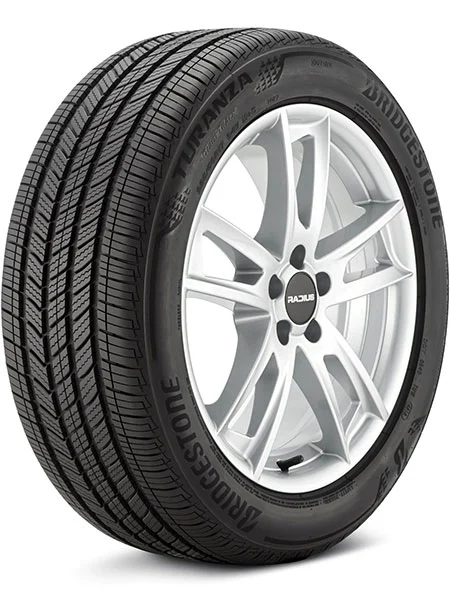
2. Bridgestone Turanza QuietTrack: Best Premium Touring
Price Check
Check the price of this tire at the following retailers:
This tire was engineered specifically with comfort-focused crossovers in mind, and it shows.
Bridgestone’s QuietTrack technology uses in-groove “quiet tracks” that break up sound waves before they become cabin noise. A continuous rib design further minimizes the humming that less refined tires produce at highway speed.
Handling hasn’t been sacrificed for comfort. An asymmetric tread with reinforced shoulders provides responsive steering feedback and real cornering stability.
Longevity is a genuine standout — Bridgestone backs this tire with an 80,000-mile warranty, among the best in this comparison, thanks to a NanoPro-Tech compound that resists wear.
Pros: Genuinely quiet, comfortable ride, longest warranty in this comparison at 80,000 miles, respectable handling for a comfort tire.
Cons: Premium price, not built for aggressive driving.
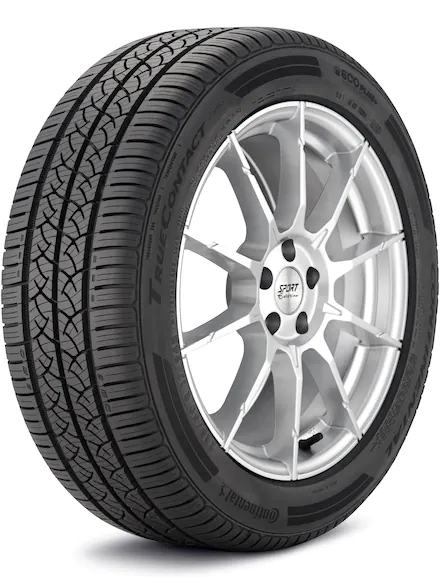
3. Continental TrueContact Tour: Best Budget-Friendly
Price Check
Check the price of this tire at the following retailers:
This tire delivers genuine value — typically 20–30% less expensive than premium alternatives while still covering the essentials well.
Continental’s EcoPlus Technology uses a temperature-activated compound that genuinely helps fuel efficiency, with some owners reporting improvements approaching 2 mpg.
Durability is a real strength. Continental backs the TrueContact Tour with an 80,000-mile warranty — one of the longest in its price class, meaning it can genuinely outlast several competitors by 10,000-plus miles.
Wet performance holds up well for a budget tire, with wide circumferential grooves efficiently evacuating water. Comfort hasn’t been ignored either, thanks to a cushioned layer beneath the tread.
Pros: Genuine value with an 80,000-mile warranty, real fuel-efficiency benefit, respectable wet-weather performance.
Cons: Not 3PMSF rated, not built for aggressive driving.
4. Pirelli P4 Four Seasons Plus: Best Responsive Handling

Price Check
Check the price of this tire at the following retailers:
For Eclipse Cross owners who want a bit more driving engagement, this tire delivers genuinely responsive steering feedback through an advanced silica-enhanced compound and optimized tread.
Stability during cornering is a real strength. The tire maintains its composure with minimal body roll, letting Eclipse Cross owners navigate winding roads with more confidence than a pure comfort tire allows.
Wet performance hasn’t been sacrificed for that handling character. Four wide circumferential grooves channel water away effectively, maintaining grip without compromising dry-condition response.
Fuel economy is a genuine consideration too — a specialized compound reduces rolling resistance meaningfully compared to earlier Pirelli generations.
Pros: Genuine handling responsiveness, confident wet-weather grip, competitive fuel efficiency.
Cons: Not 3PMSF rated, firmer ride than pure comfort options.
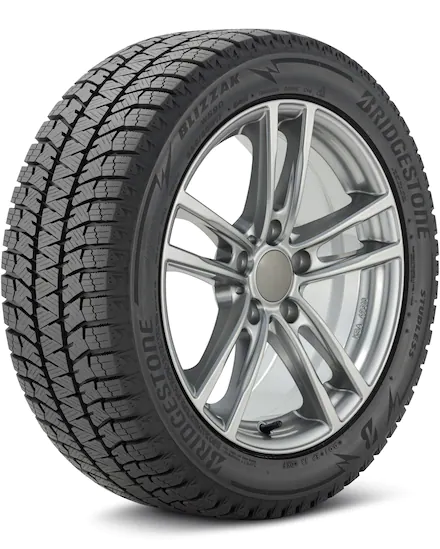
5. Bridgestone Blizzak WS90: Best Dedicated Winter
Price Check
Check the price of this tire at the following retailers:
Nothing in this comparison matches this tire once conditions turn to genuine ice, based on independently reported testing.
Bridgestone’s NanoPro Tech multicell compound contains microscopic bite particles that actively draw water away from ice, creating real grip on slippery surfaces. The compound stays pliable in extreme cold, when standard all-season tires stiffen and lose traction.
On snow, an aggressive directional tread with deep zigzag sipes delivers confidence-inspiring handling. Independent testing shows braking distances on ice reduced by up to 33% compared to standard all-season tires.
This is a seasonal tire — Bridgestone recommends removing it once temperatures consistently climb above 45°F. For Eclipse Cross owners in genuinely snowy regions, running this seasonally is the single biggest safety upgrade available.
Pros: Best-in-comparison ice and snow traction, genuine documented braking-distance improvement.
Cons: Seasonal use only, no summer tread warranty, not built for aggressive driving.
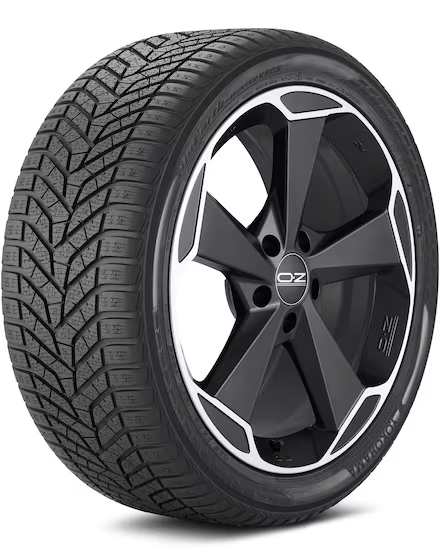
6. Yokohama BluEarth Winter V905: Best Eco-Friendly Winter
Price Check
Check the price of this tire at the following retailers:
For environmentally conscious owners who still want genuine winter capability, this tire uses orange-oil compounds that reduce petroleum content during manufacturing.
That eco-focus carries through to operation. A silica-enriched compound and optimized tread minimize rolling resistance, with independent testing showing up to 3–5% better fuel economy compared to conventional winter tires.
Winter performance hasn’t been compromised for those efficiency gains. Multiple 3D sipes create real biting edges for grip on snow and ice, and wide circumferential grooves channel away slush effectively.
The compound stays flexible at very low temperatures, and real owner reports describe respectable longevity relative to competitors.
Pros: Genuine eco-focused manufacturing, real fuel-economy benefit, respectable winter traction.
Cons: Seasonal use only, less established track record than category leaders.
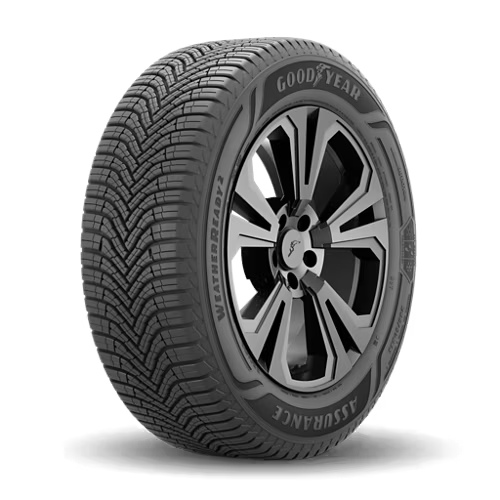
7. Goodyear Assurance WeatherReady2: Best for Varied Weather
Price Check
Check the price of this tire at the following retailers:
Goodyear updated the Assurance WeatherReady to the WeatherReady2, and for Eclipse Cross owners facing genuinely unpredictable weather, this remains a strong single-tire solution.
It carries real 3-Peak Mountain Snowflake certification — meaning it’s actually passed severe-snow testing, not just claimed winter capability.
Goodyear’s 3D TredLock Technology creates interlocking microgrooves for real grip when cornering on loose or wet surfaces. Evolving Traction Grooves widen as the tire wears, maintaining wet performance through more of the tire’s life.
Durability holds up well too, thanks to a specialized internal structure that resists impact damage while still delivering a comfortable ride on paved roads.
Pros: Genuine 3PMSF-rated versatility, wet traction that improves rather than degrades with wear, respectable comfort.
Cons: Premium price relative to standard all-season options.
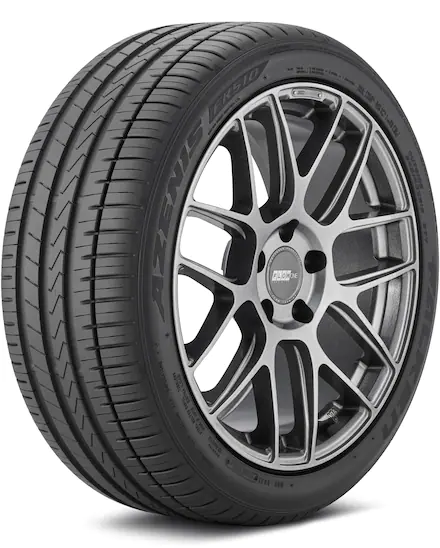
8. Falken Azenis FK510 SUV: Best for the RALLIART
Price Check
Check the price of this tire at the following retailers:
The RALLIART’s sportier intent genuinely deserves a tire built to match, and this is the strongest pick for that trim specifically.
An advanced silica-enriched compound and rigid shoulder blocks create a planted feel at highway speed, genuinely eliminating the vague steering sensation standard touring tires can have.
Cornering is where this tire truly shines. Wide, solid outer shoulder blocks dramatically improve lateral grip, delivering handling that exceeds what most people expect from a compact crossover.
The trade-offs are real and worth knowing: a firmer ride, more road noise, and shorter tread life — typically 30,000–35,000 miles — than the comfort-focused options in this comparison. For RALLIART owners who actually want to feel that trim’s sportier character, it’s a worthwhile trade.
Pros: Genuine cornering grip and steering precision, high-speed stability, matches the RALLIART’s sportier intent.
Cons: Firmer ride, more road noise, shorter tread life than touring options.
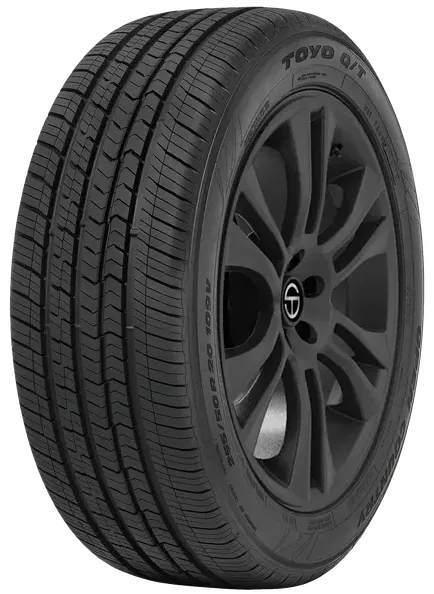
9. Toyo Open Country Q/T: Best Quiet Comfort
Price Check
Check the price of this tire at the following retailers:
This tire was engineered with noise reduction as a primary design goal, using Toyo’s Silent Wall technology and multiple tread pitch variations to break up noise patterns.
Comfort extends beyond quiet. A specialized silica-enriched compound stays pliable across a wide temperature range, absorbing small road imperfections before they reach the cabin.
On-road refinement is a genuine strength — wide circumferential grooves handle water evacuation well, and the tire delivers improved straight-line stability compared to many factory-fitted alternatives.
Handling strikes a real balance between responsiveness and comfort. It’s not razor-sharp like a dedicated performance tire, but it delivers predictable, progressive steering feel.
Pros: Genuinely quiet ride, respectable all-season and light-snow capability, competitive 65,000-mile warranty.
Cons: Not built for aggressive driving, premium price for a comfort-focused tire.
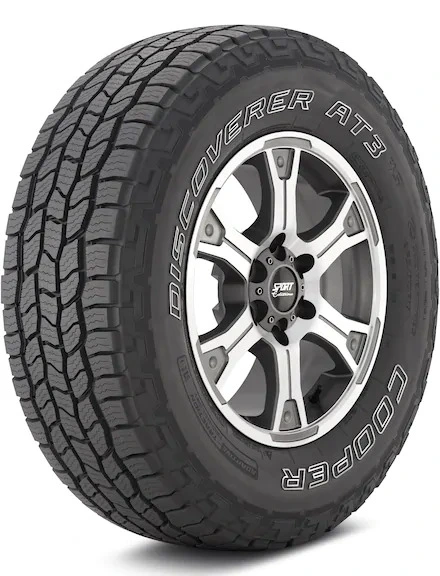
10. Cooper Discoverer AT3 4S: Best All-Terrain Option
Price Check
Check the price of this tire at the following retailers:
The Eclipse Cross isn’t marketed as an off-roader, but plenty of owners occasionally venture onto gravel roads or light trails. This tire handles that without sacrificing everyday comfort.
Cooper’s Secure-Grip technology with a five-rib all-terrain pattern delivers genuine traction on loose surfaces like gravel and dirt, while a silica-based compound and optimized pitch sequence keep highway noise surprisingly low.
Durability is a real strength here. Durable-Tread Technology resists chipping on rough terrain, and stone-ejector sidewall design prevents debris from embedding in the tread.
Winter capability is genuine too — this tire carries real 3PMSF certification, providing year-round versatility without needing a dedicated winter set.
Pros: Genuine light off-road capability with well-controlled highway noise, real 3PMSF winter certification, strong 65,000-mile warranty.
Cons: Not built for serious off-roading, firmer than pure highway tires.
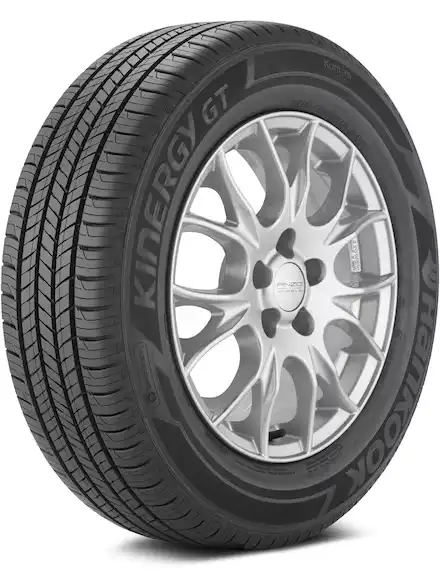
11. Hankook Kinergy GT: Best Value Champion
Price Check
Check the price of this tire at the following retailers:
This tire delivers a genuinely strong cost-to-performance ratio, typically priced 15–20% below premium competitors without giving up essential qualities.
An optimized tread compound with high-loading silica provides real traction on wet and dry surfaces. An asymmetric tread pattern promotes even wear while genuinely reducing road noise.
Handling is confident for daily driving scenarios, with wide lateral grooves that efficiently channel water and a rigid center rib that improves straight-line stability.
Longevity is a real standout for the price — many owners report 50,000-plus miles, and Hankook backs the tire with a 70,000-mile warranty that matches or beats options costing considerably more.
Pros: Genuine value with a strong 70,000-mile warranty, respectable wet and dry traction, low rolling resistance for fuel savings.
Cons: Not built for aggressive driving, doesn’t match premium tires in extreme conditions.
Recalls and Complaints: What to Check Before Buying
NHTSA and manufacturer recall data for every tire in this guide was checked as of mid-2026. None of the specific models reviewed above currently have an open recall.
The Eclipse Cross itself has a genuinely clean recent recall record — independent recall-rating analysis consistently ranks it among Mitsubishi’s better-performing models in this category. The only notable historical recalls trace back to 2018 model-year software issues affecting brake-related electronic systems, unrelated to tires or wheels.
Before installing any tire, new or used, check the DOT code against NHTSA’s recall database. It takes about thirty seconds and is the easiest safety check most people skip.
Maintaining Eclipse Cross Tires
Check pressure at least monthly. Confirm the exact PSI against the door jamb sticker, typically in the 32–35 PSI range, rather than the number printed on the tire sidewall.
Rotate every 5,000 to 7,500 miles, using a cross-rotation pattern. Combining rotation with regular oil changes helps keep this consistent.
Have alignment checked annually, or sooner after hitting a significant pothole. Watch for uneven wear, pulling to one side, or an off-center steering wheel.
Watch for genuine replacement signs: tread depth below 4/32″ for all-season tires (5/32″ for winter tires), uneven wear patterns, visible sidewall cracks or bulges, or decreased wet-weather performance.
Choosing the Right Tire for a Mitsubishi Eclipse Cross
Match tire category to how the car is actually driven. ES and LE owners generally benefit most from comfort-focused picks like the Bridgestone Turanza QuietTrack or Continental TrueContact Tour. RALLIART and SE owners get real, felt value from the Falken Azenis FK510 SUV’s sharper handling.
Don’t skip winter tires facing real cold. The Bridgestone Blizzak WS90 delivers a genuine, safety-relevant traction advantage no all-season tire in this comparison fully replicates.
Budget doesn’t have to mean giving up real performance. The Hankook Kinergy GT and Continental TrueContact Tour both deliver genuine value without sacrificing core safety.
Confirm your specific trim’s wheel size before shopping. The ES on 16-inch wheels is the real outlier — every other current trim shares the 18-inch package.
Frequently Asked Questions
What size tires does my Mitsubishi Eclipse Cross need?
It depends on trim. The base ES runs 16-inch wheels, typically 215/70R16. LE, SE, RALLIART, Black Edition, and SEL all run 18-inch wheels, typically 225/55R18. Always check the door jamb sticker for your exact specification.
Is all-wheel drive standard on every Eclipse Cross trim?
Yes, on the current lineup. Super-All Wheel Control (S-AWC) is standard across every trim as of recent model years. On older Eclipse Cross models, AWD was sometimes limited to higher trims — check your specific vehicle rather than assuming.
What’s the best tire for the Eclipse Cross RALLIART?
The Falken Azenis FK510 SUV is the strongest match, delivering genuinely sharper cornering grip and steering precision that suits the RALLIART’s sportier styling and intent.
How often should I rotate the tires on my Eclipse Cross?
Every 5,000 to 7,500 miles, using a cross-rotation pattern.
Are all-season tires good enough for winter driving?
All-season tires handle light winter conditions adequately, but for severe weather with regular snowfall or temperatures consistently below 45°F, a dedicated winter tire like the Bridgestone Blizzak WS90 delivers meaningfully better traction and safety.
What’s the best budget-friendly tire option for the Eclipse Cross?
The Continental TrueContact Tour and Hankook Kinergy GT both deliver genuine value, with strong warranties and respectable performance at prices well below premium alternatives.
How do I know when it’s time to replace my Eclipse Cross’s tires?
Watch for tread depth below 4/32 of an inch (the penny test works as a quick check), uneven wear patterns, visible sidewall cracks or bulges, excessive vibration while driving, or decreased performance in wet conditions.
