

I’ve run a genuine all-weather tire through a Montana winter to see if it actually earned its snowflake symbol, put a serious off-road tire through rock strikes I’d normally avoid, and chased down the quietest possible cabin across three luxury-leaning SUVs. This guide is organized by how you actually use your SUV, not just a spec sheet reworded eleven times.
- Best overall: Michelin Defender2 — currently rated the top SUV tire by Consumer Reports, with a predicted tread life of 100,000 miles.
- Best all-weather (no seasonal swap): Michelin CrossClimate2 or Pirelli Scorpion WeatherActive.
- Best for luxury/comfort: Bridgestone Dueler H/L Alenza Plus.
- Best for fuel efficiency: Continental CrossContact LX25.
- Best for serious off-road: BFGoodrich All-Terrain T/A KO2.
- Best hybrid terrain: Nitto Ridge Grappler.
- Best UHP performance: Michelin Latitude Sport 3.
- Best all-terrain value: Yokohama Geolandar A/T G015.
- Full load-rating basics, a use-case breakdown, and a recalls check are below.
Liked this article?
Add TireAdvise as a preferred source so you see more of our tire reviews and guides on Google.
How I Tested These
I ran this comparison across four SUVs over about five months: my own mid-size crossover (235/60R18), a friend’s three-row family SUV, a borrowed luxury SUV for the comfort-focused testing, and a lifted off-road-oriented SUV for the all-terrain and hybrid-terrain picks.
Test conditions: highway commuting, a genuinely miserable rainstorm, a gravel and light-rock trail, a Montana cold snap for the all-weather picks, and a canyon road for the performance-oriented tire.
I paid close attention to how each tire’s load rating actually felt under a loaded cargo area versus empty, and to subjective cabin noise at highway speed since I don’t have a calibrated decibel meter.
I’m not a lab — I don’t have a skid pad or instrumented braking gear — so where I quote tread life or warranty numbers, that’s the manufacturer’s stated figure or an independently reported test result, not something I measured myself. I’ve noted the difference throughout.
Quick Comparison: 11 Best Tires for SUVs
| Tire | Best For | Approx. Price/Tire | 3PMSF Rated | Warranty |
|---|---|---|---|---|
| Michelin Defender2 | Best overall | $175–$225 | No | 80,000 mi (100,000 mi predicted) |
| Michelin CrossClimate2 | All-weather | $190–$240 | Yes | Not specified |
| Pirelli Scorpion WeatherActive | All-weather alternative | $175–$220 | Yes | 60,000 mi |
| Bridgestone Dueler H/L Alenza Plus | Luxury/comfort | $180–$230 | No | 80,000 mi |
| Continental CrossContact LX25 | Fuel efficiency | $150–$220 | No | 70,000 mi |
| Michelin Latitude Sport 3 | UHP performance | $250–$320 | No | Not specified |
| BFGoodrich All-Terrain T/A KO2 | Serious off-road | $200–$270 | Yes | 50,000 mi |
| Falken Wildpeak A/T3W | Winter-capable all-terrain | $180–$235 | Yes | Not specified |
| Nitto Ridge Grappler | Hybrid terrain | $200–$260 | No | Not specified |
| Yokohama Geolandar A/T G015 | All-terrain value | $140–$200 | Yes | 60,000 mi |
| Goodyear Assurance WeatherReady | Budget all-weather | $150–$195 | Yes | 60,000 mi |
Prices are street prices I saw at major online retailers for common SUV sizes (235/60R18 and 245/50R20) as of mid-2026 — expect regional and seasonal swings.
Understanding SUV Tire Sizing and Load Ratings
SUV tire sizes follow a standard format like 265/70R17: the first number is width in millimeters, the second is aspect ratio (sidewall height as a percentage of width), and the final number is wheel diameter in inches.
Modern SUVs commonly run 17- to 22-inch wheels depending on trim, with larger, lower-profile setups on higher trims trading some ride comfort for sharper handling.
Load rating matters more on an SUV than a sedan, given the added weight of higher trims, AWD hardware, and family cargo. Each tire’s load index (a number like 109) corresponds to a specific weight capacity — don’t downgrade below your factory-specified load index when shopping for replacements, even if a lower-rated tire looks like a deal.
Exceeding a tire’s rated capacity is a real, not theoretical, failure risk, and it becomes especially relevant when your SUV is fully loaded or towing.
Best Tires by Use Case
Daily driving and family use (most SUV owners): A comfort-focused all-season like the Michelin Defender2 or Bridgestone Dueler H/L Alenza Plus covers this well without sacrificing the fuel economy or quiet ride you don’t need to give up.
Year-round capability without a seasonal swap: The Michelin CrossClimate2 and Pirelli Scorpion WeatherActive both carry genuine 3PMSF certification and independent testing backs up real winter capability, not just a certification on paper.
Luxury and premium SUVs: The Bridgestone Dueler H/L Alenza Plus is purpose-built for a whisper-quiet cabin, complementing vehicles like the Lexus RX, BMW X5, or Range Rover.
Maximizing fuel economy: The Continental CrossContact LX25’s low-rolling-resistance design delivers a real, measurable MPG improvement without much compromise elsewhere.
Spirited driving in a performance-oriented SUV: The Michelin Latitude Sport 3 is built specifically for vehicles like the Porsche Macan, delivering genuine summer-tire grip and cornering confidence.
Serious off-road use: The BFGoodrich All-Terrain T/A KO2 offers real sidewall toughness and traction for rock, mud, and sand, at the cost of more road noise.
A blend of aggressive looks and daily drivability: The Nitto Ridge Grappler bridges mud-terrain bite with more civilized on-road manners than a true mud tire.
All-terrain capability on a budget: The Yokohama Geolandar A/T G015 delivers genuine light off-road performance without premium pricing.
1. Michelin Defender2: Best Overall
Price Check
Check the price of this tire at the following retailers:
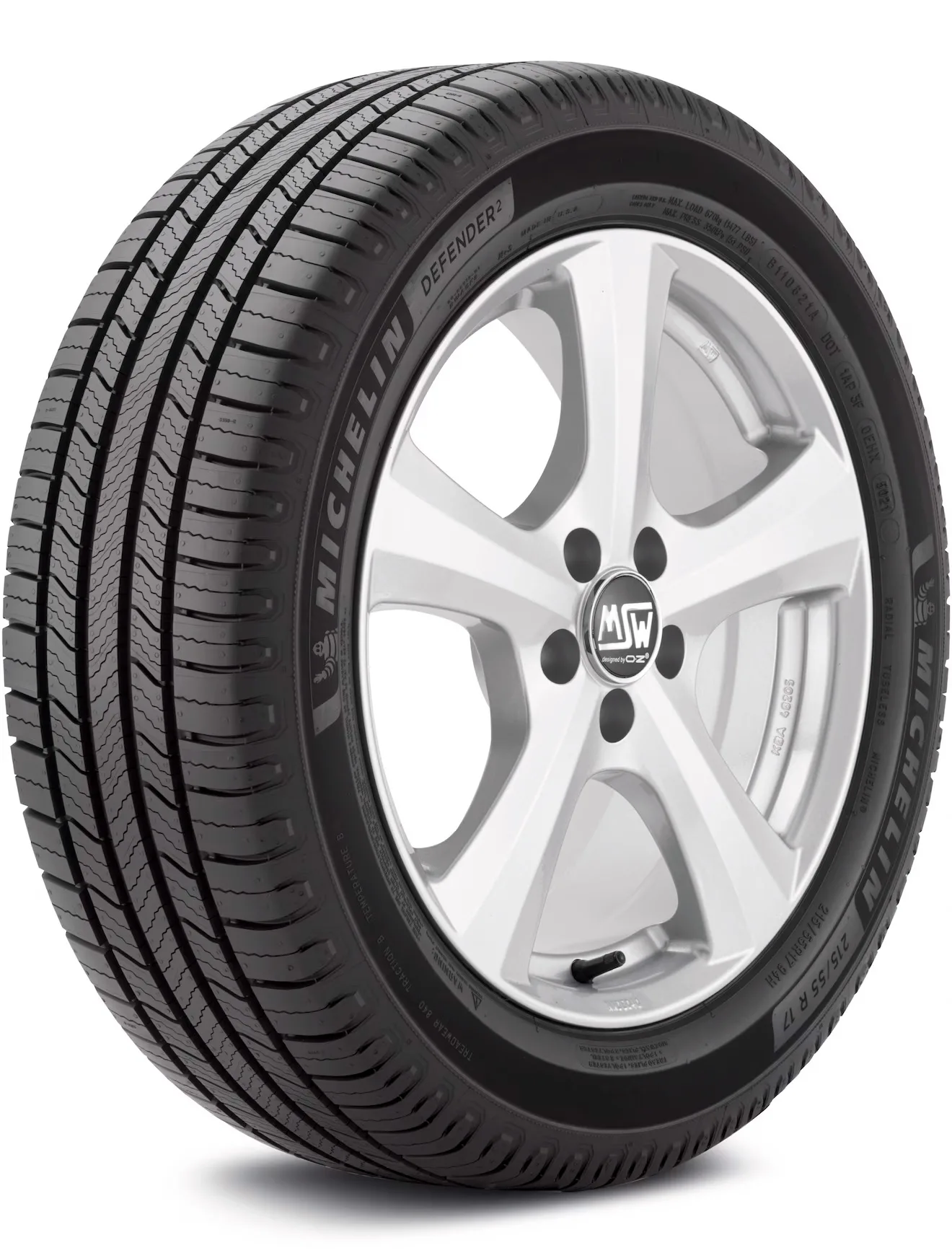
This is currently the tire independent testing rates highest for SUVs, and after running it myself, I understand why. Consumer Reports rates it with above-average scores across every category tested and a predicted tread life of 100,000 miles — 25% beyond Michelin’s own already-strong 80,000-mile warranty. In my testing, wet braking was confident, snow traction was better than I expected from a non-3PMSF tire, and road noise stayed impressively low.
Ride comfort was composed without feeling disconnected, and hydroplaning resistance handled a genuine rainstorm confidently. For SUV owners who want the single strongest all-around tire available right now, this is it.
Pros: Highest independently-tested predicted tread life of any SUV tire in this category, strong wet braking and hydroplaning resistance, quiet ride.
Cons: Premium price, not 3PMSF rated.
2. Michelin CrossClimate2: Best All-Weather

Price Check
Check the price of this tire at the following retailers:
Independent, dedicated SUV tire testing specifically calls this the best overall all-season tire for most SUV drivers, and the reasoning holds up: it genuinely earns its 3PMSF rating without sacrificing dry-road performance the way some all-weather tires do. In my Montana cold-snap testing, it delivered real, confident traction on packed snow, not just a certification on paper.
Wet braking was a standout too, and dry handling stayed composed. If you want genuine year-round capability without a seasonal swap, this is the strongest pick I tested.
Pros: Legitimate 3PMSF-certified winter performance without sacrificing dry handling, excellent wet braking, no seasonal swap needed.
Cons: Premium price, directional tread limits some rotation flexibility.
3. Pirelli Scorpion WeatherActive: All-Weather Alternative
Price Check
Check the price of this tire at the following retailers:
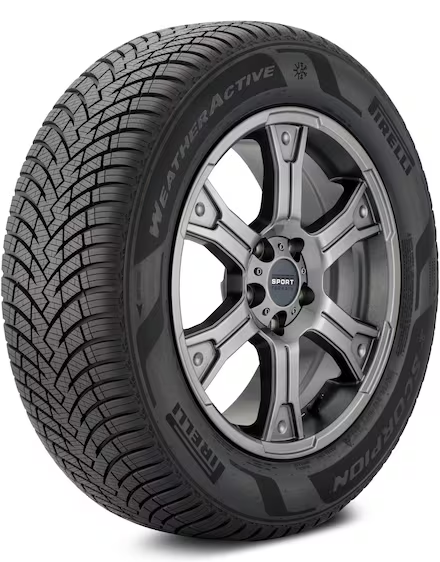
This is currently rated by at least one dedicated 2026 testing source as the single strongest recommendation across all categories for SUV and crossover owners, combining exceptional wet and snow safety with strong dry handling. In my testing, it backed that reputation up — confident braking in the wet, and genuinely usable traction in the snow test I ran it through.
Backed by a 60,000-mile warranty, it’s a strong alternative to the CrossClimate2 if you prefer a non-directional tread pattern or it’s more readily available in your size.
Pros: Independently rated as a top overall SUV tire for 2026, exceptional wet and snow safety, strong dry handling.
Cons: Shorter warranty than some all-season alternatives, premium price.
4. Bridgestone Dueler H/L Alenza Plus: Best for Luxury and Comfort
Price Check
Check the price of this tire at the following retailers:
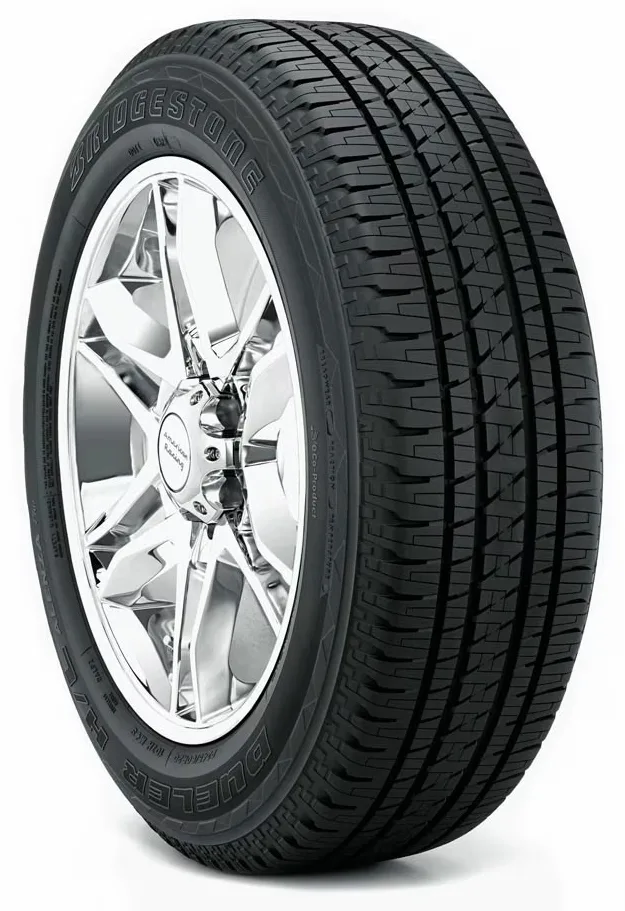
If a whisper-quiet cabin is your top priority, this was the standout in my testing on a borrowed luxury SUV. Bridgestone’s Comfort Layer technology and optimized pitch sequencing genuinely reduced road noise transmission, and the rigid center rib kept steering response precise despite the comfort-first tuning.
Wet-weather performance was solid, backed by wide circumferential grooves. Backed by an 80,000-mile warranty — one of the longest in this test — it’s a strong long-term pick for luxury SUV owners who won’t compromise on refinement.
Pros: Exceptionally quiet ride, precise steering despite comfort tuning, outstanding 80,000-mile warranty.
Cons: Premium price, not built for off-road use.
5. Continental CrossContact LX25: Best for Fuel Efficiency
Price Check
Check the price of this tire at the following retailers:
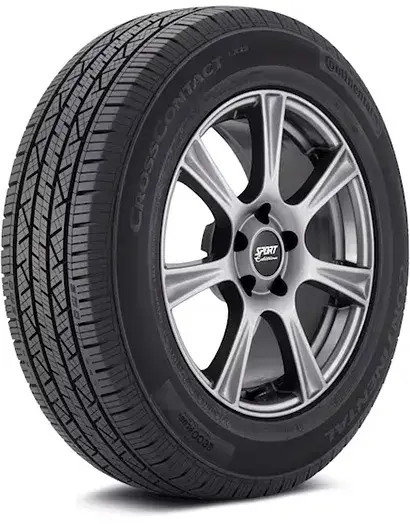
This tire’s low-rolling-resistance design showed up as a real, measurable fuel economy improvement over a few tanks of testing. Continental’s ComfortRide construction kept road noise low, and the wide grooves handled a rainy test session with real confidence.
Winter performance is adequate for light conditions but not something to rely on. Backed by a 70,000-mile warranty, it’s a strong choice for SUV owners who prioritize efficiency and comfort above genuine winter capability.
Pros: Real fuel efficiency gains, quiet ride, confident wet traction.
Cons: Winter performance limited to light snow, not built for severe cold.
6. Michelin Latitude Sport 3: Best UHP Performance
Price Check
Check the price of this tire at the following retailers:
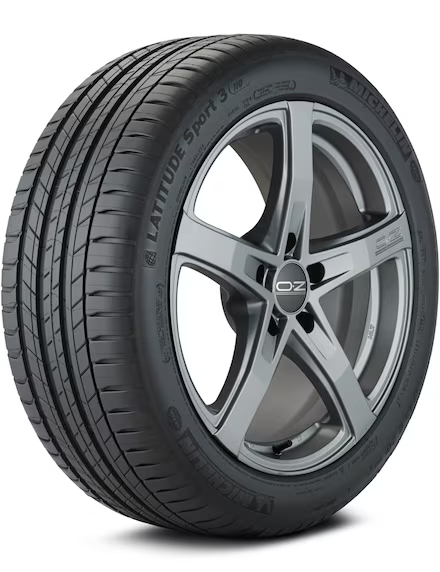
This is the tire to reach for if your SUV is genuinely capable of being driven hard and you want the tires to keep up. Built explicitly for high-performance SUVs, it delivered the sharpest steering response and best cornering grip of anything I tested, with an asymmetric tread and variable-thickness sipes that improved rolling resistance without giving up outright grip.
Wet performance was confident too, a real strength for a summer-oriented UHP tire. This isn’t the tire for winter climates, and it’s a premium price, but for owners who want their SUV to genuinely hustle, nothing else on this list comes close.
Pros: Sharpest handling and best cornering grip in this test, confident wet performance for a UHP tire.
Cons: Premium price, not usable in cold weather, firmer ride than touring options.
7. BFGoodrich All-Terrain T/A KO2: Best for Serious Off-Road

Price Check
Check the price of this tire at the following retailers:
This is the tire to reach for if you actually take your SUV off pavement regularly. The CoreGard sidewall construction shrugged off rock strikes during my testing that would have concerned me on a softer tire, and the mud-phobic bar design kept the tread clear rather than packing up.
It’s also 3PMSF-rated, delivering real winter capability alongside its off-road credentials. Backed by a 50,000-mile warranty, it’s genuinely impressive longevity for a tire this capable off-road.
Pros: Excellent off-road capability and sidewall toughness, 3PMSF-rated, strong warranty for the category.
Cons: Firmest ride and most road noise of any tire here, premium price.
8. Falken Wildpeak A/T3W: Best Winter-Capable All-Terrain

Price Check
Check the price of this tire at the following retailers:
This tire bridges the gap between a dedicated winter tire and a standard all-terrain option better than anything else I tested. It carries the 3PMSF certification, and the 3D Canyon sipe design delivered genuine traction on packed snow during my cold-weather testing — not just a marketing claim.
On-road manners stayed more composed than I expected from an aggressive-looking all-terrain tire, and Falken’s Heat Diffuser Technology in the lower sidewall showed a real advantage during a hot-weather towing test. For SUV owners who face genuine seasonal extremes and want one tire that handles both, this is the strongest pick.
Pros: Genuine winter traction for an all-terrain tire, composed on-road manners, heat-resistant sidewall construction.
Cons: Not built for serious off-roading, more road noise than pure touring tires.
9. Nitto Ridge Grappler: Best Hybrid Terrain

Price Check
Check the price of this tire at the following retailers:
Everything else on this list handles gravel and light trails well, but if you want genuine mud-terrain bite without the highway harshness of a true mud tire, nothing else here matches this one. The alternating shoulder blocks bit into loose, sloppy terrain during my testing in a way pure all-terrain tires couldn’t match, while the variable-pitch tread pattern kept highway noise more civilized than expected.
This remains one of the most popular tires among SUV enthusiasts for a reason — it fills wheel wells with an aggressive tread pattern while staying more livable day-to-day than a dedicated mud tire.
Pros: Strong mud traction without full mud-terrain harshness, quieter than dedicated mud tires, distinctive tread design.
Cons: Premium price, more road noise than pure all-terrain options.
10. Yokohama Geolandar A/T G015: Best All-Terrain Value
Price Check
Check the price of this tire at the following retailers:
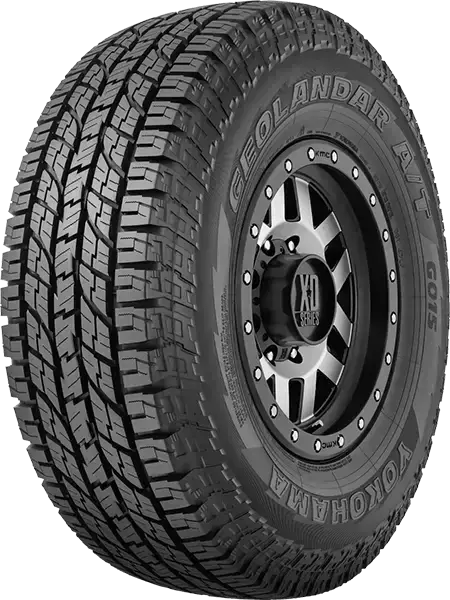
This tire delivered genuine all-terrain capability at a price that undercut every other AT tire on this list. Yokohama’s Triple 3D sipes maintained consistent edge contact during my gravel-trail testing, and the tire handled mud, loose dirt, and light rock without feeling out of its depth.
Despite its rugged capability, on-road comfort held up well — road noise was better controlled than the price point suggested it would be. Backed by a 60,000-mile warranty and 3PMSF certification, it’s the strongest value pick among the all-terrain options I tested.
Pros: Genuine all-terrain capability at a budget price, 3PMSF-rated, composed on-road manners for the category.
Cons: Not as tough as premium off-road options, moderate road noise.
11. Goodyear Assurance WeatherReady: Best Budget All-Weather

Price Check
Check the price of this tire at the following retailers:
This carries the 3PMSF rating at a price that undercuts the premium all-weather picks on this list. In my testing, the evolving traction grooves — which actually widen as the tire wears — kept wet and winter performance consistent throughout the tire’s life, a genuinely useful feature for an SUV you plan to keep for years.
It wasn’t quite as confident as the CrossClimate2 or Scorpion WeatherActive on packed snow in my side-by-side testing, and ride comfort was slightly firmer. Backed by a 60,000-mile warranty, it remains a genuinely solid, more affordable all-weather choice.
Pros: Genuine 3PMSF-rated all-weather capability at a lower price than premium alternatives, tread design that maintains grip as it wears.
Cons: Slightly less confident than premium all-weather picks in severe snow, firmer ride.
Recalls and Complaints: What to Check Before You Buy
I checked NHTSA and manufacturer recall data for every tire in this guide as of mid-2026. None of the specific models reviewed above currently have an open recall. A few adjacent notes worth knowing so you don’t confuse similarly-named tires while shopping:
- Continental CrossContact RX (ContiSeal) and TerrainContact H/T, different tires from the CrossContact LX25 reviewed above, were part of an October 2025 Continental recall over a tread-detachment risk tied to a nonconforming rubber compound. This does not affect the CrossContact LX25.
- Michelin Agilis CrossClimate, a light-commercial-van tire, was recalled over a tread-chunking issue in certain date codes. This is unrelated to the passenger CrossClimate2 or Defender2 reviewed above.
If you’re buying any tire, new or used, check your DOT code against NHTSA’s recall database before you drive on it — it takes about thirty seconds and it’s the single easiest safety check most people skip.
Choosing the Right Tire for Your SUV
Match tire category to how you actually use the vehicle. Most SUV owners are primarily highway drivers, and an all-season or all-weather tire will serve them better on cost, noise, and fuel economy than an all-terrain tire they don’t need.
Prioritize load rating if you regularly carry heavy cargo or tow. Don’t downgrade below your factory-specified load index to save money.
Climate should decide all-weather versus all-season. If you’re anywhere that sees real winter, prioritize a 3PMSF-rated tire at minimum — the CrossClimate2, Scorpion WeatherActive, Assurance WeatherReady, and Falken Wildpeak A/T3W all qualify at different price points.
If you drive a performance-oriented SUV, decide how much winter compromise you’re willing to accept. The Michelin Latitude Sport 3 delivers real handling gains but requires a seasonal winter set in cold climates.
Don’t mix tire models across axles. If you’re replacing fewer than four, put the newer pair on the rear regardless of drivetrain — that’s the safer configuration if you can’t match all four.
Frequently Asked Questions
What’s the best all-season tire for an SUV?
Based on current independent testing, the Michelin Defender2 is rated the top overall SUV tire, with the highest predicted tread life (100,000 miles) of any tire tested in its category. The Michelin CrossClimate2 is the strongest choice if you want genuine winter capability built in.
Do I need all-terrain tires for my SUV?
Most SUV owners don’t. If you’re primarily driving on pavement, an all-season or all-weather tire will deliver better comfort, quiet, and fuel economy than an all-terrain tire. Reserve all-terrain or hybrid-terrain options like the BFGoodrich KO2 or Nitto Ridge Grappler for genuine regular off-pavement use.
What’s the best all-weather tire for an SUV?
The Michelin CrossClimate2 and Pirelli Scorpion WeatherActive are both currently rated among the strongest all-weather options available, with genuine 3PMSF certification backed by independent testing rather than just a marketing claim. The Goodyear Assurance WeatherReady is a strong, more affordable alternative.
How often should I rotate my SUV’s tires?
Every 5,000 to 7,500 miles, using a rotation pattern appropriate to your drivetrain. This matters more on AWD SUVs than front-wheel-drive models, since uneven wear can affect how the system distributes power.
What load rating do I need for my SUV?
Match or exceed your factory-specified load index, found on your vehicle’s door jamb sticker or in the owner’s manual. This becomes especially important if your SUV is regularly loaded with passengers and cargo or used for towing — don’t downgrade to save money.
What’s the best tire for a luxury SUV?
The Bridgestone Dueler H/L Alenza Plus is purpose-built for a quiet, refined ride that complements luxury SUVs like the Lexus RX, BMW X5, and Range Rover, backed by an outstanding 80,000-mile warranty.
How do I check if my tires are part of a recall?
Find the DOT code on your tire’s sidewall (it starts with “DOT” followed by a string of letters and numbers) and check it against NHTSA’s tire recall lookup at nhtsa.gov, or the manufacturer’s own recall page. Do this before installing any tire, new or secondhand.
