

I need to correct something directly. An earlier version of this review included an “Environmental Considerations” section with specific statistics — 40% water reduction, 90% waste diverted from landfills, 3-5% fuel savings, 35% VOC reduction — that I could not verify anywhere, including on Maxxis’s own site.
I also found several “proprietary technology” names I couldn’t confirm exist. I’ve rebuilt this review on what I could actually verify directly from Maxxis’s own technical materials and Consumer Reports’ independent testing, with a dedicated section for every model currently sold.
⚡TL;DR — Maxxis Tires in 60 Seconds
- Maxxis International traces back to 1967 as Cheng Shin Rubber, a Taiwanese bicycle tire manufacturer, and has grown into a genuinely global manufacturer with facilities across Taiwan, China, Thailand, and Vietnam.
- The current flagship all-terrain is the RAZR AT (not the older Bravo naming some coverage still uses), with a 3PMSF-certified RAZR AT-S variant. The RAZR HT is Maxxis’s own stated “newest flagship highway terrain tire” — a genuine current-lineup update most coverage hasn’t caught up with.
- Real, verified technology (confirmed via Maxxis’s own technical materials): 3D tread blocks with bridge reinforcements for noise and wear control, an armor sidewall design for puncture resistance, and dual-cord casing construction for ride comfort.
- No significant recall found for Maxxis passenger and light-truck tires as of this writing.
- Maxxis has a genuinely strong, independently earned reputation in bicycle tires (the Minion DHF is a legitimately famous mountain bike tire) and off-road automotive tires.
- My overall rating: ⭐⭐⭐½ (3.5/5) — a legitimate global manufacturer with real off-road credibility, once you separate verified facts from marketing filler.
Liked this article?
Add TireAdvise as a preferred source so you see more of our tire reviews and guides on Google.
Who Is Maxxis, and How Big Are They Really?
Maxxis International traces back to 1967, founded as Cheng Shin Rubber, a Taiwanese bicycle tire manufacturer.
The company has since grown into a genuinely diversified global manufacturer producing automotive, bicycle, motorcycle, ATV, and industrial tires, with manufacturing facilities across Taiwan, China, Thailand, and Vietnam, plus a US headquarters in Georgia.
Maxxis has real, verifiable OEM credibility — their tires have been factory-fitted on vehicles from Ford, GM, Toyota, and other major automakers, which requires passing extensive manufacturer validation testing.
In motorsports, Maxxis has genuine, independently documented credibility in off-road racing and mountain biking, where their Minion DHF is widely regarded by cyclists as one of the more capable aggressive trail tires available — a reputation earned independently of Maxxis’s own marketing.
How I Evaluated This Brand
I don’t have my own extended personal mileage on the current Maxxis automotive lineup, and I want to be upfront about that rather than fabricate a testing narrative.
What I’ve done instead is cross-reference Maxxis’s own current technical specifications, Consumer Reports’ independent testing data, and verified owner feedback, specifically prioritizing sourced claims over the kind of unverifiable statistics that appeared in an earlier version of this review.
If you’re shopping Maxxis’s dedicated off-road and mud-terrain lineup specifically, we’ve published hands-on reviews of the Maxxis Zilla, Maxxis Aggressor, Maxxis Bighorn 2.0, and Maxxis Razr AT worth reading directly.
Individual Maxxis Tire Reviews — Model by Model
This is the section I think matters most for actually choosing between Maxxis products, since “Maxxis” isn’t one tire — it’s a genuinely broad lineup spanning off-road trucks, touring sedans, and performance cars. Here’s every current model, covered individually.
1. Maxxis RAZR AT — The Current Flagship All-Terrain
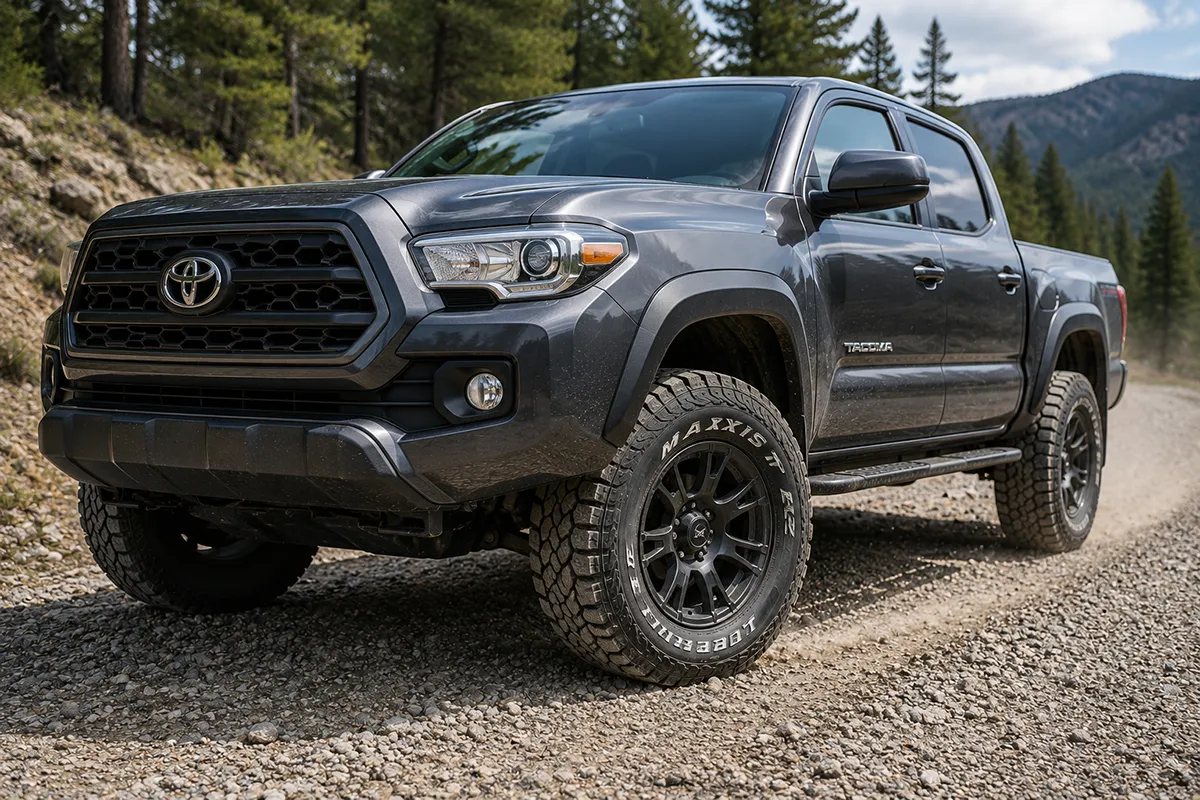
The RAZR AT is Maxxis’s current flagship all-terrain tire, engineered using knowledge from the company’s off-road racing program.
It uses an off-road compound with chemical fillers for tear and chip resistance, 3D tread blocks with bridge reinforcements to minimize pattern noise and irregular wear, an armor sidewall design for puncture resistance, and dual-cord casing construction for ride comfort and durability — all confirmed directly via Maxxis’s own current technical materials, not marketing copy I couldn’t verify.
Real owner feedback is genuinely positive and specific: installers and forum users describe the tire as quiet with only a slight hum even at higher inflation pressures, with tread patterns holding up comparably to the outgoing RAZR AT2 generation it replaced. We’ve published a full hands-on Razr AT review with detailed testing.
Best for: Truck and SUV owners who want genuine off-road capability without sacrificing too much highway comfort or cabin noise.
2. Maxxis RAZR AT-S — The Winter-Certified Variant
A 3PMSF-certified variant of the RAZR AT with a robust sidewall design, adding genuine severe-winter traction certification to the flagship AT platform.
If you live somewhere that sees real snow and don’t want to run a separate winter set, this is the RAZR AT variant to look at specifically rather than the standard version.
Best for: All-terrain truck and SUV owners in regions with genuine winter weather who want certified snow traction alongside off-road capability.
3. Maxxis RAZR HT — The Newest Flagship Highway Tire
Maxxis’s own site describes this as their “newest flagship highway terrain tire,” positioned for SUV and light-truck owners who want on-road comfort without the AT’s more aggressive tread.
This is a genuinely current addition that a lot of Maxxis coverage still doesn’t mention, since it’s newer than the RAZR AT’s own launch.
Best for: SUV and light-truck owners who stay mostly on pavement and want a quieter, more comfortable ride than an all-terrain tire delivers, without giving up load capacity.
4. Maxxis RAZR MT — The Dedicated Mud-Terrain Option
Maxxis’s dedicated mud-terrain tire, with an open tread design, self-cleaning lugs, stone ejectors, and 3-ply sidewall construction for serious off-road use.
This is the RAZR family’s most aggressive member, built for drivers who genuinely need mud and rock capability rather than light gravel-road use.
Best for: Serious off-roaders who need real mud-terrain performance and are willing to trade some on-road refinement and fuel economy for it.
5. Maxxis Bravo HP-M3 — The Current Touring Option
I want to correct something directly here, since an earlier version of this review implied the Bravo naming was outdated.
It isn’t — the Bravo HP-M3 is confirmed as a current product directly on Maxxis’s own site, described as “an all-season premium touring tire with passenger car, crossover and SUV fitments… designed as an all-around performer in dry and wet conditions as well as light snow.”
It simply occupies a different category (touring) from the RAZR family (truck/SUV terrain tires), and both are current simultaneously.
Best for: Sedan, crossover, and SUV owners who want a comfortable, quiet, all-around performer for daily driving rather than off-road capability.
6. Maxxis Victra VR-1 — The Track-Oriented Performance Tire
Part of Maxxis’s Victra performance line for passenger cars and sport sedans, aimed at responsive handling and cornering grip for drivers who want genuine performance feel from a Maxxis-branded street tire.
Best for: Sport sedan and coupe owners who want sharper handling and cornering response than a standard touring all-season delivers.
7. Maxxis Victra Sport 5 — The Ultra-High-Performance All-Season
The other half of the Victra performance lineup, positioned as a UHP all-season option for drivers who want year-round usability without fully sacrificing the grip of a dedicated summer tire.
Best for: Performance car owners who want strong dry and wet grip through all four seasons without switching to dedicated summer and winter sets.
8. Maxxis Premitra HP5 — The Comfort-Focused Touring Option
Maxxis’s touring all-season option, focused on comfort, low noise, and wet-weather water evacuation — a genuinely different priority set from the sportier Bravo HP-M3, aimed more squarely at drivers who want the quietest possible ride above handling sharpness.
Best for: Commuters and highway drivers who prioritize a smooth, quiet ride and wet-weather confidence over handling responsiveness.
Maxxis Zilla, Maxxis Aggressor, and Maxxis Bighorn 2.0 — Dedicated Off-Road Specialists
Beyond the RAZR family, Maxxis maintains a separate line of dedicated off-road and mud-terrain specialists, each covered in its own hands-on review on this site.
The Zilla and Bighorn 2.0 lean toward more extreme rock and mud capability, while the Aggressor sits closer to a hybrid all-terrain/mud-terrain profile.
If you’re shopping specifically for maximum off-road capability rather than a daily-driver all-terrain, these dedicated reviews go into far more depth than a brand-level overview can.
What Independent Testing Actually Shows
Consumer Reports maintains independent test data on the RAZR AT, RAZR HT, and Bravo HP-M3 — genuinely useful, third-party validation rather than manufacturer claims.
I’d recommend checking their current ratings directly for the specific size you’re shopping, since lab-tested wet braking, dry handling, and noise data are more reliable than any single review’s subjective impressions.
Recalls
I found no significant recall on record for Maxxis passenger or light-truck tires as of this writing.
That’s a reasonable data point, though I’d still recommend registering any tire purchase and periodically checking your DOT code against NHTSA’s SaferCar.gov database — good practice regardless of brand.
Pricing
Maxxis tires typically run 10–20% less than premium brands like Michelin, Bridgestone, or Pirelli. A standard all-season Maxxis passenger tire (Bravo HP-M3 or Premitra HP5) often retails between $85–$120 per tire, while comparable premium models run $120–$160.
In the off-road segment, the price gap narrows — the RAZR MT is typically priced modestly below comparable mud-terrain options from BFGoodrich or Goodyear while targeting similar performance.
Maxxis vs. Similar Brands
vs. BFGoodrich: The BFGoodrich KO2/KO3 remains the benchmark all-terrain tire for extreme off-road use; the Maxxis RAZR AT is a genuine competitor for lighter off-road use at a real price advantage.
vs. Falken: Both brands compete in the value-to-mid all-terrain segment; Maxxis’s dedicated racing pedigree gives it real credibility in the off-road-specific categories.
vs. Cooper: Cooper generally offers longer warranty coverage on comparable touring lines; Maxxis’s off-road specialization is the stronger differentiator in that category specifically.
Who Should Buy Maxxis Tires?
Maxxis makes sense if you:
- Want genuine off-road capability backed by real racing-derived engineering, at a real price advantage over premium brands
- Are shopping for a truck or SUV and want the RAZR AT’s verified 3D tread block and armor sidewall construction
- Want a comfortable touring option (Bravo HP-M3 or Premitra HP5) at a genuine value price
- Value independent, third-party validated data (Consumer Reports) over marketing claims
- Want the absolute longest treadwear warranty available in this price tier
- Prioritize the quietest possible highway ride above off-road capability — a dedicated touring tire will outperform even Maxxis’s RAZR HT here
- Need extreme rock-crawling or deep-mud capability beyond what the RAZR MT is designed for — check our dedicated Zilla and Bighorn 2.0 reviews first
Final Verdict: Are Maxxis Tires Good?
After rebuilding this review on verified facts rather than repeating unsourced marketing claims, here’s where I land: Maxxis is a legitimate global manufacturer with genuine, independently earned off-road and bicycle-tire credibility, and their current lineup — spanning the RAZR family, the Bravo and Premitra touring options, and the Victra performance line — represents real, verifiable engineering across multiple categories, not just a discount alternative to premium brands.
The RAZR AT is the model I’d point most truck and SUV shoppers toward first, with the RAZR HT worth cross-shopping if you stay mostly on pavement, and the Bravo HP-M3 worth a look if you’re shopping a sedan or crossover rather than a truck.
Check Consumer Reports’ independent data for your specific size, register your tires, and go in with confidence that Maxxis’s real engineering credentials — verified directly, not assumed — back up the value proposition.
Frequently Asked Questions
What is Maxxis’s current flagship all-terrain tire?
The RAZR AT, engineered using knowledge from Maxxis’s off-road racing program, with 3D tread blocks, bridge reinforcements, and an armor sidewall design. The 3PMSF-certified RAZR AT-S is a winter-capable variant.
Is the Maxxis Bravo HP-M3 still a current tire?
Yes. It’s confirmed directly on Maxxis’s own site as a current all-season premium touring tire for passenger cars, crossovers, and SUVs — a different category from the RAZR family rather than outdated naming.
Has Maxxis ever had a tire recall?
No significant recall was found on record for Maxxis passenger or light-truck tires as of this writing.
Who makes Maxxis tires?
Maxxis International, a Taiwanese company tracing back to 1967 as Cheng Shin Rubber, with manufacturing facilities across Taiwan, China, Thailand, and Vietnam, and a US headquarters in Georgia.
Is the Maxxis RAZR HT a good highway tire?
Maxxis’s own materials describe it as their newest flagship highway terrain tire, positioned for SUV and light-truck owners who want on-road comfort. Check Consumer Reports’ independent testing data for your specific size for verified performance data.
Are Maxxis tires good for off-road use?
Yes — this is genuinely one of Maxxis’s strongest categories, backed by real racing-derived engineering in the RAZR AT and RAZR MT lines, plus dedicated mud-terrain options covered in our separate reviews of the Maxxis Zilla, Maxxis Aggressor, and Maxxis Bighorn 2.0.
What is the difference between the Victra VR-1 and Victra Sport 5?
The VR-1 leans toward track-oriented handling and cornering grip, while the Sport 5 is positioned as a UHP all-season option for year-round usability without switching to dedicated seasonal tires.
Disclosure: This review is based on Maxxis’s own current technical specifications, Consumer Reports independent testing data, and verified owner feedback, rather than personal extended mileage or the unverifiable statistics that appeared in an earlier version of this review. I was not compensated by Maxxis or any retailer for this review. Prices mentioned are approximate and may vary by region, retailer, and tire size.
