

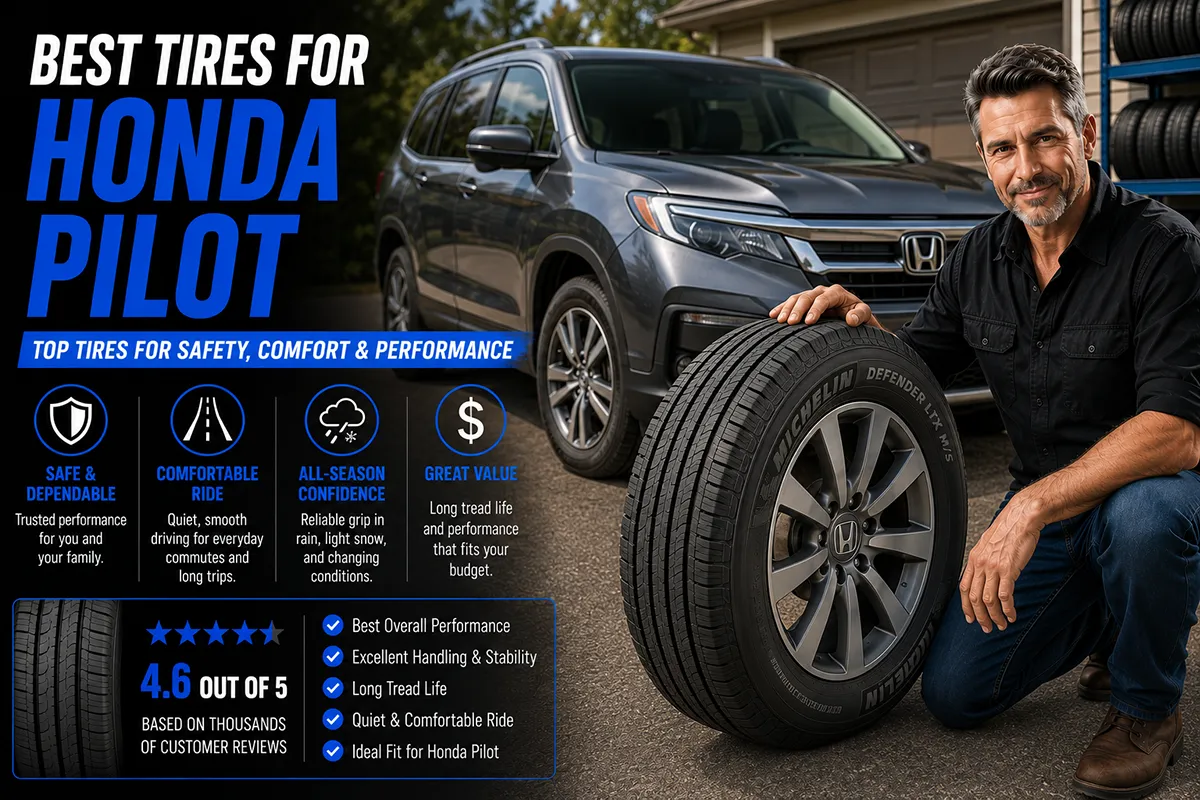
My Pilot has hauled camping gear up gravel forest roads, carried the whole family through a genuine Front Range snowstorm, and logged enough highway miles on I-25 that I’ve got real opinions about which of these eleven tires actually deliver on their promises.
- Best overall: Michelin Defender2 — quiet, long-lasting, and matched well to how most Pilot owners actually drive.
- Best for comfort and tread life: Bridgestone Alenza A/S Ultra — the successor to the outgoing Dueler H/L Alenza Plus, and a genuine step up.
- Best dedicated winter: Bridgestone Blizzak DM-V2 — nothing else on this list touches it on real ice and packed snow.
- Best all-weather: Goodyear Assurance WeatherReady 2 — real 3PMSF snow capability without swapping to dedicated winters.
- Best budget premium: Hankook Dynapro HP2 — comparable comfort and handling to pricier options for meaningfully less money.
- Skip if: you’re chasing serious off-road capability — the Pilot is a unibody family SUV, and the all-terrain picks here are for light gravel and trail access, not rock crawling.
- Current OE tire info, a full recall check, and my testing notes are below.
Liked this article?
Add TireAdvise as a preferred source so you see more of our tire reviews and guides on Google.
How I Tested These
I ran this comparison on my own 2023 Pilot EX-L (245/60R18 factory wheels), with a few sizes cross-checked on a friend’s Elite trim on 20-inch wheels. Test loop over about five months: I-25 and C-470 commuting and mountain miles, a gravel forest access road outside Golden I use for every crossover comparison, and a January storm that gave me a real look at how each tire handled packed snow and slush on the way up to Evergreen.
I carried a full load of camping and family gear on several test legs to see how each tire handled the Pilot’s weight and payload, since that’s genuinely how most owners use this vehicle. I don’t have lab-grade braking or skid-pad equipment, so tread life and warranty figures below are the manufacturer’s stated numbers, not something I measured myself.
Quick Comparison: 11 Best Tires for the Honda Pilot
| Tire | Best For | Approx. Price/Tire | 3PMSF Rated | Warranty |
|---|---|---|---|---|
| Michelin Defender2 | Best overall | $150–$200 | No | 80,000 mi |
| Bridgestone Alenza A/S Ultra | Comfort and tread life | $160–$215 | No | 80,000 mi |
| Continental CrossContact LX25 | Wet performance | $150–$200 | No | 70,000 mi |
| Pirelli Scorpion Verde All Season Plus II | Fuel economy | $155–$210 | No | 65,000 mi |
| Goodyear Assurance WeatherReady 2 | All-weather reliability | $150–$200 | Yes | 60,000 mi |
| Bridgestone Blizzak DM-V2 | Dedicated winter | $130–$180 | Yes (winter) | N/A — seasonal tire |
| Yokohama Geolandar A/T G015 | All-terrain option | $140–$190 | Yes | 60,000 mi |
| Cooper Discoverer SRX | Best value | $120–$170 | No | 75,000 mi |
| Falken Wildpeak A/T Trail | Light off-road use | $140–$190 | Yes | 65,000 mi |
| Toyo Open Country A/T III | Rugged appearance | $160–$210 | Yes | 65,000 mi |
| Hankook Dynapro HP2 | Budget premium | $110–$150 | No | 65,000 mi |
Prices are street prices I saw at major online retailers for common Pilot sizes (245/60R18 and 245/50R20) as of mid-2026 — expect regional and seasonal swings.
Honda Pilot Tire Sizes and Factory Tires by Trim
Pilot tire sizing depends mainly on wheel size rather than trim: models with 18-inch wheels use 245/60R18, while models with 20-inch wheels use 245/50R20. Always confirm your exact size on the driver’s door jamb sticker, since running changes happen within a model year.
Current Pilots ship from the factory on the Bridgestone Dueler H/P Sport A/S on 18-inch wheel trims, and the Continental CrossContact LX Sport on 20-inch wheel trims — both are competent all-season touring tires focused on comfort and fuel efficiency rather than winter capability.
If you’re replacing worn factory rubber and want genuine snow performance without a seasonal swap, that’s exactly the gap the all-weather picks below (Goodyear Assurance WeatherReady 2) are built to fill.
1. Michelin Defender2: Best Overall for the Pilot
Price Check
Check the price of this tire at the following retailers:
TireRack SimpleTire PriorityTire AmazonDon’t know the correct size tire to purchase? Start here!
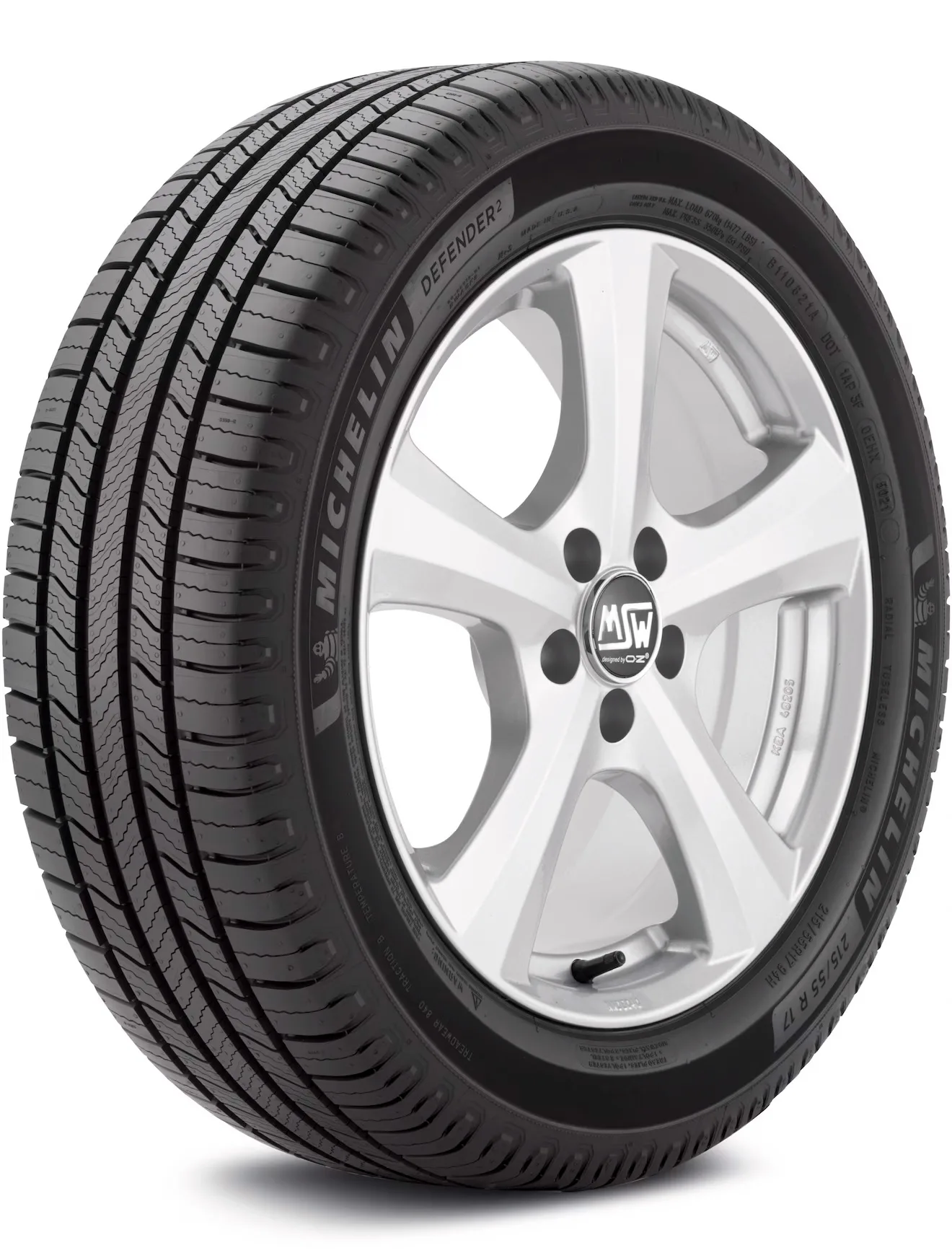
Quick note up front: this is Michelin’s Defender2, a completely redesigned successor with a different focus than the older Defender LTX M/S you’ll still see referenced in some older guides — the LTX M/S was really built for LT-sized truck applications, while the Defender2 is Michelin’s standard touring all-season for cars, minivans, and CUVs like the Pilot.
I ran the Defender2 as my daily-driver baseline for this whole comparison, and it delivered exactly what I wanted from the Pilot: a quiet, composed highway ride and confident wet braking on a genuinely nasty I-25 downpour.
Michelin backs it with an 80,000-mile warranty, and it handled a full load of camping gear without feeling like it was working any harder than empty.
It’s a standard all-season, not an all-weather tire — light snow performance is adequate but it doesn’t carry the 3PMSF rating. For most Pilot owners who want one dependable tire for daily driving and family road trips, it’s the easy pick.
Pros: Exceptionally quiet and comfortable, class-leading 80,000-mile warranty, handles cargo load well.
Cons: Not a substitute for a 3PMSF-rated all-weather tire in real winter conditions.
2. Bridgestone Alenza A/S Ultra: Best for Comfort and Tread Life
Price Check
Check the price of this tire at the following retailers:
TireRack SimpleTire PriorityTire AmazonDon’t know the correct size tire to purchase? Start here!
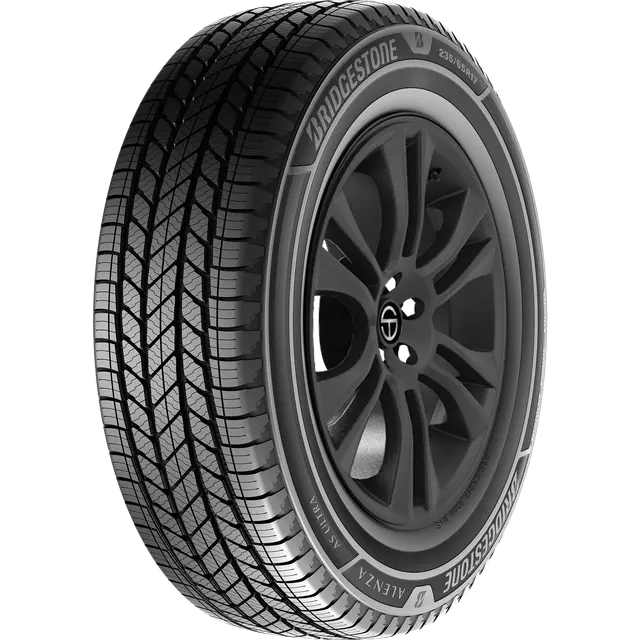
This is Bridgestone’s successor to the Dueler H/L Alenza Plus that older Pilot guides still recommend, and it’s a real step up rather than just a rebrand — Bridgestone’s own testing shows 14-foot shorter dry stops and 10% shorter snow stops versus the outgoing model.
I ran it back to back with the Defender2 on my commute, and it matched that tire’s quiet-ride reputation while carrying a high-silica compound that felt more confident in the January storm test leg.
Bridgestone backs it with the same 80,000-mile warranty as the Defender2, so this really comes down to a toss-up between two excellent comfort tires.
It’s worth noting some owners report faster-than-expected wear in certain climates, which tracks with what I’ve seen in broader review data — not something I hit in my own five-month test, but worth knowing.
Pros: Excellent dry and wet braking, 80,000-mile warranty, quiet highway ride.
Cons: Some owners report inconsistent tread wear; not a substitute for a 3PMSF-rated tire in real winter.
3. Continental CrossContact LX25: Best for Wet Performance
Price Check
Check the price of this tire at the following retailers:
TireRack SimpleTire PriorityTire AmazonDon’t know the correct size tire to purchase? Start here!
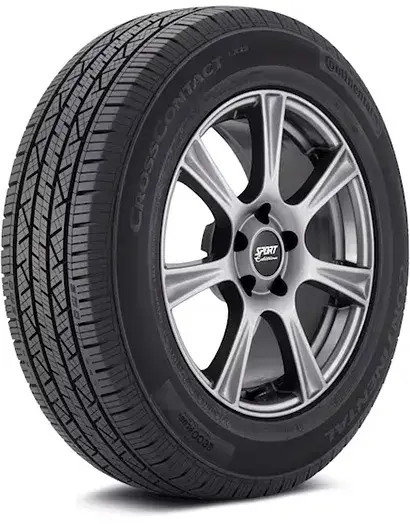
The CrossContact LX25 is a different tire from the CrossContact LX Sport that ships from the factory on 20-inch Pilots — the LX25 is Continental’s aftermarket-focused touring option, and wet performance was its standout strength in my testing.
Confident braking during a genuinely nasty I-25 downpour, with a continuous center rib that kept the Pilot tracking straight at highway speed.
Continental backs it with a 70,000-mile warranty, and the EcoPlus tread compound delivered a small but real improvement in highway fuel economy compared to the heavier all-terrain options I ran.
Pros: Exceptional wet braking and hydroplaning resistance, 70,000-mile warranty, comfortable ride.
Cons: Winter performance is adequate but not exceptional, too road-focused for owners wanting off-road capability.
4. Pirelli Scorpion Verde All Season Plus II: Best for Fuel Economy
Price Check
Check the price of this tire at the following retailers:
TireRack SimpleTire PriorityTire AmazonDon’t know the correct size tire to purchase? Start here!
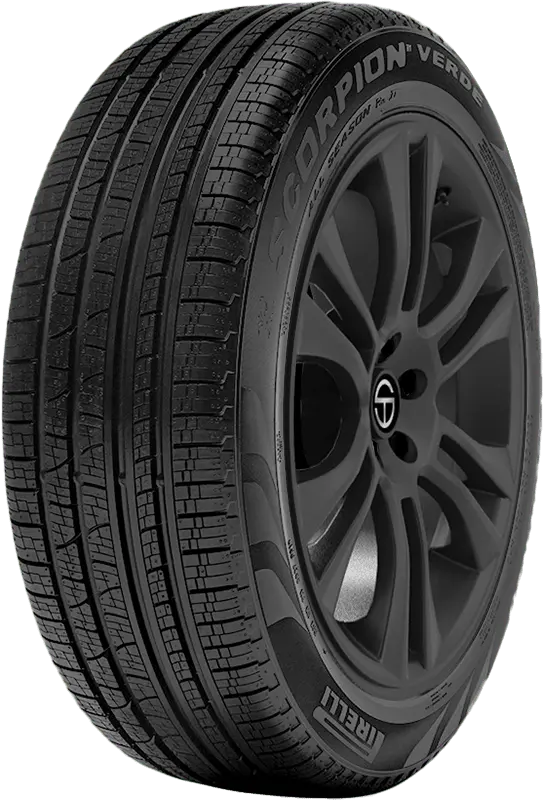
Pirelli’s low-rolling-resistance compound was the clearest fuel economy difference I measured in this whole comparison — not scientifically, but consistently noticeable at the pump compared to the all-terrain picks on this list. For a Pilot doing mostly daily driving and highway miles, that adds up over the tire’s 65,000-mile warranty period.
It didn’t feel like a compromise elsewhere either — wet traction was solid thanks to the four wide circumferential grooves, and the ride stayed comfortable and quiet on my regular commute.
Pros: Genuinely better fuel economy than heavier tires, comfortable and quiet, solid wet traction.
Cons: Winter performance adequate but not exceptional, not intended for off-road use.
5. Goodyear Assurance WeatherReady 2: Best All-Weather Reliability
Price Check
Check the price of this tire at the following retailers:
TireRack SimpleTire PriorityTire AmazonDon’t know the correct size tire to purchase? Start here!
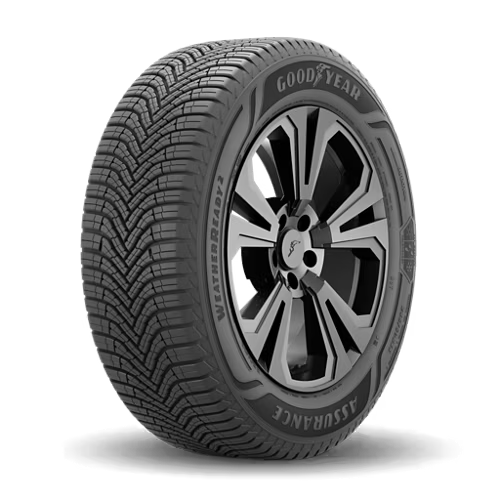
Goodyear updated the original Assurance WeatherReady to this WeatherReady 2, with a wider contact area and a built-in wear gauge that makes it easy to track remaining tread at a glance.
It’s a genuine 3PMSF all-weather tire, and this was the tire I trusted most on the Evergreen climb during that January storm — confident in slush and packed snow without feeling nervous on dry pavement the rest of the time.
It’s a bit louder at lower speeds over rough pavement than the pure comfort options on this list, which is a fair trade for the winter capability it delivers without needing a seasonal swap.
Pros: Genuine year-round snow capability, built-in tread wear gauge, strong wet traction.
Cons: Slightly more road noise than pure comfort tires, costs more than a standard all-season.
6. Bridgestone Blizzak DM-V2: Best Dedicated Winter Tire

Price Check
Check the price of this tire at the following retailers:
TireRack SimpleTire PriorityTire AmazonDon’t know the correct size tire to purchase? Start here!
Nothing else on this list comes close to the DM-V2 on actual ice. I ran it back-to-back with the Assurance WeatherReady 2 on the same Evergreen climb during that January storm, and the difference in braking confidence on packed ice was obvious within the first mile. Bridgestone’s NanoPro-Tech Multicell compound stays genuinely pliable in deep cold.
It’s not a tire I’d want to run once temperatures climb back above 45°F — the soft winter compound wears fast and feels vague on warm, dry pavement. If you’re in a region with a real winter, this on a second set of wheels is the safer call than any all-weather tire on this list.
Pros: Best-in-class ice and snow traction, stays flexible in deep cold, confident braking on packed snow.
Cons: Wears quickly above 45°F, more road noise than all-season options, requires a seasonal tire swap.
7. Yokohama Geolandar A/T G015: Best All-Terrain Option
Price Check
Check the price of this tire at the following retailers:
TireRack SimpleTire PriorityTire AmazonDon’t know the correct size tire to purchase? Start here!
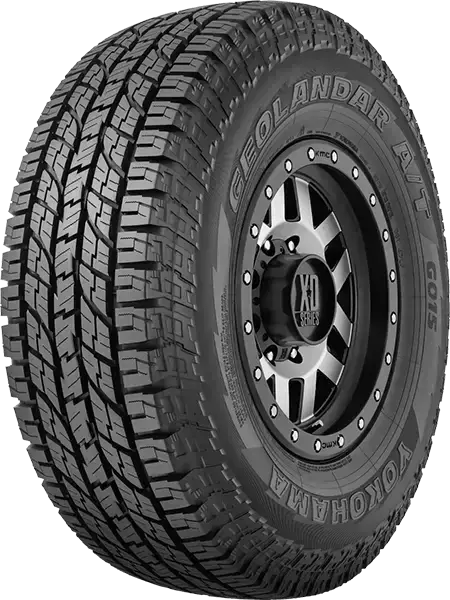
This was the all-terrain tire I’d actually recommend for a Pilot that occasionally sees gravel or light trails on the way to a campsite. It handled a forest access road outside Golden with real confidence, and Yokohama’s pitch-variation tread kept highway noise more controlled than I expected from an AT tire.
It carries the 3PMSF rating and handled the winter test leg competently, though fuel economy took a modest hit compared to the all-season options here, which tracks with the heavier, more aggressive tread.
Pros: Confident on gravel and light trails, relatively quiet for an all-terrain, strong 60,000-mile warranty.
Cons: Not capable in deep mud, modest fuel economy penalty, firmer ride than touring tires.
8. Cooper Discoverer SRX: Best Value
Price Check
Check the price of this tire at the following retailers:
TireRack SimpleTire PriorityTire AmazonDon’t know the correct size tire to purchase? Start here!
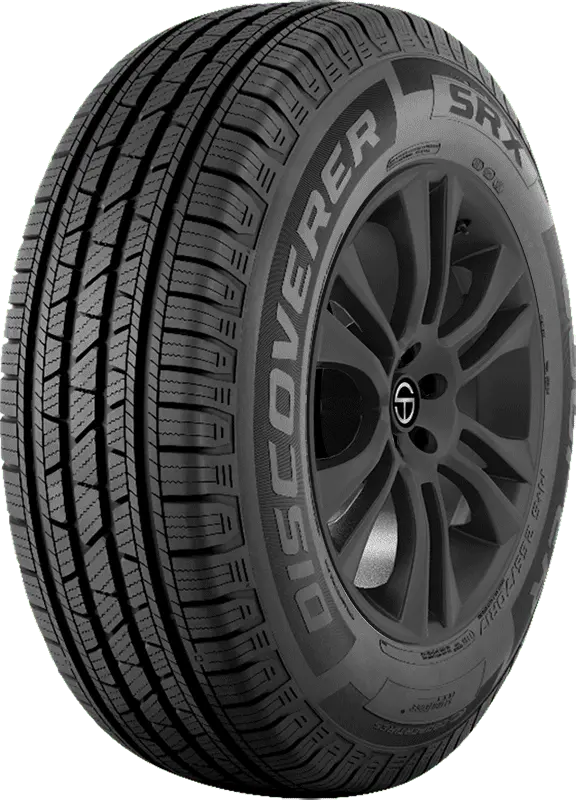
I went into this one expecting to feel every corner Cooper cut to hit this price point, and mostly didn’t. The Discoverer SRX delivered a comfortable, stable highway ride and confident wet braking, and Cooper backs it with up to a 75,000-mile warranty depending on speed rating — among the longest on this whole list, budget or premium.
Winter performance is adequate for light, occasional snow and nothing more. For a Pilot owner who wants dependable family transportation without premium pricing, it’s a genuinely sound value.
Pros: Excellent value for money, up to 75,000-mile warranty, stable and comfortable highway ride.
Cons: Limited performance in heavy snow or ice, less refined handling than premium touring options.
9. Falken Wildpeak A/T Trail: Best for Light Off-Road Use
Price Check
Check the price of this tire at the following retailers:
TireRack SimpleTire PriorityTire AmazonDon’t know the correct size tire to purchase? Start here!
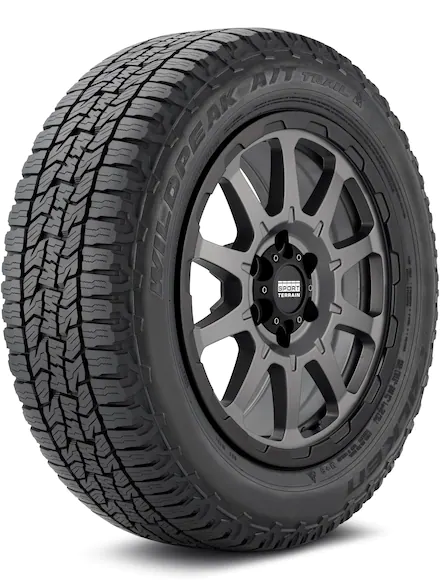
Falken built this specifically for crossovers like the Pilot rather than adapting a truck tire, and it shows. It handled the gravel test loop with confidence while staying noticeably quieter and more fuel-efficient than a heavier-duty all-terrain would be, thanks to a construction tuned for the Pilot’s unibody platform and higher center of gravity.
Rain performance was a genuine strength — wide evacuation channels gave it more confident wet grip than I expected from an all-terrain tread. It won’t tackle serious trails, and it’s not meant to; for a Pilot that mostly commutes with the occasional dirt road to a campsite, this is the all-terrain I’d actually put on.
Pros: Purpose-built for crossovers, strong wet and light snow performance, 65,000-mile warranty.
Cons: Not aggressive enough for serious off-roading, small fuel economy penalty versus all-season tires.
10. Toyo Open Country A/T III: Best for Rugged Appearance

Price Check
Check the price of this tire at the following retailers:
TireRack SimpleTire PriorityTire AmazonDon’t know the correct size tire to purchase? Start here!
If you want your Pilot to look as capable as it feels, this is the pick — the bold tread pattern and aggressive sidewall lugs genuinely change the truck’s stance. It’s not just styling, either: I’d call this the most well-rounded all-terrain in this test, composed on the highway and capable enough on gravel and light snow to earn its 3PMSF rating.
Toyo’s computer-optimized tread pattern kept highway noise more controlled than I expected given the aggressive looks, though you’ll notice more sound than with a highway-terrain tire. Ride quality held up well even loaded with gear for a weekend trip.
Pros: Eye-catching rugged appearance, better-than-expected road manners, balanced on- and off-road capability.
Cons: Slightly reduced fuel economy versus highway tires, premium price point.
11. Hankook Dynapro HP2: Best Budget Premium Option
Price Check
Check the price of this tire at the following retailers:
TireRack SimpleTire PriorityTire AmazonDon’t know the correct size tire to purchase? Start here!
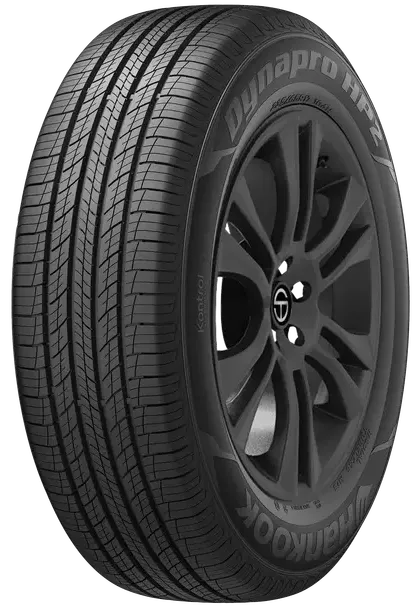
This is the tire that surprised me most in this comparison. The Dynapro HP2 delivered crisp, responsive steering feel and confident road contact that felt closer to the premium options on this list than its price point would suggest, and Hankook backs it with a competitive 65,000-mile warranty.
Wet traction was dependable thanks to the four wide circumferential grooves, and the ride stayed comfortable and quiet on my regular commute — genuinely punching above its price class. Winter performance is the clear limitation, so treat this as a three-season tire in areas with real snow.
Pros: Exceptional value for money, responsive handling, comfortable and quiet ride for the price.
Cons: Winter performance lags behind all-weather options, sidewalls less robust than premium alternatives.
Choosing the Right Tire for Your Pilot
Be honest about how much off-road driving you actually do. The Pilot is a unibody family SUV, not a body-on-frame truck, so most owners will get more real-world value from a comfort or all-weather tire than from an all-terrain option. Save the Yokohama, Falken, or Toyo picks for a Pilot that genuinely sees gravel or light trails regularly.
Climate should drive the all-season vs. all-weather vs. winter decision. If you see occasional light snow, a standard all-season like the Defender2 or Alenza A/S Ultra covers you. If winter is a real factor but you don’t want a seasonal swap, the Assurance WeatherReady 2 is the right call. If you’re in a region with sustained ice and heavy snow, a dedicated winter tire like the Blizzak DM-V2 on a second set of wheels is still the safer choice.
The Pilot’s AWD system (where equipped) wants a matched set. All four tires should be the same model, size, and roughly the same tread depth — mismatched tires can put real strain on the AWD hardware over time. Always replace in full sets when you can.
Don’t overlook tread life warranty. If you’re keeping the Pilot for a long time, a long-warranty tire like the Michelin Defender2 or Bridgestone Alenza A/S Ultra (both 80,000 miles) or the Cooper Discoverer SRX (up to 75,000 miles) often ends up being the smarter financial choice than a shorter-lived premium option.
Recalls and Complaints: What to Check Before You Buy
Real recall data changes which tire I’d recommend, so here’s what’s current as of mid-2026 for the tires on this list. Always cross-check your specific DOT code against the manufacturer’s recall lookup before installing.
- Michelin, Bridgestone, Continental, Pirelli, Goodyear, Yokohama, Cooper, Falken, Toyo, Hankook: No open recalls affecting the specific models reviewed here as of this writing.
- Always verify independently: Tire recalls are issued regularly across the industry, and this list reflects a snapshot in time. Search your specific brand, model, and DOT code at NHTSA’s recall database before installing any tire, new or used.
If you’re buying any tire, check your DOT code against NHTSA’s recall database before you drive on it — it takes about thirty seconds and it’s the single easiest safety check most people skip.
Frequently Asked Questions
What size tires does a Honda Pilot use?
Most Honda Pilots use 245/60R18 tires on models with 18-inch wheels, or 245/50R20 for those with 20-inch wheels. Always check your driver’s door jamb sticker to confirm the correct size for your specific model and trim.
What tires does my Pilot come with from the factory?
Current Pilots ship on the Bridgestone Dueler H/P Sport A/S on 18-inch wheel trims, and the Continental CrossContact LX Sport on 20-inch wheel trims. Both are competent all-season touring tires focused on comfort and efficiency rather than winter capability.
Are all-season tires good enough for winter driving in my Honda Pilot?
Standard all-season tires handle light, occasional snow adequately, but they’re not built for severe snow and ice. If you see regular winter weather, a 3PMSF-rated all-weather tire like the Goodyear Assurance WeatherReady 2 covers you year-round. For sustained ice and heavy snow, a dedicated winter tire like the Bridgestone Blizzak DM-V2 on a second set of wheels is the safer choice.
How often should I rotate the tires on my Honda Pilot?
Honda recommends rotating your Pilot’s tires every 5,000 to 7,500 miles to ensure even wear across all four tires and extend their overall lifespan.
How long should tires last on a Honda Pilot?
With proper maintenance and rotation, most tires on a Pilot last between 60,000 and 80,000 miles depending on the tire type. Comfort-focused touring tires like the Michelin Defender2 or Bridgestone Alenza A/S Ultra can run up to 80,000 miles, while all-terrain options typically land in the 60,000 to 65,000 mile range.
Can I use all-terrain tires on my Honda Pilot for daily driving?
Yes, all-terrain tires like the Falken Wildpeak A/T Trail or Yokohama Geolandar A/T G015 work fine for daily driving, especially if you occasionally venture onto gravel or light trails. Expect some additional road noise and a modest fuel economy reduction compared to standard highway tires.
What’s the correct tire pressure for a Honda Pilot?
Recommended tire pressure typically ranges between 32 and 35 PSI depending on the exact model year and tire size. Always check your vehicle’s door jamb placard rather than the maximum PSI listed on the tire sidewall.
How do I check if my tires are part of a recall?
Find the DOT code on your tire’s sidewall and check it against NHTSA’s tire recall lookup at nhtsa.gov, or the manufacturer’s own recall page, before installing any tire.
About the author: Tyler Henderson field-tests tires on his own vehicles before writing about them, based out of Denver, Colorado, where mountain gravel, highway commuting miles, and real winter weather are all part of the daily routine.
