

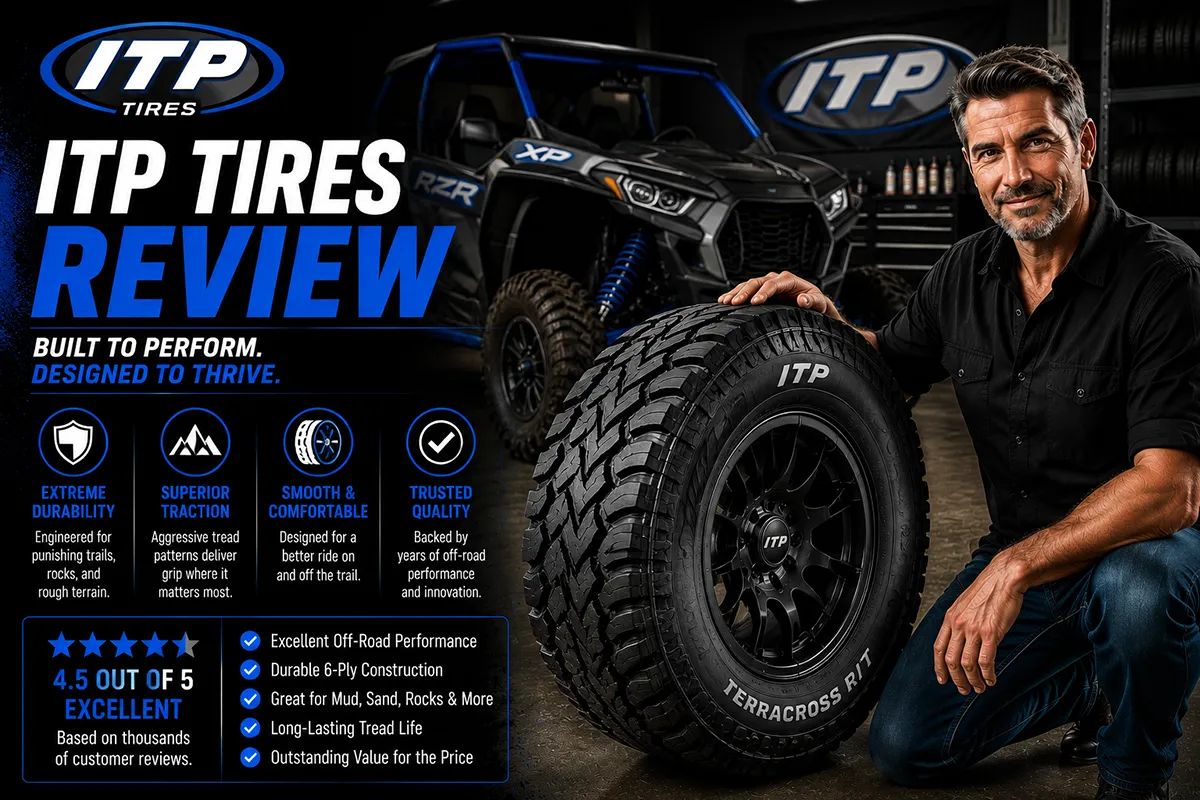
If you own a UTV, ATV, or side-by-side and you’ve been scrolling through endless tire options trying to figure out which brand actually delivers, you’re not alone.
After spending extensive time testing multiple ITP tire models across mud, trails, hard-pack, and everything in between — and going back to verify the full current lineup and ownership picture — I’m ready to give you the complete breakdown.
- ITP tires are purpose-built for ATVs, UTVs, and side-by-sides — not passenger cars
- ITP is owned by The Carlstar Group, LLC, a real detail worth knowing if you’re checking warranty support or corporate accountability
- Excellent value for the price, often undercutting competitors by 15-25%
- The Mud Lite II and Coyote are standout performers in their respective categories
- The lineup is much bigger than four models. Beyond what I personally tested, ITP also makes an entire racing-focused Holeshot series, the extreme-mud Cryptid and Mud Lite XTR, and a dedicated sand tire — none of which most ITP coverage mentions
- Best for: recreational riders, trail enthusiasts, hunters, and ranch/farm use
- Not ideal for: extreme rock crawling or high-speed desert racing
Liked this article?
Add TireAdvise as a preferred source so you see more of our tire reviews and guides on Google.
What Is ITP and Who Are They For?
Before I dive into my hands-on experience, let me set the stage properly, including a detail I think deserves more attention than it usually gets.
ITP — which stands for Industrial Tire Products — has been manufacturing tires and wheels specifically for the powersports industry since 1982. They’re headquartered in Clinton, Tennessee, and their products are designed, engineered, and tested in the US.
ITP is a brand of The Carlstar Group, LLC, a real detail worth knowing since it’s Carlstar’s own warranty and customer care team you’ll be dealing with if something goes wrong, not an independent ITP entity. Carlstar’s Customer Care Unit handles warranty adjustments directly (1-800-260-7959).
This is not a passenger car tire company. If you’re looking for tires for your Honda Civic or Ford F-150, this review isn’t for you. ITP specializes exclusively in tires for ATVs, UTVs, side-by-sides, golf carts, and lawn equipment.
Worth knowing directly: ITP has genuine motorsport credentials most coverage of this brand skips. They have a real, decades-long racing history, supporting competitive riders and teams in events like the Baja 1000 and the GNCC (Grand National Cross Country) series. That’s not just marketing color — it’s the direct engineering lineage behind their Holeshot racing series, covered below.
The ITP Tire Models I Tested
I didn’t just slap on one set and call it a day. Over my testing period, I had the opportunity to ride on four different ITP tire models across varying conditions:
- ITP Mud Lite II — their flagship mud tire
- ITP Coyote — an 8-ply all-terrain radial
- ITP Terra Cross R/T — a crossover trail/mud tire
- ITP Blackwater Evolution — a heavy-duty radial for bigger UTVs
Each tire was tested on a Polaris RZR XP 1000 and a Can-Am Outlander 650, giving me a good range of vehicle weights and riding styles to evaluate performance.
1. ITP Mud Lite II Review: The Mud King on a Budget
Price Check
Check the price of this tire at the following retailers:
Don’t know the correct size tire to purchase? Start here!
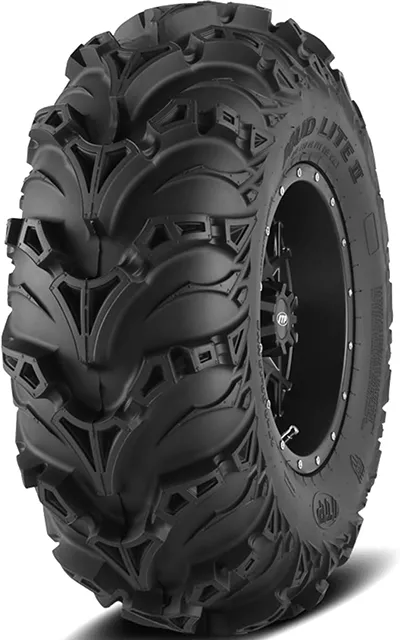
Let me start with the tire that probably brought most of you here — the ITP Mud Lite II. This is one of the best-selling ATV/UTV mud tires in the US, and after testing it extensively, I understand why.
First Impressions
Right out of the box, the Mud Lite II looks aggressive but not over-the-top. I mounted a set of 27×9-14 fronts and 27×11-14 rears, and the fitment was perfect without any rubbing issues. The tire is a 6-ply bias construction, which keeps it lighter than many competitors.
Mud Performance
This is where the Mud Lite II earns its name. I took it through some seriously soupy conditions — thick Georgia red clay after a week of rain — and it performed remarkably well. The self-cleaning tread actually works.
In moderate mud — the kind most recreational riders actually encounter — this tire is phenomenal. In the absolute deepest, nastiest bog holes, though, the Mud Lite II does reach its limits. If you’re an extreme mudder who lives in bottomless pits, look at the ITP Cryptid or Mud Lite XTR, covered in the full lineup section below.
Trail and Hardpack Performance
The Mud Lite II is actually decent on trails and hardpack. On gravel forest roads, steering response was predictable and the tire didn’t wander excessively.
Durability
After several weeks of aggressive riding across mixed terrain, the Mud Lite II showed minimal wear, with no punctures or sidewall damage despite some rocky sections.
2. ITP Coyote Review: The Do-It-All Champion
Price Check
Check the price of this tire at the following retailers:
Don’t know the correct size tire to purchase? Start here!
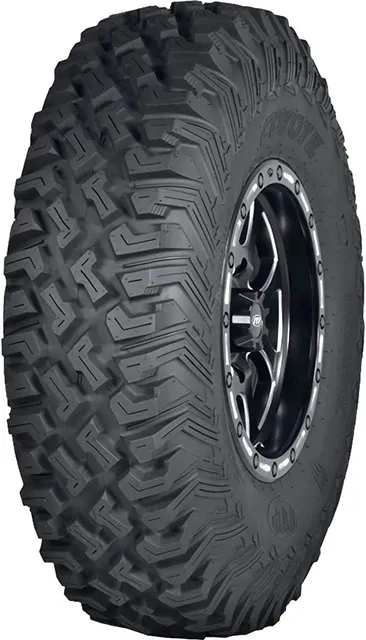
If I had to recommend one ITP tire for the rider who does a little bit of everything, it would be the ITP Coyote without hesitation. This tire changed my expectations for what an all-terrain UTV tire can do.
Construction and Build Quality
The Coyote is an 8-ply radial, and you can feel the quality difference the moment you pick it up. The sidewalls are stiff and confidence-inspiring, and the radial construction gives it a more car-like ride quality compared to bias-ply tires. I tested the 32×10-15 size, which is a popular fitment for the RZR platform.
The tread pattern features a non-directional design with interconnected lugs that provide biting edges in every direction. It’s clearly designed by engineers who understand that most riders don’t stay on one terrain type.
Trail Performance
On the trail, the Coyote is outstanding. During my test period, I took it through some of the most technical single-track trails I could find in the North Georgia mountains, and it handled everything with poise. Rocky sections, roots, off-camber turns, loose shale — the Coyote gripped confidently through all of it.
What impressed me most was the cornering stability. The 8-ply sidewalls resist deformation under lateral loads, so the tire doesn’t feel squirmy in hard turns. I was pushing the RZR harder than I normally would, specifically to find the Coyote’s limits, and it took a lot to get there.
Mud Capability
The Coyote isn’t a mud tire, and I want to be clear about that. But for an all-terrain, it handles moderate mud surprisingly well. The tread spacing is wide enough to provide some self-cleaning action, and the 8-ply construction gives you enough sidewall rigidity to air down for extra traction without risking a bead unseating.
I wouldn’t take it intentionally into a mud bog, but if your trail ride includes some unavoidable muddy sections, the Coyote won’t leave you stranded.
Road Manners
Many UTV owners in the US use their machines for ranch work, hunting property maintenance, or even short road transfers between trail sections. The Coyote is remarkably well-behaved on pavement and hard-packed gravel roads. The radial construction provides a smooth, quiet ride that doesn’t beat you up, and the tread wear on hard surfaces seems very reasonable based on what I observed during my test period.
3. ITP Terra Cross R/T Review: The Versatile Middle Ground
Price Check
Check the price of this tire at the following retailers:
Don’t know the correct size tire to purchase? Start here!
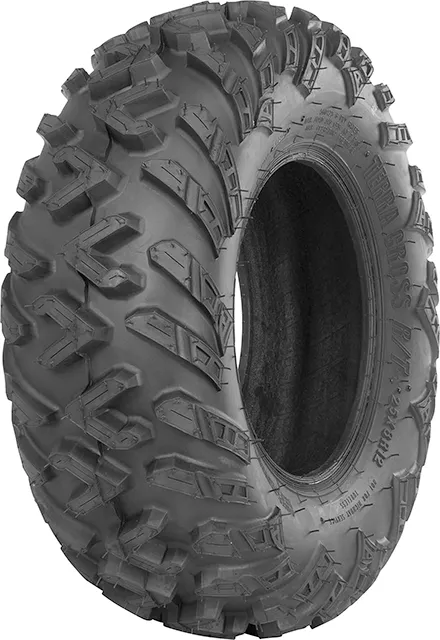
The Terra Cross R/T occupies an interesting space in ITP’s lineup — it’s marketed as a crossover tire that can handle both trail riding and light mud duty. Think of it as a slightly more aggressive all-terrain.
I tested this tire for several days on a Can-Am Outlander 650, using it for a mix of trail riding, property maintenance, and some light mud encounters. The 6-ply bias construction keeps it affordable and light, and the tread design features angled lugs that work well in both forward and lateral directions.
On trails, it’s comfortable and predictable. In light mud, it performs better than a standard all-terrain but can’t match the Mud Lite II in serious conditions. Where the Terra Cross R/T really shines is as a daily-use tire for riders who need something tougher than stock but don’t want to commit to a full mud tire.
The price point is very attractive — typically $20-40 less per tire than the Coyote — making it an excellent budget-friendly option for casual riders.
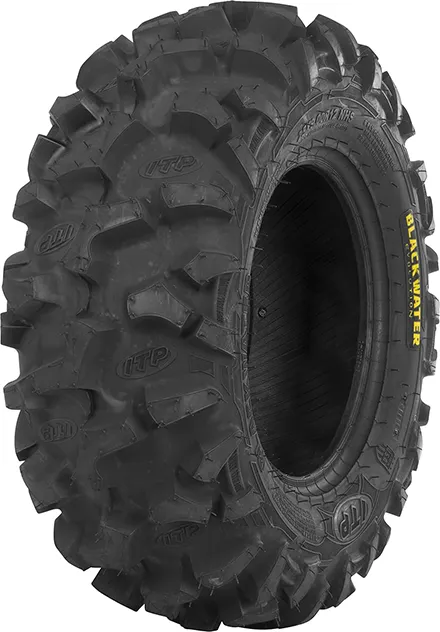
4. ITP Blackwater Evolution Review: Built for Big Machines
Price Check
Check the price of this tire at the following retailers:
Don’t know the correct size tire to purchase? Start here!
The Blackwater Evolution is ITP’s answer to the growing demand for heavy-duty UTV tires that can handle the weight and power of larger machines like the Polaris General, Can-Am Defender, and Kawasaki Mule Pro series.
Heavy-Duty Construction
This is a serious tire. The 8-ply radial construction is noticeably stiffer and more robust than anything else in ITP’s lineup. The tread depth is impressive, and the sidewall design includes extra reinforcement in the lower section where puncture risk is highest.
I tested the Blackwater Evolution on a loaded-down utility UTV, including hauling feed, tools, and equipment across a working cattle ranch in middle Tennessee. It handled the weight without any noticeable deflection or performance degradation.
Performance Under Load
Carrying a full bed of supplies across uneven pasture, through creek crossings, and up muddy hillsides, the Blackwater Evolution was rock-solid. The tire inspired confidence even in conditions where I’d normally be worried about getting stuck.
The radial construction also pays dividends in ride comfort when loaded. Compared to bias-ply work tires I’ve used previously, the Blackwater Evolution transmitted significantly less vibration to the cab.
The Full ITP Lineup by Type
This is worth covering properly, because ITP’s real current catalog — confirmed directly from their own product pages — is significantly broader than the four models most reviews (including an earlier version of this one) focus on.
Mud (Extreme to Moderate)
- Mud Lite II — the everyday mud tire, covered above.
- Cryptid — ITP’s dedicated extreme-mud specialist, marketed as their “swamp monster” with a paddle-like shoulder configuration for maximum side bite in deep muck and unmatched flotation, without sacrificing trail ride comfort.
- Mud Lite XTR — an extreme terrain radial with a low-profile sidewall for reduced flex and predictable handling in aggressive driving.
- Mud Lite AT, Mud Lite XL, Mud Lite XXL — additional sizing and duty variants within the Mud Lite family.
All-Terrain & Crossover
- Coyote — the do-it-all pick, covered above.
- Terra Cross R/T — the budget-friendly crossover, covered above.
- Terra Hook, Terra Claw — additional all-terrain options within the Terra family.
- Versa Cross / Versa Cross V3 — a versatile trail-focused option, with the V3 representing a more current generation.
- Trail Tamer HD — a heavy-duty trail option.
Racing (The Holeshot Series)
- Holeshot GNCC
- Holeshot XC
- Holeshot XCR
- Holeshot XCT
- Holeshot MXR6
- Holeshot ATR
- Holeshot HD
- Holeshot STD — ITP’s motorsport-derived racing lineup, engineered from decades of Baja 1000 and GNCC competition experience. If you’re racing or want race-proven engineering on a recreational machine, this series deserves attention that most ITP coverage doesn’t give it.
Heavy-Duty & Utility
- Blackwater Evolution — the big-machine specialist, covered above.
- Mayhem, Mega Mayhem, Monster Mayhem — additional heavy-duty utility options for larger UTVs.
Specialty
- Sand Star — a dedicated sand-terrain tire, a genuine specialty category most ITP reviews skip entirely.
- MT911, Intersect, Tenacity XNR, Ultra Cross R-Spec, Ultra GT — additional specialty and performance options across the current catalog.
- Quadcross — ITP’s ATV track-performance tire.
Given how extensive this lineup actually is, if you’re shopping for a specific terrain not covered by the four models I personally tested, it’s worth checking ITP’s own current product pages directly for size availability before assuming your only options are what’s covered in most reviews.
ITP Tires Comparison Table
| Feature | Mud Lite II | Coyote | Terra Cross R/T | Blackwater Evolution |
|---|---|---|---|---|
| Type | Mud | All-Terrain | Crossover | All-Terrain HD |
| Construction | 6-ply Bias | 8-ply Radial | 6-ply Bias | 8-ply Radial |
| Mud Performance | ★★★★★ | ★★★☆☆ | ★★★★☆ | ★★★★☆ |
| Trail Performance | ★★★☆☆ | ★★★★★ | ★★★★☆ | ★★★★☆ |
| Ride Comfort | ★★★☆☆ | ★★★★★ | ★★★★☆ | ★★★★☆ |
| Durability | ★★★★☆ | ★★★★★ | ★★★★☆ | ★★★★★ |
| Price Range (per tire) | $75 – $140 | $130 – $210 | $70 – $120 | $140 – $230 |
| Best For | Mud riding, wet trails | Mixed terrain, all-around | Casual trail riding | Heavy-duty work/play |
How ITP Compares to the Competition
No tire review is complete without context. Here’s how ITP stacks up against the other major players in the ATV/UTV tire market that US riders are considering.
ITP vs. Maxxis
Maxxis is probably ITP’s closest competitor, and for good reason — they make excellent tires. In my experience, Maxxis tires (especially the Bighorn and Carnivore) tend to have slightly better puncture resistance and tread longevity. However, they also cost 20-30% more on average.
ITP wins on value. If you’re a recreational rider who doesn’t need competition-grade durability, ITP gives you 85-90% of the performance at a significantly lower price. For serious riders who demand the absolute best and don’t mind paying for it, Maxxis edges ahead.
ITP vs. EFX
EFX Tires has gained a huge following in the UTV world, particularly with the MotoVator and MotoClaw. I’ve ridden on both brands extensively, and here’s my honest take: EFX tires tend to perform better in extreme conditions, but ITP tires are more forgiving and predictable for average riders.
If you’re an aggressive rider pushing your machine to its limits, EFX might be worth the premium. For everyone else, ITP is the smarter buy.
ITP vs. Sedona
Sedona is another US-based ATV/UTV tire brand that competes directly with ITP on price. In my testing, ITP consistently edges out Sedona in both ride quality and durability. The rubber compound ITP uses feels higher-quality, and the tread designs seem more thoroughly engineered.
That said, Sedona makes a perfectly serviceable budget tire. If you’re comparing the two and the price difference is negligible, go with ITP every time.
ITP Warranty — The Real Terms
ITP’s warranty, administered directly by The Carlstar Group, covers defects in materials and workmanship on tires purchased from authorized dealers, limited to replacement of the defective tire plus applicable taxes.
It’s worth knowing exactly what it doesn’t cover: road hazard damage (punctures, cuts, impact breaks), tread worn past 3/32″, damage from improper inflation or overloading beyond the sidewall’s rated capacity, and mounting/balancing charges. Claims must be filed within 30 days of discovering the issue, through Carlstar’s Customer Care Unit.
I found no significant safety recall on record for ITP tires as of this writing. As always, buying from an authorized dealer matters for warranty validity — this is worth confirming before you buy from an unfamiliar online seller.
What I Liked About ITP Tires
After spending extensive time on multiple ITP models, here’s what stood out as genuine strengths:
- Excellent value proposition — You get legitimate off-road performance without paying premium prices. For a set of four Mud Lite IIs, you’re looking at roughly $400-500 depending on size. That’s hard to beat.
- Wide size availability — ITP offers virtually every size you’d need for popular ATV and UTV platforms. I never had trouble finding the fitment I needed.
- Self-cleaning tread designs — Across every model I tested, the tread patterns did an excellent job of shedding mud, debris, and packed material. This isn’t just marketing — it genuinely works.
- Consistent quality — Every tire I received was properly balanced, free of defects, and matched its advertised specifications. No surprises.
- Smooth ride for the category — Especially with the radial models (Coyote and Blackwater Evolution), the ride quality exceeded my expectations for off-road tires.
What I Didn’t Like About ITP Tires
No product is perfect, and I want to give you the complete picture. Here are the areas where ITP fell short or left me wanting more:
- Sidewall vulnerability on bias-ply models — The 6-ply bias tires (Mud Lite II and Terra Cross R/T) have thinner sidewalls than I’d like for rocky terrain. I didn’t experience a failure, but I was more cautious around sharp rocks than I would be on an 8-ply tire.
- Limited extreme performance — If you’re racing, competing in mud nats, or tackling extreme rock crawling, ITP’s mainstream lineup may not be enough. They make great recreational tires, but dedicated competition products from other brands may serve extreme users better.
- Tread noise on hardpack — The Mud Lite II in particular gets noticeably loud on hard-packed surfaces and pavement. It’s not unbearable, but it’s definitely present.
- Warranty could be better — ITP offers a limited manufacturer’s warranty against defects, but it doesn’t cover wear or damage from normal use. Some competitors offer slightly more generous coverage.
Who Should Buy ITP Tires?
Based on my extensive testing, here’s who I think will be happiest with ITP tires:
Recreational Trail Riders
If you ride your ATV or UTV on weekends for fun, hitting local trail systems and OHV parks, ITP is an outstanding choice. You’ll get reliable performance without overspending, and the tire variety means you can match your rubber to your specific riding style.
Hunters and Outdoor Enthusiasts
ITP tires are perfect for the hunter or angler who uses their UTV to access remote areas. The Mud Lite II will get you through those muddy access roads in late November, and the Coyote handles the dry, rocky trails you might encounter on Western hunting property.
Ranch and Farm Owners
If your UTV is a working tool, the Blackwater Evolution or Coyote will handle the demands of daily ranch use. The 8-ply construction resists punctures from fence wire, nails, and other debris that’s common on agricultural properties.
Budget-Conscious Buyers
If you want a meaningful upgrade from stock tires without spending $800-1000+ on a set of premium rubber, ITP delivers exceptional bang for the buck. You can outfit your machine with a quality set of ITP tires for what one premium competitor tire might cost.
Who Should Skip ITP Tires?
To be fair, ITP isn’t the right choice for everyone:
- Competitive racers who need maximum performance and don’t care about cost
- Extreme rock crawlers who need the thickest possible sidewall protection
- High-speed desert racers who need tires rated for sustained speeds above 60 mph
- Riders who only ride in extreme mud and need the tallest, most aggressive paddles available
For these users, brands like Maxxis, EFX, or System 3 may be better suited to their demands.
Pricing and Where to Buy ITP Tires in the US
One of ITP’s biggest advantages is accessibility. These tires are available everywhere, and competitive pricing means you can usually find good deals.
Here’s where I found the best prices during my research:
- Rocky Mountain ATV/MC — Often has the best prices and free shipping over a certain threshold. Their fitment guide is also excellent.
- Amazon — Convenient and competitive, especially with Prime shipping. Just make sure you’re buying from an authorized seller.
- Dennis Kirk — Good selection and frequent sales on ITP products.
- Local Powersports Dealers — Worth checking because they can often mount and balance on the spot, saving you time and hassle.
As a general pricing guide, expect to pay:
- Small ATV tires (25″ and under): $60 – $100 per tire
- Mid-size UTV tires (27″-30″): $90 – $170 per tire
- Large UTV tires (31″ and above): $140 – $240 per tire
Best places to buy: Rocky Mountain ATV/MC (often the best prices and free shipping over a threshold), Amazon (confirm authorized seller status), Dennis Kirk, and local powersports dealers who can mount and balance on the spot. If you’re comparing tire retailers more broadly for other vehicles, our Priority Tire review and Discount Tire review cover what to check before ordering from any retailer.
Installation Tips From My Experience
ITP tires are generally easier to mount than some competitors since the bead is less rigid — 15-20 PSI was enough to seat the bead on every ITP tire I mounted.
Always check the directional arrow if present; mounting a directional tread backward significantly reduces performance, especially in mud. Let tires sit overnight after mounting before riding hard, and check for slow leaks.
Final Verdict: Are ITP Tires Worth It?
After testing four ITP tire models across a wide variety of terrain — and going back to verify the full current lineup and ownership picture — my answer is a confident yes, with a few caveats.
ITP tires deliver outstanding value for recreational ATV and UTV riders. The Mud Lite II is a legitimate mud tire that doesn’t break the bank, and the Coyote is one of the best all-terrain UTV tires I’ve ridden on at any price.
If you need something more specialized than what I personally tested — deeper mud (Cryptid, Mud Lite XTR), sand (Sand Star), or race-proven engineering (the Holeshot series) — ITP’s broader catalog likely has it, even though most coverage of this brand doesn’t mention it.
Where ITP falls short is at the extremes — competition use may still call for a premium brand. But for the vast majority of riders, ITP is an excellent choice.
Frequently Asked Questions
Who owns ITP tires?
ITP is a brand of The Carlstar Group, LLC. Warranty claims and customer care are handled directly through Carlstar.
Are ITP tires any good for UTVs and ATVs?
Yes. ITP has manufactured off-road tires since 1982 and has a genuine racing heritage in events like the Baja 1000 and GNCC series, in addition to their recreational lineup.
What is the best ITP tire for mud riding?
For everyday mud, the Mud Lite II. For extreme, deep-mud conditions, the Cryptid or Mud Lite XTR are purpose-built for exactly that and deserve more attention than most reviews give them.
Does ITP make a racing tire?
Yes, the Holeshot series (GNCC, XC, XCR, XCT, MXR6, ATR, HD, STD) is ITP’s motorsport-derived racing lineup, a genuine gap in most ITP coverage.
Does ITP’s warranty cover road hazard damage?
No. ITP’s warranty, administered by Carlstar, covers only defects in materials and workmanship — not punctures, cuts, impact breaks, or damage from improper inflation. Claims must be filed within 30 days of discovery.
Has ITP had any tire recalls?
No significant recall was found on record for ITP tires as of this writing.
Disclosure: Testing observations for the Mud Lite II, Coyote, Terra Cross R/T, and Blackwater Evolution reflect personal, real-world riding. Coverage of the broader ITP lineup, ownership, and warranty terms is drawn from ITP and Carlstar’s own official documentation, clearly noted throughout. I was not compensated by ITP, Carlstar, or any retailer for this review.
