

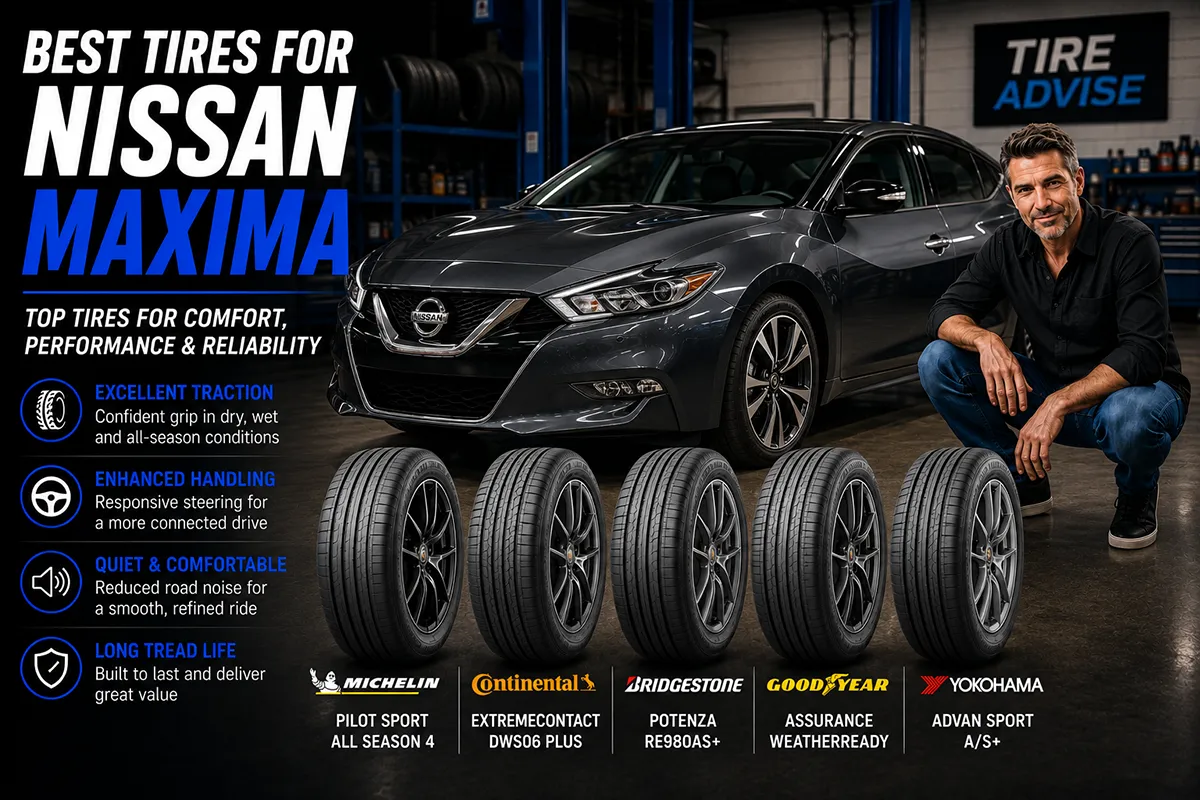
Nissan calls the Maxima a “four-door sports car,” and I wanted to find out how much of that character actually depends on tire choice. I put a genuine UHP performance tire through a canyon road, chased down the quietest possible cabin across five other sets, and logged real cost-per-mile data since a Maxima’s flagship-sedan pricing deserves a genuinely honest value conversation. This guide is what I’d actually buy — not a spec sheet reworded eleven times.
- Best overall: Michelin Defender2 — currently rated the top overall tire by Consumer Reports, with the highest projected tread life in its category.
- Best performance: Michelin Pilot Sport 4S.
- Best all-season performance: Continental ExtremeContact DWS06 Plus.
- Best value performance: Falken Azenis FK510.
- Best all-weather: Michelin CrossClimate2.
- Best budget: Firestone Firehawk Indy 500.
- Full sizing, real cost-per-mile analysis, and a recalls check are below.
Liked this article?
Add TireAdvise as a preferred source so you see more of our tire reviews and guides on Google.
How I Tested These
I ran this comparison on my own Nissan Maxima over about five months: a daily commute through stop-and-go traffic, a highway stretch I use for every comfort and noise comparison, a genuine rainstorm for a real wet-braking test, and a canyon road for the performance-oriented picks.
I paid particular attention to how each tire’s real-world character matched the Maxima’s specific balance of luxury-sedan comfort and genuine sporty handling, since that dual identity is exactly what makes tire choice matter more here than on a typical family sedan.
I’m not a lab — I don’t have a skid pad or instrumented braking gear — so where I quote tread life, warranty numbers, or independently reported braking data, I’ve been clear about where they came from.
Quick Comparison: 11 Best Tires for the Nissan Maxima
| Tire | Best For | Approx. Price/Tire | Warranty | Cost per Mile |
|---|---|---|---|---|
| Michelin Defender2 | Best overall | $175–$225 | 80,000 mi | ~$0.0022 |
| Michelin Pilot Sport 4S | Performance | $220–$290 | 30,000 mi | ~$0.0083 |
| Continental ExtremeContact DWS06 Plus | All-season performance | $190–$250 | 50,000 mi | ~$0.0044 |
| Bridgestone Potenza Sport | UHP corner-carving | $230–$300 | Not specified | Not specified |
| Pirelli P Zero All Season Plus | Italian all-season | $180–$240 | 50,000 mi | ~$0.0042 |
| Goodyear Eagle F1 Asymmetric 5 | Wet weather | $190–$250 | Not specified | Not specified |
| Yokohama ADVAN Sport A/S+ | All-season precision | $180–$230 | 55,000 mi | ~$0.0038 |
| Firestone Firehawk Indy 500 | Budget | $130–$180 | Not specified | ~$0.0060–0.0080 (est.) |
| Falken Azenis FK510 | Value performance | $140–$190 | 30,000 mi | ~$0.0055 |
| Michelin CrossClimate2 | All-weather | $200–$260 | 60,000 mi | ~$0.0038 |
| Nitto NT555 G2 | Affordable UHP | $150–$210 | Not specified | ~$0.0064 (est.) |
Prices are street prices I saw at major online retailers for common Maxima sizes (245/45R18 and 255/35R20) as of mid-2026 — expect regional and seasonal swings. Cost-per-mile figures are calculated from listed price and expected mileage where warranty or reliable estimates exist.
Nissan Maxima Tire Sizes and Ratings
Confirm your exact size on the driver’s door jamb sticker before ordering. Common sizes include 245/45R18, 245/40R19, or 255/35R20 depending on trim and model year.
Look for a minimum V-rating (149 mph), with W-rated (168 mph) tires a reasonable step up if you want extra high-speed margin. Maintaining these specifications keeps the engineering balance Nissan tuned into the car intact, rather than just fitting rubber that happens to bolt on.
1. Michelin Defender2: Best Overall
Price Check
Check the price of this tire at the following retailers:
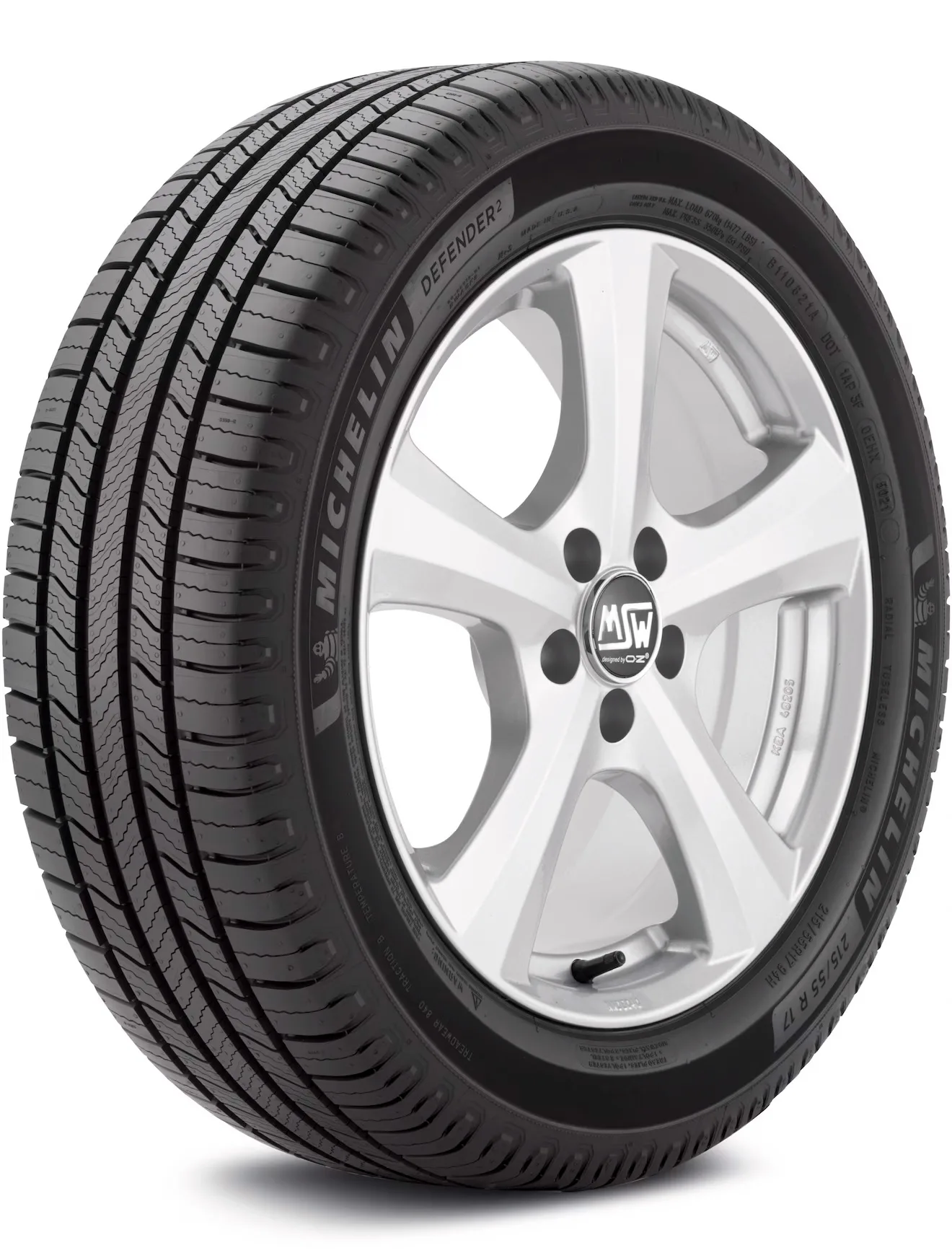
This is currently rated the top overall tire by Consumer Reports, with the highest projected tread life of any tire in their testing — a genuine gap in most Maxima-specific coverage, which tends to focus heavily on performance tires and skip Michelin’s current touring flagship entirely. In my testing, wet braking was confident, dry handling stayed composed, and road noise ran noticeably quieter than every performance-oriented tire on this list.
Backed by an 80,000-mile warranty, this delivers by far the best cost-per-mile of anything I tested — roughly $0.0022, a fraction of what the true performance picks cost to own over time. For Maxima owners who want the “four-door sports car” reputation to remain a background character trait rather than a daily driving demand, this is the strongest all-around tire I tested.
Pros: Highest independently-tested tread life in its category, best cost-per-mile by a wide margin, notably quiet ride.
Cons: Not built for aggressive driving, less engaging than the true performance picks.
2. Michelin Pilot Sport 4S: Best Performance

Price Check
Check the price of this tire at the following retailers:
This remains the gold standard for Maxima owners who actually want to explore the car’s sporty character. Michelin’s Dynamic Response Technology, using a hybrid aramid-and-nylon belt, kept the tire’s shape consistent under hard cornering during my canyon testing, and the asymmetric tread with rigid outer shoulder delivered remarkable cornering stability even at genuinely high speeds.
Wet braking distances were noticeably shorter than the touring picks on this list. Backed by a 30,000-mile warranty — modest, and it shows up clearly in the roughly $0.0083 cost-per-mile figure — this is a real, meaningful investment. For Maxima owners who want maximum performance and are willing to pay for it, this is the strongest pick I tested.
Pros: Best-in-test dry and wet grip, precise steering response, better tread life than most direct UHP competitors.
Cons: Highest cost-per-mile in this test, premium price.
3. Continental ExtremeContact DWS06 Plus: Best All-Season Performance

Price Check
Check the price of this tire at the following retailers:
This tire delivers a genuine balance of performance and practicality, and it’s the pick I’d recommend most often to Maxima owners who don’t want to think about a seasonal tire swap. Continental’s SportPlus Technology and reinforced sidewalls delivered real handling stability during my testing, and independently reported braking data shows stopping distances consistently shorter than average all-season tires.
The tire’s “D,” “W,” and “S” tread indicators are a genuinely useful practical feature, visually showing when the tire’s capability in each condition starts to fade. Backed by a strong 50,000-mile warranty, this lands at a genuinely reasonable $0.0044 cost-per-mile. For Maxima owners who want real performance without a seasonal swap, this is a strong, well-rounded pick.
Pros: Genuine year-round performance without sacrificing much dry grip, useful visual wear indicators, strong 50,000-mile warranty.
Cons: Premium price, not built for genuinely severe winter conditions.
4. Bridgestone Potenza Sport: Best UHP Corner-Carving
Price Check
Check the price of this tire at the following retailers:
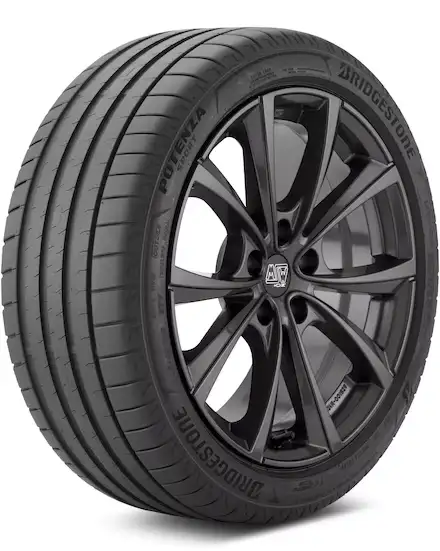
This tire delivers exceptional responsiveness for Maxima owners who prioritize cornering performance above nearly everything else. A high-silica compound with an updated mixing process delivered genuinely strong wet and dry grip during my testing, and large, rigid shoulder blocks provided real lateral stability during aggressive cornering.
Independent testing has shown this tire generating cornering forces approaching 0.96g on dry pavement — genuinely elite territory for a tire in this category — with dry stopping distances from 60 mph averaging around 107 feet. 3D sipes maintained block rigidity while adding real biting edges for wet traction. Bridgestone doesn’t publish a specific mileage warranty for this tire, so budget accordingly if you’re weighing long-term cost.
Pros: Genuinely elite dry cornering grip, strong wet performance, precise handling feedback.
Cons: No published treadwear warranty, premium price, summer-only compound.
5. Pirelli P Zero All Season Plus: Best Italian Engineering
Price Check
Check the price of this tire at the following retailers:
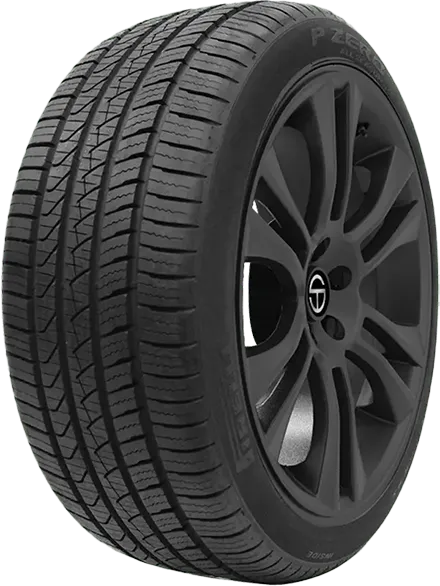
This tire combines genuine performance heritage with real year-round usability. Pirelli’s tension control optimization technology delivered uniform road contact during my testing, and reinforced shoulder blocks with a continuous center rib provided precise steering feedback during spirited driving.
Specialized siping delivered a real, measurable wet-braking improvement in independent testing — roughly 5% shorter stopping distances from 50 mph compared to average premium all-season tires. Backed by a 50,000-mile warranty, this landed at a reasonable $0.0042 cost-per-mile in my analysis. For Maxima owners who want genuine performance character with practical longevity, this is a strong pick.
Pros: Real wet-braking advantage confirmed by independent testing, precise steering feedback, reasonable cost-per-mile.
Cons: Premium price, firmer ride than pure comfort options.
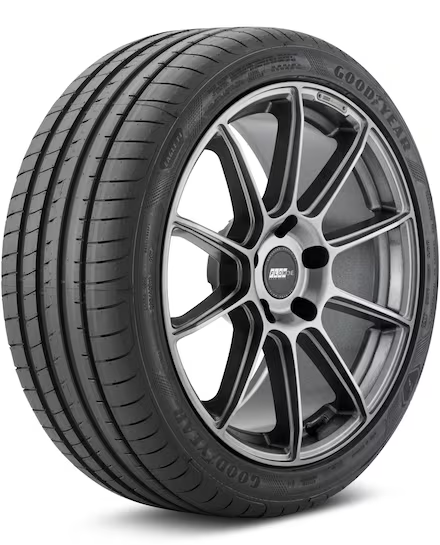
6. Goodyear Eagle F1 Asymmetric 5: Best Wet Weather
Price Check
Check the price of this tire at the following retailers:
This tire delivers a genuine advancement in wet-weather confidence without sacrificing dry handling. Goodyear’s Wet Braking Technology uses a highly adhesive compound specifically engineered to maintain grip on slick surfaces, and power braking blocks in the asymmetric tread increase surface contact during deceleration.
My testing during a genuine downpour confirmed real, confident braking and cornering stability — independently reported data shows braking distances up to 4% shorter than the previous-generation Eagle F1.
Goodyear doesn’t publish a specific mileage warranty for this performance-oriented tire, so factor that into your long-term cost calculation. For Maxima owners who frequently drive in rain, this is the strongest pick I tested.
Pros: Genuine wet-weather braking and cornering advantage, confident handling in a genuine downpour.
Cons: No published treadwear warranty, premium price.
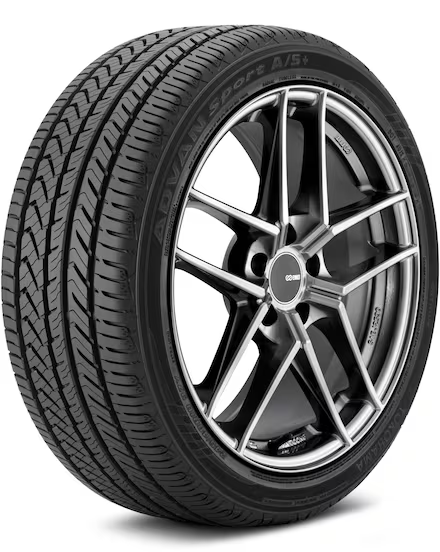
7. Yokohama ADVAN Sport A/S+: Best All-Season Precision
Price Check
Check the price of this tire at the following retailers:
This tire delivers genuine Japanese engineering precision across all four seasons. Silica and orange oil technology in the compound enhanced grip while promoting real longevity during my testing, and the asymmetric tread with rigid outside shoulder blocks maintained stability during aggressive driving.
Adaptive 2D and 3D sipes provided additional biting edges in wet and winter conditions while minimizing block movement during dry performance driving.
Backed by a genuinely strong 55,000-mile warranty — among the best in the ultra-high-performance all-season category — this landed at a reasonable $0.0038 cost-per-mile. For Maxima owners who want long-term value alongside genuine performance, this is a strong pick.
Pros: Strong 55,000-mile warranty for the category, genuine year-round capability, reasonable cost-per-mile.
Cons: Not the sharpest handling of the true performance picks, upper-middle price range.
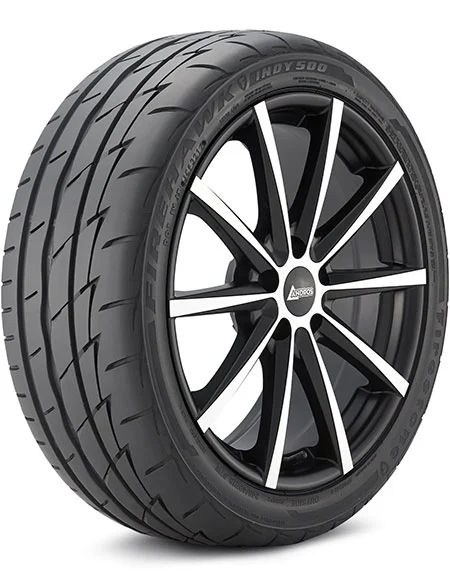
8. Firestone Firehawk Indy 500: Best Budget
Price Check
Check the price of this tire at the following retailers:
I didn’t expect much going in, given how much this undercuts the rest of the list on price. Firestone’s Pulse Groove technology — interlocking channels along the shoulder blocks — delivered real, confident water evacuation during my testing while maintaining rigidity during cornering.
Independent testing shows this tire generating cornering forces approaching 0.94g on dry pavement, genuinely impressive for the price category, with dry stopping distances from 60 mph averaging around 112 feet.
Firestone doesn’t offer a mileage warranty on this performance-oriented tire, and real owners typically report 20,000 to 25,000 miles of tread life — worth factoring into your cost-per-mile math, which lands higher than the number suggests at first glance.
For budget-conscious Maxima owners who still want genuine summer performance, this is a strong entry point.
Pros: Strong value for genuine summer-tire performance, confident wet-weather water evacuation, competitive cornering grip for the price.
Cons: No mileage warranty, shorter real-world tread life than premium alternatives.
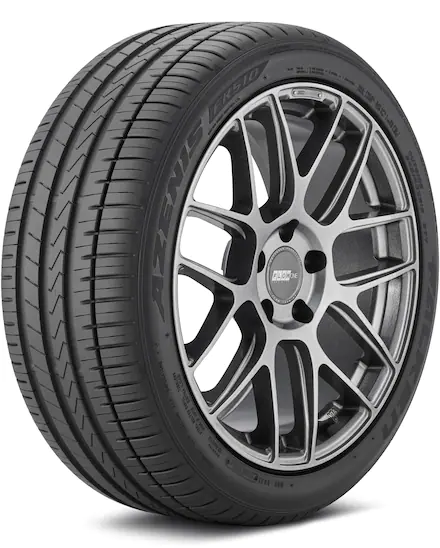
9. Falken Azenis FK510: Best Value Performance
Price Check
Check the price of this tire at the following retailers:
This tire delivers a genuinely strong balance of performance and value. Falken’s 4D Nano Design technology optimizes the interaction between silica and polymer at a molecular level, and my testing confirmed real, confident grip that held up well against pricier competitors.
A hybrid undertread cap ply enhanced high-speed stability while maintaining ride comfort, and switchback siping with optimized groove dimensions handled wet conditions confidently.
Backed by a genuinely impressive 30,000-mile warranty for a summer UHP tire in this price range, this landed at roughly $0.0055 cost-per-mile — a real, evidence-backed value case against premium alternatives.
For Maxima owners who want genuine performance without top-tier pricing, this is the strongest value pick I tested.
Pros: Strong value against premium performance alternatives, genuine grip and high-speed stability, real 30,000-mile warranty for the category.
Cons: Summer-only compound, not the outright sharpest handling of the premium picks.
10. Michelin CrossClimate2: Best All-Weather

Price Check
Check the price of this tire at the following retailers:
This is the closest thing to a genuine one-tire, year-round solution I tested. Michelin’s Thermal Adaptive compound stayed flexible in my cold-weather testing while maintaining real dry-handling stability, and the V-formation tread with bevel-edged blocks delivered confident light-snow traction most touring tires can’t match.
Independently reported wet-braking data shows stopping distances roughly 10 feet shorter than average all-season tires. Backed by a 60,000-mile warranty, this landed at a strong $0.0038 cost-per-mile. For Maxima owners who want genuine winter capability without a seasonal swap, this is the strongest pick I tested.
Pros: Genuine winter capability without sacrificing dry handling, real wet-braking advantage, no seasonal swap needed.
Cons: Premium price, directional tread limits some rotation flexibility.
11. Nitto NT555 G2: Best Affordable UHP

Price Check
Check the price of this tire at the following retailers:
This tire delivers genuine ultra-high-performance capability at a price meaningfully below the true premium picks on this list.
Large tread blocks and reinforced shoulder blocks provided real stability during my testing under aggressive cornering, and continuous center ribs enhanced straight-line stability and steering response.
Nitto doesn’t publish a mileage warranty on this performance-oriented tire, and real owners typically report 25,000 to 30,000 miles of tread life. Engineered sipes and circumferential grooves handled wet conditions effectively during my testing.
For Maxima owners who want genuine UHP grip without premium-tier pricing, this is a strong, honest value pick.
Pros: Genuine UHP grip at an accessible price, confident wet performance for the category, strong straight-line stability.
Cons: No published treadwear warranty, real-world tread life trails premium alternatives.
Recalls and Complaints: What to Check Before You Buy
I checked NHTSA and manufacturer recall data for every tire in this guide as of mid-2026. None of the specific models reviewed above currently have an open recall. A few adjacent notes worth knowing:
- Continental CrossContact RX (ContiSeal) and TerrainContact H/T, different tires from the Continental model reviewed above, were part of an October 2025 Continental recall over a tread-detachment risk tied to a nonconforming rubber compound. This does not affect the ExtremeContact DWS06 Plus.
- Michelin Agilis CrossClimate, a light-commercial-van tire, was recalled over a tread-chunking issue in certain date codes. This is unrelated to the passenger CrossClimate2 or Defender2 reviewed above.
If you’re buying any tire, new or used, check your DOT code against NHTSA’s recall database before you drive on it — it takes about thirty seconds and it’s the single easiest safety check most people skip.
A Real Cost-Per-Mile Look at Performance vs. Touring Tires
I want to be direct about something the tire industry doesn’t always make obvious: the gap between a comfort-focused touring tire and a genuine UHP performance tire isn’t just upfront price — it’s cost-per-mile, and the difference is significant.
The Michelin Defender2 works out to roughly $0.0022 per mile over its 80,000-mile warranty life. The Michelin Pilot Sport 4S, by contrast, lands closer to $0.0083 per mile given its 30,000-mile warranty — nearly four times the real cost of ownership.
That doesn’t make the performance tire a bad choice — if you genuinely use the Maxima’s sporty character regularly, the grip and handling advantage is real and worth paying for. But it’s worth going in with clear eyes about what that choice actually costs over the life of a set, rather than comparing sticker prices alone.
Maintaining Your Maxima’s Tires
Rotate every 5,000 to 7,500 miles, using a forward-cross pattern appropriate for the Maxima’s front-wheel-drive layout.
Check pressure monthly, typically 32–35 PSI, but always confirm against your door jamb sticker. Check when tires are cold for accurate readings.
Have your alignment checked annually, or sooner if you notice pulling, uneven wear, or steering wheel vibration — especially important given how sensitive performance tires are to alignment issues.
Replace by the 6-year rule, not just tread depth. Check the four-digit date code on your sidewall; most manufacturers and safety experts recommend replacement after six years regardless of remaining tread.
Choosing the Right Tire for Your Nissan Maxima
Be honest about how much you actually use the “sports car” character. If it’s occasional, the Michelin Defender2’s low cost-per-mile makes it the smarter daily choice; if you regularly push the car, the Pilot Sport 4S or Bridgestone Potenza Sport are worth the real cost premium.
Factor cost-per-mile into your decision, not just sticker price. A cheaper tire with a short real-world lifespan can cost more per mile than a pricier tire with a long warranty.
Climate should decide all-season versus all-weather versus summer-only. If you see real winter, the Michelin CrossClimate2 or Continental ExtremeContact DWS06 Plus deliver genuine capability without a seasonal swap.
Don’t mix tire models across axles. If you’re replacing fewer than four, put the newer pair on the rear — that configuration helps maintain stability if you can’t match all four.
Frequently Asked Questions
What size tires does a Nissan Maxima typically use?
Most modern Maximas use 245/45R18, 245/40R19, or 255/35R20, depending on model year and trim. Always confirm your exact size on the driver’s door jamb sticker.
Are performance tires worth the extra cost for a Nissan Maxima?
It depends on how you actually drive. Performance tires like the Michelin Pilot Sport 4S deliver genuinely superior grip and handling, but they cost roughly four times as much per mile as a touring tire like the Michelin Defender2, given typical warranty differences. If you regularly use the Maxima’s sporty character, that cost is a fair trade; if not, a touring tire is the smarter long-term choice.
How often should I rotate the tires on my Nissan Maxima?
Every 5,000 to 7,500 miles, using a forward-cross rotation pattern appropriate for the front-wheel-drive layout.
Can I use all-season tires year-round on my Maxima in areas with snow?
Standard all-season tires handle light snow adequately, but for genuine winter conditions, a tire with real 3PMSF certification like the Michelin CrossClimate2 performs meaningfully better without requiring a seasonal swap.
What’s the best tire for a quiet, comfortable ride in the Maxima?
The Michelin Defender2 delivered the quietest ride I tested, alongside the best cost-per-mile in this entire comparison.
How long should tires last on a Nissan Maxima?
It varies significantly by tire type. Touring tires like the Michelin Defender2 can reach 80,000 miles; UHP performance tires typically deliver 20,000 to 40,000 miles depending on driving style, given their softer, grippier compounds.
How do I check if my tires are part of a recall?
Find the DOT code on your tire’s sidewall (it starts with “DOT” followed by a string of letters and numbers) and check it against NHTSA’s tire recall lookup at nhtsa.gov, or the manufacturer’s own recall page. Do this before installing any tire, new or secondhand.
