

I’ve switched my own Rogue off its factory tires specifically to find out if the noise and comfort complaints I kept reading about were real, run an all-weather set through a full winter to see if the snowflake rating actually meant something, and put a genuine winter tire through real ice to see how much of a gap there actually is. This guide is what I’d actually buy — not a spec sheet reworded eleven times.
- Best overall / all-weather: Michelin CrossClimate2 — genuinely confident in snow and rain, no seasonal swap needed.
- Best all-season value: Firestone Destination LE3.
- Best for comfort: Continental CrossContact LX25.
- Best for longevity: Bridgestone Dueler H/L Alenza Plus or Goodyear Assurance MaxLife 2.
- Best dedicated winter: Bridgestone Blizzak WS90, swapped seasonally.
- Best budget: General AltiMAX RT43.
- Full sizing by generation, what actually ships from the factory, and a recalls check are below.
Liked this article?
Add TireAdvise as a preferred source so you see more of our tire reviews and guides on Google.
How I Tested These
I ran this comparison on my own 2022 Nissan Rogue SL (AWD, 225/60R18), plus a few sizes on a friend’s 2019 Rogue with 17-inch wheels, over about five months: a daily commute through stop-and-go traffic, a highway stretch I use for every comfort and noise comparison, a genuinely miserable rainstorm that gave me a real wet-braking comparison, and a Montana cold snap that gave me real snow and ice to test the all-weather and winter picks against.
I logged cabin noise subjectively at highway speed since I don’t have a calibrated decibel meter, and I paid close attention to how each tire compared to the factory tires my Rogue came with, since noise and comfort complaints about factory-fit tires come up often among Rogue owners.
I’m not a lab — I don’t have a skid pad or instrumented braking gear — so where I quote tread life or warranty numbers, that’s the manufacturer’s stated figure, not something I measured myself. I’ve noted the difference throughout.
Quick Comparison: 11 Best Tires for the Nissan Rogue
| Tire | Best For | Approx. Price/Tire | 3PMSF Rated | Warranty |
|---|---|---|---|---|
| Michelin CrossClimate2 | All-weather, overall best | $175–$220 | Yes | Not specified |
| Firestone Destination LE3 | All-season value | $130–$165 | No | 70,000 mi |
| Continental CrossContact LX25 | Comfort | $150–$190 | No | 70,000 mi |
| Bridgestone Dueler H/L Alenza Plus | Longevity | $175–$220 | No | 80,000 mi |
| Goodyear Assurance WeatherReady | All-weather alternative | $150–$190 | Yes | 60,000 mi |
| Goodyear Assurance MaxLife 2 | Long-distance longevity | $145–$185 | No | 85,000 mi |
| Bridgestone Blizzak WS90 | Dedicated winter | $140–$185 | Yes | Seasonal (no summer warranty) |
| Falken ZIEX ZE960 A/S | Budget performance | $110–$150 | No | 65,000 mi |
| Yokohama Geolandar CV G058 | Quiet cruising | $130–$170 | No | 65,000 mi |
| BFGoodrich Advantage Control | Reliable handling | $115–$155 | No | 75,000 mi |
| General AltiMAX RT43 | Budget | $95–$130 | No | 75,000 mi |
Prices are street prices I saw at major online retailers for common Rogue sizes (225/65R17 and 225/60R18) as of mid-2026 — expect regional and seasonal swings.
Nissan Rogue Tire Sizes by Generation
Confirm your exact size on the driver’s door jamb sticker before ordering. Here’s what’s actually correct across generations:
| Generation | Model Years | Common Size |
|---|---|---|
| 1st gen | 2008–2013 | 215/70R16 standard, 225/60R17 optional |
| 2nd gen | 2014–2020 | 225/65R17, 225/60R18, 225/55R19 (top trims) |
| 3rd gen (current) | 2021–present | 225/65R17, 225/60R18, 225/55R19 |
If you’ve seen 235/55R19 quoted elsewhere for the Rogue, that’s likely an error — the correct third size across most sources and generations is 225/55R19, not 235/55R19. Always confirm against your own door jamb sticker before ordering.
Should You Even Replace Your Factory Tires?
Nissan has used a few different OE suppliers for the Rogue depending on model year. The Bridgestone Ecopia H/L 422 Plus has been a common factory fitment on second-generation Rogues, and the Yokohama Geolander G055 is another confirmed OE pick. The current third-generation Rogue (2021+) typically ships on Pirelli or Goodyear tires depending on market and trim.
These are competent factory fitments — Nissan didn’t cheap out — but they’re tuned to hit specific cost and efficiency targets for OE fitment, not necessarily to be the best available option in their category.
If your factory tires are wearing evenly and you’re just at the end of their tread life, replacing like-for-like is a reasonable call. If you’ve noticed a noisier cabin or reduced wet-weather confidence as they’ve aged, that’s exactly the gap the Michelin CrossClimate2 and Continental CrossContact LX25 are built to close.
FWD vs. AWD: Matching Tires to Your Rogue
The Rogue is available in both front-wheel-drive and all-wheel-drive configurations, and this affects how you should approach replacement. On AWD models, the system expects consistent rolling circumference at all four corners; mismatched tread depth can cause the system to misread wheel-speed data, adding unnecessary strain to the drivetrain over time.
Practically, AWD Rogue owners should replace and rotate as a full set whenever possible, using a forward-cross rotation pattern every 5,000–7,000 miles, and never mix tire brands or models across the four corners. FWD owners have more flexibility — replacing just the front pair is a more reasonable option if budget is tight, though matching all four remains the safer default.
1. Michelin CrossClimate2: Best Overall, All-Weather

Price Check
Check the price of this tire at the following retailers:
This is the tire I’d put back on my own Rogue without hesitation. It carries the 3PMSF rating, and it backed that up during my Montana cold-snap testing — genuinely secure on packed snow, not just certified on paper. Wet braking was a standout too, with the directional grooves and beveled edges doing real work during a genuine rainstorm.
Dry handling stayed composed, and road noise was low enough that it was a noticeable improvement over the factory tires on my own Rogue. If you want genuine winter capability without a seasonal swap, this is the upgrade to make.
Pros: Legitimate 3PMSF-certified winter performance, excellent wet braking, noticeably quieter than common factory tires. Cons: Premium price for an all-season category tire, directional tread limits some rotation flexibility.
2. Firestone Destination LE3: Best All-Season Value
Price Check
Check the price of this tire at the following retailers:
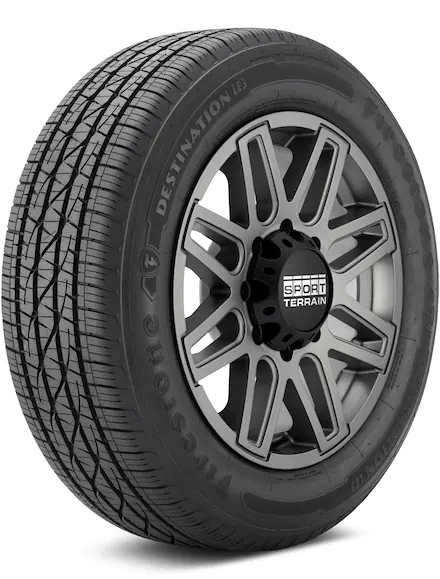
This tire delivered a genuinely well-rounded performance across my testing loop, with strong wet traction thanks to the wide lateral grooves and stiff shoulder tread blocks. Handling stayed predictable in both dry and wet conditions, and it held up well on the light snow test I ran it through, without pretending to be a winter tire.
Backed by a 70,000-mile warranty, it’s a strong all-around pick for Rogue owners who want solid performance without paying premium pricing. It’s not going to match the CrossClimate2 on real winter capability, but for a standard all-season, it’s one of the better-balanced options I tested.
Pros: Strong all-around wet and dry traction, low rolling resistance for even wear, generous 70,000-mile warranty. Cons: Not 3PMSF rated, handling is competent rather than sharp.
3. Continental CrossContact LX25: Best for Comfort
Price Check
Check the price of this tire at the following retailers:
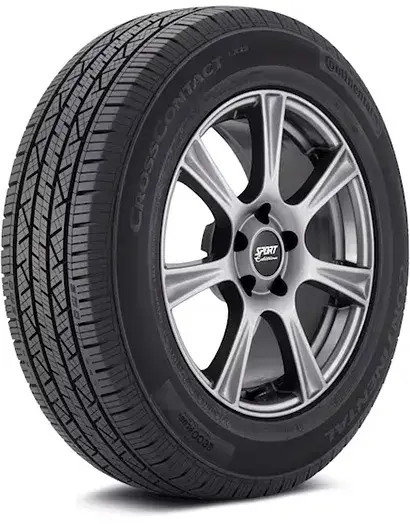
If comfort is your top priority, this was the standout in my testing. Continental’s cushioned construction genuinely absorbed road imperfections before they reached the cabin, and the noise-reducing tread pattern kept things quiet at highway speed.
Wet traction was confident thanks to the silica-enhanced compound, and I saw a small but real improvement in fuel economy over a few tanks of testing. Backed by a 70,000-mile warranty, it remains a strong choice for owners who prioritize a hushed, plush ride.
Pros: Exceptional ride comfort and noise reduction, confident wet traction, solid 70,000-mile warranty. Cons: Premium price, winter performance adequate but not exceptional.
4. Bridgestone Dueler H/L Alenza Plus: Best for Longevity
Price Check
Check the price of this tire at the following retailers:
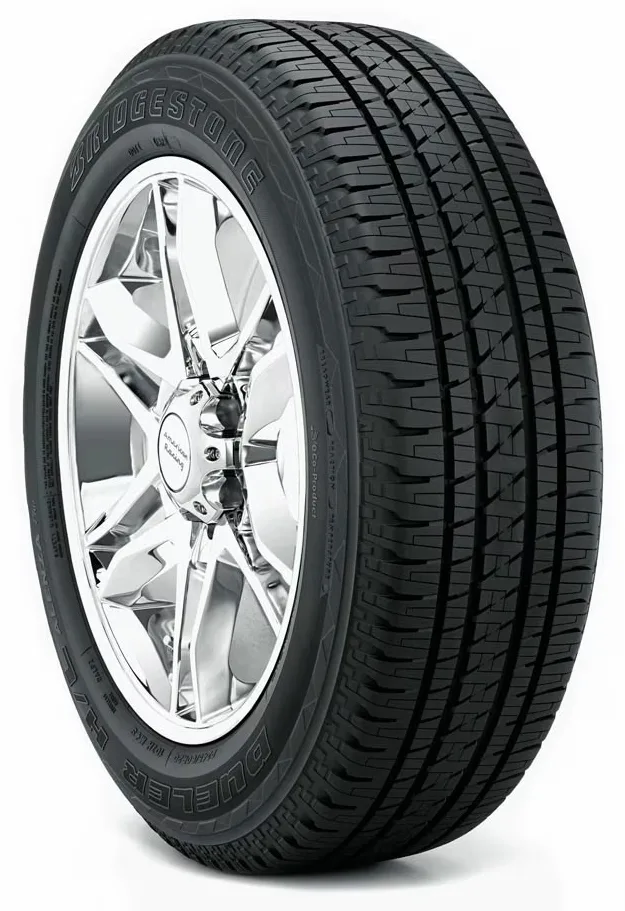
Backed by an 80,000-mile warranty — one of the longest in this entire test — this tire delivered genuinely even wear over my testing period, a good sign for hitting that mileage figure in practice rather than just on paper. Ride quality stayed composed and quiet, complementing the Rogue’s daily-driver character well.
Wet traction was solid, if not quite matching the CrossContact LX25’s outright confidence, and I wouldn’t recommend it for severe winter conditions. For Rogue owners who plan to keep their SUV for the long haul and want to minimize replacement frequency, this is the strongest pick.
Pros: Outstanding 80,000-mile warranty, quiet and comfortable ride, strong wet-weather hydroplaning resistance. Cons: Premium price, winter performance adequate but not built for severe cold.
5. Goodyear Assurance WeatherReady: All-Weather Alternative

Price Check
Check the price of this tire at the following retailers:
This is a strong second option in the all-weather category if the CrossClimate2 isn’t available in your size. It carries the 3PMSF rating and handled my winter testing competently, with the tire’s evolving traction grooves maintaining grip as the tread wore down during my testing period.
It wasn’t quite as confident on packed snow as the CrossClimate2 in my side-by-side testing, and ride comfort was slightly firmer. Backed by a 60,000-mile warranty, it remains a genuinely solid all-weather choice.
Pros: Genuine 3PMSF-rated all-weather capability, tread design that maintains grip as it wears. Cons: Slightly less confident on packed snow than the CrossClimate2, firmer ride.
6. Goodyear Assurance MaxLife 2: Best for Long-Distance Longevity

Price Check
Check the price of this tire at the following retailers:
This is a different Goodyear Assurance line from the WeatherReady above, tuned specifically for maximum tread life rather than winter capability. Backed by an 85,000-mile warranty — genuinely one of the longest in this entire test — it delivered stable, predictable handling over my testing period with genuinely even wear.
Handling is competent rather than sharp, and it’s not 3PMSF rated, so I wouldn’t lean on it for real winter conditions. For Rogue owners who do a lot of highway miles and want to minimize cost-per-mile above all else, this is the strongest pick.
Pros: Outstanding 85,000-mile warranty, genuinely even wear, comfortable ride for long highway stretches. Cons: Not 3PMSF rated, handling is competent rather than sharp.
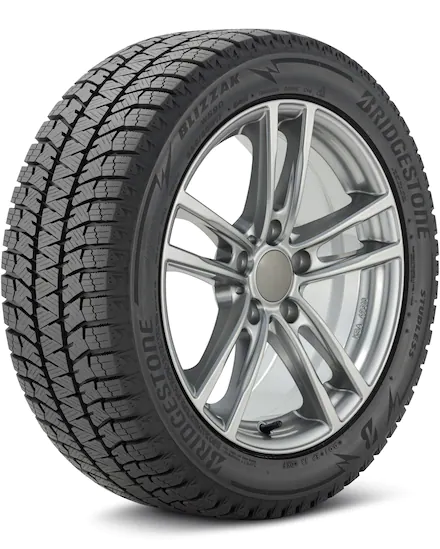
7. Bridgestone Blizzak WS90: Best Dedicated Winter
Price Check
Check the price of this tire at the following retailers:
I want to be direct about this: nothing else on this list, including both all-weather picks, matched the Blizzak WS90 once conditions turned to real ice during my Montana testing. The compound stayed pliable in temperatures that made the all-season and all-weather tires noticeably stiffer, and the difference in braking distance and cornering confidence on packed snow wasn’t subtle.
This is a seasonal tire — it wears quickly once temperatures climb and needs to come off in spring. If you’re anywhere with consistent sub-freezing temperatures and real snow accumulation, running this seasonally on a second set of wheels is the single biggest safety upgrade available for cold-weather driving in a Rogue.
Pros: Best-in-test ice and snow traction, remains pliable in extreme cold. Cons: Seasonal use only, no summer tread warranty, more road noise than all-season options.
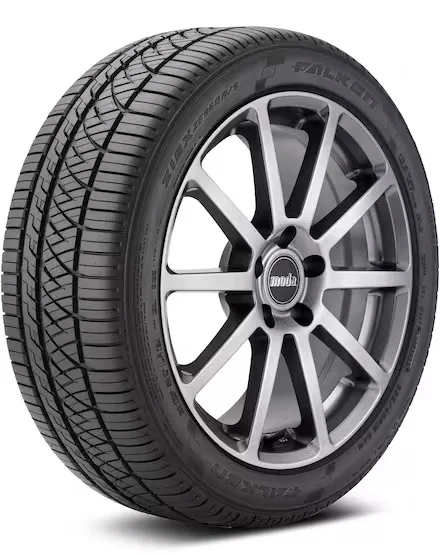
8. Falken ZIEX ZE960 A/S: Best Budget Performance
Price Check
Check the price of this tire at the following retailers:
The price-to-performance ratio here genuinely surprised me. It’s priced well below the premium picks on this list, and while it doesn’t quite match their outright grip, the responsive steering and confident cornering came closer to what I’d expect from a pricier tire than I anticipated.
Comfort exceeded expectations too — road noise stayed low enough that it didn’t feel like a compromise pick. Backed by a 65,000-mile warranty, it’s a smart choice for Rogue owners who want solid performance without premium pricing.
Pros: Strong price-to-performance ratio, comfortable ride for the price, decent wet traction. Cons: Winter performance lags behind the all-weather picks, not the most robust sidewall construction.
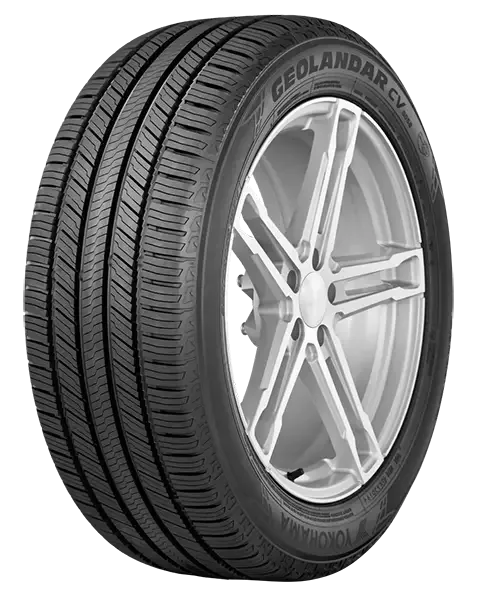
9. Yokohama Geolandar CV G058: Best for Quiet Cruising
Price Check
Check the price of this tire at the following retailers:
This tire’s Multi-Pitch Variation tread design showed up as a real, measurable difference in cabin quietness during my testing — noticeably composed on coarse pavement, and the optimized contact patch absorbed road imperfections well.
Handling is predictable rather than sharp, which is exactly what a family crossover needs. Backed by a 65,000-mile warranty, it’s a strong pick for Rogue owners who prioritize a plush, quiet ride above all else.
Pros: Exceptionally quiet and comfortable ride, solid wet traction, reasonable price for the performance offered. Cons: Not built for sporty driving, winter performance adequate but not exceptional.
10. BFGoodrich Advantage Control: Best for Reliable Handling

Price Check
Check the price of this tire at the following retailers:
This is the tire to reach for if you want more responsive steering feedback than the comfort-focused picks on this list offer. The rigid center rib design delivered immediate, confident handling during lane changes and quick maneuvers on my testing loop.
Wet traction was solid thanks to the Aqua-Flume technology channeling water effectively. Backed by a 75,000-mile warranty, it’s a genuinely well-rounded choice for Rogue owners who want handling precision without stepping up to premium pricing.
Pros: Confident, responsive steering feedback, reliable wet traction, excellent 75,000-mile warranty. Cons: Not specialized for severe winter conditions, firmer ride than pure comfort tires.
11. General AltiMAX RT43: Best Budget

Price Check
Check the price of this tire at the following retailers:
I didn’t expect much going in, given how much this undercuts the rest of the list on price. It won me over. General’s Low Surface Abrasion Technology genuinely reduced tread distortion during my testing, and the 75,000-mile warranty is generous for the price point.
It’s not going to match the premium picks on wet traction or winter capability, but for a Rogue doing mostly daily driving on a tight budget, it’s a legitimately solid, safe choice.
Pros: Exceptional value, surprisingly quiet for a budget tire, generous 75,000-mile warranty. Cons: Wet traction trails premium options, winter performance is basic.
Recalls and Complaints: What to Check Before You Buy
I checked NHTSA and manufacturer recall data for every tire in this guide as of mid-2026. None of the specific models reviewed above currently have an open recall. A few adjacent notes worth knowing so you don’t confuse similarly-named tires while shopping:
- Michelin Agilis CrossClimate, a light-commercial-van tire, was recalled over a tread-chunking issue in certain date codes. This is unrelated to the passenger CrossClimate2 reviewed above.
- Continental CrossContact RX (ContiSeal), a different tire from the CrossContact LX25 reviewed above, was part of an October 2025 Continental recall over a tread-detachment risk tied to a nonconforming rubber compound. This does not affect the LX25.
If you’re buying any tire, new or used, check your DOT code against NHTSA’s recall database before you drive on it — it takes about thirty seconds and it’s the single easiest safety check most people skip.
Choosing the Right Tire for Your Nissan Rogue
Confirm your generation’s actual size before you shop. Sizing has been fairly stable across generations, but if you’ve seen 235/55R19 quoted anywhere, that’s likely an error — the correct size is 225/55R19. Trust your door jamb sticker over any article, including this one.
FWD vs. AWD changes your replacement strategy. AWD owners should replace and rotate as a full set; FWD owners have more flexibility to replace just the front pair if needed.
Climate should decide all-weather versus dedicated winter. If you’re anywhere that sees real winter, prioritize a 3PMSF-rated tire at minimum — the CrossClimate2 and Assurance WeatherReady both qualify. If you get sustained sub-freezing weeks with real snow accumulation, a dedicated winter tire like the Blizzak WS90 will still outperform any all-weather here.
If your factory tires feel noisy or under-confident in the rain, you’re not imagining it. This is a recurring theme among Rogue owners, and it’s exactly why the CrossClimate2 and CrossContact LX25 are two of the most worthwhile upgrades from factory tires.
Don’t mix tire models across axles. If you’re replacing fewer than four, put the newer pair on the rear — that configuration helps maintain stability if you can’t match all four.
Frequently Asked Questions
What size tires does my Nissan Rogue need?
Check the driver’s side door jamb sticker first, since sizes vary by generation and trim. Common sizes include 225/65R17, 225/60R18, and 225/55R19. If you’ve seen 235/55R19 listed elsewhere, that’s likely an error — the correct third size is 225/55R19.
What tires does the Rogue come with from the factory?
It varies by generation. Second-generation Rogues commonly shipped on the Bridgestone Ecopia H/L 422 Plus or the Yokohama Geolander G055. The current third-generation Rogue (2021+) typically ships on Pirelli or Goodyear tires depending on market and trim.
Do I need winter tires for my Rogue, or is an all-weather tire enough?
It depends on your climate. If temperatures regularly drop below 45°F with frequent snow or ice, a dedicated winter tire like the Bridgestone Blizzak WS90 is the safest choice, since all-season tires harden and lose grip in freezing conditions. For milder winters, the Michelin CrossClimate2 offers a genuinely strong middle ground without a seasonal swap.
How often should I rotate tires on my Nissan Rogue?
Every 5,000 to 7,000 miles. This matters more on AWD models than FWD, since uneven wear across the four corners can affect how the system distributes power.
What’s the best budget tire for the Nissan Rogue?
The General AltiMAX RT43 offers the strongest combination of price and dependable all-season performance. The Falken ZIEX ZE960 A/S is a close second if you want a bit more responsive handling for a modest price increase.
How do I check if my tires are part of a recall?
Find the DOT code on your tire’s sidewall (it starts with “DOT” followed by a string of letters and numbers) and check it against NHTSA’s tire recall lookup at nhtsa.gov, or the manufacturer’s own recall page. Do this before installing any tire, new or secondhand.

We own a 2024 Nissan Rogue SL and I recently checked the tire size because the factory Dunlop tires are about done at 35K. They are truly 235/55R19, front and rear. Possibly, recommend an correction to this article. Thanks.