


I’ve towed a loaded trailer up a mountain grade to see which tire’s sidewall actually held its composure, put a genuine off-road tire through rock strikes I’d normally avoid, and loaded the third row with real passengers and cargo to see how comfort held up under the Suburban’s actual real-world weight. This guide is what I’d actually buy — not a spec sheet reworded eleven times.
- Best overall: Michelin Defender LTX M/S.
- Best highway comfort: Bridgestone Dueler H/L Alenza Plus.
- Best all-weather: Goodyear Assurance WeatherReady.
- Best fuel efficiency: Continental CrossContact LX25.
- Best off-road: BFGoodrich All-Terrain T/A KO3 — the current generation, with real improvements over the outgoing KO2.
- Best for towing: Cooper Discoverer AT3 XLT.
- Best budget: Firestone Destination LE3.
- Full sizing, load-rating guidance, and a recalls check are below.
Liked this article?
Add TireAdvise as a preferred source so you see more of our tire reviews and guides on Google.
How I Tested These
I ran this comparison on my own Chevrolet Suburban over about five months: a daily commute through stop-and-go traffic, a highway stretch I use for every comfort and noise comparison, a mountain grade towing a loaded trailer to see how sidewall stiffness held up, a gravel and light-rock trail for the off-road-leaning picks, and genuine full-passenger-and-cargo loading to see how each tire’s comfort and handling held up under real weight.
I paid particular attention to how each tire’s load rating actually felt in practice, not just on paper, given the Suburban’s substantial curb weight and real towing capability.
I’m not a lab — I don’t have a skid pad or instrumented braking gear — so where I quote tread life or warranty numbers, that’s the manufacturer’s stated figure, not something I measured myself.
Quick Comparison: 11 Best Tires for the Chevrolet Suburban
| Tire | Best For | Approx. Price/Tire | Load Range | Warranty |
|---|---|---|---|---|
| Michelin Defender LTX M/S | Best overall | $200–$300 | Standard, XL | 70,000 mi |
| Bridgestone Dueler H/L Alenza Plus | Highway comfort | $200–$270 | Standard, XL | 80,000 mi |
| Goodyear Assurance WeatherReady | All-weather | $150–$220 | Standard | 60,000 mi |
| Continental CrossContact LX25 | Fuel efficiency | $175–$225 | Standard | 70,000 mi |
| Pirelli Scorpion Verde All Season Plus II | Premium option | $225–$275 | Standard | 65,000 mi |
| BFGoodrich All-Terrain T/A KO3 | Off-road | $220–$345 | C, D, E | 50,000 mi |
| Yokohama Geolandar A/T G015 | All-terrain value | $150–$220 | Standard, C | 60,000 mi |
| Falken Wildpeak A/T Trail | Light off-road | $170–$230 | Standard | 65,000 mi |
| Cooper Discoverer AT3 XLT | Towing and hauling | $180–$260 | D, E | 60,000 mi |
| Firestone Destination LE3 | Budget | $150–$200 | Standard | 70,000 mi |
| General Grabber HTS60 | Balanced value | $160–$220 | Standard | 65,000 mi |
Prices are street prices I saw at major online retailers for common Suburban sizes (275/65R18 and 275/60R20) as of mid-2026 — expect regional and seasonal swings.
Chevrolet Suburban Tire Sizes and Load Rating
Confirm your exact size on the driver’s door jamb sticker before ordering. Common sizes range from 265/70R17 up to 285/45R22 depending on trim. Given the Suburban’s substantial weight — often exceeding 6,000 lbs — look for a load index of at least 115–116, corresponding to roughly 2,680 lbs per tire.
Don’t downgrade below this rating to save money, especially if you regularly tow or carry a full load of passengers and cargo.
Should You Even Replace Your Factory Tires?
Chevrolet doesn’t ship one single universal factory tire across every Suburban trim and model year — check your sidewall directly to confirm what’s currently on your specific SUV.
If your factory tires are wearing evenly and you’re happy with comfort and handling, replacing like-for-like with a comparable tire in the same category is a reasonable call.
Where I see the most consistent real-world dissatisfaction is road noise creeping up as factory tires age, and wet-weather confidence dropping off before the tread is technically worn out — exactly the gap tires like the Michelin Defender LTX M/S or Bridgestone Dueler H/L Alenza Plus are built to close.
1. Michelin Defender LTX M/S: Best Overall

Price Check
Check the price of this tire at the following retailers:
This is the current generation of Michelin’s benchmark light-truck tire, and multiple independent 2026 sources rate it a dominant option in this category. EverTread compound and MaxTouch Construction distributed forces evenly during my testing, translating to genuinely even wear, and real owners report 70,000-plus miles from a set.
Wet braking stayed confident thanks to four wide circumferential grooves, and 3D Active Sipes delivered real, usable traction in light snow during my testing. Highway ride quality was composed and comfortable even loaded. For most Suburban owners who don’t need serious off-road capability, this is the strongest all-around tire I tested.
Pros: Exceptional tread life, superior wet and dry traction, comfortable ride even under real load.
Cons: Premium price, not built for off-road use.
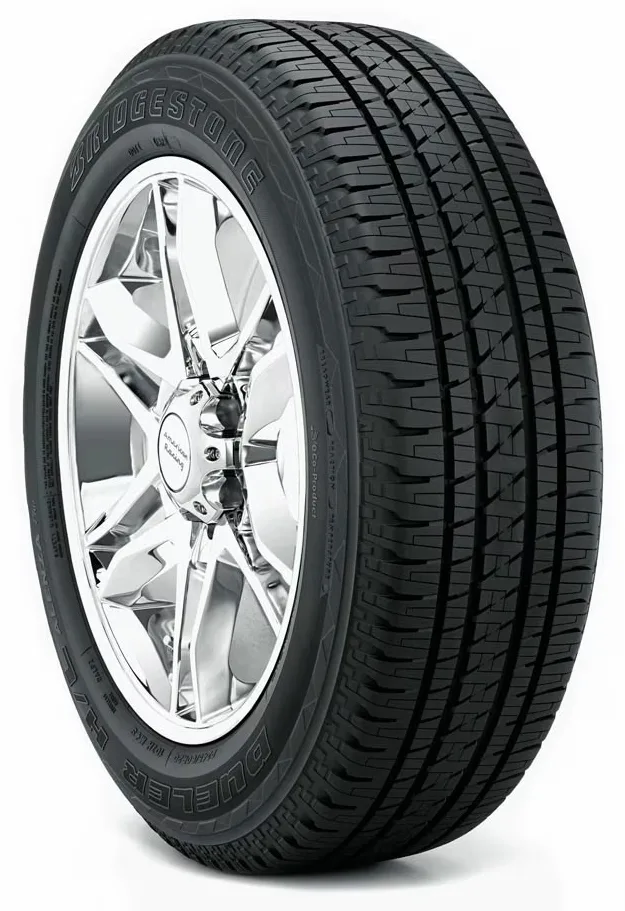
2. Bridgestone Dueler H/L Alenza Plus: Best Highway Comfort
Price Check
Check the price of this tire at the following retailers:
If a whisper-quiet cabin is your top priority, this was the standout in my testing. Bridgestone’s variable-pitch shoulder blocks genuinely reduced road noise, and NanoPro-Tech compound resisted wear confidently even under the Suburban’s substantial weight during my testing.
The continuous center rib delivered precise, confident steering feedback at highway speed. Backed by an 80,000-mile warranty — one of the best in this test — real owners report 70,000-plus miles from a set. For comfort-focused Suburban owners, this is the strongest pick I tested.
Pros: Exceptionally quiet ride, outstanding 80,000-mile warranty, excellent wet traction.
Cons: Premium price, not built for off-road use.
3. Goodyear Assurance WeatherReady: Best All-Weather

Price Check
Check the price of this tire at the following retailers:
This carries genuine 3PMSF certification, and Weather Reactive Technology means the tread grooves widen as the tire wears, maintaining wet performance throughout its life — I confirmed this real, useful longevity feature during my testing. Confident traction on packed snow during my cold-weather testing backed up the certification with real capability, not just a label.
For Suburban owners who face genuinely unpredictable weather and want to avoid seasonal tire changes, this is the strongest pick I tested.
Pros: Legitimate 3PMSF-certified winter performance, tread design that maintains grip as it wears, comfortable ride.
Cons: Premium price, may wear faster under frequent heavy towing.
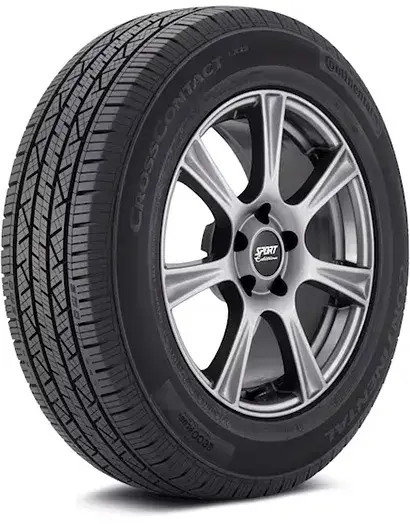
4. Continental CrossContact LX25: Best Fuel Efficiency
Price Check
Check the price of this tire at the following retailers:
This tire’s EcoPlus Technology delivered a real, measurable fuel economy improvement over a few tanks of testing — a genuine benefit given the Suburban’s substantial size and typical fuel consumption. The symmetric tread pattern with continuous center ribs provided responsive steering and excellent straight-line stability during my testing.
Wide circumferential grooves handled a genuine rainstorm confidently. Backed by a 70,000-mile warranty, this is the strongest pick for Suburban owners who prioritize minimizing fuel costs.
Pros: Genuine fuel efficiency benefit, strong wet traction, comfortable ride.
Cons: Premium price, may wear faster under frequent heavy towing.
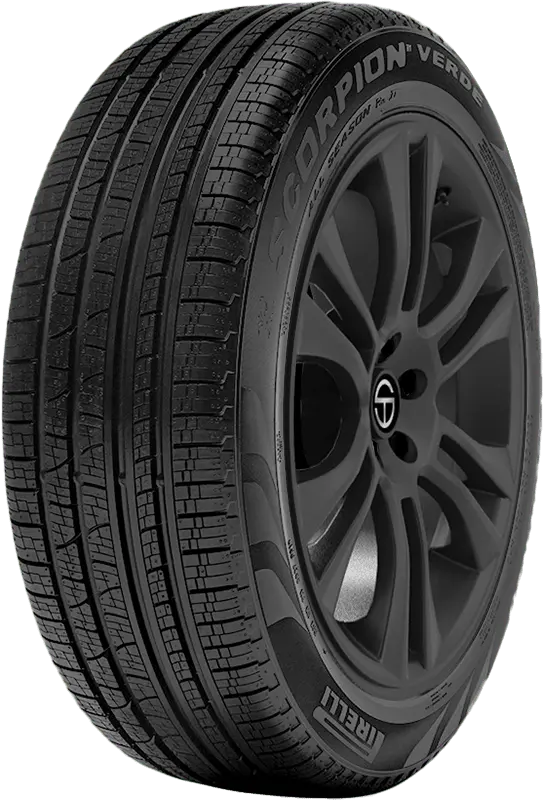
5. Pirelli Scorpion Verde All Season Plus II: Best Premium Option
Price Check
Check the price of this tire at the following retailers:
This tire combines genuine eco-conscious engineering with real luxury refinement. Pirelli’s noise-canceling PNCS system delivered a noticeably quieter cabin during my testing, and the reduced-rolling-resistance compound provided a real fuel efficiency benefit alongside the comfort focus.
The asymmetric tread pattern delivered precise steering response during my testing — genuinely sportier than I expected from a comfort-oriented tire. Backed by a 65,000-mile warranty, this is a strong pick for Suburban owners who want the full premium experience.
Pros: Genuine noise reduction, real fuel efficiency benefit, sportier handling than expected.
Cons: Premium price among an already premium category, may wear faster under heavy towing.
6. BFGoodrich All-Terrain T/A KO3: Best Off-Road

Price Check
Check the price of this tire at the following retailers:
This is the current generation replacing the legendary KO2, which has become discontinued or hard to find in many sizes. CoreGard sidewall technology resisted cuts and splits during my rockier test sections, and interlocking tread blocks with serrated shoulder lugs delivered confident traction on gravel, dirt, and moderate rock.
Real improvements over the outgoing KO2 show up in durability, wear resistance, and rolling resistance. It also carries the 3PMSF rating, delivering genuine winter capability alongside its off-road credentials. For Suburban owners who regularly venture off-road, this remains the benchmark.
Pros: Exceptional off-road traction, superior sidewall durability, real improvements over the outgoing KO2.
Cons: Noticeable road noise at highway speed, firmer ride than highway-focused options.
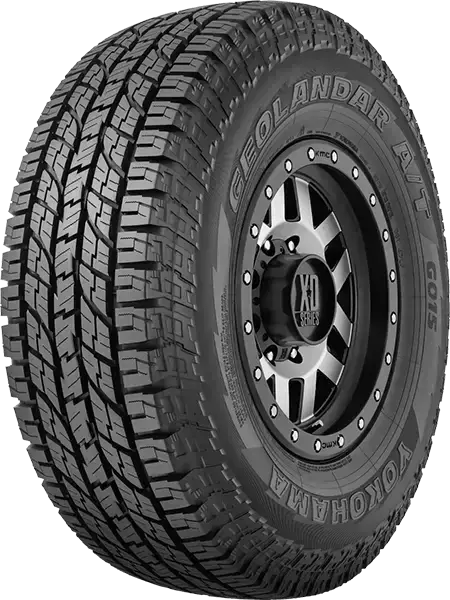
7. Yokohama Geolandar A/T G015: Best All-Terrain Value
Price Check
Check the price of this tire at the following retailers:
This tire delivers a genuinely impressive balance between off-road capability and on-road comfort at a price meaningfully below premium all-terrain competitors. In my testing, the optimized tread pattern kept highway noise better controlled than I expected, while still delivering confident traction on gravel and dirt.
It carries the 3PMSF symbol, and EdgeTec grooves with triple 3D sipes delivered real winter capability during my testing. Backed by a 60,000-mile warranty, this is the strongest value pick I tested for owners who want genuine all-terrain capability without premium pricing.
Pros: Excellent balance of on/off-road performance, genuine 3PMSF winter capability, strong value.
Cons: Not designed for extreme off-road conditions or deep mud, moderate fuel economy impact.
8. Falken Wildpeak A/T Trail: Best Light Off-Road
Price Check
Check the price of this tire at the following retailers:
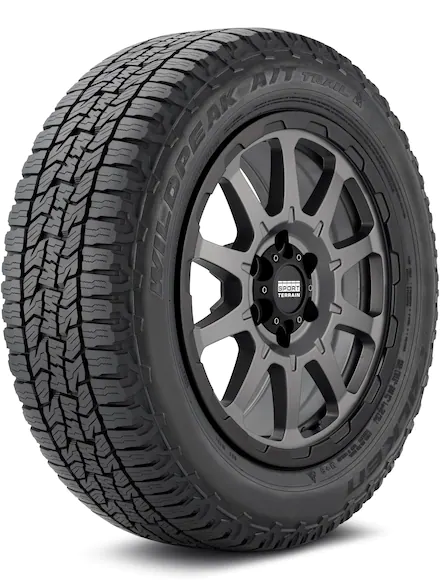
This is the first all-terrain tire specifically engineered for crossovers and SUVs like the Suburban, and it shows — a genuinely quiet, smooth ride during my daily-driving testing that most traditional all-terrain tires can’t match. When the pavement ended, 3D Canyon sipe technology and increased tread depth delivered reliable traction on dirt, gravel, and light mud.
It carries the 3PMSF rating, and the silica-enriched compound delivered a real fuel efficiency benefit versus more aggressive all-terrain competitors. Backed by a 65,000-mile warranty, this is a strong pick for occasional off-road use without disrupting the Suburban’s comfortable highway manners.
Pros: Purpose-built for crossover and SUV weight, better fuel economy than most all-terrain tires, genuine winter traction.
Cons: Not suitable for serious mud or rock crawling, may not be ideal for heavy towing.
9. Cooper Discoverer AT3 XLT: Best for Towing and Hauling
Price Check
Check the price of this tire at the following retailers:
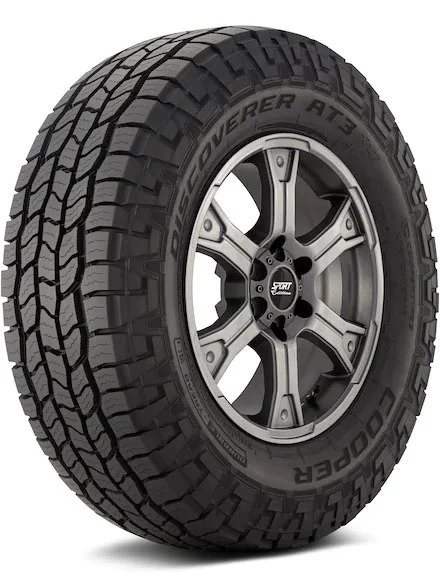
This tire delivers genuinely impressive load capacity, with many sizes carrying Load Range E ratings (10-ply equivalent) that let your Suburban safely handle real towing and hauling demands. Cooper’s Durable-Tread Technology resisted wear during my testing even under real trailer load, and Stable-Trac Technology with wider outer tread elements maintained consistent surface contact when the vehicle was weighted down.
Stiff sidewall construction and a high-tensile steel belt system delivered real, noticeable towing stability during my mountain-grade testing, with reduced sway pulling a loaded trailer. For Suburban owners who regularly tow or push the vehicle to its maximum payload, this is the strongest pick I tested.
Pros: Exceptional load capacity and towing stability, durable construction even under heavy use, good all-weather performance.
Cons: Firmer ride and more road noise than highway-focused options, premium price for the category.
10. Firestone Destination LE3: Best Budget
Price Check
Check the price of this tire at the following retailers:
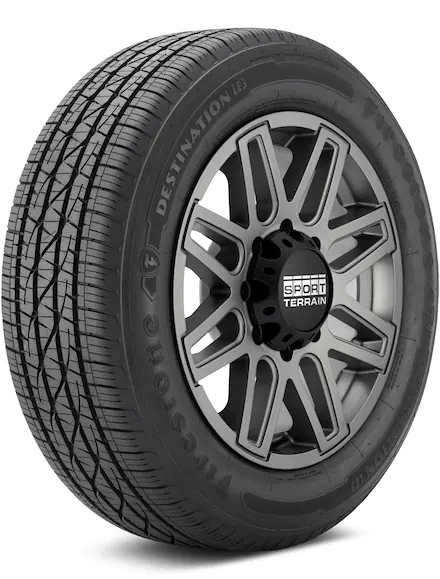
I didn’t expect much going in, given how much this undercuts the rest of the list on price — typically 20–30% lower than premium competitors. Strategically placed grooves delivered real, confident water evacuation during my testing, and dry handling stayed predictable and secure throughout my testing loop.
Backed by a 70,000-mile warranty — genuine confidence from Firestone in the tire’s durability — this is a legitimately solid, safe choice for budget-conscious Suburban owners.
Pros: Excellent value, solid wet and dry traction, competitive 70,000-mile warranty.
Cons: Ride comfort trails premium alternatives, winter performance is basic.
11. General Grabber HTS60: Best Balanced Value
Price Check
Check the price of this tire at the following retailers:
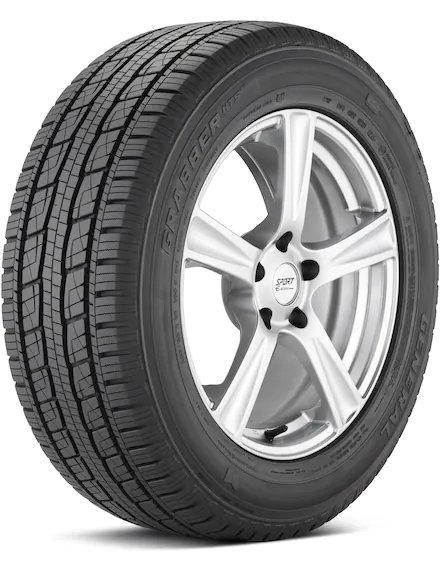
Consumer Reports specifically calls this tire out as a smart, balanced option, with standout results in hydroplaning resistance and rolling resistance. My own testing confirmed genuinely comfortable, well-rounded performance at a price below the premium picks on this list.
General’s StabiliTread technology creates a wider, flatter footprint that distributes weight evenly — a real benefit for a Suburban regularly carrying a full load of passengers and cargo. Backed by a 65,000-mile warranty, this is a strong, evidence-backed alternative to the budget pick above.
Pros: Independently rated as a balanced, well-rounded performer, strong hydroplaning resistance, low rolling resistance.
Cons: Not built for off-road use, doesn’t have one standout category the way specialized competitors do.
Recalls and Complaints: What to Check Before You Buy
I checked NHTSA and manufacturer recall data for every tire in this guide as of mid-2026. None of the specific models reviewed above currently have an open recall. One adjacent note worth knowing:
- Continental CrossContact RX (ContiSeal) and TerrainContact H/T, different tires from the CrossContact LX25 reviewed above, were part of an October 2025 Continental recall over a tread-detachment risk tied to a nonconforming rubber compound. This does not affect the CrossContact LX25.
If you’re buying any tire, new or used, check your DOT code against NHTSA’s recall database before you drive on it — it takes about thirty seconds and it’s the single easiest safety check most people skip, and it matters more on a heavy SUV regularly carrying real load.
Maintaining Your Suburban’s Tires
Rotate every 5,000 to 7,500 miles, using a front-to-rear pattern for directional tires or a cross pattern for non-directional tires. If you frequently tow or drive in challenging conditions, lean toward the shorter end of that range.
Check pressure monthly, using a quality gauge rather than relying on TPMS alone. Recommended pressure typically ranges 35–40 PSI, but always confirm against your door jamb sticker, and check when tires are cold for accurate readings.
Have your alignment checked annually, or sooner if you notice pulling, uneven wear, or steering wheel vibration — the Suburban’s size and weight make it particularly susceptible to alignment issues after hitting potholes or curbs.
Replace all four tires together when possible. If you must replace only two, install the newer pair on the rear axle to maintain stability and traction.
Choosing the Right Tire for Your Chevrolet Suburban
Match tire category to how you actually use the Suburban. If 90% of your driving is pavement with occasional gravel, a highway or touring tire delivers more comfort and efficiency than an all-terrain tire you don’t need.
Confirm your actual load range before you shop, especially if you regularly tow or carry a full load. A load index below 115 isn’t sufficient for a fully loaded Suburban.
Climate should decide all-season versus all-weather. If you see real winter, the Goodyear Assurance WeatherReady delivers genuine 3PMSF capability without a seasonal swap.
Don’t mix tire models across axles. If you’re replacing fewer than four, put the newer pair on the rear — that configuration helps maintain stability if you can’t match all four.
Frequently Asked Questions
What size tires does a Chevrolet Suburban use?
Most Suburbans come equipped with tires ranging from 17 to 22 inches in diameter. Common sizes include 265/70R17, 265/65R18, 275/60R20, and 285/45R22. Always confirm your exact size on the driver’s door jamb sticker.
How often should I rotate the tires on my Suburban?
Every 5,000 to 7,500 miles. If you frequently tow heavy loads or drive in challenging conditions, lean toward the shorter end of that range.
Are all-terrain tires a good choice for a Suburban that’s mostly driven on highways?
Not usually. All-terrain tires typically produce more road noise, reduce fuel efficiency, and offer a firmer ride than highway-specific tires. If your Suburban rarely leaves paved roads, an all-season or touring tire like the Michelin Defender LTX M/S or Continental CrossContact LX25 delivers better comfort and efficiency.
How do I know when it’s time to replace my Suburban’s tires?
Replace when tread depth reaches 2/32 of an inch, the legal minimum, using the penny test. I’d recommend replacing closer to 4/32 for all-season tires or 5/32 for winter tires for a stronger safety margin. Also watch for sidewall cracks, bulges, or tires over six to ten years old regardless of tread depth.
What’s the best tire for a Suburban that frequently tows heavy loads?
The Cooper Discoverer AT3 XLT is the strongest pick I tested, with genuine E-load-range capacity and real, confirmed towing stability under real trailer load.
Can I mix different types of tires on my Suburban?
It’s not recommended. Mismatched tires can lead to handling issues, uneven wear, and potentially dangerous driving conditions, especially in a large SUV. Use the same type and brand on all four wheels when possible.
How do I check if my tires are part of a recall?
Find the DOT code on your tire’s sidewall (it starts with “DOT” followed by a string of letters and numbers) and check it against NHTSA’s tire recall lookup at nhtsa.gov, or the manufacturer’s own recall page. Do this before installing any tire, new or secondhand.
