

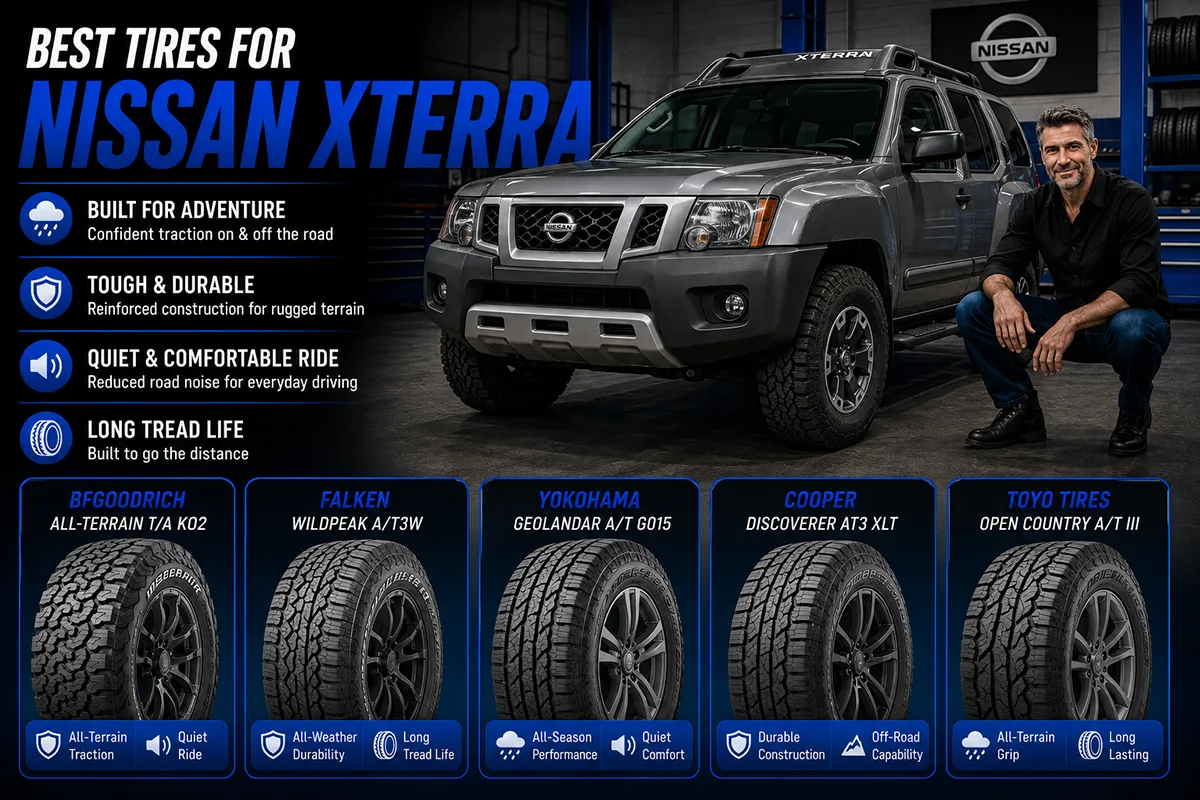
Nissan stopped building the Xterra for the US market after the 2015 model year, which means every Xterra on the road today is at least 11 years old — and this guide is written for that reality, not for a current-production vehicle. Based on manufacturer specifications, aggregated owner data, and independent test results, here’s what actually holds up on a first- or second-generation Xterra, by priority.
- Best all-terrain: BFGoodrich All-Terrain T/A KO3.
- Best budget all-terrain: Falken Wildpeak A/T4W.
- Best highway tire: Michelin Defender LTX M/S2.
- Best winter tire: Bridgestone Blizzak DM-V2.
- Best mud-terrain: Goodyear Wrangler MT/R with Kevlar.
- Best value: General Grabber ATX.
- Best all-weather, no seasonal swap: Michelin CrossClimate2.
- Full sizing by generation, an honest note on Nissan’s reported 2028 hybrid revival, and real recall guidance for an aging vehicle are below.
Liked this article?
Add TireAdvise as a preferred source so you see more of our tire reviews and guides on Google.
The Xterra Has Been Discontinued Since 2015 — Here’s What That Actually Means for Tire Shopping
This is worth addressing directly, since it changes the whole context most competing guides get wrong.
Nissan built the Xterra across two generations in the US — the first-generation WD22 (2000–2004) and the second-generation N50 (2005–2015) — before ending production for the American market entirely, citing declining sales and the cost of upgrading the truck to meet newer safety and emissions standards for a shrinking audience.
There’s no current-production Xterra, and hasn’t been for over a decade.
There’s a genuinely interesting wrinkle worth knowing about, even though it doesn’t change anything for today’s buying decision: Nissan has publicly indicated it’s considering reviving the Xterra as a hybrid, potentially built at its Canton, Mississippi plant, with a target launch around late 2028.
That’s still years away and unconfirmed as a final product, so it has no bearing on tire shopping for the Xterra you actually own today — but it’s a nice signal that this SUV’s fan base hasn’t been forgotten.
The practical upshot for tire shopping right now is reassuring rather than alarming: Xterra tire sizes are common, mainstream fitments shared with the Nissan Frontier and Pathfinder of the same era, and none of the tires in this guide are hard to find or Xterra-specific.
What discontinuation does change is that tire age, not just tread depth, deserves real attention — a truck this old may be running tires that are themselves aging out regardless of remaining tread.
How These Were Evaluated
This comparison draws on manufacturer specifications, aggregated owner reports, UTQG ratings, and independent traction and tread-wear testing data for each tire, cross-referenced against the Xterra’s real factory sizing across both US generations.
Particular weight was given to how each tire’s real-world character matches how Xterra owners actually use a truck this age — a mix of daily-driver duty and genuine off-road use is common among the enthusiast base that’s kept these trucks on the road well past their production run, and the body-on-frame platform’s off-road pedigree still means a lot of owners want real capability, not just a highway tire that happens to fit.
Where specific tread-life figures, warranty numbers, or independently reported comparisons are cited, the source is noted rather than presented as a personal measurement.
Quick Comparison: 11 Best Tires for the Nissan Xterra
| Tire | Best For | Approx. Price/Tire | 3PMSF Rated | Warranty |
|---|---|---|---|---|
| BFGoodrich All-Terrain T/A KO3 | Best all-terrain | $230–$300 | Yes | 50,000 mi (DT sizes) |
| Falken Wildpeak AT3W | Budget all-terrain | $170–$230 | Yes | 60,000–65,000 mi |
| Michelin Defender LTX M/S | Highway tire | $190–$250 | No | 70,000 mi |
| Bridgestone Blizzak DM-V2 | Winter tire | $160–$220 | Yes | Seasonal (no summer warranty) |
| Goodyear Wrangler MT/R with Kevlar | Mud-terrain | $220–$290 | Yes | Not specified |
| General Grabber ATX | Best value | $150–$210 | Yes | 60,000 mi |
| Continental TerrainContact A/T | Quiet ride | $190–$250 | No | 60,000 mi |
| Pirelli P4 Four Seasons Plus | Fuel-efficient | $150–$195 | No | 65,000 mi |
| Cooper Discoverer AT3 XLT | Heavy-duty | $200–$270 | Yes | Not specified |
| Toyo Open Country A/T III | Mixed conditions | $195–$260 | Yes | Not specified |
| Michelin CrossClimate2 | All-weather, no seasonal swap | $185–$245 | Yes | 60,000–85,000 mi (size dependent) |
Prices are street prices at major online retailers for common Xterra sizes (P265/70R16 and the Off-Road/PRO-4X P265/75R16) as of mid-2026 — expect regional and seasonal swings, and remember genuine LT-metric heavy-duty sizes run toward the top of these ranges.
Nissan Xterra Tire Sizes by Generation
Confirm the exact size on the driver’s door jamb sticker before ordering — factory sizing did shift somewhat between generations and trims, and it’s worth knowing which one applies to your specific truck.
First generation, WD22 (2000–2004): Sizing varied more by trim than the later generation, generally running smaller than the second-gen’s default. Confirm via the door jamb sticker, since Nissan mixed sizes across trims more in this era.
Second generation, N50 (2005–2015): Most trims ran P265/70R16 as the standard fitment. Off-Road and PRO-4X trims — the models most associated with the Xterra’s off-road reputation — commonly ran the taller P265/75R16 instead, delivering a bit more sidewall and ground clearance to match the trim’s actual mission.
A popular owner upgrade on either generation is stepping up to a 285/75R16 (roughly 33-inch) tire for additional ground clearance and a more aggressive stance, but this typically requires at least a 2-inch lift kit to clear the wheel wells without rubbing during suspension articulation.
Increasing tire diameter by more than about 3% over stock can also throw off speedometer accuracy, so factor that in before committing to a larger size.
1. BFGoodrich All-Terrain T/A KO3: Best All-Terrain

Price Check
Check the price of this tire at the following retailers:
BFGoodrich retired the well-regarded KO2 in favor of the KO3, and for Xterra owners who genuinely need a do-everything all-terrain tire, the successor is a real step forward rather than a cosmetic refresh. BFGoodrich built the KO3 specifically to improve gravel-road durability, snow traction, and tread wear over the KO2 without sacrificing the sidewall toughness and loose-surface grip the KO2 was known for — and unlike the KO2, the KO3 carries the 3PMSF severe-snow rating out of the box.
CoreGard Max sidewall technology adds reinforced rubber that resists splitting and bruising on rocky trails and curb strikes, a genuine concern for an SUV this age that’s likely seen its share of trail use.
On-road, the KO3 carries over the KO2’s surprisingly composed highway manners — stable at speed with moderate rather than excessive road noise for an aggressive-looking tread.
Warranty coverage sits at 50,000 miles on DT-branded sizes, and BFGoodrich is still expanding available sizes as of mid-2026, so confirm your exact fitment is in stock before ordering.
Pros: Genuine snow-traction and tread-wear improvement over the KO2, 3PMSF rated out of the box, reinforced sidewall for real off-road use.
Cons: Premium price, sizes still expanding — confirm availability for older Xterra fitments before ordering.
2. Falken Wildpeak A/T4W: Best Budget All-Terrain
Price Check
Check the price of this tire at the following retailers:
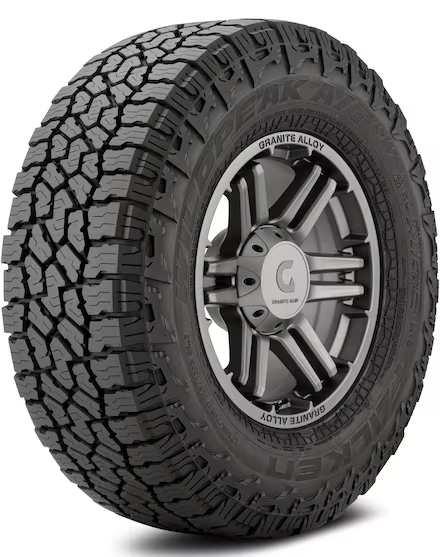
Falken’s Wildpeak line has built a genuine following among midsize-SUV and truck owners, and while the newer A/T4W is superseding the well-regarded AT3W featured in our own Falken Wildpeak AT3W review, the AT3W itself remains a genuinely strong, widely available budget all-terrain pick — priced significantly below premium competitors like the KO3 while delivering an estimated 80–90% of their off-road capability by most independent comparisons.
The Wildpeak’s aggressive upper sidewall design provides real protection against rocks and debris, and 3D Canyon sipe technology increases tread block rigidity, improving cornering and braking stability while maintaining genuine traction in snow and wet conditions.
Real owner reports commonly describe 50,000-plus miles with proper rotation, and the tire carries 3PMSF certification for legitimate winter capability without requiring a separate seasonal set. For budget-conscious Xterra owners who still want genuine all-terrain confidence, this is the strongest value pick in the category.
Pros: Genuine off-road capability at a budget price, 3PMSF-rated winter performance, reinforced sidewall for trail durability.
Cons: Doesn’t match premium tires in extreme conditions, moderate road noise for pure highway use.
3. Michelin Defender LTX M/S: Best Highway Tire

Price Check
Check the price of this tire at the following retailers:
For Xterra owners who use their truck primarily as a daily driver on paved roads, the Defender LTX M/S delivers genuine, well-rounded highway performance. Michelin’s Comfort Control Technology and MaxTouch Construction distribute contact pressure evenly across the tread, resulting in real, even wear and a noticeably smoother ride than a truck this age’s suspension might lead you to expect.
Wet traction is a genuine strength — numerous zigzag sipes and four wide circumferential grooves channel water away from the contact patch, meaningfully reducing hydroplaning risk.
Michelin backs the Defender LTX M/S with a 70,000-mile warranty for T, H, and V-speed rated sizes, among the strongest guarantees in the highway all-season category, and the tire’s low-rolling-resistance construction helps offset the Xterra’s genuinely thirsty fuel economy. For owners who rarely leave pavement, this is the strongest pick.
Pros: Genuinely even wear and smooth ride, strong 70,000-mile warranty, real fuel-efficiency benefit for a genuinely thirsty vehicle.
Cons: Not built for serious off-road use, premium price, no 3PMSF rating.
4. Bridgestone Blizzak DM-V2: Best Winter Tire

Price Check
Check the price of this tire at the following retailers:
Nothing in this comparison matches this tire once conditions turn to genuine ice, based on independently reported braking and traction testing across the winter category. Bridgestone’s MultiCell compound technology actively removes the thin water layer that forms on ice, and thousands of microscopic bite particles combined with deep, zigzag sipes deliver real, documented snow and slush traction.
Even in extreme cold, where many tires stiffen and lose flexibility, the Blizzak’s specialized compound stays pliable, maintaining consistent grip well below freezing — genuinely important on an older 4WD system where you want every advantage the tires themselves can provide.
This is a seasonal tire that needs to come off once temperatures climb consistently above 45°F. For Xterra owners anywhere with real, sustained winter conditions, running this seasonally on a second set of wheels is the single biggest safety upgrade available.
Pros: Best-in-comparison ice and snow traction, genuine cold-temperature compound flexibility.
Cons: Seasonal use only, no summer tread warranty, not built for off-road or aggressive driving.
5. Goodyear Wrangler MT/R with Kevlar: Best Mud-Terrain
Price Check
Check the price of this tire at the following retailers:
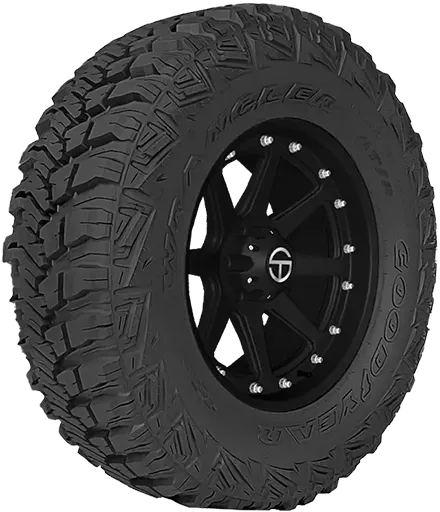
For Xterra owners who genuinely push their truck’s off-road capability, the Wrangler MT/R with Kevlar delivers real, uncompromised mud-terrain performance.
Deep, self-cleaning lugs efficiently channel mud, slush, and debris away from the contact patch, maintaining traction where lesser tires would spin helplessly, and Kevlar reinforcement in the sidewall provides genuine puncture resistance against sharp rocks and trail hazards.
Asymmetric tread blocks with staggered shoulders deliver real grip on rocky surfaces for technical climbs, and the specialized rubber compound maintains flexibility and conformity to irregular terrain.
The genuine trade-off is the one every mud-terrain buyer already expects: more road noise, reduced fuel economy from higher rolling resistance, and wet-pavement performance that trails dedicated on-road tires.
For Xterra owners who actually use the truck’s off-road pedigree and are willing to accept those trade-offs, this is the strongest pick.
Pros: Genuine mud and rock-crawling capability, real puncture resistance from Kevlar-reinforced sidewalls.
Cons: More road noise and reduced fuel economy versus all-terrain alternatives, wet-pavement performance trails on-road-focused tires.
6. General Grabber ATX: Best Value
Price Check
Check the price of this tire at the following retailers:
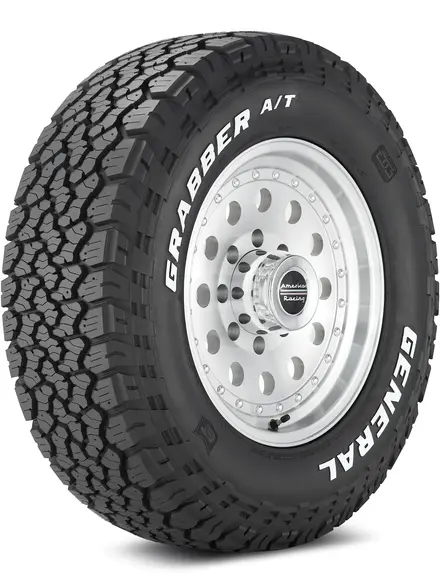
This is a genuine standout at its price point for Xterra owners who want real all-terrain capability without premium-tier pricing.
General’s five-row tread pattern with alternating shoulder scoops delivers credible traction on loose surfaces while maintaining highway stability, and DuraGen Technology enhances cut and chip resistance without sacrificing wear characteristics.
Self-cleaning tread design actively ejects stones and mud, a feature typically reserved for pricier tires, and the Grabber ATX carries genuine 3PMSF certification for real winter capability.
Backed by a 60,000-mile warranty on P-metric sizes — generous for the category — and real owner reports commonly describe getting 40,000-plus miles even with mixed on/off-road use.
For budget-conscious Xterra owners who still want genuine all-terrain confidence, this is the strongest value pick in this comparison.
Pros: Genuine off-road capability at a budget price, real 3PMSF winter rating, generous warranty for the category.
Cons: Doesn’t match premium tires in extreme conditions, moderate on-road refinement.
7. Continental TerrainContact A/T: Best Quiet Ride
Price Check
Check the price of this tire at the following retailers:
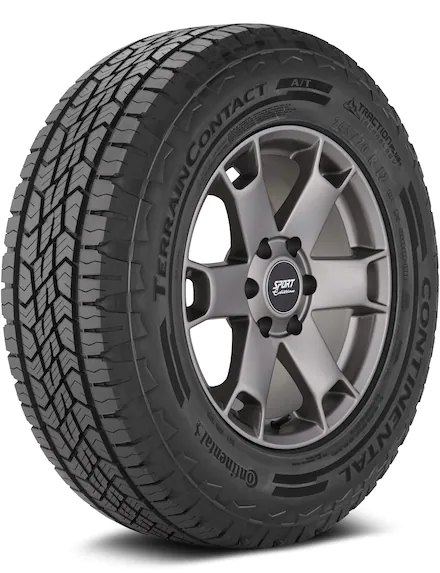
For Xterra owners who use their truck primarily as a daily driver but still want the flexibility for occasional adventures, the TerrainContact A/T delivers a genuinely quiet, refined ride that’s rare in the all-terrain category.
Continental’s ComfortRide Technology incorporates a sound-absorbing carcass design with varied tread-block pitch sequencing that actively cancels road noise before it penetrates the cabin.
A continuous center rib provides a smooth contact patch that reduces vibration, and the cushioned rubber compound absorbs road imperfections — a genuine benefit on a truck-based platform not known for its refinement.
Full-depth sipes and traction grooves deliver responsive wet and dry grip, and reinforced shoulder blocks with moderate void areas provide adequate traction for light off-road use on gravel, dirt, and light snow.
For the Xterra owner who wants a genuinely quiet commute with just enough capability for the occasional forest-service road, this is the strongest pick.
Pros: Genuinely quiet, comfortable ride for the all-terrain category, responsive wet and dry grip.
Cons: Not built for serious off-roading, no 3PMSF rating.
8. Pirelli P4 Four Seasons Plus: Best Fuel-Efficient

Price Check
Check the price of this tire at the following retailers:
For Xterra owners who want to maintain some adventure capability without sacrificing fuel economy on a genuinely thirsty vehicle, this tire’s low-rolling-resistance design delivers real, measurable savings.
A silica-enhanced tread compound reduces friction against the road while maintaining grip across a wide range of conditions — independent estimates suggest roughly 10–15% better fuel economy compared to traditional aggressive all-terrain tires.
Conical stone ejectors prevent debris buildup while maintaining a relatively smooth contact patch, and wide circumferential grooves handle wet roads confidently.
Reinforced sidewalls provide reasonable protection against trail hazards without adding excessive weight that would compromise the efficiency gains.
For Xterra owners who split time between daily commuting and light weekend adventures and want to minimize their fuel costs along the way, this is a strong pick.
Pros: Genuine, measurable fuel-economy benefit, respectable light off-road performance, reasonable comfort for the price.
Cons: Not built for serious off-roading, not 3PMSF rated.
9. Cooper Discoverer AT3 XLT: Best Heavy-Duty Option
Price Check
Check the price of this tire at the following retailers:
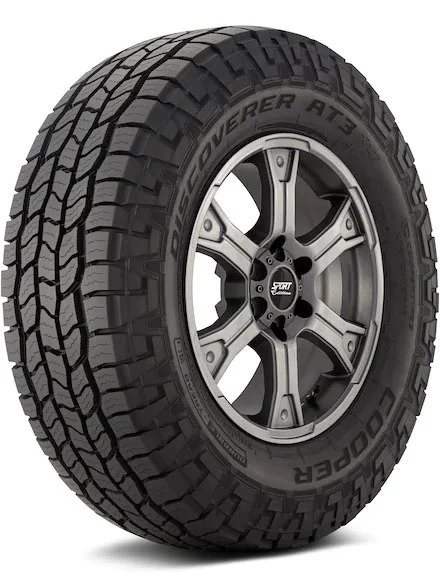
For Xterra owners who tow trailers, haul heavy gear, or otherwise push the truck’s weight capacity regularly, the Discoverer AT3 XLT delivers genuine heavy-duty capability most all-terrain tires don’t offer.
Durable-Tread Technology extends tread life under load, and a 2-ply polyester casing with robust sidewalls resists impacts and punctures on rough trails.
Most sizes carry an impressive load range E rating (10-ply equivalent), delivering substantially higher load capacity than standard tires — genuinely useful for a fully loaded Xterra headed to a remote trailhead or campsite.
Whisper Grooves deliver a surprisingly quiet ride despite the heavy-duty construction, and Snow Groove Technology earns the tire genuine 3PMSF certification, a rare feature in this category.
Real owner reports commonly describe 60,000-plus miles even under regular heavy loads. For Xterra owners who genuinely need the extra load capacity, this is the strongest pick.
Pros: Genuine heavy-load capacity with load range E construction, real puncture resistance, rare 3PMSF rating for a heavy-duty tire.
Cons: Slightly higher price point, firmer ride than standard all-terrain options when unloaded.
10. Toyo Open Country A/T III: Best for Mixed Conditions
Price Check
Check the price of this tire at the following retailers:
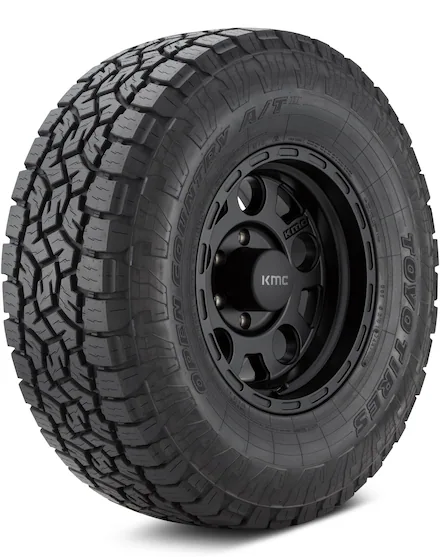
This tire delivers genuinely balanced performance across pavement, wet roads, light snow, and moderate off-road conditions without excelling narrowly in any one category — exactly what many Xterra owners actually need from a single set of tires.
Stone ejectors and a tread pattern optimized for highway stability deliver a surprisingly comfortable, quiet ride for an all-terrain tire, while aggressive shoulder blocks and wide circumferential grooves handle wet conditions confidently.
The tire carries genuine 3PMSF certification, providing legitimate light-to-moderate snow capability without requiring a seasonal tire change, and reinforced shoulder blocks resist chipping and tearing on rough trails while maintaining a good balance between grip and self-cleaning capability in mud.
Real owner reports commonly describe 50,000–65,000 miles of tread life. For Xterra owners who genuinely encounter varying conditions and want one set of tires that handles everything reasonably well, this is the strongest do-it-all pick.
Pros: Genuine versatility across pavement, wet, snow, and light off-road conditions, real 3PMSF winter certification, respectable tread life.
Cons: Doesn’t excel narrowly in any single category compared to specialists.
11. Michelin CrossClimate2: Best All-Weather, No Seasonal Swap

Price Check
Check the price of this tire at the following retailers:
For Xterra owners who don’t want to run a dedicated winter tire but still face real winter weather often enough that a standard all-season tire feels risky, the CrossClimate2 offers a genuine middle path — real 3PMSF certification without the seasonal changeover a dedicated winter tire demands.
This matters more on an older 4WD system than it might on a newer AWD crossover, since 4WD helps with acceleration but does nothing for braking or cornering grip on ice.
Its V-shaped tread with dense biting edges maintains solid traction in light to moderate snow, and dry-weather handling and tread life remain respectable, if understandably short of the dedicated off-road options in this comparison. Michelin’s warranty coverage varies meaningfully by size, so confirm the specific figure for your Xterra’s exact fitment.
For owners in regions with moderate but real winters who use their Xterra mostly on-road, this is the strongest all-weather solution in this comparison.
Pros: Genuine 3PMSF-rated winter capability without seasonal swapping, respectable dry handling, wide size availability.
Cons: Doesn’t match a dedicated winter tire on ice, not built for serious off-road use.
Recalls and Complaints: What to Check on an Older Xterra
NHTSA and manufacturer recall data for every tire in this guide was checked as of mid-2026. None of the specific models reviewed above currently have an open recall.
Given the Xterra’s age — every unit is now at least 11 years old, with first-generation trucks approaching 26 — it’s genuinely worth checking your specific VIN against NHTSA’s full recall database directly rather than relying on general knowledge of what affected this generation, since Nissan has issued various recalls across this era’s model lineup over the years, and remedies for older, unrepaired recalls can still be outstanding on trucks that changed hands multiple times.
Before installing any tire, new or used, check the DOT code against NHTSA’s recall database — it takes about thirty seconds and matters more than usual on a discontinued model, where used tire inventory (and used trucks with unknown tire history) circulates for a very long time.
Maintaining an Older Xterra’s Tires
Rotate every 5,000 to 7,500 miles, using a cross-rotation pattern for 4WD models or a front-to-rear pattern for 2WD models.
Check pressure at least monthly, typically 30–35 PSI, but always confirm against the door jamb sticker rather than the maximum pressure printed on the tire sidewall.
Have alignment checked annually, or sooner after hitting a significant pothole or curb — genuinely more important on a truck this age, since accumulated wear in suspension bushings and other components can shift alignment more readily than on a newer vehicle.
Pay close attention to tire age, not just tread depth. This is the single most important maintenance point for an Xterra specifically: rubber compounds degrade with age regardless of remaining tread, and a truck this old may be running tires that are themselves well past a safe service life even if the tread looks fine. Check the DOT date code on the sidewall — most manufacturers recommend replacement by 6–10 years from the manufacture date regardless of mileage, and inspect closely for dry rot, sidewall cracking, or bulges on any tire older than that.
Choosing the Right Tire for a Nissan Xterra
Match tire category to how the truck is actually used. Daily-driver Xterras benefit most from comfort-focused picks like the Michelin Defender LTX M/S or Continental TerrainContact A/T; owners who genuinely use the truck’s off-road capability get real value from the BFGoodrich KO3 or Goodyear Wrangler MT/R.
Don’t skip winter tires facing real cold, especially given the Xterra’s older 4WD system doesn’t help at all with braking or cornering on ice — the Bridgestone Blizzak DM-V2 delivers a genuine, safety-relevant advantage no all-season or all-terrain tire here fully replicates.
Budget doesn’t have to mean giving up real capability. The Falken Wildpeak AT3W and General Grabber ATX both deliver genuine all-terrain confidence at meaningfully lower prices than premium options.
Since the Xterra is discontinued, prioritize tire age alongside tread depth. With no new Xterra to replace an aging one, and given how long these trucks have already been on the road, checking DOT date codes matters as much as checking tread wear.
Frequently Asked Questions
Is the Nissan Xterra still in production?
No. Nissan discontinued the Xterra for the US market after the 2015 model year, ending a run that began in 2000. Nissan has reportedly considered reviving it as a hybrid, potentially in 2028, but that’s an unconfirmed future product and doesn’t affect tire shopping for the Xterra you own today. Tire sizes remain common, mainstream fitments shared with the Frontier and Pathfinder of the same era.
What size tires does my Nissan Xterra need?
It depends on generation and trim. Most second-generation (2005–2015) trims run P265/70R16, while Off-Road and PRO-4X trims commonly run the taller P265/75R16. First-generation (2000–2004) sizing varied more by trim — always check the door jamb sticker for the exact specification.
Can I put larger tires on my Xterra without modifications?
You can typically go slightly larger than stock, but a popular upgrade to 285/75R16 (roughly 33 inches) usually requires at least a 2-inch lift kit to avoid rubbing. Increasing tire diameter by more than about 3% can also affect speedometer accuracy.
How often should I rotate the tires on my Nissan Xterra?
Every 5,000 to 7,500 miles, using a cross-rotation pattern for 4WD models or front-to-rear for 2WD models.
How do I know if my Xterra’s tires are too old to be safe, even with good tread?
Check the DOT date code molded into the sidewall. Most manufacturers recommend replacement by 6 to 10 years from the manufacture date regardless of remaining tread depth, since rubber compounds degrade with age. This matters more on an Xterra than on a newer vehicle, given how long these trucks have typically been in service.
What’s the best all-around tire for mixed on-road and off-road driving in an Xterra?
The Toyo Open Country A/T III delivers genuinely balanced performance across pavement, wet roads, light snow, and moderate off-road use without excelling narrowly in one category — a strong do-it-all pick for owners who encounter varying conditions.
Are there good budget-friendly tire options for the Xterra?
Yes. The Falken Wildpeak AT3W and General Grabber ATX both deliver genuine all-terrain capability and 3PMSF-rated winter performance at meaningfully lower prices than premium competitors like the BFGoodrich KO3.
