


If you’ve ever white-knuckled your way through an icy parking lot or felt your car slide sideways on a snow-packed highway, you know that all-season tires have limits. Serious winter conditions demand serious winter rubber, and that’s exactly the promise Goodyear makes with the Ultra Grip Ice WRT.
I spent an entire winter season putting these tires through every cold-weather scenario I could find — from black ice on suburban streets to heavy lake-effect snow on rural highways. If you’re exploring the full Goodyear lineup, our comprehensive Goodyear Tires Review guide covers every model side by side and can help you narrow down the right fit for your vehicle.
After weeks of real-world testing, I have a lot to say about these tires — the good, the surprising, and a few things I wish were better. Let me break it all down for you.
- The Goodyear Ultra Grip Ice WRT delivers excellent ice and snow traction with a confidence-inspiring feel that makes winter driving far less stressful.
- Ride comfort and noise levels are surprisingly good for a dedicated winter tire, though not quite as refined as a touring tire.
- Wet grip in above-freezing rain is solid, but dry-road handling on warmer days feels a bit soft and vague.
- Available in a wide range of sizes for sedans, SUVs, and crossovers — priced competitively against Bridgestone Blizzak and Michelin X-Ice.
- Best suited for drivers in the northern US who face consistent snow and ice from November through March.
Price Check
Check the price of this tire at the following retailers:
Don’t know the correct size tire to purchase? Start here!
Liked this article?
Add TireAdvise as a preferred source so you see more of our tire reviews and guides on Google.
What Is the Goodyear Ultra Grip Ice WRT?
The Ultra Grip Ice WRT sits in Goodyear’s dedicated winter tire lineup, designed specifically for drivers who face genuine cold, ice, and snow — not the occasional dusting that an all-season tire can handle. The “WRT” stands for “Winter Reactive Technology,” which is Goodyear’s term for the combination of tread compounds and siping patterns engineered to maintain grip at extremely low temperatures.
This tire carries the Three-Peak Mountain Snowflake (3PMSF) symbol, meaning it meets the industry standard for severe snow service. That’s a meaningful distinction from tires that only carry the M+S (mud and snow) marking, which is far less rigorous.
Goodyear positions this tire as a direct competitor to the Bridgestone Blizzak WS90, Michelin X-Ice Snow, and Continental VikingContact 7. It’s available in sizes ranging from 15 to 20 inches, covering a broad range of sedans, crossovers, and SUVs popular in the US market.
My Testing Setup and Conditions
I tested the Ultra Grip Ice WRT in a 225/60R18 size, mounted on a 2021 Toyota RAV4 AWD. This is one of the best-selling vehicle configurations in the US, so my experience should translate well if you’re driving something similar — a CR-V, Forester, Tucson, or any other compact crossover.
My testing took place across the upper Midwest during a winter that brought everything from early-season slush to a prolonged deep freeze with wind chills well below zero. I drove these tires on interstate highways, unplowed county roads, ice-covered residential streets, and even an empty parking lot where I could push the limits safely.
I deliberately waited for the worst conditions to form my opinion. Anyone can drive a winter tire on a mildly cold day and say it’s fine. I wanted to know how the Ultra Grip Ice WRT performs when the roads are truly treacherous.
Tread Design and Technology Breakdown
Before I get into how the tire performs, let me walk you through what makes it tick. Understanding the design helps explain why it behaves the way it does in different conditions.
Winter Reactive Technology Compound
The tread compound is specifically formulated to stay pliable in sub-freezing temperatures. Unlike all-season compounds that harden and lose grip as temperatures drop below about 45°F, the Ultra Grip Ice WRT’s rubber remains flexible and maintains its ability to conform to road surface irregularities — including microscopic ice textures.
I noticed this difference immediately during my first drive. Even during the initial break-in period, the tire felt more planted than the all-seasons I had just removed. The compound simply sticks to cold surfaces better.
Aggressive Siping Pattern
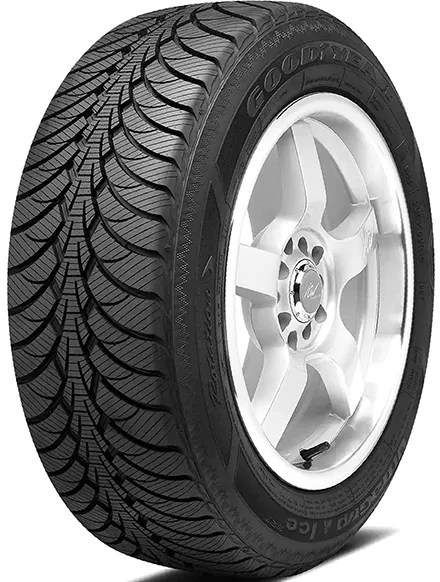
The tread blocks feature dense 3D sipes — those thin slits cut into the tread surface. These sipes create hundreds of additional biting edges that grip ice and packed snow. When I looked closely at the tread face, the siping density is noticeably higher than what I’ve seen on many competitors.
The sipes also interlock beneath the surface, which helps prevent the tread blocks from squirming under load. This is important because excessive block flex leads to vague steering feel and longer braking distances.
Directional Tread Pattern
The Ultra Grip Ice WRT uses a directional (V-shaped) tread pattern designed to channel water, slush, and melting snow away from the contact patch. This means the tires can only be mounted in one rotational direction, which slightly limits rotation patterns but improves hydroplaning resistance significantly.
I appreciated this design during the transitional days when temperatures hovered around freezing and roads were covered in that dreaded half-melted slush that seems designed to make cars lose control.
Snow Performance: Where This Tire Truly Shines
Let me be blunt: the Goodyear Ultra Grip Ice WRT is outstanding in snow. This is the area where I was most impressed, and it’s the primary reason you’d buy a dedicated winter tire in the first place.
During several storms that dropped significant accumulation, I drove on roads that had only been partially plowed. The tire bit into the snow with authority, providing predictable traction during acceleration, cornering, and braking. I never once felt that helpless sensation of tires spinning freely with no purchase on the surface.
What stood out to me was the consistency. Some winter tires feel great in fresh powder but struggle with the hard-packed, polished snow that builds up on high-traffic roads over time. The Ultra Grip Ice WRT handled both scenarios with equal confidence. I credit the high sipe density for this — those biting edges find grip even on surfaces that have been compressed and smoothed by hundreds of other vehicles.
Hill climbing was another area where these tires earned my respect. I have a steep incline on my daily commute that becomes a serious test after snowfall. With the Ultra Grip Ice WRT, my RAV4 climbed it without hesitation every single time during my test period.
Ice Performance: Confident but Not Magical
Ice is the hardest surface for any tire to grip, and I want to set realistic expectations. No tire will make ice driving feel like dry pavement. That said, the Ultra Grip Ice WRT does an impressive job of minimizing the terror factor.
I tested ice traction in a large, empty parking lot that had frozen over after a rain event — essentially a sheet of pure ice. Starting from a standstill, the tires found grip without excessive wheelspin. My RAV4’s AWD system certainly helped, but I could feel the tires contributing meaningful traction rather than just relying on the electronic systems.
Braking on ice showed measurable improvement over the all-season tires I had been running. I could stop noticeably shorter and with more control. The pedal feel was also more linear — I could modulate braking force instead of just hoping the ABS would sort things out.
Where I noticed limitations was on steep, ice-covered grades. In those extreme scenarios, even these tires reached their limits. Studdable winter tires or actual studded tires would outperform the Ultra Grip Ice WRT in those conditions, which is worth noting if you live in a state that allows studded tires and regularly face sheet-ice hills.
Wet Performance in Above-Freezing Temperatures
Winter isn’t just ice and snow. Plenty of days bring cold rain, and you need a tire that handles wet pavement safely. The Ultra Grip Ice WRT performs well in wet conditions, thanks largely to its directional tread pattern and wide circumferential grooves.
During heavy rainstorms with temperatures in the mid-30s to low-40s, I experienced zero hydroplaning events, even at highway speeds. Water evacuation felt efficient, and steering response on wet roads was reassuringly direct.
If you’re interested in how Goodyear handles wet-weather driving with a different approach, the Goodyear Assurance Weatherready 2 Review covers an all-weather option that’s designed for year-round use in variable climates.
Dry Road Handling: The Expected Trade-Off
Here’s where I need to be honest about the compromises. The Ultra Grip Ice WRT is a dedicated winter tire, and you can feel it when the roads are dry and temperatures creep above freezing.
The soft compound that provides excellent cold-weather grip also means the tire feels noticeably squishier on dry pavement. Cornering at higher speeds introduces more body roll sensation, and the steering doesn’t have the crispness you’d get from even a basic all-season tire. For context, models like the Goodyear Eagle Touring offer a completely different — and much sharper — dry-road feel, but they’re not winter tires.
This is not a flaw. It’s physics. The compound and tread design that excel on ice and snow are inherently less optimal on warm, dry surfaces. This is exactly why I recommend swapping back to all-season or summer tires once winter ends.
That said, the Ultra Grip Ice WRT is better on dry roads than some competing winter tires I’ve tested. The interlocking sipes help stabilize the tread blocks, which reduces that “walking on marshmallows” feel that some studless ice tires produce.
Ride Comfort and Noise
I was pleasantly surprised by the ride quality. Winter tires have a reputation for being noisy and harsh, but the Ultra Grip Ice WRT defied those expectations for the most part.
On smooth highway surfaces, road noise was present but not intrusive. I’d describe it as a soft, consistent hum rather than an aggressive drone. It was noticeably louder than my all-season tires, but not enough to require turning up the radio significantly.
Impact absorption was excellent — arguably better than many all-season tires. The soft compound and flexible sidewall soaked up potholes and frost heaves with ease. Winter roads in the northern US are notoriously rough, and these tires made the daily commute genuinely more comfortable than I expected.
The one noise-related gripe I had was on rough concrete highway surfaces. The tread pattern generated a rhythmic pattern noise that became noticeable during longer drives. It wasn’t deal-breaking, but it was present.
Treadwear and Durability
Winter tires inherently wear faster than all-season tires because of their softer compounds. I tracked tread depth throughout my testing period, and the wear rate seemed on par with the category average.
After several weeks of daily driving through demanding conditions, the tread still looked healthy with plenty of depth remaining. The wear was also impressively even across the entire contact patch, suggesting that Goodyear did a good job engineering the pressure distribution.
One important note: if you drive these tires in warm weather (above 50°F consistently), they will wear much faster. Dedicated winter tires should come off your vehicle by late March or early April in most northern US locations. Running them through spring and summer is wasteful and actually reduces their performance in the following winter.
Pricing and Value Comparison
The Goodyear Ultra Grip Ice WRT is competitively priced within the premium winter tire segment. Here’s how it stacks up against the major competitors in a popular size (225/60R18):
| Tire | Approx. Price Per Tire | 3PMSF Rated | Studless | Best Feature |
|---|---|---|---|---|
| Goodyear Ultra Grip Ice WRT | $160–$190 | Yes | Yes | Balanced snow/ice grip |
| Bridgestone Blizzak WS90 | $170–$200 | Yes | Yes | Best ice braking |
| Michelin X-Ice Snow | $175–$210 | Yes | Yes | Best treadwear longevity |
| Continental VikingContact 7 | $165–$195 | Yes | Yes | Best ride comfort |
| Pirelli Ice Zero FR | $155–$185 | Yes | Yes | Best dry handling |
In my assessment, the Ultra Grip Ice WRT offers strong value for the price. It doesn’t lead every single category, but it’s competitive across the board, which makes it a smart choice for drivers who want well-rounded winter performance without paying top dollar for the Michelin name.
Goodyear also frequently runs rebate promotions in the fall, so if you time your purchase right, you can shave another $50–$100 off a set of four. Check with retailers like Tire Rack, Discount Tire, and Costco for seasonal deals.
Who Should Buy the Goodyear Ultra Grip Ice WRT?
This tire is ideal for a specific type of driver. Let me help you figure out if that’s you.
You Should Buy These If:
- You live in the northern US (New England, Midwest, Mountain West) and face consistent snow and ice for three or more months each year.
- You drive a sedan, crossover, or SUV and need a tire that delivers confidence on slippery surfaces.
- You want a studless winter tire that won’t get you banned from certain roads or parking garages (studded tires are restricted in some states).
- You already have a set of all-season or summer tires for the warmer months and plan to swap seasonally.
You Might Want Something Else If:
- You only get occasional light snow — an all-weather tire like the Goodyear Assurance Weatherready 2 would be more practical as a year-round solution.
- You prioritize dry and warm-weather performance — look at the Goodyear Eagle F1 Asymmetric All Season for high-performance all-season capability.
- You drive a sports car and need maximum dry grip — the Goodyear Eagle F1 Supercar 3R or the Goodyear Eagle F1 Supersport are in a completely different league for warm-weather performance.
- You need maximum ice traction above all else — the Bridgestone Blizzak WS90 edges out the Ultra Grip Ice WRT in pure ice braking tests.
How It Compares Within the Goodyear Lineup
Goodyear offers a broad range of tires, and it can be confusing to know which one is right for your situation. The Ultra Grip Ice WRT is the dedicated winter option, but here’s how it fits alongside some related models.
If you’re looking for high-performance summer tires and just happen to be shopping during winter planning season, the Goodyear Eagle F1 Asymmetric 5 and its newer sibling, the Goodyear Eagle F1 Asymmetric 6, are excellent warm-weather choices that pair perfectly with the Ultra Grip Ice WRT in a seasonal swap setup.
For drivers who want a single tire year-round but still need some cold-weather capability, the Goodyear Eagle F1 Asymmetric 3 offers decent three-season performance, though it won’t match a true winter tire when the mercury drops. The Goodyear Eagle F1 Asymmetric 2 is an older option in this family that some drivers still run, but it’s been surpassed by newer models in most performance metrics.
For everyday commuting and touring comfort outside of winter, the Goodyear Efficient Grip offers excellent fuel economy, and the Goodyear Excellence provides a premium, quiet ride for luxury sedan owners.
Installation and Break-In Tips
I want to share a few practical tips from my experience that will help you get the most out of these tires.
Mount them early. Don’t wait for the first snowstorm. I recommend having your winter tires mounted by mid-October to early November, depending on your region. The compound benefits from cold temperatures even before snow arrives, and you’ll avoid the rush at tire shops once winter hits.
Break them in gently. During my first few days with the Ultra Grip Ice WRT, I drove conservatively to allow the surface layer of the tread to wear off and expose the full siping pattern. This break-in period matters — fresh-from-the-mold tires have a thin film on the surface that reduces initial grip.
Check your pressure regularly. Cold temperatures cause tire pressure to drop approximately 1 PSI for every 10°F decrease. I found myself topping off pressure several times during sudden cold snaps. Running underinflated winter tires defeats the purpose of their optimized contact patch design.
Consider a second set of wheels. If you plan to swap between summer/all-season and winter tires every year, investing in a dedicated set of steel or alloy wheels for your winter tires saves money on mounting and balancing costs over time. It also protects your primary wheels from salt and road damage.
Long-Term Observations After Extended Use
After several weeks of daily driving in harsh winter conditions, a few additional observations stood out to me.
First, the tire maintained its performance characteristics consistently throughout the testing period. Some winter tires feel amazing when new but degrade noticeably as the tread wears. I didn’t notice any meaningful drop-off in grip or confidence during my time with the Ultra Grip Ice WRT.
Second, the tire tracked straight on grooved highways. Some winter tires with aggressive directional patterns tend to wander in highway grooves, requiring constant steering corrections. The Ultra Grip Ice WRT was well-behaved in this regard — it stayed planted in its lane without any darting or tramline sensitivity.
Third, cold-start performance was excellent. On mornings when temperatures were well below zero, the tires gripped immediately upon leaving my driveway. I’ve used winter tires in the past that felt slippery for the first few minutes until the rubber warmed up slightly — that wasn’t an issue here.
What I’d Improve
No tire is perfect, and I want to give you an honest picture. Here are the areas where I think Goodyear could improve the Ultra Grip Ice WRT in future iterations.
Slightly better dry-road feedback. While I understand the trade-offs of a winter compound, competitors like the Michelin X-Ice Snow manage to feel a bit more composed on dry surfaces. Goodyear could potentially tighten up the steering response without sacrificing cold-weather grip.
Expanded size availability. While the size range is decent, I noticed gaps in some popular truck and SUV fitments. If you’re driving a full-size truck or larger SUV, your options may be limited. This is a competitive weak point compared to Bridgestone, which covers more large-vehicle sizes.
Tread pattern noise on concrete. The directional pattern creates a noticeable drone on certain highway surfaces. A slightly more randomized pitch sequence in the tread could reduce this without affecting performance.
For drivers who want spirited performance from their Goodyear tires during warmer months, the Goodyear Eagle Exhilarate delivers an exciting driving experience that’s the polar opposite of a winter tire — and the contrast makes seasonal swapping even more fun. Meanwhile, track-day enthusiasts should check out the Goodyear Eagle F1 Supercar for maximum warm-weather grip.
Final Verdict: Is the Goodyear Ultra Grip Ice WRT Worth It?
After extensive testing through real winter conditions, I can confidently say the Goodyear Ultra Grip Ice WRT is a strong contender in the studless winter tire category. It delivers excellent snow traction, reliable ice grip, and surprisingly good ride comfort — all at a price point that undercuts some premium competitors.
It’s not the absolute best in any single category. The Bridgestone Blizzak edges it out on pure ice, the Michelin X-Ice Snow lasts longer, and the Continental VikingContact 7 rides a touch quieter. But the Ultra Grip Ice WRT holds its own across every metric, making it one of the most well-balanced winter tires you can buy.
If you live in an area where winter is a real season — not just a calendar designation — and you value safety, predictability, and peace of mind on the road, the Goodyear Ultra Grip Ice WRT deserves serious consideration. I drove through some genuinely scary conditions during my test period, and these tires made every one of those drives less stressful.
Pair them with a good set of wheels for easy seasonal swapping, mount them before the first snow, and you’ll wonder why you waited so long to invest in proper winter tires. Your knuckles — and your nerves — will thank you.
Frequently Asked Questions
How does the Goodyear Ultra Grip Ice WRT perform on ice and packed snow?
The Goodyear Ultra Grip Ice WRT delivers confident traction on ice thanks to its specialized winter tread compound and biting edges that grip slippery surfaces effectively. In my experience, it handles packed snow with impressive stability, and the multi-directional sipes provide consistent grip during acceleration and braking. It’s one of the better studdless ice tires for daily drivers who face harsh winter conditions across the northern US.
Is the Goodyear Ultra Grip Ice WRT a good tire for everyday winter driving?
Yes, the Ultra Grip Ice WRT is designed as a dedicated winter tire that handles everyday commuting in cold, snowy, and icy conditions very well. It offers a surprisingly quiet and comfortable ride for a winter tire, making it practical for daily use from November through March. If you drive in states like Michigan, Minnesota, or anywhere in the Snow Belt, this tire is a solid all-around winter choice.
How much does the Goodyear Ultra Grip Ice WRT cost per tire?
The Goodyear Ultra Grip Ice WRT typically ranges from around $120 to $220 per tire depending on the size, with common passenger car sizes falling in the $130 to $170 range. Prices vary by retailer, and you can often find rebates through Goodyear promotions or discounts at Tire Rack, Discount Tire, and Walmart. I’d recommend shopping around and factoring in mounting, balancing, and any mail-in rebate offers to get the best deal.
How long does the Goodyear Ultra Grip Ice WRT last compared to other winter tires?
Most drivers report getting three to four solid winter seasons out of the Goodyear Ultra Grip Ice WRT when the tires are properly stored during the off-season and rotated regularly. Tread life is competitive with other premium studdless winter tires like the Bridgestone Blizzak WS90 and Michelin X-Ice Snow. Keep in mind that winter tire compound softens in warm temperatures, so running them year-round will significantly shorten their lifespan.
Goodyear Ultra Grip Ice WRT vs Bridgestone Blizzak WS90: which is better on ice?
Both are top-tier studdless winter tires, but the Bridgestone Blizzak WS90 generally has a slight edge in pure ice traction thanks to its multicell compound technology. However, the Goodyear Ultra Grip Ice WRT holds its own and often outperforms the Blizzak in deeper snow and slush handling. I’d say the WRT is the better balanced choice if you encounter a wide variety of winter conditions rather than primarily ice.
Does the Goodyear Ultra Grip Ice WRT come in SUV and truck sizes?
Yes, Goodyear offers the Ultra Grip Ice WRT in a wide range of sizes that fit popular SUVs and light trucks, including common fitments for vehicles like the Toyota RAV4, Ford Explorer, and Chevrolet Silverado. The SUV-specific sizes feature a reinforced construction to handle the extra weight and higher center of gravity of larger vehicles. You can check Goodyear’s website or retailers like Tire Rack to confirm availability for your exact vehicle.
Can you use the Goodyear Ultra Grip Ice WRT without studs in states that ban studded tires?
Absolutely — the Goodyear Ultra Grip Ice WRT is a studdless winter tire, so it’s fully legal in all 50 states, including those that prohibit studded tires like Minnesota, Wisconsin, and Illinois. It relies on advanced tread design and a cold-weather rubber compound rather than metal studs for grip, which also means less road noise and no pavement damage. This makes it an excellent option for US drivers who want maximum winter traction without worrying about stud regulations.
