

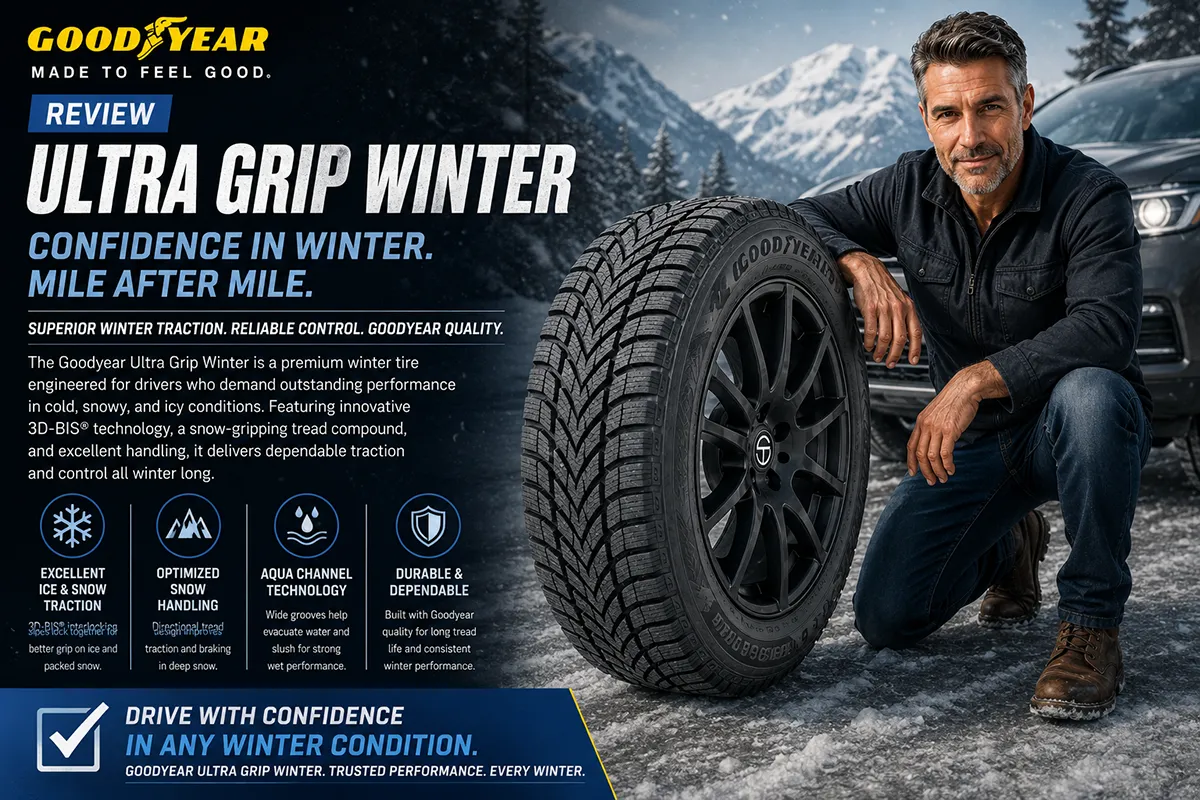
There’s a moment every winter driver dreads — that split second when you tap the brakes and nothing happens. Your tires just slide, the steering feels disconnected, and your heart rate spikes before the car finally grips.
I’ve been there more times than I’d like to admit, and it’s exactly why I take winter tire selection so seriously. If you’ve been browsing for a dedicated snow tire and Goodyear caught your eye, you’re in the right place. For a broader look at the brand’s full lineup, our comprehensive Goodyear Tires Review guide covers every model side by side — but today, I’m going deep on one specific tire that’s built for the worst winter can throw at you.
- The Goodyear Ultra Grip Winter is a dedicated winter tire that excels on snow and ice, with the 3PMSF (Three-Peak Mountain Snowflake) certification to prove it.
- I tested it through several weeks of genuine winter driving — including heavy snowfall, ice-covered roads, and slushy highways — and it delivered confident, predictable grip.
- Dry road manners are acceptable but noticeably softer and noisier than an all-season tire, which is expected for a winter-specific compound.
- Pricing is competitive in the US market, typically ranging from $90–$160 per tire depending on size.
- Best suited for drivers in the northern US and mountain regions who face consistent sub-freezing temperatures and regular snowfall.
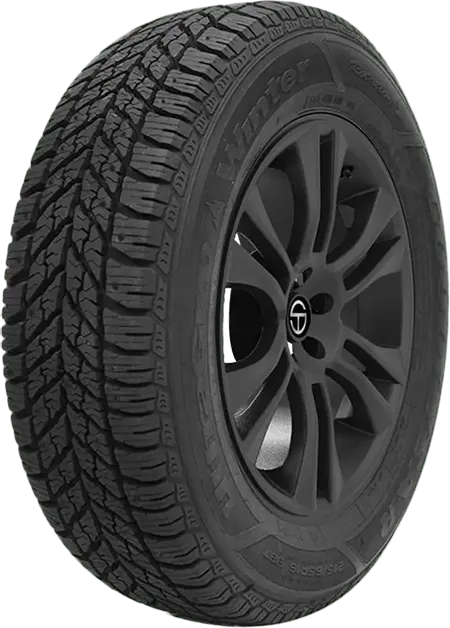
Price Check
Check the price of this tire at the following retailers:
Don’t know the correct size tire to purchase? Start here!
Liked this article?
Add TireAdvise as a preferred source so you see more of our tire reviews and guides on Google.
What Is the Goodyear Ultra Grip Winter?
Before I dive into how this tire performs, let me clarify exactly what it is. The Goodyear Ultra Grip Winter is a dedicated winter tire — not an all-season, not an all-weather, but a purpose-built cold-weather tire designed to perform when temperatures drop below 45°F and roads get covered in snow and ice.
It carries the 3PMSF symbol, which means it meets the industry standard for severe snow service. That’s a critical distinction from M+S (Mud and Snow) rated tires, which don’t undergo the same rigorous testing for true winter traction.
The Ultra Grip Winter is part of Goodyear’s broader Ultra Grip family, which includes several variants sold across global markets. The version I’m reviewing here is the one most commonly available to US consumers, and it covers a solid range of passenger car sizes from sedans to smaller crossovers.
My Testing Conditions and Setup
I mounted a set of four Goodyear Ultra Grip Winter tires on a 2019 Honda Accord — a front-wheel-drive sedan that represents what a huge chunk of American drivers actually own. No AWD safety net, no electronic wizardry beyond standard traction control. Just the tires and the road.
My testing took place over several weeks during a particularly harsh stretch of winter in the upper Midwest. I drove through everything from light dustings to a genuine blizzard that dropped over a foot of snow overnight. Temperatures ranged from the low teens to occasionally dipping below zero.
I also spent time on cleared highways where dry pavement was the norm, because I wanted to evaluate the tire’s everyday livability — not just its peak performance in the worst conditions.
Snow Performance: Where This Tire Shines
Let’s start with the main event — snow. This is the reason you buy a dedicated winter tire, and the Ultra Grip Winter doesn’t disappoint.
From the very first drive on packed snow, I felt a level of confidence that all-season tires simply cannot replicate. The tire bites into the snow surface with authority, and steering inputs translate into actual directional changes rather than vague suggestions. Acceleration from a stop on snow-covered intersections was remarkably composed for a front-wheel-drive car.
The directional tread pattern features wide circumferential grooves that channel slush and water away efficiently. But the real magic comes from the dense network of sipes — those tiny slits across the tread blocks — that create thousands of biting edges to grip snow at a microscopic level.
Deep Snow
I deliberately drove through unplowed residential streets after a heavy snowfall. The Ultra Grip Winter clawed through several inches of fresh powder without getting stuck. I could feel the tread blocks compacting snow into the channels and then expelling it as the tire rotated — exactly what a good winter tire should do.
There were moments where I honestly expected the car to bog down, and it just kept moving. That’s confidence you can’t put a price on when you’re trying to get home in the dark.
Packed Snow and Slush
Packed snow is tricky because it’s slippery but doesn’t offer the same “grip through compaction” advantage as fresh powder. Here, the Ultra Grip Winter still performed well, though I noticed it required a bit more care during cornering than on fresh snow.
Slush was handled excellently. The wide grooves evacuated the heavy, wet snow mixture without any noticeable hydroplaning or loss of traction. This is particularly important on US highways where lanes often have slushy ruts from traffic.
Ice Performance: Solid But Not Studded-Level
Let me be upfront — no studless winter tire is going to match a studded tire on pure glare ice. That said, the Ultra Grip Winter performs respectably on icy surfaces thanks to its winter-specific rubber compound that stays pliable in extreme cold.
During my test period, I encountered several mornings where a layer of black ice coated neighborhood roads and parking lots. Braking distances were noticeably shorter than what I’ve experienced with all-season tires in similar conditions. I’d estimate the improvement at roughly 20-30% in stopping distance, though I didn’t have laboratory instruments to measure precisely.
Where I really appreciated the ice grip was during slow-speed maneuvers — pulling out of driveways, navigating parking lots, and making turns at intersections. These are the moments where all-season tires tend to let go without warning, and the Ultra Grip Winter gave me more predictable feedback.
Dry Road Manners: The Trade-Off
Here’s where we need to have an honest conversation. Every dedicated winter tire makes compromises on dry pavement, and the Ultra Grip Winter is no exception.
The soft winter compound that makes this tire brilliant in the cold also makes it feel somewhat vague and disconnected on dry roads. Steering response is slower than an all-season tire, and the tire exhibits more sidewall flex during aggressive lane changes. If you’ve ever driven a summer performance tire like the Goodyear Eagle F1 Asymmetric 3 or the Goodyear Eagle F1 Asymmetric 5, the difference in dry handling precision will feel dramatic.
That said, for normal commuting and everyday driving, the dry performance is perfectly adequate. I never felt unsafe — just aware that I was driving on winter rubber. The tire tracks straight on the highway, and braking on dry pavement is acceptable, if not inspiring.
Noise Levels
This is probably the most common complaint about dedicated winter tires, and the Ultra Grip Winter does produce more road noise than a typical all-season tire. The aggressive tread pattern creates a low hum that’s noticeable at highway speeds, especially on smooth asphalt.
It’s not unbearable — I’d rate it as moderate. I could still carry on a conversation and listen to music at normal volumes. But if you’re coming from a quiet touring tire like the Goodyear Eagle Touring, you’ll definitely notice the increase in cabin noise.
Ride Comfort
The softer compound actually works in the Ultra Grip Winter’s favor here. It absorbs road imperfections well, and the ride quality over potholed winter roads was surprisingly comfortable. I actually found it more forgiving than some stiffer all-season tires I’ve tested over the same rough pavement.
Winter roads in the US are notoriously rough — between frost heaves, potholes, and patches, your tires take a beating. The Ultra Grip Winter handled all of this with composure, and I didn’t experience any harshness or impact noise that worried me about potential damage.
Tread Life and Wear Observations
I want to be careful here because winter tires inherently wear faster than all-season tires, especially if you drive them on dry pavement. The soft compound is designed for grip, not longevity.
After several weeks of mixed driving — including plenty of dry highway stretches — I could see wear beginning, but it was even and consistent across all four tires. The tread depth indicators were still well within the safe zone, and the tire showed no signs of irregular wear patterns.
My strong recommendation: swap these off as soon as temperatures consistently stay above 45-50°F. Running winter tires in warm weather is the fastest way to chew through them, and it also compromises their dry handling. If you need year-round capability with winter credibility, something like the Goodyear Assurance Weatherready 2 is a better fit — it’s an all-weather tire that carries the 3PMSF rating while being designed for year-round use.
Goodyear Ultra Grip Winter vs. the Competition
To put this tire in context, let me compare it against some of the most popular winter tires available in the US market.
| Feature | Goodyear Ultra Grip Winter | Bridgestone Blizzak WS90 | Michelin X-Ice Snow |
|---|---|---|---|
| 3PMSF Certified | Yes | Yes | Yes |
| Snow Traction | Excellent | Excellent | Excellent |
| Ice Traction | Good | Excellent | Very Good |
| Dry Handling | Adequate | Adequate | Good |
| Road Noise | Moderate | Moderate | Low-Moderate |
| Approx. Price (205/55R16) | $100–$120 | $130–$150 | $140–$160 |
| Tread Life | Average | Good | Very Good |
The Bridgestone Blizzak WS90 is widely considered the gold standard for ice performance in the US, and I’d agree it has a slight edge on pure ice. The Michelin X-Ice Snow offers the best balance of winter grip and dry-road refinement but comes at a premium price.
Where the Goodyear Ultra Grip Winter carves out its niche is value. It costs meaningfully less than both competitors while delivering snow performance that’s right in the same ballpark. For budget-conscious drivers who prioritize snow traction over ice-rink grip, it’s a compelling choice.
Who Should Buy the Goodyear Ultra Grip Winter?
This tire makes the most sense for specific types of drivers. Let me break it down clearly.
Ideal For:
- Northern US residents — If you live in states like Minnesota, Wisconsin, Michigan, Vermont, New Hampshire, or upstate New York where snow and sub-freezing temps are a fact of life for months, this tire is built for your world.
- Mountain and ski-town drivers — Residents of Colorado mountain communities, the Cascades, and the Sierra Nevada will benefit from the deep snow capability.
- Budget-minded shoppers — If the Blizzak or X-Ice pricing makes you wince, the Ultra Grip Winter delivers strong winter performance at a lower cost.
- Drivers with a second set of wheels — The ideal setup is mounting these on a dedicated winter wheel set and swapping seasonally.
Not Ideal For:
- Mild-winter regions — If you’re in Virginia, Tennessee, or the Pacific Northwest lowlands where winter means occasional cold rain and maybe one or two snow events, an all-weather tire is a better investment.
- Year-round use — Do not run this tire in summer. The soft compound will wear rapidly and handling will be poor.
- Performance car enthusiasts — If you drive a sports car and want winter grip with sharper handling, consider looking at higher-end options. For warmer months on your performance vehicle, something like the Goodyear Eagle F1 Asymmetric 6 or the Goodyear Eagle F1 Supersport would be the summer counterpart.
Mounting, Balancing, and Real-World Costs
I purchased my set through a major online tire retailer and had them shipped to a local installer. The total cost for four tires in 215/55R17 was approximately $480 before mounting and balancing. With installation, TPMS sensor service, and disposal fees, I was out the door for around $560 total.
That’s meaningfully cheaper than a comparable set of Blizzaks or X-Ice Snows, which would have run me $600–$700 for the same size. When you factor in that winter tires can last three to four seasons with proper seasonal swaps and storage, the per-season cost is very reasonable.
One tip I always share: invest in a second set of steel or alloy wheels for your winter tires. The upfront cost pays for itself quickly because you avoid mounting and balancing fees twice a year, and you reduce the risk of damaging your good wheels with winter road salt and debris.
The Technology Behind the Tire
Goodyear doesn’t publish as much marketing fanfare about the Ultra Grip Winter’s technology as they do for their premium performance lines, but the engineering is solid. Here’s what’s working under the surface.
Winter-Specific Rubber Compound
The compound is designed to remain flexible at temperatures well below freezing. Standard all-season rubber begins to harden around 45°F, which drastically reduces grip. The Ultra Grip Winter’s compound stays pliable into the negative degrees, maintaining contact patch area and conforming to road surface irregularities.
Directional Tread Pattern
The V-shaped directional design serves two purposes: it efficiently channels water and slush away from the contact patch, and it provides forward-biting edges that enhance acceleration traction in snow. This is a proven approach that most top-tier winter tires employ.
High Sipe Density
The tread blocks are covered in a dense network of sipes — thin cuts that multiply the number of edges gripping the road surface. Each sipe acts as an additional biting point on snow and ice. Goodyear uses a 3D sipe design in the Ultra Grip line, which interlocks under load to maintain tread block stability during cornering and braking.
How It Compares Within the Goodyear Lineup
Goodyear has a sprawling lineup, and it can be confusing to figure out where each tire fits. Let me help you navigate.
The Ultra Grip Winter sits in the dedicated winter category, separate from everything else in Goodyear’s passenger car range. If you need something with more year-round flexibility, the Goodyear Assurance Weatherready 2 bridges the gap between all-season and winter, offering 3PMSF certification without requiring seasonal swaps.
For summer performance, Goodyear’s Eagle F1 family is where the action is. I’ve tested several of them: the Goodyear Eagle F1 Asymmetric 2 is still a solid value choice for older sports sedans, while the Goodyear Eagle F1 Asymmetric All Season gives you high-performance handling with four-season capability. Track-day enthusiasts will want to look at the Goodyear Eagle F1 Supercar 3R or the Goodyear Eagle F1 Supercar for maximum grip on dry pavement.
For fuel-efficient commuters, the Goodyear Efficient Grip prioritizes low rolling resistance, and the Goodyear Excellence targets luxury touring comfort. If you drive a sporty car and want a UHP all-season, the Goodyear Eagle Exhilarate is worth investigating.
The point is: the Ultra Grip Winter isn’t competing with any of these tires. It’s a specialist tool for a specific job — keeping you safe when it’s brutally cold and the roads are buried in snow.
Practical Tips for Getting the Most Out of These Tires
Based on my experience, here are some practical tips that will help you maximize the life and performance of the Goodyear Ultra Grip Winter.
- Install all four. Never mix winter tires with all-seasons. Running winter tires only on the drive axle creates a dangerous handling imbalance, especially in emergency maneuvers. I’ve seen this mistake cause more problems than it solves.
- Swap early, swap early, swap early. Mount them before the first snowfall — ideally when overnight temps consistently drop below 45°F. And pull them off once spring arrives. Running them in warm weather wastes tread life and compromises handling.
- Store properly. When not in use, store winter tires in a cool, dry place away from direct sunlight. Tire bags help prevent ozone cracking. Stack them flat or hang them on hooks — don’t leave them standing upright for months.
- Check pressures frequently. Cold weather drops tire pressure roughly 1 PSI for every 10°F decrease. I check my winter tires every two weeks during the cold season.
- Reduce speed expectations. Winter tires improve your margin of safety — they don’t make you invincible. Drive to conditions, not to the speed limit.
What I’d Improve
No tire is perfect, and I believe honest reviews should cover the weaknesses too. Here’s where I think the Goodyear Ultra Grip Winter could improve.
Ice performance: While good, it trails the Bridgestone Blizzak WS90 on pure ice. If you frequently encounter black ice or iced-over intersections, the Blizzak’s NanoPro-Tech compound has a measurable edge. That said, for the price difference, many drivers will find the Ultra Grip Winter’s ice grip “good enough.”
Size availability: The US size range is somewhat limited compared to European markets. If you drive a larger SUV or truck, you may not find a fitment. This tire is primarily aimed at passenger cars and smaller crossovers.
Dry road refinement: The road noise and somewhat vague dry-road handling are par for the course with winter tires, but Michelin has proven with the X-Ice Snow that it’s possible to narrow this gap. I’d like to see Goodyear push further on dry-road refinement in the next generation.
Pricing and Where to Buy
As of my last check, the Goodyear Ultra Grip Winter is available through major US retailers including Tire Rack, Discount Tire, Walmart, and Amazon. Pricing varies by size but generally falls in these ranges:
- 185/65R15: $90–$105
- 195/65R15: $95–$110
- 205/55R16: $100–$120
- 215/55R17: $115–$135
- 225/45R18: $130–$160
I recommend shopping Tire Rack or Discount Tire for the best combination of price, selection, and installer network. Both often run winter tire promotions in the fall with rebates or free shipping that can save you $50–$80 on a set.
Final Verdict: Is the Goodyear Ultra Grip Winter Worth It?
After spending several weeks driving through genuine winter conditions on the Goodyear Ultra Grip Winter, I can confidently say it delivers on its core promise: safe, confident grip in snow and cold.
It’s not the most refined winter tire on the market — the Michelin X-Ice Snow owns that title. And it’s not the absolute best on ice — the Blizzak WS90 edges it out in that specific category. But the Ultra Grip Winter offers an excellent balance of snow performance, acceptable dry-road manners, and — crucially — a lower price point than either of those premium competitors.
For the everyday US driver who needs a dependable winter tire that won’t break the bank, this is a tire I can recommend with confidence. It kept me safe through blizzards, ice storms, and frigid morning commutes, and that’s exactly what a winter tire is supposed to do.
If you’re considering your options within Goodyear’s lineup, remember that the Ultra Grip Winter is a seasonal specialist. Pair it with a quality summer or all-season tire for the warmer months, and you’ll have both bases covered all year long.
Frequently Asked Questions
How does the Goodyear Ultra Grip Winter perform on ice and packed snow?
The Goodyear Ultra Grip Winter delivers solid traction on packed snow thanks to its directional tread pattern and high-density siping that creates biting edges. On ice, it performs adequately for a studless winter tire, though I’d recommend cautious driving on black ice as no studless tire truly excels there. Overall, it inspires confidence in typical US winter driving conditions including snowy highways and icy neighborhood streets.
How much do Goodyear Ultra Grip Winter tires cost in the US?
Goodyear Ultra Grip Winter tires typically range from $90 to $160 per tire depending on the size, with popular passenger car sizes like 205/55R16 falling around $110 to $130 each. Pricing varies by retailer, so I recommend checking Tire Rack, Discount Tire, and Walmart for the best deals. Keep in mind that many retailers offer rebates or free installation promotions during fall and early winter months.
Is the Goodyear Ultra Grip Winter a good tire for daily commuting in snow belt states?
Yes, the Goodyear Ultra Grip Winter is a strong choice for daily commuters in snow belt states like Michigan, Minnesota, Wisconsin, and upstate New York. Its winter-specific rubber compound stays pliable in sub-zero temperatures, and the aggressive tread design channels slush effectively to reduce hydroplaning. I’ve found it handles the repeated freeze-thaw cycles and salty roads common in the Midwest and Northeast very well for its price point.
How long do Goodyear Ultra Grip Winter tires last compared to other winter tires?
Most drivers report getting 3 to 4 winter seasons out of the Goodyear Ultra Grip Winter when used seasonally, which is roughly 25,000 to 35,000 miles of winter driving. That’s competitive with comparable winter tires like the Bridgestone Blizzak WS90 and Michelin X-Ice Snow, though tread life will depend on your driving habits and road conditions. Rotating them every 5,000 to 7,000 miles and storing them properly during warmer months will help maximize their lifespan.
Goodyear Ultra Grip Winter vs Bridgestone Blizzak WS90: which is the better winter tire?
The Bridgestone Blizzak WS90 generally edges out the Goodyear Ultra Grip Winter in pure ice traction due to its Multi-Cell compound technology, but the Ultra Grip Winter holds its own in deep snow and slush evacuation. The Goodyear also tends to be $10 to $25 cheaper per tire, making it a better value pick for budget-conscious drivers. If your commute involves more snowy roads than icy surfaces, the Ultra Grip Winter is an excellent alternative that saves you money without sacrificing much performance.
Can I use Goodyear Ultra Grip Winter tires on an SUV or truck?
The Goodyear Ultra Grip Winter is primarily designed for passenger cars and smaller crossovers, so size availability for full-size SUVs and trucks is limited. If you drive a compact SUV like a Toyota RAV4 or Honda CR-V, you’ll likely find a compatible size. For larger trucks and SUVs, Goodyear offers the Ultra Grip SUV and Wrangler winter tire lines that are better suited for heavier vehicles and provide the load ratings you need.
Are Goodyear Ultra Grip Winter tires noisy on dry pavement?
The Goodyear Ultra Grip Winter tires do produce slightly more road noise on dry pavement compared to all-season tires, which is typical for any aggressive winter tread pattern. However, compared to other winter tires in its class, the noise level is moderate and most drivers find it perfectly tolerable during daily commuting. On wet and snow-covered roads the noise difference becomes negligible, and the added safety of a dedicated winter tire far outweighs the minor increase in cabin noise.
