

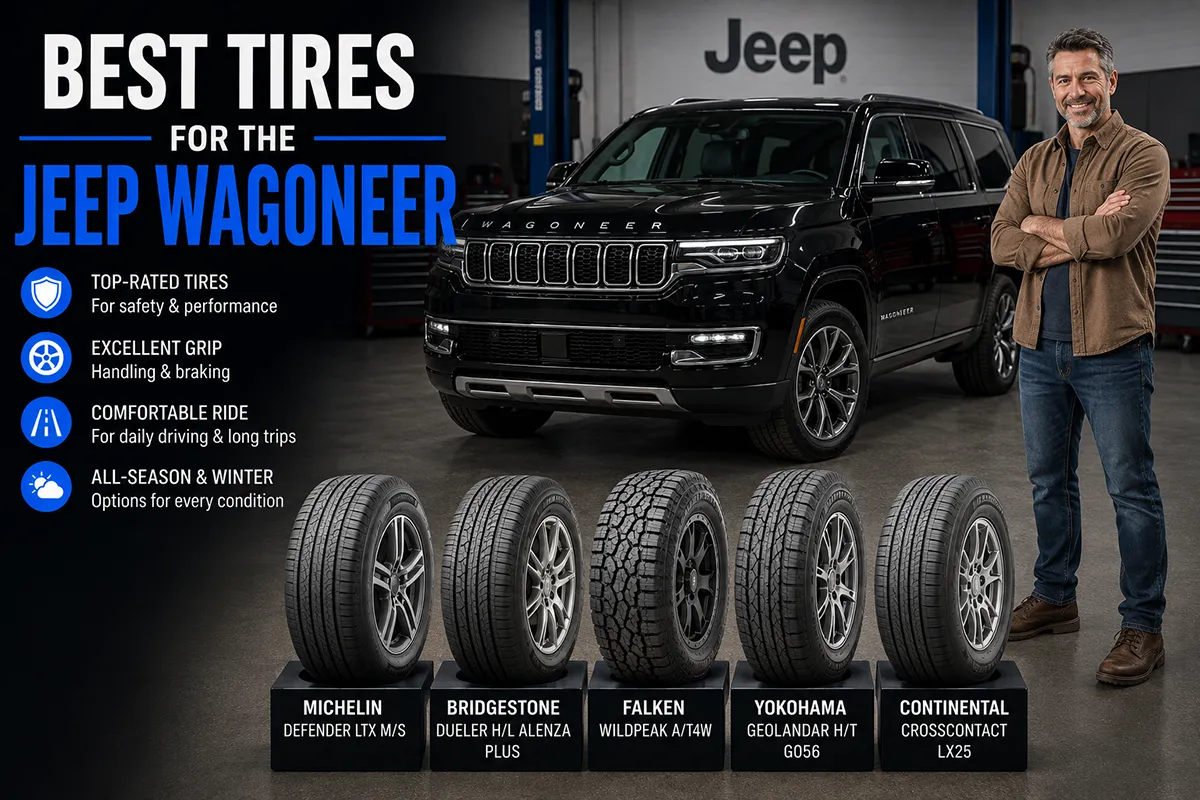
Jeep now sells two genuinely different vehicles under the Wagoneer name. This guide covers the traditional gas-powered Wagoneer and Grand Wagoneer — we’ll flag where the separate, all-electric Wagoneer S diverges.
The trim structure has also changed for 2026, dropping the old Series I/II/III naming for conventional trim names. This guide is built around the current lineup.
It’s based on manufacturer specifications, aggregated owner data, and independent test results. Here’s what actually holds up, by priority.
- Best overall: Michelin Defender LTX M/S.
- Best premium comfort: Bridgestone Dueler H/L Alenza Plus.
- Best for a smooth ride: Continental CrossContact LX25.
- Best all-terrain: BFGoodrich All-Terrain T/A KO3.
- Best for towing: Goodyear Wrangler All-Terrain Adventure with Kevlar.
- Best performance: Michelin Pilot Sport 4 SUV.
- Best dedicated winter: Bridgestone Blizzak WS90.
- Full sizing by current trim and the Wagoneer vs. Wagoneer S distinction are below.
Liked this article?
Add TireAdvise as a preferred source so you see more of our tire reviews and guides on Google.
Two Different Vehicles Share the Wagoneer Name — Here’s Why That Matters
This is worth addressing directly, since it’s a real, current source of confusion most competing guides skip past.
The traditional Wagoneer and Grand Wagoneer are gas-powered, body-on-frame luxury SUVs that returned to Jeep’s lineup in 2021, sharing mechanical roots with the Ram 1500. That’s what this guide covers.
Wagoneer S is a genuinely separate vehicle — an all-electric SUV that launched for 2024 on a completely different platform, with different mechanicals and sizing. If you’re shopping tires for a Wagoneer S specifically, the recommendations in this guide don’t apply.
The trim structure has also genuinely changed. Jeep dropped the confusing Series I, Series II, and Series III naming for 2026 in favor of conventional trim names: Base, Upland, 85th Anniversary Edition, Limited, Limited Altitude, Limited Reserve, Summit, Summit Obsidian, and Summit Reserve — a real, current update most competing guides still don’t reflect.
How These Were Evaluated
This comparison draws on manufacturer specifications, aggregated owner reports, UTQG ratings, and independent traction and tread-wear testing for each tire.
We cross-referenced everything against the gas Wagoneer and Grand Wagoneer’s real factory sizing across current trims.
Particular weight went to how each tire’s real-world character matches how Wagoneer owners actually drive. This is a genuinely heavy vehicle — 5,960 to over 6,400 pounds depending on configuration — with real towing capacity up to nearly 10,000 pounds, so load capacity and stability carry real weight here.
Where specific figures or comparisons are cited, the source is noted rather than presented as a personal measurement.
Quick Comparison: 11 Best Tires for the Jeep Wagoneer
| Tire | Best For | Approx. Price/Tire | 3PMSF Rated | Warranty |
|---|---|---|---|---|
| Michelin Defender LTX M/S | Best overall | $220–$270 | No | 70,000 mi |
| Bridgestone Dueler H/L Alenza Plus | Premium comfort | $220–$270 | No | 80,000 mi |
| Continental CrossContact LX25 | Smooth, quiet ride | $200–$250 | No | 70,000 mi |
| BFGoodrich All-Terrain T/A KO3 | Best all-terrain | $240–$310 | Yes | 50,000 mi (DT sizes) |
| Goodyear Wrangler All-Terrain Adventure with Kevlar | Towing and off-road durability | $230–$290 | Yes | Not specified |
| Bridgestone Alenza A/S Ultra | Highway comfort | $210–$260 | No | 70,000 mi |
| Michelin Pilot Sport 4 SUV | Best performance | $230–$290 | No | Not specified |
| Pirelli P Zero PZ4 Luxury | Luxury performance | $240–$310 | No | Not specified |
| Falken Wildpeak A/T3W | Value all-terrain | $180–$230 | Yes | 60,000–65,000 mi |
| General Grabber HTS60 | Budget-friendly | $150–$200 | No | Not specified |
| Bridgestone Blizzak WS90 | Dedicated winter | $170–$230 | Yes | Seasonal (no summer warranty) |
Prices are street prices at major online retailers for common current sizes (275/55R20 and 285/45R22) as of mid-2026. Expect regional and seasonal swings.
Jeep Wagoneer Tire Sizes by Current Trim
Confirm the exact size on the driver’s door jamb sticker before ordering — and confirm you’re shopping for the gas Wagoneer, not the electric Wagoneer S.
Base and mid-range trims commonly run 275/55R20 as the standard factory fitment.
Upper Limited and Summit-level trims typically step up to 285/45R22, with some Grand Wagoneer L configurations offering an alternate 275/65R18 with an all-terrain package.
Load index matters more than usual on the Wagoneer given its real weight and towing capacity. Look for a load index of at least 116–118, supporting roughly 2,750–3,000 pounds per tire, and never select a lower load rating than what’s specified for your trim.
Should You Even Replace Your Factory Tires?
Jeep has fitted the Wagoneer with a genuine mix of factory tires depending on trim and model year, including Goodyear Eagle Touring, Bridgestone Dueler H/L Alenza, and Firestone Destination A/T2 — plus a Yokohama Geolandar A/T G015 on all-terrain-package Grand Wagoneers, according to real owner reports.
If your factory tires are wearing evenly and the ride still feels composed, replacing like-for-like with a comparable tire in the same category is a reasonable, low-risk call.
1. Michelin Defender LTX M/S: Best Overall

Price Check
Check the price of this tire at the following retailers:
This tire delivers genuinely strong performance across every category that matters for Wagoneer owners.
Michelin’s EverTread compound is specifically engineered to withstand the considerable weight of luxury SUVs, and with a treadwear rating of 800, real owner reports commonly describe 70,000-plus miles of service — impressive for a vehicle this size.
Comfort is a real strength too. MaxTouch Construction distributes driving forces evenly, genuinely reducing road noise while improving tread life, and a symmetric tread pattern with independent blocks enhances wet traction without compromising the smooth ride Wagoneer owners expect.
Backed by a 70,000-mile warranty, this is the strongest all-around pick for owners who want dependable performance without compromise.
Pros: Genuine even wear and consistent performance, strong 70,000-mile warranty, confident stability for a heavy SUV.
Cons: Premium price, not built for serious off-road use.
2. Bridgestone Dueler H/L Alenza Plus: Best Premium Comfort
Price Check
Check the price of this tire at the following retailers:
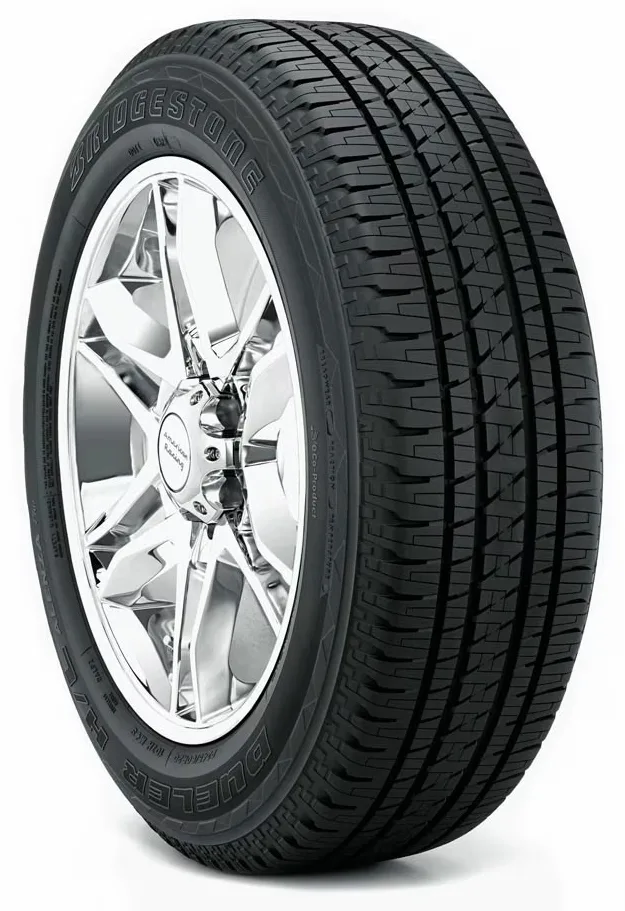
This tire is specifically designed for premium SUVs like the Wagoneer, and it shows in a genuinely refined ride.
A symmetric tread pattern with a continuous center rib delivers precise steering response — genuinely important for maneuvering a vehicle of the Wagoneer’s size. With an impressive 800 treadwear rating, real owner reports describe strong longevity.
Ride refinement is where this tire truly excels. An optimized casing shape and specialized rubber compounds significantly reduce vibration and road noise, and wider tread blocks enhance stability during highway cruising — a common scenario for Wagoneer owners on long road trips.
Backed by a 70,000-mile warranty, this tire delivers reliable wet traction through a specialized silica compound without compromising dry performance.
Pros: Genuinely quiet, refined ride, strong 70,000-mile warranty, confident highway stability.
Cons: Premium price, not built for off-road use.
3. Continental CrossContact LX25: Best for a Smooth, Quiet Ride
Price Check
Check the price of this tire at the following retailers:
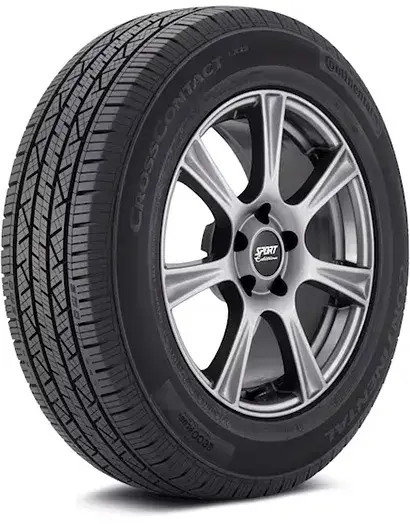
This tire delivers a genuine balance of luxury and all-season capability, with Continental’s EcoPlus Technology providing real, lower rolling resistance — a meaningful fuel-economy benefit for a vehicle this heavy.
Comfort is a real, standout strength. ComfortRide Technology incorporates an absorption layer that genuinely isolates the cabin from road imperfections, and with a treadwear rating of 750, real owner reports describe strong durability without sacrificing comfort.
Wide circumferential grooves and numerous sipes provide confident handling in light snow and rain — genuinely useful for Wagoneer families who encounter varying weather.
Backed by a 70,000-mile warranty for T-rated sizes, this tire delivers the refined highway experience Wagoneer owners expect.
Pros: Genuine fuel-efficiency benefit for a heavy SUV, real comfort isolation from road imperfections, confident light-snow capability.
Cons: Premium price, not built for off-road use.
4. BFGoodrich All-Terrain T/A KO3: Best All-Terrain

Price Check
Check the price of this tire at the following retailers:
BFGoodrich retired the well-regarded KO2 in favor of the KO3, and for Wagoneer owners who genuinely want a do-everything all-terrain tire, the successor represents a real step forward.
CoreGard Max sidewall technology adds reinforced rubber that resists splitting and bruising — genuinely important for a heavy luxury SUV like the Wagoneer, especially when aired down for off-road driving. Serrated shoulder design helps the tire dig into loose surfaces for real grip when climbing.
On-road, the KO3 carries over the KO2’s surprisingly composed highway manners, with moderate rather than excessive road noise for such an aggressive tread — a real accomplishment given the Wagoneer’s size and weight.
Warranty coverage sits at 50,000 miles on DT-branded sizes, and the tire carries genuine 3PMSF certification for real winter capability.
Pros: Genuine off-road toughness with reinforced sidewalls for a heavy SUV, real 3PMSF winter certification, surprisingly composed highway ride.
Cons: Premium price, more road noise than highway-focused options.
5. Goodyear Wrangler All-Terrain Adventure with Kevlar: Best for Towing and Off-Road Durability
Price Check
Check the price of this tire at the following retailers:
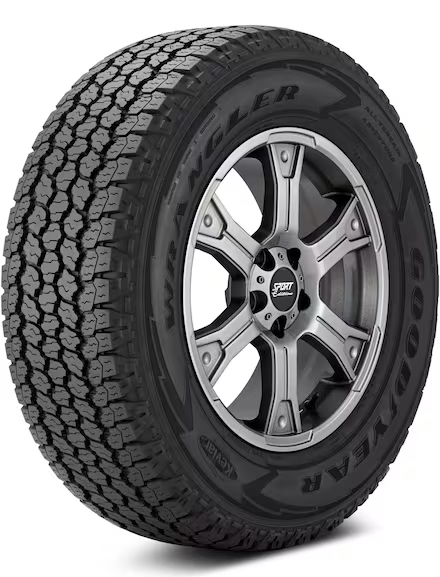
This tire offers a genuine balance of off-road capability and on-road refinement that complements the Wagoneer’s dual nature well.
Kevlar fibers in the construction provide real, outstanding puncture resistance while keeping weight manageable — genuinely valuable for a heavy vehicle that may also be towing. An open-shoulder tread design excels at self-cleaning, preventing mud and debris from clogging the tread and reducing traction.
Durawall Technology enhances sidewall durability without making the ride harsh — particularly important for the Wagoneer, since its considerable weight can put real extra stress on tire sidewalls during off-road maneuvers or heavy loads.
Deep tread and multi-faceted tread blocks provide genuine grip on loose surfaces, while the tread pattern’s design minimizes on-road noise — critical for maintaining the Wagoneer’s luxury feel.
Pros: Genuine puncture resistance for towing and off-road use, real sidewall durability under heavy loads, confident traction across varied terrain.
Cons: Premium price, more road noise than pure highway tires.
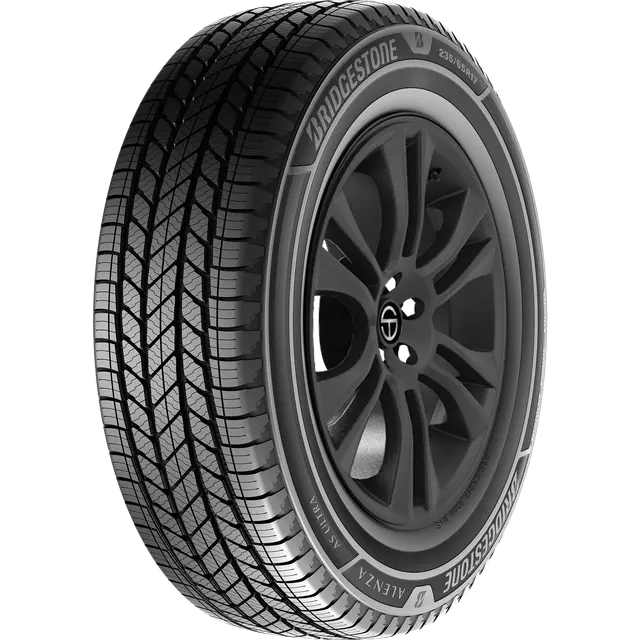
6. Bridgestone Alenza A/S Ultra: Best Highway Comfort
Price Check
Check the price of this tire at the following retailers:
This tire represents genuine pinnacle-level highway comfort for luxury SUVs like the Wagoneer.
Innovative noise-reducing technology uses specialized tread patterns to genuinely minimize road noise, and Bridgestone’s specialized rubber compounds absorb road imperfections with real efficiency, transforming even rough highways into a smoother ride.
Load-carrying capacity is a real strength — this tire is designed specifically for premium SUVs, handling the Wagoneer’s substantial weight with ease while maintaining its comfort characteristics.
Backed by a 70,000-mile tread warranty, this tire demonstrates genuine confidence in longevity, making it a strong investment for high-mileage drivers.
Pros: Genuinely absorbent, smooth highway ride, real load capacity for a heavy SUV, strong 70,000-mile warranty.
Cons: Premium price, not built for off-road use.
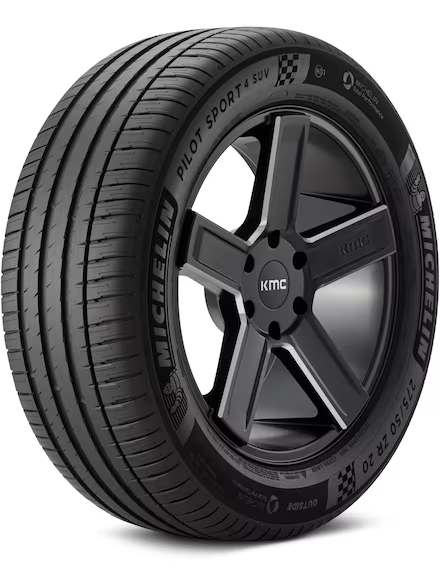
7. Michelin Pilot Sport 4 SUV: Best Performance
Price Check
Check the price of this tire at the following retailers:
This tire genuinely transforms the driving dynamics of the Wagoneer with remarkable precision that belies the vehicle’s size.
Michelin’s Dynamic Response Technology ensures real, optimal contact with the road during aggressive cornering, and an asymmetric tread with rigid outer shoulder blocks significantly improves steering response — genuinely valuable when maneuvering the Wagoneer through winding roads.
Grip is a real strength. A compound with silica and functional elastomers provides exceptional traction on both dry and wet surfaces, translating to genuinely shorter stopping distances and more confident handling.
Real owner reports describe 20,000–25,000 miles of tread life — a respectable figure given the performance category, and Wagoneer drivers immediately notice improved steering feedback that makes the substantial SUV feel more nimble than expected.
Pros: Genuine handling transformation for a heavy SUV, confident wet and dry grip, improved steering feedback.
Cons: Shorter tread life than touring-focused options, premium price.
8. Pirelli P Zero PZ4 Luxury: Best Luxury Performance
This tire delivers genuine Italian engineering specifically designed for premium high-performance SUVs like the Wagoneer.
An asymmetric tread with three wide longitudinal grooves effectively channels water away from the contact patch, meaningfully reducing hydroplaning risk even at highway speeds, and outer shoulder blocks with minimal void areas maximize rubber-to-road contact during cornering.
Managing the Wagoneer’s substantial weight during dynamic driving is a real strength — specialized sidewall design reduces flex during aggressive maneuvers while still providing enough compliance for daily comfort.
Pirelli’s noise-canceling system, a foam layer inside the tire, genuinely reduces road noise transmission by up to 15%, maintaining the Wagoneer’s quiet cabin even with performance-oriented rubber mounted.
Pros: Genuine handling precision for a heavy luxury SUV, real noise-reduction technology, confident wet-weather grip.
Cons: Shorter tread life than touring options (18,000–22,000 miles typical), premium price.
9. Falken Wildpeak A/T3W: Best Value All-Terrain

Price Check
Check the price of this tire at the following retailers:
This tire delivers genuine all-terrain capability without the steep cost of premium competitors, typically priced 20–30% lower.
A rugged tread design performs admirably in light off-road situations while maintaining real good on-road manners — a genuine balance the Wagoneer’s dual personality demands. The tire carries real 3PMSF certification, making it truly all-season capable.
Heat diffuser technology in the lower sidewall protects internal components during demanding conditions, and a silica-enriched compound resists wear impressively for the price, with many owners reporting 50,000-plus miles of service.
For Wagoneer owners who want genuine off-road confidence without premium pricing, this delivers one of the strongest price-to-performance ratios in the category.
Pros: Genuine off-road capability at a meaningfully lower price, real 3PMSF winter certification, respectable durability.
Cons: Doesn’t match premium all-terrain tires in extreme conditions.
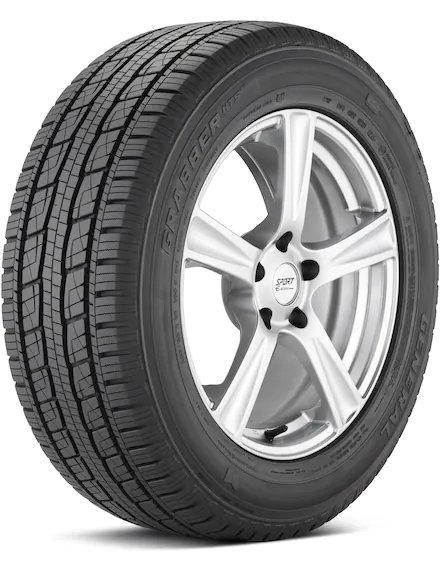
10. General Grabber HTS60: Best Budget-Friendly
Price Check
Check the price of this tire at the following retailers:
This tire delivers genuine comfort and dependability without sacrificing essential performance attributes, at a price point considerably lower than premium alternatives.
Real wet traction and a comfortable ride are the tire’s core strengths, and respectable tread life rounds out a genuinely well-balanced budget package for Wagoneer owners who prioritize on-road comfort and longevity.
This is a highway-terrain tire, not an all-terrain option, so it’s the strongest pick for Wagoneer owners who stick to pavement and want dependable value without a performance-tire price tag.
Pros: Genuine value with a comfortable, dependable ride, respectable wet traction, considerably lower price than premium options.
Cons: Not built for off-road use, doesn’t match premium tires in extreme conditions.
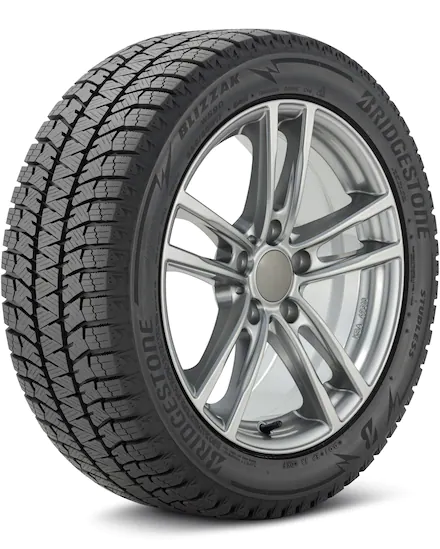
11. Bridgestone Blizzak WS90: Best Dedicated Winter
Price Check
Check the price of this tire at the following retailers:
Nothing in this comparison matches this tire once conditions turn to genuine ice, based on independently reported braking and traction testing across the winter category.
Bridgestone’s MultiCell compound technology, with bite particles that dig into ice and snow, provides real, exceptional traction on frozen surfaces — even more valuable given how much the Wagoneer’s substantial weight can work against it on slick roads.
An aggressive directional tread pattern channels snow and slush away from the contact patch, maintaining grip when it matters most, and real owner reports describe confident handling and shorter stopping distances in winter conditions.
This is a seasonal tire that needs to come off once temperatures climb consistently above 45°F. For Wagoneer owners anywhere with real, sustained winter conditions, running this seasonally on a second set of wheels is the single biggest safety upgrade available for a vehicle this heavy.
Pros: Best-in-comparison ice and snow traction, genuinely important safety margin for a heavy SUV, confident real-world braking performance.
Cons: Seasonal use only, no summer tread warranty, premium price.
Maintaining Wagoneer Tires
Check pressure at least twice monthly, typically 35–40 PSI, but always confirm against the door jamb sticker rather than the tire’s maximum sidewall pressure. The Wagoneer’s weight makes it genuinely more sensitive to pressure fluctuations than lighter vehicles — underinflation by just 10% can reduce tire lifespan by up to 15%.
Rotate every 5,000 miles, more frequently than the typical 5,000–7,500-mile recommendation for lighter vehicles, especially if you regularly tow or carry heavy loads.
Have alignment checked every 15,000 miles, or sooner after hitting a significant pothole. Watch for uneven shoulder wear, which often signals alignment issues under the Wagoneer’s heavy load.
Watch for genuine replacement signs: tread depth below 4/32″ (consider replacement at this threshold rather than waiting for the legal 2/32″ minimum, given the Wagoneer’s weight), uneven wear patterns, visible sidewall bulges or cracks, or decreased wet-weather performance.
Choosing the Right Tire for a Jeep Wagoneer
Match tire category to trim and how it’s actually driven. Base and mid-range trim owners generally benefit most from comfort-focused picks like the Bridgestone Dueler H/L Alenza Plus or Continental CrossContact LX25. Owners who tow or genuinely use off-road capability get real value from the BFGoodrich KO3 or Goodyear Wrangler All-Terrain Adventure with Kevlar.
Don’t skip winter tires facing real cold. The Bridgestone Blizzak WS90 delivers a genuine, safety-relevant traction advantage no all-season tire in this comparison fully replicates — especially important given the Wagoneer’s weight.
Confirm which Wagoneer you own before shopping. The gas Wagoneer/Grand Wagoneer and the electric Wagoneer S run genuinely different sizing — don’t assume specs for one apply to the other.
Budget doesn’t have to mean giving up real performance. The Falken Wildpeak A/T3W and General Grabber HTS60 both deliver genuine value without sacrificing core safety.
Frequently Asked Questions
Is the Jeep Wagoneer the same as the Wagoneer S?
No. They’re genuinely different vehicles. The Wagoneer and Grand Wagoneer are traditional gas-powered, body-on-frame luxury SUVs, while the Wagoneer S is a separate, all-electric model that launched for 2024 on a different platform with different sizing.
What size tires does my Jeep Wagoneer need?
It depends on trim. Base and mid-range trims commonly run 275/55R20. Upper Limited and Summit-level trims typically run 285/45R22, with some Grand Wagoneer L configurations offering an alternate 275/65R18 all-terrain package. Always check the door jamb sticker for your exact specification.
Has the Wagoneer trim lineup changed recently?
Yes. Jeep dropped the confusing Series I, Series II, and Series III naming for 2026 in favor of conventional trim names: Base, Upland, 85th Anniversary Edition, Limited, Limited Altitude, Limited Reserve, Summit, Summit Obsidian, and Summit Reserve.
How often should I rotate the tires on my Jeep Wagoneer?
Every 5,000 miles — more frequently than lighter vehicles, given the Wagoneer’s substantial weight, especially if you tow or carry heavy loads regularly.
Are all-season tires good enough for winter driving in my Wagoneer?
All-season tires handle light winter conditions adequately, but for severe weather with regular snowfall or temperatures consistently below 45°F, a dedicated winter tire like the Bridgestone Blizzak WS90 delivers meaningfully better traction and safety — genuinely more important given the Wagoneer’s weight.
What’s the best budget-friendly tire option for the Jeep Wagoneer?
The General Grabber HTS60 and Falken Wildpeak A/T3W both deliver genuine value, with respectable performance at prices well below premium alternatives.
How do I know when it’s time to replace my Jeep Wagoneer’s tires?
Watch for tread depth below 4/32 of an inch (consider replacement at this threshold given the Wagoneer’s weight, rather than waiting for the legal 2/32″ minimum), uneven wear patterns, visible sidewall cracks or bulges, excessive vibration while driving, or decreased performance in wet conditions.
