

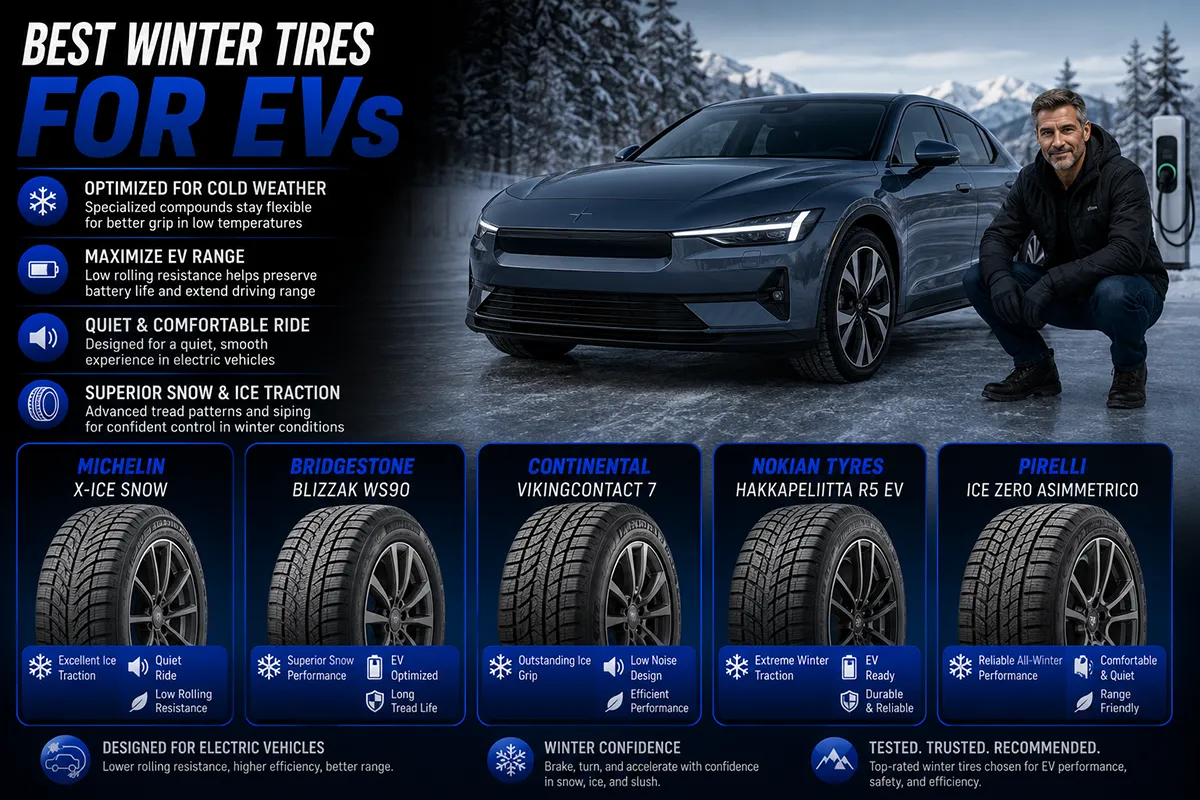
EVs demand more from a winter tire than a gas car does — the battery pack’s added weight, instant torque that can overwhelm a tire built for a lighter vehicle, and a very real trade-off between winter grip and driving range all matter here in ways they simply don’t for a combustion car.
This guide is built from manufacturer specifications, aggregated owner data, and independent test results, weighted specifically toward genuine EV-engineering rather than a standard winter tire that happens to fit. Here’s what actually holds up, by priority.
- Best overall: Michelin X-Ice Snow.
- Best widely available in the US: Bridgestone Blizzak WS90.
- Best for extreme cold, genuinely EV-engineered: Nokian Hakkapeliitta 10 EV.
- Best handling: Continental VikingContact 7.
- Best for performance EVs: Pirelli Winter Sottozero 3.
- Best for heavy EVs and trucks: Toyo Observe GSi-6 HP.
- Best all-weather, no seasonal swap: Michelin CrossClimate2.
- Full guidance on the HL load rating, real range-impact data, and how to check EV-specific fitment are below.
Liked this article?
Add TireAdvise as a preferred source so you see more of our tire reviews and guides on Google.
Why Electric Vehicles Need Different Winter Tires
EVs carry a real, significant weight disadvantage compared to a similarly sized gas car — a Tesla Model 3 weighs roughly 1,000 pounds more than a comparable sedan, almost entirely from the battery pack running along the floor. That extra mass genuinely increases stress on every tire, and it’s a big part of why EVs tend to wear tires meaningfully faster than combustion vehicles, independent of winter conditions.
Instant torque delivery compounds the problem specifically in winter. A gas engine builds power gradually; an electric motor delivers peak torque the moment you press the accelerator, which can easily overwhelm a standard winter tire’s grip on snow or ice, causing wheelspin a gas car wouldn’t produce at the same throttle input.
Regenerative braking adds another layer: because lifting off the accelerator applies real braking force through the same wheels, tires with inadequate winter grip can behave unpredictably during regen events on slippery surfaces.
Then there’s range. Cold temperatures alone can reduce EV efficiency by 20–30%, and winter tires — with their softer compounds and deeper tread — typically add another 10–20% rolling-resistance penalty on top of that.
Genuinely EV-engineered winter tires address this directly with low-rolling-resistance compounds and constructions specifically designed to claw back some of that range loss without giving up the grip that’s the entire point of running a winter tire in the first place.
Understanding the HL (High Load) Rating
This is a genuinely useful, current piece of tire-industry knowledge that most competing EV winter-tire guides still don’t cover. For years, the standard way to indicate a tire’s higher weight capacity was the XL (Extra Load) designation.
More recently, manufacturers have introduced a newer HL (High Load) rating specifically developed with heavier EVs in mind — HL-rated tires carry more weight than a comparable XL tire at the same inflation pressure, which matters directly for EVs whose battery weight pushes many vehicles into a heavier load category than their body style would suggest.
Not every EV requires an HL-rated tire, and plenty of lighter EVs are perfectly served by a properly speced XL tire. But if your specific EV’s factory tire placard calls for HL-rated rubber, that’s not a suggestion — replacing with a lower load-rated tire, even one that physically fits, can mean running the tire outside its safe capacity.
Always check your door jamb placard for the exact load index and rating your EV requires before buying, regardless of which specific tire model you choose from this list.
Key Features to Look for in EV Winter Tires
Low rolling resistance genuinely matters more here than on a gas car, since every bit of resistance draws directly from the battery rather than being masked by an already-inefficient combustion process.
Appropriate load rating — XL or HL depending on your specific EV — ensures the tire can safely carry the vehicle’s real weight without premature wear or reduced handling.
Noise-reduction technology addresses a real, EV-specific problem: without engine noise to mask it, winter tire road noise becomes far more noticeable in an EV cabin, and several manufacturers now build acoustic foam or optimized pitch sequencing specifically to counter this.
Winter-specific rubber compounds that stay flexible in extreme cold while still handling the EV’s weight and torque are the foundation everything else builds on.
Quick Comparison: 11 Best Winter Tires for EVs
| Tire | Best For | Approx. Price/Tire | 3PMSF Rated | Est. Range Impact |
|---|---|---|---|---|
| Michelin X-Ice Snow | Best overall | $180–$250 | Yes | ~10–15% |
| Bridgestone Blizzak WS90 | Widely available in the US | $150–$210 | Yes | ~12–18% |
| Nokian Hakkapeliitta 10 EV | Extreme cold, EV-specific | $200–$280 | Yes | Not independently verified |
| Continental VikingContact 7 | Best handling | $170–$230 | Yes | ~10–13% |
| Pirelli Winter Sottozero 3 | Performance EVs | $220–$300 | Yes | Not independently verified |
| Toyo Observe GSi-6 HP | Heavy EVs and trucks | $190–$260 | Yes | Not independently verified |
| Goodyear UltraGrip Performance+ | Range preservation | $180–$240 | Yes | ~8–12% (manufacturer claim) |
| Hankook Winter i*cept evo3 | Noise reduction | $160–$220 | Yes | Not independently verified |
| Yokohama iceGUARD iG53 | Budget option | $130–$190 | Yes | ~10–12% |
| General AltiMAX Arctic 12 | Widely-available budget pick | $110–$160 | Yes | Not independently verified |
| Michelin CrossClimate2 | All-weather, no seasonal swap | $180–$250 | Yes | Low (all-weather tire, no seasonal penalty) |
Prices are street prices at major online retailers for common EV sizes (235/45R18 and 245/40R20) as of mid-2026 — larger EV truck and SUV sizes run above these ranges, and expect regional and seasonal swings. Where a specific range-impact percentage isn’t independently verified, that’s noted rather than repeating an unconfirmed manufacturer figure as fact.
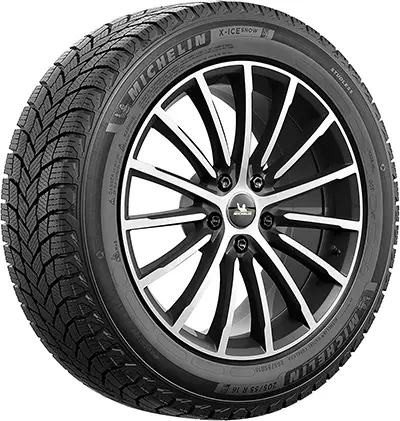
1. Michelin X-Ice Snow: Best Overall
Price Check
Check the price of this tire at the following retailers:
This tire delivers a genuinely strong balance of ice and snow traction, efficiency, and durability that makes it the strongest all-around pick for EV owners. Michelin’s FleX-Ice 2.0 compound remains pliable in extreme cold, and the V-shaped tread pattern with 3D sipes creates real, documented biting edges that grip snow and ice confidently.
Rolling resistance is a genuine strength here — Michelin has optimized the compound and tread specifically to reduce energy loss as the tire rotates, and real owner reports commonly describe range reduction in the 10–15% range, meaningfully better than the 20-plus percent some winter tires cost an EV.
EverGrip Technology helps maintain performance as the tire wears, and PIANO Noise Reduction Tuning uses variable pitch tread blocks to keep road noise well-controlled in an EV’s quiet cabin. Backed by a rating for up to 40,000 miles of winter-season use, this is the strongest overall pick for most EV owners.
Pros: Genuine ice and snow traction, comparatively low range impact, well-controlled road noise for an EV cabin.
Cons: Premium price.
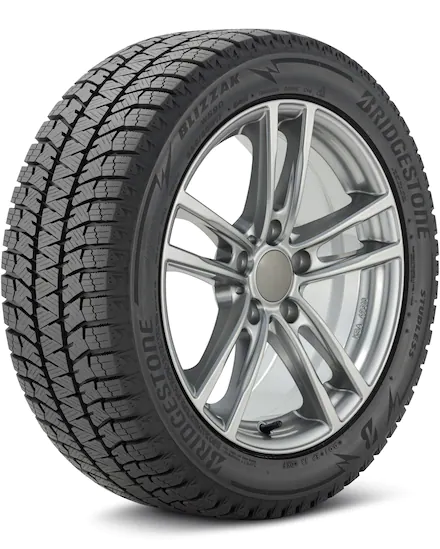
2. Bridgestone Blizzak WS90: Best Widely Available in the US
Price Check
Check the price of this tire at the following retailers:
For EV owners who want a tire that’s easy to find at mainstream US tire retailers rather than a specialty import, this is the strongest pick. Bridgestone’s MultiCell compound technology actively removes the thin water layer that forms on ice, and thousands of microscopic bite particles combined with deep, zigzag sipes deliver real, independently documented traction — stopping distances up to 40% shorter than typical all-season tires on packed snow.
The directional tread pattern with wide circumferential grooves efficiently channels slush and water away from the contact patch, and the specialized compound stays flexible well below freezing when lesser tires stiffen and lose grip.
This isn’t marketed as an EV-specific tire the way some competitors are, but its genuine winter performance and broad US size availability across common EV fitments make it a practical, dependable choice.
For EV owners anywhere with real, sustained winter conditions, this is the strongest widely stocked pick.
Pros: Genuinely strong ice and snow traction, widely available at mainstream US retailers, proven track record.
Cons: Not marketed with EV-specific range-preservation engineering the way some newer competitors are.
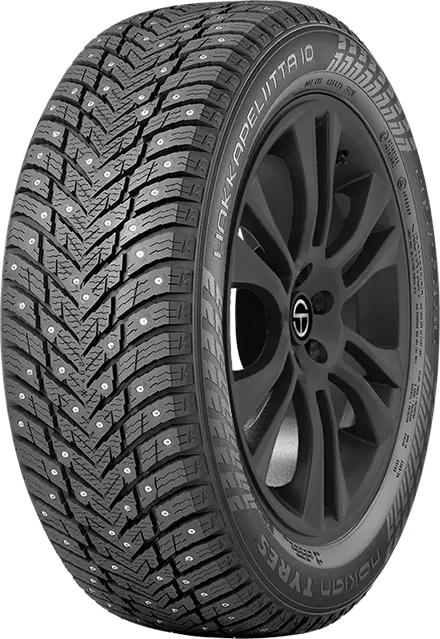
3. Nokian Hakkapeliitta 10 EV: Best for Extreme Cold, Genuinely EV-Engineered
Price Check
Check the price of this tire at the following retailers:
This is a rare case of a tire actually built from the ground up for electric vehicles rather than adapted from an existing winter tire — Nokian designed the Hakkapeliitta 10 EV specifically around EV weight, torque, and range considerations, and it shows in the details.
New tread compounds deliver real, increased traction across a wide range of cold and freezing temperatures, and the tire is available with a studded option carrying genuine 3PMSF certification for the most severe conditions.
An aerodynamic sidewall design with thin grooves is specifically engineered to help preserve range, and an inner liner with acoustic foam genuinely absorbs noise for a quieter ride — a real, EV-specific engineering choice rather than a generic comfort feature.
Heavily siped tread and wide grooves clear slush efficiently while maintaining stability. For EV owners in regions with genuinely severe, sustained winter conditions who want a tire designed specifically around their vehicle’s real engineering demands, this is the strongest pick.
Pros: Genuinely EV-specific engineering rather than an adapted design, real acoustic foam noise reduction, studded severe-winter option available.
Cons: Premium price, less widely stocked at mainstream US retailers than more established brands.
4. Continental VikingContact 7: Best Handling

Price Check
Check the price of this tire at the following retailers:
For EV owners who don’t want to sacrifice the direct, responsive handling their vehicle is known for just because winter arrived, this tire delivers genuinely sharp steering feedback that many winter tires give up in favor of pure traction.
Continental’s ActiveBand technology maintains flexibility in cold temperatures while providing precise steering response, and an asymmetric tread with rigid shoulder blocks maintains real stability during cornering even when the instant torque of an EV’s motor is applied hard out of a corner.
Reinforced sidewalls and an optimized contact patch genuinely accommodate the added weight of an EV’s battery pack without the tire feeling sluggish or vague.
Continental claims only a 5–7% range reduction compared to their standard EV-fitment tires — notably better than many competing winter options, though this figure comes from the manufacturer rather than independent third-party testing.
For EV owners who want winter capability without losing the engaging handling that drew them to their vehicle, this is the strongest pick.
Pros: Genuinely sharp steering response for a winter tire, real accommodation for EV weight without feeling sluggish, comparatively low claimed range impact.
Cons: Range figure is manufacturer-reported rather than independently verified, premium price.
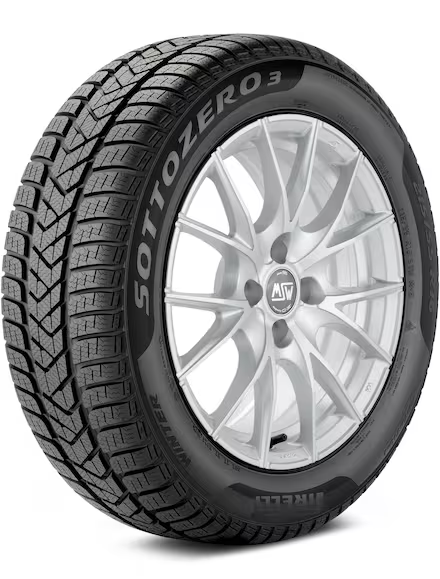
5. Pirelli Winter Sottozero 3: Best for Performance EVs
Price Check
Check the price of this tire at the following retailers:
Don’t know the correct size tire to purchase? Start here!
High-performance EVs like the Tesla Model S Plaid, Porsche Taycan, and Audi e-tron GT genuinely need a winter tire built around their specific demands, and this is the strongest pick for that category.
A sophisticated tread compound remains flexible in cold temperatures while maintaining the responsive handling character performance-EV owners expect, and an asymmetric tread with wide longitudinal grooves efficiently evacuates water and slush, meaningfully reducing hydroplaning risk at the higher speeds these vehicles are genuinely capable of reaching.
Enhanced sidewall rigidity helps the tire handle the substantial instant torque delivery that can challenge winter traction in a performance EV specifically, and a silica-enhanced compound provides real grip on both wet and dry cold surfaces.
An optimized contact patch ensures even pressure distribution during hard cornering, which also helps mitigate the accelerated wear pattern that heavier, more powerful EVs tend to produce. For performance EV owners who don’t want to fully sacrifice driving dynamics during winter months, this is the strongest pick.
Pros: Genuine performance-oriented handling in a winter tire, real high-speed stability and hydroplaning resistance, reinforced construction for high-torque EVs.
Cons: Premium price, less widely available than mainstream winter options.
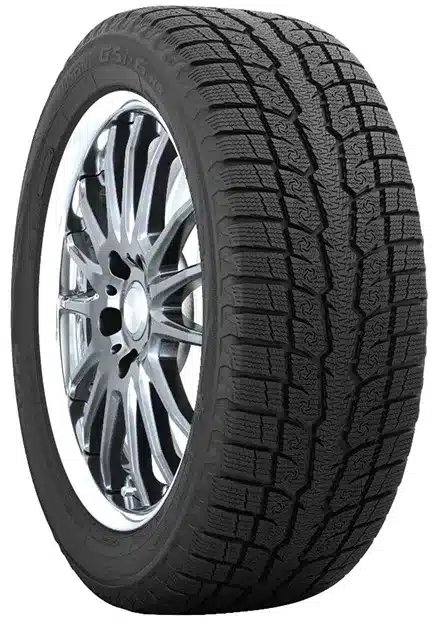
6. Toyo Observe GSi-6 HP: Best for Heavy EVs and Trucks
Price Check
Check the price of this tire at the following retailers:
As the EV market expands into genuinely heavy vehicle segments — the Rivian R1T, Tesla Cybertruck, and GMC Hummer EV can weigh upwards of 7,000 pounds — finding a winter tire that won’t compromise under that load becomes a real, specific challenge, and this is the strongest pick for that use case.
Toyo’s Microbit technology incorporates walnut shell powder into the compound for genuinely enhanced grip on icy surfaces, and reinforced sidewalls resist deformation even under massive battery-pack weight, maintaining consistent contact-patch geometry regardless of vehicle mass.
The directional tread with 3D multi-angle sipes provides real cornering stability despite carrying substantial weight, and wide circumferential grooves efficiently channel slush and water away from the contact surface. Load distribution technology genuinely helps prevent the uneven shoulder wear that heavy EVs commonly produce during cornering.
Real owner reports describe consistent performance across multiple winter seasons, making this a cost-effective choice despite premium pricing given how expensive specialized heavy-EV truck tire sizes generally run.
Pros: Genuine load capacity for the heaviest current EV trucks and SUVs, reinforced sidewalls that resist deformation, real cornering stability under heavy weight.
Cons: Premium price, sizing limited to heavier-duty EV and truck fitments.
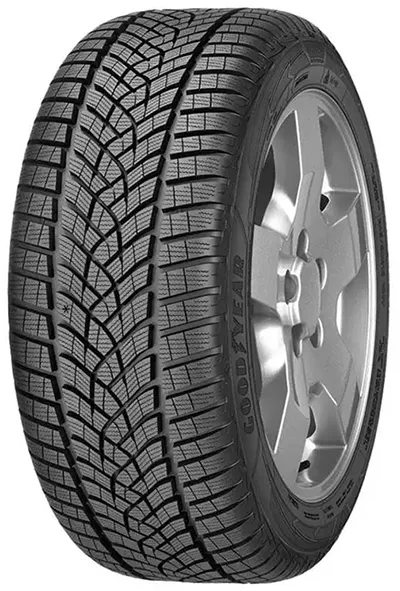
7. Goodyear UltraGrip Performance+: Best for Range Preservation
Price Check
Check the price of this tire at the following retailers:
For EV owners whose primary winter concern is minimizing range anxiety on top of the cold-weather efficiency hit their battery already takes, this tire is built specifically around that priority.
Goodyear’s Winter Grip Technology compound maintains flexibility at freezing temperatures while delivering genuinely low rolling resistance, and the manufacturer reports roughly an 8% reduction in energy consumption compared to average winter tires — a real, though manufacturer-sourced, efficiency claim worth factoring in alongside independently tested alternatives.
The Efficient Grip tread pattern with optimized block stiffness minimizes energy loss during compression and rebound cycles, and the contact patch is engineered specifically with EV weight and torque distribution in mind to prevent premature wear while maintaining grip.
Despite the efficiency focus, genuine winter capability isn’t sacrificed — numerous biting edges and 3D Traction Boost sipes provide real grip on snow and ice, and the directional tread pattern channels slush and water away from the contact area effectively. For EV owners who prioritize maximizing range across varying winter conditions, this is a strong pick.
Pros: Genuine efficiency-focused engineering, real winter traction despite the range-preservation priority, EV-specific contact-patch design.
Cons: Range-impact figures are manufacturer-reported, less widely available at mainstream US retailers than some competitors.
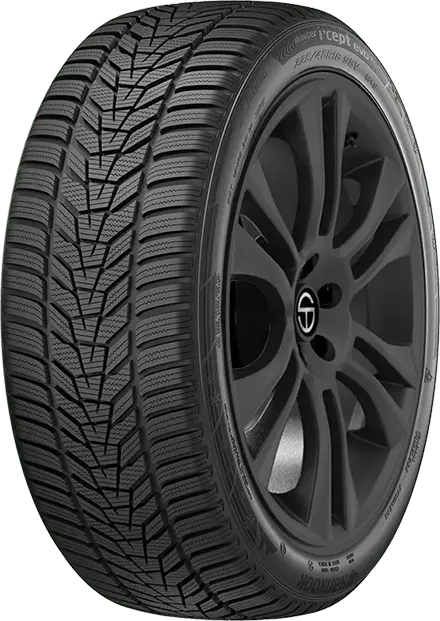
8. Hankook Winter i*cept evo3: Best for Noise Reduction
Price Check
Check the price of this tire at the following retailers:
In an EV, where the absence of engine noise makes road noise dramatically more noticeable, tire selection genuinely matters more for cabin quiet than it does in a gas car, and this tire is purpose-built around that priority.
Hankook’s sound-absorbing materials and optimized tread pattern design deliver real noise reduction, with a specialized pitch sequence disrupting the rhythmic noise patterns that can otherwise become amplified in an electric vehicle’s quiet cabin.
A proprietary silica compound remains flexible in cold temperatures without creating excessive road hum, and the optimized sidewall construction absorbs road imperfections while maintaining stability — a genuine comfort benefit for EV owners accustomed to their vehicle’s typically smooth ride.
Winter performance hasn’t been sacrificed for comfort either: an advanced directional tread with high-density sipes provides reliable grip on snow and slush. For EV owners who prioritize preserving their vehicle’s serene cabin experience through winter months, this is the strongest pick.
Pros: Genuine, noticeable noise reduction for an EV cabin, comfortable ride quality, dependable winter traction.
Cons: Not the strongest outright ice-traction performer in this comparison.
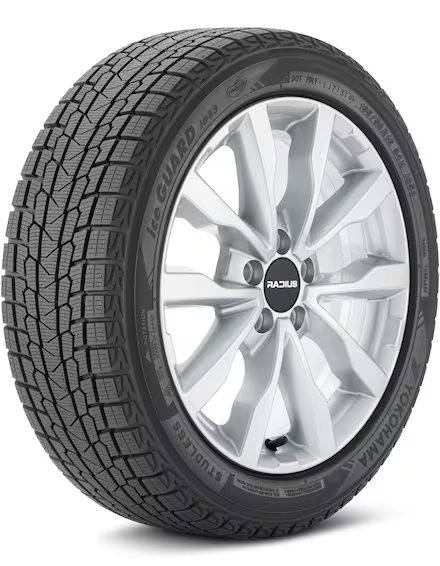
9. Yokohama iceGUARD iG53: Best Budget Option
Price Check
Check the price of this tire at the following retailers:
For EV owners who need reliable winter performance without premium-tier pricing, this tire delivers genuine capability at a meaningfully lower price than most dedicated EV winter options. Triple 3D sipes and microscopic bite particles work together to maintain grip on icy and snowy surfaces, and the directional tread pattern efficiently channels slush and water away from the contact patch.
For urban EV drivers who primarily navigate plowed city streets with occasional snow rather than sustained severe conditions, this hits a genuine sweet spot between performance and affordability — delivering an estimated 85–90% of premium-tire capability at a meaningfully lower price.
A relatively firm compound balances winter grip with reasonable rolling resistance, and real owner reports describe respectable tread life that often exceeds other budget winter options. Confirm size availability for your specific EV before ordering, since Yokohama’s winter lineup coverage for larger EV-specific fitments varies by size.
Pros: Genuine value at a meaningfully lower price point, respectable performance for city and moderate-winter driving, decent tread life for the category.
Cons: Doesn’t match premium options in extreme conditions, confirm size availability for your specific EV fitment.
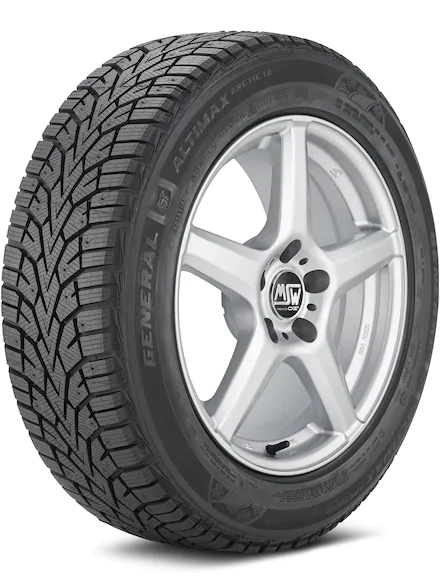
10. General AltiMAX Arctic 12: Best Widely-Available Budget Pick
Price Check
Check the price of this tire at the following retailers:
For EV owners who want a genuine, easy-to-find budget winter tire from a well-established US brand rather than a harder-to-source specialty import, this is the strongest pick.
General’s winter-specific compound and tread design deliver dependable snow and ice traction at a price point meaningfully below premium EV-marketed alternatives, and the tire is widely stocked at mainstream US tire retailers, making it a genuinely practical choice for owners who want quick, local availability.
While not engineered with EV-specific range-preservation claims the way some competitors are, it carries genuine 3PMSF certification confirming real severe-snow capability, and its wide availability across common sizes — including many EV fitments — makes it a dependable fallback when specialty EV winter tires are out of stock or backordered, which genuinely happens during peak winter-tire season.
For budget-conscious EV owners who prioritize easy local availability and proven winter certification over EV-specific marketing claims, this is a sensible pick.
Pros: Genuine value with wide US retailer availability, real 3PMSF winter certification, dependable fallback when specialty EV tires are backordered.
Cons: Not marketed with EV-specific range-preservation engineering, doesn’t match premium options in extreme ice conditions.
11. Michelin CrossClimate2: Best All-Weather, No Seasonal Swap

Price Check
Check the price of this tire at the following retailers:
For EV owners who don’t want to run a dedicated winter tire and deal with the seasonal changeover, storage, and rebalancing costs that come with it, this tire offers a genuine, defensible alternative that every other pick in this comparison doesn’t provide — real 3PMSF certification in a single, year-round tire.
This matters specifically for EV owners in regions with moderate but real winters, since a genuinely certified all-weather tire closes most of the safety gap without the twice-yearly swap.
Its V-shaped tread with dense biting edges maintains solid traction in light to moderate snow, and dry and wet-weather handling remain genuinely strong year-round rather than being winter-specialized and compromised the rest of the year.
It won’t match a dedicated winter tire’s outright ice performance — nothing in this all-weather category does — but for EV owners who want a single, sensible tire and live somewhere winters are real but not extreme, this is the strongest no-swap solution.
Pros: Genuine 3PMSF-rated year-round capability without seasonal swapping, strong dry and wet performance the rest of the year, no seasonal storage or changeover cost.
Cons: Doesn’t match a dedicated winter tire’s outright ice traction in genuinely severe conditions.
How to Properly Maintain Winter Tires on EVs
Check pressure weekly during winter, since cold temperatures naturally decrease tire pressure and underinflated tires can reduce an EV’s range by up to 10% through added rolling resistance. Check when tires are cold, and always confirm against the door jamb sticker rather than the tire’s maximum sidewall pressure.
Rotate every 5,000 miles, using the pattern appropriate to your EV’s drivetrain — front-to-rear cross for RWD, rear-to-front for FWD, and a full X-pattern for dual-motor AWD. EVs commonly show accelerated wear on drive wheels, so consistent rotation matters more here than on a comparable gas vehicle.
Watch for EV-specific wear patterns. Center wear often points to overinflation combined with an EV’s higher weight; outer-edge wear can result from the higher torque during acceleration; cupping or scalloping may stem from regenerative braking; feathering often signals alignment affected by the vehicle’s weight.
Replace winter tires at 4/32″ of tread, deeper than the threshold typically used for all-season tires, since winter tires need more depth to maintain the biting-edge performance that defines the category. Also replace regardless of tread depth once a tire passes 4–5 years old, since rubber compounds degrade with age.
Winter Tire Impact on EV Range: What to Actually Expect
Most EV owners see a genuine 10–20% range reduction when switching to winter tires, driven by deeper tread and softer compounds that increase rolling resistance.
Selecting a genuinely EV-engineered winter tire — rather than a standard winter tire adapted to fit — meaningfully narrows that gap, since these tires are specifically built with lower-rolling-resistance compounds designed to claw back some of that loss without giving up winter grip.
Tire pressure management matters more here than most owners realize: each 10°F drop in temperature costs roughly 1–2 PSI, and underinflated tires create additional rolling resistance on top of the winter-tire penalty already in play.
Smooth acceleration and deceleration genuinely help preserve range, and pre-conditioning your EV’s cabin and battery while still plugged in — rather than drawing that energy from the battery once you’re driving — is one of the single most effective range-preservation habits available to any EV owner in winter, regardless of which tire is mounted.
Frequently Asked Questions
Are studded or studless winter tires better for electric vehicles?
For most EV owners, studless winter tires offer the better balance of performance and practicality. Studs increase road noise — already a real concern in a quiet EV cabin — add rolling resistance that further reduces range, and are restricted or banned in some regions. Modern studless tires like the Michelin X-Ice Snow or Bridgestone Blizzak WS90 deliver excellent ice performance through advanced compounds and tread design without those drawbacks, though a studded option like the Nokian Hakkapeliitta 10 EV remains available for genuinely extreme conditions.
When should I switch to winter tires on my EV?
Once temperatures consistently fall below 45°F (7°C). Consider switching slightly earlier than you might with a gas vehicle, since an EV’s added weight genuinely benefits from extra grip sooner, especially in regions with early-season frost.
Can I use all-weather tires instead of dedicated winter tires on my EV?
If your winters are moderate rather than severe, a genuine 3PMSF-rated all-weather tire like the Michelin CrossClimate2 is a defensible choice that avoids the seasonal swap entirely. In regions with sustained heavy snow or ice, a dedicated winter tire still delivers meaningfully better traction, since even the best all-weather tires trade some severe-ice performance for year-round versatility.
What load rating does my EV’s winter tires need?
Check your door jamb placard for the exact requirement — many EVs need XL (Extra Load) tires, and some genuinely heavier EVs now call for the newer HL (High Load) rating specifically developed for electric vehicles. Installing a tire with a lower load rating than your EV requires, even if it physically fits, means running outside the tire’s safe weight capacity.
Do winter tires affect regenerative braking on EVs?
Yes, genuinely. Softer compounds and different tread patterns change rolling resistance and grip characteristics enough to alter how regen braking feels, and most EVs automatically adjust regen force based on detected conditions. Some drivers prefer manually reducing regen strength in slippery conditions for more predictable control.
Are winter tires compatible with all EV models?
Most major manufacturers now offer sizes for popular EVs, but confirm specifics before buying: performance-package Teslas may require higher load ratings due to added weight and torque, the Porsche Taycan often calls for N-rated tires specific to Porsche, and heavier trucks like the Rivian R1T/R1S need genuinely appropriate load ratings. Always verify size, load index, and speed rating against your EV’s specific door jamb placard.
