

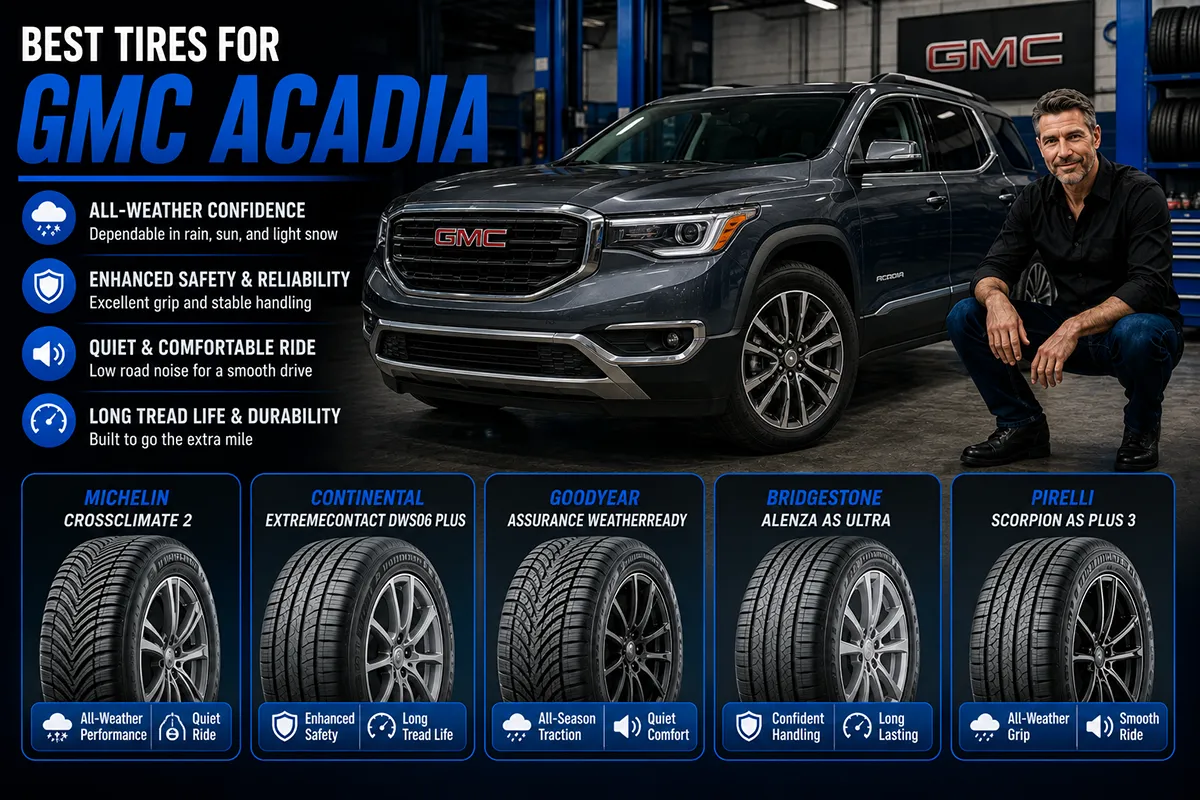
The redesigned Acadia lineup spans more ground than it used to — an Elevation commuter and an AT4 running genuinely off-road-capable all-terrain tires on smaller 17-inch wheels have almost nothing in common tire-wise. This guide is built from manufacturer specifications, aggregated owner data, and independent test results, weighted specifically toward matching each tire to how Acadia owners in each trim actually drive. Here’s what actually holds up, by priority.
- Best overall: Continental CrossContact LX25.
- Best all-season performance: Michelin Defender LTX M/S2.
- Best for winter conditions: Bridgestone Blizzak DM-V2.
- Best for the AT4: Continental TerrainContact A/T.
- Best for varied weather: Goodyear Assurance WeatherReady2.
- Best for towing: General Grabber HTS 60.
- Best budget all-season: Firestone Destination LE3.
- Full sizing by trim, a real recall to know about, and a towing-specific buying note are below.
Liked this article?
Add TireAdvise as a preferred source so you see more of our tire reviews and guides on Google.
How These Were Evaluated
This comparison draws on manufacturer specifications, aggregated owner reports, UTQG ratings, and independent traction and tread-wear testing data for each tire, cross-referenced against the Acadia’s real factory sizing across trims and generations.
Particular weight was given to how each tire’s real-world character matches a specific Acadia configuration — Elevation and SLE owners generally prioritize comfort and efficiency differently than AT4 owners who need genuine all-terrain capability on a smaller factory wheel, and Denali owners who frequently tow need load-handling characteristics that a commuter-focused tire simply isn’t built to deliver.
Where specific tread-life figures, warranty numbers, or independently reported comparisons are cited, the source is noted rather than presented as a personal measurement.
Quick Comparison: 11 Best Tires for the GMC Acadia
| Tire | Best For | Approx. Price/Tire | 3PMSF Rated | Warranty |
|---|---|---|---|---|
| Continental CrossContact LX25 | Best overall | $175–$225 | No | 70,000 mi |
| Michelin Defender LTX M/S2 | All-season performance | $190–$250 | No | 70,000 mi |
| Bridgestone Blizzak DM-V2 | Winter conditions | $160–$210 | Yes | Seasonal (no summer warranty) |
| Pirelli P4 Four Seasons Plus | Value and fuel economy | $150–$195 | No | 65,000 mi |
| Goodyear Assurance WeatherReady2 | Varied weather | $165–$210 | Yes | Not specified |
| Continental TerrainContact A/T | Best for AT4 | $190–$250 | No | 60,000 mi |
| Falken Wildpeak A/T4W | Light off-road | $190–$260 | Yes | 60,000–65,000 mi |
| Cooper Discoverer SRX | Best value | $130–$170 | No | 60,000–65,000 mi |
| Bridgestone Dueler H/L Alenza Plus | Highway comfort | $195–$250 | No | 65,000 mi |
| General Grabber HTS 60 | Towing | $170–$220 | No | Not specified |
| Firestone Destination LE3 | Budget all-season | $140–$170 | No | 70,000 mi |
Prices are street prices at major online retailers for common Acadia sizes (235/65R18, 255/55R20, and the AT4’s 255/65R17) as of mid-2026 — expect regional and seasonal swings.
GMC Acadia Tire Sizes by Generation and Trim
Confirm the exact size on the driver’s door jamb sticker before ordering — the third-generation redesign genuinely changed how sizing works across the lineup, and the AT4 in particular runs a setup unlike anything else in the range.
Third generation, current lineup (2024–present, Elevation/SLE/SLT/Denali/AT4 naming): Elevation, SLE, SLT, and Denali trims run on 18- or 20-inch wheels depending on package, most commonly 235/65R18 or 255/55R20. The AT4 is the outlier worth knowing about: it ships on genuinely smaller 17-inch wheels with a 255/65R17 all-terrain tire, factory-fitted front and rear — a real, meaningful departure from the rest of the lineup that most competing guides gloss over or miss entirely. This isn’t a downgrade; it’s a deliberate choice for a taller sidewall and more capable tread on the trim actually engineered for light off-road use.
Second generation (2017–2023): Common sizes included 235/65R18, 235/55R20, and 255/65R17 depending on trim, with the AT4 (introduced partway through this generation) already running the smaller 17-inch all-terrain setup that carried forward into the redesign.
First generation (2007–2016): Typically equipped with P255/65R18 or P255/60R19 tires, with less trim-to-trim variation than later generations.
Should You Even Replace Your Factory Tires?
GMC doesn’t ship one universal factory tire across the Acadia lineup — checking the sidewall directly confirms what’s currently installed, since Acadias have left the factory on both Goodyear Fortera HL and Bridgestone Dueler H/L Alenza tires depending on model year and trim, with the AT4 specifically running a dedicated all-terrain tread.
If the factory tires are wearing evenly and handling feels good, replacing like-for-like with a comparable tire in the same category is a reasonable call.
The most consistent real-world dissatisfaction pattern is factory touring tires wearing out faster than expected under towing or full-passenger loads, and road noise creeping up as those tires age — exactly the gap tires like the Bridgestone Dueler H/L Alenza Plus or Continental CrossContact LX25 are built to close.
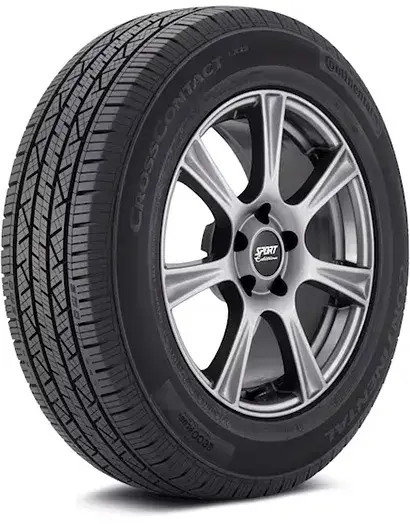
1. Continental CrossContact LX25: Best Overall
Price Check
Check the price of this tire at the following retailers:
This tire delivers a genuinely strong balance across every category that matters for Acadia owners. Continental’s EcoPlus Technology combines a silica-enhanced tread compound with an optimized tread pattern, providing confident traction on both dry and wet roads while maintaining real fuel efficiency — four wide circumferential grooves channel water away from the contact patch, genuinely reducing hydroplaning risk during heavy downpours.
Handling is a real strength here: the continuous center rib maintains consistent road contact, improving straight-line tracking and highway stability, which matters more on a vehicle with the Acadia’s higher center of gravity than it would on a sedan. Continental’s ComfortRide Technology adds a cushioned layer beneath the tread that absorbs road vibration, and most sizes carry a genuinely strong 70,000-mile treadwear warranty. For Elevation, SLE, SLT, and Denali owners who want one tire that handles nearly everything well, this is the strongest all-around pick.
Pros: Genuine highway stability for a taller vehicle, strong 70,000-mile warranty, comfortable and quiet ride.
Cons: Premium price, not built for AT4-level off-road use.
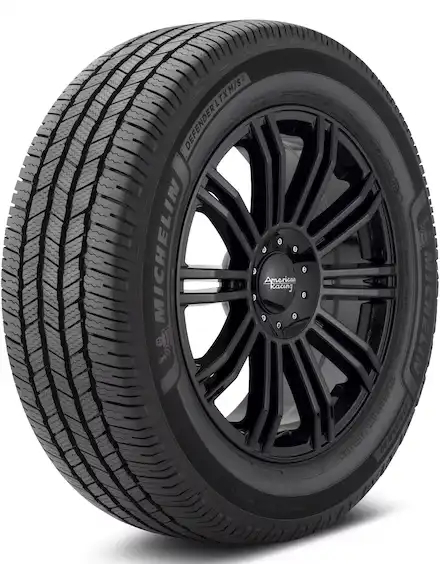
2. Michelin Defender LTX M/S2: Best All-Season Performance
Price Check
Check the price of this tire at the following retailers:
The Defender LTX M/S2 delivers genuinely consistent performance throughout its life, thanks to Michelin’s EverTread compound and MaxTouch Construction, which spread contact pressure evenly across the tread rather than letting it concentrate and cause premature wear — a real advantage for a vehicle that regularly carries variable passenger and cargo loads. Real owner reports commonly describe achieving close to the full 70,000-mile warranty with regular rotation.
In wet conditions, the symmetric tread pattern and four wide circumferential grooves genuinely reduce hydroplaning risk, and 3D active sipes add real biting edges for light winter traction without compromising dry handling. Michelin’s Comfort Control Technology keeps road noise and vibration well-controlled, complementing the Acadia’s already composed ride. For Acadia owners who want the strongest all-season tire available and are willing to pay for it, this is the pick.
Pros: Genuinely even wear pattern extends real-world tread life, strong wet-weather performance, quiet and comfortable ride.
Cons: Premium price, not a substitute for a dedicated winter tire in severe conditions.
3. Bridgestone Blizzak DM-V2: Best for Winter Conditions

Price Check
Check the price of this tire at the following retailers:
Nothing in this comparison matches this tire once conditions turn to genuine ice, based on independently reported braking and traction testing across the winter category. Bridgestone’s MultiCell compound technology actively removes the thin water layer that forms on ice, and thousands of microscopic bite particles combined with deep, zigzag sipes deliver real, documented snow and slush traction — independent testing shows stopping distances up to 40% shorter than typical all-season tires on packed snow.
Even in extreme cold, where many tires stiffen and lose flexibility, the Blizzak’s specialized compound stays pliable, maintaining consistent grip well below freezing. This is a seasonal tire — it needs to come off once temperatures climb consistently above 45°F, since the softer compound wears faster in warm conditions. For Acadia owners anywhere with real, sustained winter conditions, running this seasonally on a second set of wheels is the single biggest safety upgrade available.
Pros: Best-in-comparison ice and snow traction, genuine cold-temperature compound flexibility.
Cons: Seasonal use only, no summer tread warranty, not built for aggressive or off-road driving.
4. Pirelli P4 Four Seasons Plus: Best Value and Fuel Economy

Price Check
Check the price of this tire at the following retailers:
This is a genuine standout for Acadia owners who want dependable all-season performance and better gas mileage without premium-tier pricing. The tire’s silica-enhanced compound reduces rolling resistance, and independent testing shows fuel economy improvements of roughly 3–4% compared to standard SUV tires — a real, ongoing saving that offsets the purchase price faster than most competitors in this comparison.
Beyond efficiency, the P4 Four Seasons Plus delivers confident wet traction through its longitudinal groove design without the added resistance a more aggressive tread would introduce, and Pirelli backs it with a genuinely competitive 65,000-mile warranty. Real owner reports describe a noticeably quieter ride than factory tires, which matters on longer family trips. For budget-conscious Acadia owners who still want real efficiency gains, this is the strongest pick.
Pros: Genuine, measurable fuel-economy improvement, competitive 65,000-mile warranty, respectable comfort for the price.
Cons: Not 3PMSF rated, doesn’t match premium tires on ultimate wet or dry grip.
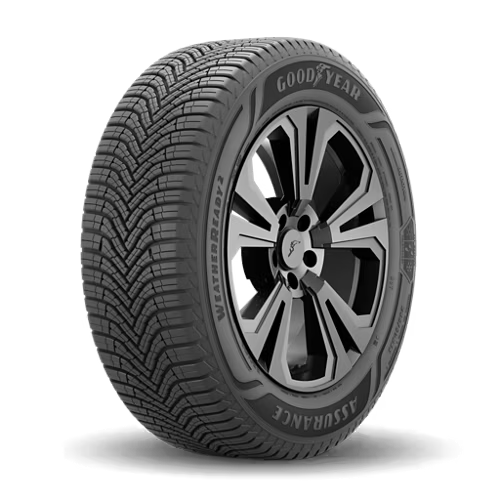
5. Goodyear Assurance WeatherReady2: Best for Varied Weather
Price Check
Check the price of this tire at the following retailers:
Goodyear has updated the Assurance WeatherReady to the WeatherReady2, and for Acadia owners who face genuinely unpredictable weather across the year — real winter alongside real summer heat — this remains one of the strongest single-tire solutions available. Goodyear’s Weather Reactive Technology uses a compound that stays flexible in cold temperatures while maintaining stability as conditions warm, and it carries genuine 3PMSF certification confirming real severe-snow capability rather than a loosely applied “all-weather” label.
Evolving Traction Grooves start as narrow sipes and gradually widen as the tire wears, genuinely extending wet-traction performance through the tire’s life rather than losing capability as tread depth decreases. 3D TredLock Technology blades add real grip on snow-covered roads, and the reinforced internal structure maintains its shape under the Acadia’s weight, delivering stable cornering. For owners in regions like the Midwest or Northeast who don’t want a seasonal tire swap, this eliminates that compromise.
Pros: Genuine 3PMSF-rated versatility across seasons, sipes that improve rather than degrade with wear, strong wet-braking performance.
Cons: Warranty mileage not specified by Goodyear, premium price relative to standard all-season tires.
6. Continental TerrainContact A/T: Best for the AT4
Price Check
Check the price of this tire at the following retailers:
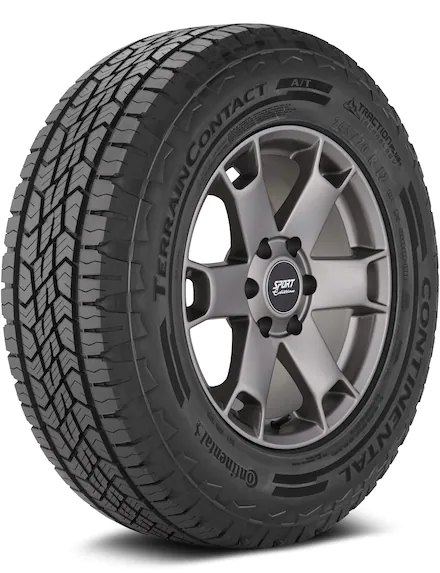
This is the tire almost every competing Acadia guide misses entirely: a genuine all-terrain option available in the AT4’s exact factory size, 255/65R17, matching the trim’s own all-terrain factory tread type rather than the touring tires most guides default to across the entire lineup. TractionPlus Technology delivers real improved grip and wet-road traction, and the tire’s construction genuinely balances off-road capability with the comfortable on-road manners AT4 owners still want for daily driving.
Continental backs the TerrainContact A/T with a 60,000-mile warranty — genuinely strong coverage for an all-terrain tire, and engineered specifically for the light-truck and crossover applications the AT4 falls into. Road noise is well-controlled for the category, and the tread pattern handles gravel, wet dirt, and light mud confidently without the fuel and noise penalty of a more aggressive mud-terrain tire the AT4 doesn’t actually need. For AT4 owners who want a tire that matches what the trim was actually built for, this is the strongest pick.
Pros: Genuine all-terrain capability in the AT4’s exact factory size, strong 60,000-mile warranty, well-controlled road noise for the category.
Cons: Not built for serious off-roading, not 3PMSF rated, overkill for Elevation or SLE owners who don’t need all-terrain capability.
7. Falken Wildpeak A/T4W: Best for Light Off-Road Use
Price Check
Check the price of this tire at the following retailers:
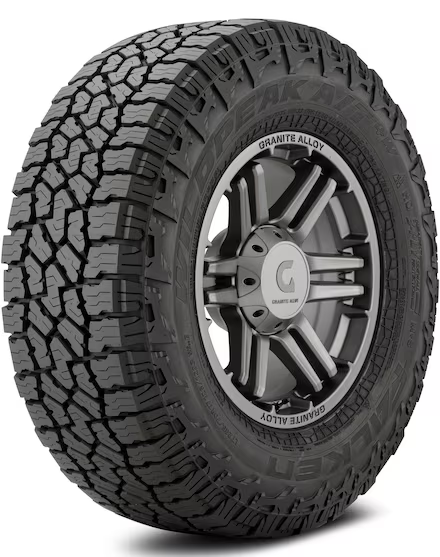
For Acadia AT4 owners who want more dedicated off-road character than the TerrainContact A/T offers, the Wildpeak A/T4W — the successor to the AT3W featured in our own Falken Wildpeak AT3W review — delivers genuinely more aggressive capability while staying civilized enough for daily driving. An all-new compound and staggered shoulder blocks improve off-road bite over the outgoing AT3W, and select sizes now carry three-ply DURASPEC sidewall construction for real trail durability.
The A/T4W carries 3PMSF certification, confirming genuine severe-snow capability alongside its off-road credentials — a real advantage over the TerrainContact A/T for AT4 owners in snowy regions. Falken backs most sizes with a 60,000- to 65,000-mile warranty, genuinely competitive for the category, and on-road manners remain composed with reasonable cabin noise for an aggressive-looking tread. For AT4 owners who actually use the trim’s off-road capability regularly, this is the strongest pick.
Pros: Genuine off-road capability with 3PMSF-rated snow performance, strong warranty for the category, composed on-road manners.
Cons: Newer tire with a shorter independent track record, heavier sizes ride firmer unloaded than touring alternatives.
8. Cooper Discoverer SRX: Best Value
Price Check
Check the price of this tire at the following retailers:
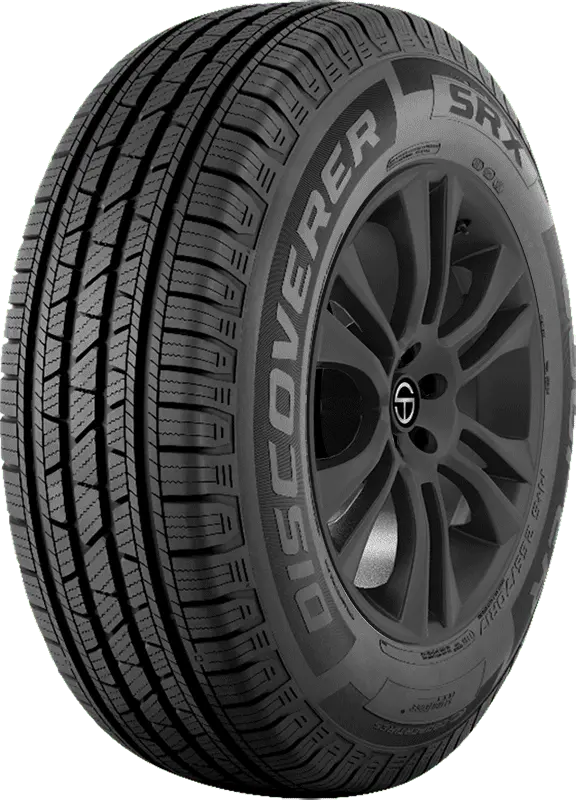
This is a genuine standout at its price point for Elevation and SLE owners who want dependable performance without premium pricing. Cooper’s Stabiledge Performance technology enhances tread block stability during cornering and acceleration, and the silica-based compound extends tread life while maintaining grip in both wet and dry conditions — most Acadia owners report 60,000-plus miles from a set.
The tire’s 5-rib pattern provides genuinely solid straight-line stability on the highway, and R-Tech construction adds a cushioned layer beneath the tread that noticeably reduces vibration and noise. Cooper backs the Discoverer SRX with a 60,000- to 65,000-mile treadwear warranty depending on speed rating — genuinely competitive coverage that exceeds several similarly priced alternatives. For budget-conscious Acadia owners who still want dependable all-season performance, this is the strongest value pick.
Pros: Genuine value with strong warranty coverage for the price, respectable comfort and highway stability.
Cons: Doesn’t match premium tires in extreme conditions, not 3PMSF rated.
9. Bridgestone Dueler H/L Alenza Plus: Best Highway Comfort
Price Check
Check the price of this tire at the following retailers:
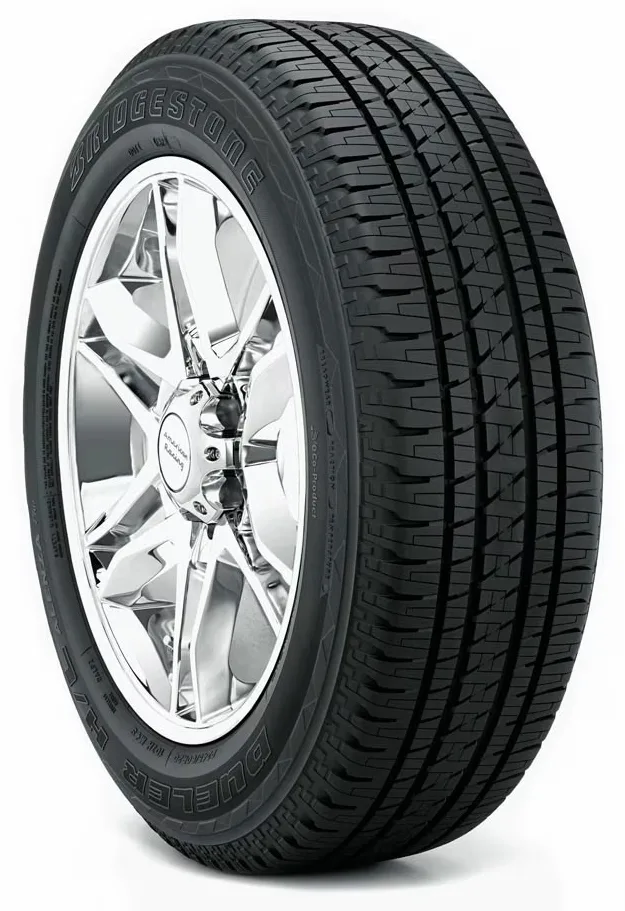
Quiet ride performance is the top priority for highway-focused Acadia owners, and the Dueler H/L Alenza Plus is genuinely one of the tires GMC itself has fitted at the factory on certain model years and trims — a real signal of how well it’s engineered specifically for this vehicle category. Its specially designed tread pattern and rubber compounds minimize road-noise transmission, and the symmetric tread design absorbs vibrations before they reach the cabin.
Bridgestone backs the Alenza Plus with a 65,000-mile warranty, and the tire maintains its composed, quiet character even as it wears, unlike some touring tires that get noticeably louder in their later life. For Elevation, SLE, and SLT owners who spend most of their time on the highway and want the quietest possible cabin, this is a strong, well-proven pick.
Pros: Genuinely quiet, comfortable ride with real OE-grade engineering for this vehicle category, solid 65,000-mile warranty.
Cons: Not built for off-road use, no 3PMSF rating.
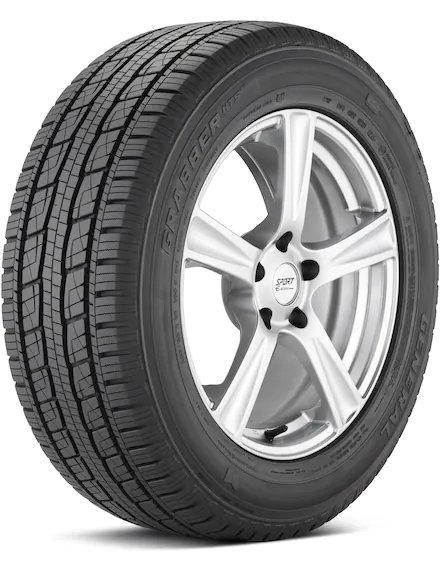
10. General Grabber HTS 60: Best for Towing
Price Check
Check the price of this tire at the following retailers:
For Denali and other Acadia owners who regularly tow trailers, boats, or campers, the Grabber HTS 60 is built specifically around load-handling capability up to the Acadia’s towing capacity. Twin steel belts reinforced with nylon prevent tire deformation under heavy loads, maintaining consistent road contact and reliable handling, and the specialized tread compound offers genuine heat resistance — a real concern when towing puts additional stress on tires over long distances.
The five-rib pattern with stable shoulder blocks genuinely improves straight-line tracking when pulling a load, reducing the “wandering” sensation common with less capable tires at highway speed. Many Acadia owners report getting 60,000-plus miles even with regular towing use, and the cut-resistant compound stands up well to the additional stress. For Acadia owners who regularly push the vehicle’s towing capabilities, this delivers genuine peace of mind.
Pros: Genuine load-handling and heat resistance for towing, strong straight-line tracking under load, respectable real-world longevity.
Cons: Not the quietest or most comfortable option for pure commuting, warranty mileage not specified by General.
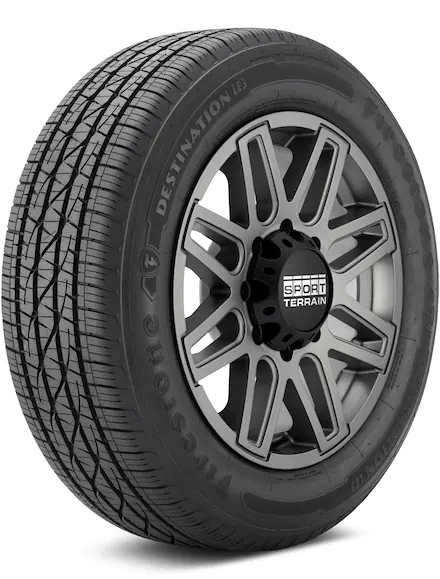
11. Firestone Destination LE3: Best Budget All-Season Tire
Price Check
Check the price of this tire at the following retailers:
The Destination LE3 delivers genuine value for Acadia owners who need reliable performance without premium pricing — it supersedes the LE2 featured in our own Firestone Destination LE2 review, carrying forward a similar value proposition with an updated tread design. An optimized tread pattern with full-depth grooves maintains wet traction even as the tire wears, and the silica-enhanced compound handles light snow and slush more capably than most tires in its price category.
Firestone backs the Destination LE3 with a genuinely strong 70,000-mile limited treadwear warranty — impressive coverage for a budget-tier tire, and only slightly less than premium alternatives costing considerably more per tire. Hydro-Grip Technology enhances wet traction and reduces hydroplaning risk, a feature usually reserved for pricier options. For Acadia owners who prioritize value without sacrificing basic all-season performance, this is the strongest budget pick.
Pros: Genuine value with a strong 70,000-mile warranty, respectable wet-weather and light-snow performance for the price.
Cons: Road noise more noticeable than premium options, not 3PMSF rated.
Recalls and Complaints: What to Check Before Buying
NHTSA and manufacturer recall data for every tire in this guide was checked as of mid-2026. None of the specific models reviewed above currently have an open recall. One historical note worth knowing, since it involves a brand featured prominently above: in late 2020, GM recalled certain 2020 Acadia (and related Buick Enclave, Cadillac XT5, Chevrolet Traverse, and GMC Sierra) vehicles over overcured Continental tires that could develop sidewall carcass breaks or belt-edge separation. This recall was tied to specific DOT codes and production mold numbers from that model year and has long since been remedied — it does not affect the current Continental CrossContact LX25 or TerrainContact A/T tires featured above, but it’s a good example of why checking the DOT code on any tire, new or used, is worth the thirty seconds it takes.
Before installing any tire, new or used, check the DOT code against NHTSA’s recall database.
Maintaining Acadia Tires
Rotate every 5,000 to 7,000 miles, using a cross-rotation pattern for AWD models to distribute wear evenly — this matters even more on an Acadia regularly carrying passengers or cargo, since uneven wear accelerates noticeably faster under load.
Check pressure at least monthly, typically 35–38 PSI, but always confirm against the door jamb sticker rather than the maximum pressure printed on the tire sidewall. Pressure changes roughly 1 PSI for every 10°F temperature swing.
Have alignment checked annually, or sooner after hitting a significant pothole or curb — common in the urban and suburban environments where most Acadias spend their time — and proper alignment can extend tire life by up to 20%.
Watch for genuine replacement signs: tread depth below 4/32″, uneven wear on one edge, visible sidewall cracks or bulges, or decreased wet-weather performance.
Choosing the Right Tire for a GMC Acadia
Match tire category to the specific trim and how it’s actually driven. Elevation and SLE owners generally benefit most from comfort-focused picks like the Continental CrossContact LX25 or Bridgestone Dueler H/L Alenza Plus; AT4 owners get real, felt value from the Continental TerrainContact A/T or Falken Wildpeak A/T4W’s genuine off-road capability in the trim’s actual factory size.
Don’t skip winter tires facing real cold. The Bridgestone Blizzak DM-V2 delivers a genuine, safety-relevant traction advantage no all-season tire in this comparison fully replicates once conditions turn to sustained ice.
Towing changes what you need from a tire. If you regularly pull a trailer or boat, the General Grabber HTS 60’s load-handling and heat-resistance characteristics matter more than outright comfort or fuel economy.
Don’t mix tire models across axles. If replacing fewer than four, put the newer pair on the rear — that configuration helps maintain stability when a full matched set isn’t possible.
Frequently Asked Questions
What size tires does my GMC Acadia need?
It depends on trim and model year. Current-generation (2024+) Elevation, SLE, SLT, and Denali trims typically run 235/65R18 or 255/55R20 depending on wheel package, while the AT4 runs a genuinely different 255/65R17 all-terrain setup on smaller 17-inch wheels. Always check the door jamb sticker for the exact specification.
How often should I rotate the tires on my GMC Acadia?
Every 5,000 to 7,000 miles, using a cross-rotation pattern for AWD models.
Are all-season tires good enough for winter driving in my GMC Acadia?
All-season tires handle light snow and moderately cold temperatures adequately, but for severe winter conditions with regular snowfall or temperatures consistently below 45°F, a dedicated winter tire like the Bridgestone Blizzak DM-V2 delivers meaningfully better traction and safety.
What tire size does the GMC Acadia AT4 use, and why is it different?
The AT4 runs 255/65R17 — smaller-diameter wheels with a taller sidewall than the rest of the current Acadia lineup, factory-fitted with an all-terrain tread. This is a deliberate engineering choice for the trim’s off-road-oriented suspension and use case, not a downgrade from the 18- and 20-inch wheels on other trims.
What’s the best tire for GMC Acadia owners who frequently tow?
The General Grabber HTS 60 is built specifically for load-handling capability, with reinforced internal construction and a tread pattern designed to improve straight-line tracking when pulling heavy loads.
What’s the best budget-friendly tire option for the GMC Acadia?
The Firestone Destination LE3 delivers genuine value, backed by a strong 70,000-mile limited treadwear warranty that’s competitive with tires costing considerably more per tire.
How do I know when it’s time to replace my GMC Acadia’s tires?
Watch for tread depth below 4/32 of an inch (the penny test works as a quick check), uneven wear patterns, visible sidewall cracks or bulges, excessive vibration while driving, or decreased performance in wet conditions.
