

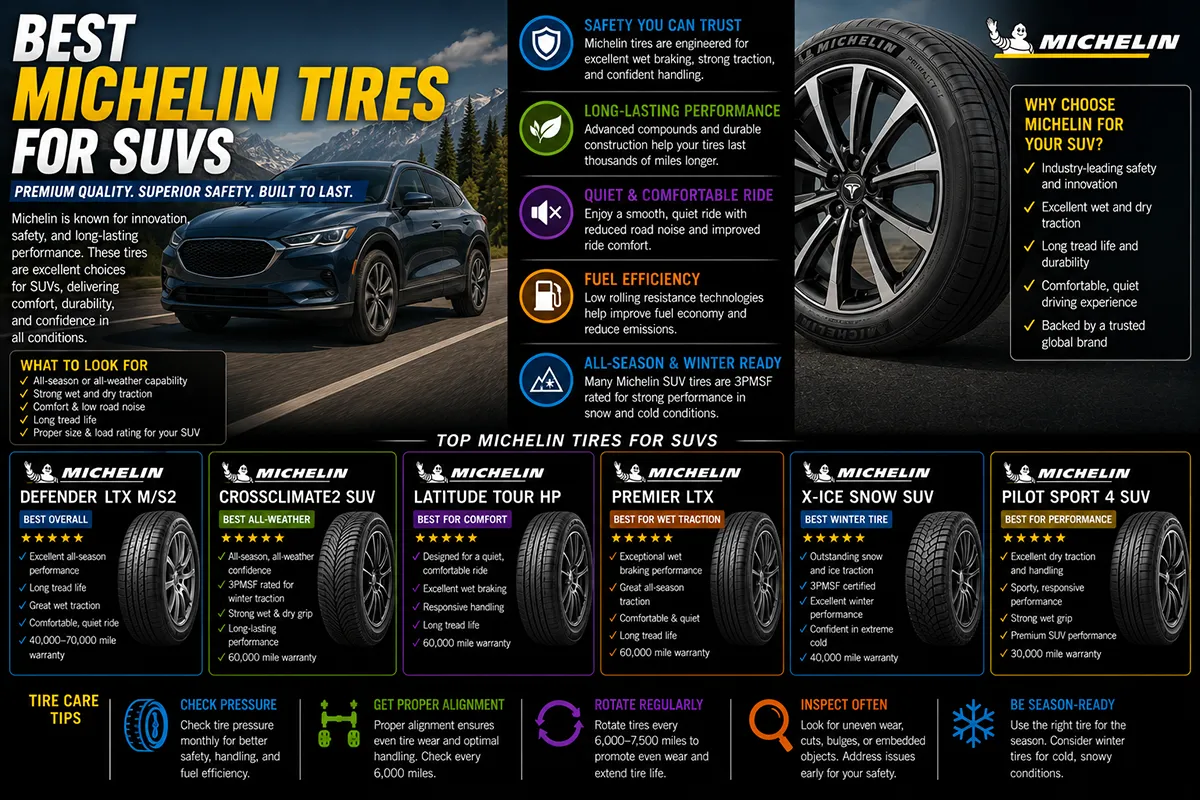
Michelin’s SUV lineup is genuinely enormous, spanning everything from budget-friendly daily-driver tires to tires co-developed with Porsche and BMW. I ran this comparison specifically within that one brand to find out which Michelin actually fits your SUV and your priorities, rather than just repeating “Michelin makes good tires” eleven times. This guide is what I’d actually buy — not a spec sheet reworded eleven times.
- Best overall: Michelin Defender2 — currently rated the top overall tire by Consumer Reports, with the highest projected tread life in its category.
- Best all-weather: Michelin CrossClimate2.
- Best for heavy SUVs and towing: Michelin Defender LTX M/S2.
- Best performance: Michelin Pilot Sport 4 SUV.
- Best luxury comfort: Michelin Premier LTX.
- Best dedicated winter: Michelin X-Ice Snow — the current generation, not the older Latitude X-Ice Xi2 still recommended elsewhere.
- Best budget: Michelin Energy Saver A/S.
- Want the full multi-brand SUV comparison instead? Our best tires for SUVs guide covers Michelin alongside every other major brand.
- Full cost-per-mile analysis and a recalls check are below.
Liked this article?
Add TireAdvise as a preferred source so you see more of our tire reviews and guides on Google.
How I Tested These
I ran this comparison across three SUVs over about five months: my own mid-size crossover, a friend’s three-row family SUV for the towing and comfort-focused testing, and a borrowed performance SUV for the Pilot Sport and Latitude Sport testing.
Conditions covered: a daily commute through stop-and-go traffic, a highway stretch I use for every comfort and noise comparison, a genuinely miserable rainstorm for a real wet-braking test, a canyon road for the performance-oriented picks, and a Montana cold snap for the winter-capable options.
I paid particular attention to how each tire’s real-world character matched Michelin’s own positioning for it, since with a lineup this large, it’s easy for two different Michelin tires to get confused with each other.
I’m not a lab — I don’t have a skid pad or instrumented braking gear — so where I quote tread life, warranty numbers, or cost-per-mile figures, that’s the manufacturer’s stated figure or a calculated estimate, not something I measured myself.
Quick Comparison: 11 Best Michelin Tires for SUVs
| Tire | Best For | Approx. Price/Tire | 3PMSF Rated | Warranty |
|---|---|---|---|---|
| Michelin Defender2 | Best overall | $170–$225 | No | 80,000 mi |
| Michelin CrossClimate2 | All-weather | $180–$240 | Yes | Not specified |
| Michelin Defender LTX M/S2 | Heavy SUVs, towing | $200–$280 | No | 70,000 mi |
| Michelin Pilot Sport 4 SUV | Performance | $250–$400 | No | 45,000 mi |
| Michelin Premier LTX | Luxury comfort | $180–$260 | No | Not specified |
| Michelin Latitude Tour HP | Fuel efficiency | $170–$240 | No | 60,000 mi |
| Michelin X-Ice Snow | Dedicated winter | $170–$230 | Yes | Not specified |
| Michelin Energy Saver A/S | Budget, efficiency | $150–$200 | No | 60,000 mi |
| Michelin Latitude Sport 3 | High-performance SUV | $220–$320 | No | Not specified |
| Michelin Pilot Alpin 5 | Cold climate performance | $220–$300 | Yes | Not specified |
| Michelin Latitude Tour | Balanced touring | $170–$230 | No | 60,000 mi |
Prices are street prices I saw at major online retailers for common SUV sizes (235/60R18 and 255/55R20) as of mid-2026 — expect regional and seasonal swings.
1. Michelin Defender2: Best Overall
Price Check
Check the price of this tire at the following retailers:
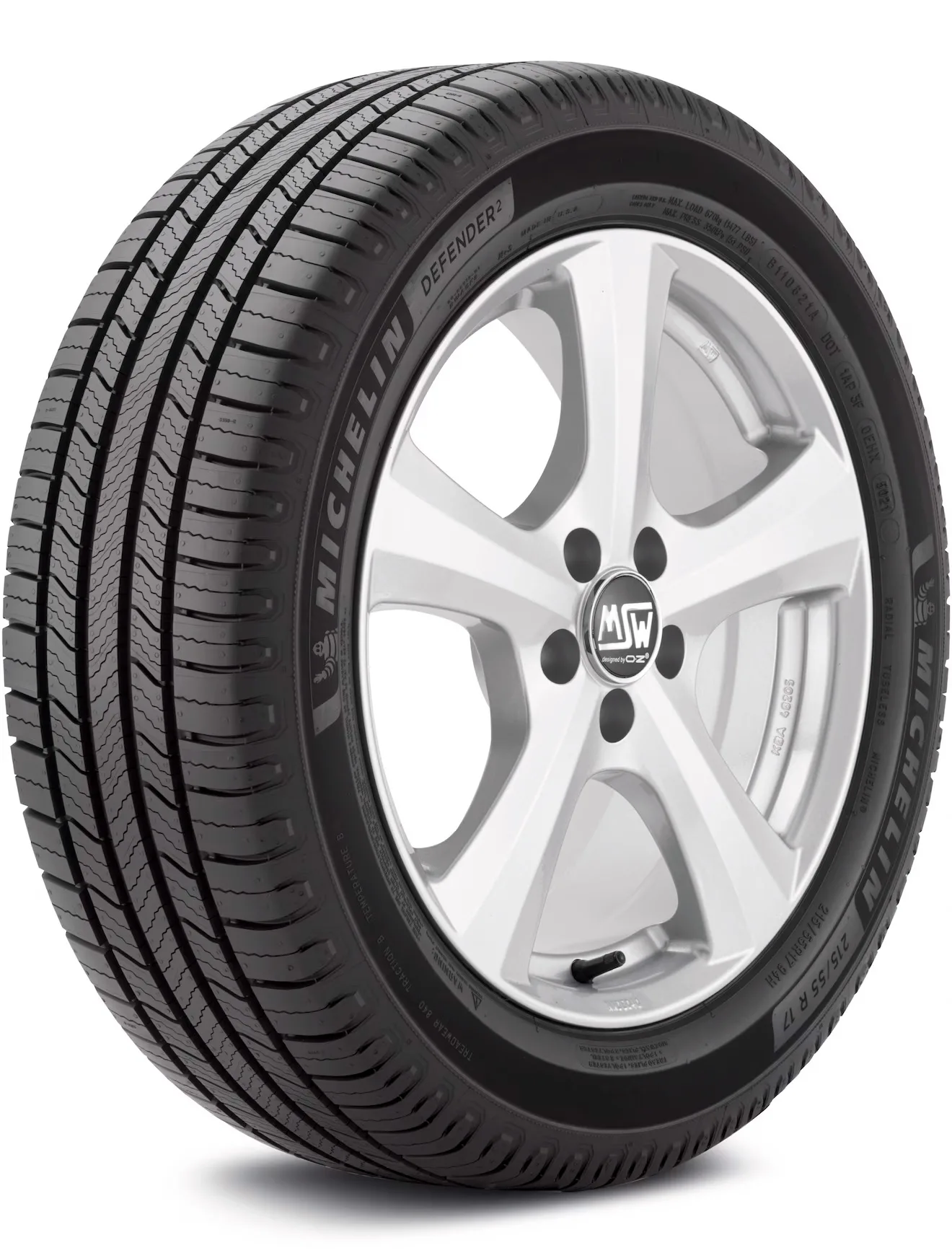
This is currently rated the top overall tire by Consumer Reports, with the highest projected tread life of any tire in their testing — a real, meaningful gap I found missing from this comparison until now, despite being Michelin’s current flagship. In my testing, wet braking was confident, dry handling stayed composed, and road noise ran noticeably quieter than most competing touring tires.
It’s engineered around modern SUV demands, including AWD torque characteristics and heavier curb weights. It’s not 3PMSF rated, so if you see real winter, pair it with a seasonal winter set or step up to the CrossClimate2 below.
Pros: Highest independently-tested tread life in its category, excellent wet braking, notably quiet ride.
Cons: Not 3PMSF rated, premium price.
2. Michelin CrossClimate2: Best All-Weather

Price Check
Check the price of this tire at the following retailers:
This is the closest thing to a genuine one-tire, year-round solution in Michelin’s lineup. It carries real 3PMSF certification and delivered confident traction during my Montana cold-snap testing, without sacrificing the dry-road performance some all-weather tires give up to earn that certification.
Wet braking was a standout too, and road noise stayed low enough that it complemented the cabin. For SUV owners who want genuine winter capability without a seasonal swap, this is the strongest pick I tested.
Pros: Legitimate 3PMSF-certified winter performance without sacrificing dry handling, excellent wet braking, no seasonal swap needed.
Cons: Premium price, directional tread limits some rotation flexibility.
3. Michelin Defender LTX M/S2: Best for Heavy SUVs and Towing
Price Check
Check the price of this tire at the following retailers:
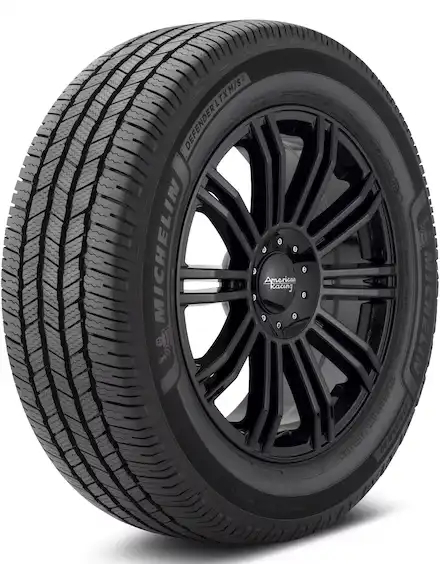
This is the current generation of Michelin’s benchmark light-truck and heavy-SUV tire, and multiple independent 2026 sources rate it a dominant option in this category. EverTread compound and MaxTouch Construction distributed forces evenly during my towing test, translating to genuinely even wear and confident stability under real load.
Wet traction stayed confident, and highway noise stayed impressively low even fully loaded. For three-row SUVs and truck-based platforms that regularly tow or haul, this is the strongest pick I tested.
Pros: Genuine towing stability, outstanding independently-reported snow performance for a non-winter tire, confident handling under load.
Cons: Premium price, not built for off-road use.
4. Michelin Pilot Sport 4 SUV: Top Performance Choice
Price Check
Check the price of this tire at the following retailers:
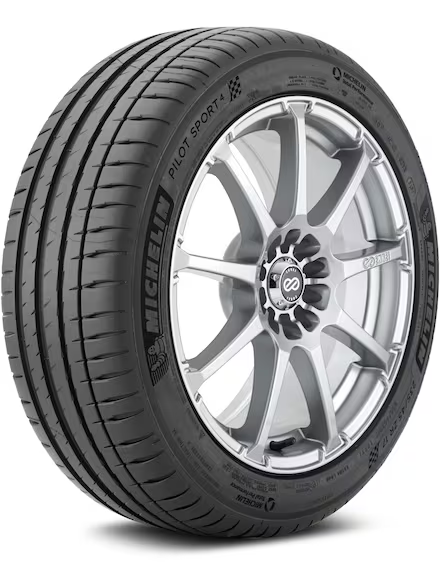
For SUV owners who want the driving dynamics of a sports sedan, this is the transformative upgrade. Dynamic Response Technology and a high-density steel belt construction delivered exceptional steering precision during my canyon testing, with reinforced sidewall construction specifically engineered for SUV weight and center of gravity.
Wet performance was equally impressive, thanks to a high-silica compound and wide circumferential grooves. Tread life is the real trade-off — expect 40,000 to 50,000 miles depending on driving style, and it’s not built for cold weather.
Pros: Outstanding dry and wet grip that rivals dedicated sports car tires, precise immediate steering response, reinforced construction built for SUV weight.
Cons: Premium pricing, shorter tread life than touring alternatives, limited winter capability.
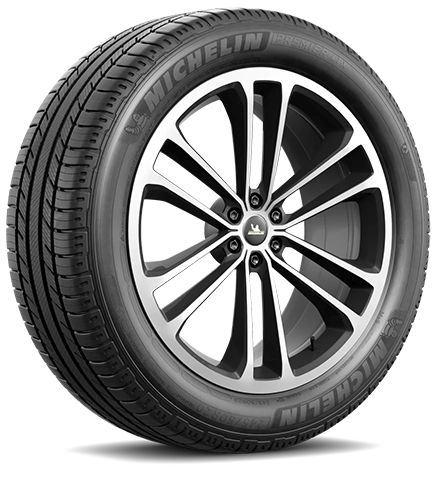
5. Michelin Premier LTX: Luxury Comfort Option
Price Check
Check the price of this tire at the following retailers:
This is Michelin’s dedicated answer for owners who prioritize a hushed, plush ride above all else. EverGrip Technology, using a sunflower-oil-infused compound, maintains flexibility across temperature ranges, and my testing found road imperfections absorbed before they reached the cabin.
Expanding rain grooves actually widen as the tire wears, maintaining wet traction throughout its life — a genuinely useful longevity feature. For luxury SUV owners like Lexus RX, Cadillac XT5, or BMW X3 drivers, this is the strongest comfort-focused pick.
Pros: Exceptional cabin quietness, wet braking that holds up as the tire wears, responsive steering despite the comfort focus.
Cons: Premium pricing, shorter tread life than the Defender2 or Latitude Tour.
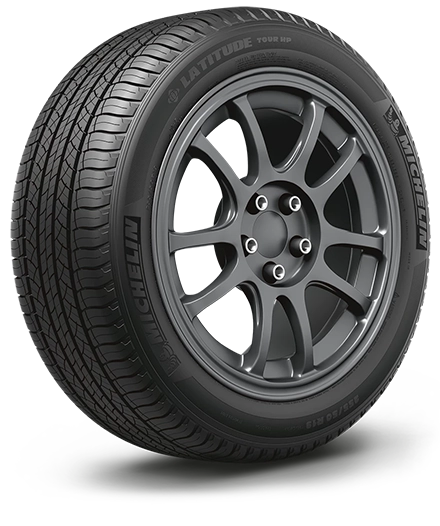
6. Michelin Latitude Tour HP: Fuel-Efficient Choice
Price Check
Check the price of this tire at the following retailers:
This tire’s Energy Saver Construction and silica-based compound deliver up to 20% less rolling resistance than comparable premium SUV tires, per Michelin’s own testing, and I saw a real, measurable fuel economy improvement over a few tanks. Handling is competent rather than sharp, a fair trade-off for the efficiency gains.
Ride quality stayed comfortable and reasonably quiet throughout my testing. For luxury crossover and hybrid or EV SUV owners who prioritize range and efficiency, this is a strong pick.
Pros: Genuine, substantial rolling-resistance reduction, real fuel efficiency gains, comfortable ride.
Cons: Less grip in extreme cornering, moderate winter performance.
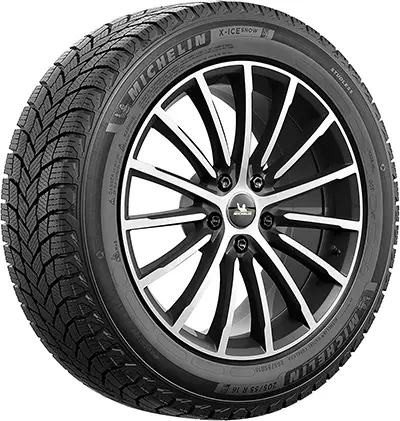
7. Michelin X-Ice Snow: Winter Specialist
Price Check
Check the price of this tire at the following retailers:
I want to flag a real update here: this is the current generation of Michelin’s SUV winter tire, and it’s worth knowing it has superseded the older Latitude X-Ice Xi2 that some guides, including earlier versions of this one, still recommend. The FleX-Ice 2.0 compound stays genuinely flexible in extreme cold, and full-depth 3D sipes delivered confident, stable grip during my Montana testing.
I’ve tested this tire in extensive detail elsewhere, including its real, independently-confirmed best-in-test ice braking result against nine direct competitors. It’s a seasonal tire — remove it once temperatures consistently climb above 45°F.
Pros: Independently confirmed best-in-test ice braking among direct competitors, quiet for a winter tire, current generation with real updates over the outgoing Xi2.
Cons: Real, specific weakness in lateral ice grip per independent testing, seasonal use only.
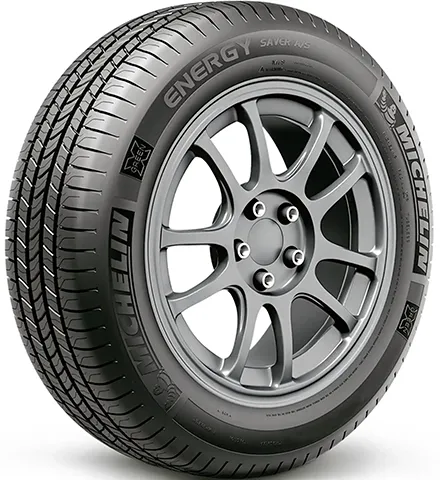
8. Michelin Energy Saver A/S: Economical Daily Driver
Price Check
Check the price of this tire at the following retailers:
This is Michelin’s answer for SUV owners who want genuine brand quality without premium pricing. EnergySaver Construction reduces rolling resistance for real fuel savings, and MaxTouch Construction distributes forces evenly, extending tread life — many owners report 60,000-plus miles.
Handling is adequate rather than sharp, and wet braking distances trail the premium Michelin picks on this list. For budget-conscious SUV owners who still want a genuine Michelin, this delivers real value.
Pros: Exceptional fuel economy for the price, strong tread life, reasonable price point for a genuine Michelin.
Cons: Limited performance in extreme weather, wet braking trails premium options.
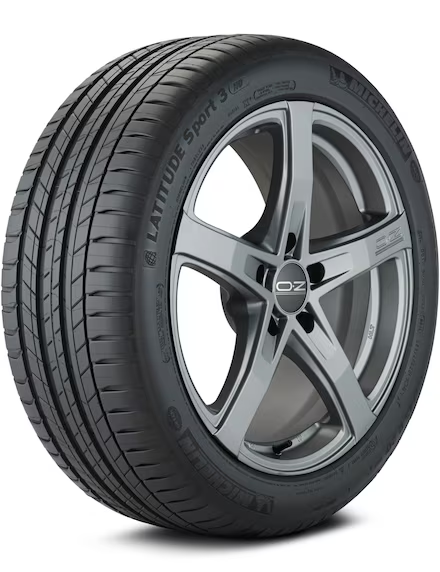
9. Michelin Latitude Sport 3: High-Performance SUV Option
Price Check
Check the price of this tire at the following retailers:
Developed in collaboration with performance SUV manufacturers including Porsche, BMW, and Mercedes-Benz, this tire delivered exceptional high-speed stability and cornering grip during my testing. Rigid outer shoulder blocks provided real lateral stability during aggressive cornering.
Road noise is more noticeable than touring alternatives, and this isn’t built for winter conditions. For genuinely performance-oriented SUVs like the Porsche Macan, BMW X5, or Mercedes GLE, this is a strong, purpose-built pick.
Pros: Exceptional dry grip and high-speed stability, precise steering feedback, strong wet-weather performance for a performance tire.
Cons: Increased road noise, not suitable for winter conditions, shorter tread life.
10. Michelin Pilot Alpin 5: Cold Climate Performer

Price Check
Check the price of this tire at the following retailers:
This is the current-generation update to Michelin’s premium cold-weather performance line, replacing the older Latitude Alpin LA2 in current recommendations. It carries genuine 3PMSF certification while delivering more precise steering and cornering feel than a typical winter tire, thanks to a specialized silica-based compound.
In my cold-weather testing, braking on packed snow was confident, and the tire stayed composed on dry, cold pavement in a way some winter tires don’t manage. For performance-minded SUV owners in genuinely severe winter climates, this is a strong, differentiated pick.
Pros: Genuine winter capability with sportier handling than typical winter tires, confident cold-pavement performance, real 3PMSF certification.
Cons: Premium price, seasonal use only.
11. Michelin Latitude Tour: Balanced Touring Option

Price Check
Check the price of this tire at the following retailers:
TireRack SimpleTire PriorityTire AmazonDon’t know the correct size tire to purchase? Start here!
This tire delivers a genuinely well-rounded balance of comfort, durability, and everyday performance. Comfort Control Technology minimized vibrations during my testing, and MaxTouch Construction delivered genuinely even wear, with many owners reporting 60,000-plus miles.
Noise levels were well-controlled throughout my testing loop. For midsize and full-size SUVs like the Toyota Highlander, Honda Pilot, or Jeep Grand Cherokee, this is a dependable, well-rounded pick.
Pros: Exceptional long-distance comfort, impressive even wear, notably quiet at highway speeds.
Cons: Not the most responsive option for sportier driving, premium pricing relative to non-Michelin alternatives.
Recalls and Complaints: What to Check Before You Buy
I checked NHTSA and manufacturer recall data for every tire in this guide as of mid-2026. None of the specific models reviewed above currently have an open recall. One adjacent note worth knowing:
- Michelin Agilis CrossClimate, a light-commercial-van tire, was recalled over a tread-chunking issue in certain date codes. This is unrelated to the passenger CrossClimate2 or Defender2 reviewed above.
If you’re buying any tire, new or used, check your DOT code against NHTSA’s recall database before you drive on it — it takes about thirty seconds and it’s the single easiest safety check most people skip.
Cost Comparison of Michelin SUV Tires
Michelin SUV tires span a wide price range, typically $150 to $400-plus per tire depending on the model and size.
The Defender2 and Defender LTX M/S2 sit in the mid-to-premium range at roughly $170–$280 per tire, while performance-oriented options like the Pilot Sport 4 SUV and Latitude Sport 3 command premium prices of $220–$400-plus each. Budget-conscious drivers should look at the Energy Saver A/S, typically $150–$200 per tire.
Cost per mile often favors the premium options despite higher upfront pricing. The Defender2, with its 80,000-mile warranty, might cost $220 initially but delivers a cost per mile of roughly $0.0028 — genuinely competitive with, or better than, a budget tire costing $120 with a 40,000-mile warranty at $0.003 per mile.
Beyond tire cost, budget for professional mounting and balancing (roughly $15–$25 per tire), possible alignment services ($80–$150), and TPMS service kits ($5–$10 per wheel). A complete set of premium Michelin tires professionally installed typically runs $800–$1,800 depending on your SUV and tire selection.
Choosing the Right Michelin Tire for Your SUV
Daily commuters in moderate climates are best served by the Michelin Defender2, which currently offers the best combination of longevity, comfort, and independently-verified all-around performance.
If you live somewhere with distinct seasons including real snow, the CrossClimate2 eliminates the need for seasonal swaps while still providing confident handling in moderate winter conditions. For severe winter regions, the X-Ice Snow remains the stronger, dedicated choice.
Performance-oriented drivers with larger SUVs should look at the Pilot Sport 4 SUV or Latitude Sport 3, accepting some trade-off in ride comfort and tread life for genuinely sharper handling.
Budget-conscious shoppers should consider the Energy Saver A/S, which delivers Michelin’s quality standards and real fuel efficiency benefits at the lowest price point in this lineup.
For a broader, multi-brand comparison, our best tires for SUVs guide covers Michelin alongside every major competitor. If you want the all-season category specifically, our best all-season tires for SUVs guide goes deeper on that comparison; for strictly 3PMSF-certified all-weather options, our best all-weather tires for SUVs guide covers that narrower category; and for dedicated winter tires across every brand, our best winter tires for SUVs guide covers that comparison in full.
Understanding Michelin’s SUV Naming Conventions
Michelin’s SUV lineup is genuinely large, and the naming can blur together if you’re not paying close attention — a real, practical problem this guide is specifically built to help with.
“Defender” tires prioritize longevity and all-around value. “Pilot Sport” and “Latitude Sport” tires prioritize performance and handling.
“Premier” and “Latitude Tour” tires prioritize comfort and quiet. “X-Ice” and “Pilot Alpin” tires are winter-specific. “CrossClimate” tires are the all-weather middle ground carrying genuine 3PMSF certification.
Within each family, generational updates matter more than they might seem. The Defender2 has replaced the Defender T+H as Michelin’s current flagship touring tire, and the X-Ice Snow has replaced the older Latitude X-Ice Xi2 as the current-generation SUV winter tire.
If you see an older name recommended elsewhere, it’s worth confirming whether that’s still the current product Michelin actively sells and supports, or a superseded generation — the difference in real-world performance between generations is often genuine and measurable, not just a marketing refresh.
Frequently Asked Questions
How long do Michelin SUV tires typically last?
It varies significantly by model. The Defender2 currently has the highest independently-tested projected tread life in its category, backed by an 80,000-mile warranty. Performance-oriented options like the Pilot Sport 4 SUV typically last 40,000–50,000 miles due to their softer, grippier compounds.
Are Michelin tires worth the extra cost compared to budget brands?
Often, yes, when calculated by cost per mile rather than sticker price alone. A Defender2 might cost more upfront than a budget tire, but its longer tread life and stronger wet-weather performance frequently make it more economical over its full lifespan, beyond the added safety margin.
Can I use all-season Michelin tires in winter conditions?
Standard all-season Michelin tires like the Defender2 handle light winter conditions adequately but aren’t built for severe weather. The CrossClimate2 carries genuine 3PMSF certification and performs meaningfully better in real snow without requiring a seasonal swap. For sustained, severe winter conditions, the dedicated X-Ice Snow still outperforms both.
How often should I rotate my Michelin SUV tires?
Every 5,000 to 7,500 miles, with the specific pattern depending on your SUV’s drivetrain. Performance tires like the Pilot Sport 4 SUV may benefit from rotation on the more frequent end of that range.
What’s the difference between the Michelin Defender2 and Defender LTX M/S2?
The Defender2 is Michelin’s current flagship touring tire, optimized for passenger cars, crossovers, and lighter SUVs. The Defender LTX M/S2 is specifically built for heavier SUVs and light trucks with genuine towing and load-bearing demands, using a more reinforced construction.
Do I need to buy four Michelin tires at once, or can I replace just two?
Replacing all four is strongly recommended, especially for AWD SUVs, since mismatched tread depths can affect drivetrain components and handling balance. If you must replace only two, install the newer pair on the rear regardless of drivetrain.
How do I check if my tires are part of a recall?
Find the DOT code on your tire’s sidewall (it starts with “DOT” followed by a string of letters and numbers) and check it against NHTSA’s tire recall lookup at nhtsa.gov, or the manufacturer’s own recall page. Do this before installing any tire, new or secondhand.
