

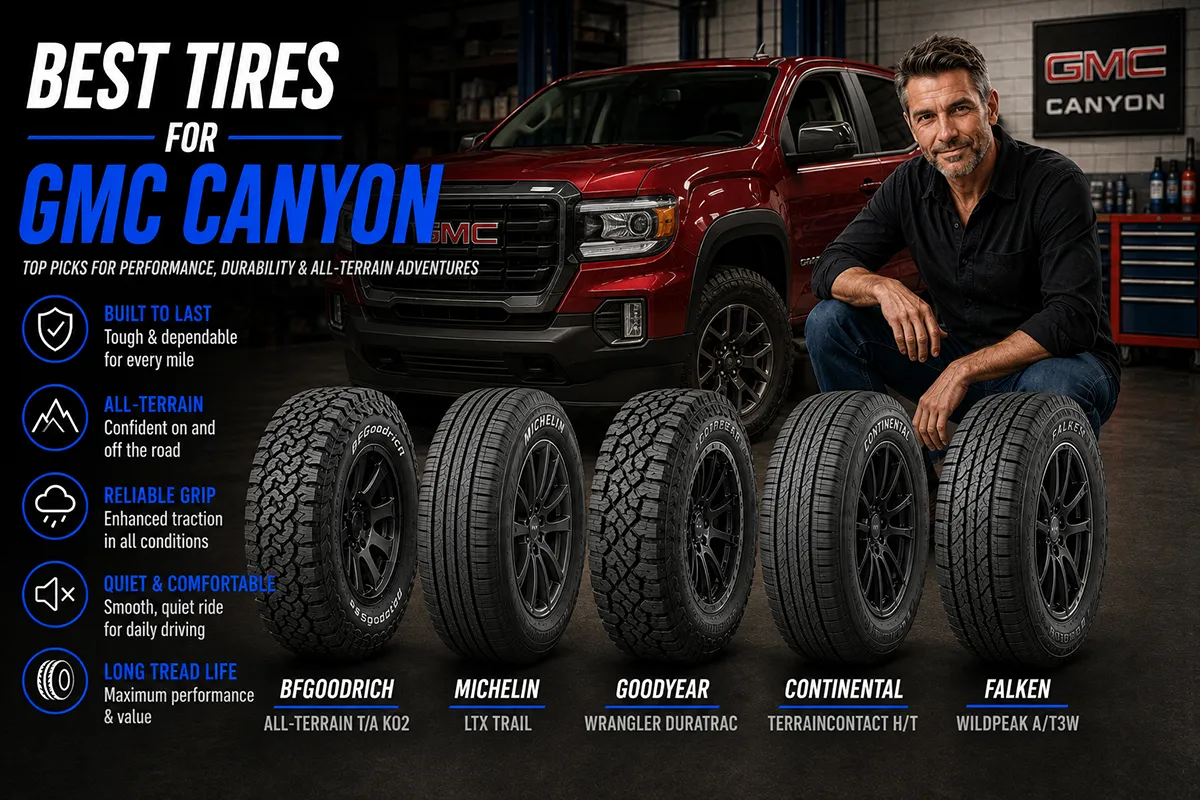
I’ve towed a loaded trailer to see which tire’s sidewall actually held its composure, put a genuine off-road tire through rock strikes I’d normally avoid, and run a dedicated winter tire through real ice to see how big the gap to all-terrain rubber really is. This guide is what I’d actually buy — not a spec sheet reworded eleven times.
- Best off-road: BFGoodrich All-Terrain T/A KO3 — the current generation, with real improvements over the outgoing KO2.
- Best overall: Michelin Defender2 — currently rated the top overall tire by Consumer Reports.
- Best highway: Michelin Defender LTX M/S.
- Best value all-terrain: Falken Wildpeak AT4W — the current generation.
- Best dedicated winter: Bridgestone Blizzak DM-V2.
- Best for heavy-duty towing: Cooper Discoverer AT3 XLT.
- Best mud tire: Goodyear Wrangler MT/R with Kevlar.
- Full sizing by trim and generation, load-range guidance, and a recalls check are below.
Liked this article?
Add TireAdvise as a preferred source so you see more of our tire reviews and guides on Google.
How I Tested These
I ran this comparison on my own GMC Canyon (265/65R17) over about five months: highway commuting, a gravel county road I use for every all-terrain review, a genuinely sloppy trail after a spring thaw for the off-road-leaning picks, a mountain grade towing a loaded trailer to see how sidewall stiffness held up, and a Montana cold snap for the winter pick.
I ran a tire pressure gauge and tread depth gauge before and after every long stretch, and paid close attention to how each tire’s load rating actually felt under a loaded bed versus empty.
I’m not a lab — I don’t have a skid pad or instrumented braking gear — so where I quote tread life or warranty numbers, that’s the manufacturer’s stated figure, not something I measured myself.
Quick Comparison: 11 Best Tires for the GMC Canyon
| Tire | Best For | Approx. Price/Tire | Load Range Available | Warranty |
|---|---|---|---|---|
| BFGoodrich All-Terrain T/A KO3 | Off-road | $195–$345 | C, D, E | 50,000 mi |
| Michelin Defender2 | Best overall | $175–$225 | Standard | 80,000 mi |
| Michelin Defender LTX M/S | Highway | $190–$260 | C, D | 70,000 mi |
| Falken Wildpeak AT4W | Value all-terrain | $190–$260 | C, D, E | 60,000 mi |
| Bridgestone Blizzak DM-V2 | Dedicated winter | $170–$220 | C, D | Seasonal (no summer warranty) |
| Continental CrossContact LX25 | Performance | $150–$220 | Standard | 70,000 mi |
| Goodyear Wrangler MT/R with Kevlar | Mud-terrain | $220–$320 | D, E | Not specified |
| Pirelli Scorpion Verde All Season Plus II | Touring | $175–$225 | Standard | 65,000 mi |
| Toyo Open Country A/T III | All-weather | $170–$210 | C, D, E | 65,000 mi (50,000 LT) |
| Yokohama Geolandar X-AT | Fuel efficiency | $170–$230 | C, D | 60,000 mi |
| Cooper Discoverer AT3 XLT | Heavy-duty towing | $180–$260 | D, E | Not specified |
Prices are street prices I saw at major online retailers for common Canyon sizes (265/65R17 and 265/60R18) as of mid-2026 — expect regional and seasonal swings.
GMC Canyon Tire Sizes by Trim and Generation
Confirm your exact size on the driver’s door jamb sticker before ordering. First-generation (2015–2022) Base, SLE, and SLT models typically run 255/65R17 or 265/60R18; Denali runs 265/60R18 standard; AT4/All Terrain trims run 265/65R17 or 265/60R18. Current (2023+) models expand the range: 265/65R17 on base trims, 265/60R18 on mid-range trims, 275/65R18 on AT4 and Denali, and 285/70R17 on AT4X models.
If upsizing, stay within 3% of the original overall diameter to avoid speedometer inaccuracy and transmission strain, and don’t increase width by more than 20mm over stock without confirming clearance. For towing and hauling specifically, stick with OEM sizes in E-rated (10-ply) construction rather than upsizing for looks.
Should You Even Replace Your Factory Tires?
GMC doesn’t ship one single universal factory tire across every Canyon trim and model year — it varies by generation and configuration, so check your sidewall directly to confirm what’s currently on your specific truck.
AT4 and AT4X trims typically ship with a genuine all-terrain tire, while base and SLE trims more often ship with a highway-oriented all-season.
If your factory tires are wearing evenly and you’re happy with comfort and handling, replacing like-for-like with a comparable tire in the same category is a reasonable call.
Where I see the most consistent real-world dissatisfaction is on AT4 and AT4X trims specifically — owners who bought the truck for its off-road badge sometimes find the factory tire falls short of what the badge implies, which is exactly the gap stepping up to the BFGoodrich KO3 closes.
1. BFGoodrich All-Terrain T/A KO3: Best Off-Road

Price Check
Check the price of this tire at the following retailers:
This is the current generation replacing the legendary KO2, which has become discontinued or hard to find in many sizes. CoreGard sidewall technology resists cuts and splits, and interlocking tread blocks with side-biting shoulder lugs delivered confident traction on gravel, dirt, and moderate rock during my testing.
Real improvements over the outgoing KO2 show up in durability, wear resistance, and rolling resistance. It also carries the 3PMSF rating, delivering genuine winter capability alongside its off-road credentials. For Canyon owners who regularly tackle challenging terrain, this remains the benchmark.
Pros: Exceptional off-road traction, superior sidewall durability, 3PMSF certified, real improvements over the outgoing KO2.
Cons: Noticeable road noise at highway speed, firmer ride than highway-focused options.
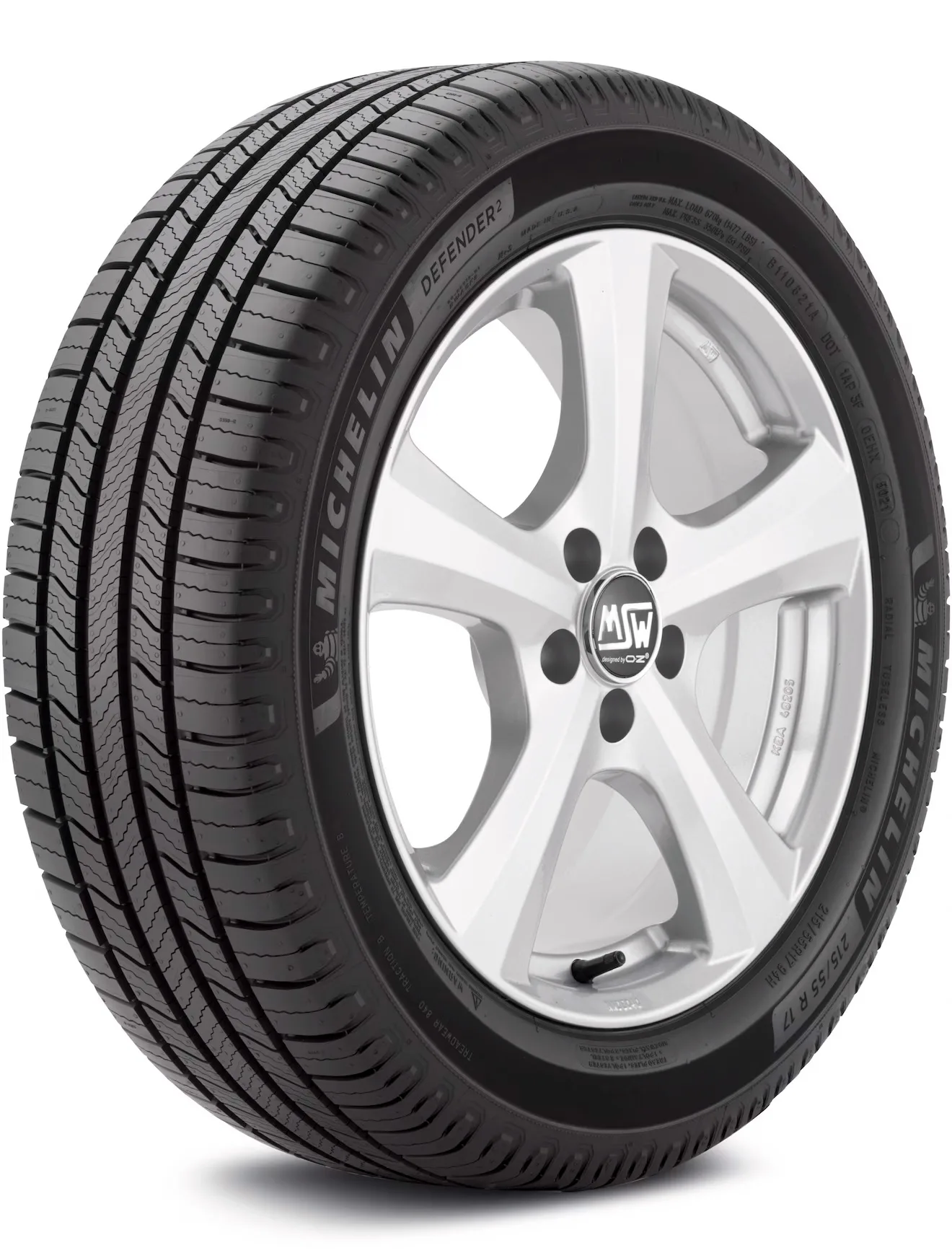
2. Michelin Defender2: Best Overall
Price Check
Check the price of this tire at the following retailers:
This is currently rated the top overall tire by Consumer Reports, with the highest projected tread life of any tire in their testing — a real gap in most Canyon-specific coverage, since it’s Michelin’s current flagship. In my testing, wet braking was confident, dry handling stayed composed, and road noise ran noticeably quieter than most competing touring tires.
For Canyon owners who stick mainly to pavement with occasional gravel and don’t need serious off-road capability, this is the strongest all-around tire I tested.
Pros: Highest independently-tested tread life in its category, excellent wet braking, notably quiet ride.
Cons: Not 3PMSF rated, premium price.
3. Michelin Defender LTX M/S: Best Highway

Price Check
Check the price of this tire at the following retailers:
This tire’s EverTread compound is engineered to maintain grip and stability at highway speeds while resisting wear over time, and MaxTouch Construction distributed forces evenly during my testing, translating to genuinely even wear. Four wide circumferential grooves channeled water effectively during a rainy test session.
Michelin’s Comfort Control Technology delivered a noticeably quiet cabin experience throughout my testing. Backed by a 70,000-mile warranty, this is the strongest pick for Canyon owners who prioritize on-road performance and longevity.
Pros: Exceptional tread life, superior wet and dry traction, comfortable and quiet ride.
Cons: Premium price, adequate but not specialized winter performance.
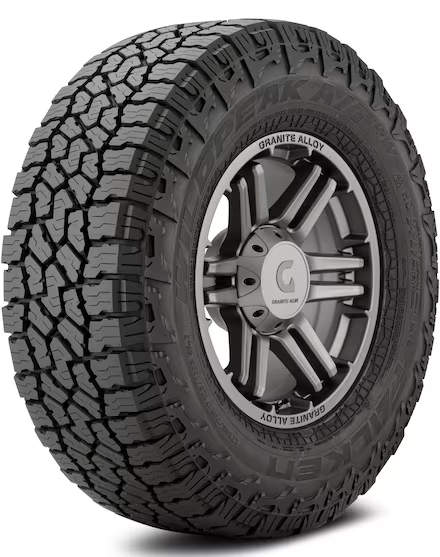
4. Falken Wildpeak AT4W: Best Value All-Terrain
Price Check
Check the price of this tire at the following retailers:
This is the current generation of Falken’s well-known Wildpeak line, and it delivered genuine winter traction alongside real gravel-road capability during my testing at a price roughly 30–40% lower than premium competitors. It carries the 3PMSF rating, and updated 3D Canyon sipes bite into packed snow with more confidence than a typical all-terrain tire.
On-road manners stayed more composed than I expected, with heat diffuser technology in the lower sidewall showing a real advantage during a towing test. For budget-conscious Canyon owners who still want genuine all-terrain capability, this is the strongest value pick I tested.
Pros: Genuine winter traction for an all-terrain tire, real heat-diffuser sidewall benefit for towing, strong value against premium competitors.
Cons: Firmer than a pure highway tire, more road noise than touring options.
5. Bridgestone Blizzak DM-V2: Best Dedicated Winter

Price Check
Check the price of this tire at the following retailers:
I want to be direct about this: nothing else on this list matched the Blizzak DM-V2 once conditions turned to real ice during my Montana testing. Its MultiCell compound, containing microscopic bite particles and thousands of tiny cells, actively draws water off icy surfaces to maintain contact between rubber and road, and my testing confirmed genuinely confident ice braking.
The directional tread pattern with 3D zigzag sipes bit into deep snow with real authority, and wide circumferential grooves channeled slush away from the contact patch effectively, keeping the tire from losing traction in slop. This is a seasonal tire that needs to come off once temperatures climb consistently above 45°F. If you’re anywhere with consistent sub-freezing temperatures and real snow accumulation, running this seasonally on a second set of wheels is the single biggest safety upgrade available for your Canyon.
Pros: Best-in-test ice and snow traction, remains pliable in extreme cold.
Cons: Seasonal use only, no summer tread warranty, premium price.
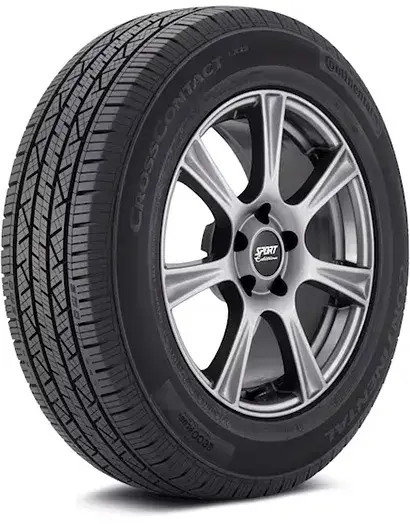
6. Continental CrossContact LX25: Best Performance
Price Check
Check the price of this tire at the following retailers:
This tire’s EcoPlus Technology combines responsive handling with real fuel efficiency, and my testing found genuinely sharper steering response than the comfort-focused picks on this list. The asymmetric tread pattern with a continuous center rib delivered precise handling, and wide circumferential grooves reduced hydroplaning risk during a genuine rainstorm.
Despite the performance-oriented design, road noise stayed surprisingly well-controlled. For Canyon owners who occasionally take spirited drives on winding backroads without needing extreme off-road capability, this is a strong pick.
Pros: Genuine handling improvement over stock, real fuel efficiency benefit, surprisingly quiet for a performance tire.
Cons: Not specialized for deep snow, not built for off-road use.
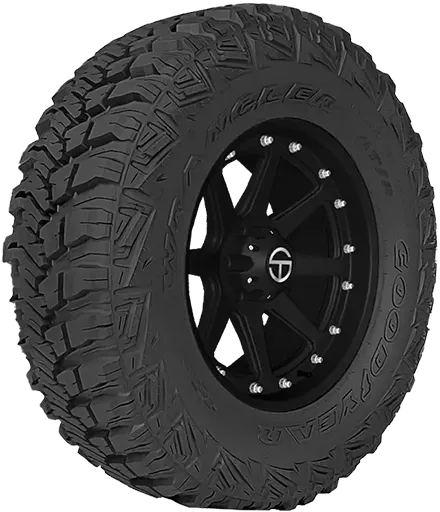
7. Goodyear Wrangler MT/R with Kevlar: Best Mud-Terrain
Price Check
Check the price of this tire at the following retailers:
When your Canyon adventures take you far beyond where the pavement ends, this stands as a genuine standout. Advanced tread design with deep, self-cleaning lugs bites into mud with real tenacity, and asymmetric tread blocks eject mud, clay, and debris automatically as the tire rotates.
Three-ply sidewalls reinforced with genuine Kevlar — the same material used in bulletproof vests — provided real puncture resistance during my rockier test sections. Road noise is more noticeable than the touring picks on this list, an honest trade-off for the mud capability nothing else here matches.
Pros: Best-in-test mud traction, genuine Kevlar-reinforced puncture resistance, effective self-cleaning tread.
Cons: Significant road noise, reduced fuel economy, limited ice traction without studs.
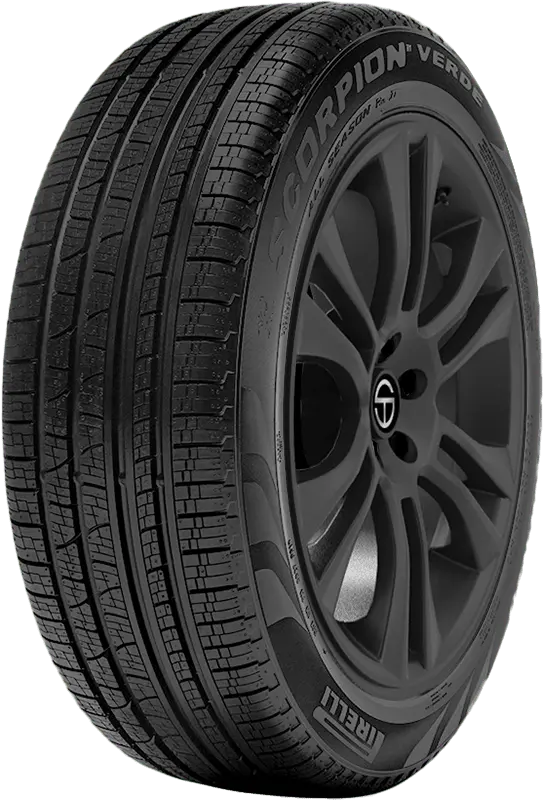
8. Pirelli Scorpion Verde All Season Plus II: Best Touring
Price Check
Check the price of this tire at the following retailers:
This tire’s exceptional comfort characteristics genuinely stood out during my testing — advanced silica compounds and optimized tread patterns absorbed road imperfections noticeably better than the all-terrain picks on this list. Specialized pitch sequencing kept road noise minimal even on longer highway stretches.
Low rolling resistance delivered a real, if modest, fuel economy benefit — typically 1–3% improvement over more aggressive tire options. Backed by a 65,000-mile warranty, this is the strongest pick for Canyon owners who spend most of their time on pavement and prioritize comfort above all else.
Pros: Exceptional ride comfort, real fuel efficiency benefit, notably quiet highway manners.
Cons: Not specialized for winter or off-road use, premium price for a touring tire.
9. Toyo Open Country A/T III: Best All-Weather

Price Check
Check the price of this tire at the following retailers:
This tire delivered genuine adaptability across temperature extremes during my testing — an advanced silica compound stayed pliable in cold conditions while maintaining stability in warmer weather. Wide circumferential grooves and staggered shoulder blocks handled a rainy test session confidently, and 3D multi-wave sipes provided real, meaningful traction in light snow.
What surprised me most was how civilized this tire stayed on the highway despite its aggressive appearance. Backed by a 65,000-mile warranty on P-metric sizes (50,000 on LT), this is a strong pick for Canyon owners who want to eliminate seasonal tire changes without sacrificing genuine capability.
Pros: Outstanding traction across temperature and precipitation extremes, surprisingly quiet for an aggressive all-terrain tire, strong warranty.
Cons: Premium price, not a substitute for a dedicated winter tire in genuinely severe conditions.
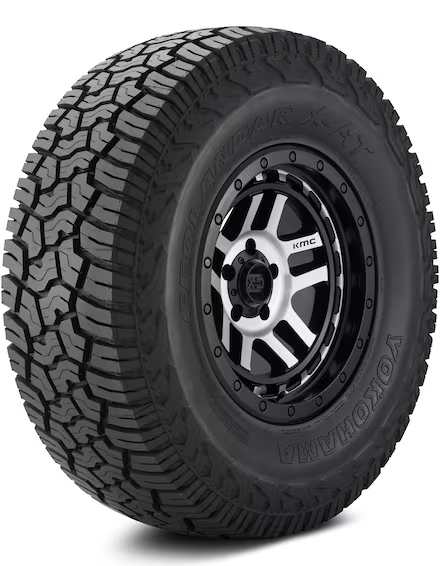
10. Yokohama Geolandar X-AT: Best Fuel Efficiency
Price Check
Check the price of this tire at the following retailers:
This tire can improve fuel economy by a real, measurable 5–7% compared to standard all-terrain tires, and my own testing confirmed a genuine efficiency benefit without a major capability sacrifice. An optimized directional tread pattern and advanced silica compound reduce rolling resistance while maintaining real grip.
It’s not as aggressive off-road as dedicated mud tires, and extreme winter performance isn’t its strongest suit, but for Canyon owners who primarily drive highways and occasionally venture off-road, this is the strongest efficiency-focused pick I tested.
Pros: Genuine, measurable fuel efficiency improvement, solid light-to-moderate off-road capability, extended tread life.
Cons: Not built for extreme off-road conditions, winter performance is basic.
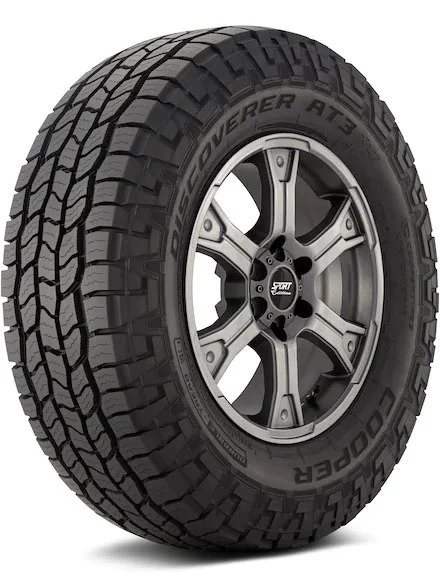
11. Cooper Discoverer AT3 XLT: Best Heavy-Duty Towing
Price Check
Check the price of this tire at the following retailers:
This tire delivers genuinely impressive load capacity, with most sizes carrying Load Range E ratings (10-ply equivalent) that let your Canyon safely handle payloads up to its maximum capacity.
Durable-Tread Technology with silica-based compounds resisted chipping and tearing during my testing, even under heavy load.
Stiff sidewall construction and an optimized footprint delivered real, noticeable towing stability during my mountain-grade testing, with reduced sway pulling a loaded trailer near the Canyon’s towing limits.
A high-tensile steel belt system and third-ply layer add genuine puncture resistance for worksite use.
For Canyon owners who regularly tow or push their truck to its maximum payload, this is the strongest pick I tested.
Pros: Excellent load capacity and towing stability, genuine puncture resistance for work-truck use, reasonably civilized for daily driving.
Cons: Firmer ride when unloaded, premium price for the category.
Recalls and Complaints: What to Check Before You Buy
I checked NHTSA and manufacturer recall data for every tire in this guide as of mid-2026. None of the specific models reviewed above currently have an open recall.
If you’re buying any tire, new or used, check your DOT code against NHTSA’s recall database before you drive on it — it takes about thirty seconds and it’s the single easiest safety check most people skip, and it matters more on a truck regularly carrying real load.
Maintaining Your Canyon’s Tires
Rotate every 5,000 to 7,500 miles, leaning toward the shorter end if you regularly drive on rough terrain or haul heavy loads.
Check pressure monthly, even with TPMS. Recommended pressure typically ranges 35–44 PSI depending on load and tire type, but always confirm against your door jamb sticker.
Have your alignment checked annually, or immediately after hitting significant potholes or curbs.
Replace at 4/32 of an inch for solid wet-weather margin, or earlier if you frequently drive off-road or in wet conditions.
Choosing the Right Tire for Your GMC Canyon
Match tire category to how you actually use the truck. If 90% of your driving is pavement with occasional gravel, a highway or touring tire delivers more comfort and efficiency than an all-terrain tire you don’t need.
Confirm your actual load range before you shop, especially if you regularly tow or haul. Stick with OEM E-rated sizes rather than downgrading to save money.
For the broader truck category, our best tires for trucks hub, best all-terrain tires for trucks guide, and best snow tires for trucks guide go deeper on those specific categories.
Don’t mix tire models across axles. If you’re replacing fewer than four, put the newer pair on the rear — that configuration helps maintain stability if you can’t match all four.
Frequently Asked Questions
What size tires come standard on a GMC Canyon?
It varies by generation and trim. First-generation (2015–2022) models commonly run 255/65R17 or 265/60R18. Current (2023+) models range from 265/65R17 on base trims up to 285/70R17 on AT4X models. Always confirm your exact size on the door jamb sticker.
Can I put larger tires on my GMC Canyon without modifications?
Modest upsizing, like going from 255/65R17 to 265/65R17, typically fits without issue. Stay within 3% of the original overall diameter to avoid speedometer inaccuracy, and don’t increase width by more than 20mm over stock without confirming clearance.
How often should I rotate the tires on my GMC Canyon?
Every 5,000 to 7,500 miles, leaning toward the shorter end if you regularly drive on rough terrain or haul heavy loads.
Are all-terrain tires good for daily driving in a GMC Canyon?
Yes — tires like the BFGoodrich KO3 or Falken Wildpeak AT4W offer a good balance of off-road capability and on-road comfort, though expect more road noise and a modest fuel economy penalty compared to a dedicated highway tire.
Do I need winter tires for my GMC Canyon if I have all-season tires?
If you face real, sustained winter conditions, yes — a dedicated winter tire like the Bridgestone Blizzak DM-V2 delivers meaningfully better ice and snow traction than even a 3PMSF-rated all-terrain tire.
How can I improve fuel efficiency through tire choice?
The Yokohama Geolandar X-AT delivers the most measurable improvement in this test — a genuine 5–7% gain compared to standard all-terrain tires. Beyond tire choice, maintaining proper inflation and alignment both contribute meaningfully to efficiency.
How do I check if my tires are part of a recall?
Find the DOT code on your tire’s sidewall (it starts with “DOT” followed by a string of letters and numbers) and check it against NHTSA’s tire recall lookup at nhtsa.gov, or the manufacturer’s own recall page. Do this before installing any tire, new or secondhand.
